UNLV KIN 223 EXAM 4! (disc) DIAGRAM
 Call Kai
 Learn
Learn Practice Test
 Spaced Repetition
 Match
Match Flashcards
 Knowt Play
1/13

There's no tags or description
Looks like no tags are added yet.
Name | Mastery | Learn | Test | Matching | Spaced | Call with Kai |
|---|
No analytics yet
Send a link to your students to track their progress
14 Terms
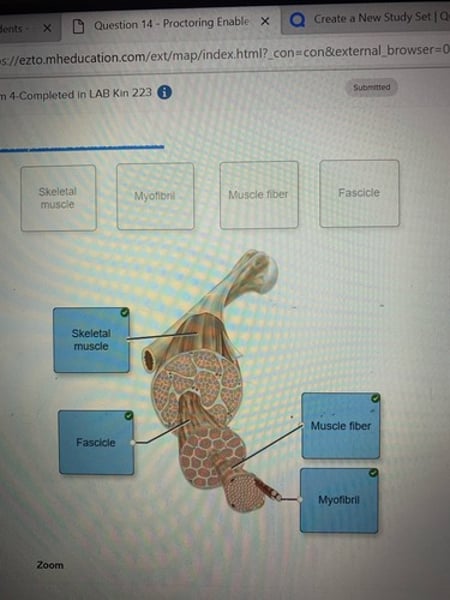
Label the components of skeletal muscle.
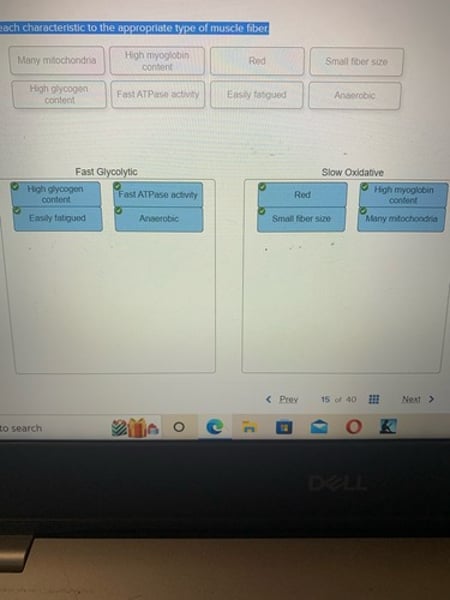
Assign each characteristic to the appropriate type of muscle fiber.
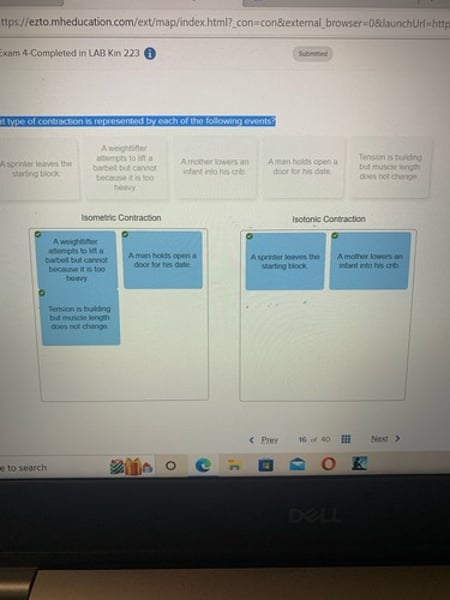
What type of contraction is represented by each of the following events?
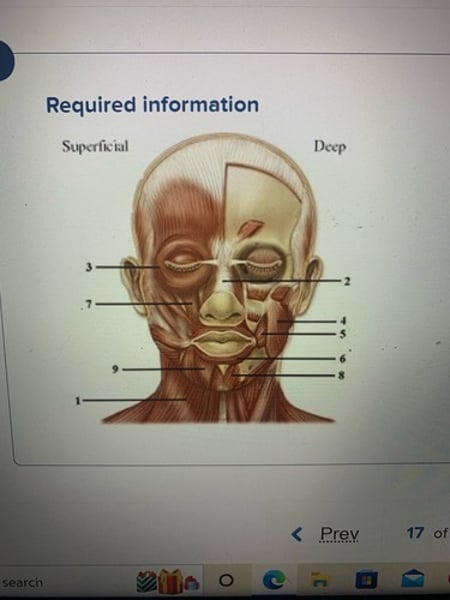
This figure shows the muscles of facial expression. What muscle does number 1 indicate?
Epicranius
Procerus
Nasalis
Platysma
Orbicularis oculi
Platysma
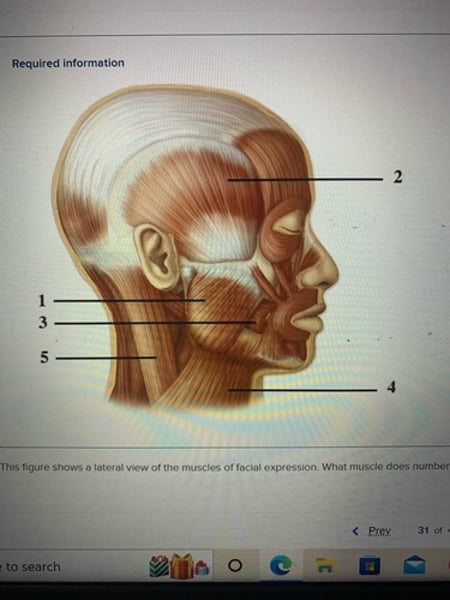
This figure shows a lateral view of the muscles of facial expression. What muscle does number 1 indicate?
Masseter
Temporalis
Sternocleidomastoid
Platysma
Buccinator
Masseter
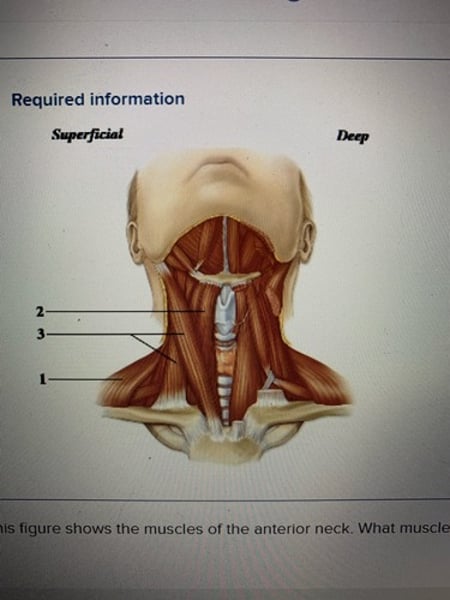
This figure shows the muscles of the anterior neck. What muscle does number 3 indicate?
Sternohyoid
Trapezius
Sternothyroid
Geniohyoid
Sternocleidomastoid
Sternocleidomastoid
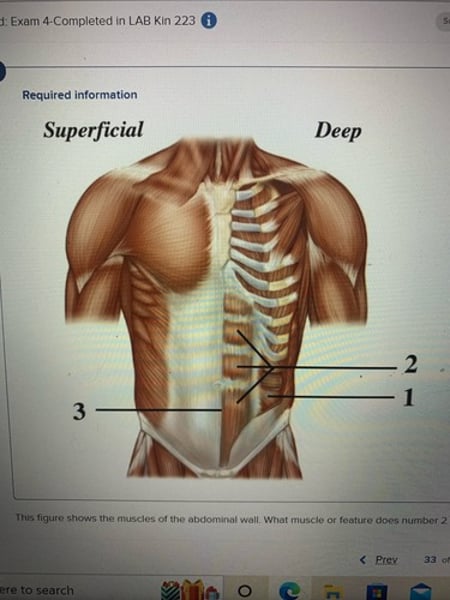
This figure shows the muscles of the abdominal wall. What muscle or feature does number 2 indicate?
Linea alba
Internal oblique
External oblique
Transversus abdominis
Rectus abdominis
Rectus abdominis
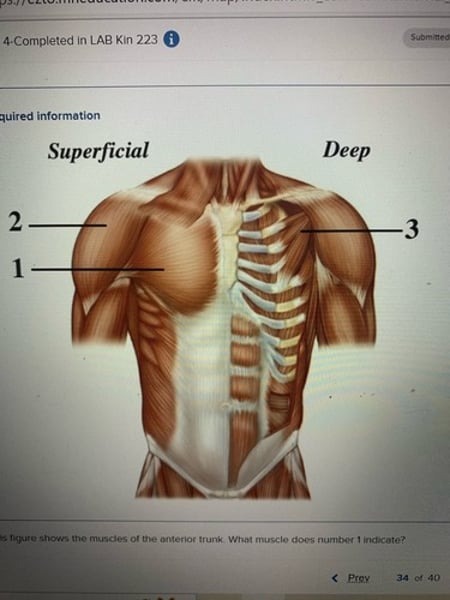
This figure shows the muscles of the anterior trunk. What muscle does number 1 indicate?
Latissimus dorsi
Pectoralis minor
Deltoid
Biceps brachii
Pectoralis major
Pectoralis major
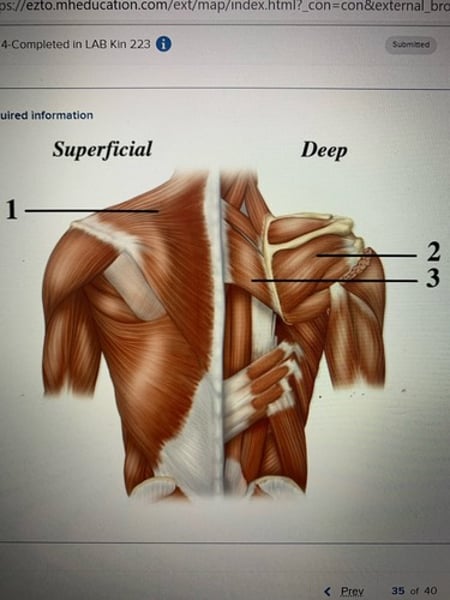
This figure shows the muscles of the posterior trunk. What muscle does number 1 indicate?
Trapezius
Supraspinatus
Infraspinatus
Rhomboid major
Trapezius
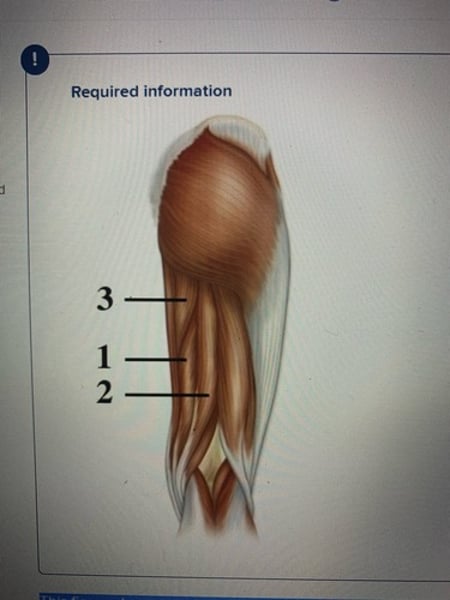
This figure shows a posterior view of the right thigh. What muscle does number 2 indicate?
Semimembranosus
Gluteus maximus
Semitendinosus
Biceps femoris
Adductor magnus
Semitendinosus
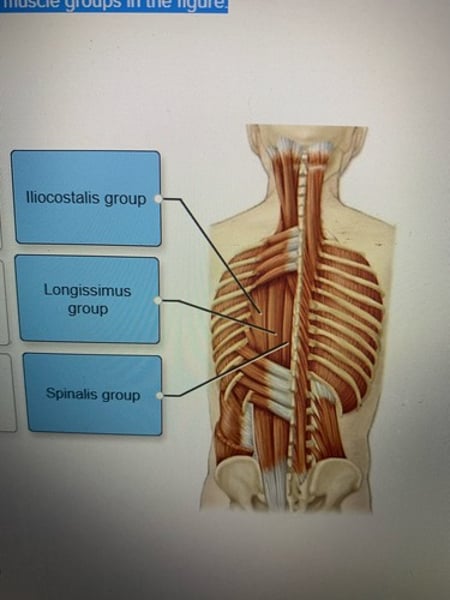
Label the erector spinae muscle groups in the figure.
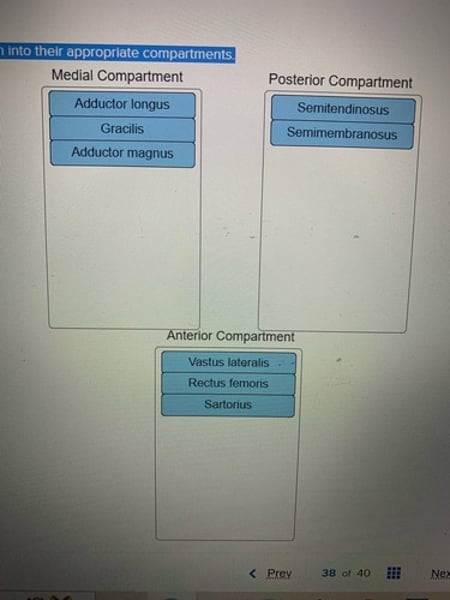
Classify the muscles of the thigh into their appropriate compartments.
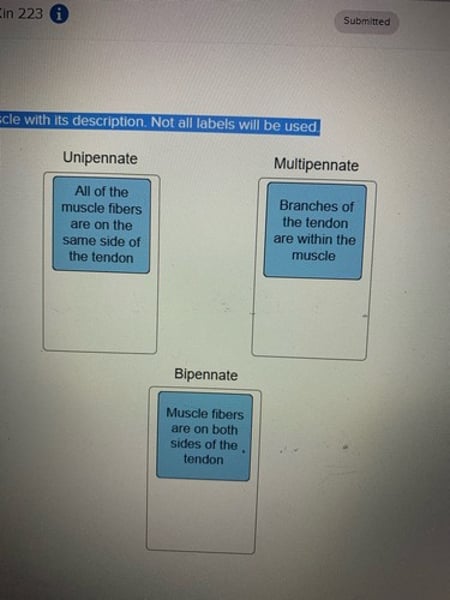
Classify the type of pennate muscle with its description. Not all labels will be used.
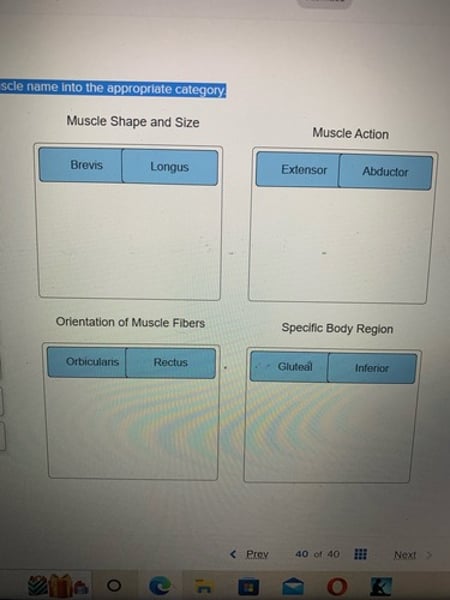
Place each component of a muscle name into the appropriate category.