geos 206 - sediment transport
 Call Kai
 Learn
Learn Practice Test
 Spaced Repetition
 Match
Match Flashcards
 Knowt Play
1/18

There's no tags or description
Looks like no tags are added yet.
Name | Mastery | Learn | Test | Matching | Spaced | Call with Kai |
|---|
No analytics yet
Send a link to your students to track their progress
19 Terms
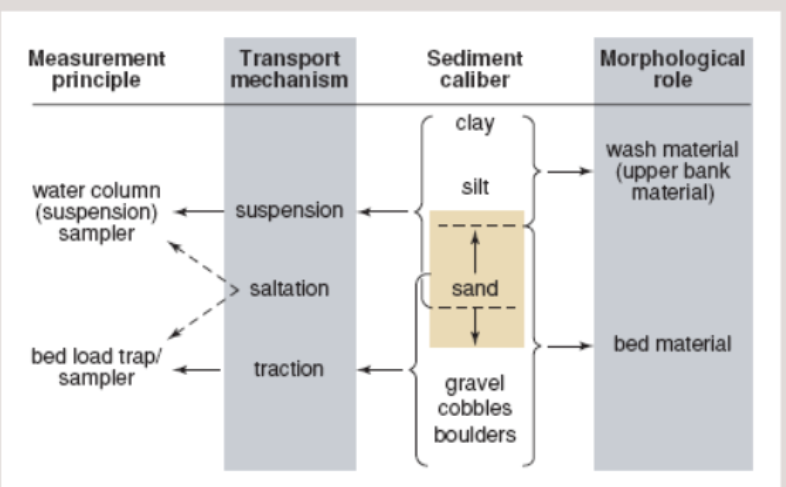
what factors are used to classify fluvial sediment
measurement principle, transport mechanism, sediment size, and morphological role
what makes up the washload, and why is washload important
silt and clay
all sediments except washload will be found on the bed
what materials are in suspension
clay and silt
what materials are in saltation
silt, sand, and gravel
what materials are in traction
gravel, cobble, and boulders
what does bed material make up
it makes up the banks and forms the cross sectional shape
do fine or coarse sediments require a higher shear stress for motion
fine sediment
silt and clay
due to cohesion of fine particles so they do not behave as individual particles but larger clumps
what is number for fully turbulent flow and why?
𝜽𝒄 = 0.06 ≈ constant
for particles larger than 5mm
𝜽𝒄 (dimensionless shear stress)
surface armory
the surface of the bed has coarser material and finer material beneath it
finer sediment is carried faster therefore deposited first and then larger sediment is deposited later
what is the primary factor to initiate motion of material
the shear stress needed to initiate motion depends on grain roughness
how does morphology affect material movement
surface structures redistribute shear stress, increase hydraulic roughness and turbulence, and modify critical shear stress
what is a factor when considering the entrainment of mixed size sediment
large grains protrude into the flow more and small grains tend to hide in between them
this makes large grains easier to move than smaller grains
grain packing and relative grain size complicate things
what affects suspended load transport
Q
bed material can be in suspension part of the time and partially on the bed
washload (related to sediment supply) is always in suspension and is not related to Q → a river will support as much washload as is supplied
what are some measurement methods for sediment
helly-smith (fin + bag contraption)
sediment traps
belts
hydrophones
check dams
morphological budgeting
what is suspended load
sediment that is transported in suspension within the water column
why is suspended load significant
floodplain formation
many contaminants to water quality travel on the surface of suspended particles
if it is too high it is a poor habitat for many aquatic species
how is concentration maintained in flow
upward turbulent dispersion of sediment must balance downward settling
how is rouse number and grain size related
if grain size gets larger then the rouse number will also increase and the grain is more likely to settle
why does suspended load increase with Q
when Q increases so does velocity
higher U means more erosion and more turbulence thus more sediment is carried