Economics Exam
 Call Kai
 Learn
Learn Practice Test
 Spaced Repetition
 Match
Match Flashcards
 Knowt Play
1/93

There's no tags or description
Looks like no tags are added yet.
Name | Mastery | Learn | Test | Matching | Spaced | Call with Kai |
|---|
No analytics yet
Send a link to your students to track their progress
94 Terms
Exchange rates
The value of a currency expressed in terms of other currencies
Fixed Exchnage rate
Government or central bank sets rate, e.g. HongKong (USD peg), singapore(managed float)
Fixed Exchange rates Market Intervention
- buying or selling foreign currency to balance the supply and demand at the chosen rate
- All foreign exchange holding needs to be lodged with the central bank to manage foreign reserves and maintain the fixed rate
- The government can devalue and revalue the currency to officially lower or raise their rate to be more inline with actual market forces
Floating Exchange Rate
Supply and deamand set currency value, e.g. Australia AUD
Floating Exchange Rates intervention method
- to curb rapid depreciation, RBA will buy AUD, appreciate the value of AUD by increasing demand
- To curb appreciation they can sell AUD to increase supply
- Rasing interet rates can increase demand for AUD as it attracts foreign saving
Trade Weighted Index
Value of the Australian dollar against a basket of currencies that are weighted according to their significance to Australia's trade flows. Gives an indication of how the AUD is moving against all currencies in general.
Calculating the TWI
- Countrys with currencies that are more prominent in Australia's trade are given a higher weighting so more influence on TWI
- Total num of countires included in TWI must cover 90% of Australian trade
Limitation of TWI
- weighting is based on volume of trade regardless of currency in which exports and imports are involved
- 90% of Australia's merchandise exports and more than half of imports are priced in USD
- USD exchange is far more important than the weight it recieves in the TWI calcualtion
- Analysing the impact of movements in the AUD against USD and TWi on Australia's trade and financital flows
Supply factor that affect AUD
- Interest Rate Diferentials
- Ralative inflation
- Australia's Economic Growth
Demand Factors that Affect AUD
- Interest Rate Diferentials
- Relative Inflation
- Commodity Prices
- Economic growth of trading partners
Balance of Payments
Records all transactions between Australian residents and non-residents
BoP and Exchange rate relationship
Balance of Payments and Exchnage rate have an interdependent relationship, they both influence each other continously
Impact of Balacnce of Payment on Exchnage Rates
- Credit entries represent the demand of AUD
- Debit entries represent the supplu of AUD
- Increase in credit or decrease in debit will cause AUD to appreciate
- Decrease in credit or increase in debit will cause AUD to depreciate
Foreign Investment
Refers to stock of assets in australia that are owned by foreign interests and australian investment abroad. Includes foreign debt and foreign equity. ie flow of capital in and out of Australia
Foreign Investment (Benefits)
- Expands the productive capacity of the economy
- Can bring new technology and managerial expertise
- Supplements Australia's savings pool
- Profits are reinvested into the business
- Generates additional taxation revenue
- Generates economic growth and employment
Foreign Investment (Costs)
- Possible loss of control of assets
- Profits can be remitted back to "Home" country
foreign debt
Relates to a country's borrowing and lending of money
foreign equity
Relates to a country's buying of foreign assets and selling of domestic assets
International Investment Position(IIP)
Difference between foreign investment in Australia (FIA) and Australian investment abroad (AIA)
Foreign assets
Financial obligation that foreign residents owe to Australain residents
Foreign Liabilities
The financial obligations that Australia residents owe to foreign residents
Net International Investment Position
NIIP reflects whether Australia is a Net borrower or net lender to the rest of the world
Equation: Total Foreign assets - Total Foreign Liabilities
Foriegn Direct Investment
Investment where foreign investor owns more than 1-% or more of an Australian company, giving them influecne or control
Foreign Portfolis Investment
Investment where foreign investor owns less than 10%, no control or influence
Depreciation in the AUD (Winners)
- Australian Exports
- Domestic business that compete with imports
Depreciation in the AUD (Losers)
- Domestic business that sell imports
- Australian consumers
Apreciation in AUD (Winner)
- domestic business that sell imports
- Australian consumers
Apreciation in AUD (Losers)
- Australian exporters
- Domestic business that compete with imports
Top currencies in Australia''s TWI
1. Chineses Yuan (30%)
2. Japanese Yen (17%)
3. European Euro (9%)
4. American Dollar (9%)
5. Sout Korean Won (7%)
How exchanae rates help economy recover from shock (Negative)
Global Financial Crisis -> Australia GDP (decreases) -> Investment into Australia(decreases) -> Demand for AUD(Decreases) -> Depreciation in AUD - > Exports increase -> GDP increases
How exchanage rates elp economy recover from shock (Positive)
China's economic growth -> Australian Exports increase -> GDP increases(inflation icnreases) -> AUD appreciates -> Australian Exports decrease -> GDP Decrease -> Australian Inflation Decrease
Globalisation
Ongoing process of countries becoming more connected and interdependant, mutual dependence at the global level
trade
Sum of exports and imports of goods and service measured as a share of gross domestic product
Investment
spending on capital equipment, inventories, and structures, including household purchases of new housing
Tourism
the commercial organization and operation of vacations and visits to places of interest.
Immigration
Movement of individuals into a population
Significance of Trade to Economy
- Expands a country's consumptuion possibilities
- Increases nation's output through trade
- Exports pay for imports a country needs to enjor high standards of living
- Exporting enables Australian firms to produce for world market
- Importing allows Australian households to consume goods and services that cannot be produced domestically or is too expensive to produce domestically.
- •increases specialisation
How does increased Global Trade lead to Increase economic Growth
- Expands product variety
- Boosts production and employment
- Enhances firm competitiveness
- Accelerates knowledge sharing
- Promotes economies of scale
- Strenghtens global ties
Trade Intensity Formula
(X + M) / GDP x 100
Opportunity Cost
the potential benefit that is given up when one alternative is selected over another
Comparative Advantage
The ability of an individual or group to produce goods and services at a lower opportunity cost than other economic actors - a country should specialise in producing items whether their opportunity cost is lower and engage in trade
World Trade Oranization (WTO)
An international body that determines international trade rules
free trade aggreement (FTA)
Treaties between two or more countries designed to reduce or eliminate certain barriers to trade and investment, and to facilitate stronger trade and commerical ties between participating countries
Bilateral Trade Agreements
Agreements between two countires, focusing on reducing trade restriction and enhancing economic cooperation.
E.G. China-Australia (ChAFTA), Korea-Australia(KAFTA)
Regional Trade Agreements
Agreements involving multiple countries, aiming to reduce trade barriers and promote economic integration
e.g. AANZFTA, CPTPP
Trade liberalisaion
Opposite of protecting, achieved by removing or reducing any restriction which limit trade in goods and service
Benefits of Trade Liberations
- Wider product range
- Promote Regional Economic Integration
- Enchance trade
- Stronger relationshio
- Long term benefits
Absolute Advantage
The ability of an individual or group to carry out a particular economic activity more efficiently than another individual or group
Specialisation
The process where an individual or group focuses their labour and resources on a specific type
Sources of Comparative Advantage
- Resource endowment
- Wage cost and Labour Supply
- Technological Progress
- Ability to benefit from economies of scale
- Research and development
- Exchange rates
- FTA and protectionism
- Non-price competitiveness
- Institution
Comparative advantage equation
quantity of good A for country X / quantity of good B for country X
Protection
Any action by the government designed to give the domestic producer an artificial advantage over foriegn producer
Types of Protection
- Measures that increase domestic price of the foreign product(e.g. Tariff)
- Measures that decrease the production cost of domestic products (e.g. Subsidies)
- Those that impose a quantitative restriction on imports (e.g. Quotas)
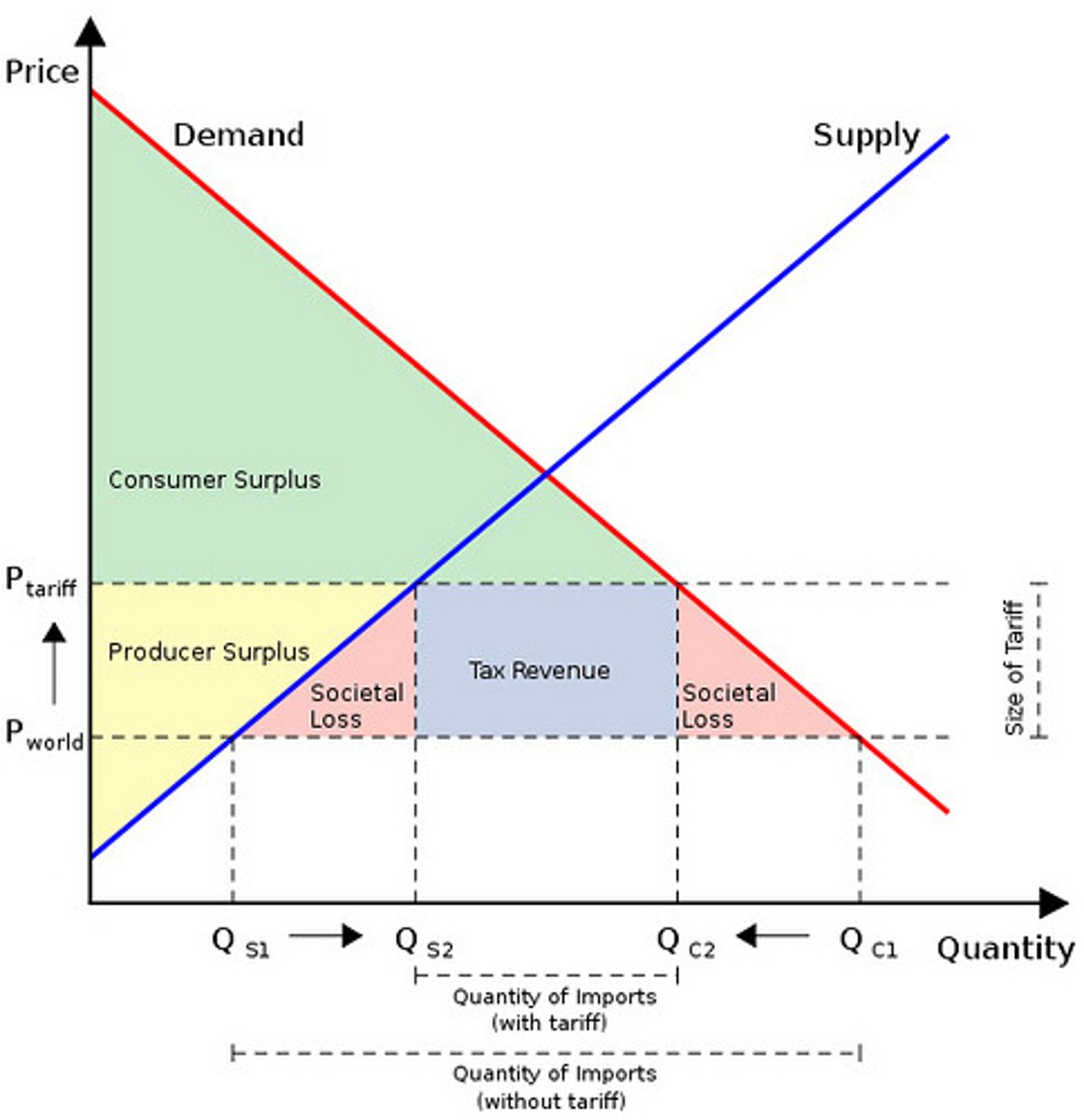
Tariff
Tax levied on imported products, artificially increases the prices of imported products and decreases quantity of imports
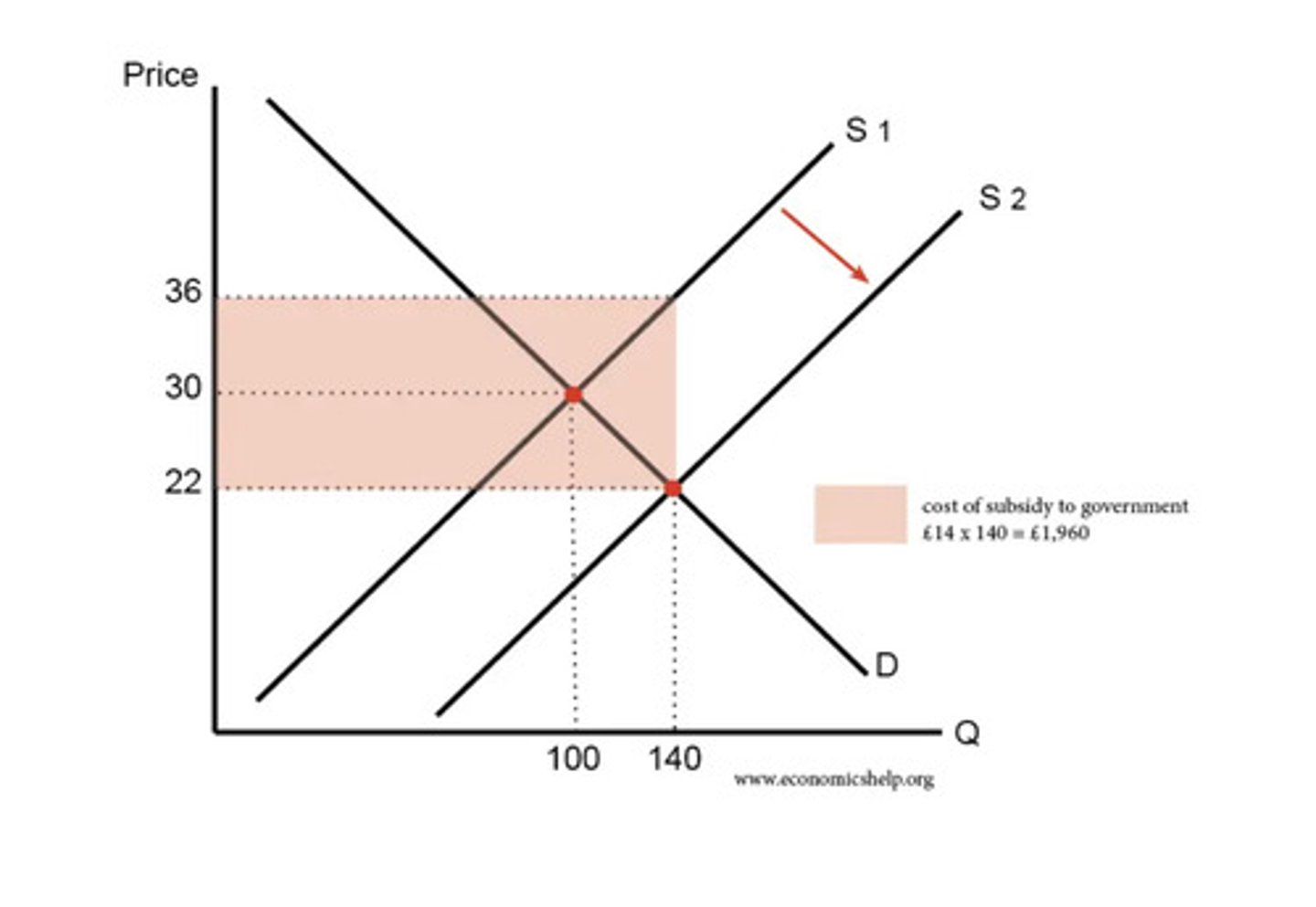
Subsidies
Paid to domestic producers to reduce overall production costs and allow them to be more competitive with international producers
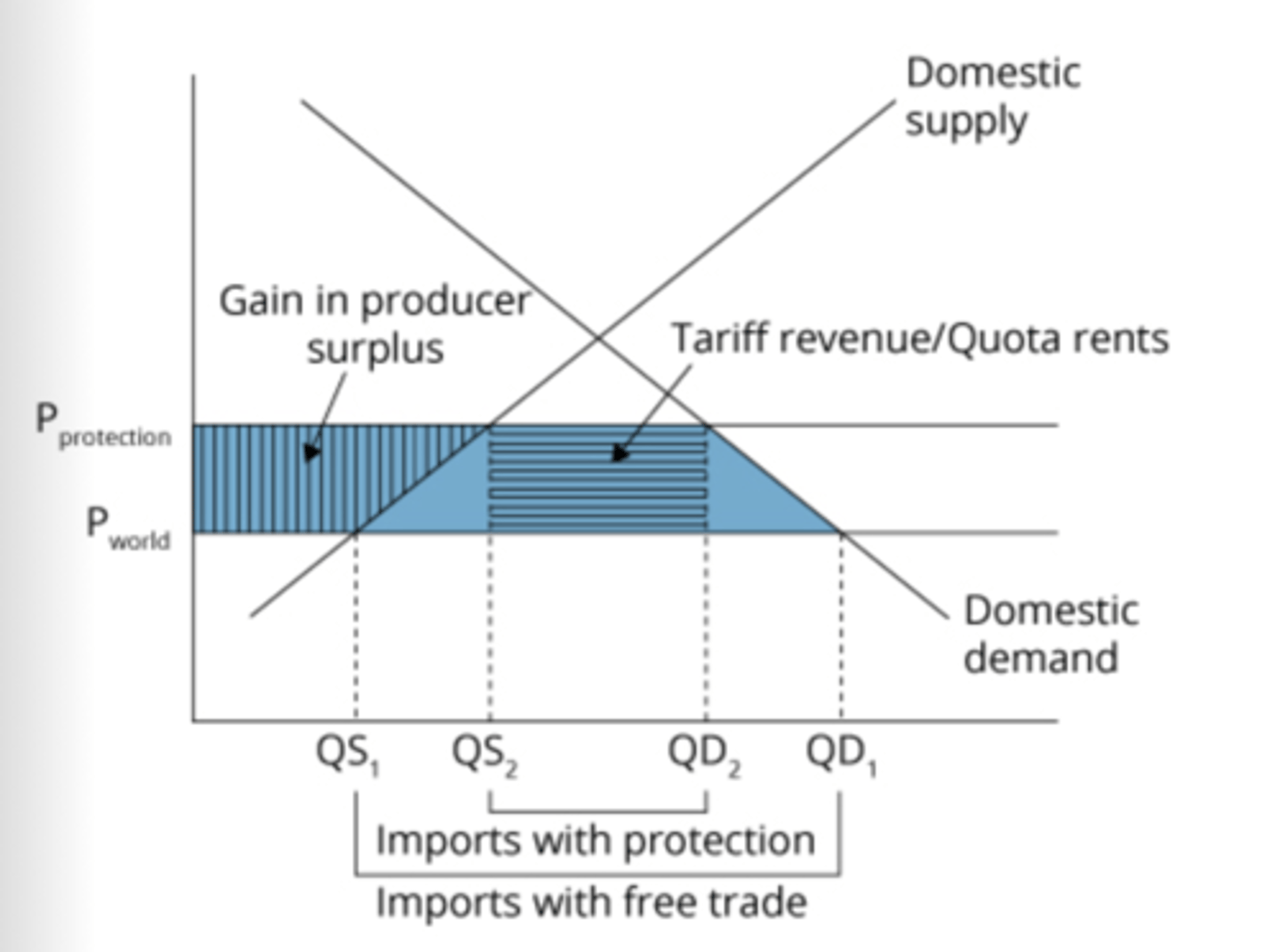
Quotas
Quantitative limit on imports
Impact of Protectionism
- Misallocation of resources to inefficient production
- Reduction in innovation and productivity improvements
- Higher inflation
- Reduced overall growth rate
- Increased unemployment due to lower growth
- Encourages retaliatory protection measures from other countries
- Reduced living standards
- Less reliance on othher countries for supply of vital G&S
Benefits of trade Protection
- Anti-Dumping
- Infant Industry protection
- Diversification of Industry
- National Security(Defense)
- Increased Employment
- Ceap Foreign labour
Impact of Trade liberisation on Firms
Short Term:
- Import competing industries go out of business
- lower tariffs provide lower input costs for firms
Long Run:
- Efficient firms restructure operation to compete on the global stage
Impact of Trade liberisation on Individuals
Short Run:
•Structural unemployment increases as inefficient firms close
- Consumer gain access to wider variety of goods at lower prices
Long Run:
- Job opportunities increase in internationally comperitive sectors
Impact of Trade liberisation on Government
Short Run:
- Cutting tariffs will reduce governemtn revenue
- Reducing protection may have adverse political consequences
- Government spending on structural adjustment programs may increase
Long Run:
- Sustainable economic growth should raise revenue
Balance of Payments
Set of accounts that record financial flows between Australia and rest of world over a period of time
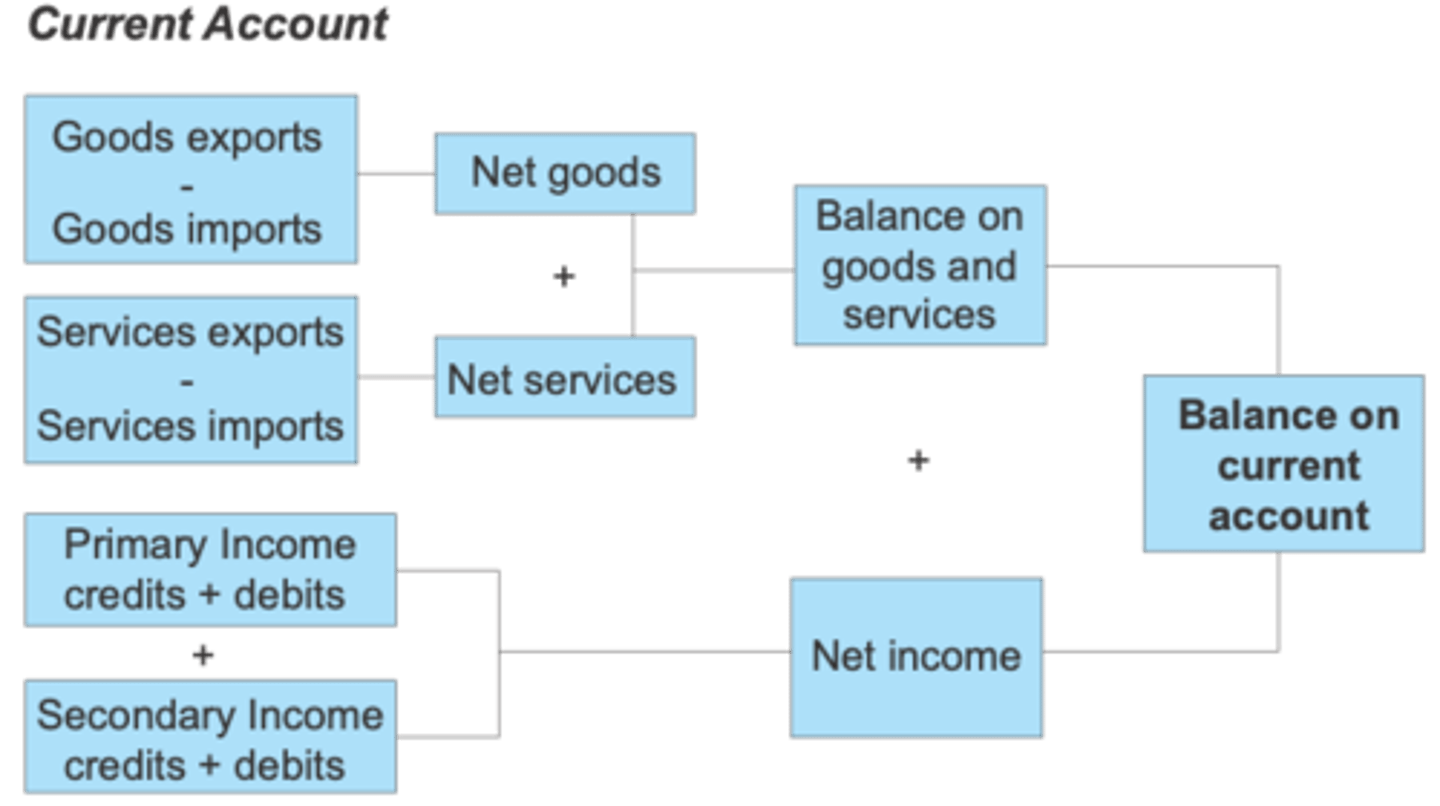
Current Account Structure
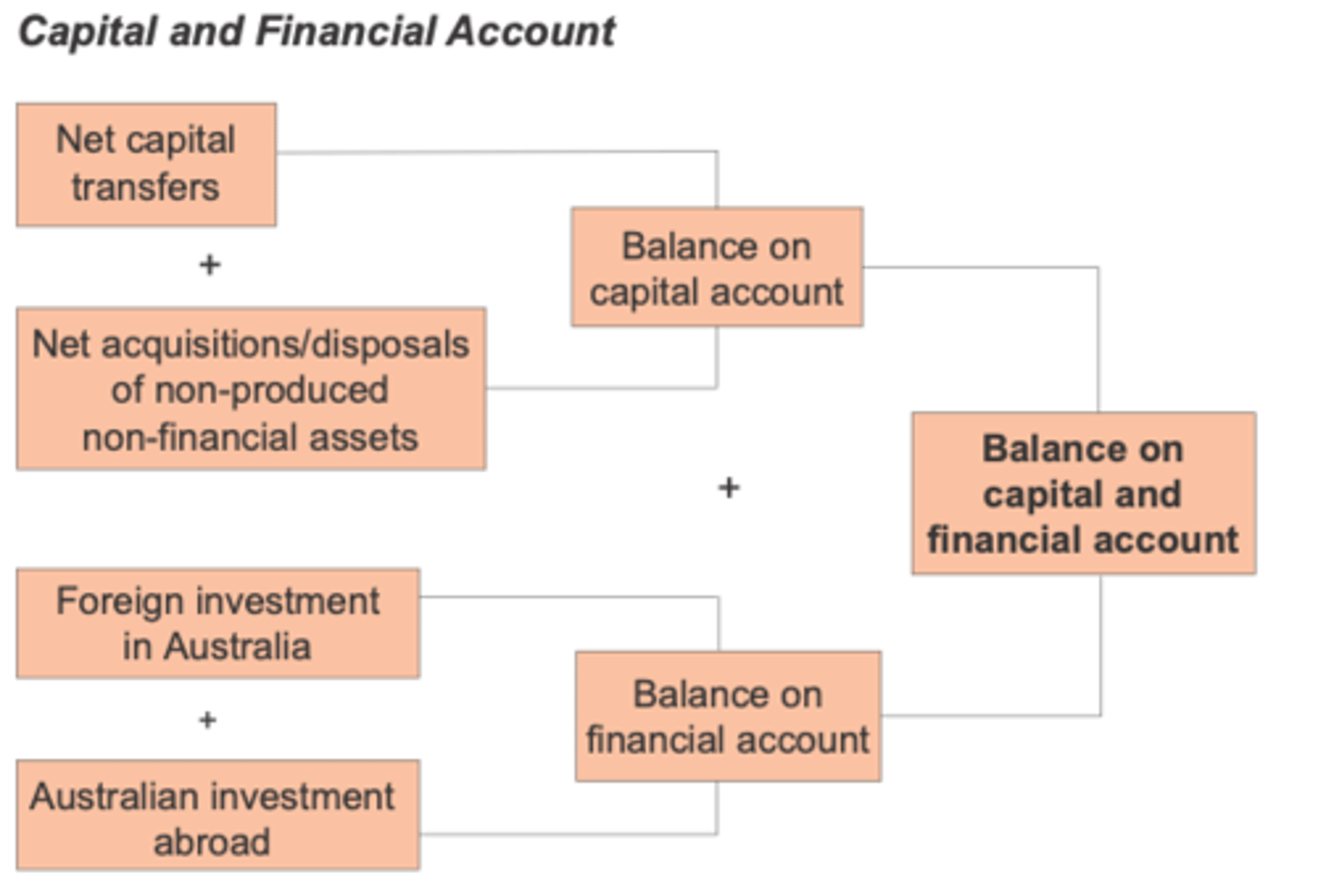
capital and financial account
Current Account
Shows the net amount a country is earning if it is in a surplus, or spending if it is in deficit
capital & financial account structure
Records the net chabge in ownership of foreign assets
Balancing Item/ Net error and omissions
Simply an amount that accounts for any statistical errors and assures that the current and capital accounts sum to zero.
Goods Balance
difference between what Australia receives for exports and what is paid for imports
Services balance
Difference between what Australia earns from exporting services and what is paid for importing services
Net primary income
Income from Australian-owned overseas assets (credits) minus payments on foreign-owned assets in Australia (debits)
Net primary income Includes
- Interest on borrowing
- Investment returns
- Profits and dividends
Net secondary income
No specific good or service is provided in return, recorded in the current account whne they are used for immediate consumption rather than long-term investment
Net secondary income includes...
- Foreign Aid
- Insurance claims
- Pensions
balance on current account
Balance on goods and serices + net income + net current transfers
Major Items in Capital Account
- Mirant transfers
- Foreign Aid
- Non Produced assets
Non Produced Assets
Assets that come into existence other thhan though processes of production, including tangible and intangible assets, along with their ownership transfer costs and major improvement
Major Items in Financial Account
- Direct Investment
- Portfolio Investemnts
- Reserve asstes
- Net errors and Omissions
Direct Investment
Purchase of sale of assets or company takeovers overseas and in Australia. More than 10%
Portfolio Investment
investment that does not involve obtaining a degree of control in a company, Less than 10%
Savings Investment gap
Refers to the difference between domestic savings and investment levels
Reasons for Current Account balance
- Cyclical Factors
- Structural Factors
Cyclical Factors
Temporary and more frequent factors that mainly affect trade balance:
- Domestic Business cycle
- World Business cycle
- Exchange rate
- Commodity prices
- Relative inflation
Structural Factors
More permanent and gradual factors that mainly affect income balance:
- Saving-Investment gap
- Foreign investment
- Foreign liabilities
Terms of Trade
Index which measures the ratio of a country's exports prices to its import prices
Terms of trade (TOT) index formula

Depamd for export factors tat affect ToT
- World Economic growt
- Inflation
- Change in Incomes of tradingg Partners
- Change in World Population Growth
- Change in tastes and preferneces
- Changing World attitudes towards protectionism
Supply for export factors tat affect ToT
- Level of productivity and International Competitiveness
- Chhanges in Taxation policies
- Changes in Wages
- Changes in Technology
- Supply Shock
Demand for import factors tat affect ToT
- Global demand for Products Australia Imports
- Changes in tastes and preferences
- Rate of Population Growth
- Domestic Economic Growth and Incomes
Supply for import factors tat affect ToT
- Change in protectionism Policies
- Changes in Transportation Costs
- Supply Shock
- International Competitiveness
BoP Effects of changes in the ToT
An improvement in the ToT (where export prices rise relative to import prices) increases export revenue. This improves the Balance on Goods and Services (BOGS), potentially reducing the overall current account deficit in the Balance of Payments (BoP).
Exchanage Rate Effects of changes in the ToT
Higher export prices boost demand for Australian exports, leading to increased foreign demand for AUD. This causes the currency to appreciate, making imports cheaper — though exports may become less competitive in the long term if the appreciation is significant.
Level of Economic Acitivty Effects of change in the ToT
Improved ToT increases national income, especially in key export sectors like mining and agriculture. This fuels business investment, boosts employment, raises consumer spending, and leads to overall higher economic growth.
Inflation effect of changes in the ToT
- Higher ToT leads to potential inflationary pressure
- Demand-Pull Inflation
- Cost-Pust Inflation
Significance of Changes in ToT