ocular injury - corneal foreign bodies
 Call Kai
 Learn
Learn Practice Test
 Spaced Repetition
 Match
Match Flashcards
 Knowt Play
1/13

There's no tags or description
Looks like no tags are added yet.
Name | Mastery | Learn | Test | Matching | Spaced | Call with Kai |
|---|
No analytics yet
Send a link to your students to track their progress
14 Terms
what is the most common type of ocular injruy
foreign bodies
counts for 50% of all eye injuries
what factor can cause an injury to be penetrating
high velocity - high speed
even a small object can penetrate if it is moving fast
what do foreign bodies affect
usually affect the superficial cornea
however, can cause a deeper or penetrating injury - with scarring and potential visual impairment.
what do px with a foreign body often have a history of
Patient often gives history of foreign body entering eye wind blown particles (sand, dust, vegetation) high velocity (hammering, grinding, drilling)
what are the predisposing factors of corneal foreign bodies (3)
•Hazardous occupations (e.g. machinery, construction, agriculture)
•DIY and gardening
•Lack of suitable eye protection
describe what a sub tarsal plate FB is and its aetiology (3)
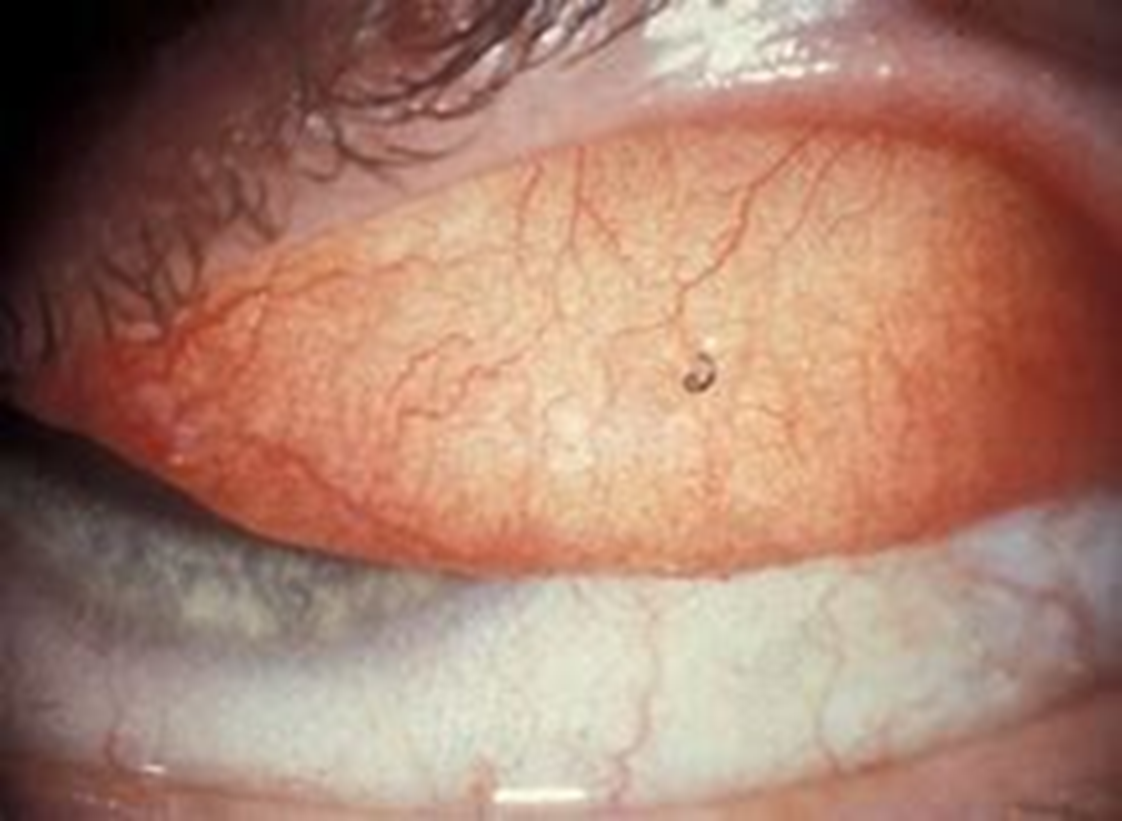
FB trapped underneath the eyelid - under tarsal plate
px may give a history of FB entering the eye
wind blown from an unknown source
what are the sx of sub tarsal plate FB (4)
Foreign Body sensation
acute pain
Lacrimation
Red Eye
what is the significance/effects of a sub tarsal plate FB (2)
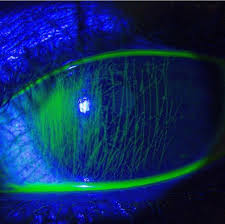
when px blinks the FB will rub against their cornea - vertical linear staining on cornea
can cause corneal abrasion and pain and irritation
what are the sx of a corneal FB (5)
Often unilateral.
Irriation / Foreign Body sensation /pain. Lacrimation.
Blurred Vision.
Red eye.
Photophobia
what are the clinical signs of a corneal injury (6)
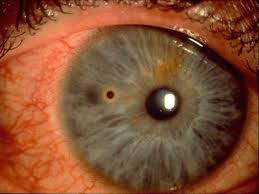
Foreign Body adherent to ocular surface
Linear Corneal Scratches, staining with fluroscein around the foreign body - thin straight scratches on the cornea - vertical
Corneal rust ring from ferrous foreign body - left from iron/metal
Surrounding ring of oedema and infiltrate if long-standing
Subconjunctival haemorrhage maybe present - blood under conjunctiva
Red Eye.
what complications may occur if a FB is not removed (3)
depending on the material:
Iron - may cause rust rings
Risk of infection
Reduced/loss of vision if on the visual axis (within the pupil area)
explain importance of history taking in identification and examination of a FB (4)
determines how the injury was caused
If - High velocity particles – risk of globe penetration
Metallic (ferrous) – rust ring (haemosiderosis).
Vegetative – risk of fungal infection (from plants/gardening)
describe the management of corneal foreign bodies (4)
Penetration into stroma, or presence of rust ring, may result in scarring and potential visual loss - therefore refer to ophthalmologist as emergency (same day)
Loose foreign body can be irrigated away with normal saline
Foreign body on conjunctiva can be removed with a sterile cotton bud - assess depth of corneal foreign body (slit lamp optical section)
Carry out Seidel test to check for corneal perforation.
describe what the Seidel test and how to carry it out (3)
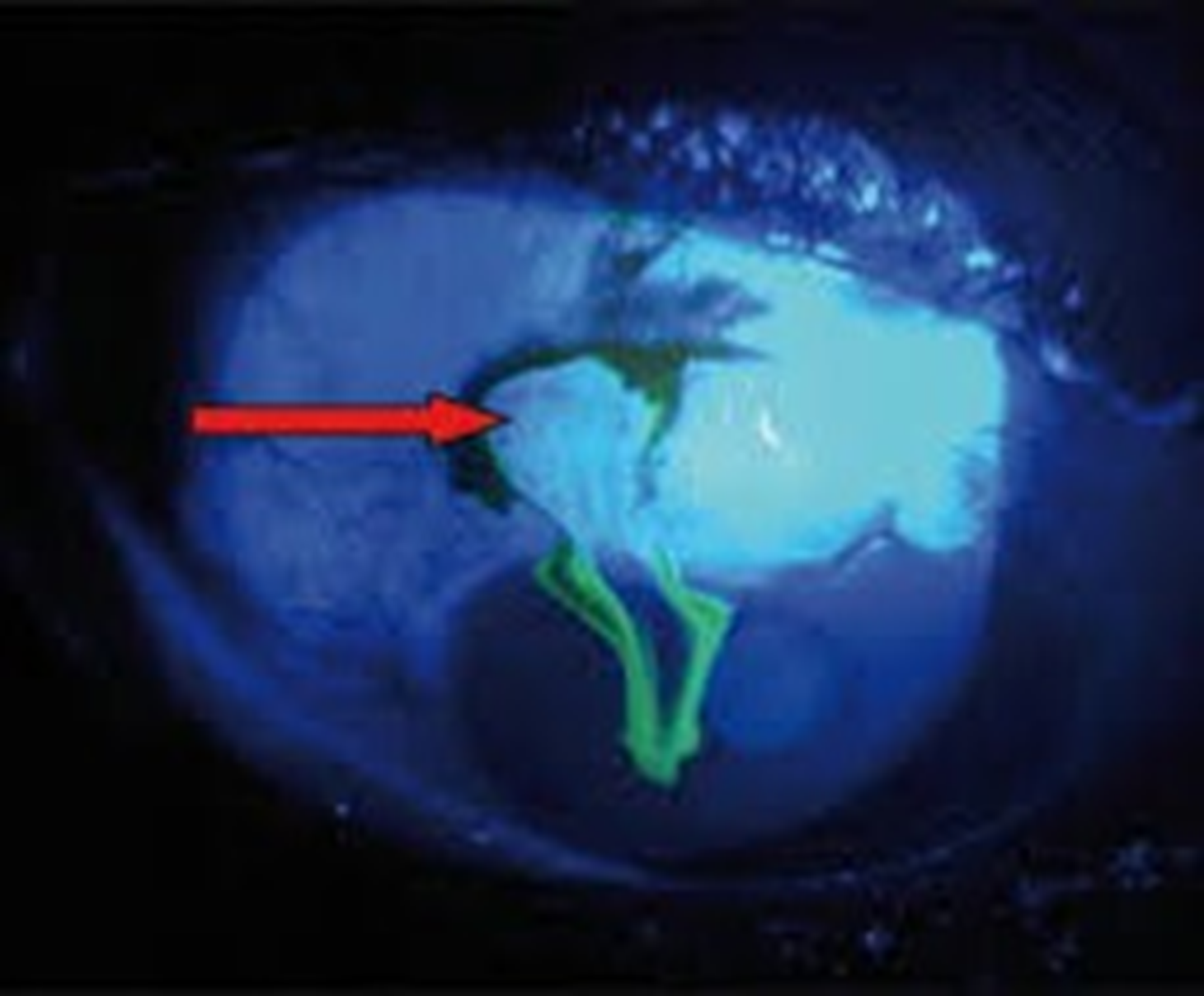
used to check for a leaking wound of the cornea or sclera, meaning there may be a full-thickness injury to the eye wall
detects whether aqueous humour is leaking out of the eye
using FL dye - if there is a leakage - creates a bright stream or washout effect - will not be a uniform green stain - looks like a river washing through green dye = positive Seidel sign