chapter 19: The Circulatory System: Heart
 Call Kai
 Learn
Learn Practice Test
 Spaced Repetition
 Match
Match Flashcards
 Knowt Play
1/30

There's no tags or description
Looks like no tags are added yet.
Name | Mastery | Learn | Test | Matching | Spaced | Call with Kai |
|---|
No analytics yet
Send a link to your students to track their progress
31 Terms
systole
Contraction
diastole
Relaxation
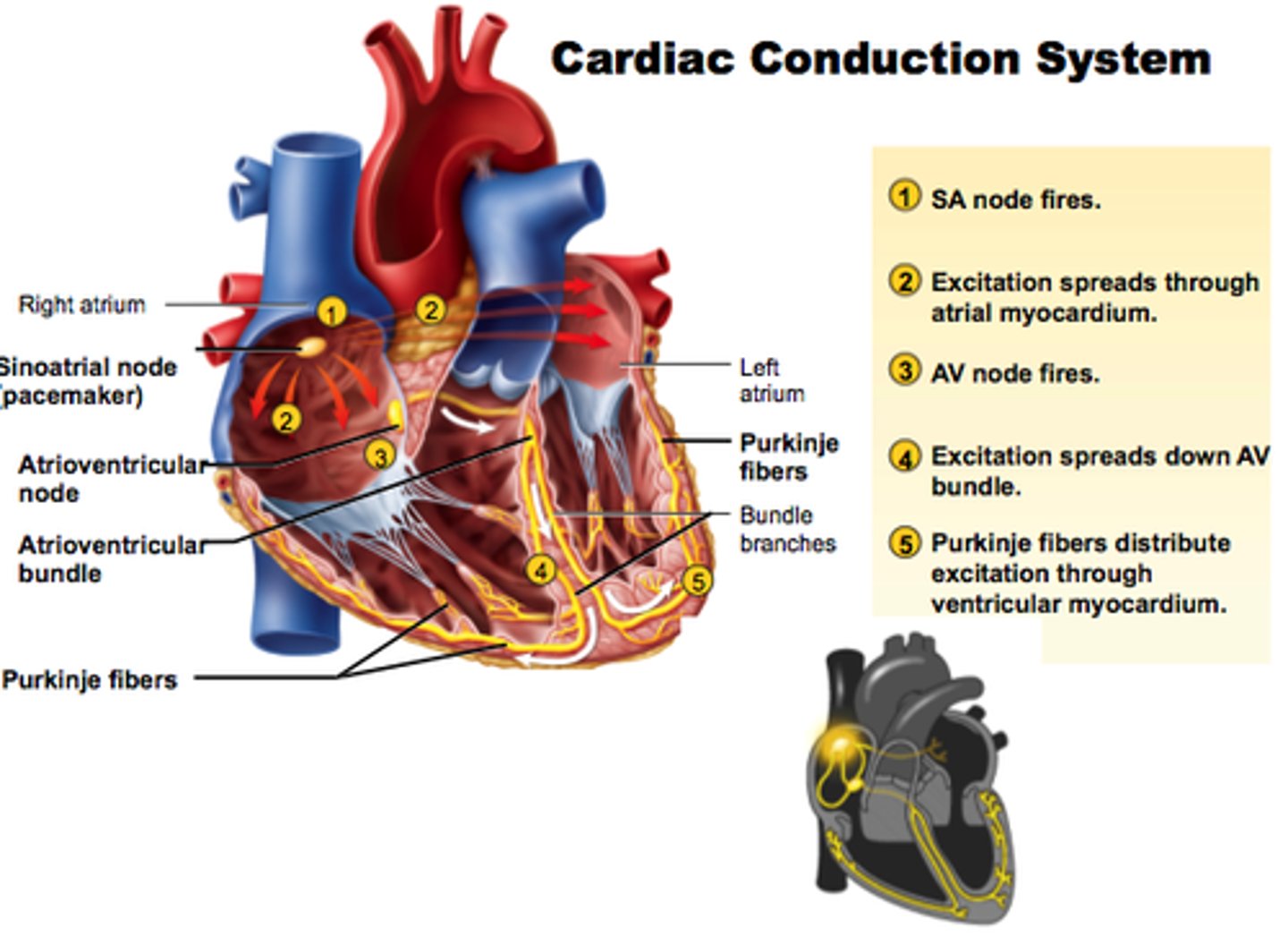
cardiac conduction system
1. SA node fires
2. Excitation spreads through atrial myocardium
3. AV node fires
4. Excitation spreads down AV bundle
5. subendocardial conducting network distribute excitation through ventricular myocardium
what is an arrythmia?
Any deviation from the regular rhythm of the heartbeat driven by the SA node
what are ventricular fibrillations?
uncontrolled, uncoordinated
contractions of the ventricles
what is cardiac output?
The amount of blood ejected by each ventricle in one minute
why do cells in the SA node have an inherent rhythmicity to the production of electrical signals?
The cells of the SA node are autorhythmic.
what are the steps involved when action potentials occur in cardiac muscle cells?
1. Voltage gated Na+ channels open
2. Na+ inflow depolarizes the membrane and triggers the opening of still more Na+ channels, creating a positive feedback cycle and a rapidly rising membrane voltage.
3. Na+ channels close when the cell depolarizes, and the voltage peaks at nearly +30mV
4. Ca2+ entering the prolongs depolarization of membrane, creating a plateau. Plateau falls slightly because of some K+ leakage, but most K+ channels remain closed until the end of the plateau.
5. Ca2+ channels close and Ca2+ is transported out of cell. K+ channels open, and rapid K+ outflow returns membrane to its resting potential.
what is the first step involved when action potentials occur in cardiac muscle cells?
Voltage gated Na+ channels open
what is the second step involved when action potentials occur in cardiac muscle cells?
Na+ inflow depolarizes the membrane and triggers the opening of still more Na+ channels, creating a positive feedback cycle and a rapidly rising membrane voltage.
what is the third step involved when action potentials occur in cardiac muscle cells?
Na+ channels close when the cell depolarizes, and the voltage peaks at nearly +30mV
what is the forth step involved when action potentials occur in cardiac muscle cells?
Ca2+ entering the prolongs depolarization of membrane, creating a plateau. Plateau falls slightly because of some K+ leakage, but most K+ channels remain closed until the end of the plateau.
what is the fifth step involved when action potentials occur in cardiac muscle cells?
Ca2+ channels close and Ca2+ is transported out of cell. K+ channels open, and rapid K+ outflow returns membrane to its resting potential.
what is the significance of the calcium plateau?
causes a longer, more sustained
contraction as opposed to a quick twitch
what is the importance of the long refractory period?
This prevents summation and tetanus of any kind.
sinus rhythm
the normal heartbeat triggered by the SA node. typically, 70-80bpm
P wave
depolarization of the atria
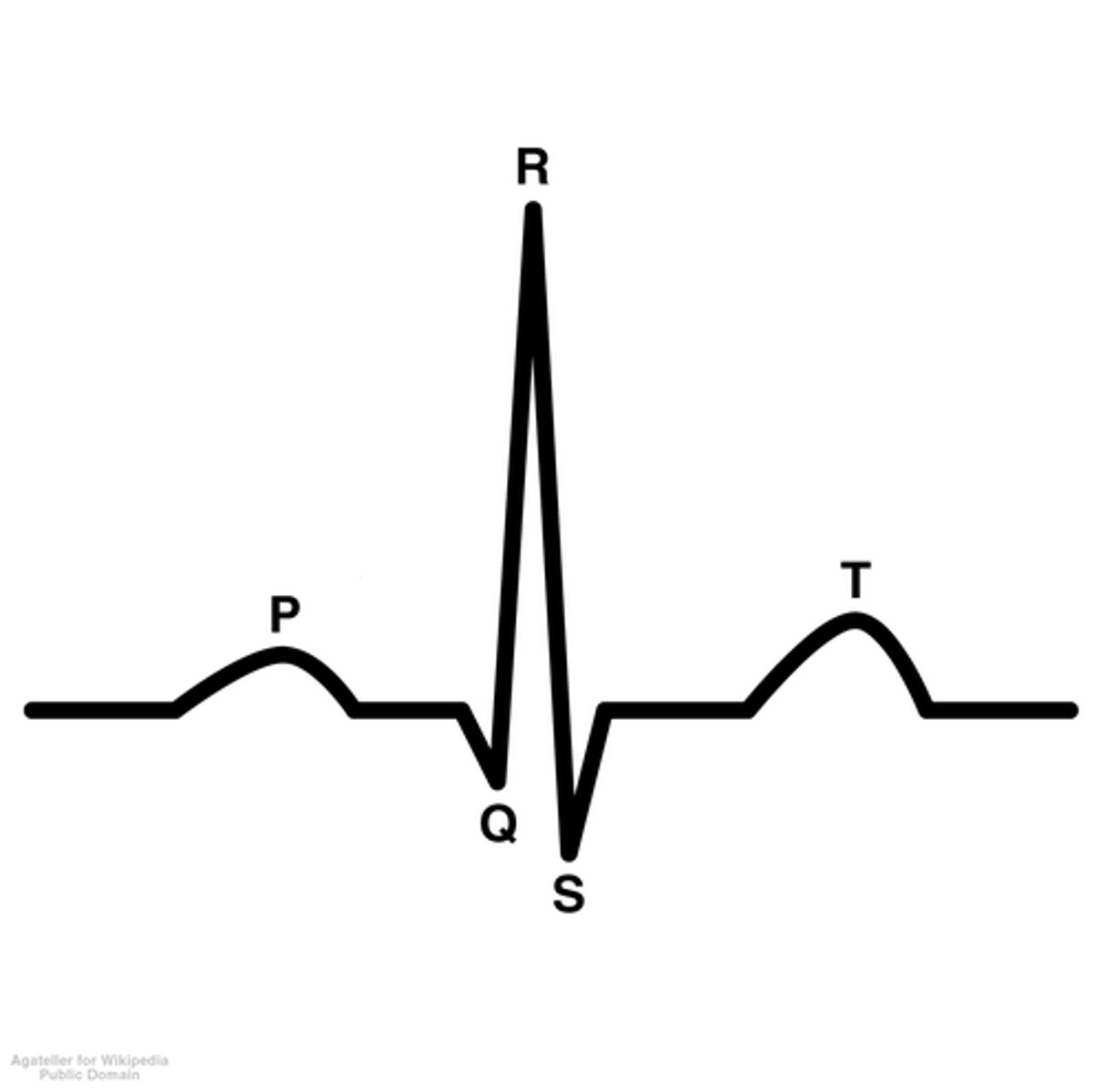
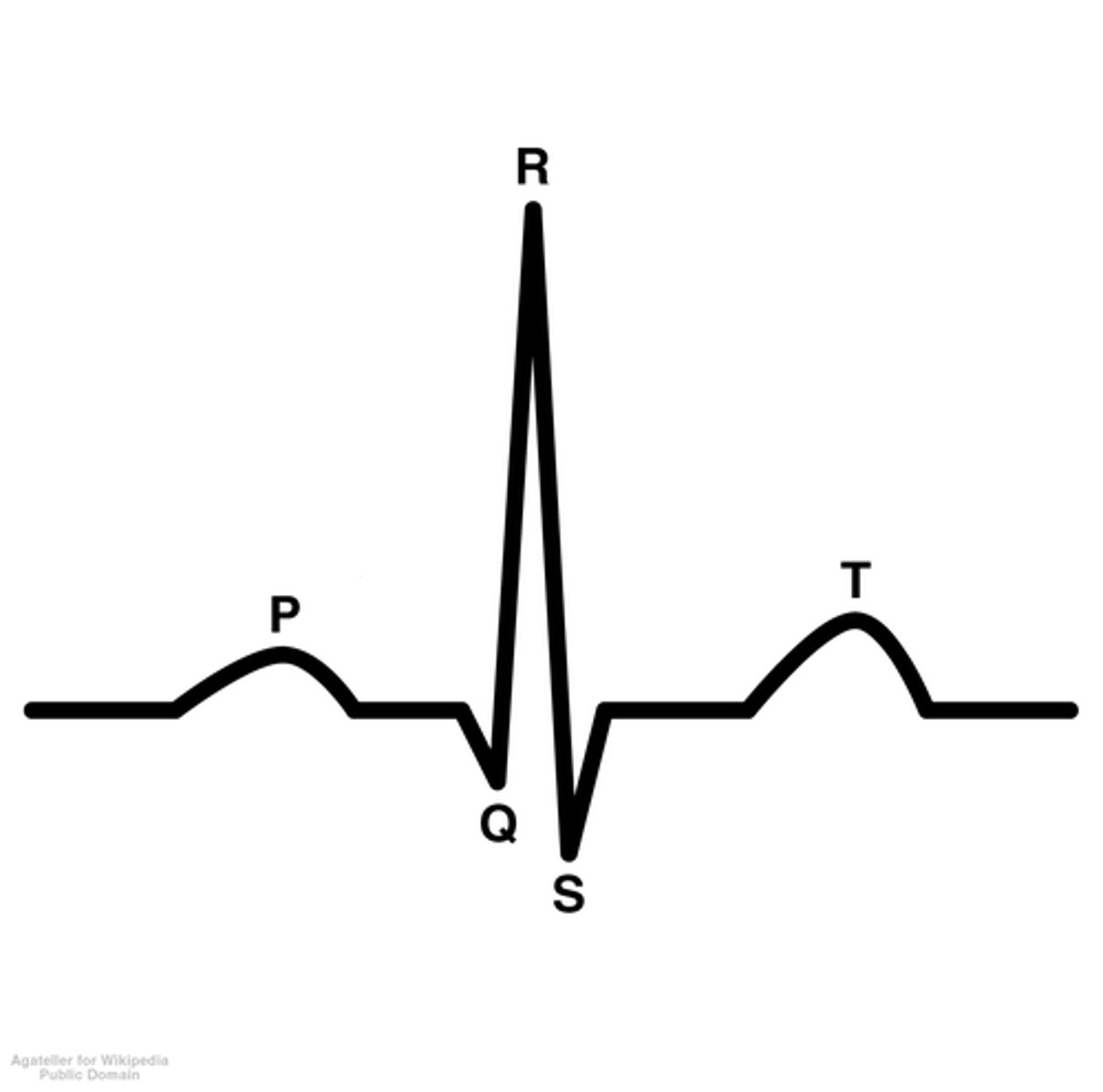
QRS complex
depolarization of the ventricles
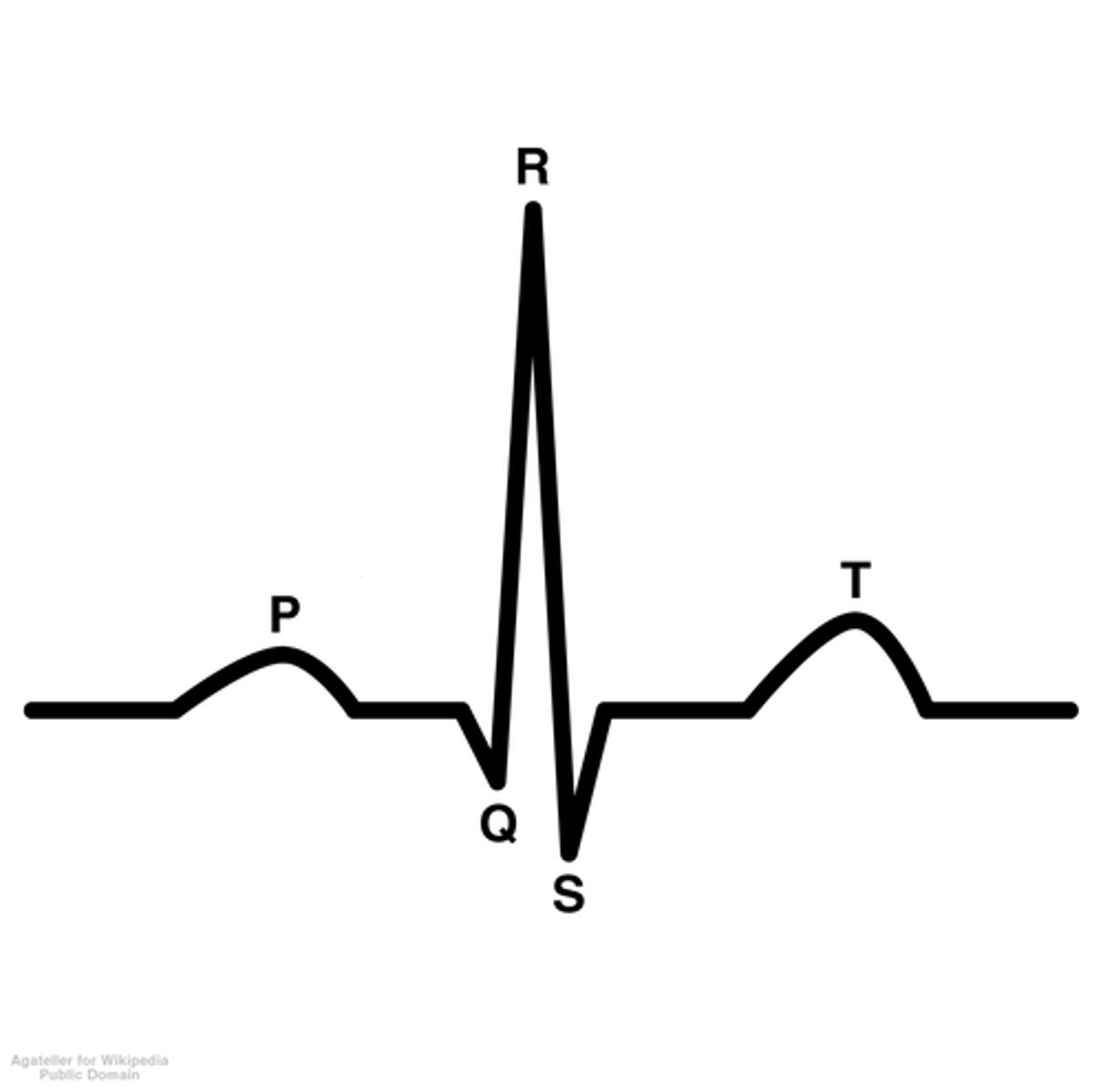
T wave
repolarization of the ventricles.
what are the two factors that affect cardiac output?
Heart Rate and Stroke Volume
what is stroke volume?
Amount of blood pumped per heartbeat.
What is bradycardia?
a persistent resting adult heart rate lower than 60 beats/min.
why might bradycardia occur?
Common during sleep and in endurance-
trained athletes.
what is tachycardia?
a persistent resting adult heart rate above 100 beats/min
Why might tachycardia occur?
due to stress, stimulants, heart
disease, etc.
why might heart rate be altered by the autonomic nervous system?
in response to information received from baroreceptors and/or chemoreceptors (which measure oxygen levels, carbon dioxide levels, and pH).
what is the Frank starling Law?
stroke volume is proportional to end-diastolic volume. In other words, the ventricles will eject as much blood as they receive
how does stroke volume work?
the more that cardiac muscle cells are stretched, the harder they will contract
what might affect stroke volume?
contraction strength
what might affect heart contraction?
Calcium increases the strength
Epinephrine and norepinephrine both increase the
heart rate and the strength of each contraction and therefore the filling of the ventricles.