Gas Laws
 Call Kai
 Learn
Learn Practice Test
 Spaced Repetition
 Match
Match Flashcards
 Knowt Play
1/18

There's no tags or description
Looks like no tags are added yet.
Name | Mastery | Learn | Test | Matching | Spaced | Call with Kai |
|---|
No analytics yet
Send a link to your students to track their progress
19 Terms
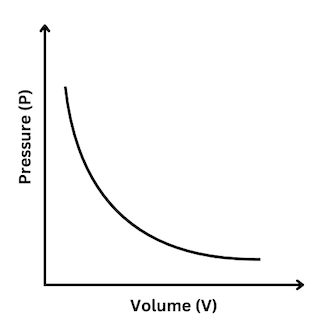
Boyles Law
At a constant temperature, pressure and volume are inversely proportional. (As the pressure of gas increases, the volume decreases)
Math eqn for Boyles Law
P1V1=P2V2
Graph for Boyles Law
Examples of Boyles Law
As you squeeze a balloon, the volume decreases but pressure increases
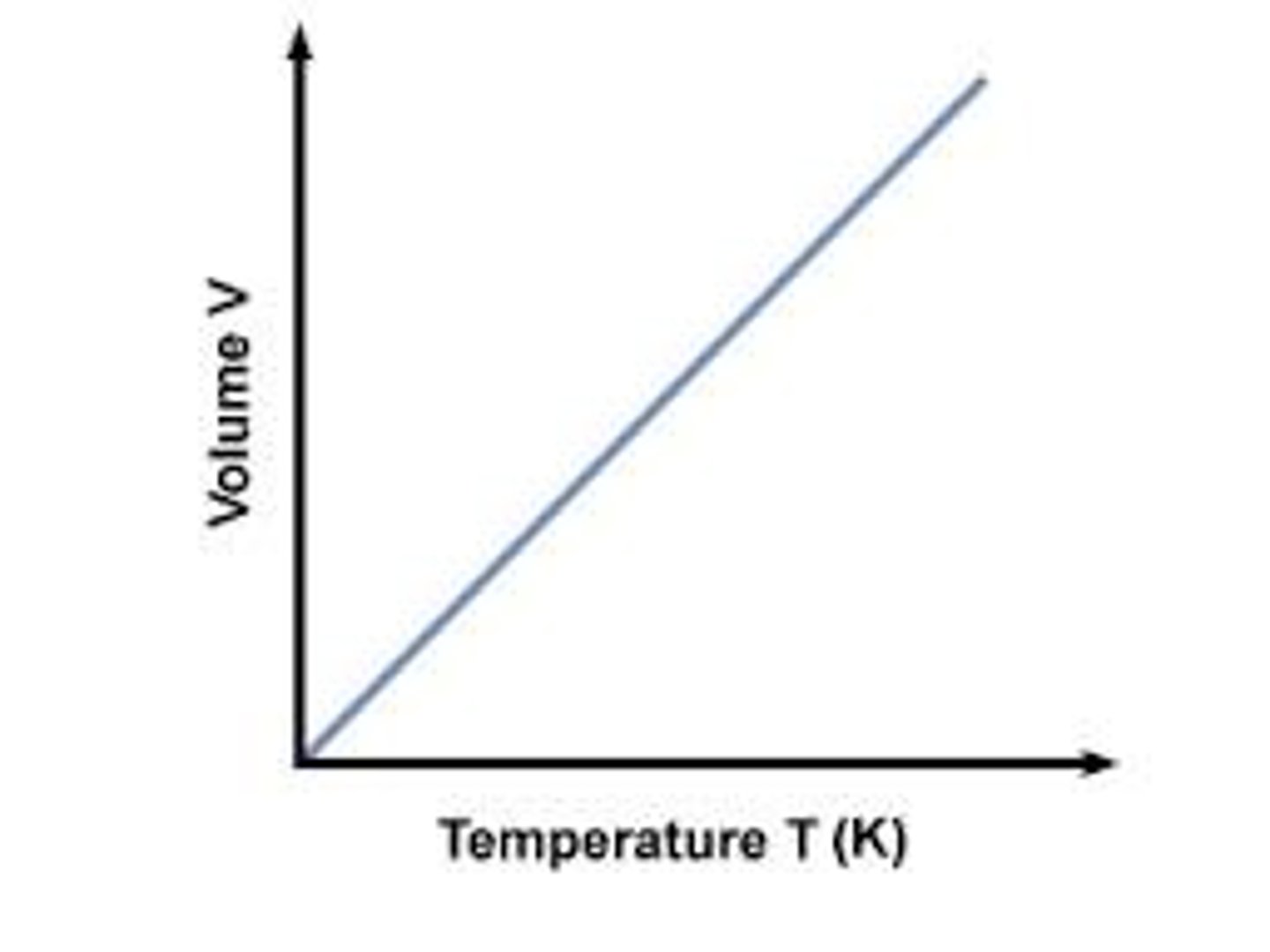
Charles Law
The volume of a gas is directly proportional to its temperature, provided the pressure remains constant
Math Eqn for Charles Law
V1/T1=V2/T2
Charles Law graph
Example of Charles law
When dough is baked, the gas trapped inside heats and expands, so the dough rises
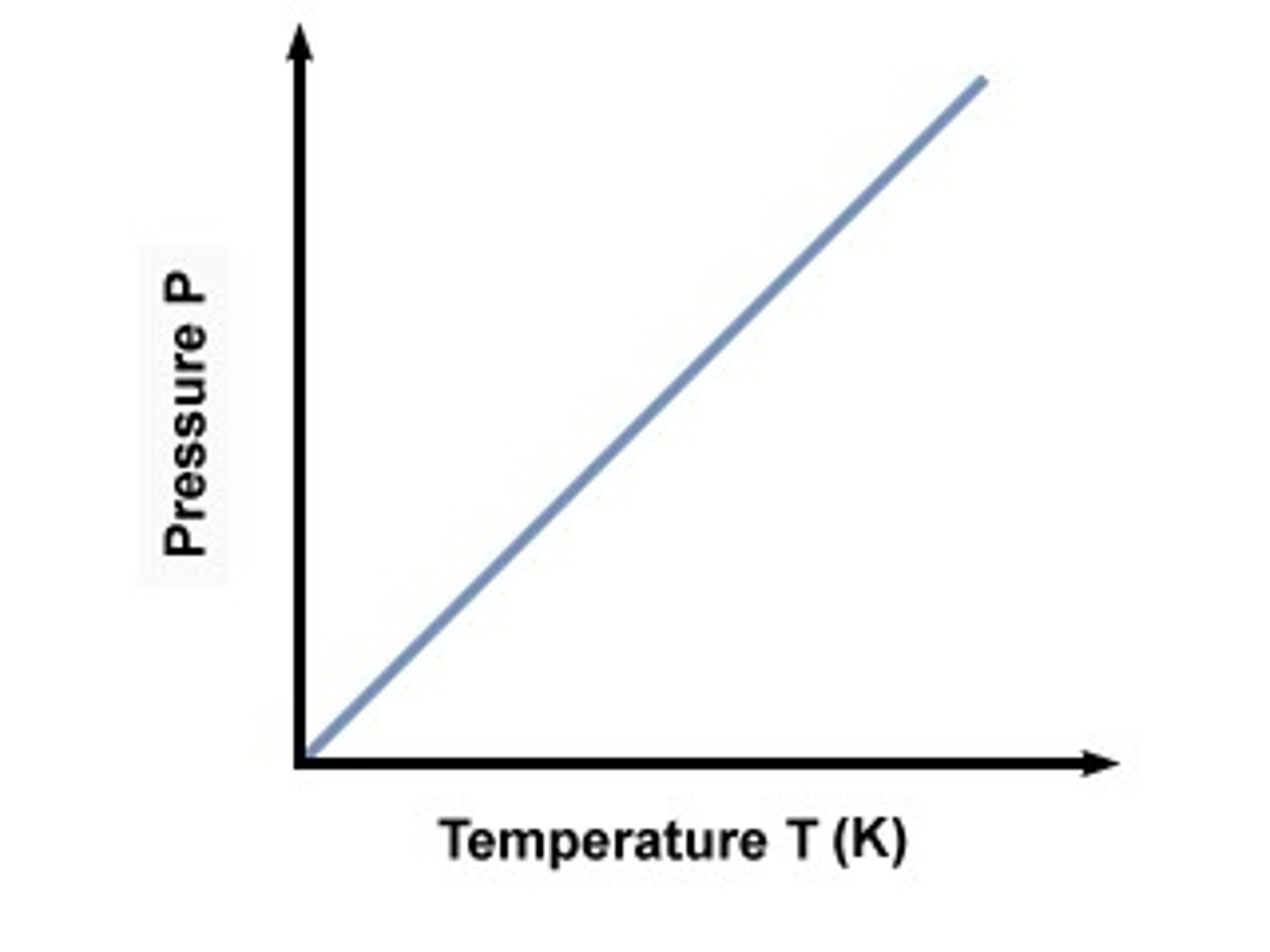
Guy Lussac's Law
The pressure of a gas is directly proportional to its temperature, provided the volume remains constant
Math Eqn For Guy Lussac's Law
P1/T1=P2/T2
Guy Lussac's Law Graph
Guy Lussac's Law example
Tire air pressure drops on a cold day and increases on a hot day
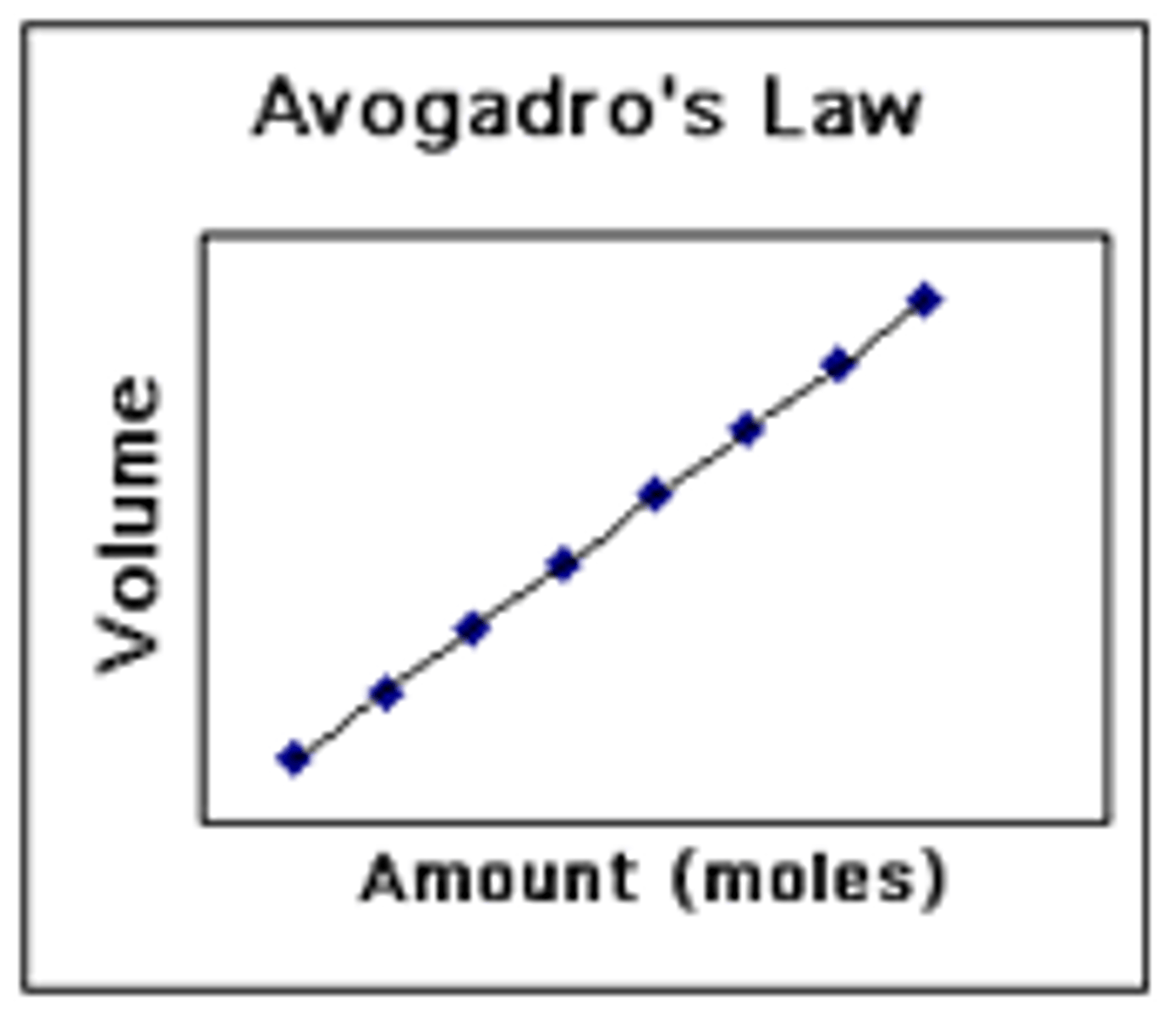
Avogadros Law
The volume of a gas is directly proportional to the number of molecules (or moles) present, assuming the temperature and pressure remain constant
Avogadros Law eqn
V1/n1=V2/n2
Avogadros Law graph
Example of Avogadros Law
When inhaling, you expand your lungs, making room to take in a larger volume of oxygen molecules
Grahams Law
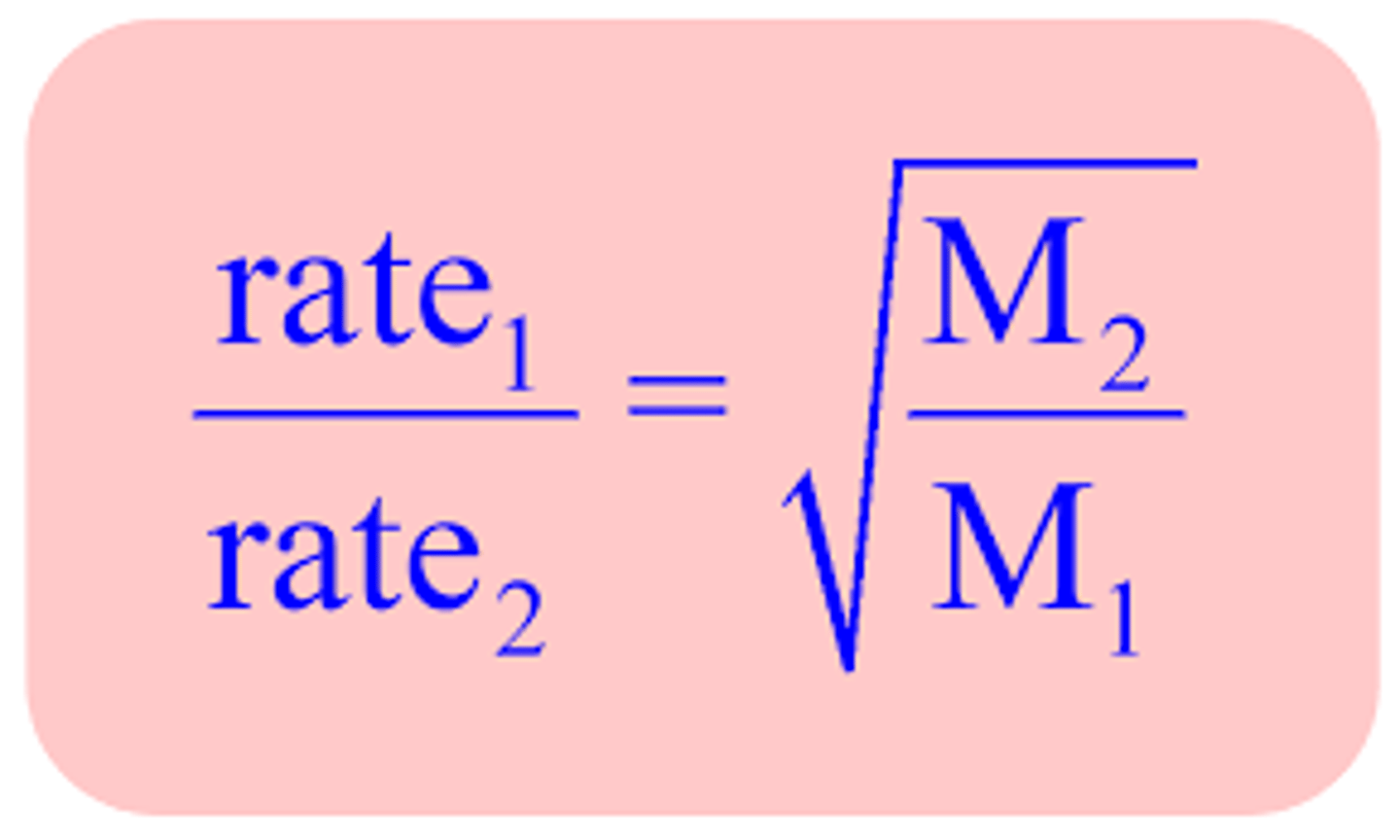
The rate at which a gas diffuses or effuses is inversely proportional to the square root of its molar mass
(under same temp and pressure, lighter gas molecules move faster than heavier ones)
Grahams Law equation
Grahams Law example
Because helium is much lighter, its molecules move faster and it will effuse (escape through the microscopic pores of the rubber) much faster than the heavier nitrogen/oxygen in the air-filled balloon