Last two lectures of criminalistics
 Call Kai
 Learn
Learn Practice Test
 Spaced Repetition
 Match
Match Flashcards
 Knowt Play
1/103

There's no tags or description
Looks like no tags are added yet.
Name | Mastery | Learn | Test | Matching | Spaced | Call with Kai |
|---|
No analytics yet
Send a link to your students to track their progress
104 Terms
Document examination
This applies scientific methods to analyze questioned documents. Examiners use visual inspection and instrumental techniques to authenticate documents, detect alterations, and compare handwriting.
Biomechanics, learned habits, neurological pathways
Handwriting is shaped by…
Letter formation
This handwriting character affects shape, slant, and size. Includes letter connections and stroke direction.
Writing dynamics
This handwriting character affects speed, spacing, pressure, and overall control/dexterity.
Document arrangement
This handwriting character affects margin alignment, line spacing, and page orientation.
Position, fatigue, stress, speed, writing instrument, and surface
Variation in handwriting is influenced by…
Collecting handwriting exemplars
Content requirements:
Include same words/letter combinations
Allows direct comparisons
Non-contamination protocol:
Do NOT show questioned document
Avoid giving spelling/punctuation help
Prevents imitation
Material similarity:
Match pen, ink, and paper
Writing surface affects results
Sufficient quantity:
Collect multiple samples/pages
Captures natural variation
One sample is not enough
Mechanical defects, toner distribution, registration marks
Label the characteristics of printing devices…
__________ _______:
Worn/damaged components
Scratches, spacing issues
Repeatable patterns
_____ __________:
Density variations
Streaking or fading
Cartridge-specific patterns
__________ _____:
Alignment errors
Repeated smudges
Consistent positioning issues
Laser printing
This digital technology creates toner fusion patterns. heat-based printing with distinct microscopic features.
Digital photocopying
This digital technology creates compression artifacts and pixel patterns. Digital noise signatures.
Inkjet printing
This digital technology creates ink droplet patterns, nozzle defects, edge detail, and ink bleeding.
Alterations
(Questioned Documents)
Adding or changing information
Erasures
(Questioned Documents)
Removing writing (mechanical or chemical)
Obliterations
(Questioned Documents)
Covering or hiding original content
Infrared analysis
This technique helps reveal ink differences not visible to the naked eye. Some inks will become transparent while others remain visible. Reveals hidden or altered writing. Can reveal obliterations in questioned documents.
Identifying erasures
How to detect:
Use microscopy
Examine under direct and oblique light
What to look for:
Disturbed or broken fibers
Surface roughness
Loss of original texture
Indentations or irregularities
Damage remains even if writing is overwritten.
Indented writing
Impressions from previous pages. Revealed using electrostatic detection apparatus (ESDA)
Faded ink
Lost or weakened writing. Enhanced with multispectral imaging.
Charred documents
Fire damage materials recovered with careful handling and imaging.
Watermark analysis
Identifies paper source & age. Helps detect authenticity issues.
Image enhancement, multispectral imaging, automated comparison
Label the image processing applications…
_____ ________:
Adjusts contrast & brightness
Removes background noise
Improves text clarity
__________ ______:
Uses multiple wavelengths (UV → IR)
Reveals hidden/altered writing
Different inks respond differently
________ _________:
Compares handwriting features
Measures stroke characteristics
Identifies pattern similarities
Visual spectrophotometry, thin-layer chromatography, raman spectroscopy, hyperspectral imaging, x-ray fluorescence, laser spectroscopy
Label the ink & paper comparative methods…
______ ____________:
Non-destructive
Measures light absorption
Creates ink “spectral profiles”
____-_____ _____________:
Separates ink components
Reveals dye composition
Requires small samples
_____ ________:
Non-destructive
Provides molecular “fingerprints”
Identifies ink composition
_______ ______:
Captures many narrow wavelength bands
Detects ink differences
Reveals subtle alterations
_-___ ___________:
Identifies elemental composition
Analyzes ink & paper
Useful for dating & authenticity
_____ __________:
Provides molecular information
Non-destructive analysis
Identifies material differences
Serology
What is the study of biological fluids such as blood, semen, and saliva? This can place someone at a scene, support or refute statements, and lead to DNA analysis.
Semen
These three tests are presumptive for which biological fluid?
Acid Phosphatase (AP)
Fast, sensitive
Purple color = positive
PSA (p30)
More specific than AP
Still considered screening in forensics
Microscopy (sperm cells)
Can visually identify sperm
Not always present (vasectomy, degradation, etc)
Blood
These four tests contain peroxidase-like activity of hemoglobin and are presumptive for which biological fluid?
Kastle-meyer (phenolphthalein)
Pink color = positive
Luminol
Blue glow in the dark
Great for hidden/cleaned blood
Leucomalachite Green
Green color change
Hemastix
Quick tests trips
Individualizing bloodstains
Step 1:
Is it human? Use species-specific tests (antibodies)
Confirms: Human vs animal
Step 2:
DNA analysis (STR profiling)
Creates a genetic profile
Why DNA is powerful:
Can match blood to one individual
Extremely high accuracy (often 1 in billions)
DNA
This is your genetic blueprint and is found in almost every cell in your body. It carries instructions for growth, development, body function, and reproduction. It is unique to each person (except identical twins) and can identify individuals, link people to evidence, and exclude suspects.
Nuclear DNA
This type of DNA is shaped like a twisted ladder (two strands twisted together). It is made of repeating units (building blocks) of sugar, phosphate, and a base (A, T, C, G). Base pairs in a specific way: A — T and C — G. The order of base pairs is what makes DNA different between people.
Gene
A small section of DNA that contains instructions and codes for a protein or functional RNA.
Think: a single recipe in the instructions manual.
Chromosome
A package of DNA inside the nucleus that holds many genes. Humans have 23 pairs (46 total).
Locus
The specific location/marker of a gene on a chromosome. Like an address for a gene.
Allele
What is the specific value at a locus? We have two at each locus one from mother and one from father. Reported as numbers.
DNA tandem repeats
Short DNA sequences that repeat back-to-back (ex. GATA GATA GATA). The number of repeats varies between people which is useful for DNA identification. We analyze these repeats at specific locations (STR loci). The combination of repeats = a person’s DNA profile.
Short Tandem Repeats (STRs)
These are specific locations on DNA (loci) that contain short repeating sequences (2-6 base pairs). Gold standard for forensic DNA profiling.
Advantages include…
High sensitivity (works well with small or degraded samples)
High discrimination
Rapid analysis
Database compatible
Extraction, quantitation, amplification, separation, and data analysis
What are the steps in forensic DNA analysis?
DNA extraction (purification)
The goal of this step of DNA analysis is to get clean DNA out of cells for analysis.
Step 1: Cell lysis
Breaks open cells
Releases DNA from the nucleus
Step 2: Protein removal
Removes proteins and debris
DNA sticks to a silica membrane
Step 3: DNA precipitation
Washes away impurities
DNA stays attached
Step 4: Elution
Release (collect) purified DNA
DNA is now ready to analyze
DNA Quantitation
This step of DNA analysis measures how much DNA is in a sample. It ensures the right amount of DNA goes into PCR. Too little DNA will cause weak results and too much DNA will cause messy/overloaded data.
Real-time PCR (qPCR)
This DNA quantitation technique measures DNA during amplification in real time. It uses fluorescent probes to track DNA amount. Tells us DNA concentration, human-specific DNA, male DNA (Y-target), degradation level, and presence of inhibitors. Works well with trace samples.
DNA amplification
This step of DNA analysis utilizes the polymerase chain reaction (PCR), an elegant molecular biology technique that produces millions of copies of specific DNA regions.
Thermal cycling process:
Denature (94-96 degrees C) - Heat separates double-stranded DNA into single strands
Anneal (50-65 degrees C) - Primers bind to complementary target sequences
Extend (72 degrees C) - DNA polymerase synthesizes new DNA strands
The cycle repeats 28-32 times, doubling DNA with each cycle.
Primer, template DNA, dNTPs, DNA polymerase, and fluorescent dyes
List the essential PCR components
DNA separation
This DNA analysis technique is the process of sorting amplified DNA fragments by size so they can be identified and used to generate a DNA profile. This is typically done using capillary electrophoresis, where an electric field pulls negatively charged DNA through a polymer-filled capillary, allowing fragments to be separated with high precision based on size.
Injection - DNA is loaded into a thin capillary tube
Separation - Electric field pulls DNA through polymer. Smaller fragments travel faster than larger ones.
Detection - Laser detects fluorescent labels and produces a graph (electropherogram)
STR typing
This process combines DNA extraction, PCR amplification of specific loci, and capillary electrophoresis to separate DNA fragments by size. The resulting pattern of peaks represents the individual’s unique genetic profile at each STR locus examined.
Power of STRs
The true strength of STR analysis lies in multiplexing — simultaneously analyzing multiple STR loci to create highly discriminating DNA profiles that can individualize evidence with extraordinary statistical certainty.
New STR kits
What’s improved?
Analyze more STR loci (15-24+) at once
Use multiple dye colors to detect many fragments simultaneously
Why does this matter?
Higher discrimination
Better mixture interpretation
Works better with degraded DNA
Compatible with national databases (CODIS)
More loci = more power to distinguish between individuals.
Product rule
We combine multiple STR loci to calculate how rare a DNA profile is. STR loci are independent of each other → one locus does not affect another.
Multiply the frequency of each allele/genotype
Ex…
Locus 1: 1 in 10
Locus 2: 1 in 20
Combined: 1 in 200
Combined DNA index system (CODIS)
This is the FBI’s national DNA database system and is used to compare DNA profiles across labs. Convicted offenders, arrestees, crime scene evidence, missing persons, and unidentified remains will all be found in this database.
Amelogenin marker
This is present on both X and Y chromosomes. Included in most STR kits and allows sex determination during DNA profiling.
Sex identification:
Female (XX): 1 peak
Male (XY): 2 peaks
Y-STRs
These STRs are located only on the Y chromosome. They are passed from father to son and target male DNA in mixtures. They are useful when female DNA overwhelms male DNA and can detect small amounts of male DNA. Inherited is unchanged along the paternal line. Males in same family share similar ____ profiles. Useful for kinship and genealogy.
Mitochondrial DNA
This type of DNA is useful when nuclear DNA is degraded or absent. Examples include hair shafts, bones, and teeth. This DNA is not located in the nucleus but contains many copies per cell (easier to recover). It has a circular DNA structure. It is inherited solely from the mother which meals all maternal relatives share the same ____ profile.
Collection of DNA evidence
Clothing collection:
Collect from victim and suspect
Package each item in a separate paper bag
Dried stains:
Use slightly moistened swab (distilled water)
Air dry completely before packaging
Individual packaging:
Package items separately
Paper, NOT plastic
Plastic traps moisture → DNA degradation
Reference samples:
Collect reference samples from known individuals
Buccal swabs or blood samples
Used for comparison
Packaging biological evidence
Air dry first - prevents mold and bacterial growth
Use paper, NOT plastic - plastic traps moisture -→ DNA degradation
Package separately - prevents cross contamination
Seal & label properly - case info, initials, date/time
Maintain chain of custody
Store properly - keep cool, dry, and refrigerate/freeze if needed
Sexual Assault evidence
Common evidence collected:
Swabs:
External genital, vaginal/cervical, rectal
Oral swabs
Bite marks & contact areas
Reference samples:
Buccal swab
Blood sample
Head & pubic hair
Trace evidence:
Fingernail scrapings/clippings
Pubic hair combings
Clothing/items:
All clothing (outer + undergarments)
Bedding or objects from the scene
Toxicology
Urine sample (drug/alcohol testing)
4-6, 48, 72, 3-6
Intact sperm with tails can be detected for _-_ hours.
Seminal acid phosphatase enzyme can persist for <__ hours.
Prostate-specific antigen (PSA) are detectible for <__ hours.
Sperm heads without tails can remain detectable for _-_ days.
Paint
This evidence is a powerful forensic tool, especially in forensic hit-and-run evidence.
Layered structure → unique to each source
Chemical composition → helps identify origin
Can link suspects, vehicles, and crime scenes
Each tiny fragment can provide strong associative evidence
Binder
Holds paint together and helps it stick to surface
Pigment
Provides the color and opacity of paint. Adds durability (e.g. corrosion resistance.
Solvent
Keeps paint liquid for application. Evaporates as paint dries.
Additives
Improves performance (control drying, flow, and UV stability) for paint.
Brushing
A manual paint application for small areas and detail work.
Rollers
A paint application for large, flat surfaces. Has fast coverage.
Spraying
A paint application for smooth, even coating. Good for complex shapes.
Dipping
A full immersion paint application for complete, uniform coverage.
Electrodeposition
A paint application that uses an electrical current for a durable, uniform coating (automotive).
True
True or false
Each paint layer serves a specific function and together they create a unique fingerprint.
Paint collection
Document:
Photograph evidence in place
Record location & context
Use proper tools:
Clean tweezers or scalpel
Avoid contamination
Preserve layer structure
Collection sufficient sample:
Gather enough material
Keep layers intact
Package seperately:
Use rigid containers
Prevent damage or mixing
Color, texture, layer sequence, thickness, decorative elements, pigment analysis, defects
Label the paint parameters:
_____: Visual & instrumental comparison
_______: Surface finish & application patterns
_____ ________: Order of layers (substrate → topcoat)
_________: Individual & total layer thickness
________ ________: Metallic flakes, special pigments
______ _______: Particle size, shape, distribution
_______: Unique imperfections (individualizing features)
Pyrolysis GC
This analysis method is useful for determining binder composition in paint.
IR spectroscopy
This analysis method is useful for determining chemical identification of paint.
Microscopy
This analysis method is a visual screening which examines color, texture, and layer structure of paint.
SEM-EDS
This analysis method is useful for determining elemental composition and analyzes pigments & additives in paint.
Ford Model Pyrogram
This pyrogram shows characteristic peak patterns unique to Ford’s acrylic enamel formulation, with distinct thermal decomposition products.
Chrysler Model Pyrogram
This pyrogram displays peak distribution, demonstrating how manufacturers use proprietary binder formulations that can be distinguished forensically.
Paint collection
Documentation:
Photograph in place (with scale)
Record location & context
Rigid packaging:
Use pillboxes or vials
Prevent crushing, smearing, or contamination
Keep questioned vs known apart
Precise labeling:
Include case #, date, and location
Add collector & description
Cross section
What is this type of paint cut?

Thin peel
What is this type of paint cut?
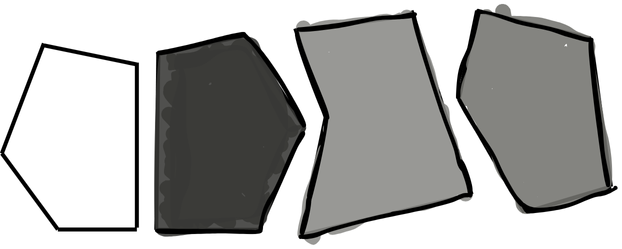
Wedge Cut
What is this type of paint cut?
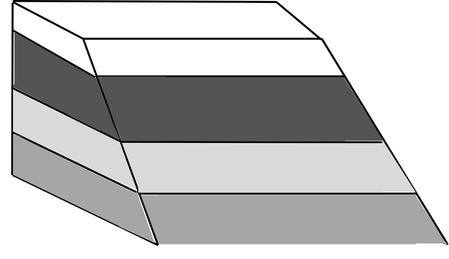
Stair step
What is this type of paint cut?
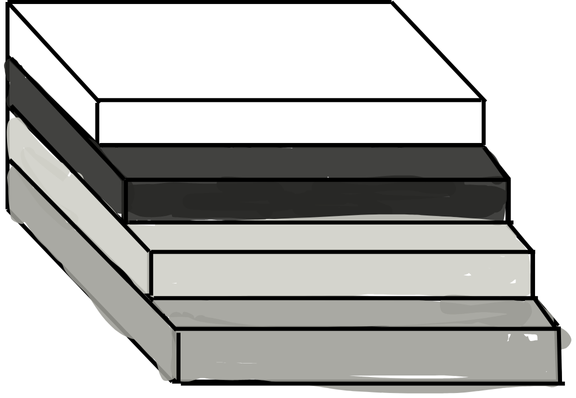
Electrocoat, primer, basecoat, clearcoat
Label the different type of automotive paint types…
__________:
Applied directly to metal
Provides corrosion resistance
______:
Smooths surface imperfections
Prepared for color layers
________:
Provides color & special effects
Contains pigments (metallic flakes)
_________:
Transparent top layer
Adds gloss, UV protection, and scratch resistance
Alkyd resins, acrylic polymers, epoxy resins, polyurethanes
Label the different type of paint binders…
_____ ______:
Common in household paints
Traditional oil-based polymers
_______ ________:
Common in modern automotive paints
Good color retention & weather resistance
_____ ______:
Used in industrial/marine coatings
Strong adhesion & chemical resistance
_____________:
High-performance coatings
Durable, abrasion-resistant (often clearcoats_
Inorganic pigments
These pigments provide opacity & stability. Examples include titanium dioxide (white), iron oxides (yellow, brown), and chromium oxides (green).
Organic pigments
These pigments provide bright, vibrant colors. Examples include azo dyes, phthalocyanines (blue/green), quinacridones (red/violet).
Plasticizers, UV stabilizers, flow agents, anti-settling agents
Label the functional additives (paint)…
_________: flexibility
__ _________: prevent degradation
____ ______: smoother application
____-_______ _____: keep pigments mixed
Issues in paint interpretation
Environmental weathering:
Sunlight, moisture, pollutants alter paint
Causes fading, chalking, oxidation
Must compare aged vs fresh samples carefully
Repair and repaint complexity:
Adds non-original layers
May not match factory finish
Can complication or help comparison
Contamination concerns:
Dirt, oil, rust can obscure color/layers
May interfere with analysis
Cleaning must preserve original structure
Paint data query (PDQ)
This database contains over 70,000 automotive paint samples, helping investigators narrow vehicle possibilites based on layer structure and composition.
Soil
This evidence is common at crime scenes and easily transferred between people, objects, and locations. It can be distinguished by color, texture, and composition. Even simple side-by-side comparison can differentiate from different locations. Provides valuable trace evidence linking suspects to scenes.
Points of comparison for soil
Minerals (type and abundance)
Organic material (plant remains, microbes)
Grain size and texture
Color & layering
Artificial debris (glass, fibers, pollutants)
Sandy, clay, silt, loam
Label the soil types…
_____ soil:
Large particles, gritty texture
High drainage, low nutrient retention
____ soil:
Very fine particles, smooth texture
Poor drainage, high nutrient retention
____ soil:
Medium particles, smooth feel
Moderate drainage, fertile
____ soils:
Mix of sand, silt, and clay
Balanced properties (ideal soil)
Granular
This soil structure…
Small rounded pieces
Common at surface
Good for plant growth
High permeability
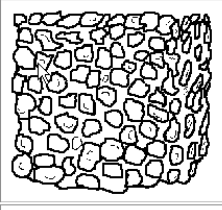
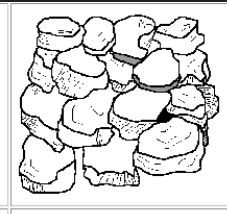
Blocky
This soil structure…
Irregular blocks
Found in subsoil
Moderate drainage
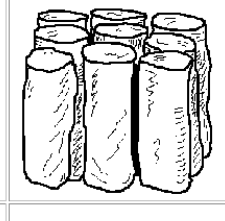
Prismatic
This soil structure…
Vertical columns
Clay-rich soils
Water moves slowly
Moderate permeability
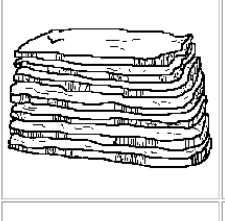
Platy
This soil structure…
Thin, flat layers
Compacted soils
Poor water movement
NIST guidelines for soil analysis
Documentation:
Record how & where soil was collected
Maintain chain of custody
Analysis protocols:
Use standardized methods & instruments
Examples: microscopy, chemical tests
Comparison standards:
Compare to known/reference samples
Use statistics to support conclusions
Inorganic minerals
This part of soil gives it its structure. Ex… sand, quartz, feldspar
Organic matter
This part of soil affects colors & nutrients. Ex… decaying plants & animals
Microorganisms
This part of soil can link it to a location. Ex… bacteria, fungi
Human (anthropogenic) debris
This part of soil contains strong forensic clues. Ex… glass, paint, fibers
Soil reference samples
Collect from multiple locations
Include the exact site + surrounding area (~100ft)
Used for comparison late
DO NOT remove soil from items
Package items as is
Munsell Color System
This is a standardized way to describe soil color. It removes subjective descriptions “brownish”.
Hue:
Red, yellow, brown
EX: 10YR, 5R
Value:
How light or dark?
Scale: 0=black → 10=white
Chroma:
How intense?
Dull → bright color
Low = grayish, high = vivid
Stereomicroscopy (soil)
10-50x magnification
Examines color differences, particle size, and visible debris (glass, paint)