Quick sheet Bio
 Call Kai
 Learn
Learn Practice Test
 Spaced Repetition
 Match
Match Flashcards
 Knowt Play
1/159

There's no tags or description
Looks like no tags are added yet.
Name | Mastery | Learn | Test | Matching | Spaced | Call with Kai |
|---|
No analytics yet
Send a link to your students to track their progress
160 Terms
decreased ATP/mitochondria/oxygen →
glycolysis
adaptive immunity -
B and T cells
branched
(1,6)
straight
(1,4)
nucleus:
Contains DNA
Controls transcription of genes
creating docking sites for the recruitment of transcription factors such as STAT1 that bind DNA through interactions with the phosphodiester backbone.
a positive amino acid would bind here
(PLP) and its isoform DM20,
isoform - look for something about splicing
PLP is a 276-residue monomeric polypeptide that is stabilized by two disulfide bonds
A purified sample of PLP is visualized using SDS-PAGE performed under reducing conditions. How many bands of different molecular weights are expected to appear on the gel?
1 - because it is monomeric
myelin -
increase the conduction speed of action potentials along an axon
Transcription =
gene expression
If transcription decreases →
mRNA decreases → protein decreases
Genes are transcribed, not
replicated, for expression
DNA and RNA nucleotides are connected by
phosphodiester bonds
highly proliferative and divide frequently
Gastrointestinal epithelial cells
If mutant transcript goes up, wild-type transcript must go
down
Transcription factors -
bind DNA, contain binding site in their promoter region.
Hydrophobic residues-
diffuse directly into membrane
No ribosomes
Makes lipids, phospholipids, and steroid hormones
Detoxifies drugs/toxins (especially in liver cells)
Stores Ca²⁺ (important in muscle cells)
smooth ER
Has ribosomes attached
Makes proteins
Begins protein folding/modification
Sends proteins to the Golgi
rough ER
smooth ER
lipids/steroids (Aldosterone, cortisol, testosterone sex hormones (estrogen/testosterone). diffuse directly into cell membrane,
rough ER
ribosomes attached,
Ribosomes attached, protein synthesis, folding, modification
talking about rough ER
Lipid synthesis, steroid hormones, detoxification, Ca²⁺ storage
talking about smooth ER
cleavage -
endomembrane system
Antibodies →
rough ER
Detoxification/alcohol metabolism →
smooth ER
Packaging/shipping →
golgi
Calcium storage →
smooth ER
Kinase -
phosphorylation; add phosphatase
facilitates proper protein folding and inhibits the formation of nonfunctional protein aggregates
chaperone
formation of vesicles for intracellular trafficking
clatherin
intron/exon
look for something about splicing
Neutral amino acid means
NO charge
Mature mRNA - contains
signal sequence
only step where nothing is oxidized or reduced
chemiosmosis
Ion concentration- involves
Na+K+ ATPase. catalyzes ion transport through the liposome
Cholesterol rich domains -
lipid rafts
Oligosaccharides -
carbohydrates, sugars
Filtration is what type of transport
passive transport
Na/K/ATPase is what type of transport
primary active transport
Digestion, phagocytosis, degradative enzymes →
lysosomes
Hydrogen peroxide, very long FA oxidation →
peroxisome
symporter/antipoter -
secondary active transport
Erythrocytes (RBC)
have no DNA, no nucleus
Gene transcription →
nucleus
Ribosome assembly →
Nucleolus
Albumin →
Major source of oncotic pressure
totipotent -
pluripotent -
multipotent -
totipotent - zygote
pluripotent - embryonic stem cells
multipotent - adult stem cell
DNA binding
Promoter
Enhancer
Gene regulation
Transcription activation/repression
transcription factors
compeitive inhibition crosses on the x axis
peptidases -
digest proteins
nucleases
digest nucleotides
carbohydrases
digest carbohydrates
lipases
digest fats (triglycerides)
adding phosphate/phosphorylation causes
a negative charge, mimics acidic amino acid
phagocytotic innate immune cells specific to the brain.
microglia
The presence of which type of intercellular connections between endothelial cells of brain capillaries results in the blood–brain barrier?
tight junctions
colon
water absorption
As chloride ions have a negative charge, the entry of chloride ions into the cell will make the cytoplasm
more negative thus hyperpolarizing the cell membrane.
amber codon-
stop codon
a control
changes ONE VARIABLE
responsible for the absorption of nutrients from the diet
small intestine
Once nutrients are absorbed, they are transported to the liver via the
hepatic portal vein
Researchers have noted that chloramphenicol (a commonly used antibiotic) is becoming less effective in treating typhoid fever.
Why would an antibiotic stop working?
The bacteria evolved resistance. → look for question choice about resistance
something needs and acidic environment to work →
endosome
microfilament -
actin
melanosomes move along microtubules produced by and radiating from,
centrosome
proteins positioned at the centromere of a chromosome.
kinetechores
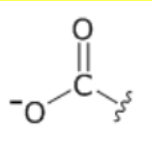
carboxylase
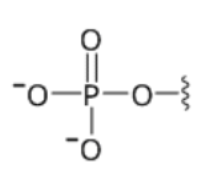
phosphate
Ca²⁺
muscle contraction
Caspases
apoptosis
Operon =
prokaryotes
One promoter →
one mRNA → many proteins.
Protein in urine =
glomerular damage
Frameshift mutations often
preserve the N-terminus but alter the C-terminus.
Location
Cytosol
Purpose
Glucose → Pyruvate
Rate-Limiting Enzyme
PFK-1 (Phosphofructokinase-1)
Product
2 Pyruvate
2 ATP (net)
2 NADH
Regulation
Activated by: AMP, ADP, Fructose-2,6-bisphosphate
Inhibited by: ATP
glycolysis
Location
Liver
Kidney
Purpose
Make glucose
Rate-Limiting Enzyme
Fructose-1,6-bisphosphatase
Product
Glucose
Activated By
ATP
Citrate
Inhibited By
AMP
Fructose-2,6-bisphosphate
gluconeogenesis
Location
Liver
Muscle
Purpose
Store glucose
Rate-Limiting Enzyme
Glycogen Synthase and branching enzyme
Product
Glycogen
Stimulated By
Insulin
Glycogenesis
Location
Liver
Muscle
Purpose
Break glycogen
Rate-Limiting Enzyme
Glycogen Phosphorylase
Product
Glucose-1-phosphate
Stimulated By
Glucagon
Epinephrine
Glycogenolysis
Location
Cytosol
Purpose
Generate reducing power
Rate-Limiting Enzyme
Glucose-6-phosphate dehydrogenase (G6PD)
Products
NADPH
Ribose-5-phosphate
pentose phosphate pathway
Location
Mitochondria
Purpose
Links glycolysis to TCA
Enzyme
Pyruvate Dehydrogenase
Product
Pyruvate →
Acetyl-CoA
Produces:
NADH
CO₂
Pyruvate Dehydrogenase Complex
Location
Mitochondrial matrix
Purpose
Generate electron carriers
Rate-Limiting Enzyme
Isocitrate Dehydrogenase
Products (per Acetyl-CoA)
3 NADH
1 FADH₂
1 GTP
2 CO₂
Citric Acid Cycle (TCA/Krebs)
Location
Inner mitochondrial membrane
Purpose
Make ATP
Rate-Limiting Enzyme
No single major one for MCAT
Final Electron Acceptor
Oxygen
Product
ATP
Water
Electron Transport Chain
Location
Cytosol
Purpose
Make fatty acids
Rate-Limiting Enzyme
Acetyl-CoA Carboxylase
Product
Malonyl-CoA
Fatty acids
Activated By
Insulin
Inhibited By
Glucagon
fatty acid synthesis
Location
Mitochondria
Rate-Limiting Step
CPT-1 (Carnitine Palmitoyltransferase I)
Product
Acetyl-CoA
NADH
FADH₂
Fatty Acid β-Oxidation
fat → acetylcoa→
ketones
Location
Liver mitochondria
Purpose
Make ketones
Rate-Limiting Enzyme
HMG-CoA Synthase
Products
Acetoacetate
β-Hydroxybutyrate
Acetone
Occurs During
Starvation
Fasting
Low glucose
ketogenesis
Location
Cytosol & Smooth ER
Rate-Limiting Enzyme
HMG-CoA Reductase
Product
Cholesterol
Drug
Statins inhibit this enzyme
MCAT Shortcut
Reductase = cholesterol
cholesterol synthesis
Location
Liver
Purpose
Remove ammonia
Rate-Limiting Enzyme
Carbamoyl Phosphate Synthetase I
Product
Urea
urea cycle
Location
Cytosol
Rate-Limiting Enzyme
Glutamine-PRPP Amidotransferase
Products
Adenine
Guanine
purine synthesis
replication and transcription happens
in nucleus
transcription happens on
ribosomes
iron-containing molecule that binds oxygen and electrons.
heme
cAMP, cGMP, IP₃DAG, Ca²⁺
G Protein-Coupled Receptor- secondary messengers
Aquaporins
collecting duct
Pseudostratified columnar epithelium-
respiratory tract
a loose connective tissue that binds epithelium to its underlying structures
aerolar tissue
makes up the bladder and urinary tract, can be stretched
transitional epithelium