Bio 222 Week 7: Animal Nutrient Homeostasis
 Call Kai
 Learn
Learn Practice Test
 Spaced Repetition
 Match
Match Flashcards
 Knowt Play
1/40

There's no tags or description
Looks like no tags are added yet.
Name | Mastery | Learn | Test | Matching | Spaced | Call with Kai |
|---|
No analytics yet
Send a link to your students to track their progress
41 Terms
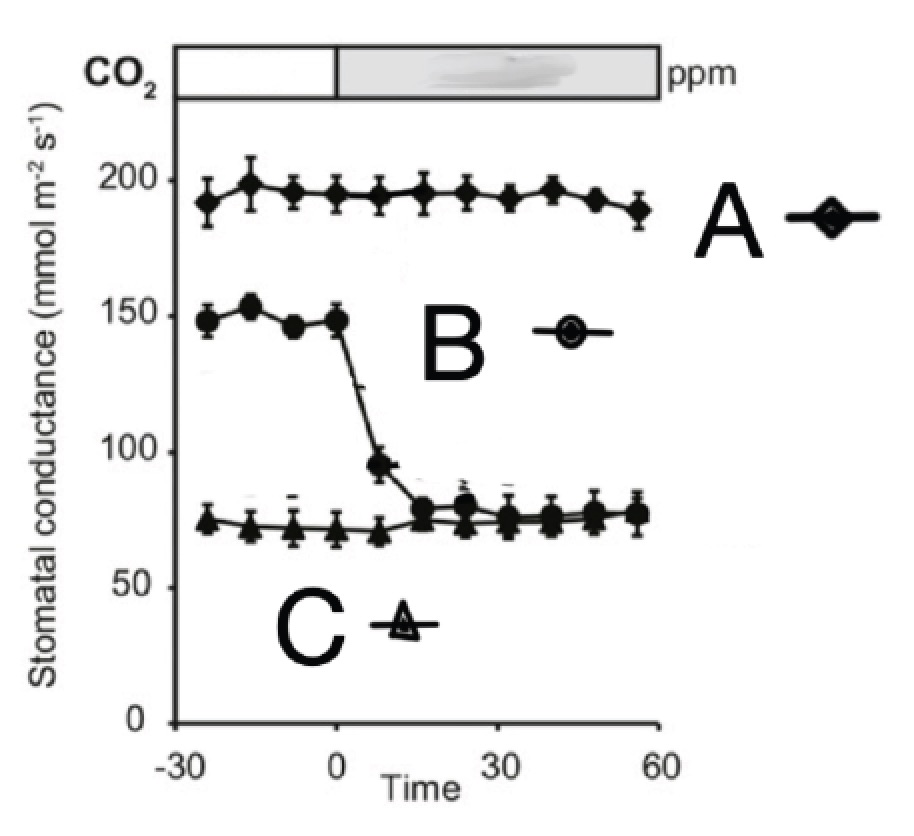
The three lines above represent three different plants responding to an acute change in environmental carbon dioxide levels.
Which of the lines might represent the stomata response to a change in carbon dioxide levels of a mutant lacking CA activity?
Which could be a lack in CBC activity?
What happens to carbon dioxide levels at time zero?
Which of the lines might represent the stomata response to a change in carbon dioxide levels of a mutant lacking CA activity? A
Which could be a lack in CBC activity? C
What happens to carbon dioxide levels at time zero? They rise
What is CBC?
CBC is the convergence between blue light and carbon dioxide regulation protein.
(CBC opens the stomata, and can be used as a regulatory region for an enzyme within the guard cell)
A cotransporter MUST be used when...
Driving force opposes the intended direction of movement
In "the goose graph" the amount of oxygen delivered from lungs to the flight muscles in the low oxygen environment shown is represented by the red double arrow.
The p50 of hemoglobin in homeostatic conditions is represented by the little black circle.
If the goose were to maintain homeostatic temperature and pH conditions in all parts of the body even at high altitudes the delivery of oxygen to the flight muscles would be about half what is is when conditions are allowed to be considerably outside the homeostatic range in lungs and flight muscles.
Calvin Cycle Formula:
6 CO2 + 18 ATP + 12 NADPH --> Glucose
(ATP is spent)
Concentration drives nitrate through LATS machinery during root nutrient uptake. Endodermal cells generate the casparian strip. Pericycle cells generate lateral root meristems which in turn form lateral roots. Study of plant nutrient uptake kinetics came before discovery of channels and cotransporters
True or False:
If anion BULA- is entering a cell through HATS, we know the equilibrium potential of BULA- is positive.
False
True or False:
If anion BULA- is entering a cell through HATS, we know the equilibrium potential of BULA- is negative.
False
True or False:
If anion BULA- is entering a cell through LATS, we know the equilibrium potential of BULA- is positive.
False
True or False:
If anion BULA- is entering a cell through LATS, we know the equilibrium potential of BULA- is negative.
True
For this set of questions you must identify HATS as cotransporters, LATS as channels. Remember that plants maintain negative membrane potentials (without real means to create a positive membrane potential). So if a cell is importing an anion it is moving it against charge, but it may be importing it against concentration as well. If it CAN use a channel it will, so you know that if HATS is the system involved, the ion is moving against driving force. Conversely, if LATS is being used, driving force is favorable. With anion import, only a favorable concentration gradient stronger than the membrane potential can make that happen.
REVIEW THIS ^^^
Omega three fatty acids are essential, but omega 9 fatty acids are not. This is because...
We can make double bonds in FAs between the 9th and 10th carbon from the methyl end of a fatty acid.
True or False:
Although both plants and animals require uptake of essential amino acids, the list is different between plants and animals, and different between different types of plant and between different types of animal.
False! Even the first sentence of this is a lie: plants can make amino acids so they’re not essential for them.
Minerals are the inorganic class of human nutrient all items of which are essential. We don't burn that type of nutrient for calories, nor do we burn vitamins , which is a nutrient class that includes both lipid soluble and water soluble members that are NCHOPS not made into macromolecules. Traditional staple diets include legumes and grain, which when combined possess all of the 8 or 9 essential amino acids in our diet. The most energy rich nutrient type are the fatty acids (lipids) . The 2 types of essential nutrients of this class are both unsaturated. For that last bit, don't just repeat what class of nutrient you mean.
For humans, amino acids…
Are nutrients that can be used as building blocks and fuel
True or False:
A cation nutrient entering an endodermal cell from the soil water must have a positive equilibrium potential.
False
True or False:
A cation nutrient entering an endodermal cell from the soil water must have a negative equilibrium potential.
False
The enzyme pepsin does not damage the cells that produce it because...
The enzyme is made in an inactive form
True or False:
Glucose, but not disaccharides, enter brush border cells driven by concentration gradient.
False
What is made at high levels in response to cholera toxin?
cAMP
Cholera toxin:
Increases cellular osmotic potential
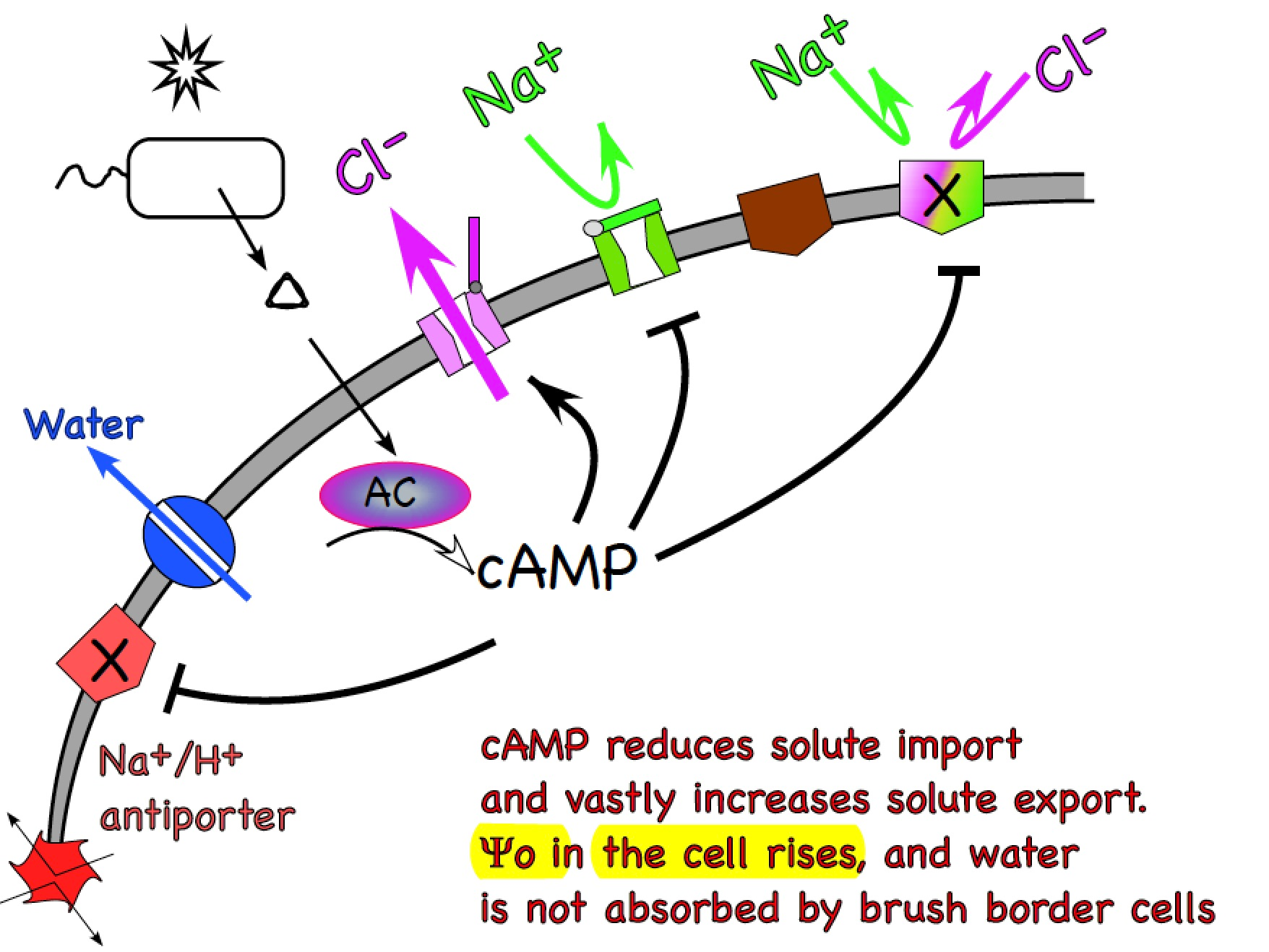
Digestion consists of hydrolysis reactions that take place in the gut. The process of taking up water from the gut is called reabsorprtion. The most abundant digestive enzyme in the mouth is salivary amylase. Parietal cells add protons and chloride to the stomach. The environment of the stomach changes the shape of pepsinogen enough to allow pepsinogen to cut itself into pepsin.
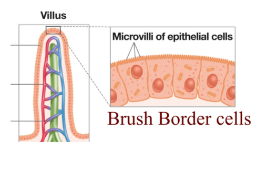
The remarkable, almost fractal nature of the levels of surface area enhancing features of small intestine architecture include the formation of multicellular but microscopic villi.
What is the most common form of nutrient uptake?
Sodium cotransport import
Glucose is imported accompanied (driven) by 2 sodium ions
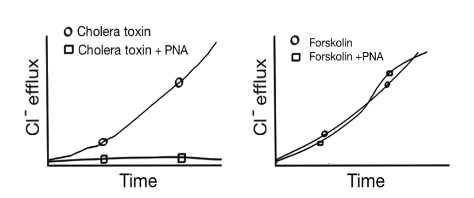
Given the data, what is PNA doing?
PNA could be a molecule that prevents cholera uptake.
Note: cholera and forskolin both to the same thing—activate adenylate cyclase (AC)
The number of villi in the small intestine…
Is less than the number of microvilli in the small intestine
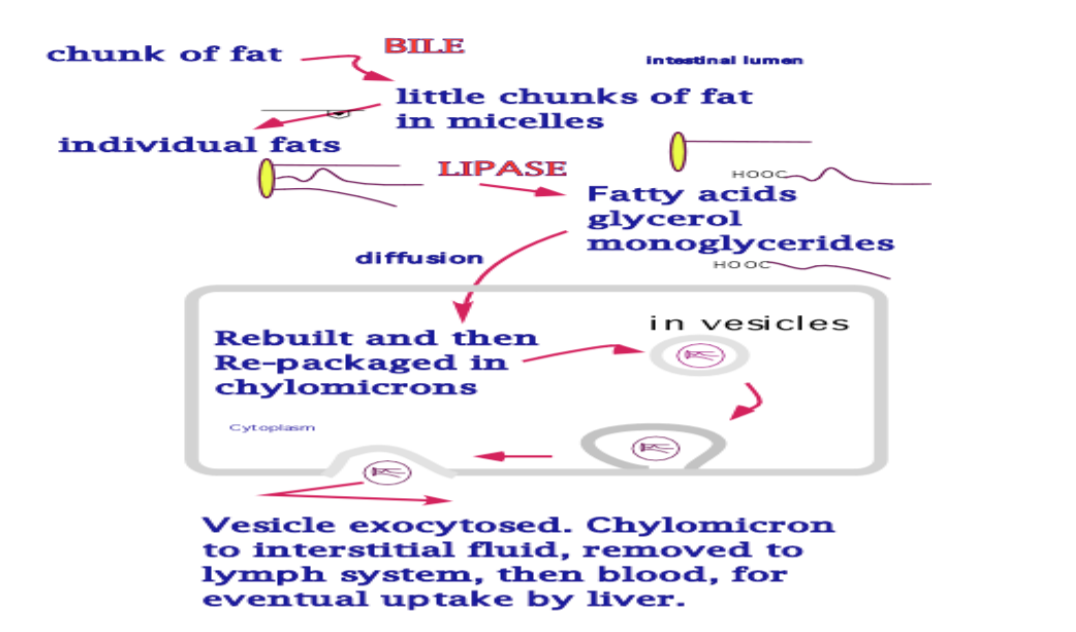
Fats and fat digestion:
Chunk of fat
↓ BILE
little chunks of fat in micelles
↓ BILE
individual fats
↓ LIPASE
cut into fatty acids, glycerol, and monoglycerides
↓
diffused into the brush border cell
↓
rebuilt and then repackaged into chylomicrons
↓
chylomicrons are packaged into vesicles that are exocytosed from the basolateral to the IF
↓
vesicles are removed to the lymph system, then into blood, then are eventually uptaken by the liver (and sometimes the tissues as well where they deal with VLDLs and LDLs)
↓
Once in the liver the chylomicrons are taken apart, the fats cut them into monomers and then they are re-used. The liver can make any non-essential nutrient from fats, including new fats and cholesterol.
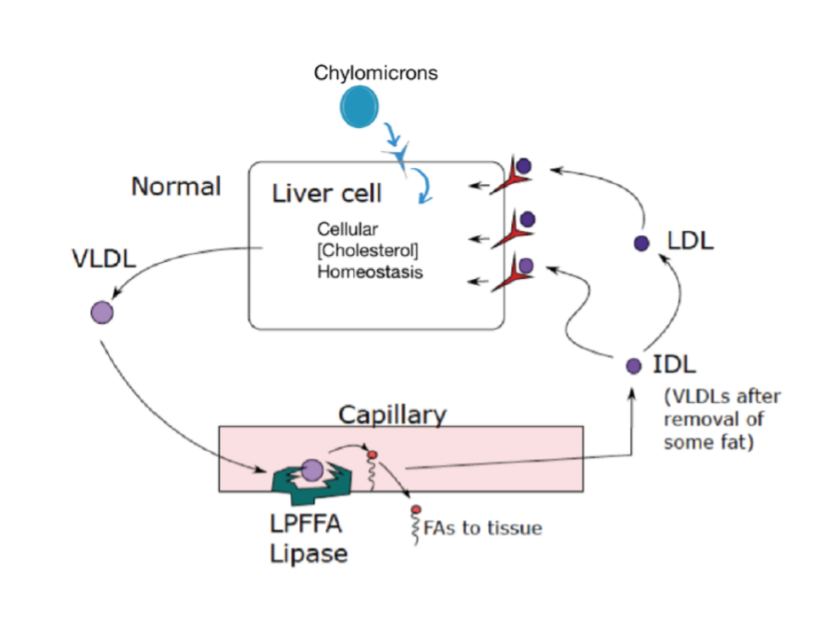
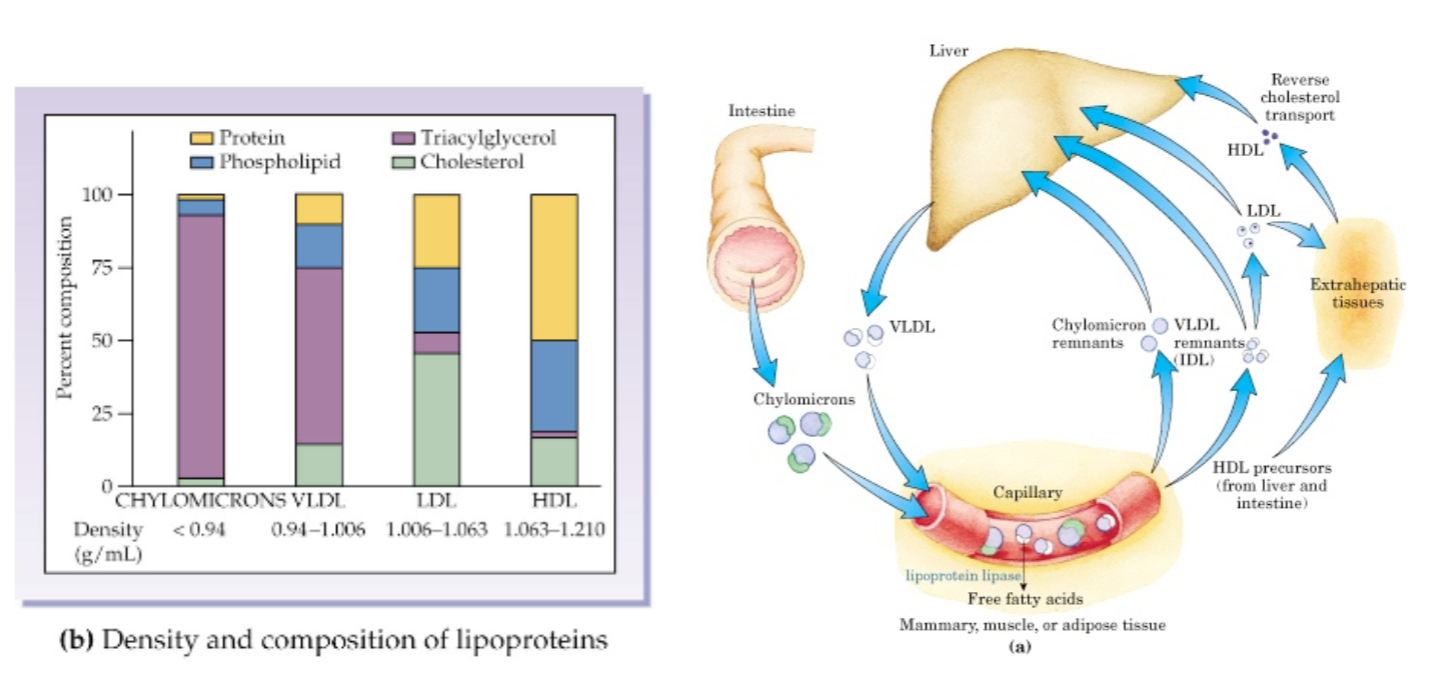
How are fats delivered from the liver to the tissues?
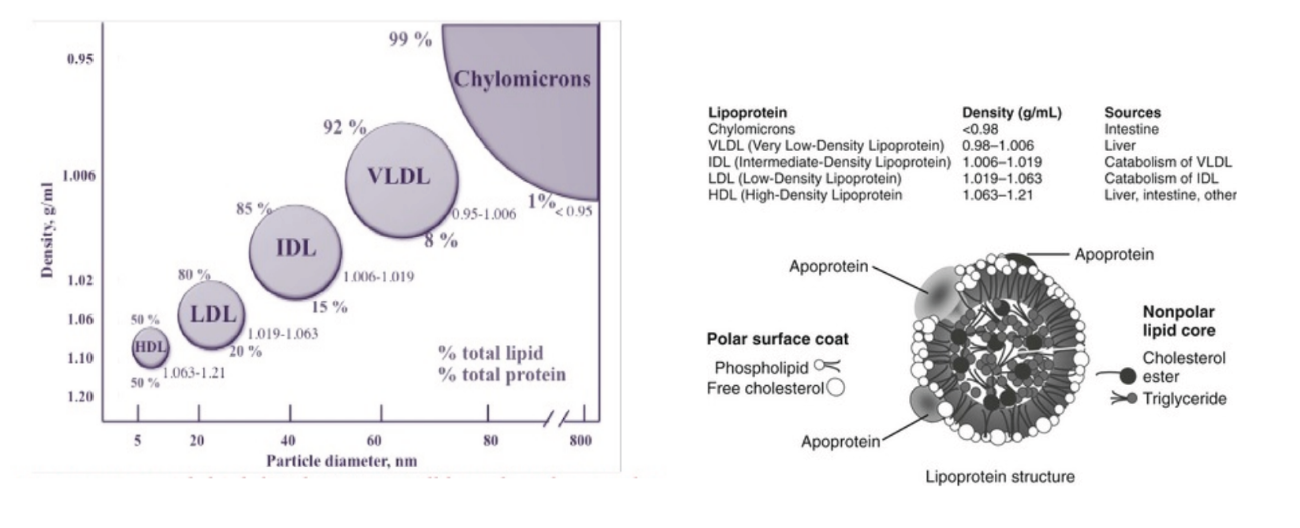
Delivery of fats from the liver to the tissues takes place in a second set of lipoproteins called VLDLs and LDLs.
The VLDLs carry most of the fat to be sent out to tissues from the liver, and as they accomplish this delivery they become LDLs by having fat removed by enzymes located in the capillaries.
LDLs carry and deliver most of the cholesterol in circulation.
They are known as “bad cholesterol” in the media because they are the containers of cholesterol that can lead to health problems when too numerous.
LDLs can travel through the spaces between capillary cells to enter the interstitial fluid.
90% stay in the vessels.
LDLs are taken up by tissues with LDL receptors.
The liver takes up LDL to remove lipids from the bloodstream.
HDLs are another lipoprotein that moves lipids back to the liver from the tissues.
Known as the good cholesterol in the media because these packages are destined for the liver, where the cholesterol and other lipids can be broken down and made into something else.
Free fatty acids also travel in the blood. They are not really free though, they are bound to albumin to keep them in solution. This is a smaller fraction of lipid transport than the lipoproteins.
What does it mean for a molecule to be amphipathic?
It is a component of bile
It has polar and nonpolar ends
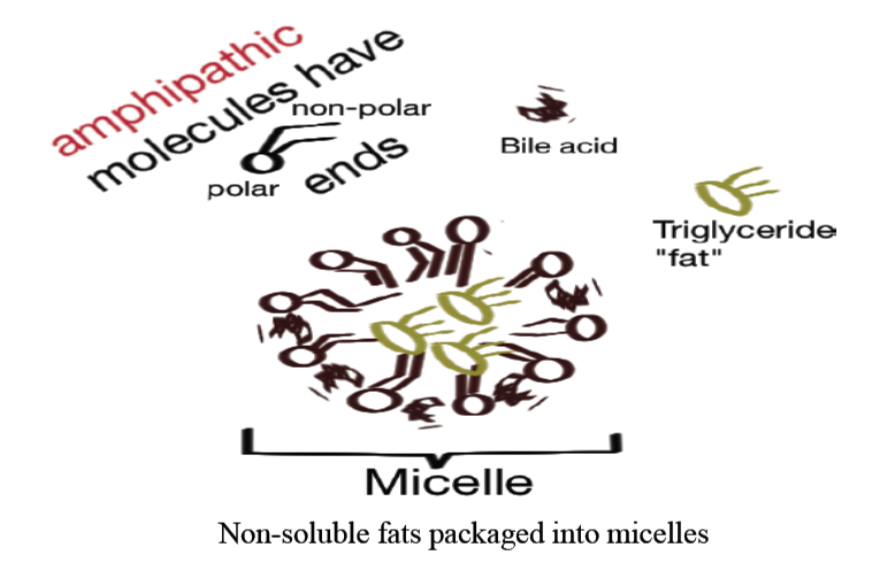
These divide sets of fats into smaller sets as they generate the structures holding them soluble in an aqueous solution. The detergent properties of amphipathic molecules split big chunks of fat into little chunks. Smaller chunks have a better SA/V ratio for lipase.
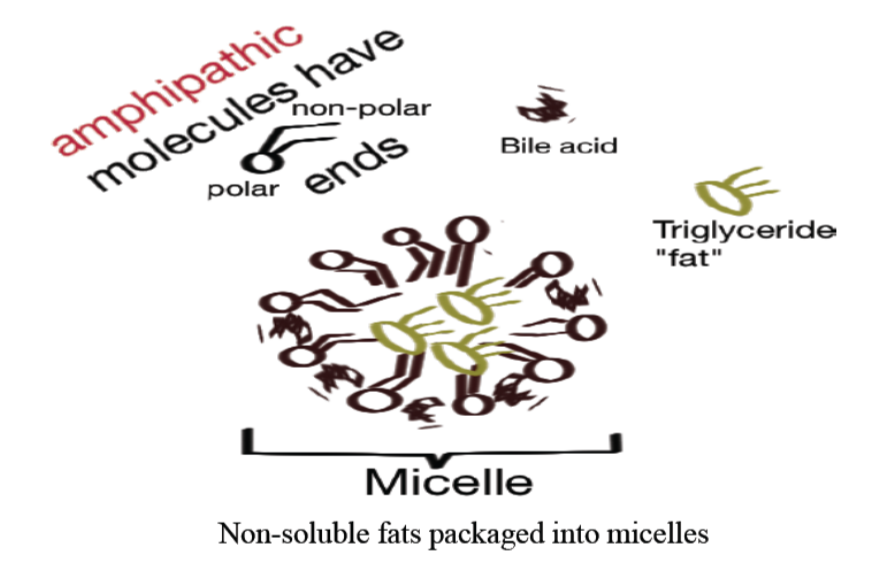
What are some functions of bile?
Emulsification
Related to micelles
Amphipathic molecules form mono-layers around lipids.
Lipase can get to them in these structures.
Buffering
Helping bicarbonate raise the pH from stomach offerings.
Recycling material
Bilirubins (a breakdown product of hemoglobin) are an example of material that needs throwing away.
These breakdown products are what make poop brown and pee yellow and they make bruises the myriad of colors they turn over time. Or recycling getting dumped into the intestine. Bile contains some of these materials.
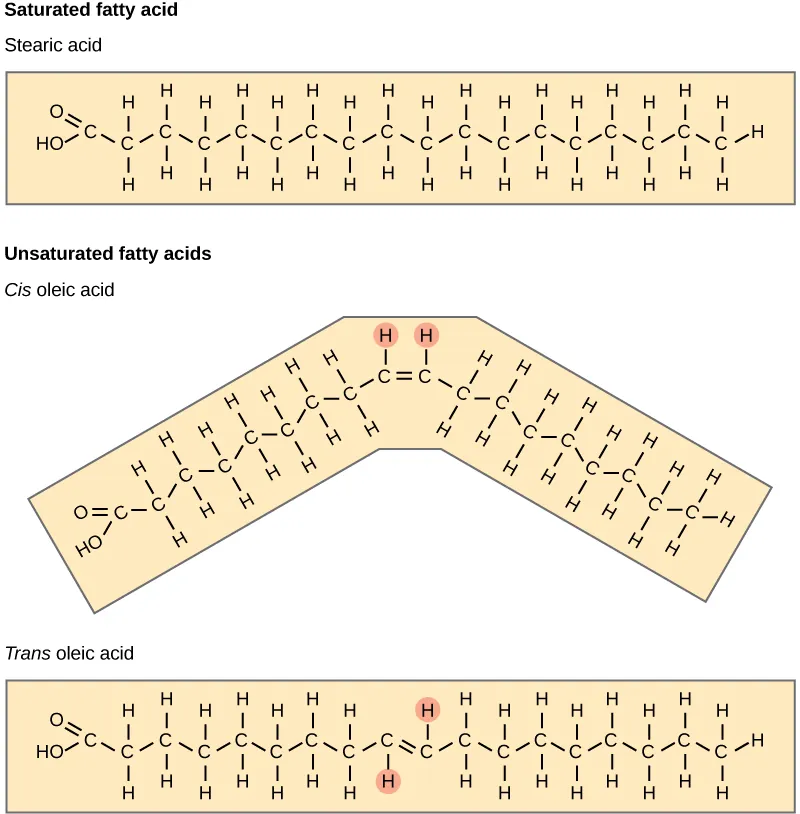
What is the difference between saturated/unsaturated fats and cis/trans fats?
Saturated = hydrogenated
Unsaturated = CC double bond
Cis = Hydrogens on the same side = liquid (soluble)
Trans = Hydrogens on opposite sides = solid
How are non-soluble fats packaged?
Into micelles!
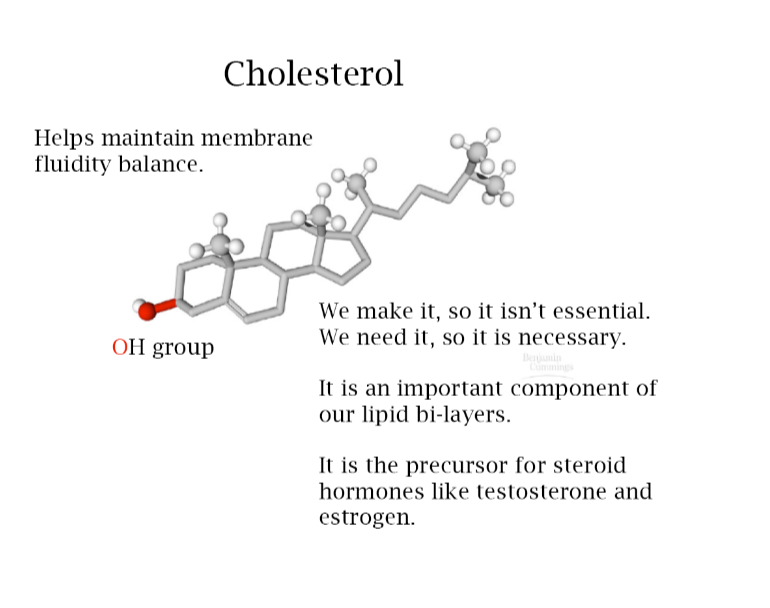
Why is cholesterol important to us?
It maintains fluidity balance
It is an important component of our lipid bi-layers
It is a precursor for steroid hormones like testosterone and estrogen
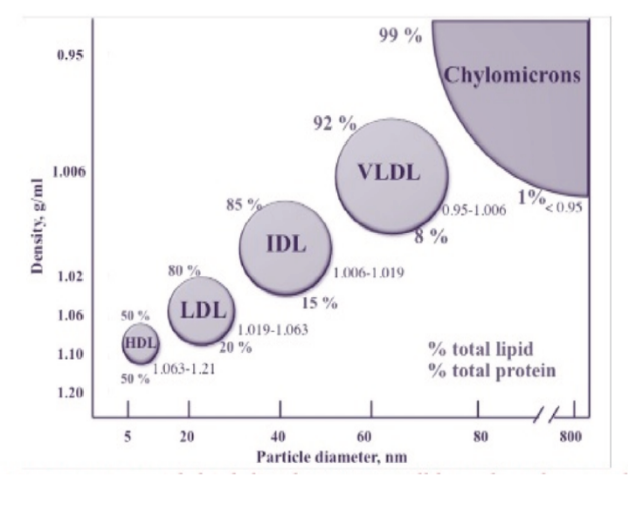
What is the lowest density lipoprotein?
Chylomicrons
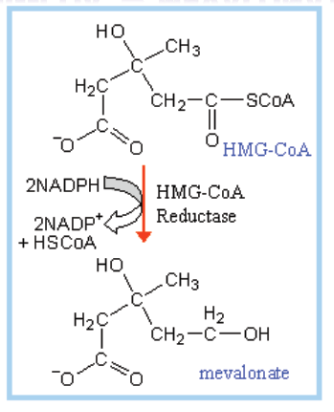
What is the rate limiting step in cholesterol production?
HMGR (AKA HMGcoA)
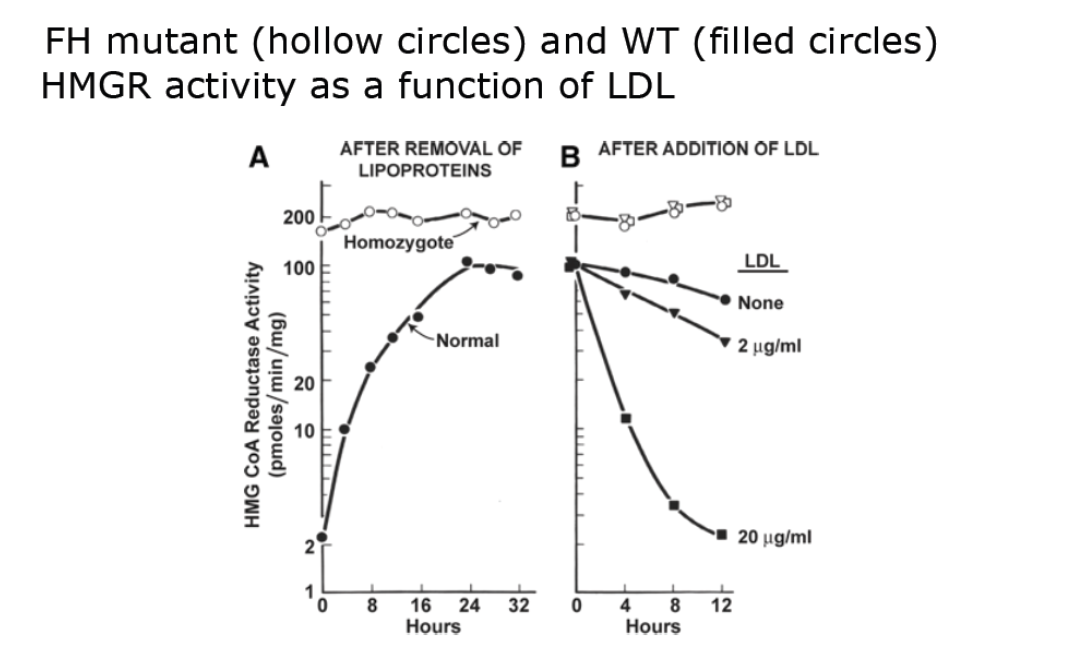
Goldstein and Brown Paper:
From this data, they initially hypothesized that….
The HMGR enzyme of FH individuals lacks normal down-regulation by LDL.
THIS HYPOTHESIS WAS WRONG!!!
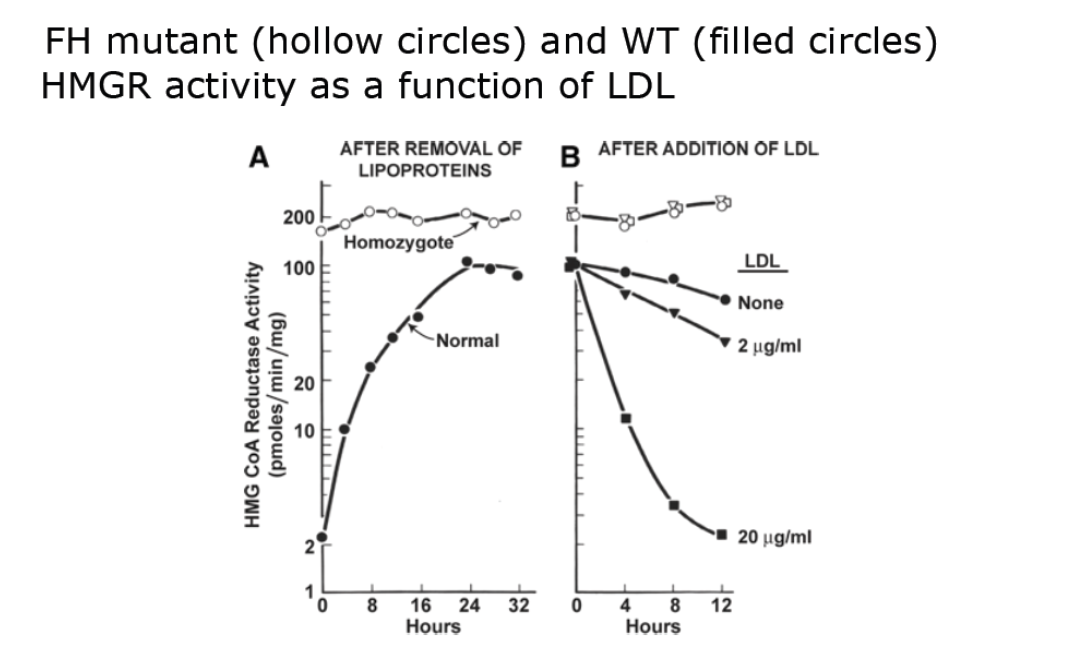
Goldstein and Brown Paper:
How do we know that their first hypothesis was wrong?
Because cholesterol stops HMGR activity in both FH and WT cells
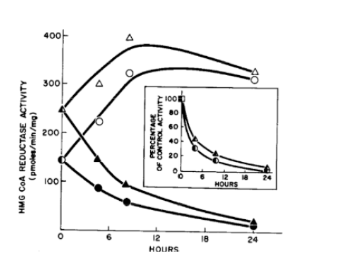
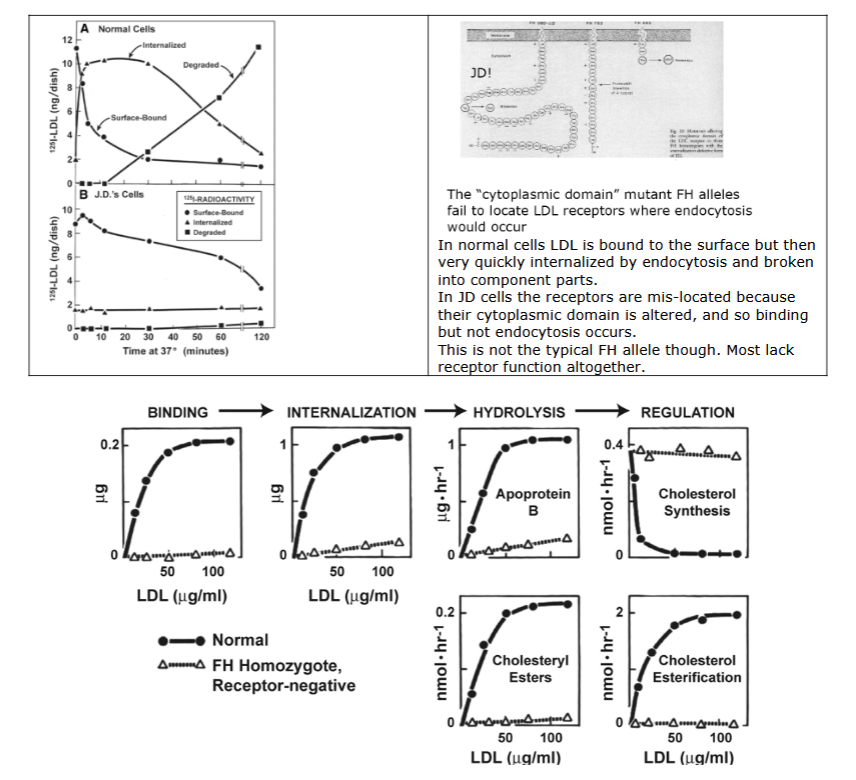
Goldstein and Brown Paper:
In normal cells, LDL is bound to the surface but then very quickly internalized by endocytosis and broken into component parts.
In JD’s cells, the LDL receptor is mislocated so binding but not endocytosis occurs. Knowing this, which graph on the bottom would look different if the JD allele mutant was used rather than the mutants lacking LDL receptors altogether?
The first graph: binding!
JD allele still binds
FH allele is receptor negative (no receptor at all)
So the binding step would look different, but afterwards (in the import step, for example) they’d look alike because they both fail to internalize the LDLs.
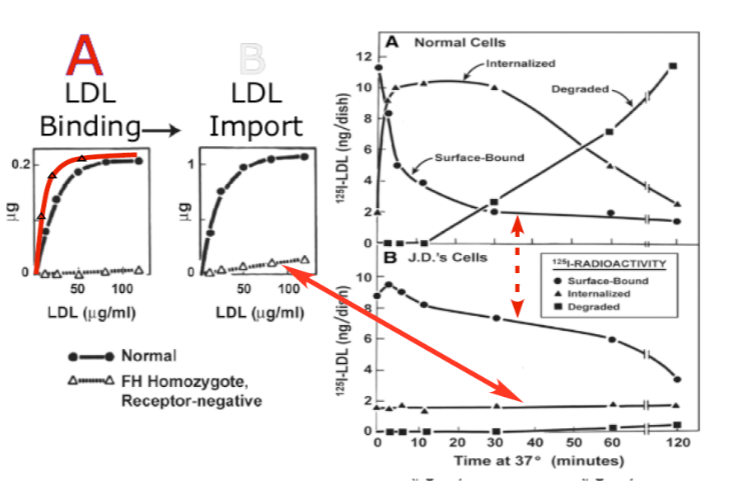
Goldstein and Brown Paper: Overview
LDLs carry cholesterol in the blood.
High LDL levels are associated with heart attack, stroke, and other circulatory diseases.
The liver removes cholesterol from the blood by LDL receptor mediated endocytosis of LDL particles.
There is a negative feedback loop for liver cellular cholesterol levels that shuts down cholesterol synthesis when cholesterol levels in the cell are high.
Cholesterol IMPORT is also part of the negative feedback system of
maintaining cellular cholesterol levels.
Cholesterol import by the LIVER is at the same time the key to maintaining blood, and therefore organismal level, cholesterol homeostasis.
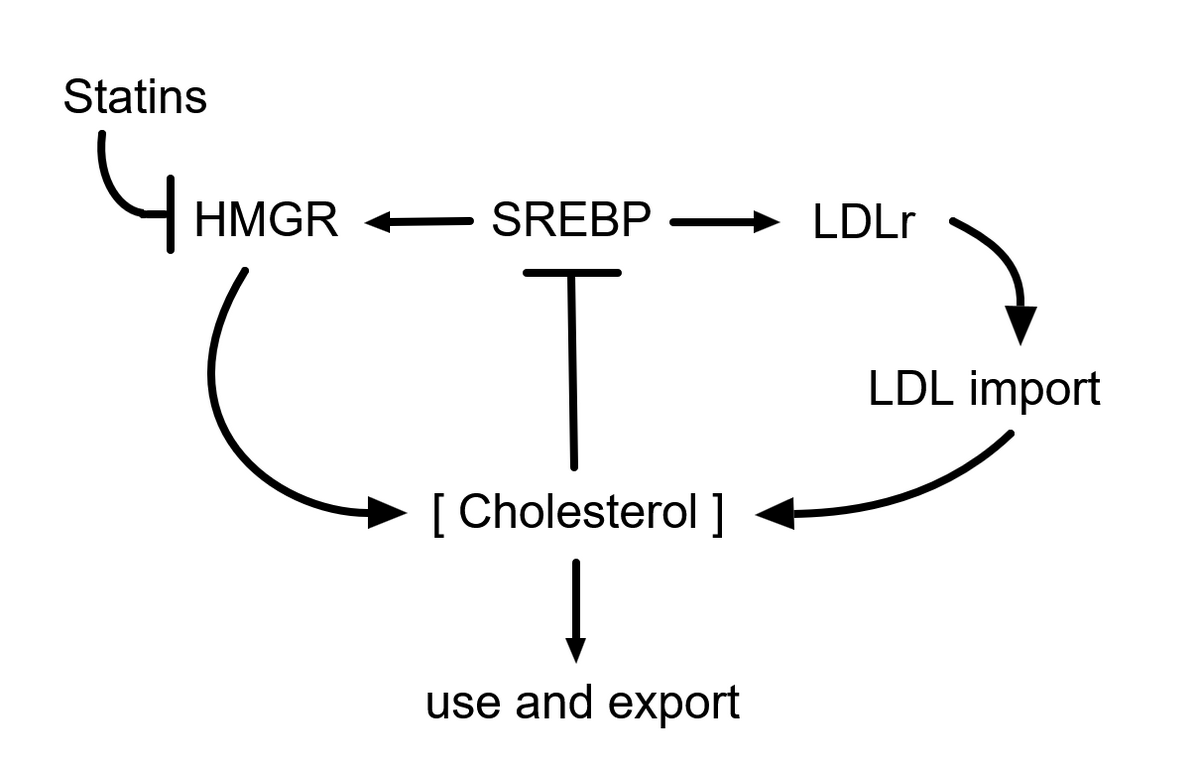
Goldstein and Brown Paper: Pathway
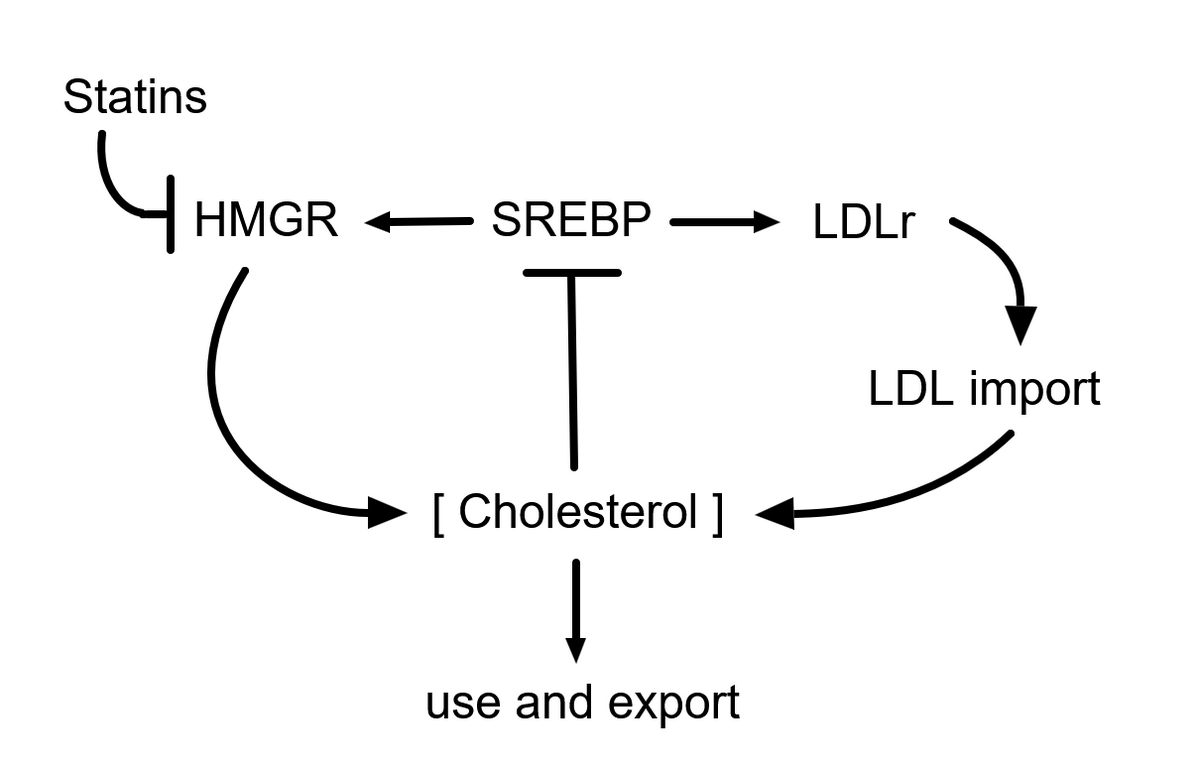
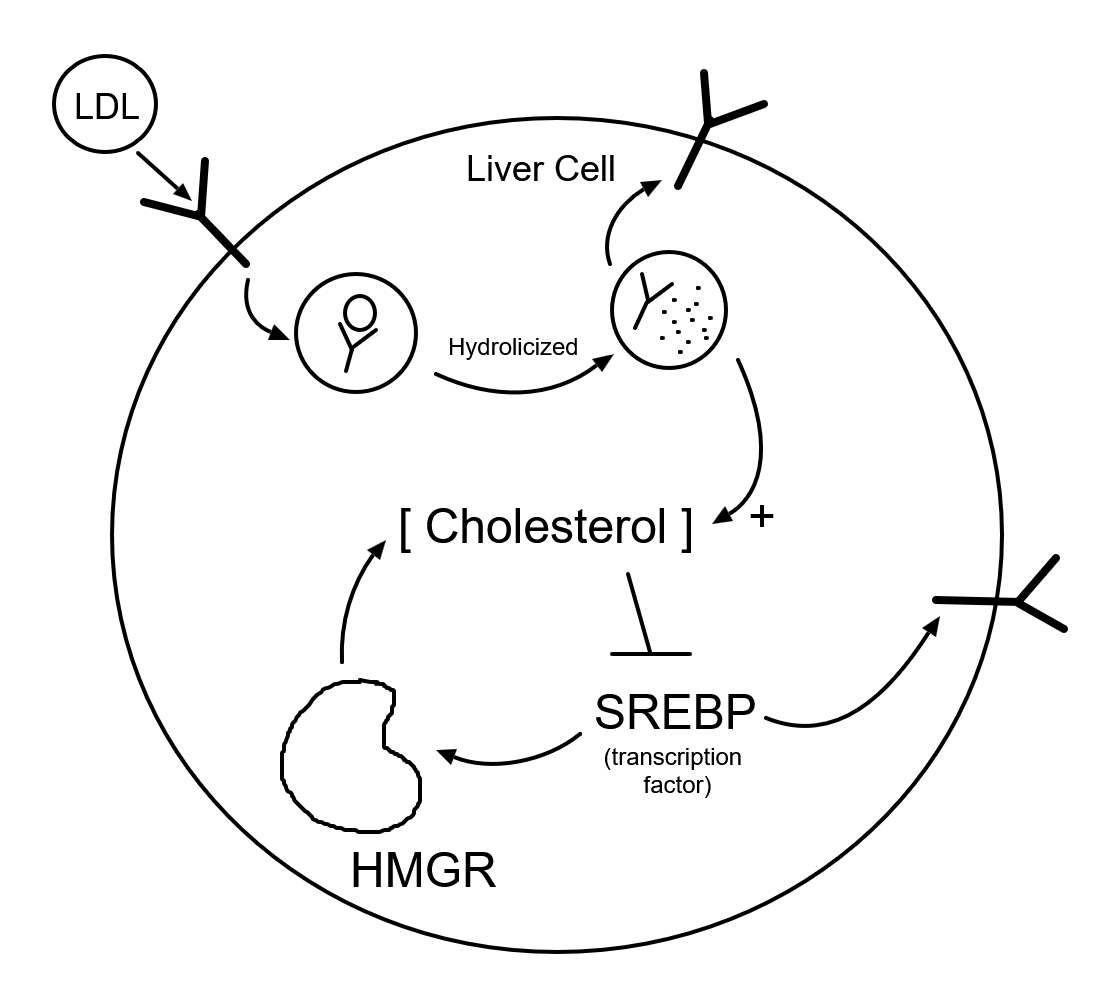
Goldstein and Brown Paper:
Liver cell in a normal person
Goldstein and Brown Paper:
Liver cell in someone with Familial Hypercholesterolemia (FH)
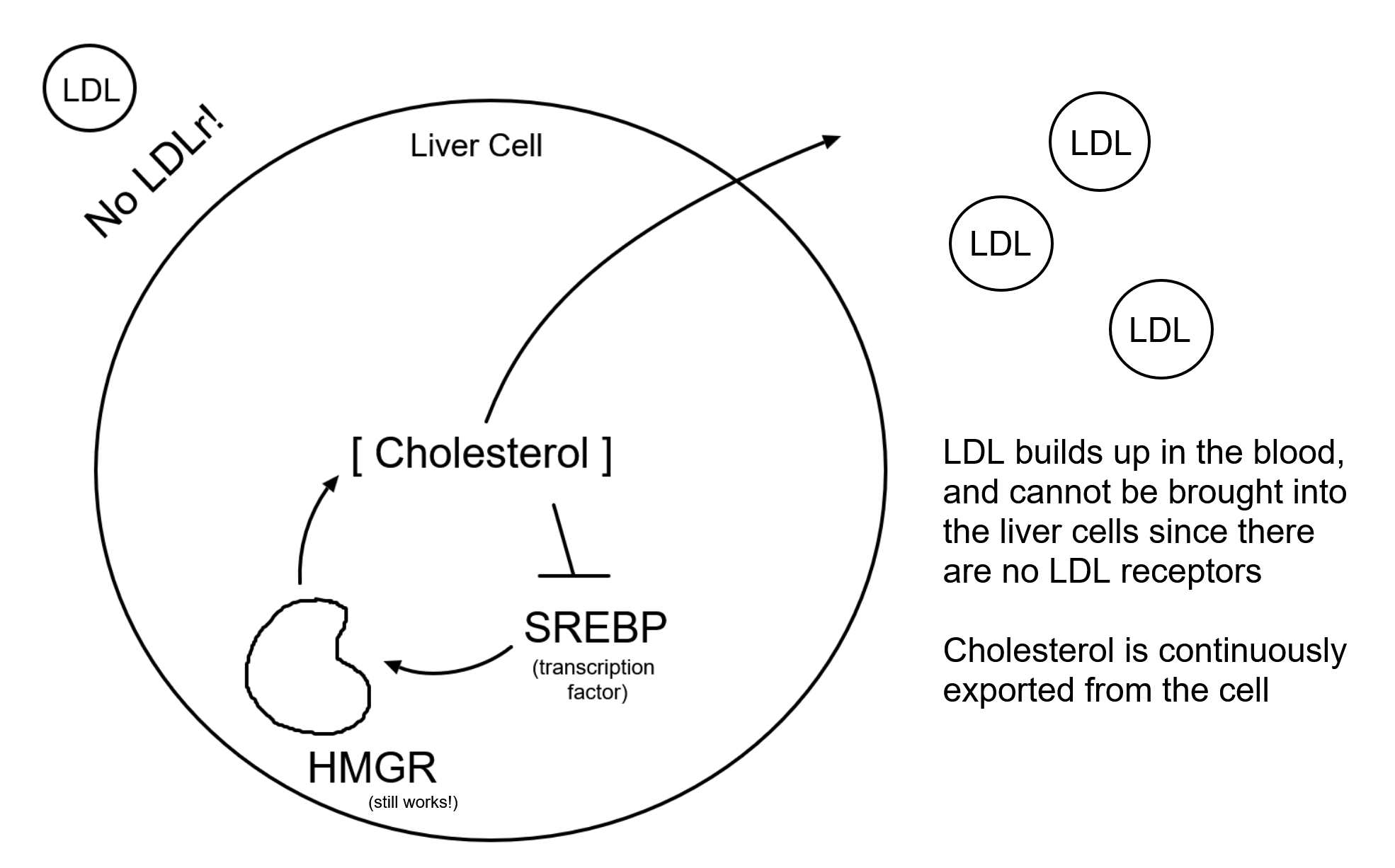
How do you tell if there is no way of knowing the equilibrium potential of something?
If the sign of the driving force and the membrane potential match, you cannot tell if the equilibrium potential will be positive or negative.