psy100 term test 2
 Call Kai
 Learn
Learn Practice Test
 Spaced Repetition
 Match
Match Flashcards
 Knowt Play
1/257

There's no tags or description
Looks like no tags are added yet.
Name | Mastery | Learn | Test | Matching | Spaced | Call with Kai |
|---|
No analytics yet
Send a link to your students to track their progress
258 Terms
Learning
relatively permanent change in thoughts, feelings and behaviour resulting from experience
develop memory of event AFTER event has occured
S-S association (stimuli association)
allow us to predict events and adjust response (tend to tgt to allow us to predict response)
dark clouds (S1) + Rain (S2)
expect rain, get unbrella
Classical Conditioning (CS)
2 stimuli repeatedly paired tgt
S1 becomes a signal that S2 is coming (see clouds, expect rain)
response only occur after learning (bring umbrella!)
strong pairing
frequent overlap over time
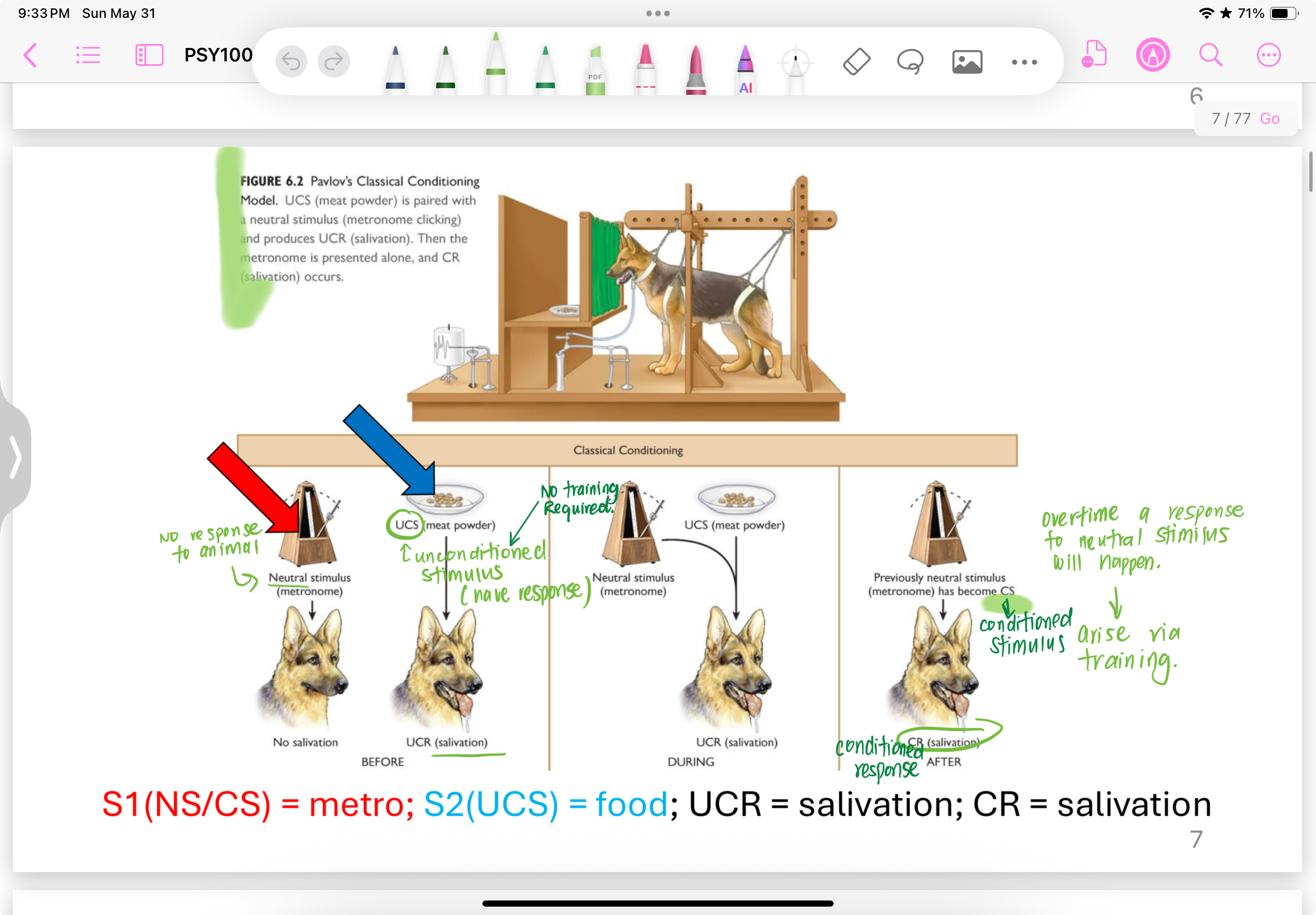
Neutral stimulus (NS)
no response from animal
Unconditioned stimulus (UCS) and unconditioned response (UCR)
have response naturally
no training needed
Classical conditioning method
let dog associated NS sound with UCS (food) and this will cause it to salivate. overtime a response to neutral stimuli will occur and NS will become CS to cause CR
higher order conditioning (chains of CS)
after first round CS1 evoke stronger CR and CS1 and CS2 paired tgt, CS2 will evoke weaker CR
can repeat for several times but response gets weaker
in advertising
Ads make something meaningful to you and let it relate to their product (christmas, coke, feeling good)
Adverse learning
rapid, strong and resilient (may lead to phobias)
very strong as bad things make you remeber best, learn things that dangerous to you increase survival.
NS evoke CR
Fear conditioning (learning model)
overlap shock (UCS) with environment (CS1, blue box) and tone (CS2)
when reexposed to CS1 or 2 animal expects UCS
Freezing behaviour
The anticipation of the UCS
indicate association has been learned
drug dose and location
when introduced to new location, overdose may happen even with same dose as normally, familiar places preps our body for drug by being in environment,
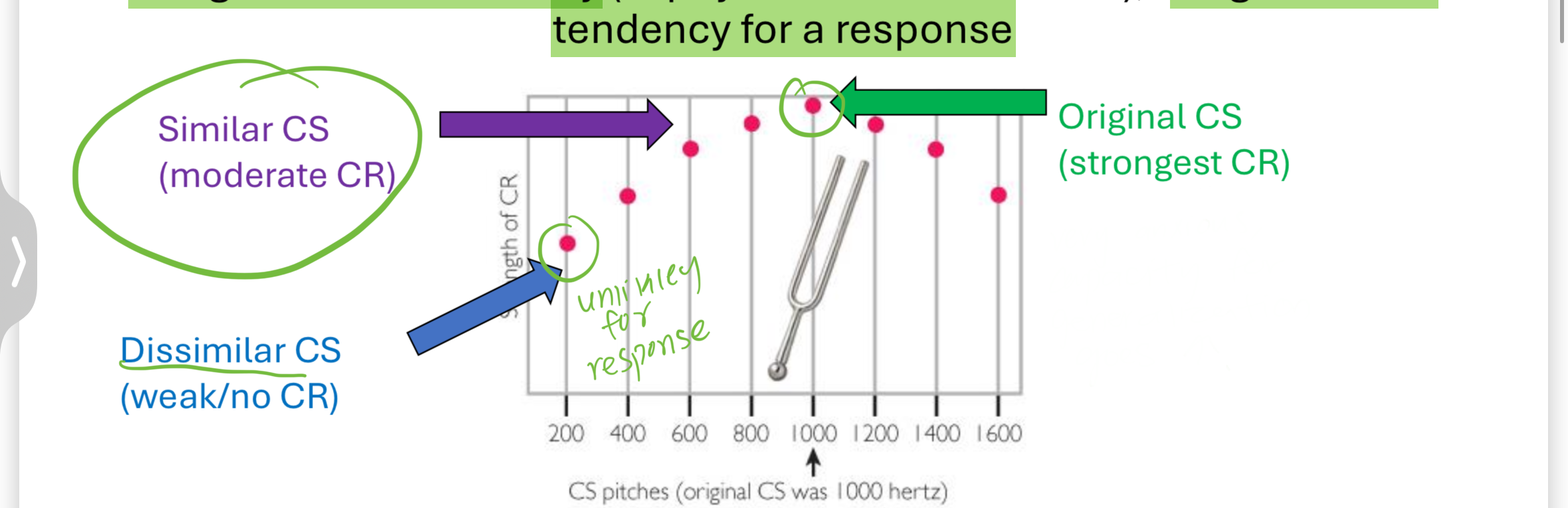
Stimulus generalization
the greater the similarity (physically) the greater the tendency for a response
case of Little Albert
liked albino rats
study paried loud noises that made albert cry
boy became scared of rats and anything else that was white and furry
generalization
CS-UCS pairings
some more likely to occur than others
Conditioned taste aversion CTA
Animals learn food (CS) and illness (UCS) associations, which in turn can lead to avoiding foods
get food poisoning —> would not likely eat that food again
other stimuli paired with illness
other stimuli may be difficult to pair with illness and make poor CS
preparedness
prepared to learn them
we may be genetically hardwired for certain cs-ucs associations
Latent inhibition
stimulus experienced many times in neutral context is not suitable for conditioning
past might prevent current conditioning difficult to pair with UCS
use unfamiliar stimulus
Blocking of CC
once UCS has been paired with a CS1 its hard to pair that same ucs with other CS2 in the future
cs1 pairing created learning history
no suprise for cs2 —> blocked
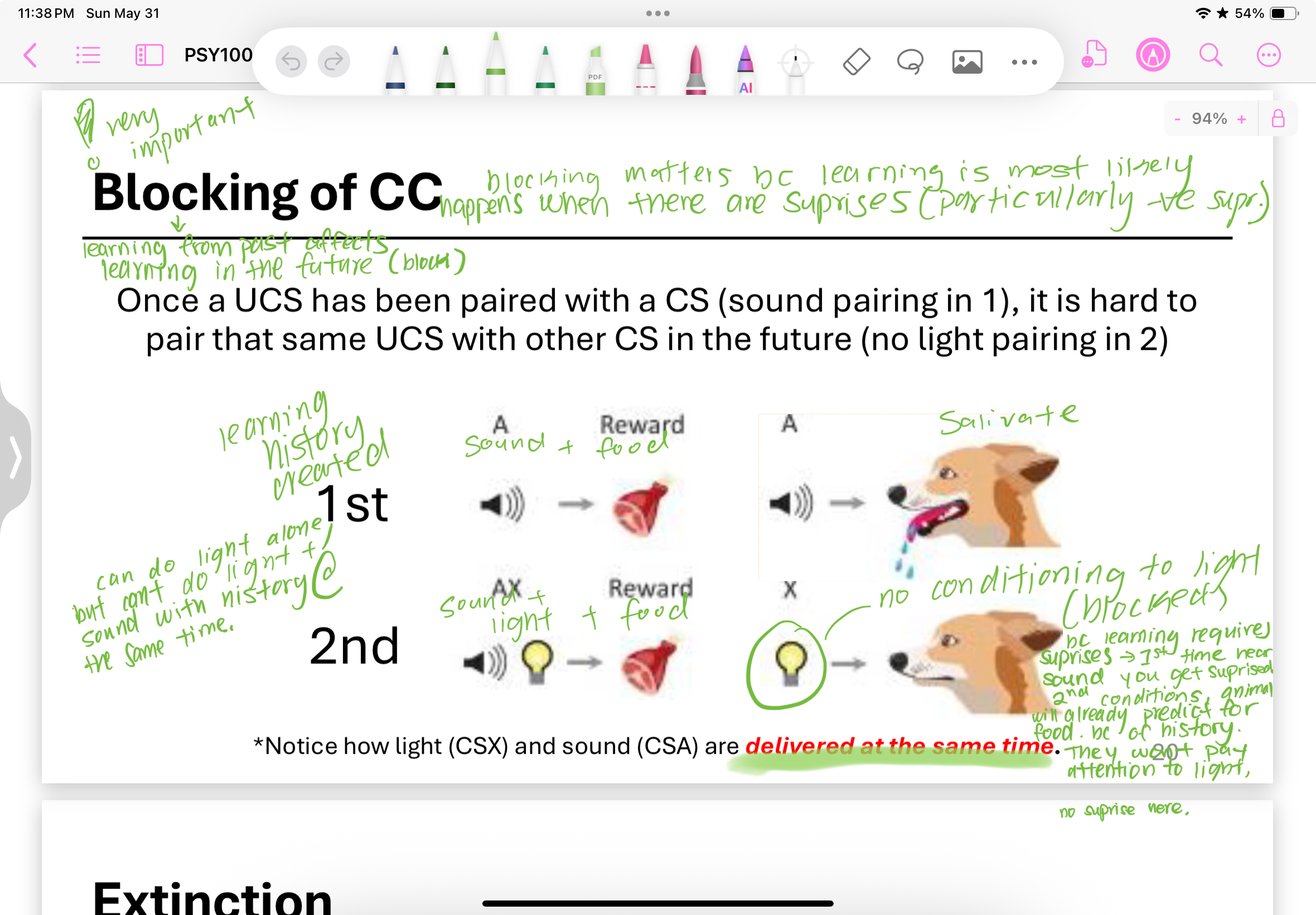
learning requires suprises
1st time hearing sound, you get suprised
2nd time the animal will already predict for food bc of history with stimuli, they wont pay attention to cs2
extinction
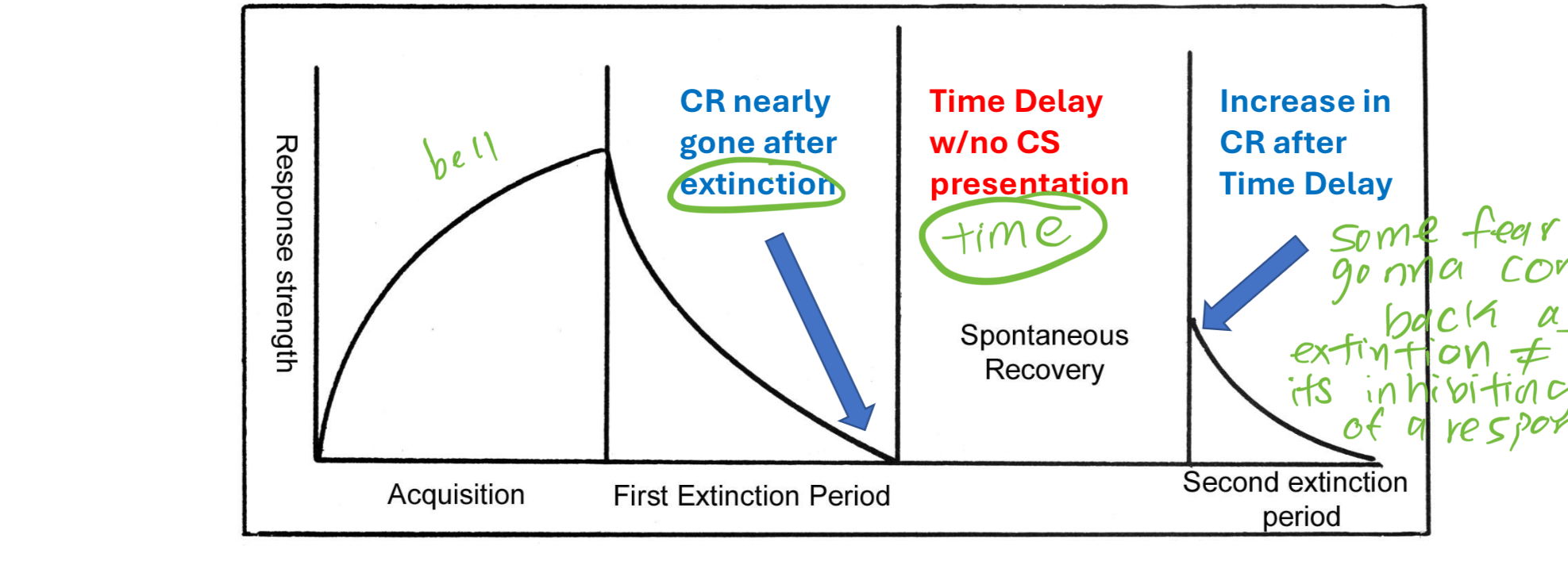
if we stop UCS CS pairings, the CR will decline (NOT FORGETING just supressed memories)
bell (CS)+ food (US) —> saliva (CR)
extinction
Bell (CS) = no response
evidence of extinction: reinstatement
after extinction, the CR can return to full stregth following a single UCS-CS repairing
CR never fully removed
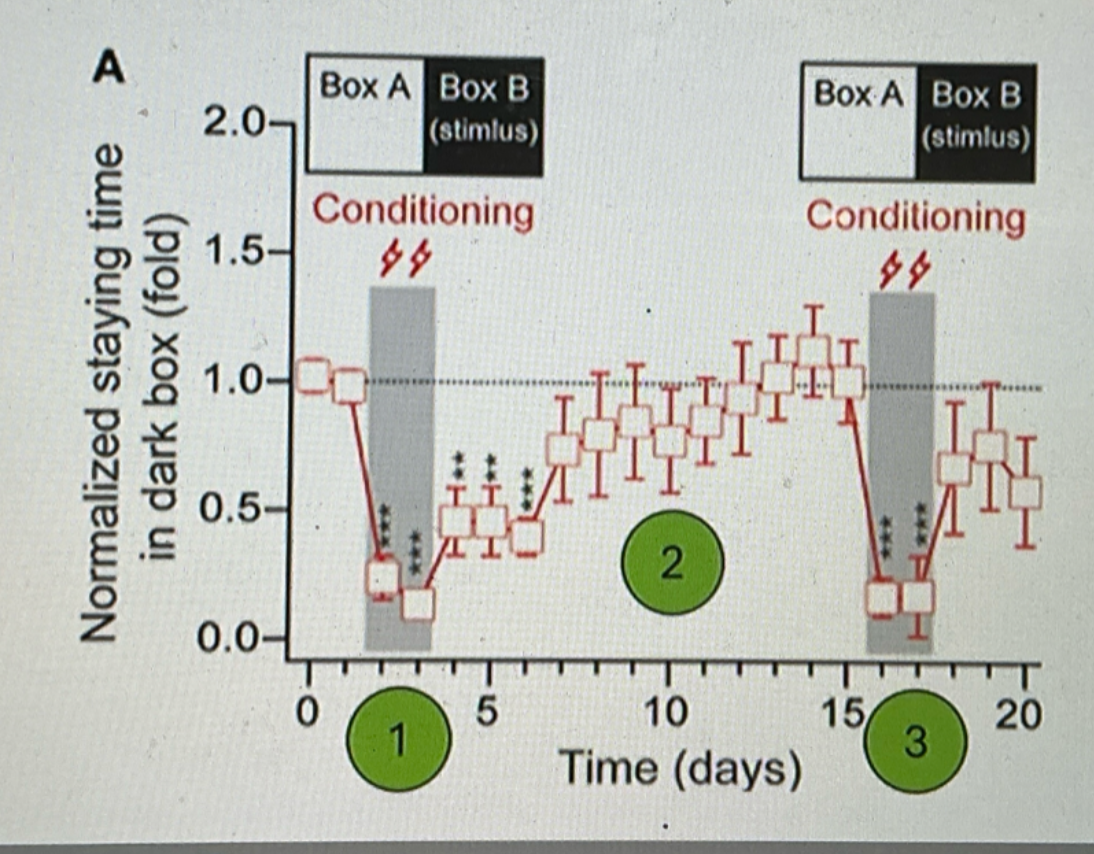
evidence of extinction: Spontaneous recovery
return of CR after period of time (NOTHING ELSE — just time)
fear doesnt disappear just inhibited
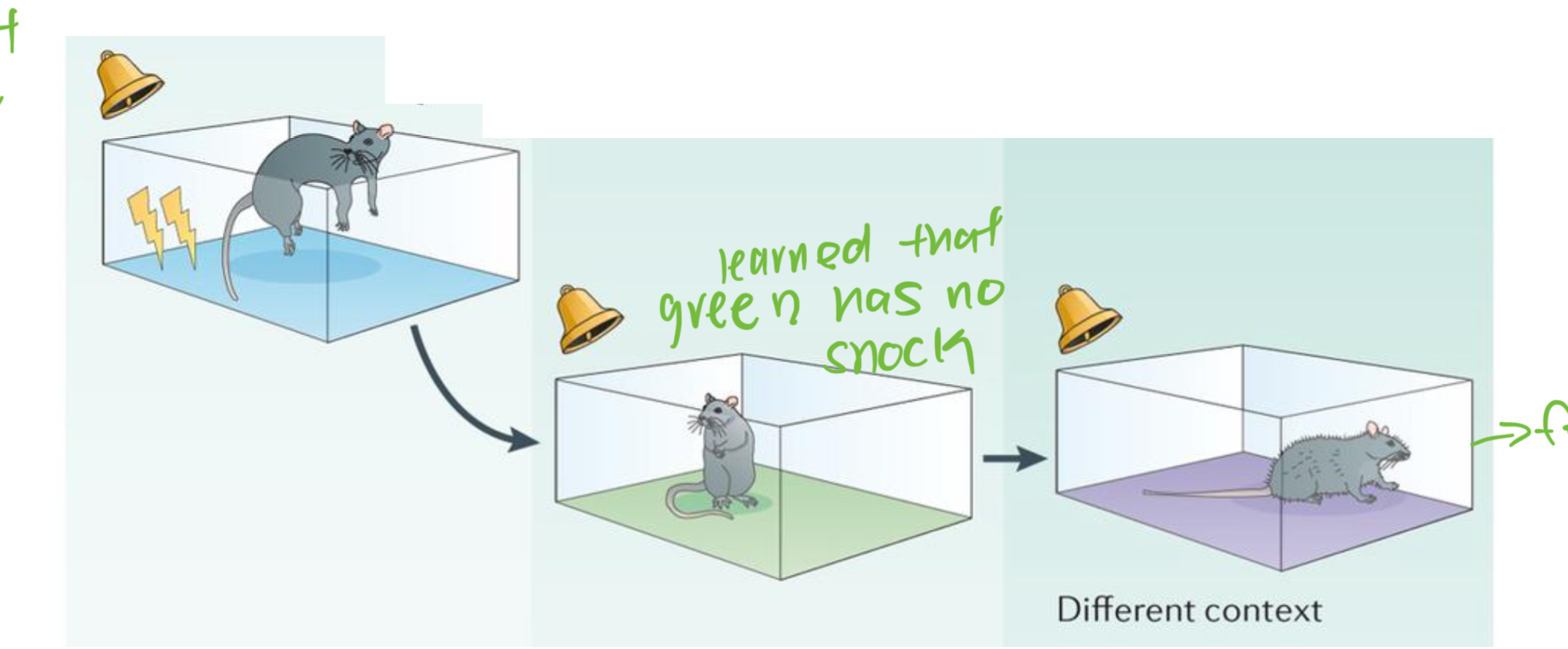
evidence of extinction: Renewal
extinction very SPECIFIC to context
even if you extinguish cs-ucs pairing in one context (green box) CS will still evoke CR in new context (Purple)
Extinction in therapy: exposure therapy
in phobias there is CLEAR triggers for anxiety or fear
repeated exposure to triggers in a safe environment may reduce fear
Operant conditioning (S-R associations)
frequency of a behaviour is linked to its consequences
things you do that get you rewarded —> you will do more often and vice versa
OC VS CC
CC - development of phobias
OC - avoidance of phobic stimuli to preserve mood
Positive Reinforcement
add something, increase a behaviour
child clean room and get cookie —> more likely to clean again
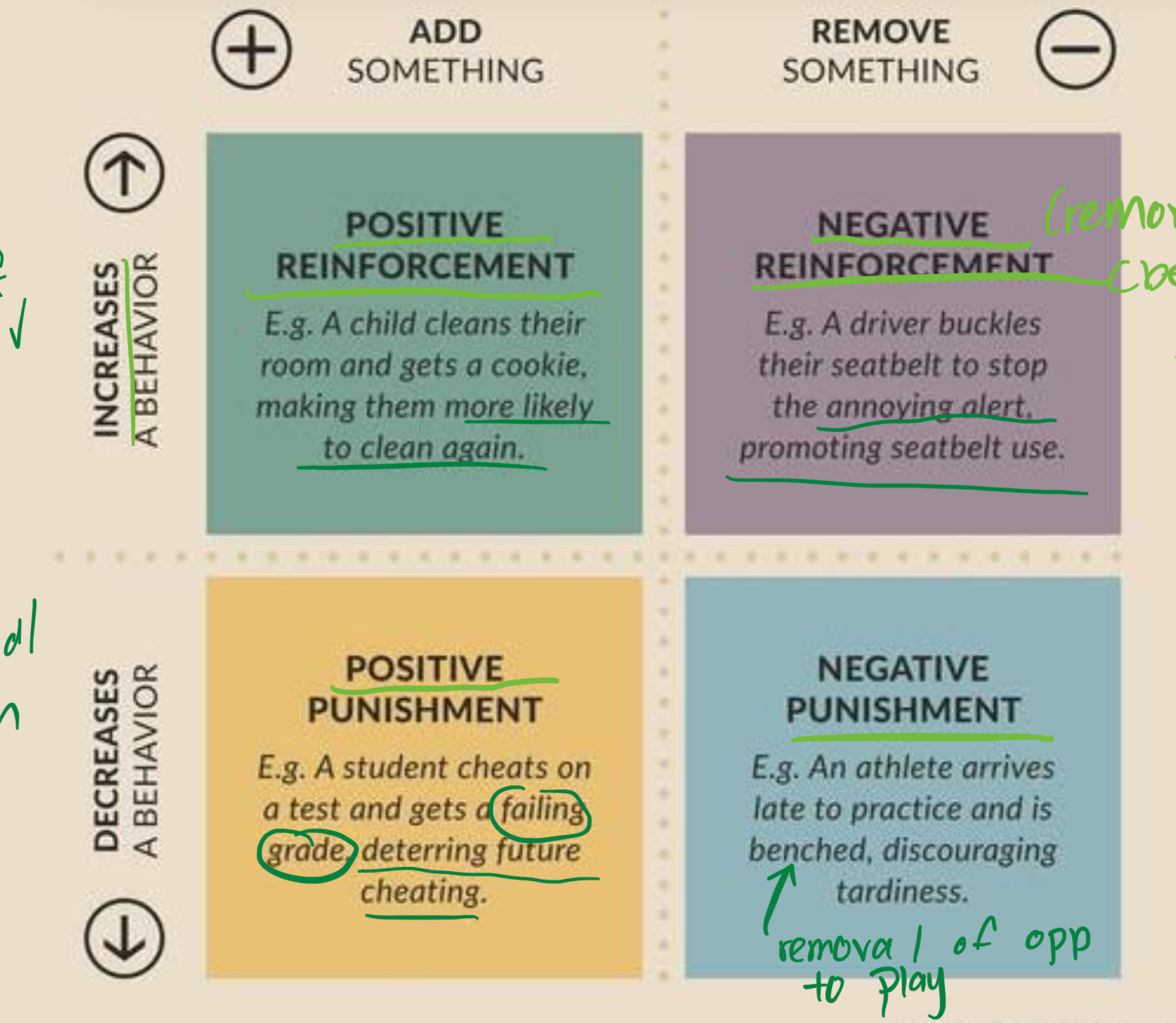
Positive Punishment
add something to decrease a behaviour
student cheats on test and get failing grade —> less likely to cheat again
Negative reinforcement
remove something to increase a behaviour
driver buckles seatbelt to stop annoying alert —> promote seatbelt use
Negative Punishment
remove something to decrease a behaviour
athlete arrives late to practice and is benched —> stops lateness
Token economies in hospitals and classrooms
tokens exchanged for goods and services
good behaviour gets token bad behaviour cost token
Applied behaviour analysis (ABA)
teach new skills
study of behavioural patterns with goal of encouraging certain behaviours through personalized behaviour modification program
oftenly used in children with autism
Why is a mix of reinforcement and punishment the best?
P alone is problematic
only tell you what NOT to do doesnt say what you should do
tend to make ppl hide/lie what they do
Schedules of reinforcement: Continuous
mostly theoretical
do good —> get award all times
Schedules of reinforcement: Partial
irregular not all the time
real world
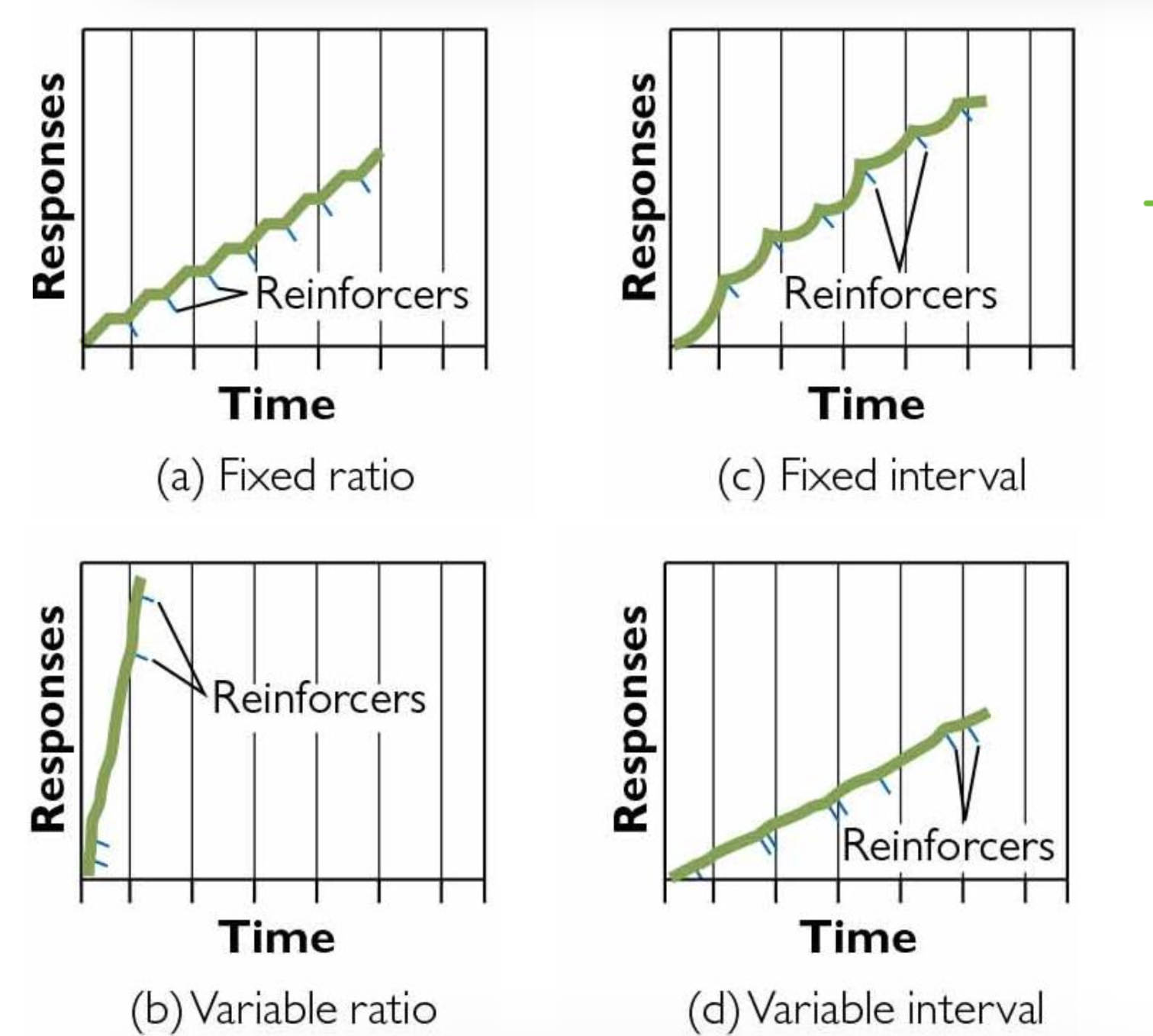
Schedules of reinforcement: Partial - fixed interval
exact amount of time
assignment due at X
Schedules of reinforcement: Partial - variable interval
response after varying period of time (average)
Schedules of reinforcement: Partial - fixed ratio
exact amount of responses
buy 4 get 1 free
Schedules of reinforcement: Partial - variable ratio
after certaain average amount of responses, ur likely to get reward (game of CHANCE)'
gambling
comparing fixed vs variable schedules
fixed: have post reinforcement pause
steady response rate (do it until get reward, THEN STOP
variable: steady response rate (highest for VR)
any response can get rewarded
Observational learning (BANDURA)
organism learn through witnessing experiences of another
bandura’s studies agression
children who watch aggressive videos are more likely to be agressive after
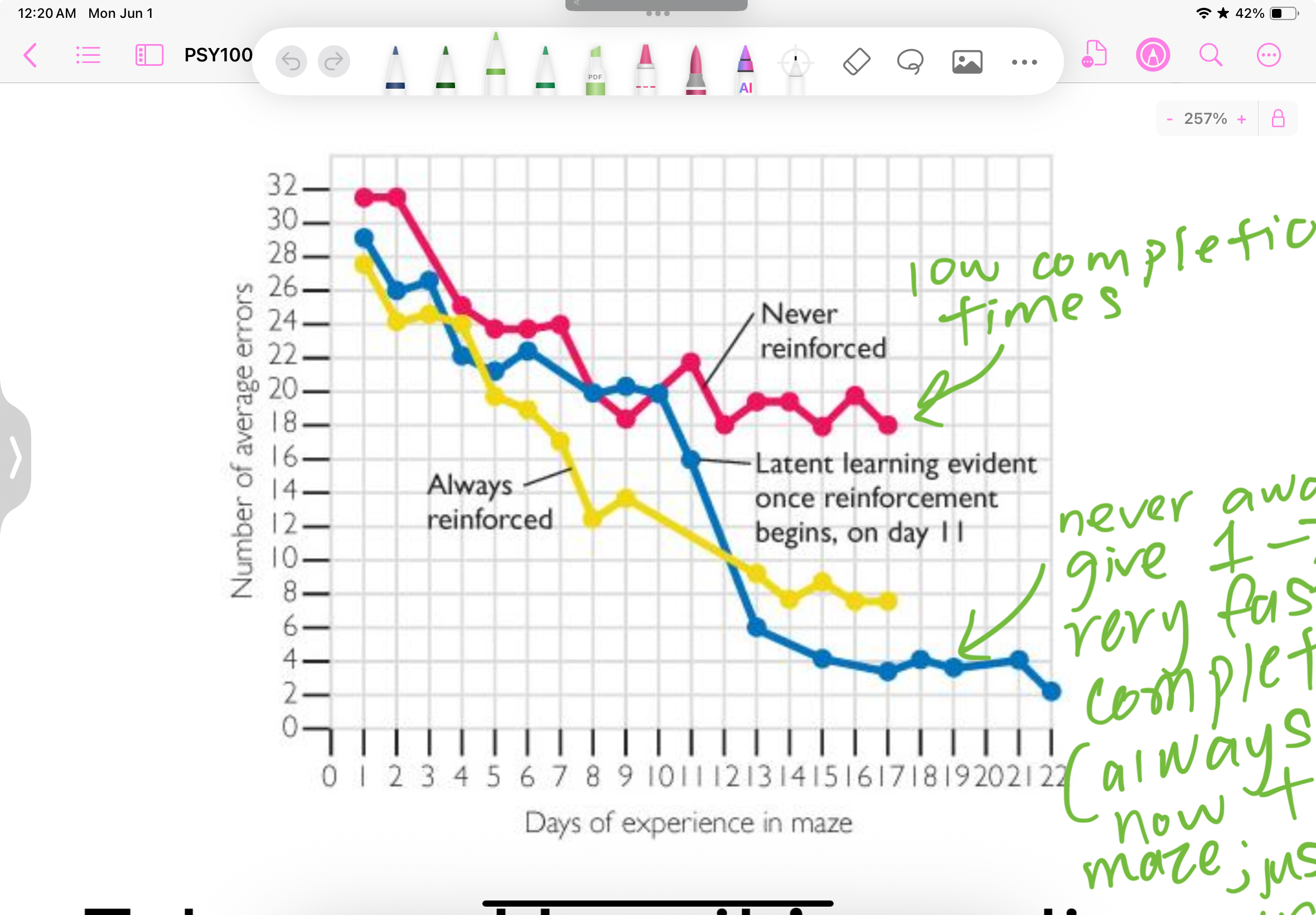
Latent Learning (LAZY)
learning not being expressed bc of lack of incentives
always knew how to do task, too lazy to do until reward (TOLMAN + HONZIK’s studies)
memory
process where info is stored, consolidated and retreived
sensory, short term, long term (IN THIS ORDER - SERIAL PROCESSING)
Duration
length of time info can be stored without rehearsal (limited by decay)
1sec or less for visual memory
capacity
amount of info that can be stored
5 for visual
properties of sensory memory
very short duration (1s or less)
capacity is theoreticaaly large but functionally small
can only report on few stimuli (4/100)
Short term memory
decays unless mentally rehersed
15-30s without, minutes with
capacity: 5-9 items
decay of info and interference(new with old) cause to be shorter
emotionally salient
stressful events that your never have to try and remember, you just do remember
two forms of rehersal: maintenance and elaborative
maintenance: simple repetition
elaborative: complex, relate info to other concepts (something meaningful/personal)
more effective
STM capacity (digit span)
longest string of digits you can remember without error
usually 7
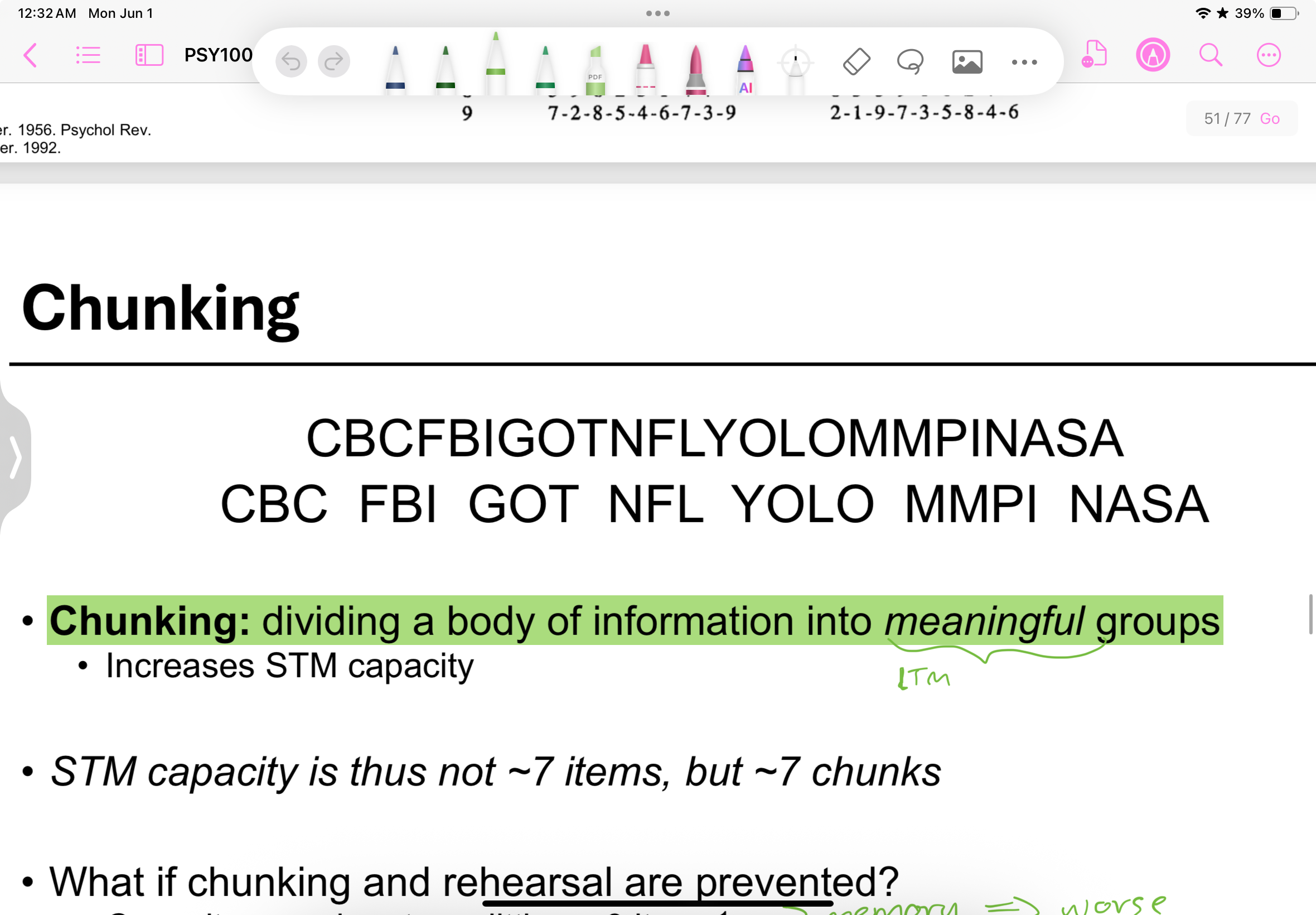
Chunking
divide body of info into meaningful groups
increase stm capacity to 7 chunks instead of items
limits to stm model
multitasking hard to explain
single STM would expect bad multi tasking (interference)
but we can do it they are just processed differently in diff parts
Working memory (WM) —> newer STM model
several process that work tgt to manage info
3 vs 1
manipulates info
OSPAN test
track words while doing math
primacy/recency effect or serial position effect
in short list of items, first and last part are better remebered
types of LTM - declarative (things yk that you can tell others)
hippocampus dependent
episodic: unique memory of an event from their pove
semantic: general knowledge (rivia_
types of LTM - Non declaritive (things yk you can show by doing)
hippocampus independent
memory ur not aware that ur accessing
skill learnng (bike riding)
priming —> using specific words
conditioning
LTM retrieval failures: tip of tongue
sometimes we have memory but cant retrieve it
one hint can trigger retrieval (related to priming)
misconceptions ab memory
memory cant be retreived from the past and re experience it in the present
this idea presumes that memory is stored in permanent form that doesnt change
HOWEVER, your never experiencing the same OG event
View: Memory is (Re)constructed
not retrieved but actively assembled
we build mental representation of it
feature memory form today that wasnt present in that event
influence of current self (goals, expectations)
change everytime its recalled
Schemas
learned cognitive framework that fills memory gaps (feel like certain events happened here becasue it usually does)
eg. script which is a sequence of events predicted by individuals
Source monitoring
try to find source of information (dk who told you)
often schema based
erros may lead to plagiarism
think source is themsleves
Memory for arousing experiences
everyday and arousing memories become inaccurate overtime, though confidence in arousing memories remain high
memory for key events is good, rest is poor
patterns in LTM
reminscence bump
talk ab youth more
many firsts —> contribute to identiyt
very plastic brain
repeating same events daily
Eyewitness testimony
pivital role in legal system (NOT reliable perfectly)
due to confidence
misinformation effect
after crime, eyewitness memory can be modified by interviews, media coverage etc
more in young children and older adults
link to high empathy and low intelligence
false memories
inadvertently created by interactions with law enforcement, media, therapist
lead to wrongful convictions
repressed memories
some aversive events too traumatic for one to handle, hidden under contiousness
may reemerge later in lufe
memory wars
a controversial idea in which repressed memories were disputed as false by some psychologists
context dependent memory
best memory when encoding and recall in same context
state dependent memory
bets memory when encoding/recall in same physiological state
mood dependent memory
in depresssion, more likely to recal negative info
What is a gene?
unit of hereditiy from parent to offspring (50-50 from each parent)
what is a gene?
encode for proteins
influence structure of nervous system and its functional output
order of dogma
dna - rna - protein - biological process in nervous system - trait
have environmental influences that may cause epigenetic influences
genetic variation
20k-25k diff genes that may have serveral versions (alleles) with diff functions
Genetic similarity → trait similarity
Family members have trait similarity partly because of gene similarity
genetic differences in twins
monozygotic: 100% identical genetically
Dizygotic: 50% identical genetically
Heritability (simple view)
traits may vary within pop (phenetypic variation Vp)
due to genetic factors (Vg) or environmental factors (Ve)
Vp = Vg+Ve
Heritability (H2)
H2 = VG/Vp
Heritability according to twin studies
psychologiccal traits (personality, intelligence, religiosity) may be heritable
gene, environment, randomness play a role
heritability is considered an abstraction
estimate — can be inaccurate/misleading\
based on assumptions
context specific
estimate in 1 group may not apply to other group
Nature (genetics) vs Nurture (env)
not real debate
both ARE significant and interact with eachother
why traits become common: reproductive fitness
certain traits are associated with more offspring
disease resistance
physical features that are attractive to potential mates (sexual selection)
these traits reporduce more —> become more common (is selected for)
twin studies vs molecular heritability
early h2 estimate were from twin studies at around 0.4-0.5
today we use molecular heritability which use actual genetic variation and h2 is around 0.1-0.2
Ability to predict traits from genes alone is “not great”
trait influenced by MANY gene —> each gene explain small part of variablilty
context dependent
gene and environment interaction
common
gene might affect attraction, access and response to environment
eg. genes for creativity attract you to artistic films
what is intelligence
conceptual variable
capacity to acquire and apply knowlege and skills
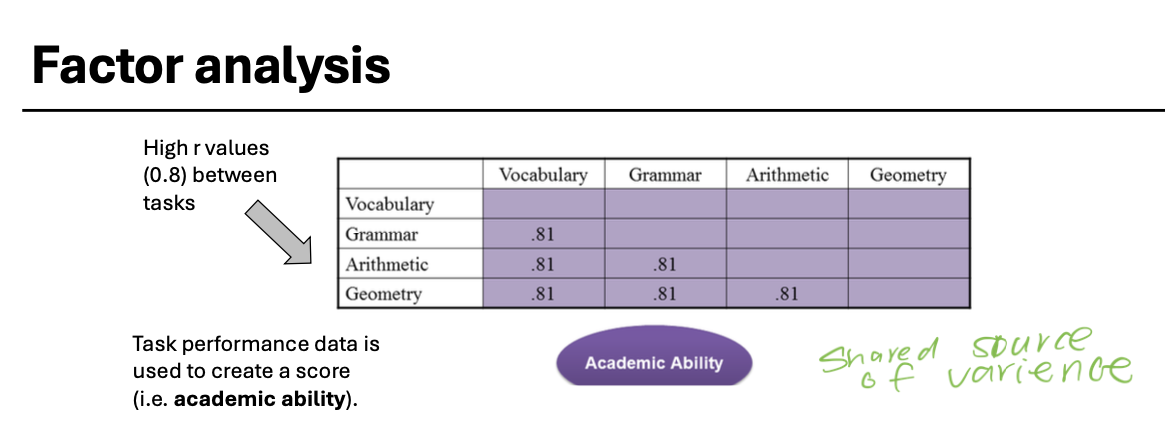
The idea of g (positive manifold)
idea of how ppl tend to get similar scores in seemingly different psychometric tests ( vocab, comprehension and arithmetric)
positive correlation
Why do we see positive correlations?
tests might be related in some way
look like theyre testing for different traits but could be all measuring parts of the SAME trait
driven by the G factor
g
statistical creation
something that is correlated with other abilities
eg. academic ability
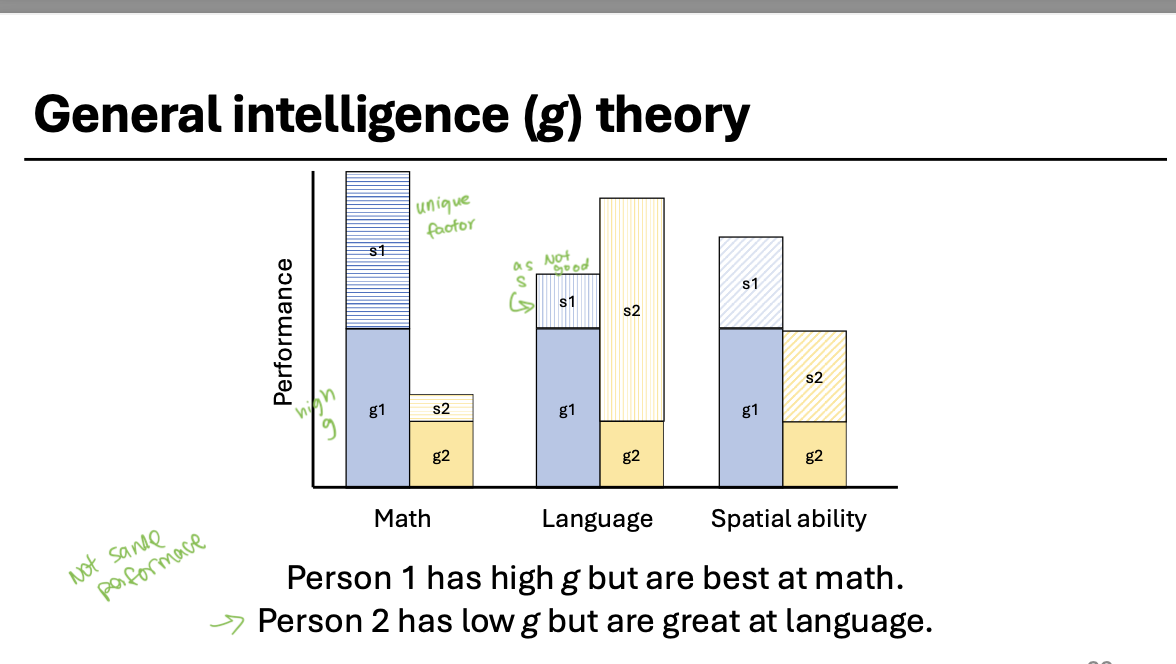
General intelligence (g) theory: cons
not all cognitive abilities are driven by g (ENTIRELY)
correlation between g and one cogn. ability not perfect
portion not explained by g
explained by specific factor (S)
Barriers in Cognitive testing
language ability and culture are concern
test for 1 group might no apply to another
Raven’s Matrices
reduce influence of language and culture by making test based on pattern reconization
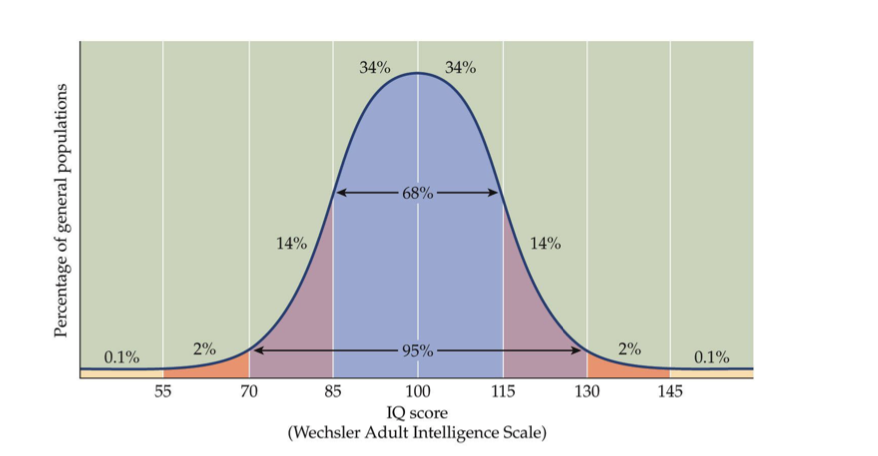
Intelligence Quotient (IQ) “normal” distribution
more impaired cases in reality
many places ISNT random
eg. testing done at uoft might have higher IQ as its at a school campus
Evaluating ourselves
not great r = 0.2 for esitmated IQ
some proposed that low cognitive ability have inflated confidence (criticized)
dunning kruger effect
Why do people care about IQ (or Intelligence)?
preductor of success: TERMAN
related to highly complex profession and better performance
Why do people care about IQ (or Intelligence)? correlation
+ with longevity and hight
- with criminal behaviour and divorce rate (better finanical standings)
ONLY 1 PREDICTOR, MANY OTHER VARIABLES TO CONSIDER
“Too Smart For Your Own Good”
correlated with ledarship performance
high IQ —> worse ledarship