Introduction to Human Anatomy and Physiology: Key Concepts and Body Organization
 Call Kai
 Learn
Learn Practice Test
 Spaced Repetition
 Match
Match Flashcards
 Knowt Play
1/55

There's no tags or description
Looks like no tags are added yet.
Name | Mastery | Learn | Test | Matching | Spaced | Call with Kai |
|---|
No analytics yet
Send a link to your students to track their progress
56 Terms
What is anatomy?
The study of the structure/morphology of the human body and its parts.
What is physiology?
The study of the functions of the human body and its parts.
What are the levels of organization in the human body?
Subatomic particles, atoms, molecules, macromolecules, organelles, cells, tissues, organs, organ systems, organism.
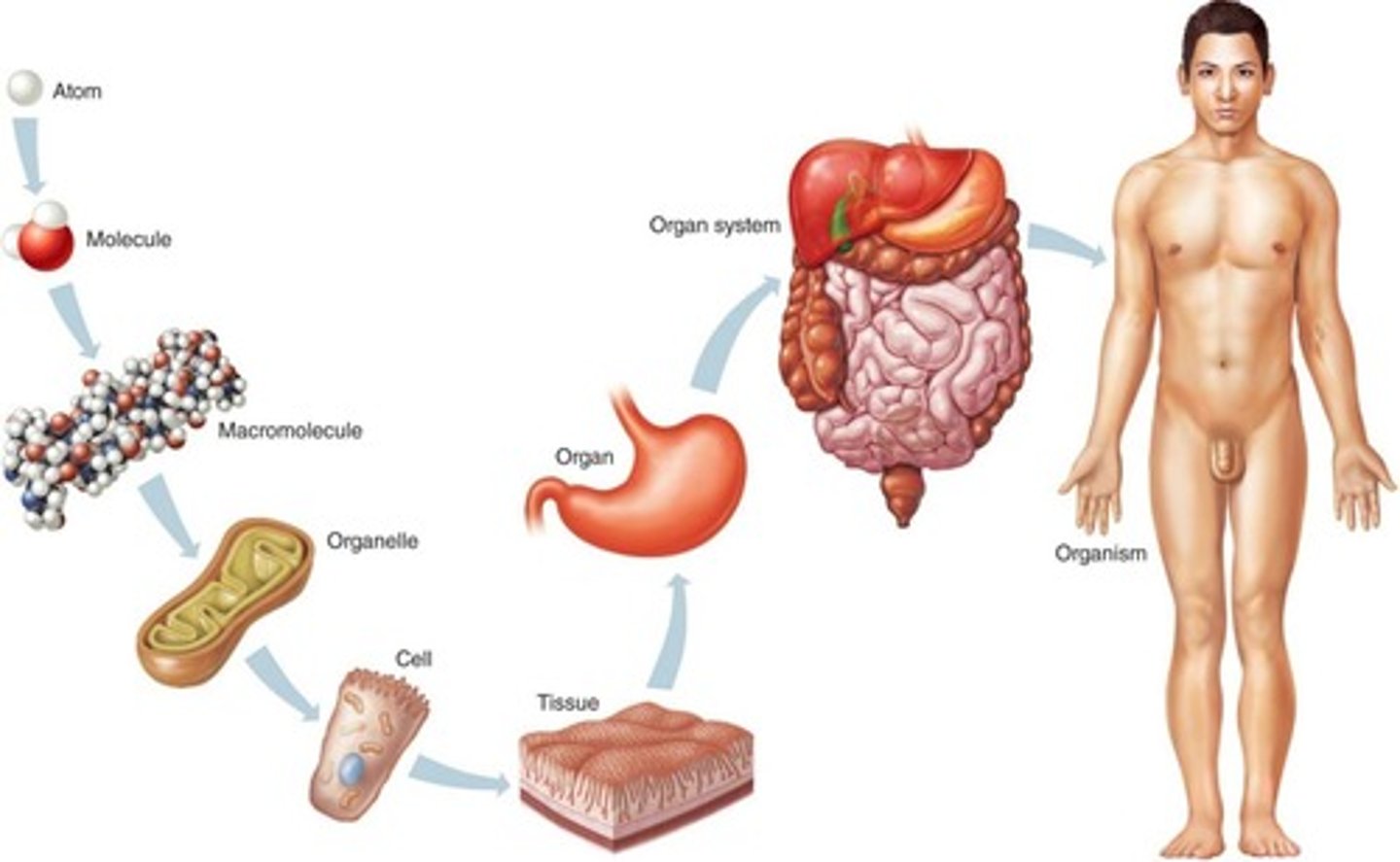
What is the basic unit of structure and function in the human body?
Cell.
What is a tissue?
A layer or mass of cells with a specific function.
What is an organ?
A group of different tissues with a specific function.
What is an organ system?
A group of organs that work together for a common function.
What is homeostasis?
The maintenance of a stable internal environment.
What are the three parts of a homeostatic mechanism?
Receptor, control center, effector.
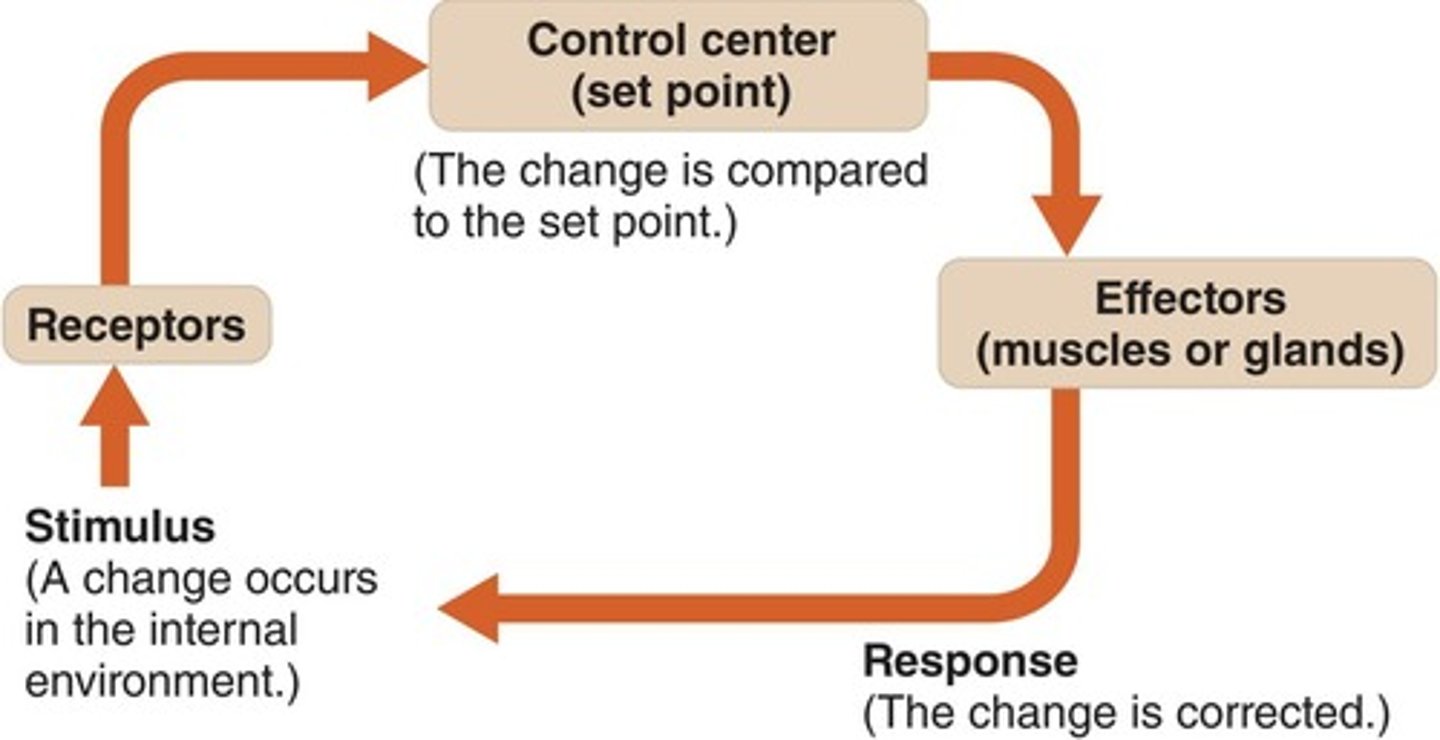
What is negative feedback?
A homeostatic mechanism where effectors return conditions toward normal range, reducing deviation from the set point.
What role does water play in the human body?
It is the most abundant substance, necessary for metabolic processes, transport of substances, and regulation of body temperature.
What is the significance of oxygen for organisms?
It is used to release energy from nutrients.
What is the role of heat in the body?
It helps maintain body temperature and partly controls the rate of metabolic reactions.
What is the function of pressure in the human body?
It applies force on objects, important for breathing and keeping blood flowing.
What is metabolism?
All of the chemical reactions in an organism that support life.
What is the process of digestion?
The breakdown of food substances into simpler forms that can be absorbed and used.
What is absorption in the context of human physiology?
The passage of substances through membranes and into body fluids.
What does responsiveness refer to in living organisms?
The reaction to a change inside or outside the body.
What is the process of excretion?
The removal of wastes produced by metabolic reactions.
What is the significance of reproduction in living organisms?
It is the production of new organisms and new cells.
What is assimilation in human physiology?
The changing of absorbed substances into different chemical forms.
What is circulation in the body?
The movement of substances in body fluids.
What is growth in the context of human physiology?
An increase in body size without a change in shape.
What is the role of sweat glands in thermoregulation?
Sweat glands secrete sweat, which cools the skin.
How do blood vessels in the skin contribute to heat loss?
Blood vessels in the skin dilate to lose heat to the environment.
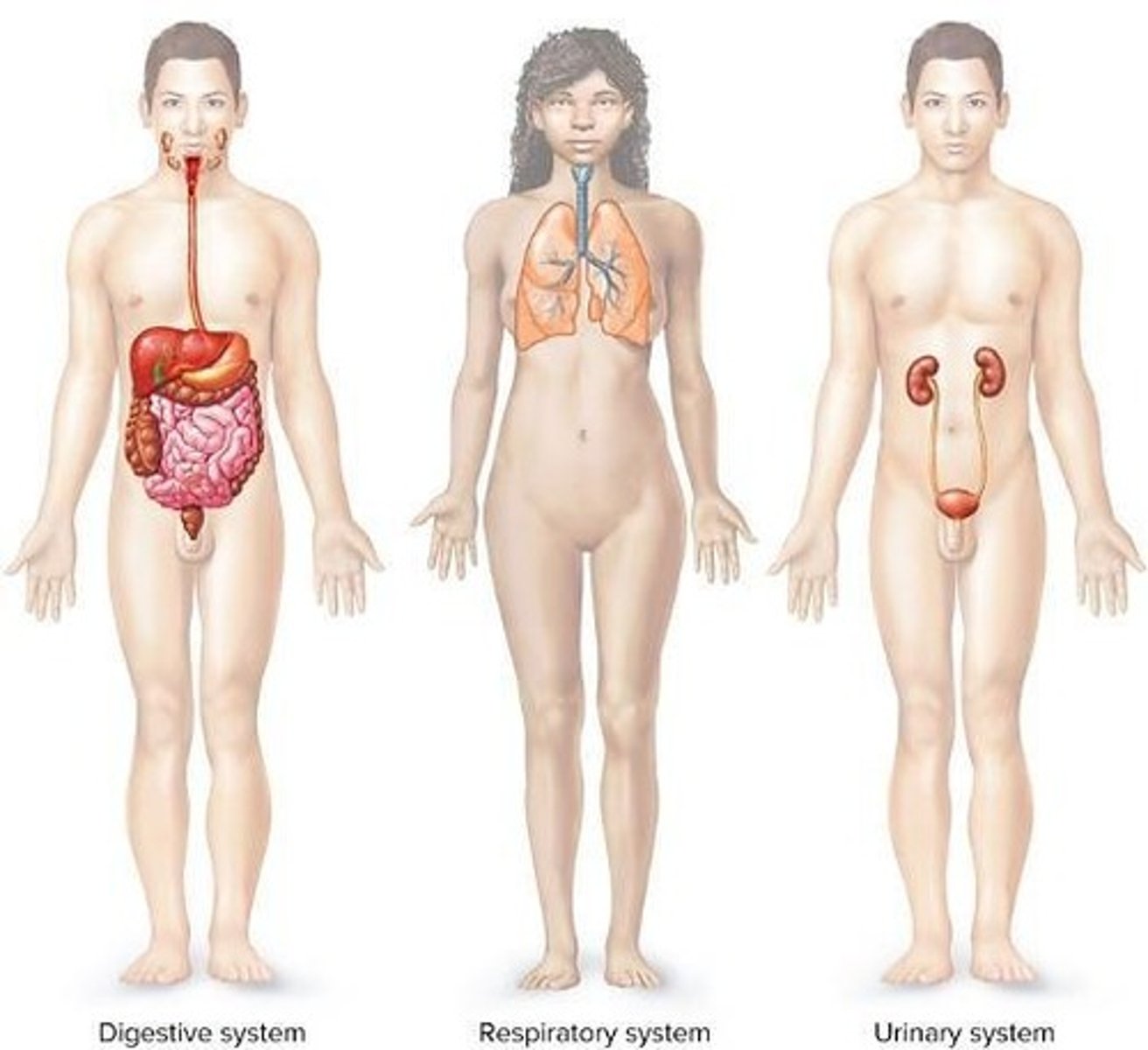
What is the function of the digestive system in homeostasis?
The digestive system brings nutrients into the body.
What does the respiratory system do for homeostasis?
It brings in oxygen and gets rid of carbon dioxide.
How does the cardiovascular system support homeostasis?
It distributes oxygen and nutrients to body cells and transports wastes away from them.
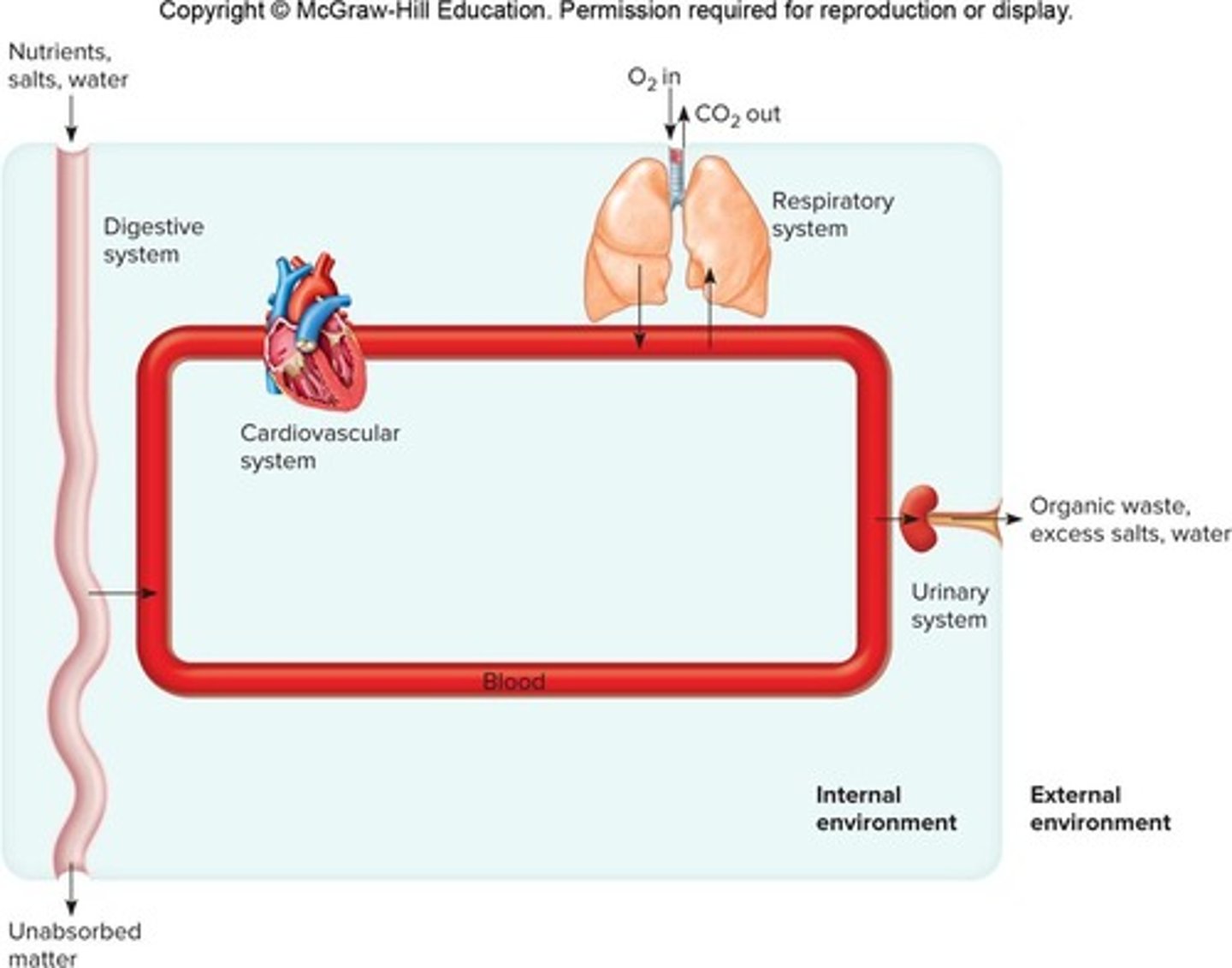
Which systems are responsible for waste removal from the body?
The urinary and respiratory systems.
What characterizes positive feedback mechanisms?
They intensify changes instead of reversing them and are short-lived.
Give an example of a positive feedback mechanism.
Blood clotting and uterine contractions during childbirth.
What are the primary functions of the integumentary system?
Protection, body temperature regulation, sensory reception, and production of Vitamin D.
What is the main purpose of the skeletal system?
Framework, protection, attachment sites, storage of inorganic salts, production of blood cells, support, and movement.
What is the primary function of the muscular system?
Movement, main source of body heat, and maintenance of posture.
What do the nervous and endocrine systems do?
They integrate and coordinate organ function through nerve impulses or hormones.
What does the cardiovascular system transport?
Gases, nutrients, blood cells, and wastes.
What is the role of the lymphatic system?
Transportation of fluids, lymphocyte production, and body defense.
What are the main functions of the digestive system?
Receives food, breaks down food, and excretes waste.
What is the function of the respiratory system?
Exchange of gases.
What does the urinary system regulate?
Removes blood wastes, regulates electrolyte and water balance, and blood pressure.
What are the functions of the reproductive system?
Produces and transports sex cells; female system also provides fetal development and childbirth.
What are the two main portions of the human body?
Axial portion (head, neck, trunk) and appendicular portion (upper and lower limbs).
What does the cranial cavity house?
The brain.
What is contained within the vertebral canal?
The spinal cord.
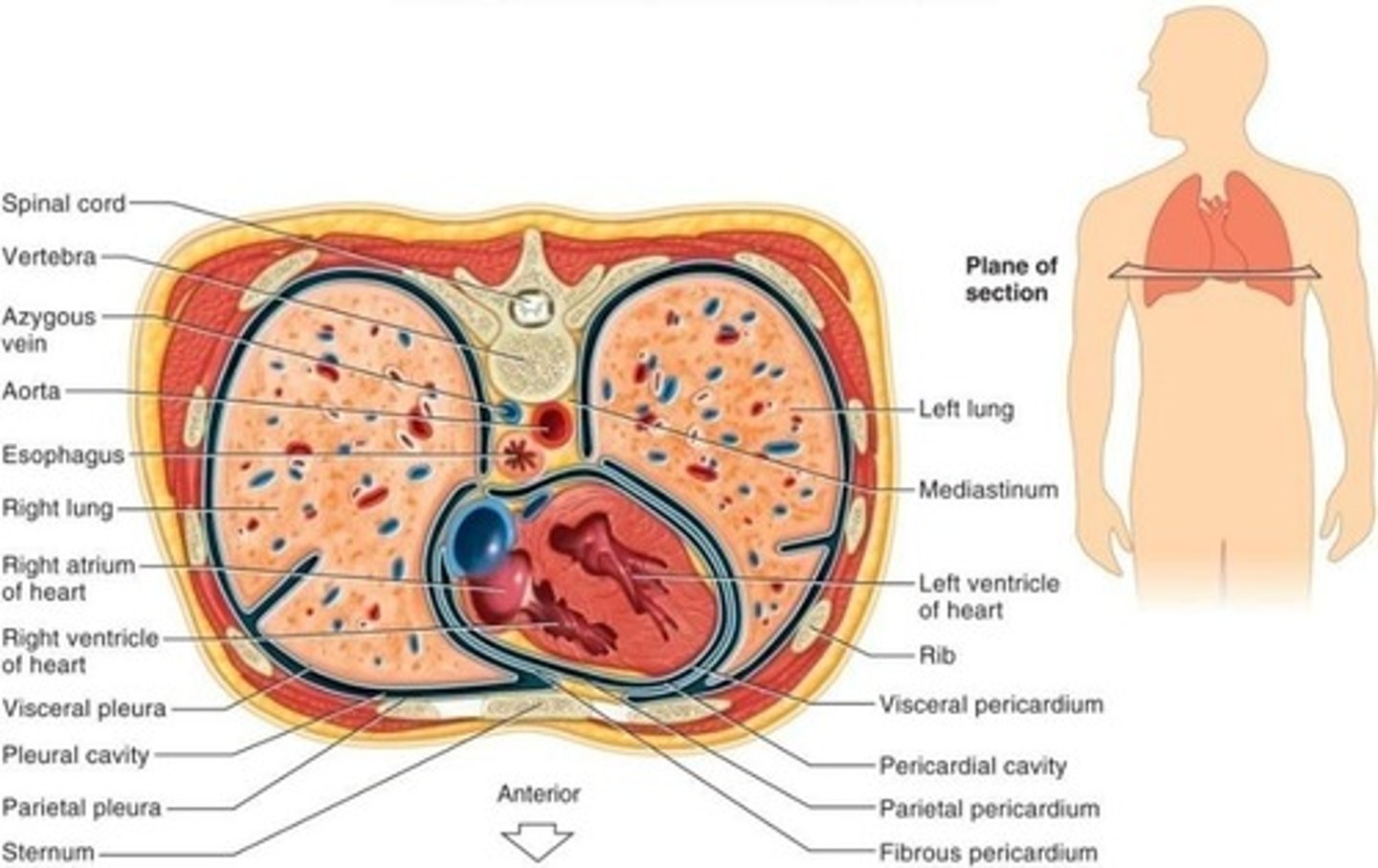
What does the thoracic cavity contain?
Lungs and thoracic viscera.
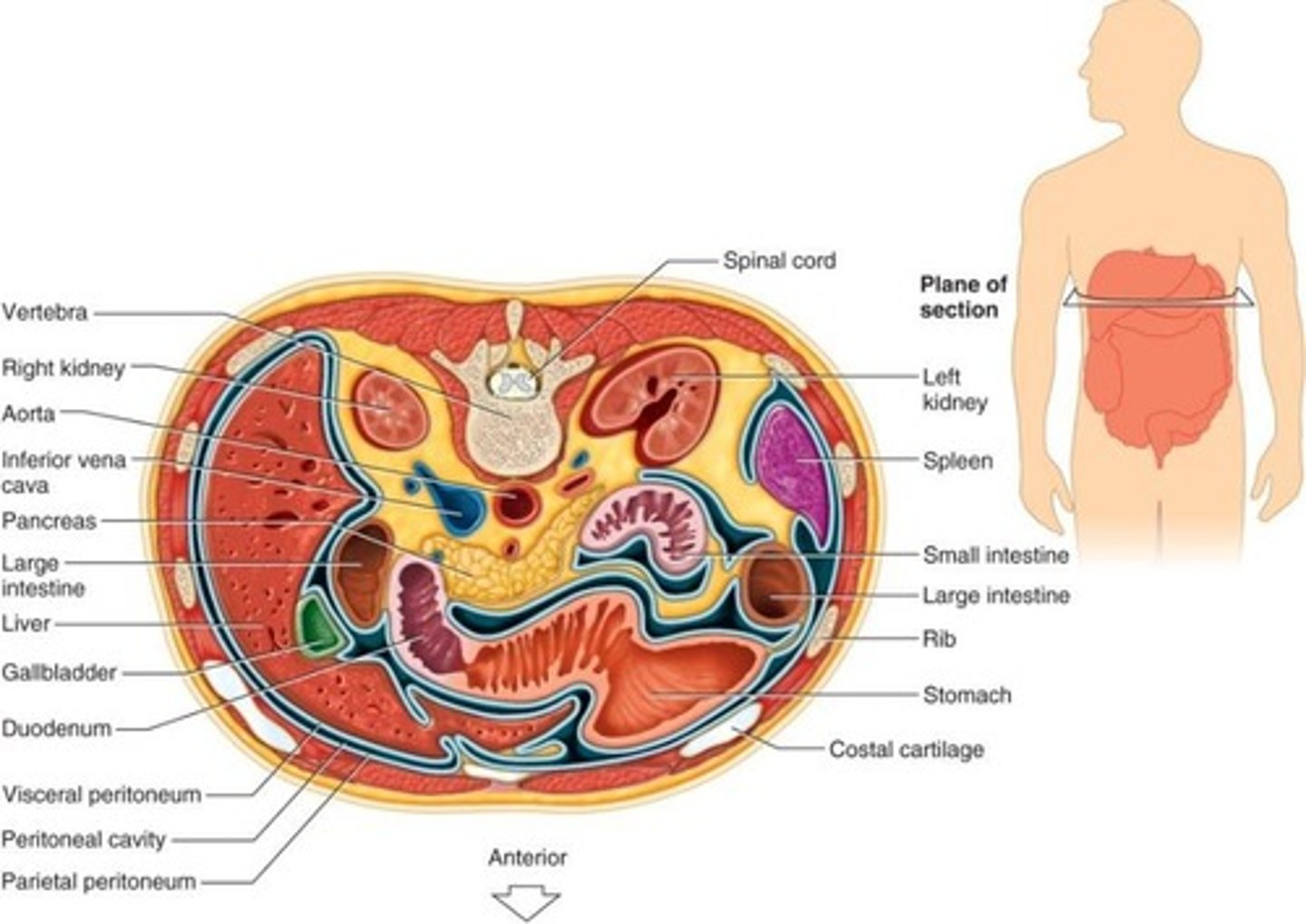
What is the abdominopelvic cavity?
It contains abdominal and pelvic viscera.
What are the small cavities of the head?
Oral cavity, nasal cavity, orbital cavities, and middle ear cavities.
What are the regions of the abdominopelvic area?
Epigastric, umbilical, hypogastric, right and left hypochondriac, right and left lumbar, right and left iliac.
What is the anatomical position?
Standing erect, facing forward, upper limbs at the sides, palms facing forward.
Define 'superior' in anatomical terms.
Above.
Define 'inferior' in anatomical terms.
Below.
What does 'medial' refer to?
Toward the midline.
What does 'lateral' mean?
Away from the midline.
What is a sagittal section?
A longitudinal cut that divides the body into left and right portions.
What is a transverse section?
A cut that divides the body into superior and inferior portions.
What is the purpose of serous membranes?
To secrete serous fluid that prevents friction between layers.