LDSP Final Exam-Ch. 8, 9, 10, 13
 Call Kai
 Learn
Learn Practice Test
 Spaced Repetition
 Match
Match Flashcards
 Knowt Play
1/29

There's no tags or description
Looks like no tags are added yet.
Name | Mastery | Learn | Test | Matching | Spaced | Call with Kai |
|---|
No analytics yet
Send a link to your students to track their progress
30 Terms
LDSP Definition
Leadership is a process whereby an individual influences a group of individuals (followers) to achieve a common goal
Transformational LDSP
A process that changes and transforms both leaders and followers. It involves an exceptional form of influence that moves followers to accomplish more than expected. (Ghandi)
Transactional LDSP
Focuses on exchanges between leaders and followers. (surpass goals=promotion)
Pseudo-transformational LDSP
Leaders who are transforming in a negative way; self-serving, exploitive, and power-oriented with warped values. (Hitler)
Charismatic LDSP
Charisma is a special personality characteristic giving a person superhuman or exceptional powers, often treated as being of divine origin.
Charismatic LDSP-personality traits
-dominent
-desire to influence
-self-confident
-strong moral values
Charismatic LDSP-behaviors
-sets strong role model
-shows competence
-articulates goals
-communicates high expectations
-expresses confidence
-arouses motives
Charismatic LDSP-effects on followers
-trust in leaders ideology
-belief similarity between leader and follower
-unquestioning acceptance
-affection toward leader
-obedience
-identification with leader
-emotional involvement
-heightened goals
-increased confidence
Strengths of Transformational LDSP
-well researched across many studies and real world leaders
-has strong intuitive appeal-people easily understand it
-focuses on LDSP as a process
-offers a broad, growth focused view of LDSP
-emphasizes followers' needs, values, and development
-supported as an effective LDSP approach
Criticisms of Transformational LDSP
-Lacks clear definition—concepts can be vague
-Overlapping ideas with other leadership theories
-Dimensions are not clearly distinct or defined
-May seem like a personality trait, not teachable
-No clear cause-effect link to outcomes
-Can be seen as elitist or leader-centered
-Heroic bias—overemphasizes the leader
-Potential for misuse/abuse of power
-May not resonate with younger generations
Authentic LDSP Definition
-focuses on whether leadership is genuine
-Leader behavior is grounded in positive psychological qualities and strong ethics
-Authentic leadership is when who you are aligns with how you lead
Interest in Authentic LDSP
-increasing in recent times due to social upheavals
-people longing for trustworthy leaders
-identified earlier in transformational LDSP research but not studied separately
-needed evidence based research construct
Intrapersonal Definition
-self-"who I am"
-Leadership based on self-concept and how self-concept relates to actions
-Relies on the life story of the leader, own personal values and convictions;Inner compass
Interpersonal Definition
-others-"how I relate"
-Leadership is created by leaders and followers together
-It is a reciprocal process because leaders affect followers and followers affect leaders.
-How do I show up for others; do others perceive me as authentic
5 characteristics of authentic leaders
-understand their purpose
-strong values
-trusting relationships
-self-discipline
-act from the heart
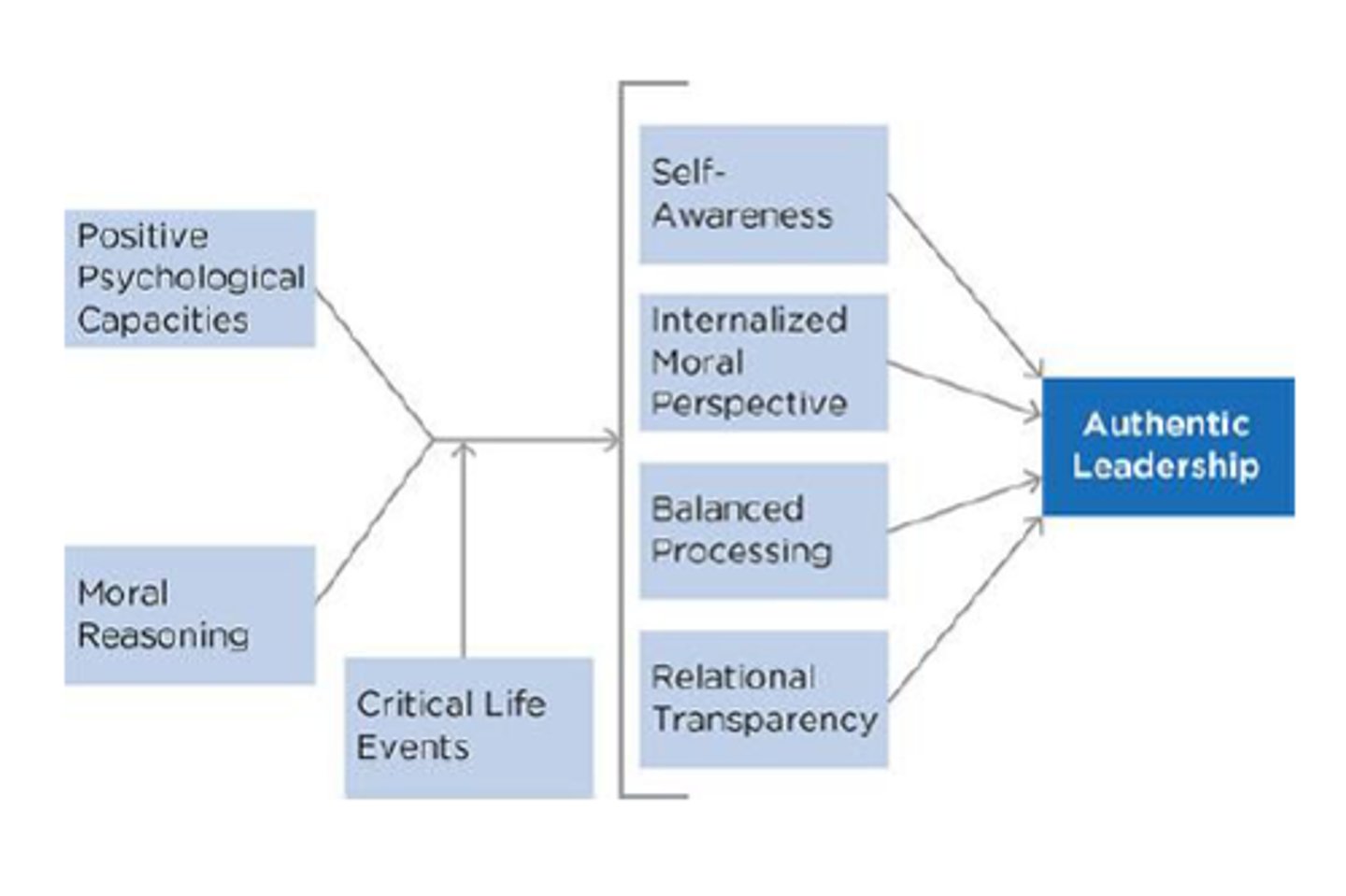
Four components of Authentic LDSP-basic model
-self awareness: reflecting on one's core values, identity, emotions, motives
-internalized moral perspective: self-regulatory process using internal moral standards to guide behavior
-balanced processing: ability to analyze information objectively and explore other people's opinions before making a decision
-relational transparency: Being open and honest in presenting one's true self to others
Strengths of Authentic LDSP
-Responds to the need for trustworthy leadership in uncertain times
-Provides a practical + theoretical guide for becoming a better leader
-Emphasizes ethics and the greater good
-Anyone can develop authentic leadership (not trait-based)
-Can be measured (ALQ) for research and development
Criticisms of Authentic LDSP
-Still a developing theory with concepts not fully established
-The moral component is unclear—what defines "right"?
-Psychological traits (confidence, optimism) not fully explained
-Limited research on newer generations (Millennials/Gen Z)
-Impact on outcomes is unclear—does it always lead to success?
Servant LDSP Definition
Greenleaf="I serve, so you can grow-and then lead too"
Servant LDSP is...
-wanting to help others
-serving others comes before leading them
-focusing on what people really need
Servant LDSP Model
community -> team members -> mid-level LDSP -> leader
10 characteristics of a servant leader
-listening
-empathy
-healing
-awareness
-persuasion
-conceptualization
-foresight
-stewardship
-commitment to the growth of the people
-building community
Strengths of Servant LDSP
-Puts people first → Focuses on helping others grow and succeed
-Shares power → Leaders don't control everything; they empower others
-Works when people are open → Strong when followers want support and growth
-Encourages ethical leadership → Focus on fairness and care for others
Criticisms of Servant LDSP
-No clear definition → Scholars don't all agree on what it exactly is
-Can feel unrealistic → Not all situations allow leaders to always put others first
-May conflict with results focus → Balancing people vs.productivity can be tough
-Can sound moralistic → May come across as "this is theonly right way to lead"
Followership Definition
-a process whereby an individual or individuals accept the influence of others to accomplish a common goal
-The character and behavior of followers have an impact on organizational outcomes.
Relational-Based Perspective
-Based on social constructivism: People create meaning about their reality as they interact with each other
-Followership is co-created by the leader and follower in a given situation through communication
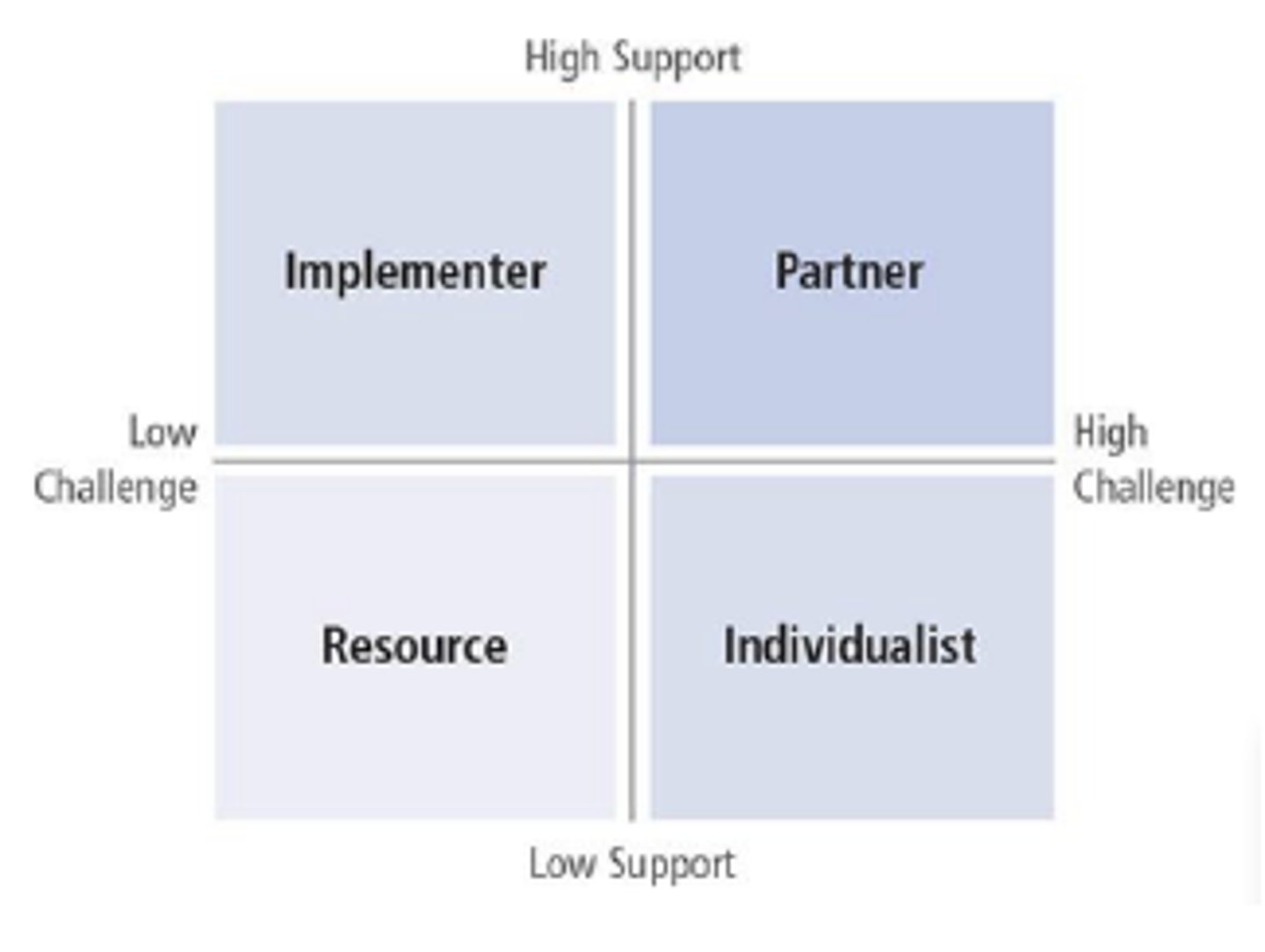
Chaleff Typology
-resources
-individualist: questions, independent thinker
-implementer: dependable, loyal, avoids conflict or questioning
-partner: supports and constructively challenges, offers solutions
-diehard
Courageous Followership
-Followers need to take a more proactive role
-Followers need to take more responsibility, feel more agency, and confidence in ability to influence others
-Constructively challenge the leader if the common purpose or integrity of the group is being threatened
-Champion the need for change when necessary
Strengths of Followership
-Recognizes followers as essential to leadership success
-Shifts thinking from leader-only focus to shared responsibility
-Views leadership as co-created (leaders + followers)
-Provides clear guidance on how followers should acteffectively
Criticisms of Followership
-Limited research and data to fully support theory
-Much of the theory is based on observation, not empirical studies
-Traditional leader-focused mindset is hard to change
-Less developed compared to long-established leadership theories