HLTH 207 Week 6 - Case Control Designs
 Call Kai
 Learn
Learn Practice Test
 Spaced Repetition
 Match
Match Flashcards
 Knowt Play
1/103

There's no tags or description
Looks like no tags are added yet.
Name | Mastery | Learn | Test | Matching | Spaced | Call with Kai |
|---|
No analytics yet
Send a link to your students to track their progress
104 Terms
Does the entire population need to be studied in a case control study?
Not the entire population of interest needs to be studied in a case design; a sample can simply be taken
3 parts of a case control design
Identify a group of individuals with the outcome of interest (cases) along with a suitable comparison group of individuals without the outcome (controls)
Identify history of exposures of all study participants
Determine which exposures are more (or less) common among cases than controls
Outcome frequency measure for case control designs
Cannot calculate
Measure of association calculated for case control designs
Exposure odds ratio (EOR)
4 basic steps of designing a case control study
State the research question
Design the case-control study
Conduct the case-control study
Analyze and report data
3 aspects of stating the research question
State the study hypothesis(es) based on the research question
Define outcome(s) with case definitions
Define the exposure and reference group
4 aspects of designing the case control study
Determine whether you will conduct a primary or secondary-base case-control study
Identify the sample population from the source population
Decide on a strategy to identify cases and controls
Decide whether you want to conduct matching
Aspect of conducting the case-control study
Select cases and controls, obtain informed consent, and measure the past exposure status of the participants
3 aspects of analyzing and reporting data
Calculate measures of association (and conduct a matched analysis, if appropriate)
Report findings using the STROBE reporting guidance
Consider the strengths and limitations of the study
When are case-control studies used?
when investigators are interested in studying a particular health outcome and aim to identify exposures associated with that outcome
5 questions that case control studies should address?
What is the population of interest?
What is the health outcome of interest and how is it defined?
What is the exposure of interest and how is it defined?
What measures of frequency are being compared?
What is the direction of the hypothesized association
Functions of cases in a case-control study
provide an estimate of the frequency of the exposure in people with the outcome in the source population
Controls
selected from the same source population as the cases, and would have been identified as cases had they acquired the outcome
Function of controls in a case-control study
provide an estimate of the frequency of the exposure in the source population
What is the most important aspect to define in a case-control study?
Source population
Source population
refers to the underlying population that gave rise to the cases
Case control designs require a ____________ definition to determine who is eligible to be considered a case
rigorous case definition
2 qualities of exposures used in a case-control study
Typical for several different exposures to be investigated in case-control studies
Exposures should be factors that are plausibly related to the outcome of interest
“Gold standard” meaning
The term “gold standard” is used to describe a measurement method that is widely accepted as the best or most reliable way to measure an exposure or outcome
2 classifications of case-control studies and how they are categorized
Case-control studies are classified as primary- or secondary-base depending on how the source population is identified and used for participant recruitment
Primary base case-control studies
with a well-defined source population, and then cases and controls are selected from that population
Function of primary base case control study
This strategy ensures cases and controls are sampled from the same source population and is therefore the preferred approach
Secondary base case control study
investigators begin by identifying a feasible mechanism for selecting cases from the source population
When should a secondary base case-control study be used?
Sometimes it may not be feasible to clearly define and sample from the source population that gave rise to the cases
Since there is not a well-defined source population in secondary base case control studies, what must investigators do?
Attempt to identify an appropriate comparison group of individuals who would have been identified as cases had they developed the outcome of interest
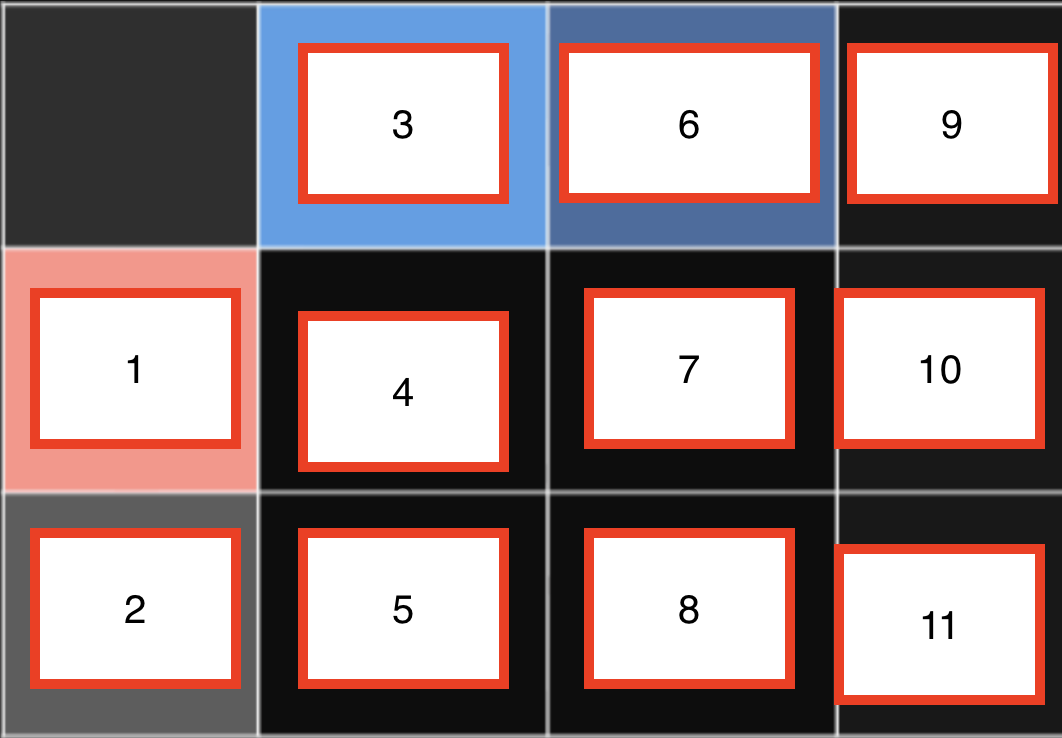
Label the following table for case-control studies
Cases
Controls
Exposed (E+)
A
C
Unexposed (E-)
B
D
Total
M1 (A+B)
M2 (C+D)
Measure of outcome frequency used in case-control designs
None
Why is there not a measure of outcome frequency used for case-control designs?
Investigators decide how many cases and controls to enroll in a case-control study
Thus, there is no meaningful measure that describes the frequency of an outcome for this design
Measure of exposure frequency used in case control design
Odds
Function of odds (measure of exposure frequency)
We typically do not report the frequency of the exposure on its own - however, we use this information to help calculate the odds ratio, which is the appropriate measure of association for case-control designs
Odds of exposure among cases calculation
probability of exposure among cases/probability of non-exposure among cases = (A/M1)/(B/M1) = A/B
Odds of exposure among controls calculation
probability of exposure among controls/probability of non-exposure among controls = (C/M0)/(D/M0) = C/D
Measure of association used in case control designs
Exposure odds ratio (EOR)
What may EOR also be referred to as?
Cross-product
EOR calculation
EOR = odds of exposure among cases/odds or exposure among controls = (A/B)/(C/D) = AD/BC → may be referred to as cross-product
Structure for interpreting an exposure odds ratio
The odds of exposure among cases is [EOR] times the odds of exposure among controls
Purpose of a case control study
ascertain whether an exposure is more or less common in those with the outcome compared to the source population, therefore the interpretation should only reference the exposed condition among cases and controls
Null value for EOR
1
The case-control design is useful because it allows investigators to evaluate the association between one or more exposure and a health outcome without requiring what 2 pieces of information?
Exposure data on everyone in the source population
A follow-up period
Odds ratio in other study designs
The odds ratio is the only measure of association that can be calculated in a case-control study
However, odds ratios are sometimes calculated for in other study designs
The cross-product/EOR can be calculated in any study with __________________
traditional 2×2 data
What is the cross-product called in a cohort study?
risk odds ratio
What is the cross-product called in a cross-sectional study?
prevalence odds ratio
Appropriate use of odds ratio vs. risk/rate-based measures in other types of studies
It is best to report risk-, rate- or prevalence-based measures of association for these other study designs, and seeing that investigators have reported an odds ratio isn’t enough to determine that they have conducted a case-control study
Method 1: Sampling after enumeration of all cases
Begins by identifying all cases occurring in the source population and including either all of these individuals as cases or a random sample of these individuals as cases in the study
When is method 1 (enumeration of all cases) common?
when the health outcome of interest is systematically collected or reportable (i.e. outcome data are available in health registries, vital records, or previous cohort studies)
What may occur in method 1 (enumeration of all cases) when it is not possible to enroll all of the cases that were identified?
In this situation, a random sample of cases may be enrolled
In a random sample, each case has the same probability of being selected and enrolled
What should the frequency of exposure be if a random sample of cases is enrolled in a case control design?
In this situation, the frequency of the exposure in the random sample of cases should be the same as the frequency of exposure among all those with the outcome in the source population
If it is not possible to identify all individuals with the health outcome of interest, what is a common approach?
One common approach is to identify patients receiving care within a particular healthcare facility as cases
2 disadvantages of not identifying all individuals with the health outcome of interest in the source population
sampled cases may be different than those who would have been selected if there was a complete listing of cases available
May miss some cases in the source population
Selection bias in case-control designs
if investigators only enumerated and sampled cases from one of these healthcare facilities, the estimate of the frequency of exposure among cases would not be the same as the source population
When selecting cases for case-control study, investigators must also consider whether they are selecting _________ or __________ cases of the outcome
incident, prevalent
Is it generally preferable to select and enroll incident or prevalent cases in case control studies? Why?
It is generally preferable to select and enroll incident cases because the exposure could be associated with survival among those with the outcome
When the exposure is associated with survival, unexposed cases live longer and would be overrepresented in a sample of prevalent cases
Why might prevalent cases not provide an accurate measurement compared to incident cases in a case-control design?
If exposure is associated with survival, prevalent cases may not provide an accurate estimate of the frequency of exposure among those with the outcome in the source population
Controls
group of individuals who should be selected from the same source population as the cases, and who should provide an estimate of the frequency of exposure(s) in the source population
3 main sources from which to select controls
Population-based controls
Hospital and clinic based controls
Relatives, neighbors, or friends of cases
Population-based controls
occurs in primary base studies and is the most robust approach to identify controls
Population-based controls method
Investigators have access to complete list of the source population, which is often defined by a geographic area
Advantage of population-based controls
frequency of the exposure(s) among controls randomly selected from a population-based roster should be similar to that of the entire source population
2 disadvantages of population-based controls
May not always be feasible
Individuals selected from a population-based roster may be less likely to agree to participate in a research study than those identified via other approaches
Hospital- and clinic-based controls
When cases are identified at a healthcare facility, investigators may enroll hospital- or clinic-based controls
Source population in hospital- and clinic-based controls
The source population is conceptualized as a group of individuals who would be treated at a particular facility if they were to develop the outcome of interest
Control group in hospital- and clinic-based controls
It is assumed that the control group would receive treatment at the same facility as the cases if they actually had the outcome of interest
2 advantages of hospital- and clinic-based controls
May be easier to find, more motivated to participate than controls recruited using other methods
May be more similar to cases than population-based controls on confounders
Limitation of hospital- and clinic-based controls
These controls may not accurately represent the frequency of exposure in the source population
Relative, neighbors, or friends of cases method
In instances where population-, hospital-, or clinic-based controls cannot be identified, relative, neighbors, or friends of the cases may be selected as a control group
3 advantages of relative, neighbors, or friends of cases method
Do not have to enumerate the source population
May be more motivated to participate given the social connection to cases
May be more similar to the cases on confounders
2 limitations of relative, neighbors, or friends of cases method
Reliance on cases to provide contact information for potential controls
Frequency of exposure(s) among these controls group may be more similar to the cases than to the source population due to proximity
Defining feature of a cohort study
a group of individuals who are at-risk for the outcome of interest are followed over time to see who develops the outcome of interest
What changes if historical data is used to conduct a cohort study?
the underlying structure is the same
Outcome frequency in cohort studies
Outcome frequency can be measured in all types of cohort studies
3 characteristics of case-control study that is different from cohort study
Does not follow a cohort of at-risk individuals over time
First classified by outcome status
Outcome frequency cannot be estimated using case-control data
Matching
occurs when investigators select controls who have specific attributes that correspond to those of the cases
Requirements of matching attrivutes
must be factors that are likely to be confounder of the relationship between exposure and outcome
Confounders
factors that are associated with both the exposure and the outcome and may partially or completely explain an observed exposure-outcome association
What happens (in terms of data analysis) if confounders are ignored?
EOR will be biased or incorrect
What happens in terms of matching once a case is identified?
Once a case is identified, investigators may seek to identify a control or set of controls that has (have) the same matching factors characteristics (i.e. age) as the case
4 types of matching
Pair-matching
Exact matching
Category matching
Caliper matching
Pair-matching
occurs when one control is matched to each case while n-to-one matching means more than one control is matched to each case, where n is the number of controls
Exact matching
matching on the exact same value of the matching factors; however, this may be challenging for certain factors
Example of exact matching
exact matching on age and sex means a 36-year-old female case is matched to a 36-year-old female control
Category matching
mutually exclusive categories for the matching factor are identified and a control is selected that falls in the same category as the case
Caliper matching
controls with a value within a specified range of the case are identified
Advantage of matching in case-control study
Control for the confounding by the matched factors
2 limitations of matching in case-control study
More difficult to identify controls for inclusion in the study
Can be time-consuming and costly
What happens to a factor once it is matched on?
Once a particular factor is matched on, it can no longer be considered as a potential exposure because matching has forced the cases and controls to have the same frequency of the matched factor
How is the data layout for a pair-matched case control study different from an unmatched case control study?
each cell represents the number of pairs with a given exposure pattern
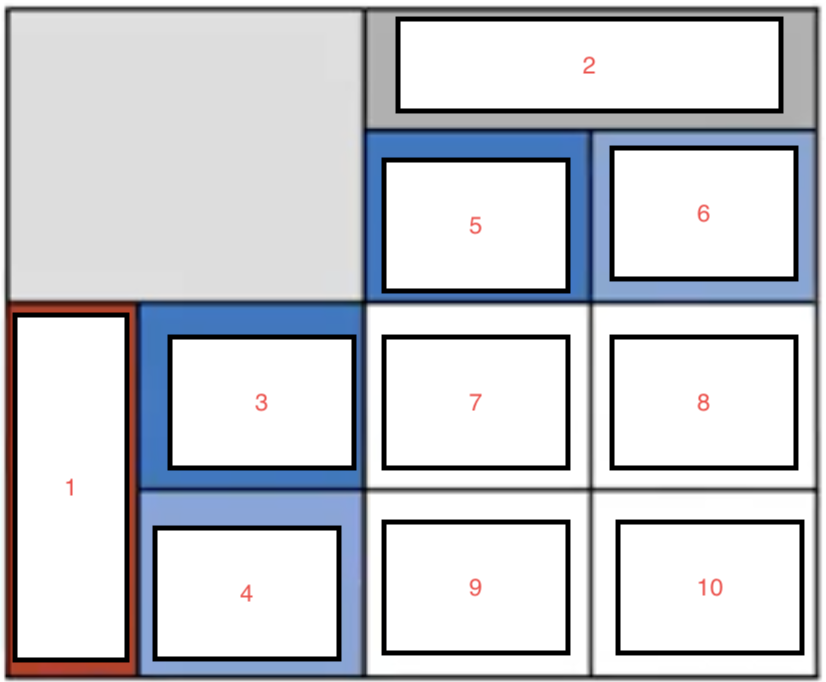
Label the following case control 2×2 table
Exposure status of the case
Exposure status of the control
Exposed (E+)
Unexposed (E-)
Exposed (E+)
Unexposed (E-)
W
X
Y
Z
W (on case-control 2×2 table)
both the case and control are exposed
X (on case-control 2×2 table)
the case is exposed and the control is unexposed
Y (on case-control 2×2 table)
the case is unexposed and the control is exposed
Z (on case-control 2×2 table)
both the case and control are unexposed
2 exposure patterns/statuses
Concordant
Discordant
Concordant exposure pattern
the exposure status is the same for the case and control (W and Z)
Discordant exposure pattern
the exposure status is different for the case and control (X and Y)
What can we evaluate when the exposure status of the case and control are concordant?
we don’t gain any information to evaluate the relationship between the exposure and outcome
What can we evaluate when the exposure status of the case and control are discordant?
e can evaluate whether there is an association between exposure and outcome
Pair-matched odds ratio (mOR)
ratio of discordant pairs: X/Y
Pair-matched odds ratio (mOR) null value
1
What can we conclude if the pair-matched odds ratio is greater than 1?
there are more pairs where the case is exposed and the control is unexposed