Acute Kidney Failure: Diagnosis, Manifestations, and Nursing Interventions
 Call Kai
 Learn
Learn Practice Test
 Spaced Repetition
 Match
Match Flashcards
 Knowt Play
1/22

There's no tags or description
Looks like no tags are added yet.
Name | Mastery | Learn | Test | Matching | Spaced | Call with Kai |
|---|
No analytics yet
Send a link to your students to track their progress
23 Terms
What is the primary function of the kidneys?
To remove wastes and perform regulatory functions.
What is the GFR range for End-Stage Renal Disease (ESRD)?
0-15.
What is acute kidney injury?
A reversible syndrome that results in decreased glomerular filtration rate and oliguria.
What is chronic renal failure?
A progressive, irreversible deterioration of renal function that results in azotemia.
How long does chronic kidney disease last?
More than 3 months.
What can cause reduced blood flow to the kidneys?
Hypovolemia, dehydration, hypotension, and reduced cardiac output.
What are common causes of acute kidney injury?
Reduced blood flow, obstruction of the urinary tract, and exposure to nephrotoxic medications.
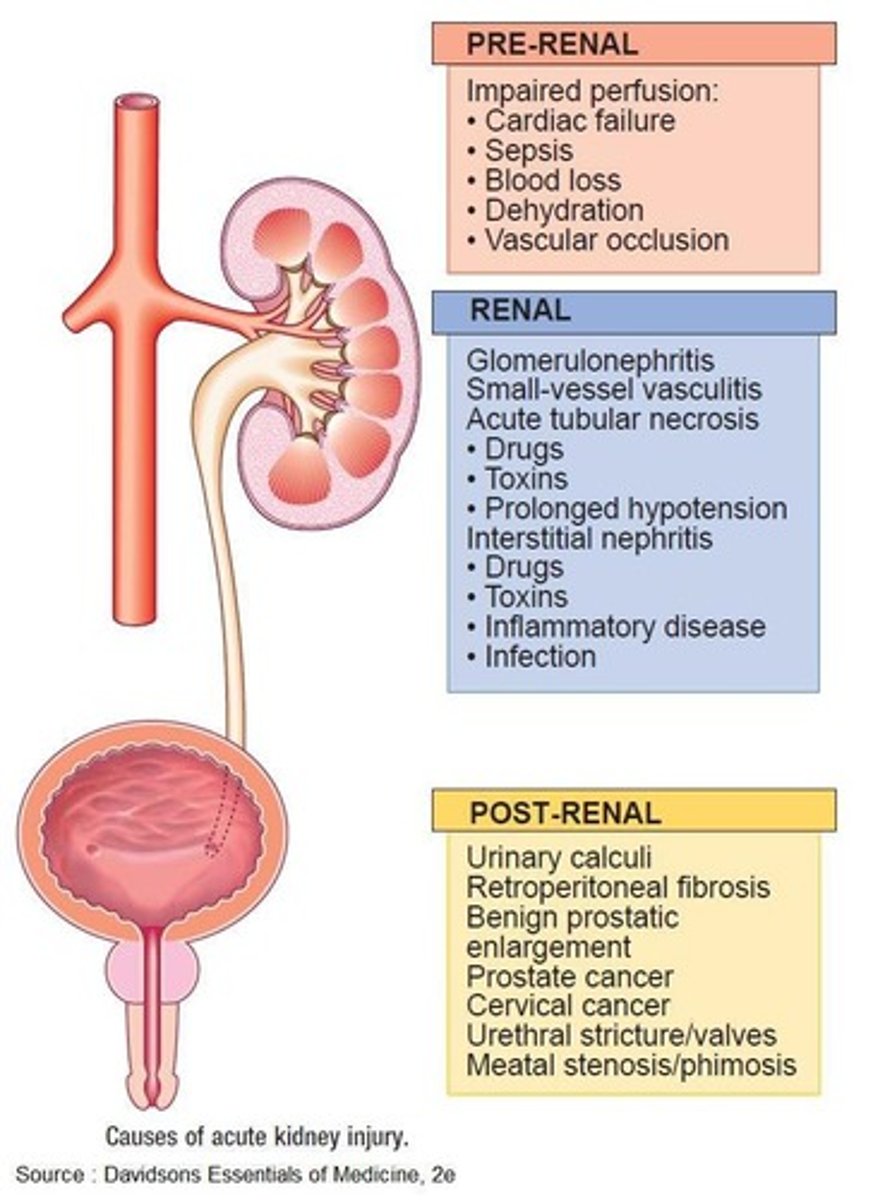
What is prerenal failure?
Impaired perfusion of the kidney.
What is intrarenal failure?
Kidney infection (pyelonephritis) or nephrotoxic medications.
What is postrenal failure?
Obstruction of the urinary tract (e.g., stones, BPH, cancer).
What are clinical manifestations of fluid volume overload?
Pulmonary edema, hypertension, and peripheral edema.
What electrolyte imbalance is associated with acute kidney failure?
Hyperkalemia, which increases the risk for dysrhythmias.
What acid-base imbalance can occur in acute kidney failure?
Metabolic acidosis.
What are potential long-term consequences of acute kidney failure?
Chronic kidney disease (CKD) and End-stage renal disease (ESRD).
What nursing interventions are important for fluid management?
Monitor intake and output, and daily weights.
What dietary considerations should be made for patients with acute kidney failure?
Low sodium, low sugar, low fat, and restricted fluid intake.
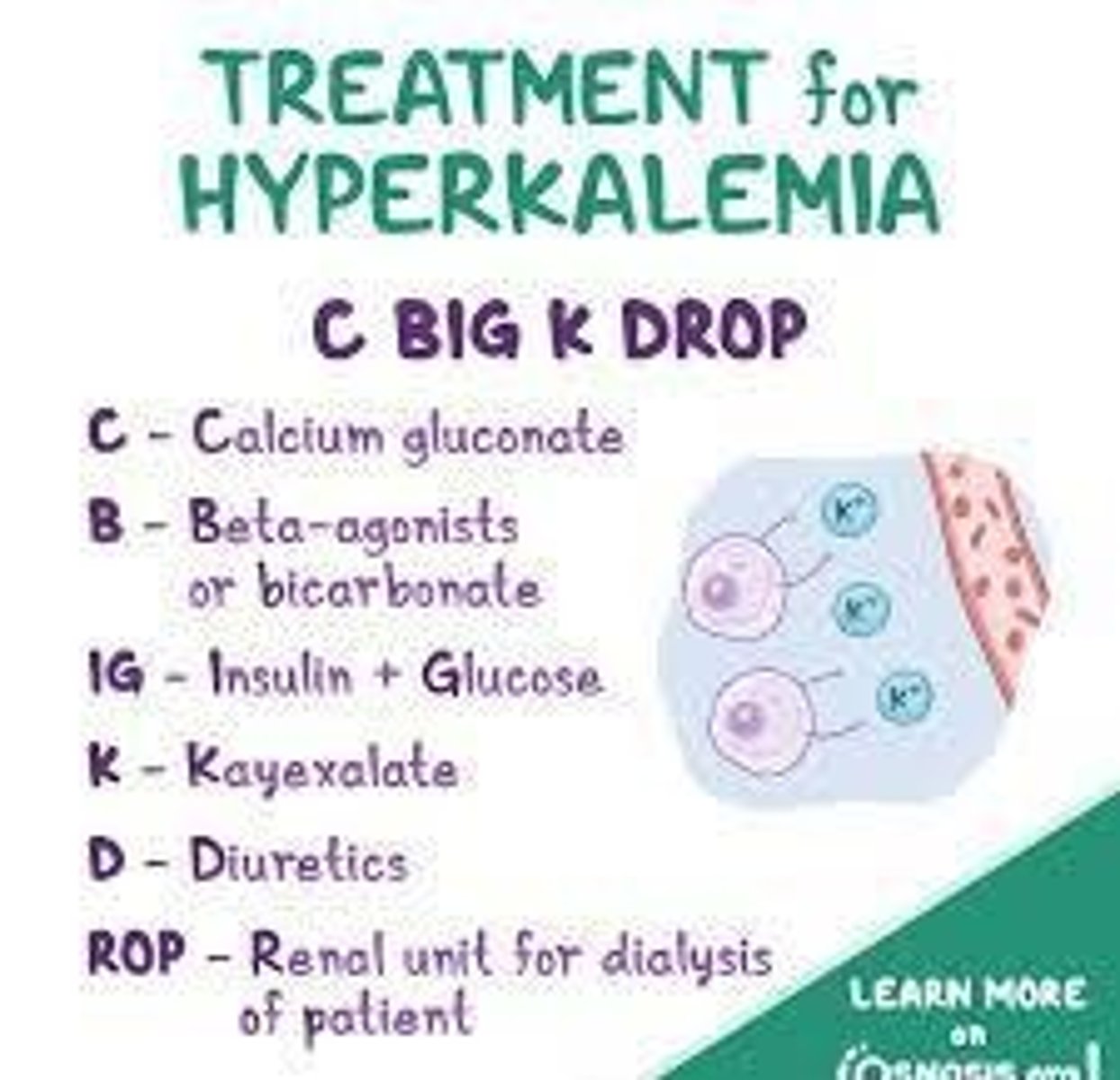
What is the role of Kayexalate in pharmacologic management?
It binds to potassium in the intestine and removes it in stool.
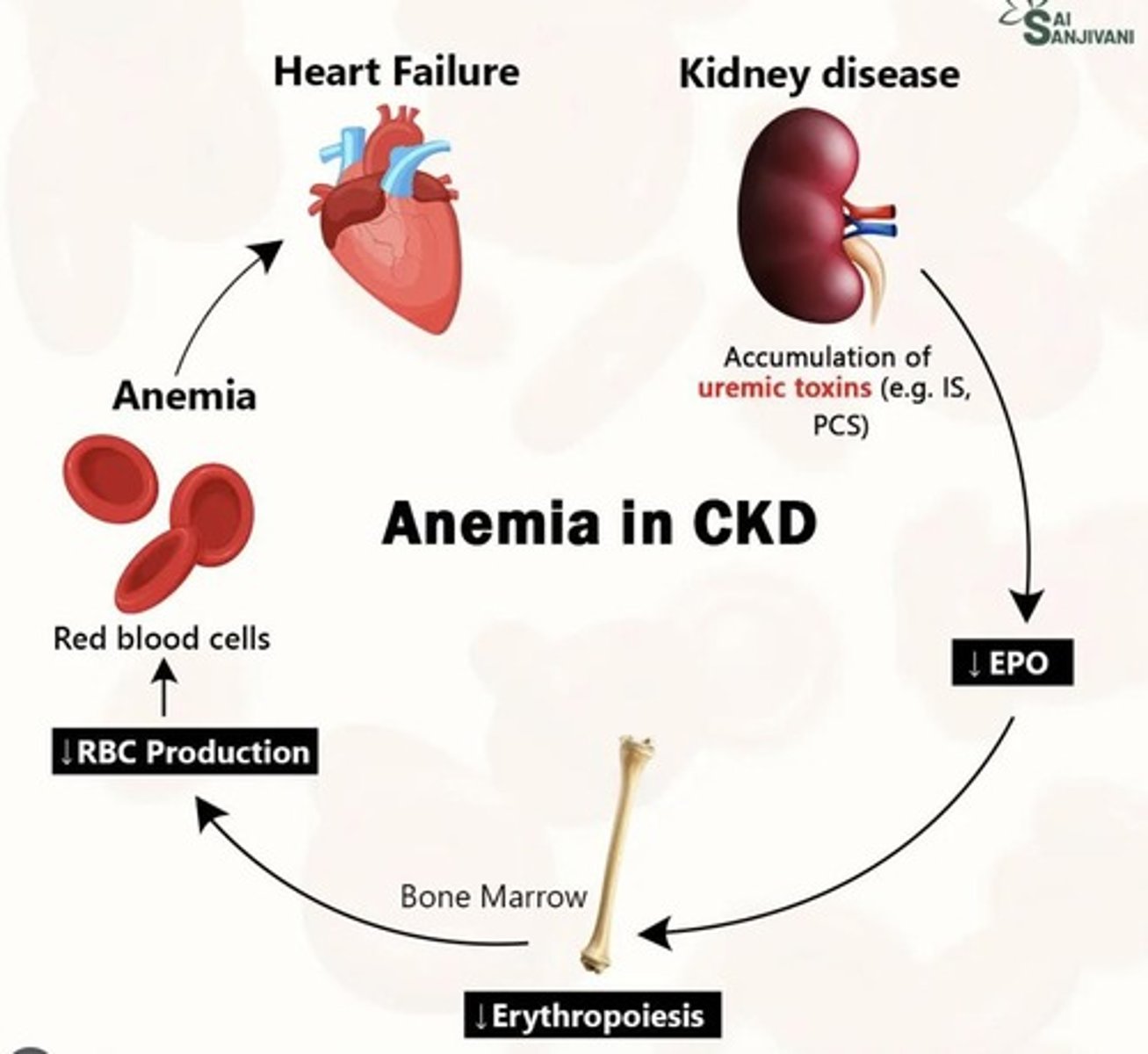
What is the purpose of Epogen (epoetin alfa) in treatment?
It signals the bone marrow to produce more red blood cells.
What should be evaluated after administering a diuretic?
Whether urine output increased.
What complications can arise from hyperkalemia?
Cardiac arrhythmias and uremic pericarditis.
What are signs of fluid overload in patients?
Edema, jugular vein distension (JVD), and ascites.
What is a common skin manifestation in acute kidney failure?
Itching or rash due to uremia/azotemia.
Potential Complications of AKI?
Hyperkalemia
• cardiac arrhythmias Pulmonary edema Congestive Heart Failure
Uremic Pericarditis
• caused by azotemia (high levels urea,
creatinine, body waste compounds in blood)
Hypertension
• caused by fluid overload
Anemia
Bone disease
• increased phosphorus pulls Ca from bone Seizures