service marketing
 Call Kai
 Learn
Learn Practice Test
 Spaced Repetition
 Match
Match Flashcards
 Knowt Play
1/61

There's no tags or description
Looks like no tags are added yet.
Name | Mastery | Learn | Test | Matching | Spaced | Call with Kai |
|---|
No analytics yet
Send a link to your students to track their progress
62 Terms
4 processing categories of services
people processing
possession processing
mental stimulus processing
information processing
components of the extended marketing mix
process: customers often involved/co producers
physical environment: design servicescape and provide tangible evidence of service performance
people: interactions between customers and contact personnel strongly influence customer perceptions of service quality
3 stage model of service consumption
pre purchase stage: awareness of need, info search
service encounter stage: request service from chosen supplier
post encounter stage: evaluation of service performance and future behaviours
perceived risks customers face
functional: unsatisfactory performance
financial: monetary loss
temporal: wasted time
physical: physical injury
psychological: fears and negative emotions
social: how others react
sensory
components of customer expectations
desired service level: wished level of service that should be delivered
adequate service level: min acceptable service
predicted service level: service level customers believe the firm will deliver
zone of tolerance: the range within customers are willing to accept
moment of truth metaphor
when the customer directly interacts with service firm and involves the skills, motivation and tools employed by the firm to prove to the customer that they are the best choice
Role, script and perceived control theories
Role: employees have roles to play and behave specifically
scripts: specifies the sequences of behaviour for customers and employees
behavioural control: allows customers to change the service situation by asking the firm to customise typical offerings
decisional control: customer can choose between 2+ options
cognitive control: why something is happening and what will happen next
dimensions of service quality
tangibles
reliability
responsiveness
assurance
credibility
security
competence
courtesy
Understand how customer, competitor, and company analyses (i.e., the 3 Cs) help to develop a customer-driven services marketing strategy.
Customer Analysis | Overall examination of market characteristics. Customer needs and related characteristics and behaviours |
Competitor analysis | Current positioning Strengths and weaknesses |
Company analysis | Current brand positioning and image Resources limitations and restraints |
key elements of positioning strategy
segmentation: dividing population into groups with common characteristics
targeting: choose segments to focus on
positioning: differentiation forms first step to create unique positioning
how positioning maps analyse and develop competitive strategy
represents consumer perceptions of alternative products graphically. This info can be obtained from market data
attributes employed in maps are important to target segments
performance of individual firms on each attribute accurately reflect perceptions of customers in target segments
Developing an effective positioning strategy
segmentation, targeting
target audience
frame of reference: category the brand is competing in
point of difference: benefit offered by brand
reason to believe: proof that brand can deliver the benefits
components of a service product
core product: principal benefits and solutions eg. hotel room to provide sleep
supplementary service: facilitate and enhance product eg. hotel offering wifi
delivery process: how those services are being delivered eg. hotel using online booking
Flower service model ( 2 supplementary services)
facilitating: needed for service delivery or help in use of core product
Enhancing: add extra value for the customer
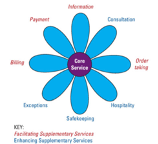
How facilitating supplementary services relate to core product
information: how to obtain product/service
order taking: what is available and how to secure irem
bulling: clear and accurate
payment
how enhancing supplementary services relate to the core product
consultation: tailoring customer needs in situations
hospitality
safekeeping: prefer not to worry about looking after possessions when on service sight
exception: flexibility when making requests
4 brand architecture options
branded house: company that applies its brand name to multiple unrelated fields
sub brands: master brand is the main reference but each product has a distinctive name
endorsed brand: product brand dominates but the corporate name is still featured
house of brands: each brand owned by corporation is promoted under its own name
requirements to deliver a branded service experience
having great processes in place
the servicescape
investing in good employees
categories of new service development
style changes
service improvements
supplementary service innovations
process line extensions
how does design thinking apply to new service design
product line extensions: addition to current product lines
major process innovations: new processes to deliver existing products with additional benefits
major service innovations: new core products for previously undefined markets
4 questions that form foundation of distribution strategy
What is being distributed?
how should the service be distributed?
where should a service facility be located?
when should service be delviered?
describe 3 interrelated flows
information and promotion flow: movie trailers
negotiation flow: service provider/customers agree on pricing and condition
product flow: actual service being delivered
determinants of customers channel preferences
complex and high perceived risk service - rely on personnel channels
greater confidence about channel tend to use impersonal and self service channels
customers who are more technology savvy prefer remote channels
customers with social motives use personal channels
convenience drives channel choice
importance of channel integration
service delivered requires seamless and consistent experience
new delivery channels are inconsistent and disjointed experience for customers
service providers need effective pricing strategies to deliver value
tactical location considerations
1. Ministered:
Creating small service factories to maximise geographic coverage
Separating the front and back stages of operation
Purchasing space from another provider in complimentary field
Proximity to where customers live and work
2. Location constraints:
Operational requirements- airports
Geographic factors – ski resorts
Need for economies of scale – hospitals
Difference between flowcharting, blueprinting and customer journey mapping
flowchart: displays nature and sequence of the different steps involved when a customer flows through service process
blueprint: specifies in detail how a service process is constructed
customer journey map: shows every step a customer takes when interacting with brand
Advantages of blueprint
distinguish between frontstage and backstage
clarify interactions between customers and staff
identify fail points
pinpoint stages in process where customers have to wait
components of service blueprint
define standards for front stage activities
specify physical evidence
line of interaction
line of visibility
support process involves service personnel
support process involve IT
how service process redesign can improve service quality and productivity
Redesign efforts focus on:
- Reduced number of service failures
- Reduced cycle time for customer initiation of a service process to its completion
- Enhanced productivity
- Increased customer satisfaction
Service process redesign often involves:
- Examining the service blueprint with key stakeholders
- Eliminating non-value adding steps
- Addressing bottlenecks in the process
- Shifting to self service
steps to reduce customer reluctance to change
develop customer trust
understand customer habits and expectations
pre-test new procedures and equipment
publicise the benefits of changes
teach customers to use innovations and promote trial
monitor performance and continue to seek improvements
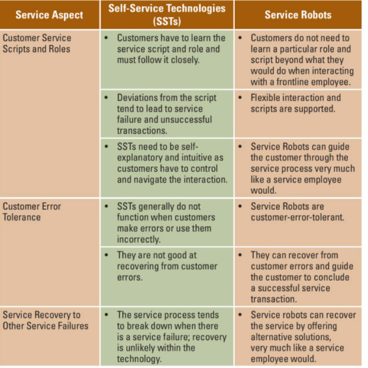
differences between service robots and SST
uses of blueprint
provide platform for innovation
recognise roles and dependencies
facilitate strategic and tactical innovations
transfer and store knowledge
design moments of truth
clarify competitive positioning
steps for developing a blueprint
1. Identify company service
2. Identify customer segments
3. Map the process form customers POV
4. Map contact employee actions or technology actions
5. Link contact activities to needed support functions
6. Add evidence of service at each customer action step
3 broad target audiences
1. Prospects: employ traditional communication mix because prospects are not known in advance
2. Users: more cost-effective channels
3. Employees: building a service brand and positioning it against competition, persuade target customers, attract new users and maintaining contact with existing customers
roles that service marketing communciations assume
1. Promote tangible cues to communicate quality (using modern, clean areas)
2. Add value through communication content (healthcare providing free online care)
3. Facilitate customer involvement in service production (fitness apps allowing customisation plans)
4. Promote the contribution of service personnel and backstage operations (Behind the scenes videos)
problems of intangibility
1. Generality: items that comprise a class of objects, persons or events
2. Non-searchability: cannot be searched or inspected before purchase
3. Abstractness: no one to one correspondence with physical objects
4. Mental impalpability: customers find it hard to grasp benefits of complex, new offerings
overcome problems of intangibility
1. Abstractness: service consumption episodes
2. Generality: system documentation for objective claims, service performance episodes for subjective claims
3. Non search ability: consumption documentation, reputation documentation
4. Impalpability: service process episodes, case history episodes
5. Use tangible cues in advertising
6. Use metaphors to communicate benefits of service offerings
3 foundations of pricing strategy
Cost based: calculate the minimum viable price based on fixed and variable costs
Competition based: research or assume competitor prices and determine positioning
Value based: assess customer perceptions, willingness to pay and price discrimination options
revenue management and how it works
Maximising revenue from available capacity at a given time
Revenue management is price customisation
Uses mathematical models to examine historical data and real time information to determine – what prices to change within price bucket, how many service units to allocate
Most effective when:
- Relatively high fixed capacity - high fixed cost structure
- Perishable inventory - variable and uncertain demand
- Varying customer price sensitivity
6 questions marketers answer to design strategy
how much to charge
what basis for pricing
who should collect payment
where should payment be made
how should payment be made
how to communicate prices
4 purposes service environments fulfil
shape customer service experiences and behaviours
signal quality and position, differentiate and strengthen the brand
core component of the value proposition
facilitate the service encounter and enhance productivity
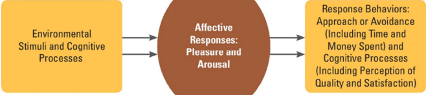
Mehrabian-Russell Stimulus-response model:
feelings are a key driver of customer responses to service environments
shows how people respond to environments
Environment: conscious and unconscious perceptions and interpretation influence how people feel that in environment
Feelings rather than perceptions drive behaviour
integrative servicescape model
identifies main dimensions in a service and key to effective design is how well each dimension fits together
ambient conditions
space/functionality
signs, symbols and artifacts
main dimensions of service environment
exterior facilitates - architecture
general interior - cleanliness
store layout -traffic flow
interior displays - price display
social dimensions - employee uniforms
ambient conditions and effect on customers
Music: effect on perceptions and behaviours (fast tempo = increase arousal level)
Scents: pervades an environment and can obtain emotional, physiological and behavioural responses
Colour: impact peoples feelings (hue (pigment), value (lightness/darkness) and chroma (saturation), warm colour encourages fast decision making and impulse boys, low colour is high involvement decisions
roles of signs, symbols and artifact
- Communicates the firms image
- Helps customer find their way
- Lets customer know the service script
- Draw meaning from signs and symbols
- Unclear signals can result in anxiety and uncertainty about how to proceed and obtain the desired service
why designing an effective servicescape has to be done holistically and from the customer’s perspective.
Servicescapes must be seen holistically: no dimension of design can be optimised in isolation because everything depends on everything else
Design should be from a customers perspective
Environment aspects that irritate shoppers
- Ambient conditions
- Environmental design variables
why are employees important for the success of the firm
core part of product
service firm
the brand
affect sales
key driver of customer loyalty
determine productivity
factors that make staff demanding
1. Organisation vs client: dilemma whether to follow company rules or to satisfy customer demands – ACUTE IN ORGANISATIONS THAT AREN’T CUSTOMER ORIENTED
2. Person vs role: conflicts between what jobs require and employees own personality and beliefs
3. Client vs client: conflicts between customers that demand service staff intervention
emotional labour
cycle of failure
The employee cycle of failure:
- Narrow job design for low skill levels
- Emphasis on rules rather than service
- Use of technology to control quality
- Bored employees who lack ability to respond to customer problems
- Dissatisfied with poor service attitude
- Low service quality
- High employee turnover
The customer cycle of failure:
- Repeated emphasis on attracting new customers
- Customers dissatisfied with employee performance
- Customers always served by new faces
- Fast customer turnover
Ongoing search for new customers to maintain sales volume
cycle of mediocrity
- Service delivery is oriented towards:
- - standardised services
- Operational efficiencies
- Promotional based on long service
- Successful performance measured by absence of mistakes
- Rule based training
- Little freedom in narrow and repetitive jobs
- Customers find organisations frustrating to dela with
- Little incentive for customers to cooperate with organisations
- Complaints made to unhappy employees
cycle of success
- Longer term view of financial performance; seeks too prosper investing in people
- Attractive pay and benefits attract better job applicants
- More focused recruitment, intensive training and higher wages make it more likely that employees are:
o Happier in work
o Provide higher quality, customer pleasing service
levels of employee involvement
1. Suggestion involvement
Employee make recommendations through programs
2. Job involvement
Job redesigned
Employees retrained, supervisors reoriented to facilitate performance
3. High involvement
Information is shared
Employees skilled in teamwork
Participate in management decisions
Profit sharing and stock ownership
importance of customer loyalty
Increase purchases and account balances
Reduced operating costs
Referrals to other customers
Price premiums
measuring customer equity
1. Acquisition revenue less cost:
a. Revue (application fee + initial purchase)
b. Costs (marketing + credit check + account set up)
2. Projected annual revenue and costs
a. Revenues (annual fee + sales + service fees + value of referrals)
b. Costs (account management + cost of sales + write offs)
3. Value of referrals
a. % of customers influenced by others
why customers are loyal to service firms
Confidence benefits
Confidence in correct performance
Ability to trust the provider
Lower anxiety when purchasing
Knowing what to expect and receive
cross selling
makes switching a major effort that the customer is unwilling to go through unless extremely unsatisfied with service provider (one-stop shop = high service level, high service tier)
Bundling
Can be financial (discount and loyalty program) /non financial (priority waitlist and queues)
Social bonds: personal relationship between provider and customer
Structural bonds: seen in B2B settings – aligns customer way of doing things and suppliers own processes
difference between financial and non financial rewards
Financial: customer incentives that have financial value
- Brand loyalty vs deal loyalty
Non-financial: benefits that cant be translated directly into monetary terms
- Special recognition and appreciation
what factors cause customers to switch to competitor/how to avoid
Reduce customer defections:
- Deliver quality service
- Reduce inconvenience and non-monetary costs
- Have fait and transparent pricing
- Industry specific drivers
- Take active steps to retain customers
o Save teams: staff who deal with customers who want to cancel accounts
o How save teams are rewarded
- Implement effective complain handling
transactional vs relationship marketing
Transactional marketing: transaction between a customer and a supplier is anonymous, no long term record kept – focus on segmenting the market, matching customer needs
Relationship marketing: firm and customer have interest in deeper engagement and higher value added exchange