Systems 3/4 - Mechanical
 Call Kai
 Learn
Learn Practice Test
 Spaced Repetition
 Match
Match Flashcards
 Knowt Play
1/29

There's no tags or description
Looks like no tags are added yet.
Name | Mastery | Learn | Test | Matching | Spaced | Call with Kai | Chat |
|---|
No analytics yet
Send a link to your students to track their progress
30 Terms
Units - what is the measurement (from the calculation sheet) and base units name?
d / m (answer: distance in meters)
F / N
T / Nm (like a backwards J)
P / Pa
W (or E) / J
t / s OR m
distance in meters
Force in Newtons
Torque in NewtonMeters
Pressure in Pascals
Work (or Energy) in Joules
time in seconds OR minutes (speed is best in m/s)
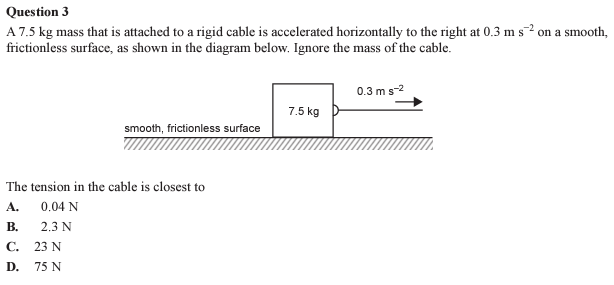
Force
What equation should you use?
Calculate the answer from the image
F = m x a
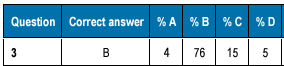
(rare)
What’s the easy way to convert:
From km/h to m/s
From m/s to km/h
Divide by 3.6
Multiply by 3.6
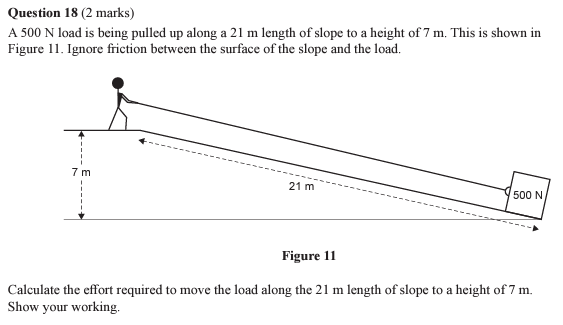
Inclined Planes
The best formula for inclined planes is not provided (it is indirectly)
What is the better formula?
Calculate the answer from the image
Answer on the back.
Effort (Force in N) = H/S x load (Force in N)
(Derived from the mechanical advantage equation)
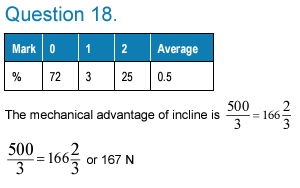
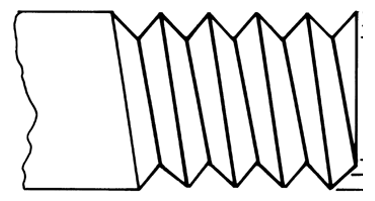
(rare)
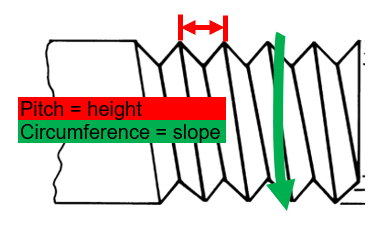
Screw
What part of a screw equates to the slope?
What part of a screw equates to the height?
The pitch, or distance between the peaks of the screw
The circumference of the screw
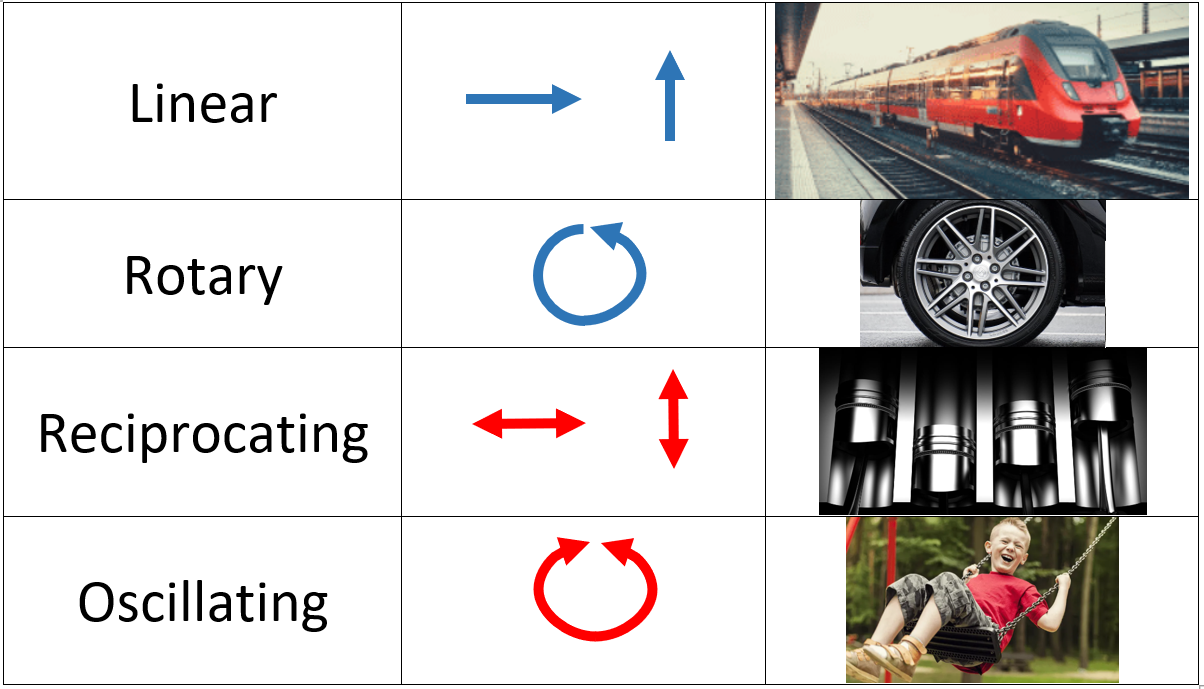
4 types of motion
What are their names, with one example
Draw/show arrows to match each one (image)
Linear, train moving on tracks
Rotary, wheels on a car
Reciprocating, a piston
Oscillating, a swing
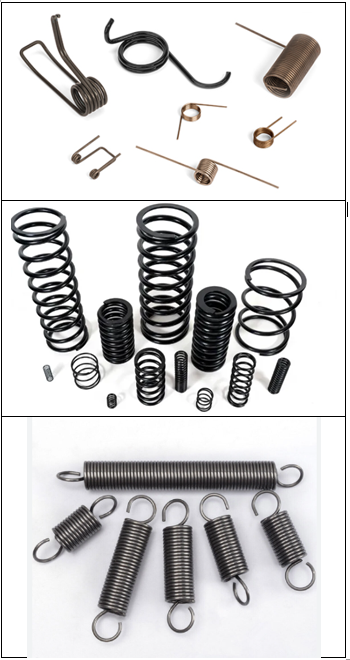
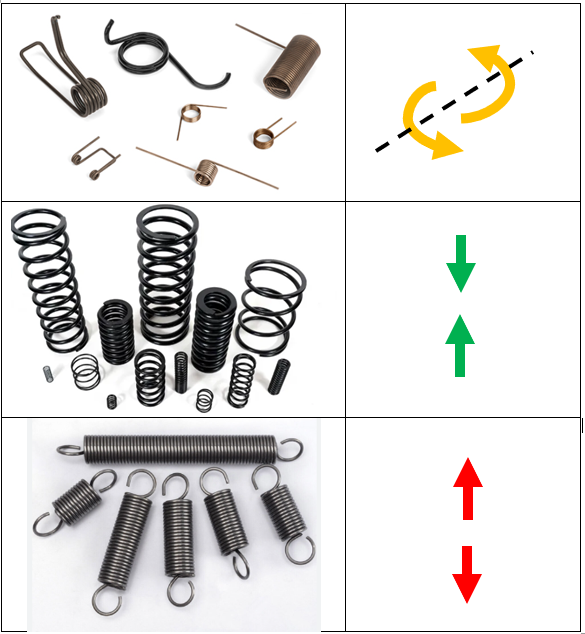
3 Types of springs
Name each one
Torsion spring
Compression spring
Tension spring
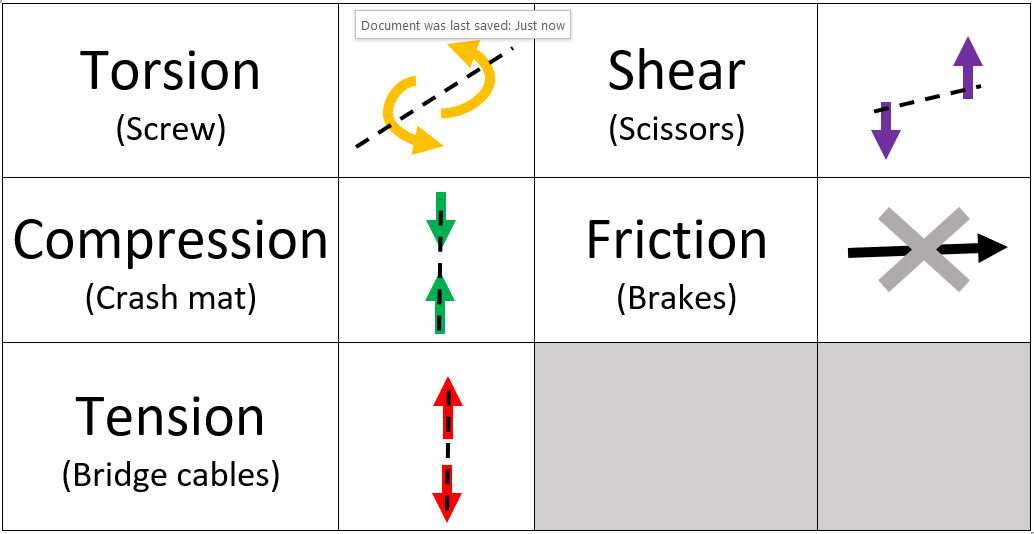
5 common forces (In Systems exams)
Name + Describe each + example (image)
Torsion - twisting force
Compression - squishing
Tension - pulling apart
Shear - cutting or splitting
Friction - limiting force from contact
Potential energy types
Description
Type 1
Type 2
Type 3
(exam usually gives you some of this info for you to fill out rest)
Any energy type that has “stored” energy
Gravity (water at the top of a dam)
Elastic (stretched spring)
Chemical (battery storage)
3 common (non-potential) energy types
Name + describe each + example (image)
(exam usually gives you some of this info for you to fill out rest)
Kinetic/ mechanical, physical movement, propeller
Electrical, energy in wires, circuits
Radiant/ thermal, light, infrared, heat (typically from friction)
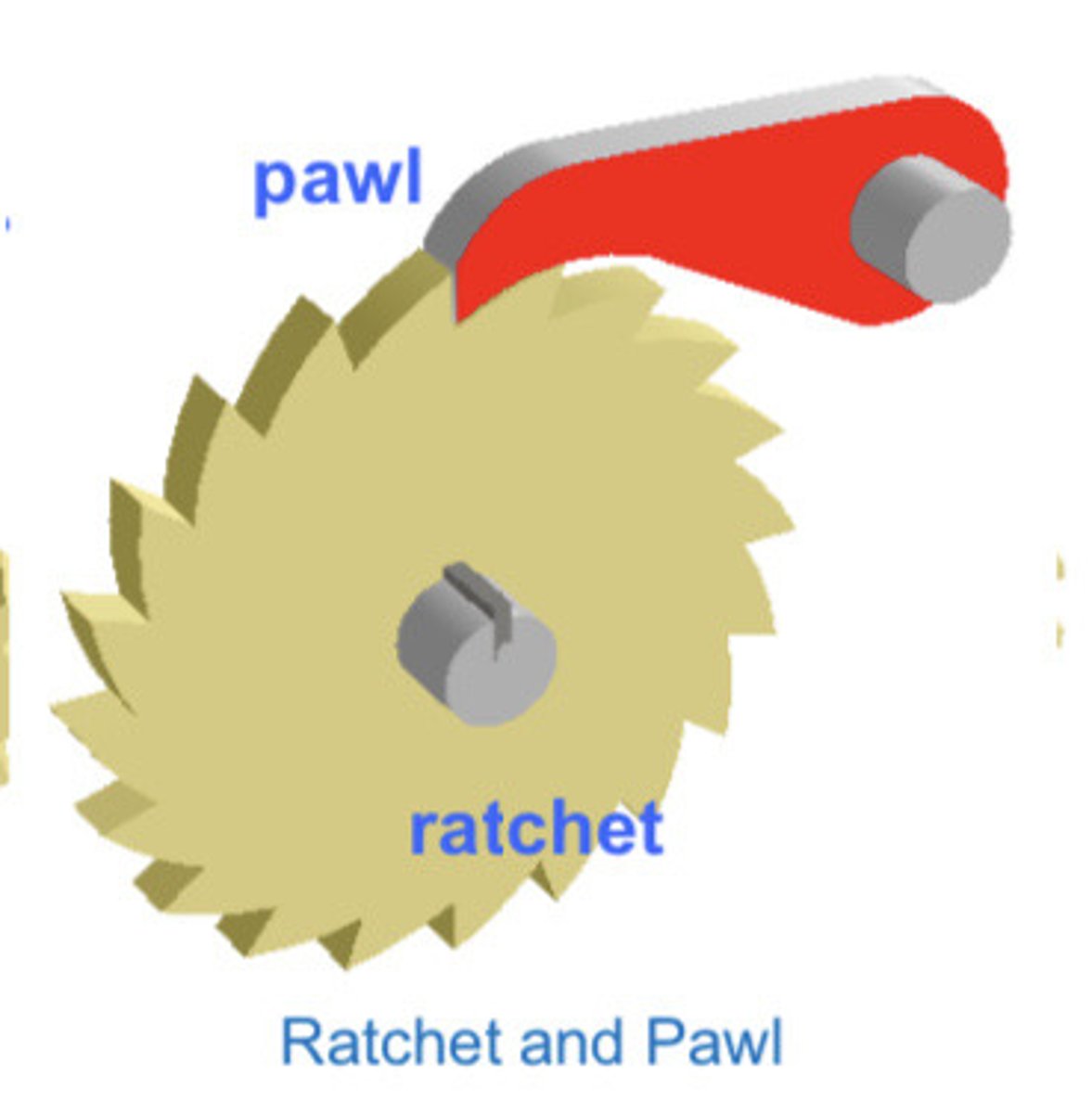
Ratchet and Pawl
Description
Example
Identification (image)
Used to limit rotary motion to one direction
Ratchet Wrench
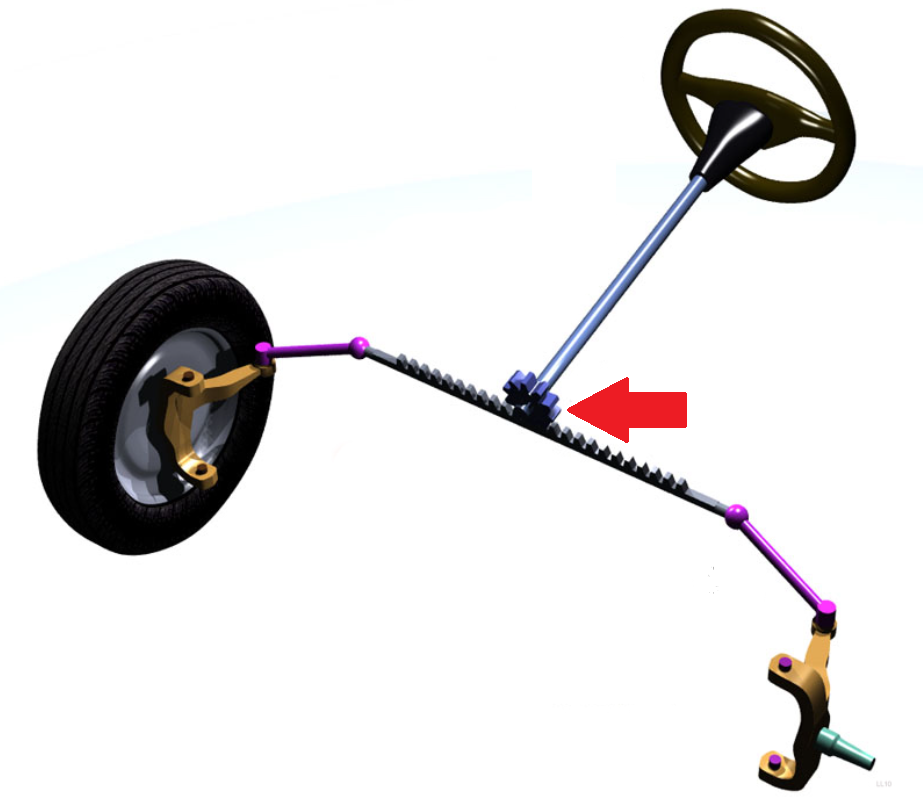
Rack and Pinion
Description
Example
Identification (image)
A gear (pinion) meshed with a flat set of teeth (rack). Motion transformation is rotation to linear.
Steering in cars
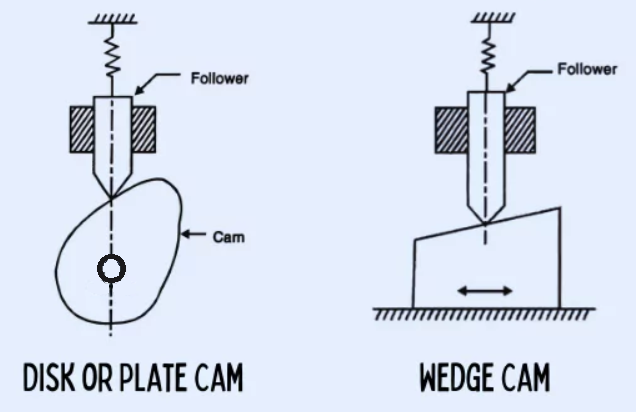
Cam and follower
Description
Example
(rare) Description of a wedge cam
Identification (both kinds) (image)
A rotating plate (many shapes) that transforms to a reciprocating follower
Camshaft and intake valve
A reciprocating or linear wedge that transforms to a reciprocating follower
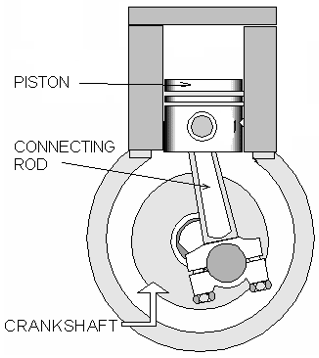
Piston and crank
Description
Example
Identification (image)
A reciprocating piston that transforms to a rotating crank(shaft)
An engine (chemical > mechanical energy > transformation)
(rare)
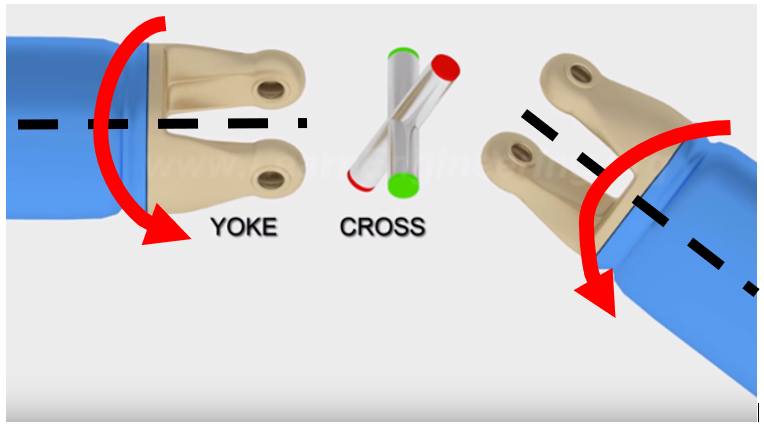
Universal Joint
Description
Example
Identification (image)
A rotating yoke (end of an axel), which though a cross rotates another yoke/ axel in a different direction/ angle
Rear-wheel drive cars
Pulleys
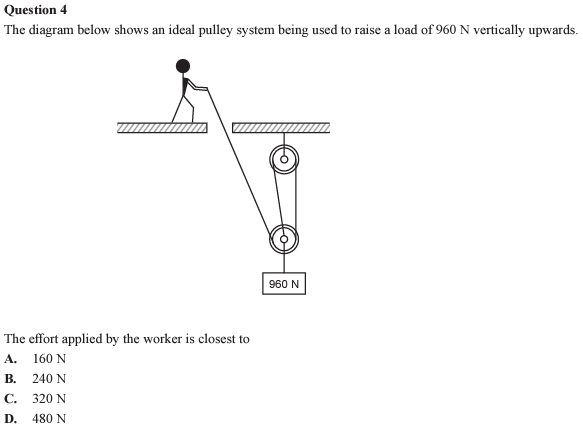
The best formula pulleys is not provided (it is indirectly)
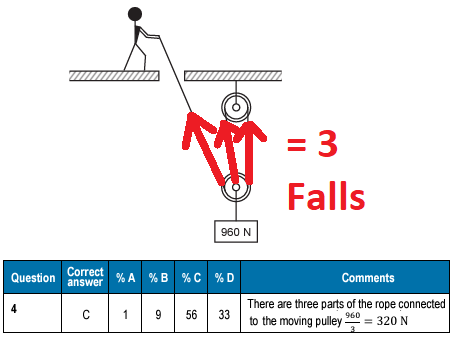
How many falls are there?
How do you calculate the MA?
Calculate the answer from the image
Falls = the number of ropes/wires extending away from the moving pulley = 3.
Load / Falls = Effort
Gear Physics
What does MA, VR and GR stand for?
MA is a change in…?
VR is a change in…?
Ignoring losses, how do MA and VR relate?
Ignoring losses, how do GR and MA relate?
Mechanical Advantage, Velocity Ratio, Gear Ratio
A change in force
A change in distance travelled (or speed)
Inversely proportional (eg. MA=1/4, VR = 4/1)
Equal (eg. GR = 1/4, MA = 1/4)
Gear Physics Continued
What can Teeth of a driver be used to first calculate?
What can Diameter of a driver be used to first calculate?
Would the Pulley ratio and Gear ratio of a toothed belt be equivilent?
GR for teeth
Pulley Ratio
Yes
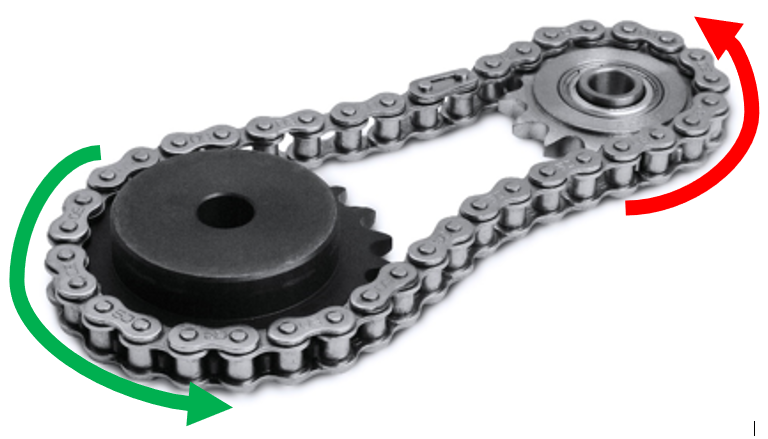
Chain and Sprocket
Describe the motion transformation
Pros/ Cons (instead of a belt)
What feature is used to calculate MA?
Use case?
Identification (image)
Transfers the same direction of rotation over a distance
Won’t slip, doesn’t get brittle over time/ More parts, more maintenance, more noise
The ratio of teeth OR diameter of the driven gear over the driver gear
A bike
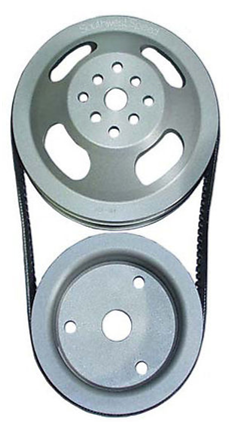
Belted Pulley
Description
Pros/ Cons (instead of a chain)
What feature is used to calculate MA?
Use case?
Identification (image)
A typically rubber belt that transfers the same direction of rotation over a distance
Cheaper/ can slip
The ratio of diameters of the driven pulley over the driver pulley
Drill press
Toothed Belt
Description
Pros/Cons to belts and chains?
What feature is used to calculate MA?
Use case?
Identification (image)
A typically rubber belt with teeth that transfers the same direction of rotation over a distance
Reduces slipping of a belt, but is cheaper and simpler than a chain/ can still loosen over time
The ratio of teeth OR diameter of the driven gear over the driver gear
3D printer

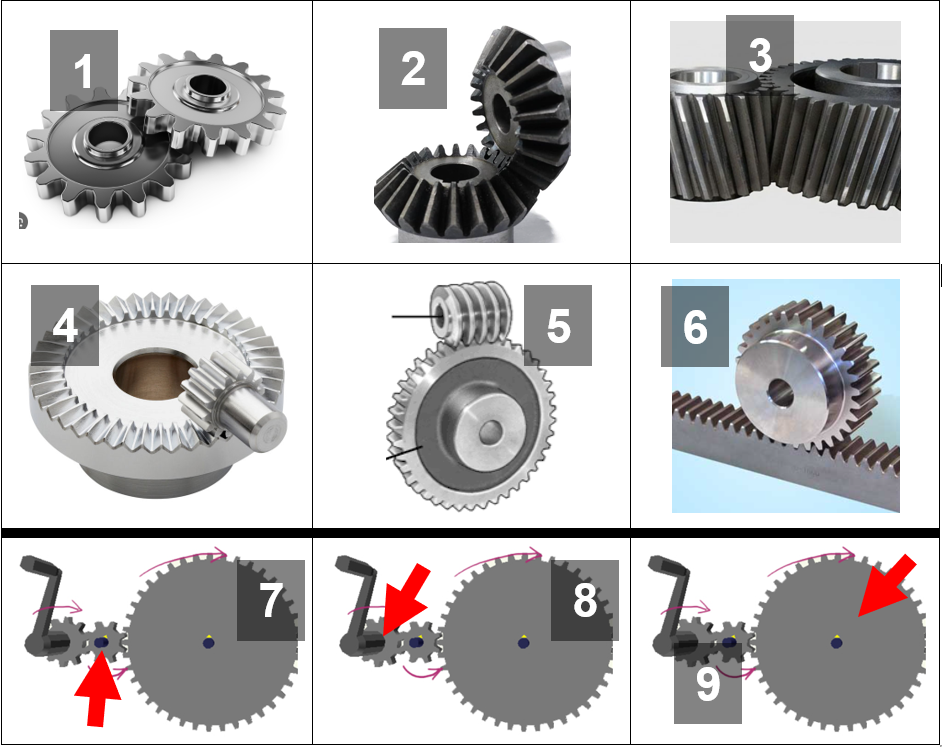
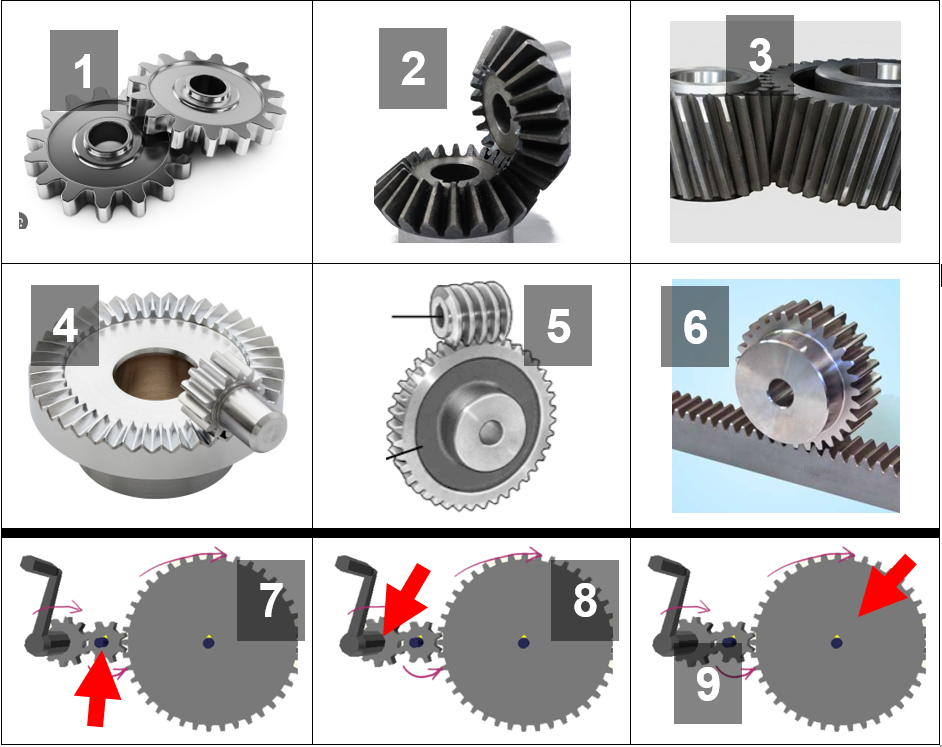
Name these gears 1-9
Spur gear
Bevel gear (not always 90° angle)
Helical gear (V shaped teeth = herringbone)
Crown gear
Worm gear
Rack and pinion
Idler gear
Driver gear
Driven gear
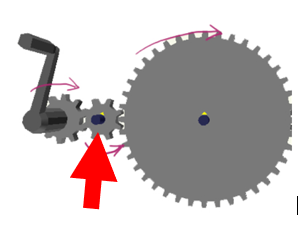
Does an idler effect MA or VR?
No
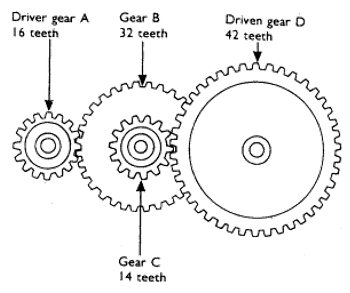
Compound Gears
How do you combine two GRs for total GR?
What does that mean the MA and VR will be?
Calculate the answer from the image
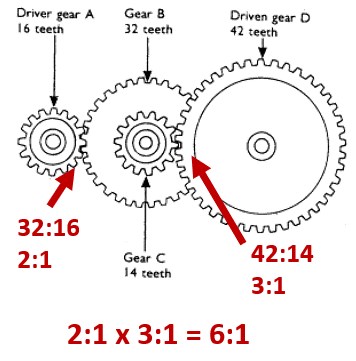
Multiply each GR together (Driven teeth/Driver teeth)
GR = MA, VR is inversely proportional (excluding losses)
GR = 6/1, MA = 6/1, VR = 1/6
Levers
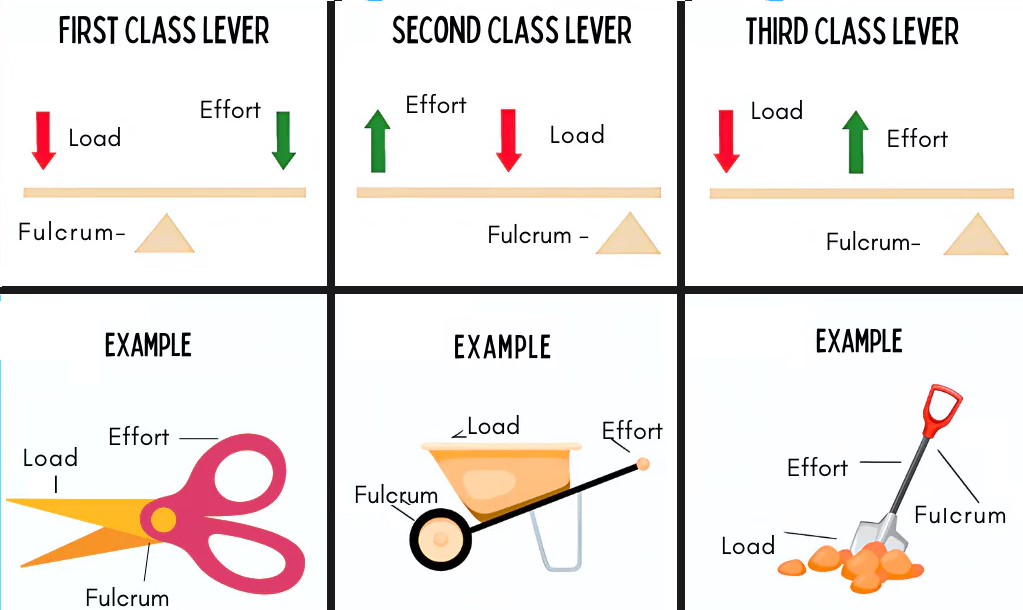
What are the 3 types
What are their arrangement
An example
First class - EFL - Effort, Fulcrum, Load - See-saw, Boom gate
Second class - ELF - Effort, Load, Fulcrum - Wheelbarrow, Nail clipper
Third class - FEL - Fulcrum, Effort, Load - Fishing rod, Baseball bat
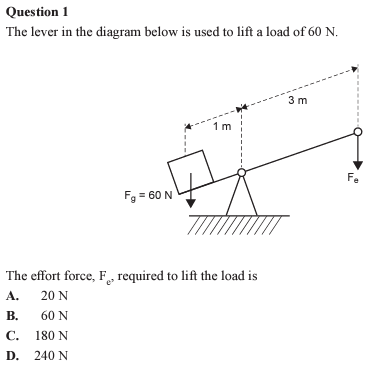
Torque in equilibrium
How could you modify T = F x d for this example question?
Could the same equation be used if the crane diagram is replaced by a diagram of two differently sized wheels?
Calculate the answer from the image
F1 / d1 = F2 / d2 (because torque is equal for both sides/ same pivot point)
Yes

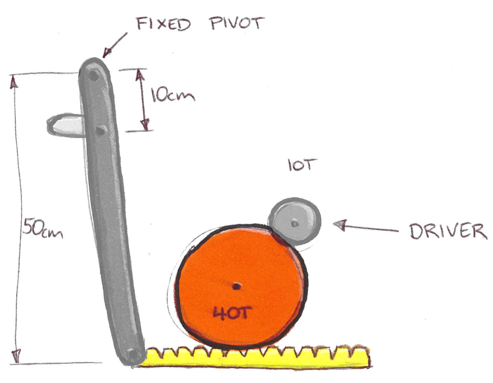
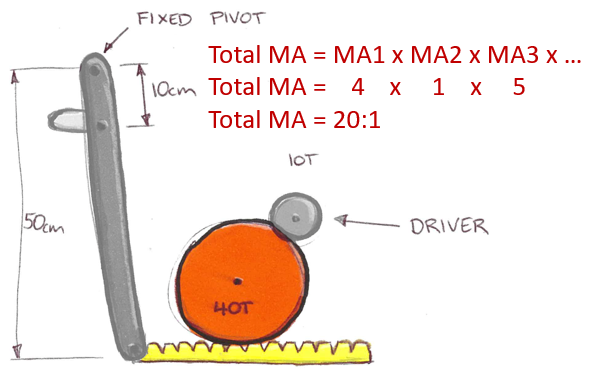
General Compounded Systems
If there is a pulley attached to a gear ratio, do you multiply them together?
If there are simple mechanisms in the compound that do not have a MA or VR (1:1), what do you do?
Calculate the answer from the image
Yes
Ignore (multiply the ratio by 1)
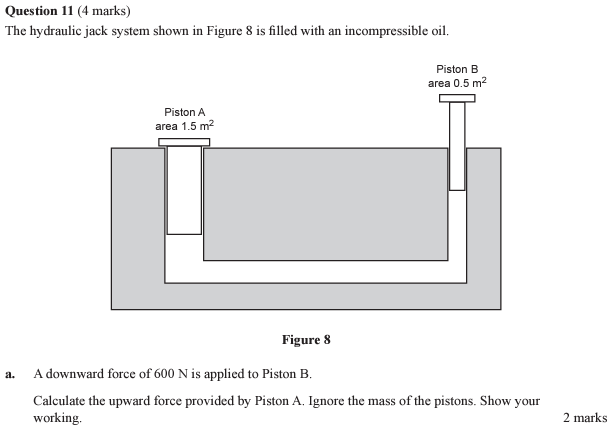
Hydraulic Systems
What happens to pressure in an ideal hydraulic system?
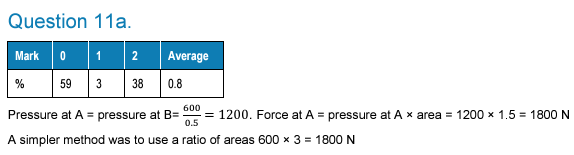
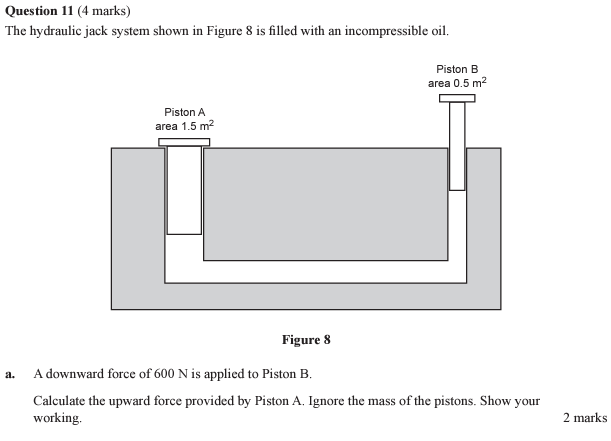
How could you modify P = F/A for this example question? (Calculate the answer)
Pressure is equal in whole system
F1 / A1 = F2 / A2 (because pressure is equal to both sides)
(rare)
Movement in Hydraulic Systems
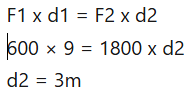
If the piston B moves down 9m, what equation could we use to find the change in height for piston A?
If there are air bubbles, what changes?
Work (from W = F x d) stays equal in whole system too, so F1 x d1 = F2 x d2
The liquid could compress and the system becomes spongy
John has 3 apples, but his train is 7 minutes late.
Calculate the mass of the sun
Honestly it was just bothering me that there was 29 mechanical flashcards
A: 1.99 × 1030 kilograms