Chapter 6: Bones and Skeletal System
 Call Kai
 Learn
Learn Practice Test
 Spaced Repetition
 Match
Match Flashcards
 Knowt Play
1/59

There's no tags or description
Looks like no tags are added yet.
Name | Mastery | Learn | Test | Matching | Spaced | Call with Kai |
|---|
No analytics yet
Send a link to your students to track their progress
60 Terms
What are the five major functions of bones?
Support, protection, movement, mineral storage, and blood cell formation.
Which minerals are primarily stored in bones?
Calcium and phosphorus.
What is hematopoiesis?
The process of blood cell formation.
Where does hematopoiesis occur?
In red bone marrow.
How do bones contribute to movement?
They act as levers for muscles.
What are the four major categories of bones by shape?
Long, short, flat, and irregular bones.
Give an example of a long bone.
Femur or humerus.
Give an example of a short bone.
Carpals (wrist bones).
Give an example of a flat bone.
Sternum or skull bones.
Give an example of an irregular bone.
Vertebra.
What are sesamoid bones?
Small bones embedded in tendons
What is the largest sesamoid bone?
Patella.
What is the diaphysis?
The shaft of a long bone.
What is the epiphysis
The enlarged end of a long bone.
What is the metaphysis?
The region between the diaphysis and epiphysis.
What is the epiphyseal plate?
Growth plate made of hyaline cartilage.
What does the epiphyseal plate become in adults?
The epiphyseal line.
What is articular cartilage?
Hyaline cartilage covering joint surfaces.
What is the periosteum?
Tough connective tissue covering the outer bone surface.
What is the endosteum?
Membrane lining internal bone cavities.
What is compact bone?
Dense outer bone tissue.
What is spongy bone?
Lightweight bone containing trabeculae.
What are trabeculae?
Lattice-like structures within spongy bone.
What is the medullary cavity?
Hollow cavity inside the diaphysis.
What fills the medullary cavity in adults?
Yellow bone marrow.
What are osteogenic cells?
Stem cells that produce osteoblasts.
What are osteoblasts?
Bone-building cells.
What are osteocytes?
Mature bone cells that maintain bone tissue.
What are osteoclasts?
Bone-resorbing (bone-destroying) cells.
Which cells break down bone matrix?
Osteoclasts.
Which cells secrete bone matrix?
Osteoblasts.
What gives bone its hardness?
Calcium phosphate salts.
What gives bone flexibility?
Collagen fibers.
What is hydroxyapatite?
Mineral crystals that harden bone.
What is ossification?
The process of bone formation.
What are the two types of ossification?
Intramembranous and endochondral ossification.
Which ossification forms most bones?
Endochondral ossification.
Which ossification forms flat skull bones?
Intramembranous ossification.
What hormone stimulates bone growth during childhood?
Growth hormone (GH).
Which hormones contribute to the adolescent growth spurt
Estrogen and testosterone.
What is bone remodeling?
Continuous replacement of old bone with new bone.
Why is bone remodeling important?
Maintains strength and mineral balance.
Which cells perform bone remodeling?
Osteoblasts and osteoclasts.
What hormone lowers blood calcium levels?
Calcitonin.
What hormone raises blood calcium levels?
Parathyroid hormone (PTH).
What is a fracture?
A break in a bone.
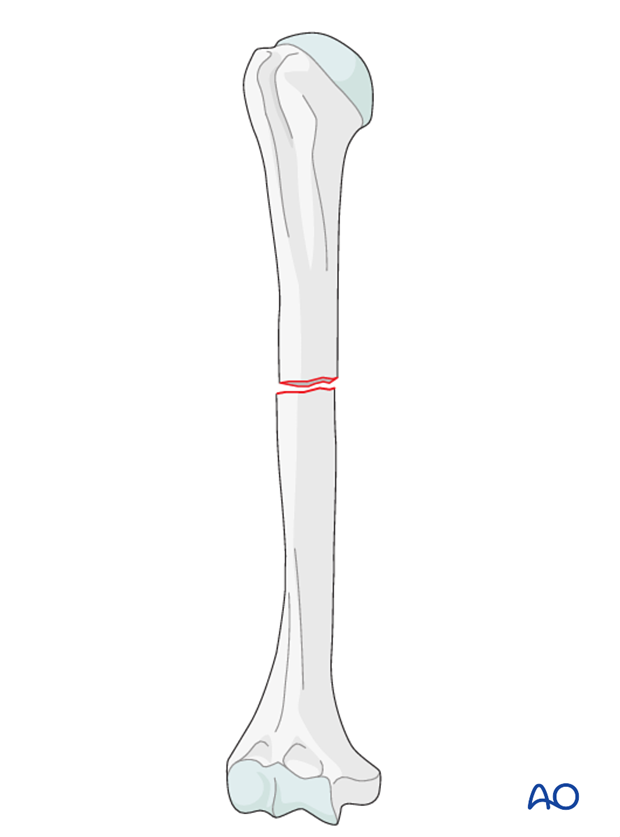
What is a closed (simple) fracture?
Bone breaks but does not pierce the skin.
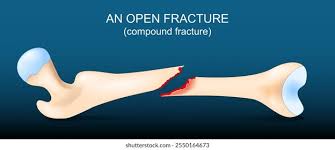
What is an open (compound) fracture?
Bone breaks and penetrates the skin.
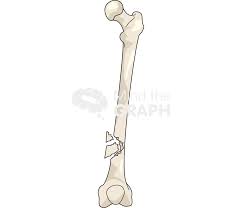
What is a comminuted fracture?
Bone breaks into several fragments.
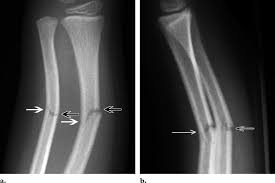
What is a greenstick fracture?
Incomplete fracture common in children.
What is osteoporosis?
Loss of bone mass causing fragile bones.
Which population is most at risk for osteoporosis?
Older adults, especially postmenopausal women.
What is rickets?
Soft bones in children caused by vitamin D deficiency.
What is osteomalacia?
Adult version of rickets.
What nutrients are most important for healthy bones?
Calcium, phosphorus, vitamin D, and protein.
Which bone cell builds bone?
Osteoblast.
Which bone cell breaks down bone?
Osteoclast.
Which bone cell maintains bone?
Osteocyte.
What is the functional unit of compact bone?
Osteon (Haversian system).
What is the primary mineral stored in bone?
Calcium.