CNA: Chapter 17
 Call Kai
 Learn
Learn Practice Test
 Spaced Repetition
 Match
Match Flashcards
 Knowt Play
1/37

There's no tags or description
Looks like no tags are added yet.
Name | Mastery | Learn | Test | Matching | Spaced | Call with Kai |
|---|
No analytics yet
Send a link to your students to track their progress
38 Terms
Defecation
(commonly known as a bowel movement) is the biological process of eliminating solid, semisolid, or liquid waste material (feces) from the digestive tract through the anus
OBSERVING AND REPORTING: STOOL
WHITISH, BLACK, RED, OR HARD STOOL
DIARRHEA
CONSTIPATION
FLAUTLENCE/GAS
PAIN WHEN HAVING A BOWEL MOVEMENT
BLOOD, PUS, MUCUS, OR DISCHARGE IN STOOL
FECAL INCONTINENCE (INABILITY TO CONTROL BOWELMOVEMENTS)
As a person ages, it is normal that…
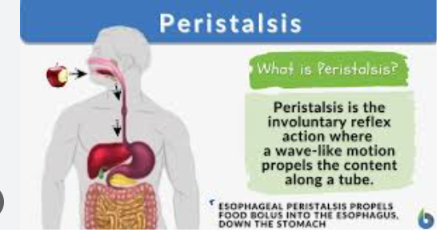
Peristalsis slows. Peristalsis are involuntary contractions that move food through the gastro-intestinal system. Digestion takes longer and less efficient. Proteins, vitamins, and minerals are not absorbed as well. Decreased saliva production affects the ability to chew and swallow, and so does tooth loss. Medication use and a dulled sense of taste may result in poor appetite
Peristalsis
s the automatic, wave-like contraction and relaxation of muscles that propels contents through hollow tubes in the body. It primarily drives food and waste through the gastrointestinal tract, but also moves urine from the kidneys and bile from the gallbladder.
WHAT CAN AFFECT BOWEL MOVEMENTS?
Psychological factors (stress and anxiety increase elimination, while depression may decrease it)
Foods and fluids (fiber helps)
Physical activity (regular physical activity improves elimination)
Medications (can affect bowel elimination)
Constipation
a common digestive issue characterized by having fewer than three bowel movements a week, or passing hard, dry, and difficult-to-pass stools.
Enema
is a medical procedure or device used to inject liquid directly into the rectum and lower colon.
Fecal impaction
a severe, potentially life-threatening condition where a large, hard mass of stool gets stuck in the rectum or lower colon.
Hemorrhoids
are swollen veins in the anus and lower rectum, similar to varicose veins. They are caused by increased pressure from straining during bowel movements, chronic constipation, obesity, or pregnancy
Diarrhea
is passing loose, watery stools three or more times a day. It is usually caused by viral or bacterial stomach bugs (often called "food poisoning" or "stomach flu"), medications, or underlying digestive conditions.
Fecal incontinence
s the accidental passing of solid or liquid stool or mucus. It occurs due to weakened pelvic floor muscles, nerve damage, or underlying conditions like chronic diarrhea or constipation. While it can cause significant distress, a variety of effective treatments—including dietary changes, pelvic floor therapy, and medications—are available.
Flatulence
is the expulsion of gas from the intestines through the anus. It is a completely normal bodily function, with the average person passing gas 10 to 25 times a day
Lactose intolerence
is a common digestive condition where the body cannot properly break down lactose, the sugar naturally found in milk and dairy products.
Malabsorption
is a digestive disorder where your small intestine fails to effectively absorb essential nutrients, vitamins, and minerals from the food you eat.
Gastroesophageal Reflux Disease (GERD)
is a chronic digestive condition where stomach acid or bile repeatedly flows back into the esophagus. This continuous backwash irritates the esophageal lining, commonly causing symptoms like heartburn, acid regurgitation, and chest discomfort
heart-burn
is a painful burning sensation in your chest or throat caused by stomach acid backing up into your esophagus (the tube connecting your mouth and stomach). Despite the name, it is a digestive issue and has nothing to do with your heart
ulceration
is the process of forming an ulcer—an open, crater-like sore that develops when the top layers of skin or mucous membranes are worn away. They can occur internally (like stomach or intestinal ulcers) or externally (like pressure or diabetic foot ulcers on the skin).
Peptic ulcers
are open sores that develop on the inner lining of the stomach (gastric ulcers) or the upper part of the small intestine, known as the duodenum (duodenal ulcers). They occur when corrosive digestive acids and enzymes eat through the protective mucus layer of the digestive tract
Irritable Bowel Syndrome (IBS)
is a common, long-term gastrointestinal disorder. It involves a group of symptoms—including abdominal pain, cramping, bloating, and altered bowel habits (diarrhea, constipation, or both)—that occur together without causing physical damage or disease to the digestive tract.
Inflammatory bowel disease (IBD)
is a group of chronic, lifelong autoimmune conditions that cause ongoing inflammation and ulcers in the digestive tract. The two most common forms are Crohn's disease and ulcerative colitis. Symptoms typically include severe abdominal pain, diarrhea, and bloody stools.
Ulcerative colitis
is a chronic inflammatory bowel disease (IBD) that causes long-lasting inflammation and ulcers (sores) in the innermost lining of the large intestine (colon) and rectum. While there is no cure, medical treatments aim to induce remission, manage symptoms, and heal the intestinal lining
Inflammatory bowel disease (IBD)
s a group of chronic, lifelong autoimmune disorders that cause inflammation and sores in the digestive tract. The two most common types are Crohn's disease and ulcerative colitis. While there is no cure, medications and lifestyle changes can manage symptoms and promote long-term remission
Crohn’s disease
is a chronic inflammatory bowel disease (IBD) where the immune system mistakenly attacks the digestive tract, causing inflammation anywhere from the mouth to the anus.
stoma
is a surgically created opening on the surface of your body that connects to an internal organ.
Colorectal cancer
is the growth of abnormal cells starting in the colon or rectum, usually developing from benign polyps over several years. Because it is highly treatable—and often entirely preventable—if precancerous polyps are removed early, routine screenings are strongly recommended
WHAT ARE THE FOUR TYPES OF ENEMAS
1. Cleansing Enemas (e.g., Tap Water or Saline)
How it works: Uses a large or small volume of water or a mild salt (saline) solution to expand the colon and mechanically stimulate bowel movements.
Best used for: Relieving constipation and flushing out impacted stool fast.
When to use: Short-term constipation relief or pre-procedure colon cleansing (e.g., before a colonoscopy). [1, 2, 3, 4, 5]
2. Retention Enemas (e.g., Oil-Retention)
How it works: A small volume of liquid—typically mineral or olive oil—is injected and must be held in the colon for up to an hour.
Best used for: Soaking and lubricating hard, dry stools.
When to use: Severe constipation or fecal impaction to make the stool easier to pass. [1, 2, 3, 4]
3. Stimulant Enemas (e.g., Bisacodyl or Soapsuds)
How it works: Solutions like soapsuds (castile soap) or bisacodyl mildly irritate the lining of the bowel to trigger strong muscle contractions.
Best used for: Actively forcing the colon to contract and push waste out.
When to use: Stubborn constipation where the bowel requires a physical prompt to move stool. [1, 2, 3]
4. Medicated Enemas
How it works: Delivers specific medications (like corticosteroids, mesalamine, or antibiotics) directly into the rectal mucosa.
Best used for: Treating localized inflammation or infections rather than clearing the bowel.
When to use: Managing chronic conditions like ulcerative colitis or inflammatory bowel disease (IBD). [1, 2, 3, 4]
HOW TO COLLECT A STOOL SPECIMEN
IDENTIFY SELF
WASH HANDS
EXPLAIN PRODECURE
GIVE PRIVACY
PUT ON GLOVES
WHEN THE RESIDENT IS READY TO MOVE THEIR BOWELS, ASK THEM TO NOT URINATE AT THE SAME TIME
FIT THE HAT TO THE TOILET OR COMMODE AND PROVIDE A RESIDENT WITH BEDPAN
MAKE SURE THE BED IS IN LOWEST POSITION. PLACE TOILET PAPER IN RESIDENT’S REACH
REMOVE AND DISCARD
GLOVES
PLACE THE CALL LIGHT WITHIN RESIDENT’S REACH
WHEN CALED BY THE RESIDENT, RETURN AND WASH HANDS
USE TWO TONGUES BLADES, TAK ABUT TWO TABLESPOONS OF STOOL AND PUT IT IN CONTAINER
WRAP THE TONGUE BLADES IN TOILET PAPER AND PUT THEM IN PLASTIC BAG
EMPTY CONTENTS OF BEDPAN INTO TOILET, THEN FLUSH
RINSE THE BEDPAN IF PRT OF FACILITY POLICY
REMOVE AND DISCARD GLOVES
WASH HANDS
REMOVE PRIVACY
PLACE CALL LIGHT WITHIN RESIDENT REACH
TAKE THE SPECIMEN AND LAB SLIP TO PROPER AREA
Fecal occult blood testing
detects microscopic, hidden blood in your stool (poop). It is primarily used as a non-invasive screening tool for early-stage colorectal cancer and benign gastrointestinal conditions like polyps, ulcers, or hemorrhoids
HOW TO TEST A STOOL SPECIMEN FOR OCCULT BLOOD
(create a guide for later
ureterostomy
is a surgical procedure that redirects one or both ureters (the tubes that carry urine from the kidneys) to a new, artificial opening in the abdomen called a stoma. This allows urine to bypass the bladder and drain directly into an external pouch.
colostomy
is a surgical procedure that creates an opening, called a stoma, in the abdominal wall.
CARING FOR AN OSTOMY
emptying the pouch regularly, keeping the surrounding skin clean and protected, and changing the entire appliance every 3 to 7 days.
Bowel retraining
is a structured behavioral program designed to help manage chronic constipation, fecal incontinence, or irregular bowel function by teaching your body to maintain a predictable daily schedule. It typically takes a few weeks to establish a consistent pattern.