Nervous System - Neurotransmitters and Synapses
 Call Kai
 Learn
Learn Practice Test
 Spaced Repetition
 Match
Match Flashcards
 Knowt Play
1/82

There's no tags or description
Looks like no tags are added yet.
Name | Mastery | Learn | Test | Matching | Spaced | Call with Kai |
|---|
No analytics yet
Send a link to your students to track their progress
83 Terms
3 categories of neurotransmitters
amino acids, biogenic amines, polypeptides
glutamate, glycine, and GABA are examples of what category of neurotransmitter
amino acids
acetylcholine, dopamine, norepinephrine, and serotonin are examples of what category of neurotransmitter
biogenic amines
acetylcholine
stimulates muscle contraction
dopamine
mood, happiness
serotonin
sleepiness and mood
endorphins
pain reduction, mood
neurons communicate with other cells at ____
synapses
neurons communicate with each other at synapses:
in the brain, a _____ neuron may have chemical ___ with hundreds or thousands of ____ neurons, which may use different ____
postsynaptic, synapses, presynaptic, neurotransmitters
neurons communicate with each other at synapses:
____ for a given neurotransmitter on the _____ cell may be of different types with different actions
receptors, postsynaptic
neurons communicate with each other at synapses:
this complexity in ___ function helps explain the complexity of ___ function
synapse, brain
2 types of neurotransmitter receptors
ionotropic and metabotropic
ionotropic receptors
ligand gated ion channels that cause changes in ion movement
ionotropic receptors response
fast and short-lived
metabotropic receptors
G protein linked receptors that produce second messengers that induce signaling cascades
metabotropic receptors response
slow and long-lived
2 types of synapses
excitatory and inhibitory
____ synapses shift membrane potential towards threshold
excitatory
excitatory (EPSPs) synapses produce
graded membrane depolarization
____ synapses shift membrane potential away from threshold
inhibitory
____ produce graded membrane hyperpolarizations
inhibitory synapses (IPSPs)
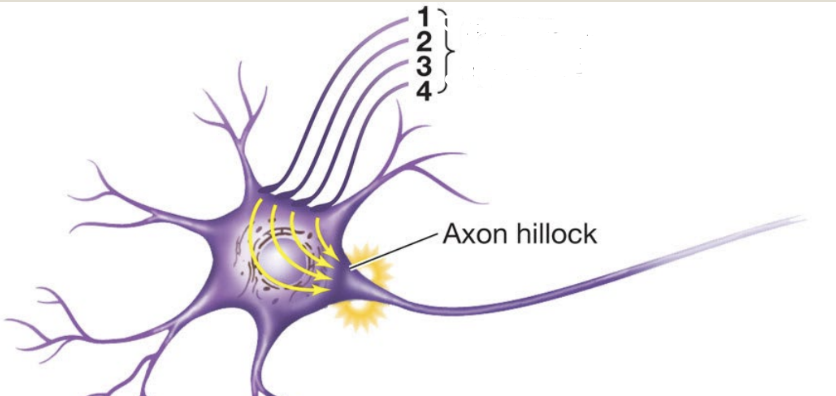
1-4 are
excitatory synapses
two types of neurotransmitters
excitatory and inhibitory
excitatory neurotransmitters increase ____ and chance for ____ to be achieved
membrane permeability, threshold
____ decrease membrane permeability and chance for threshold to be achieved
inhibitory neurotransmitters
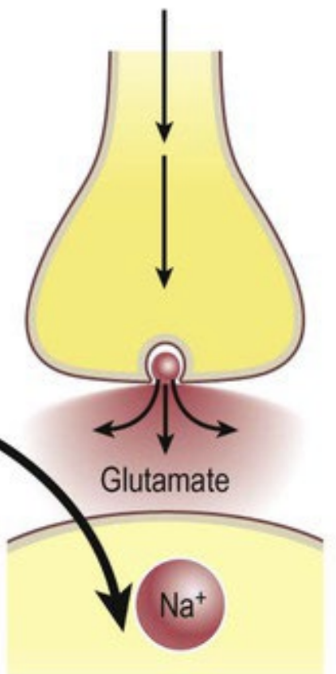
excitatory synapse
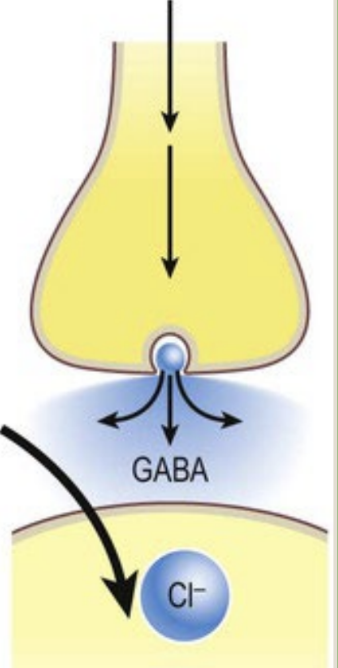
inhibitory synapse
gamma-aminobutyric acid known as
GABA
GABA ____ the activity of the neurons to which it binds
reduces (inhibitor)
most common type of receptor
GABA
what percentage of all synapses work with GABA
40
GABA has a _____ effect
tranquilising
tranquilising effect
reduces anxiety and calms body by slowing down cns
low levels of GABA associated with (2)
anxiety and phobia
sedatives bind to ____ receptors
GABA
agonist
molecule that has same effect on postsynaptic neuron as the neurotransmitter itself does
antagonist
molecule that blocks the effect that the neurotransmitter normally has on the postsynaptic neuron
____ are drugs that occupy receptors and activate them
agonist
____ are drugs that occupy receptors but do not activate them
antagonist
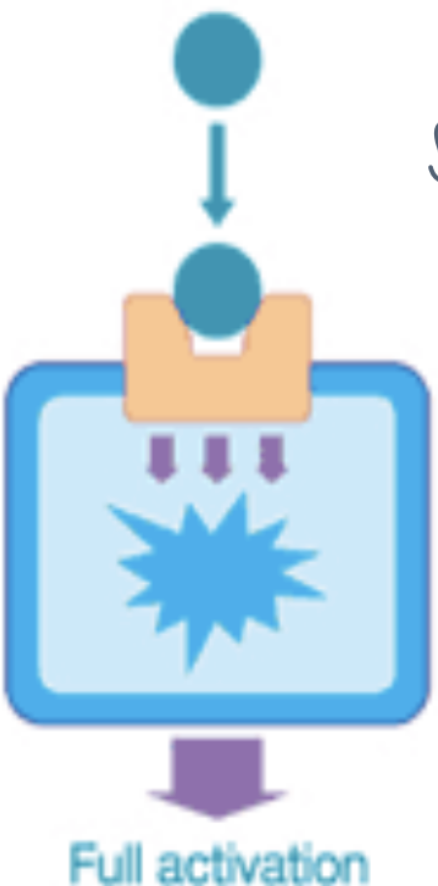
agonist
agonist and antagonist together leads to ___ activation
less
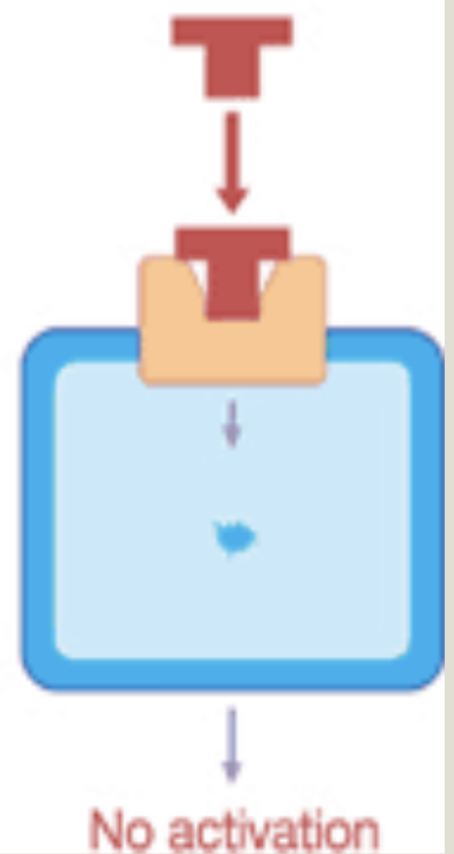
antagonist alone
nerve impulse:
speed is proportional to the
size of the axon
nerve impulse:
greater diameter =
faster impulse
nerve impulse:
(myelinated/unmyelinated) axons conduct impulses faster
myelinated
synapse
junction between two communicating neurons
nerve pathway: nerve impulse travels from neuron to
neuron
nerve pathway specifically
dendrite, cell body, along axon, synapse (gap), dendrite
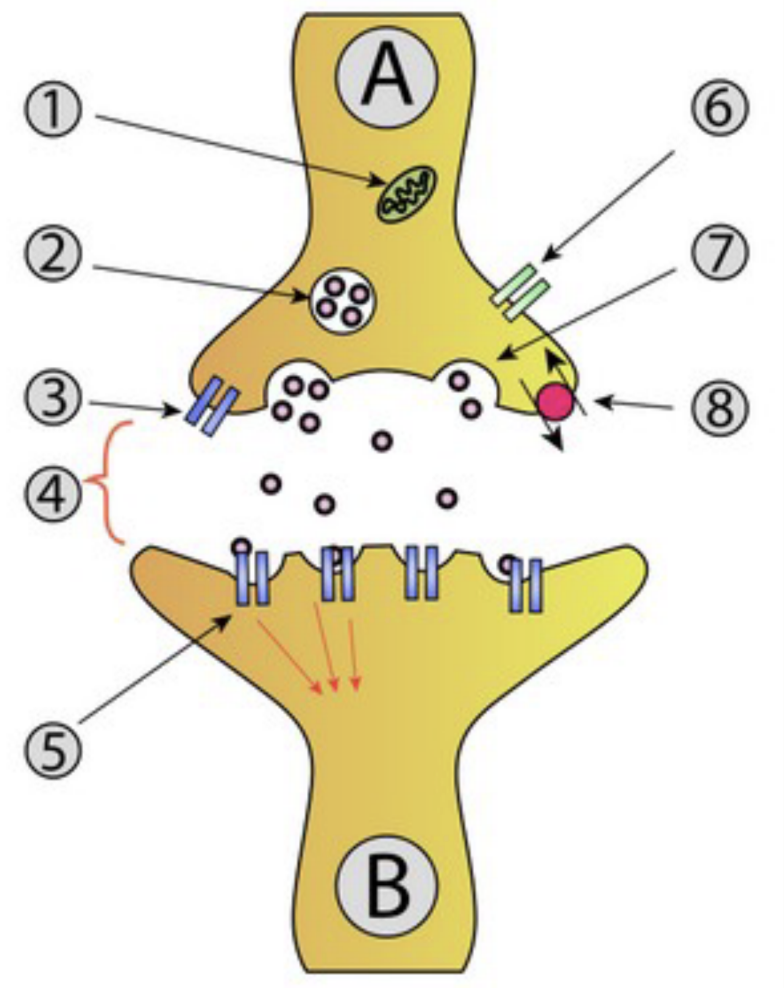
A
neuron (axon)
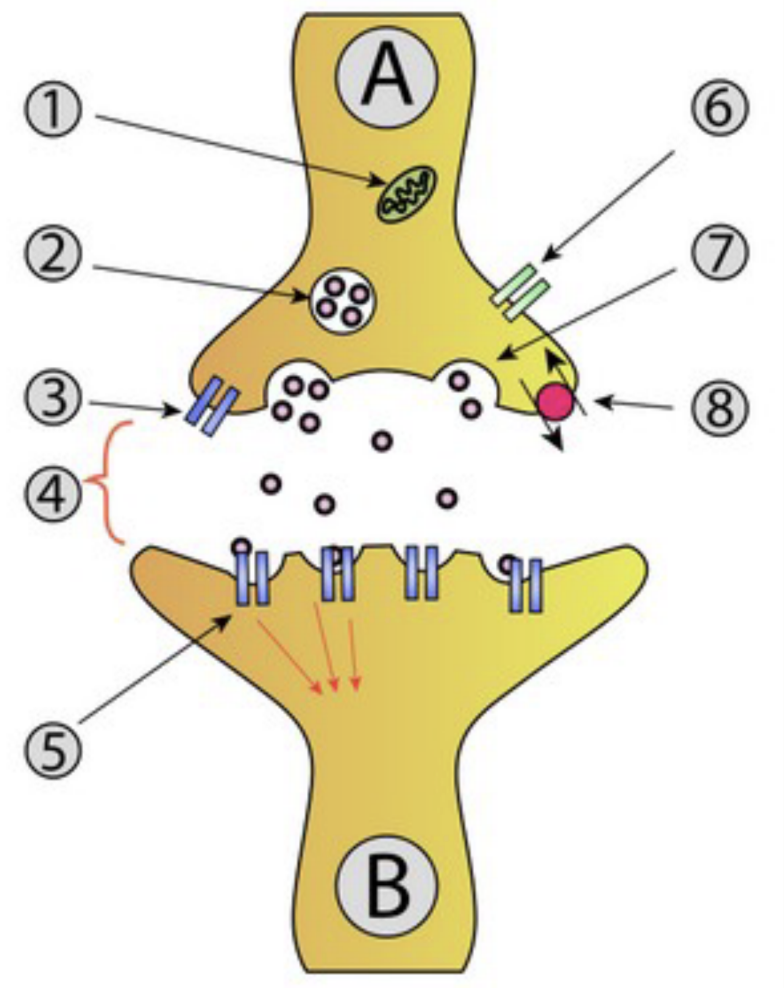
B
neuron (dendrite)
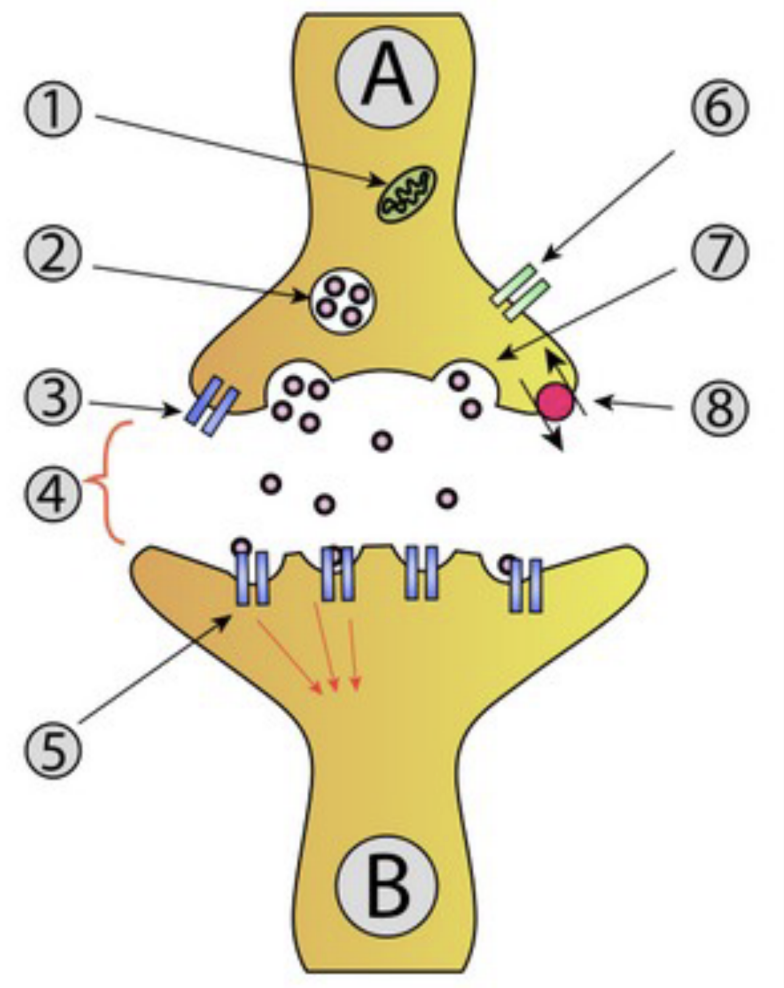
1
mitochondria
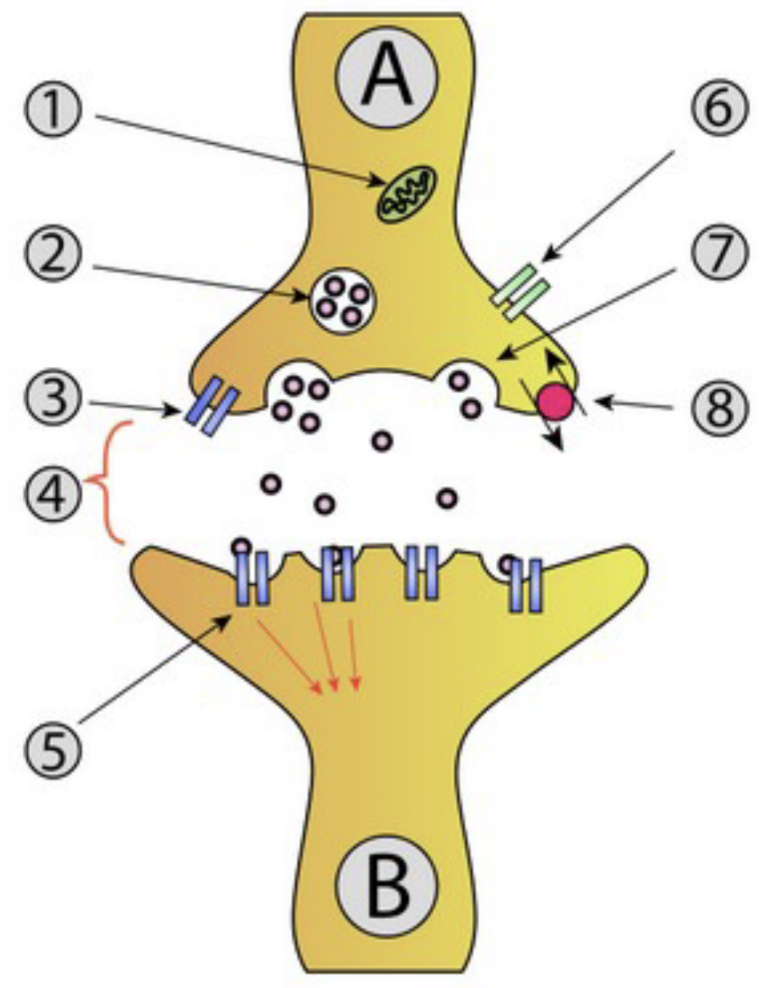
2
vesicle
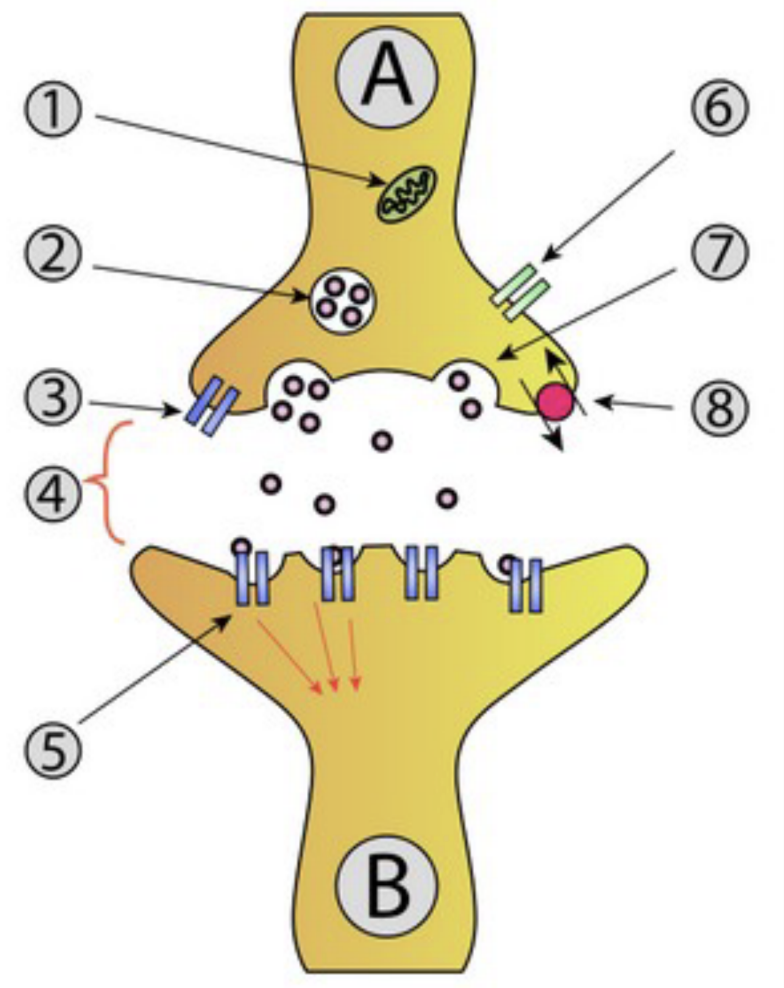
3
receptor
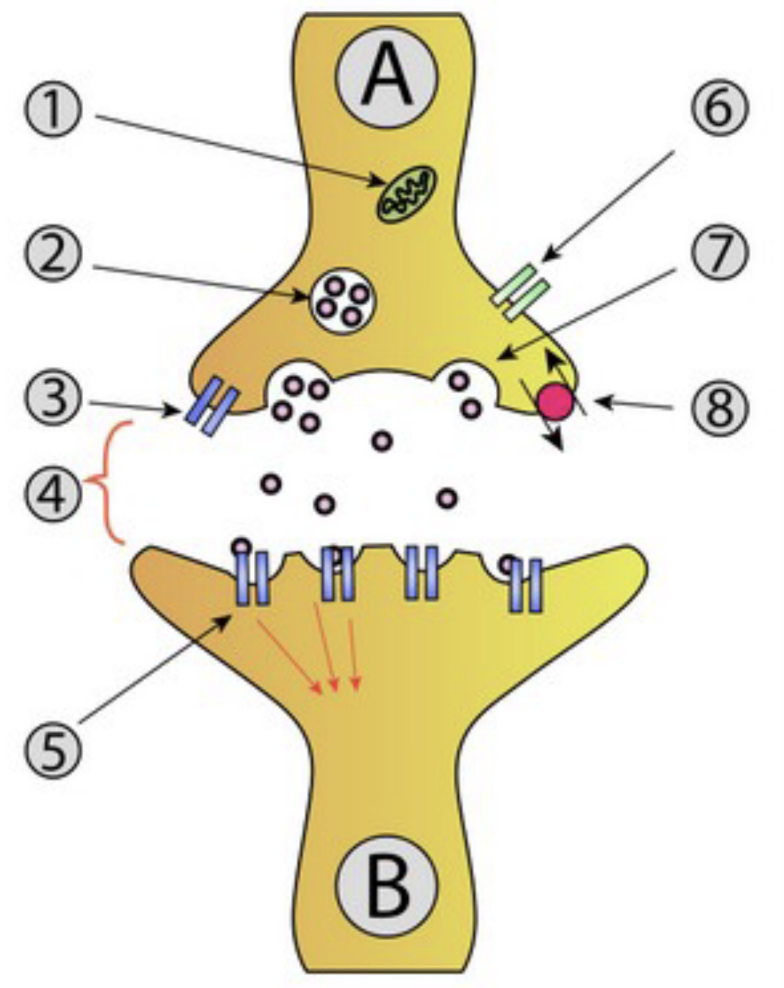
4
synapse
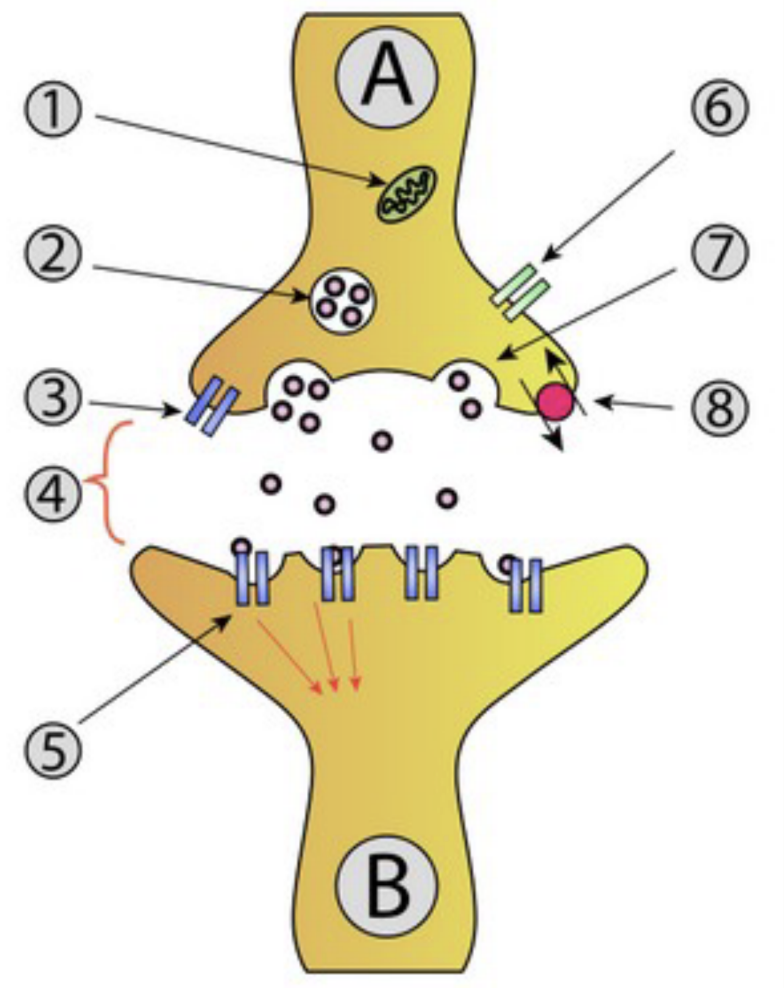
5
receptor
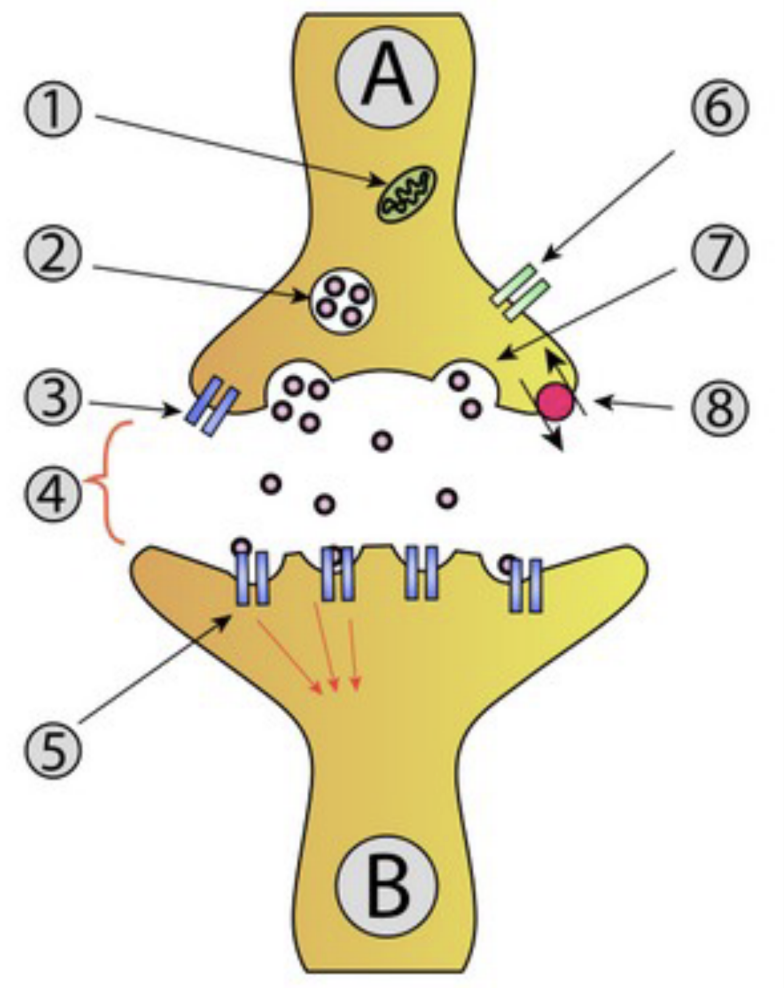
6
calcium channel
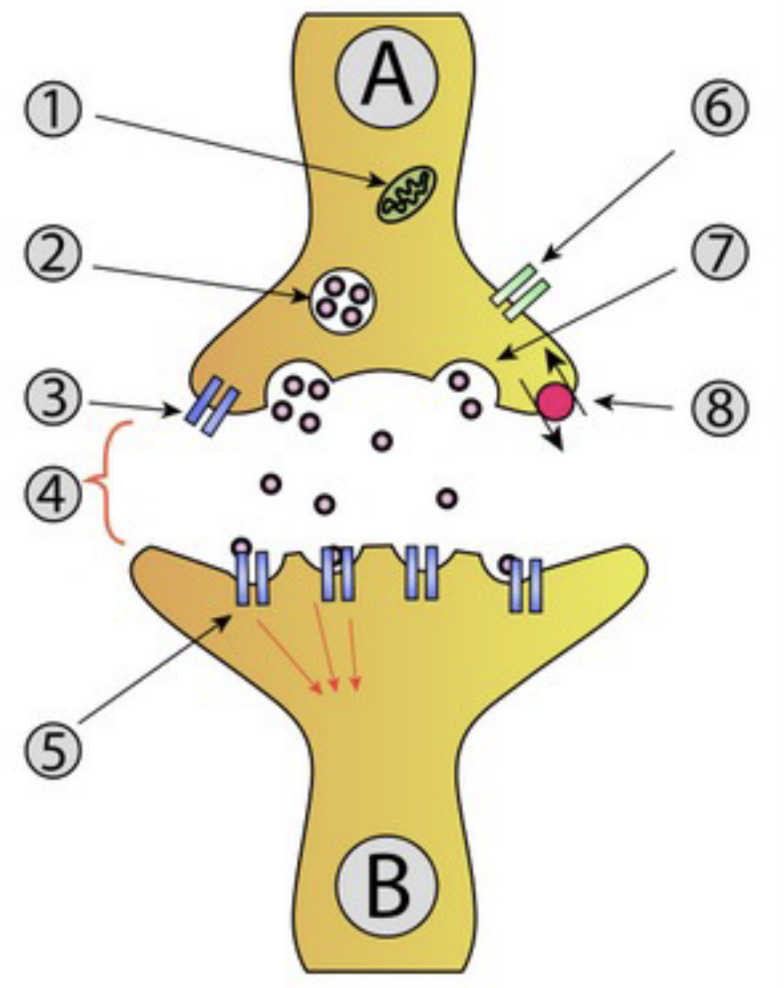
7
releases neurotransmitter
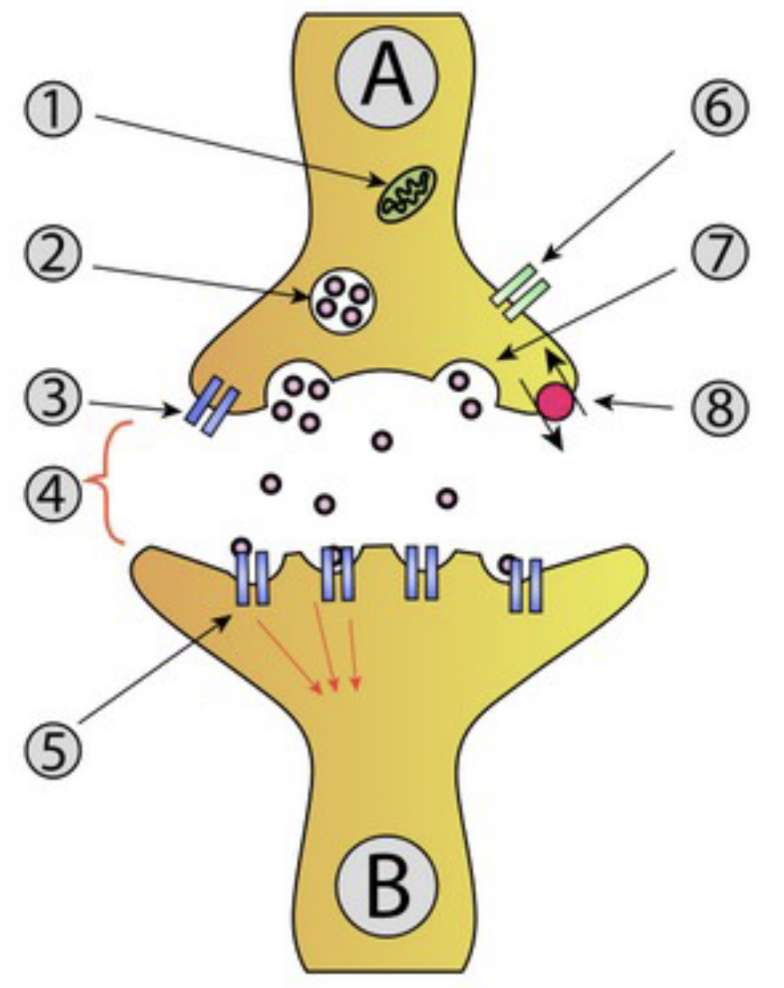
8
re-uptake
____ poisoning can be fatal to humans and animals and can occur by ____ and ____
strychnine, inhalation, swallowing
strychnine prevents the proper operation of the
chemical that controls nerve signals to the muscles
strychnine poisoning:
the chemical controlling nerve signals works like the body’s ______ for muscles. when this ____ does not work correctly, muscles throughout the body have ______
off switch, off switch, painful spasms
cocaine:
____ binds to receptors and is eventually recycled back into the ____
dopamine, neuron
if cocaine is present, it attaches to the _____ and ____ the normal recycling process, resulting in a ____ of dopamine in the ____, which contributes to the ____ effects of cocaine
dopamine transporter, blocks, buildup, synapse, pleasurable
ecstasy (mdma):
____ is the feel good neurotransmitter and helps regulate ____
serotonin, body temperature
____ (mdma):
our brain cells recycle serotonin ____ the cells and ____ of the synapse using ____
ecstasy, back into, out, serotonin reuptake transporters
ecstasy takes these upkeep transporters and ___ their roles. this causes a massive flood of ____ from the ___ into the ___
reverses, serotonin, brain cells, synapse
the most common cause of ecstasy-related death is
overheating/hyperthermia
antidepressants:
zoloft is a part of a class of drugs called
selective serotonin reuptake inhibitors
SSRIs ____ the uptake of serotonin ___, keeping mood elevated for a ____ time
inhibit, back into the cell, longer
heroine/opiates activates ____, blocks ____, releases more ____
opiate receptors, release of GABA, dopamine
____ mimic dopmnine by ____ to receptors
amphetamines, binding
amphetamines:
dopamine (does/does not) re-enter the cell, ___ the cell’s supply
does not, depleting
PRIALT
a calcium channel blocker that is used to inhibit pain transmission from the spinal cord
PRIALT does not bind to ____ receptors
opioid
impulse processing
do not need to think about (stop sign)
____ groups of neurons that make hundreds of synaptic connections and work together to perform a common function
neuronal pool
neuronal pools help us remember ____ tasks, like (2)
sequential, tying a shoe or riding a bike
spinal reflex/reflex arc:
afferent information converts to
efferent activity without going through the brain
nerve pathway that is involuntary and instant
spinal reflex/reflex arc
____ maintains uprightness
knee-jerk reflex
knee-jerk reflex:
____ receptors in the patellar tendon send _____ to the ____
stretch, action potentials, spinal cord
knee-jerk reflex:
the ____ neuron synapses with a ___ neuron, sending a(n) ____ to the leg muscle
sensory, motor, action potential
withdrawal reflex
avoidance of painful stimuli (touch and pull back)