Mass number and isotopes calculations
 Call Kai
 Learn
Learn Practice Test
 Spaced Repetition
 Match
Match Flashcards
 Knowt Play
1/14

There's no tags or description
Looks like no tags are added yet.
Name | Mastery | Learn | Test | Matching | Spaced | Call with Kai |
|---|
No analytics yet
Send a link to your students to track their progress
15 Terms
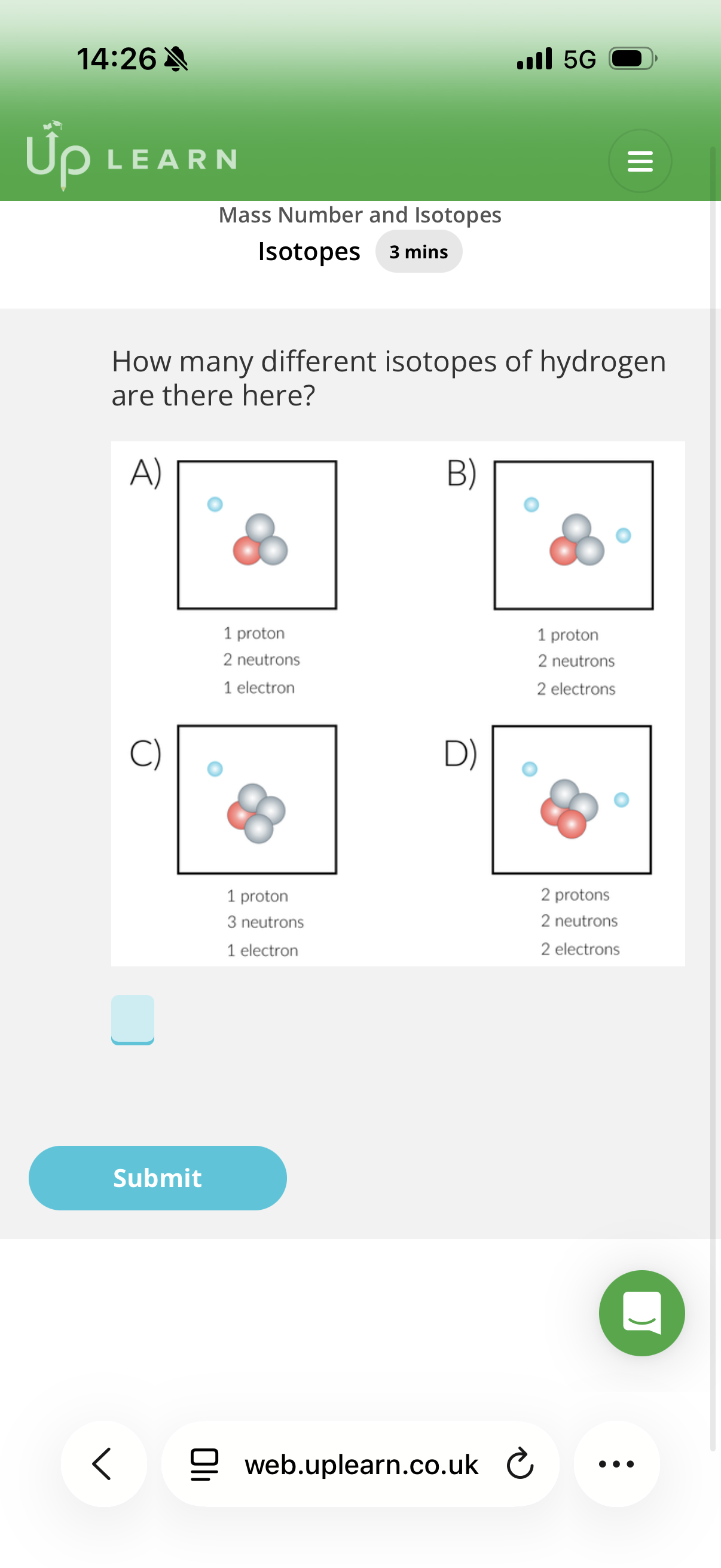
Isotopes
What are isotopes?
Answer image question?
Note: in chemistry there is no difference between the chemical properties of isotopes
Versions of the same element with the same number of protons but different number of neutrons
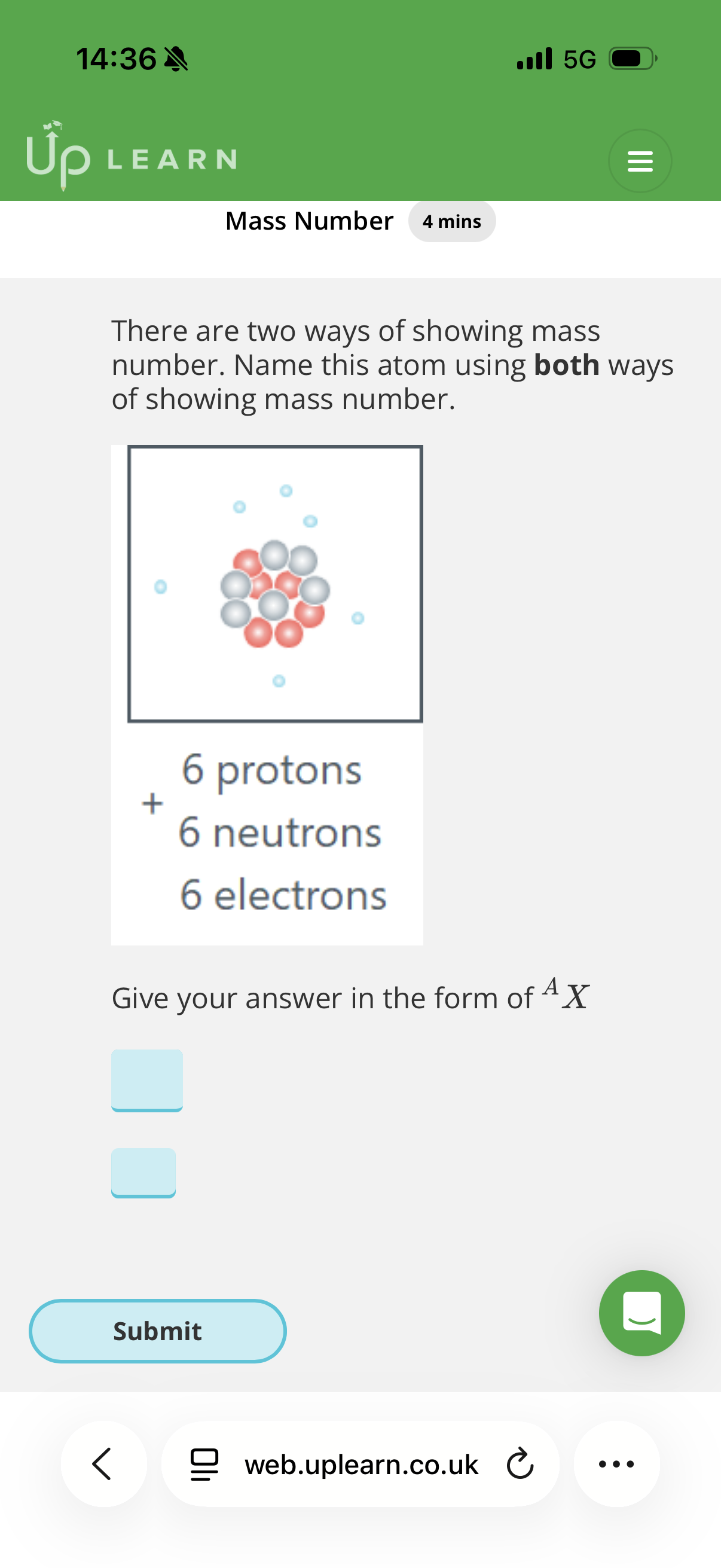
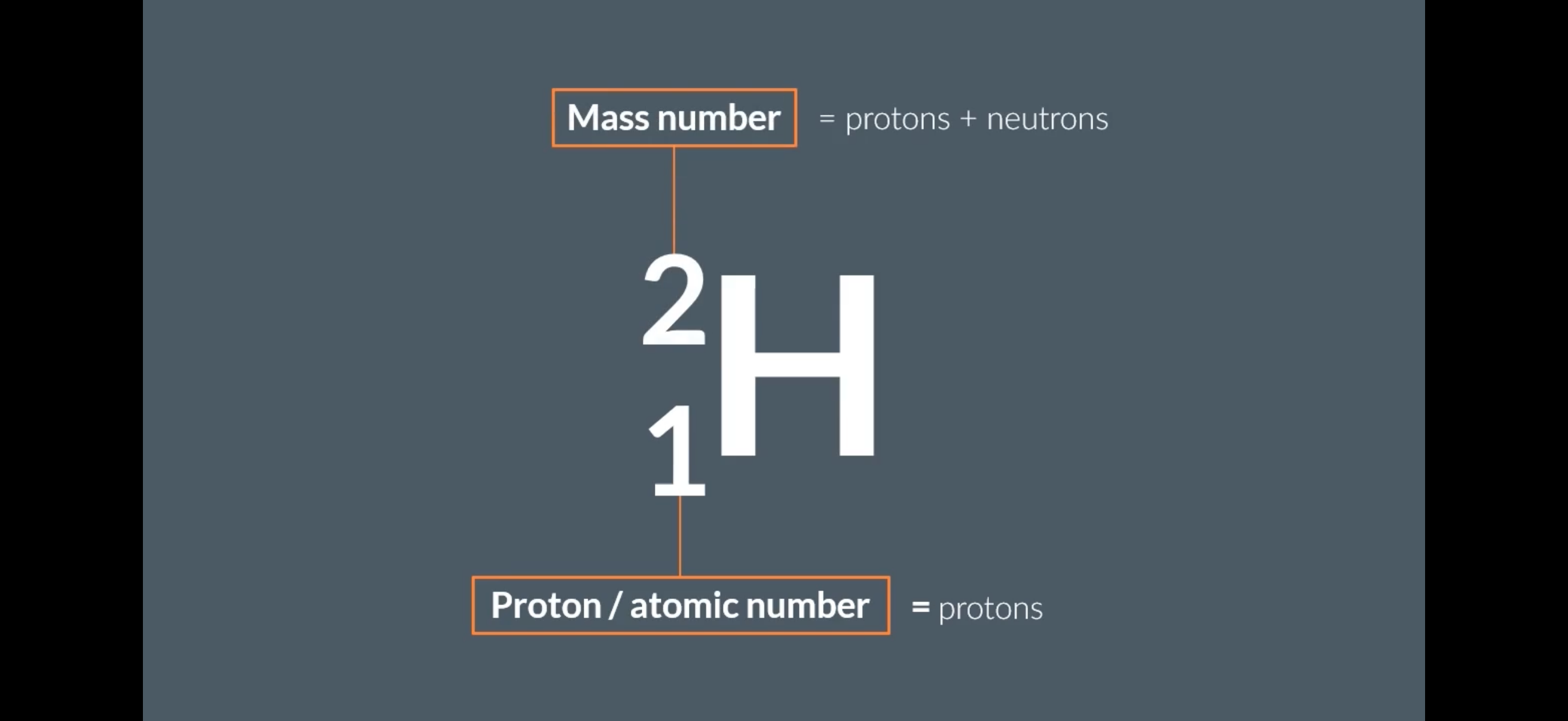
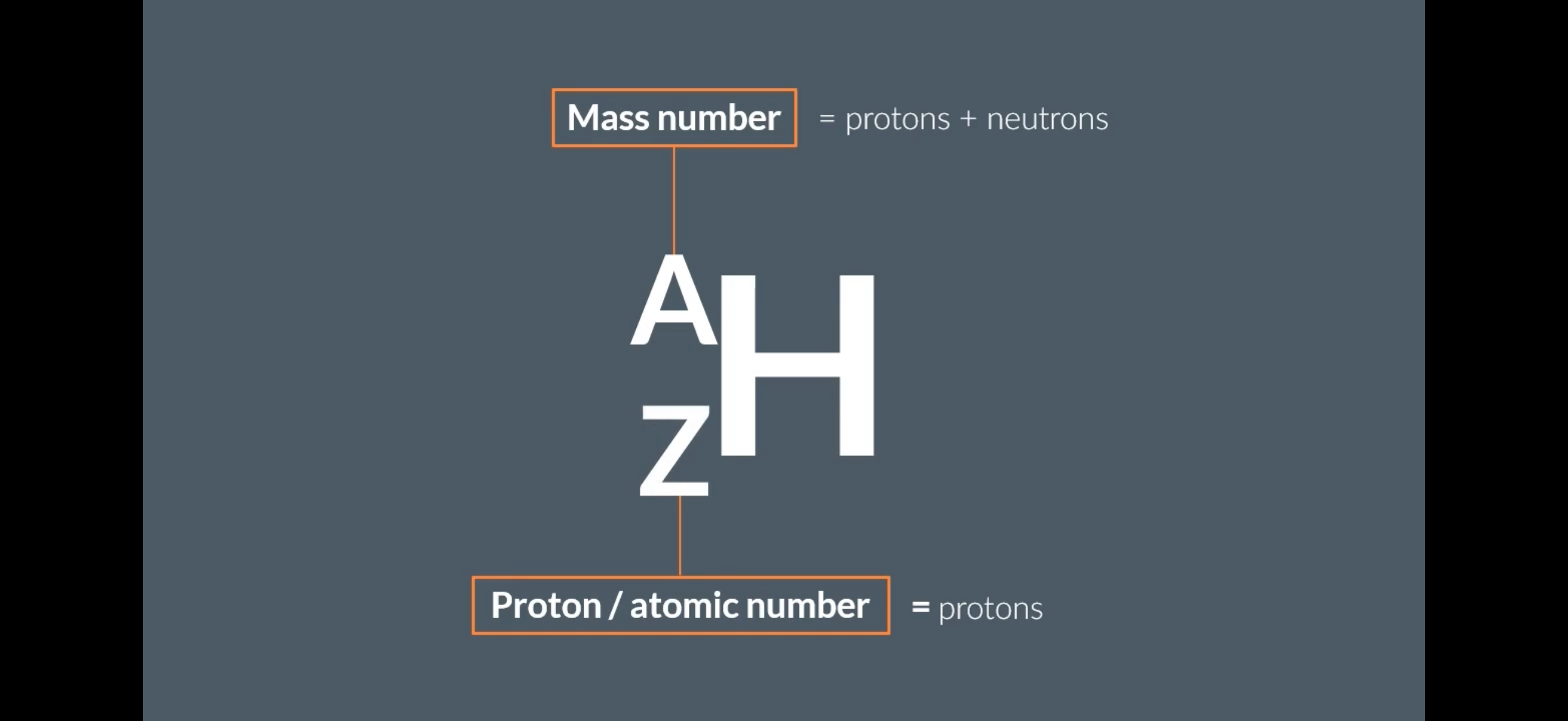
Mass number
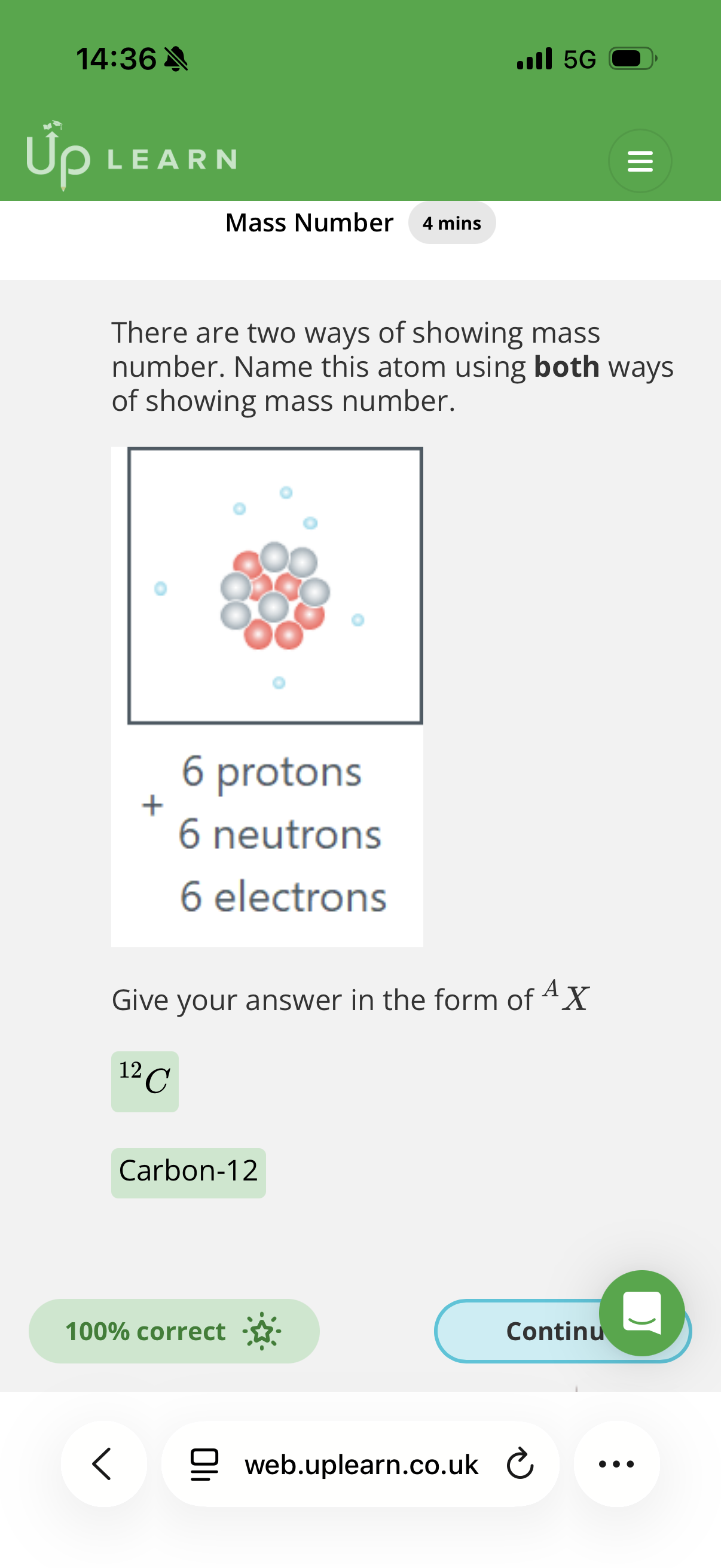
• Answer the image question: The image shows the 2 ways you can name isotopes by showing their mass number.
An atom of carbon-13 has …1? protons and …2? neutrons.
Note: When showing the mass number we always put it on the top left of the isotope.
Six. 2. Seven
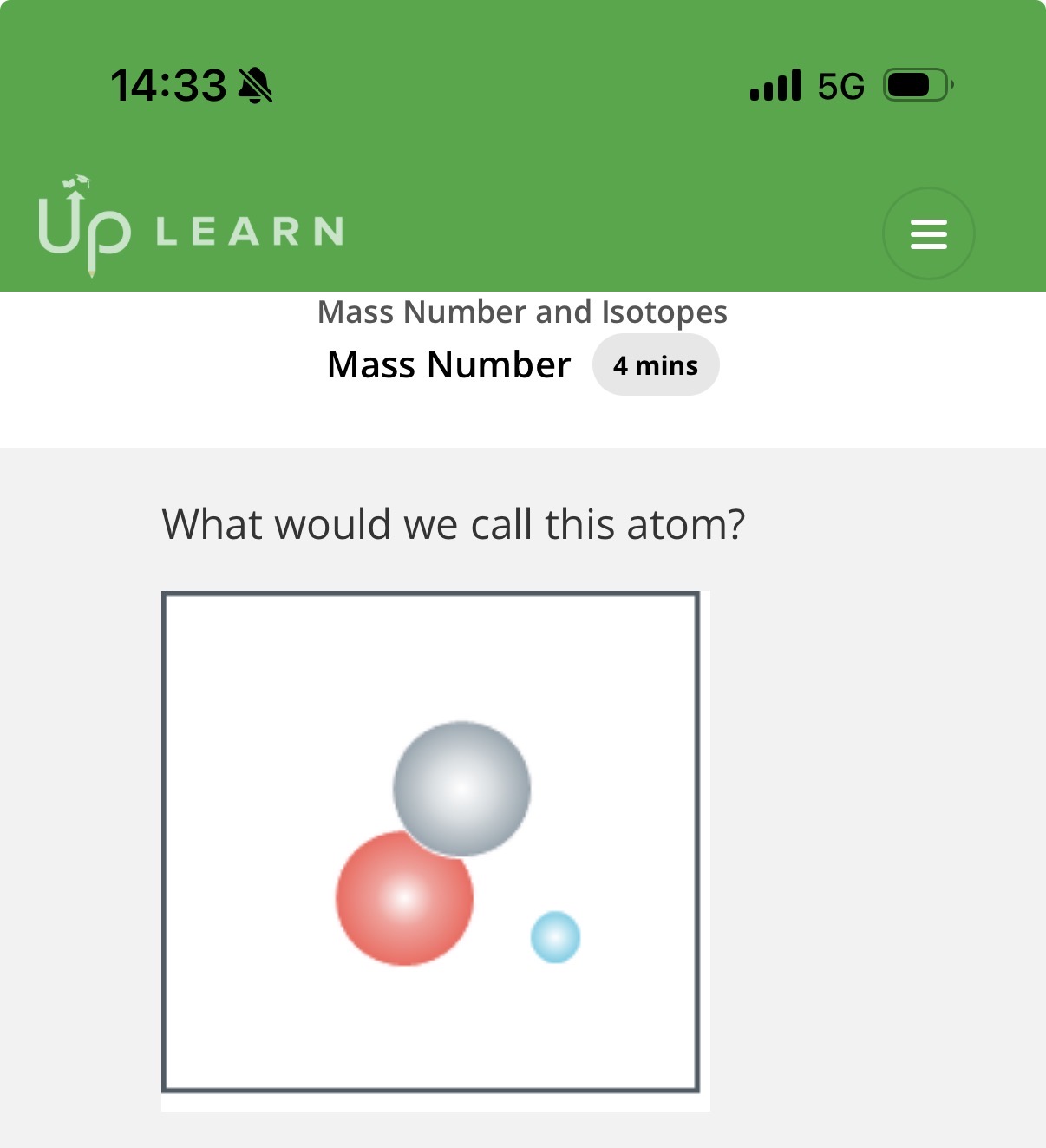
Answer image question?
Mass number is the number of …3? And …4?
3+4. Protons and neutrons
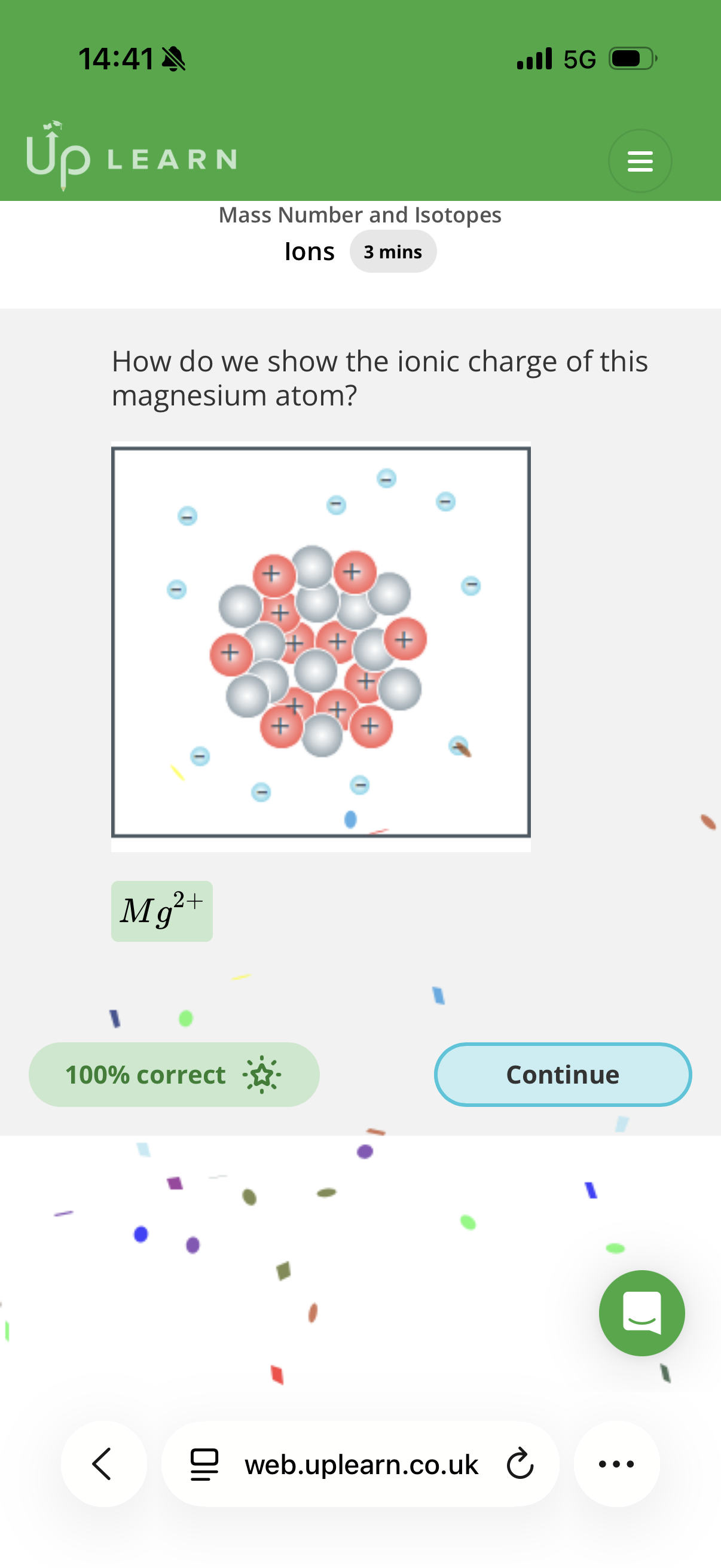
Ions
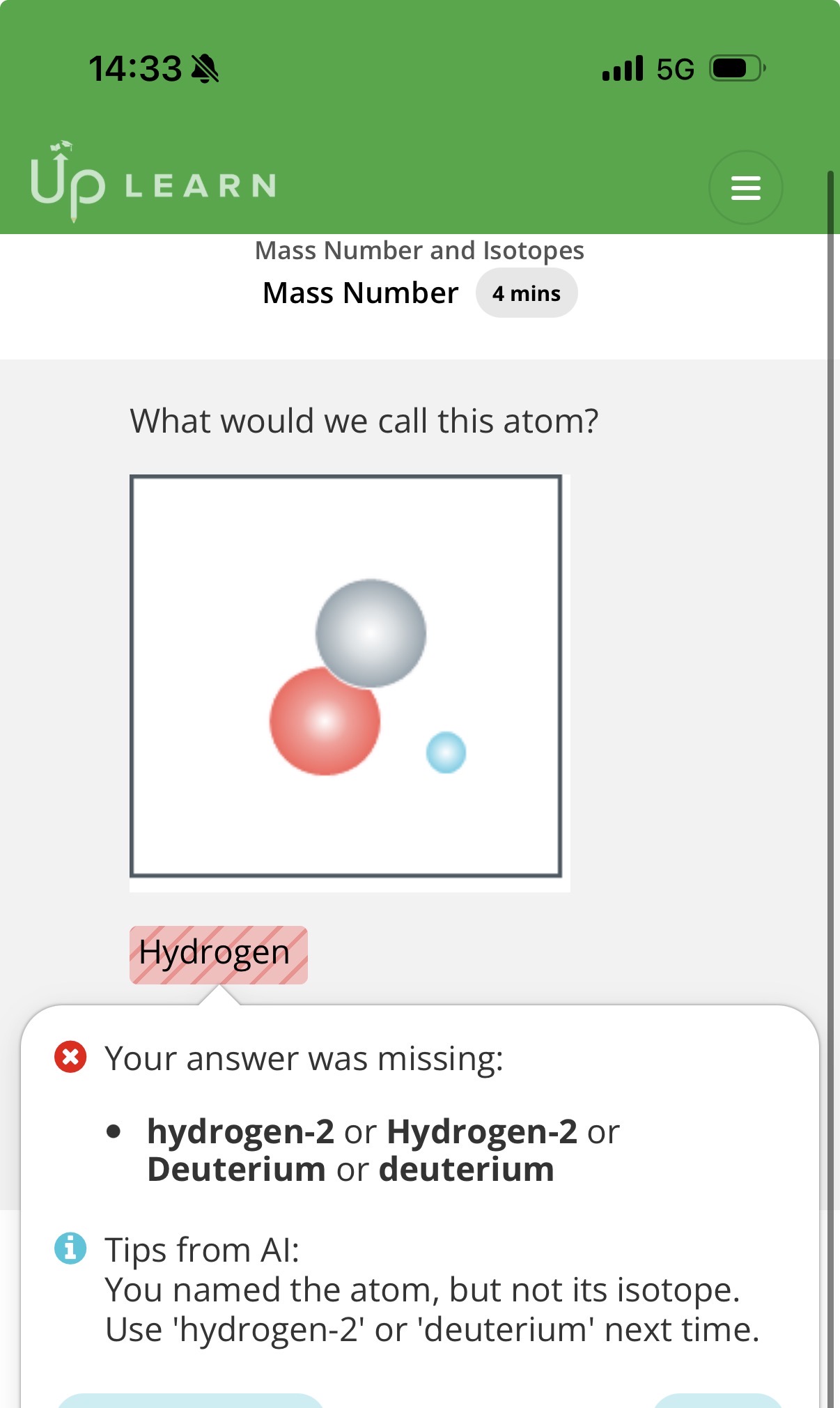
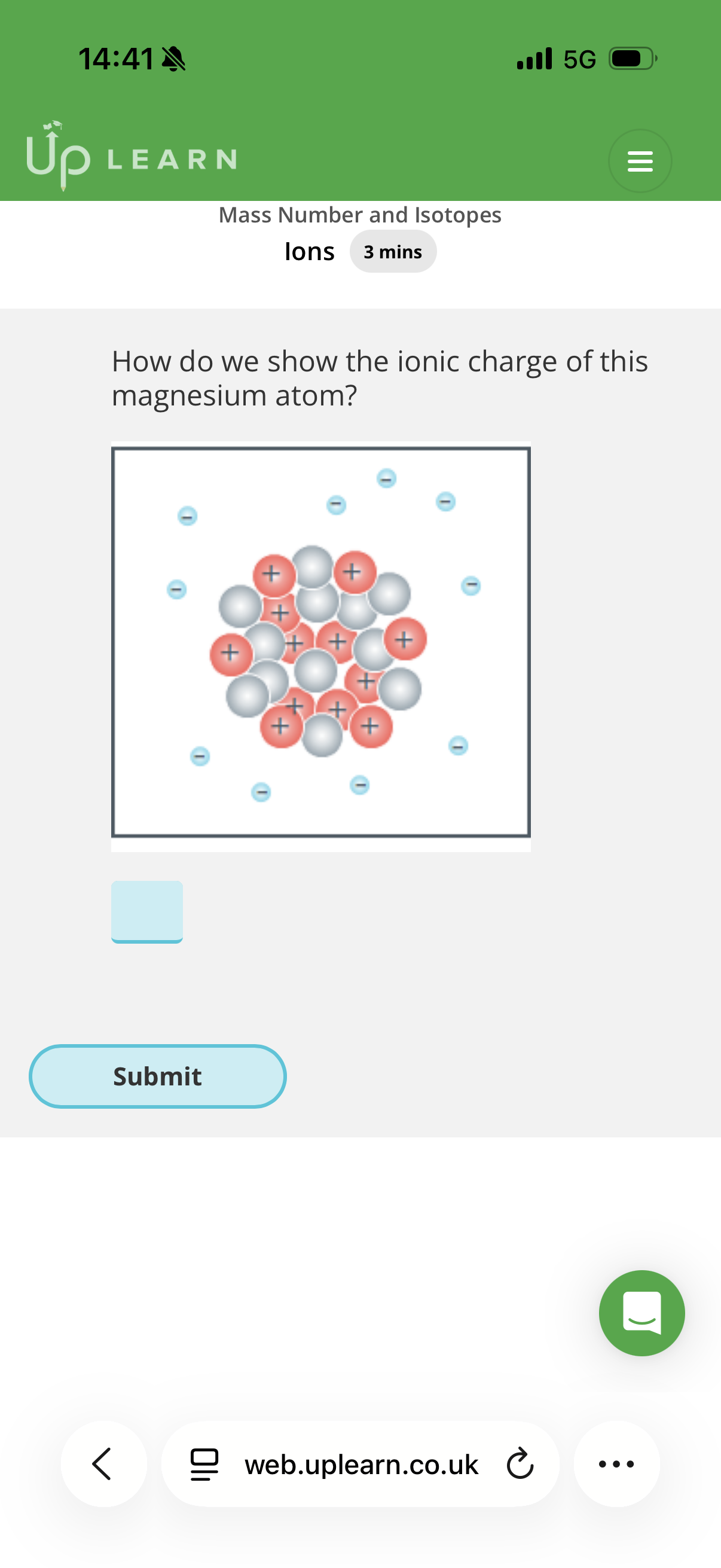
Answer image question
Note: When showing the ionic charge we always put the charge number to the top right of the ion.
•An atom with more electrons than …2?has a …3? overall charge.
•An atom with a positive or negative overall charge is called an …4?
Which of the following expressions give us the ionic charge?
Select all that apply
A: proton number + electron number
B: proton number – electron number
C: electron number – proton number
An oxygen atom has 8 protons and 6 electrons. What is its ionic charge?
The chemical symbol for oxygen is O.What is the chemical symbol for an oxygen atom with 6 electrons?
Protons
Negative
Ion
B
2+
O2+
Proton number
Info: The atomic number means the proton number and on an isotope, it’s shown on the bottom left.
Info: The periodic table is arranged in increasing proton number.(Protons help us identify elements)
Which of the following atoms or ions has a proton number of 6?
Select all that apply
A: Carbon-12
B: Carbon-14
C: C2+
An atom's …? number determines which element it is.
A,B,C (since they are all carbon they will all have a proton number of 6)
Proton
Answer image question?
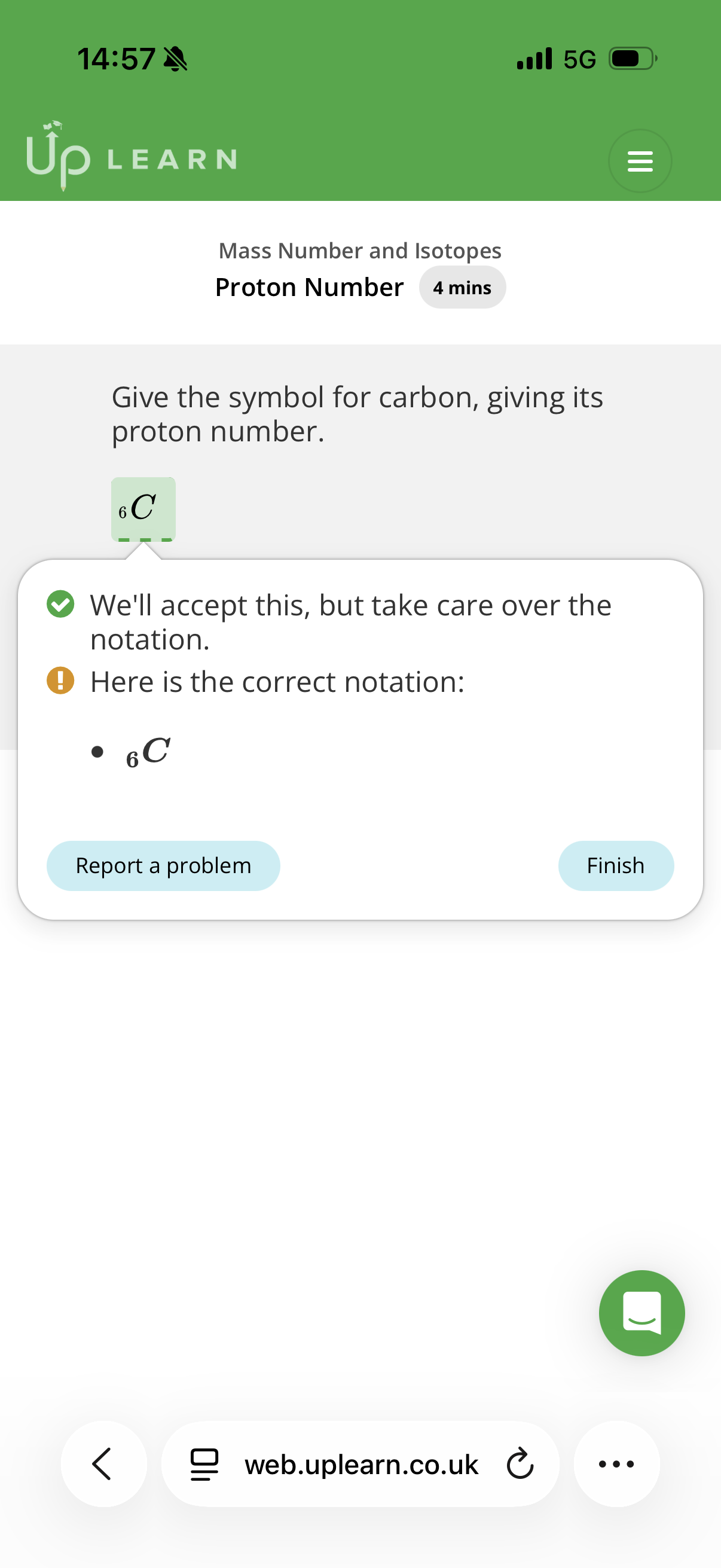
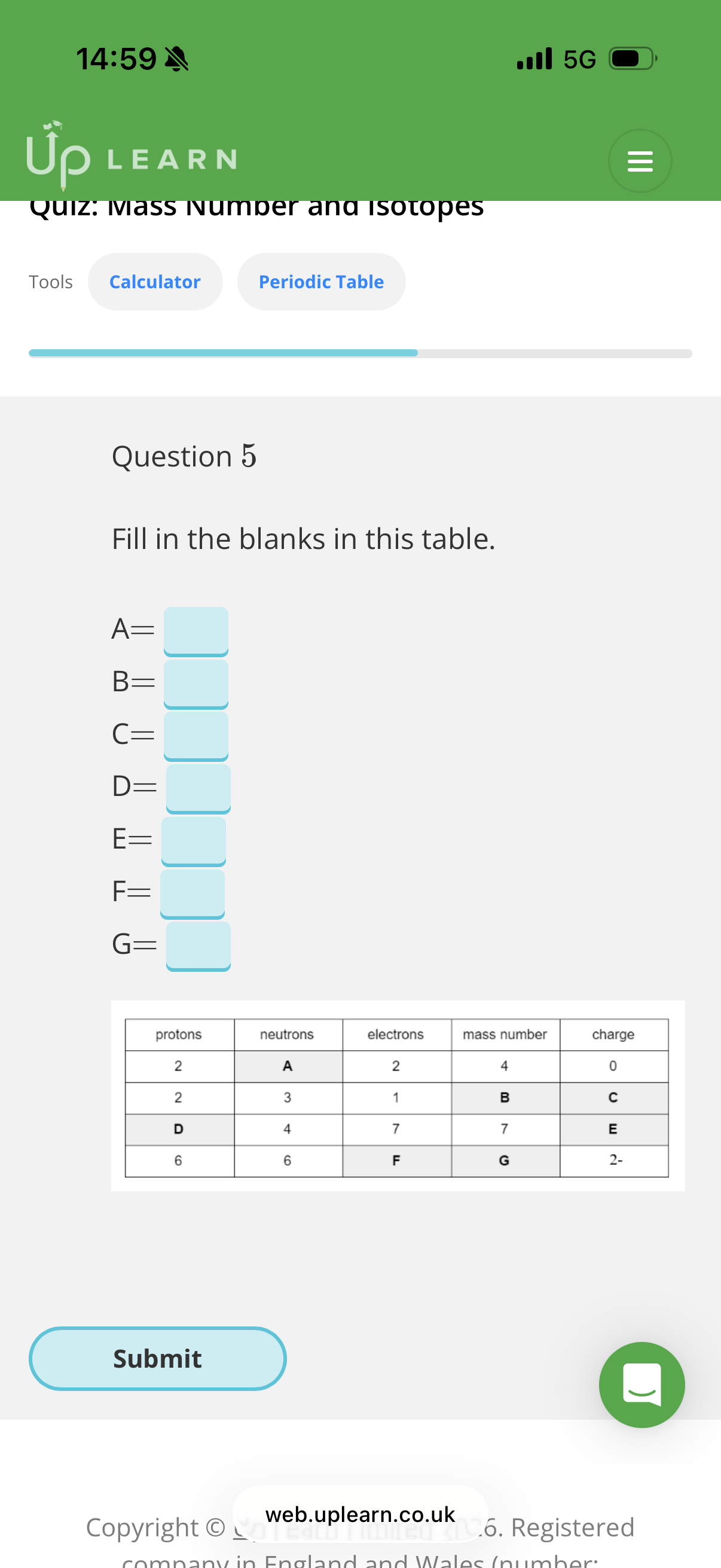
Answer image question?
Atoms are different elements if they have a different number of …2?
Atoms are different isotopes of the same element if they have the same number of …3? but different numbers of …4?.
Atoms are ions if their …5? And …6? numbers differ.
Protons
Protons
Neutrons
Proton
Electron
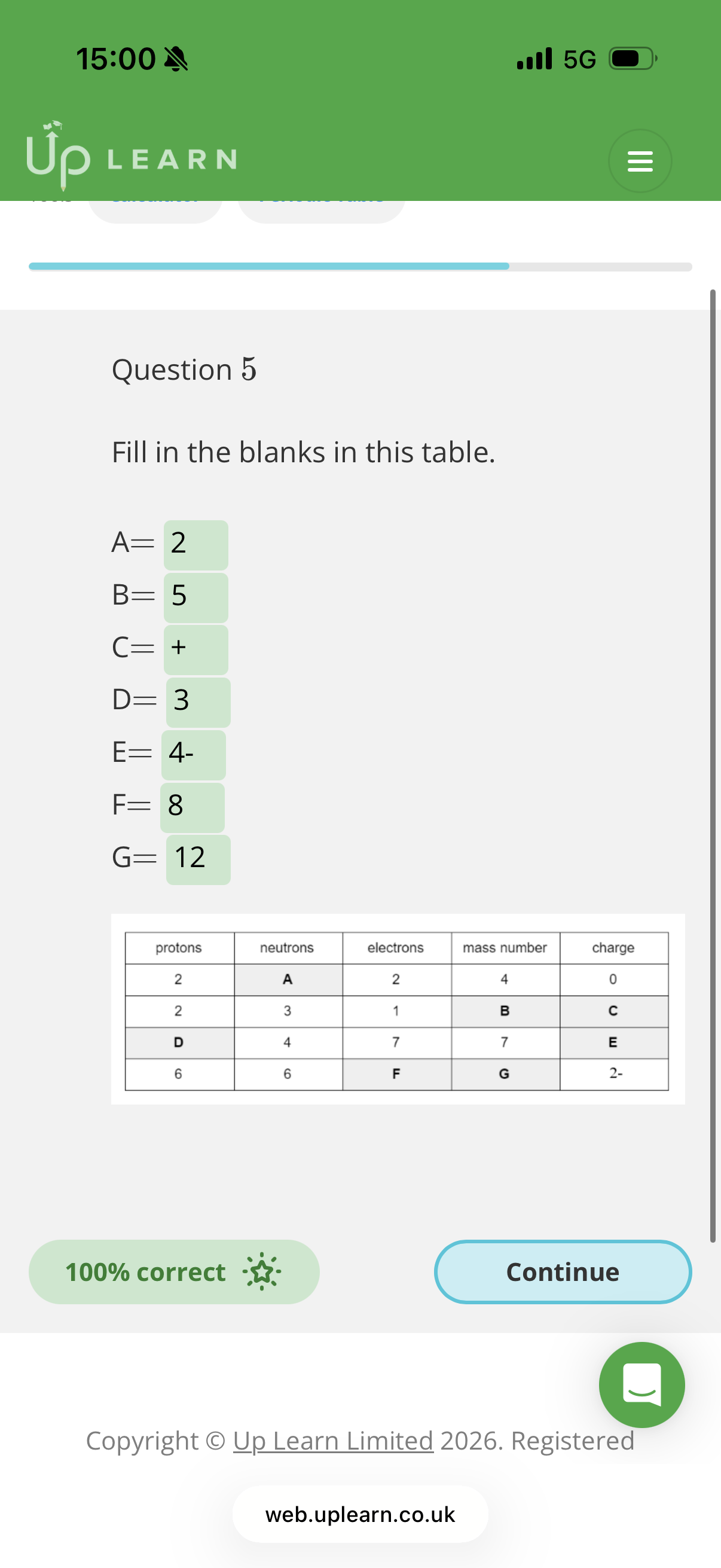
The atomic mass unit
Chemists measure mass at the atomic level using a unit called the…?
This unit is exactly equal to…
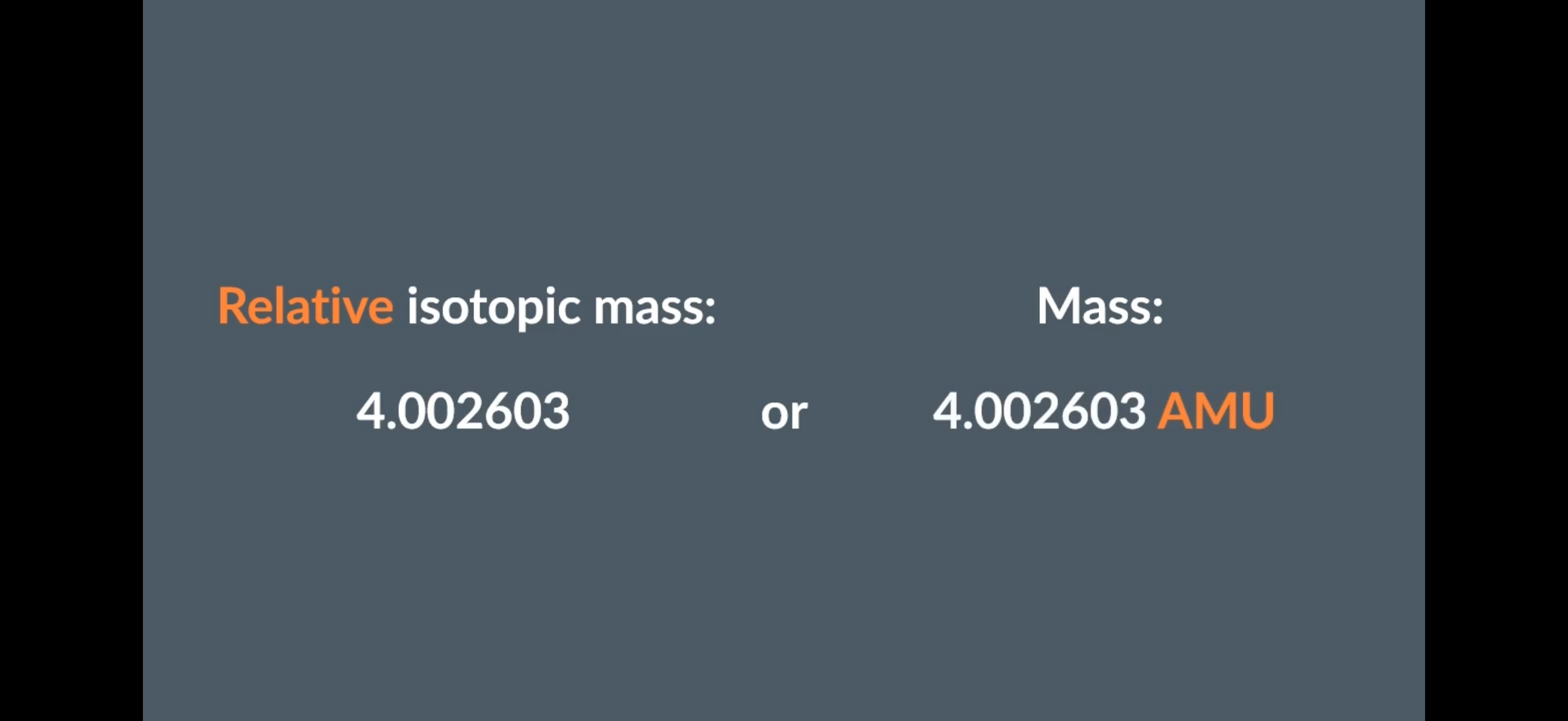
The image shows the 2 ways we can write the mass of an atom
Predict the relative isotopic mass of chlorine-35?
Give your answer to 6 decimal places.The mass of an isotope, measured in …4? is called the relative isotopic mass.
•At A-Level, it is safe to use the …5? as an estimate of the relative isotopic mass.An atom’s relative isotopic mass always rounds to its …?
Estimate the relative isotopic mass of chlorine-37.
Give your answer to 2 significant figures.The most common isotope of silicon has an equal number of protons and neutrons.
Its relative isotopic mass is 27.976926
Give your answer to the nearest integral value.
Mass number? Proton number? Neutron number?
Two atoms, 20 42Ca and 20 43Ca, have different…
Select all that apply
A: proton numbers.
B: neutron numbers.
C: mass numbers.
D: relative isotopic masses.
Atomic mass unit (AMU)
1/12th of the mass of an atom of carbon-12
35.0000 (we just round to the mass number since it’s close enough to the exact mass number)
Grams
Mass number
Mass number
37 Explanation
The precise answer is 36.965903.
The mass number is always the same as the relative isotopic mass to the nearest integer.Mass no.: 28. P: 14. N:14
B,C,D
Relative abundance
Silver has two naturally-occurring isotopes: silver-107 and silver-109.
Silver-109 has a relative abundance of 48.2%.
Silver-107 has a relative abundance of …?The …2? of an isotope is the number of atoms of that isotope that exists on Earth, as a percentage of all the atoms of that element.
Relative Atomic Mass
Calculate the average mass of a chlorine atom, based on the following data:
Chlorine-35 has a relative abundance of 75% and a relative isotopic mass of 35.
Chlorine-37 has a relative abundance of 25% and a relative isotopic mass of 37.Give your answer in AMU to one decimal place.
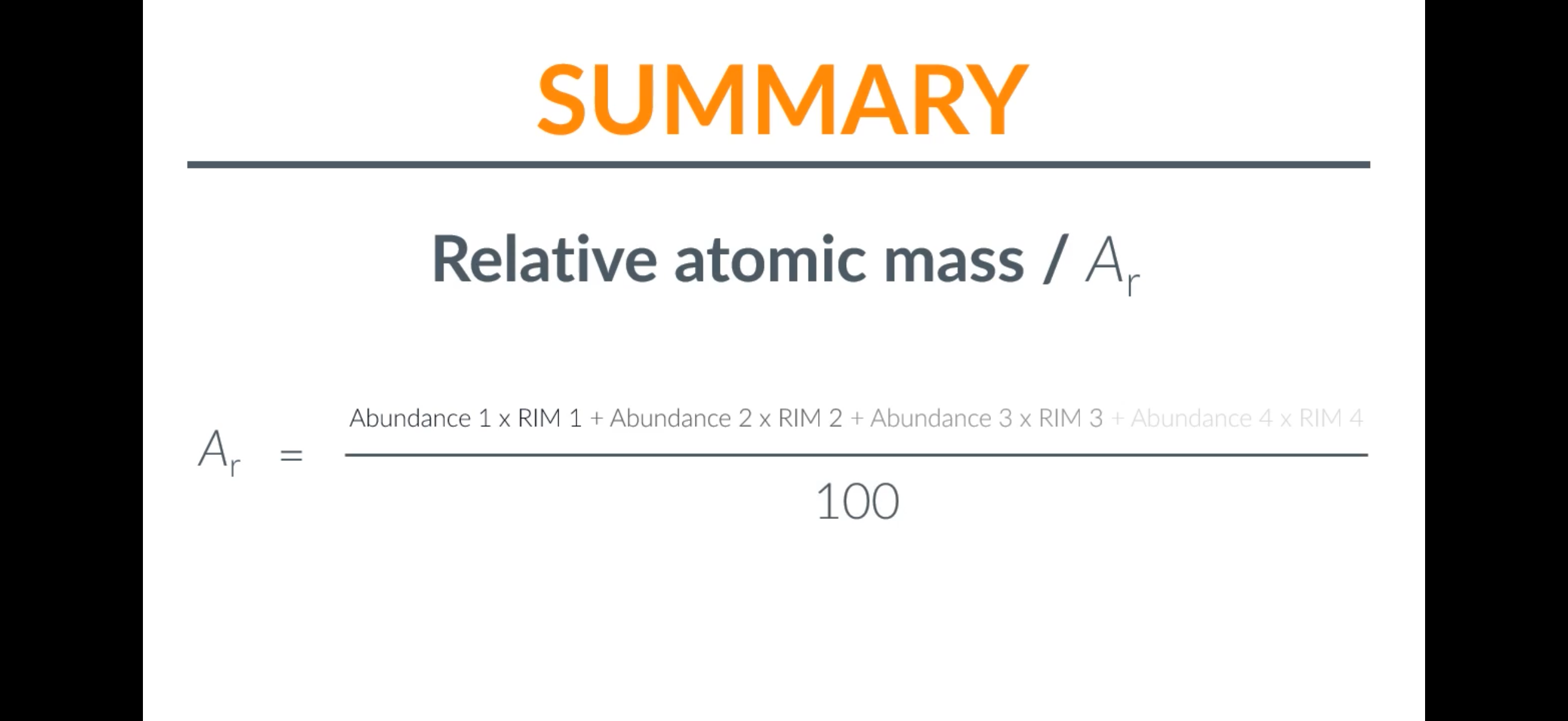
The mass of an average atom of a given …4? is called its relative atomic mass.
•We calculate it by multiplying the relative abundance of each isotope by its relative …5? mass, and summing the products
What is the definition for relative atomic mass?
51.8%
Relative abubdance
35.5 AMU (We call this the relative atomic mass since it’s an average of chlorine isotopes)
Element
Isotopic
The average mass of an element compared to 1/12th the mass of an atom of carbon-12.
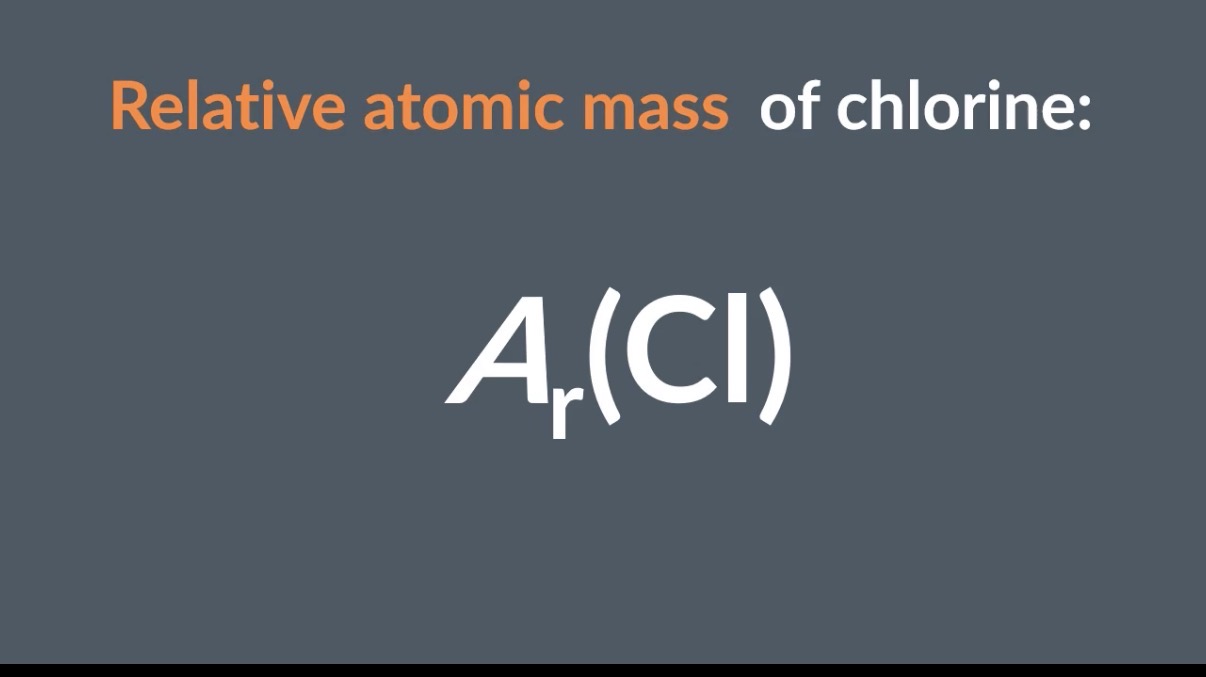
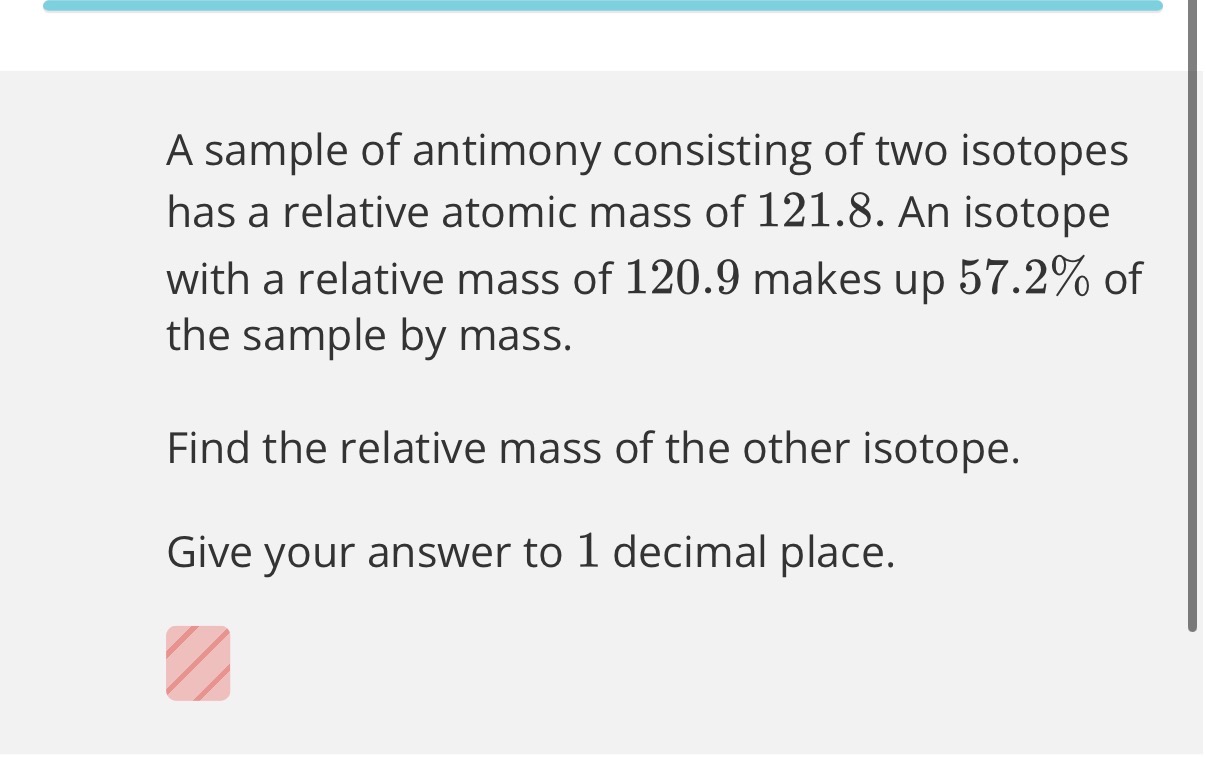
Answer image question
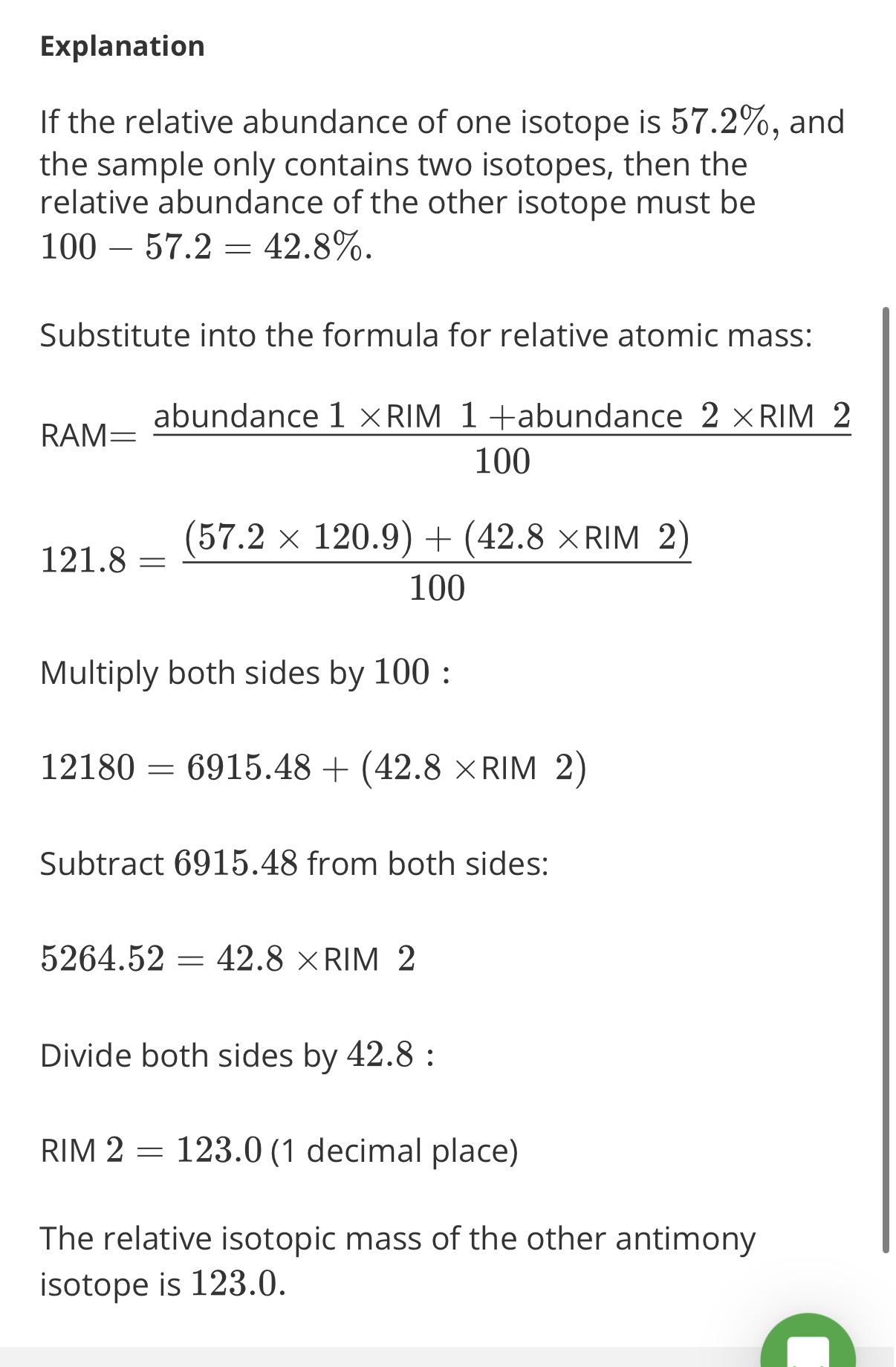
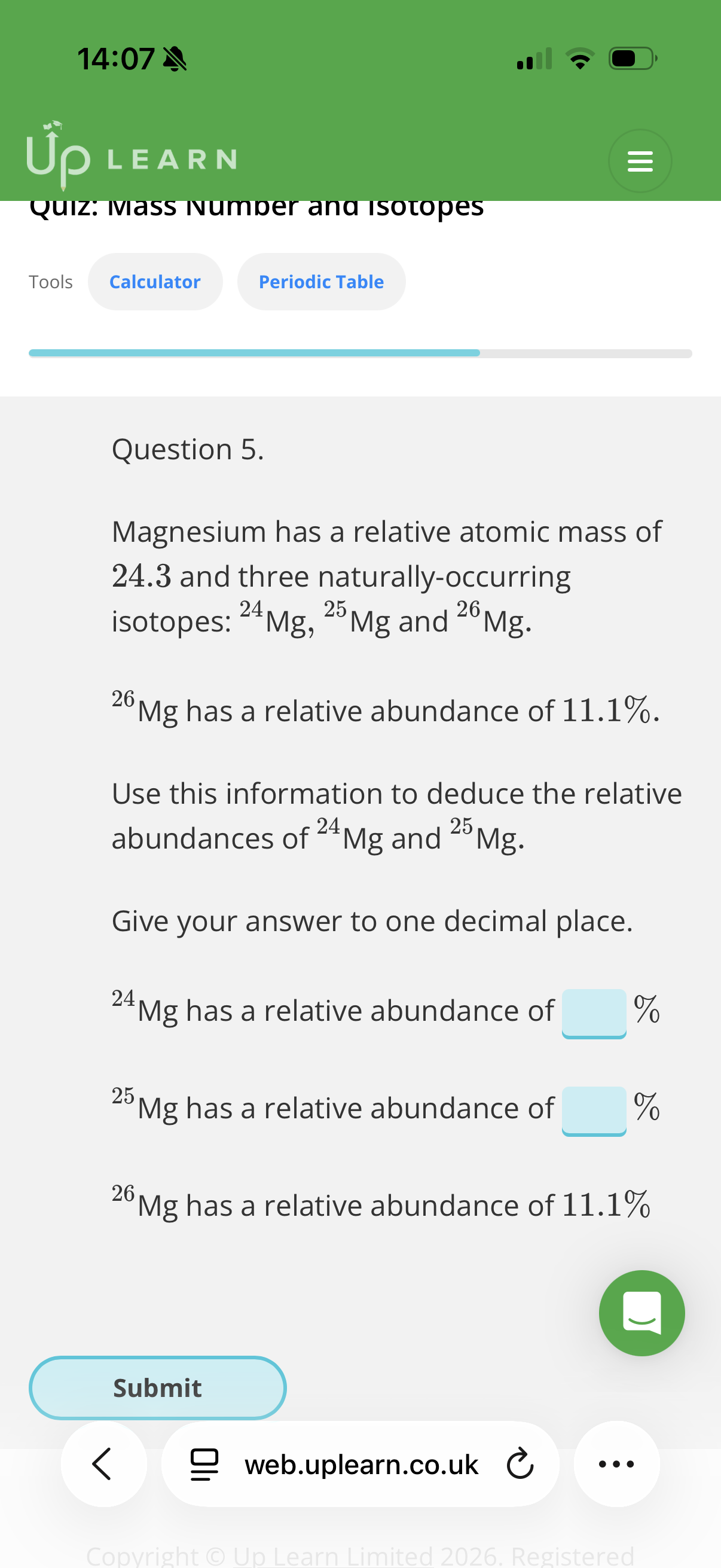
Calculating an unknown abundance
The relative abundances of all the naturally-occurring isotopes of an element must sum to...
The relative abundances of 191Ir and 193Ir add to 100%.
The relative abundance of 191Ir is 37.3%.
The relative abundance of 193Ir is…
(Give your answer to one decimal place)Silicon has three naturally occurring isotopes: 28Si, 29Si and 30Si
The relative abundance of 28Si is 92.2%
The relative abundance of 29Si is 4.7%
The relative abundance of 30Si is…(Give your answer to one decimal place)
We can calculate an unknown relative abundance by subtracting the relative abundances of all the other naturally-occurring isotopes from …?
100%
62.7%
3.1%
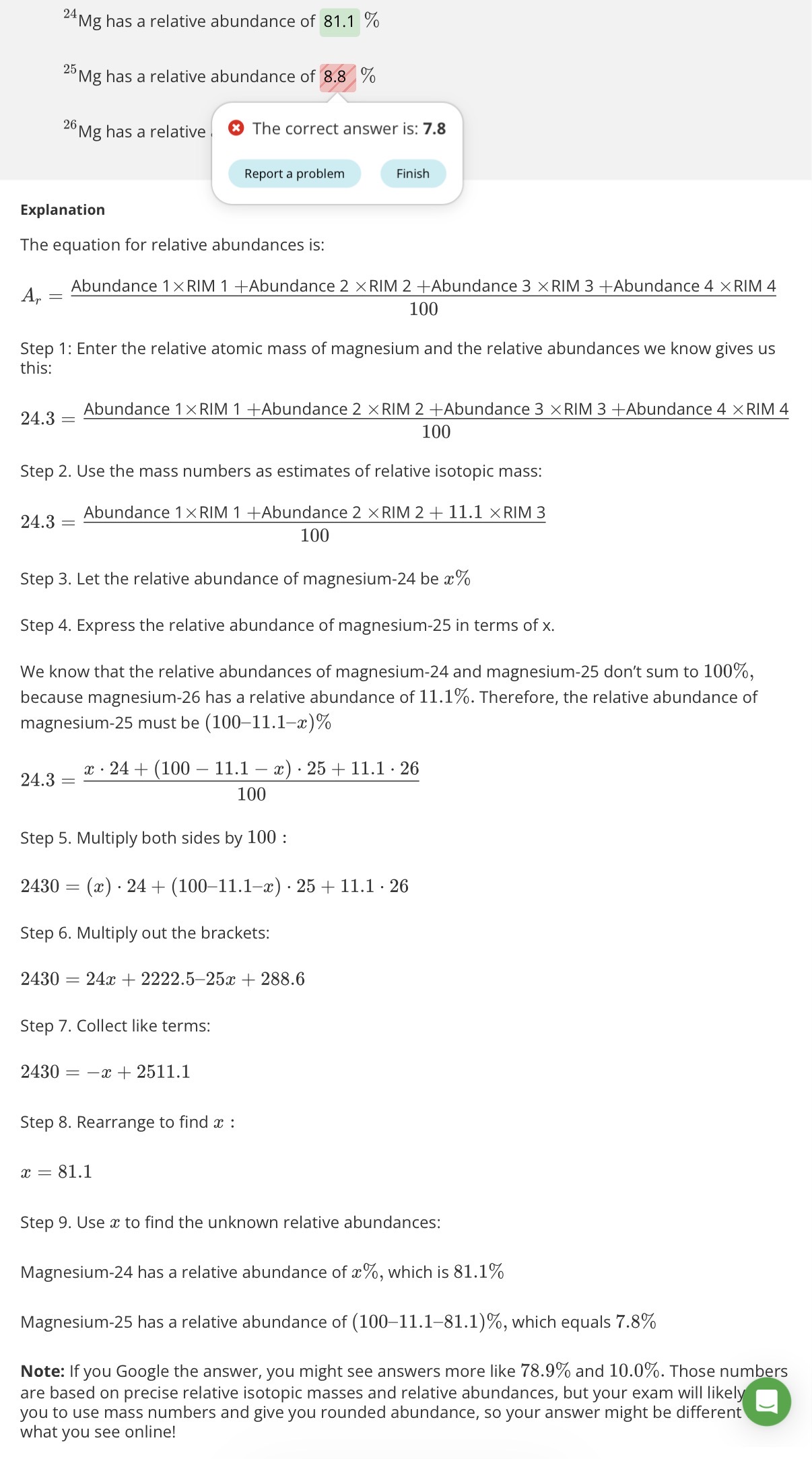
Explanation
Step 1:
92.2%+4.7%+x=100%
Step 2:
x=100%–92.2%–4.7%
Step 3:
x=3.1%100%
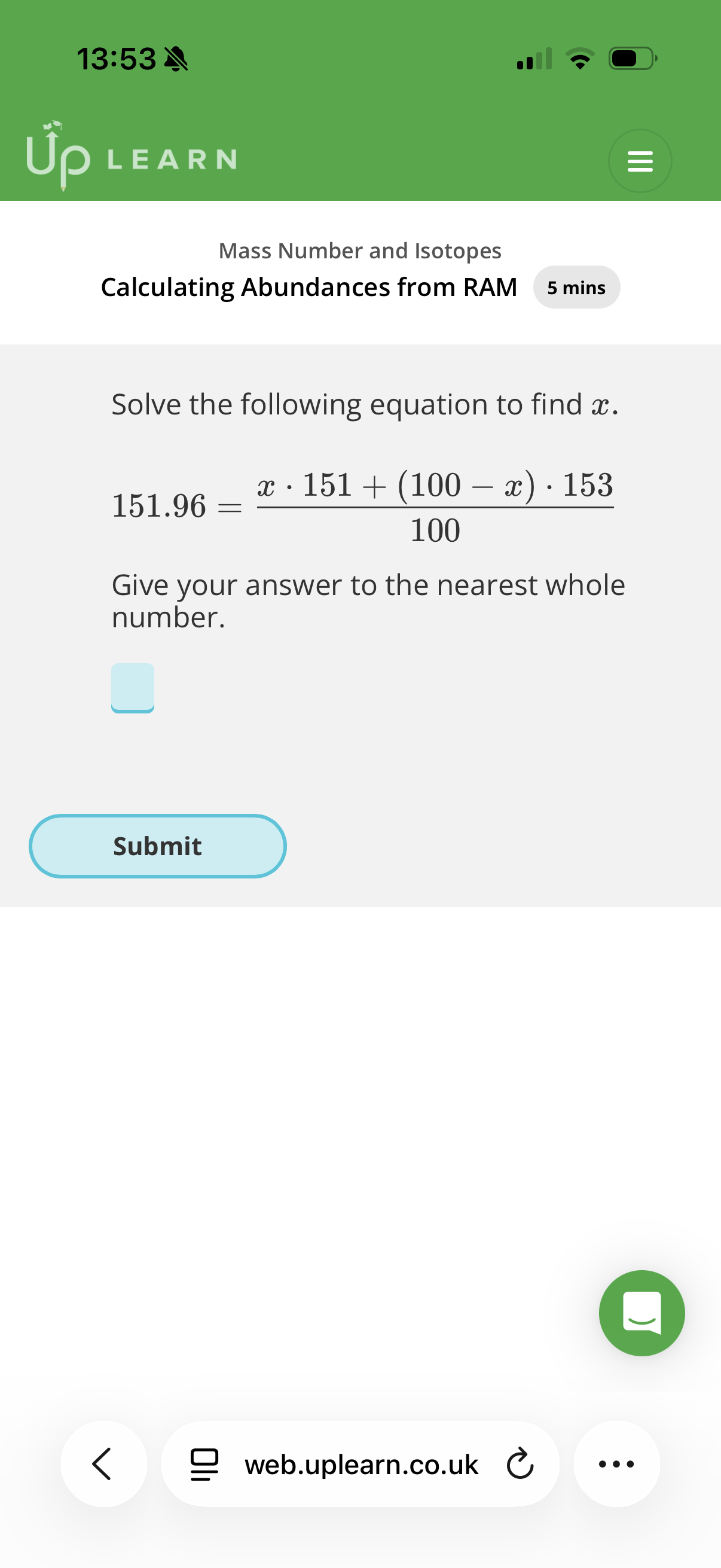
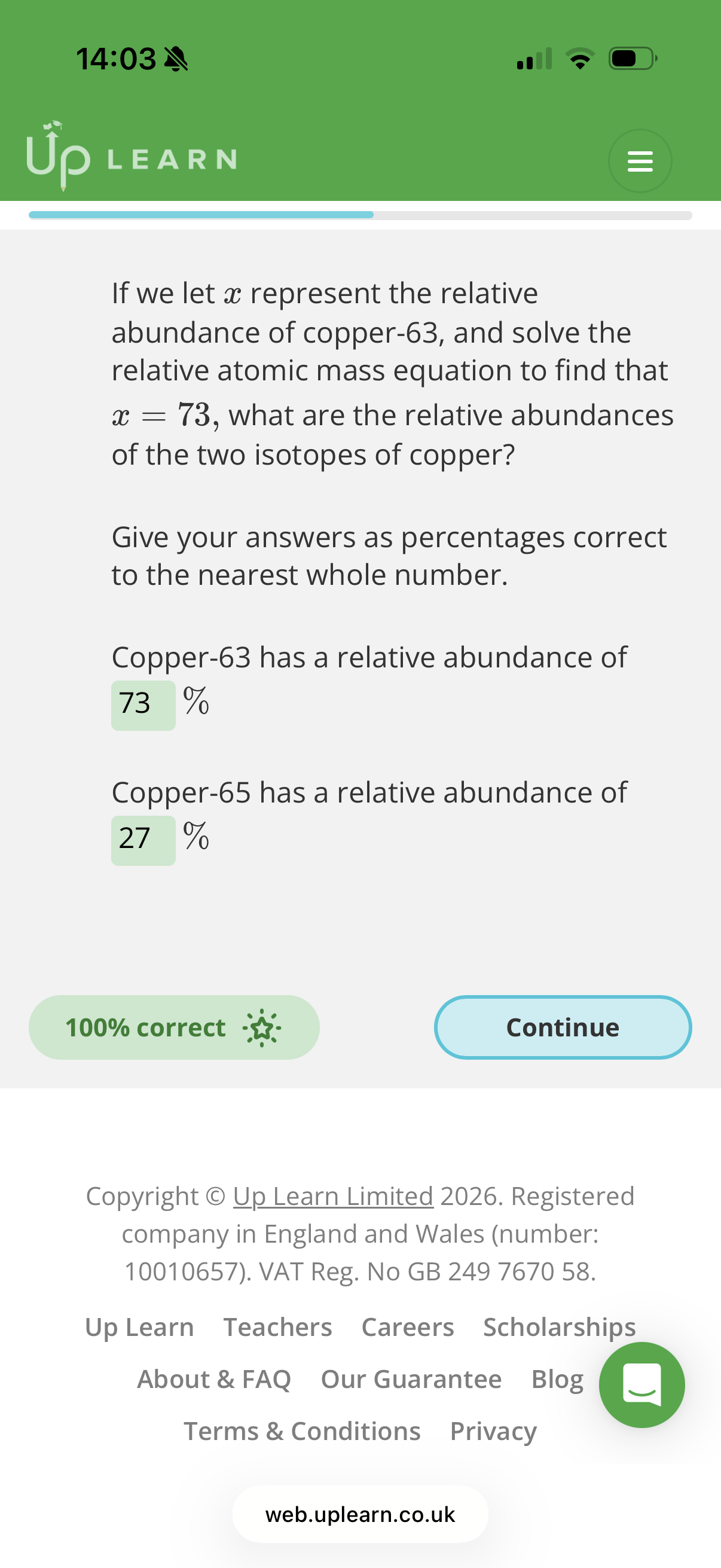
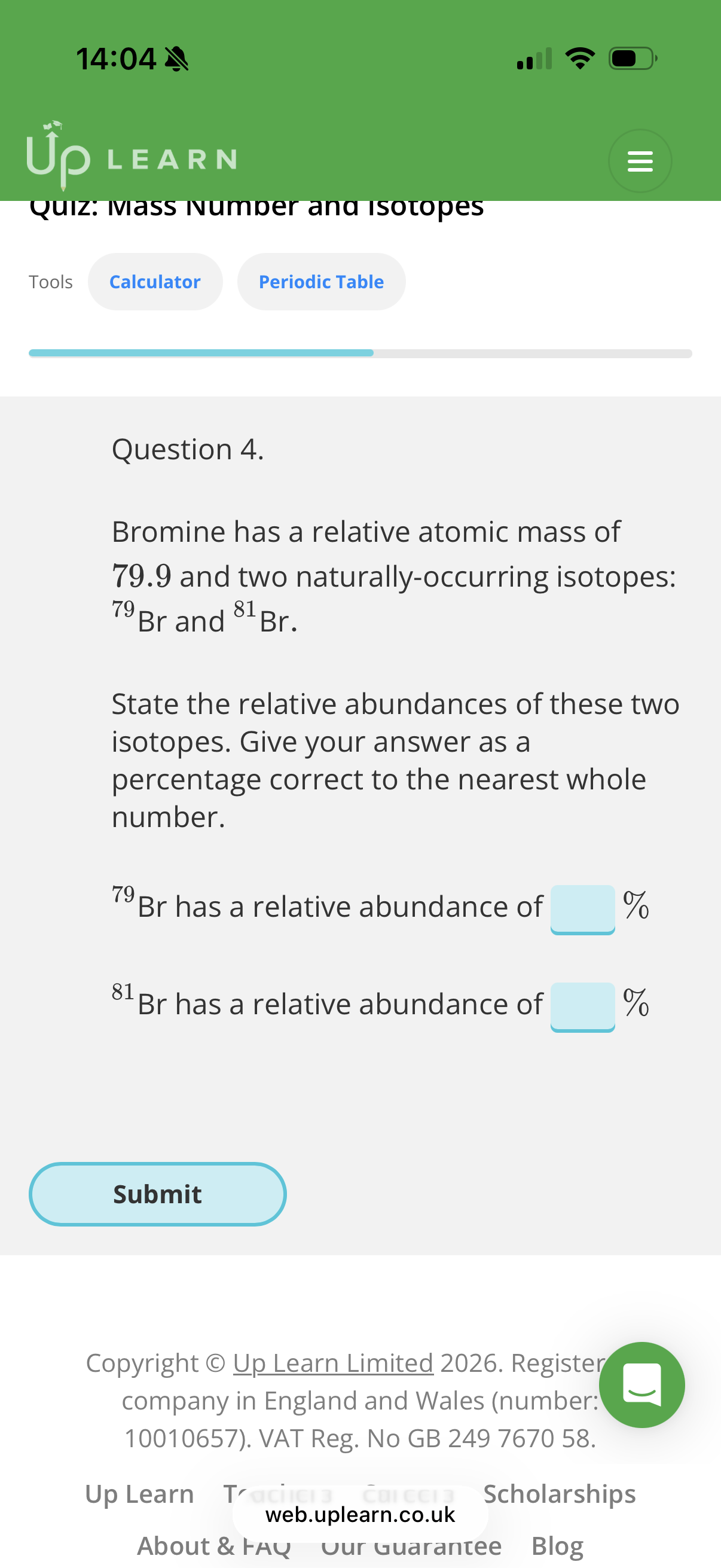
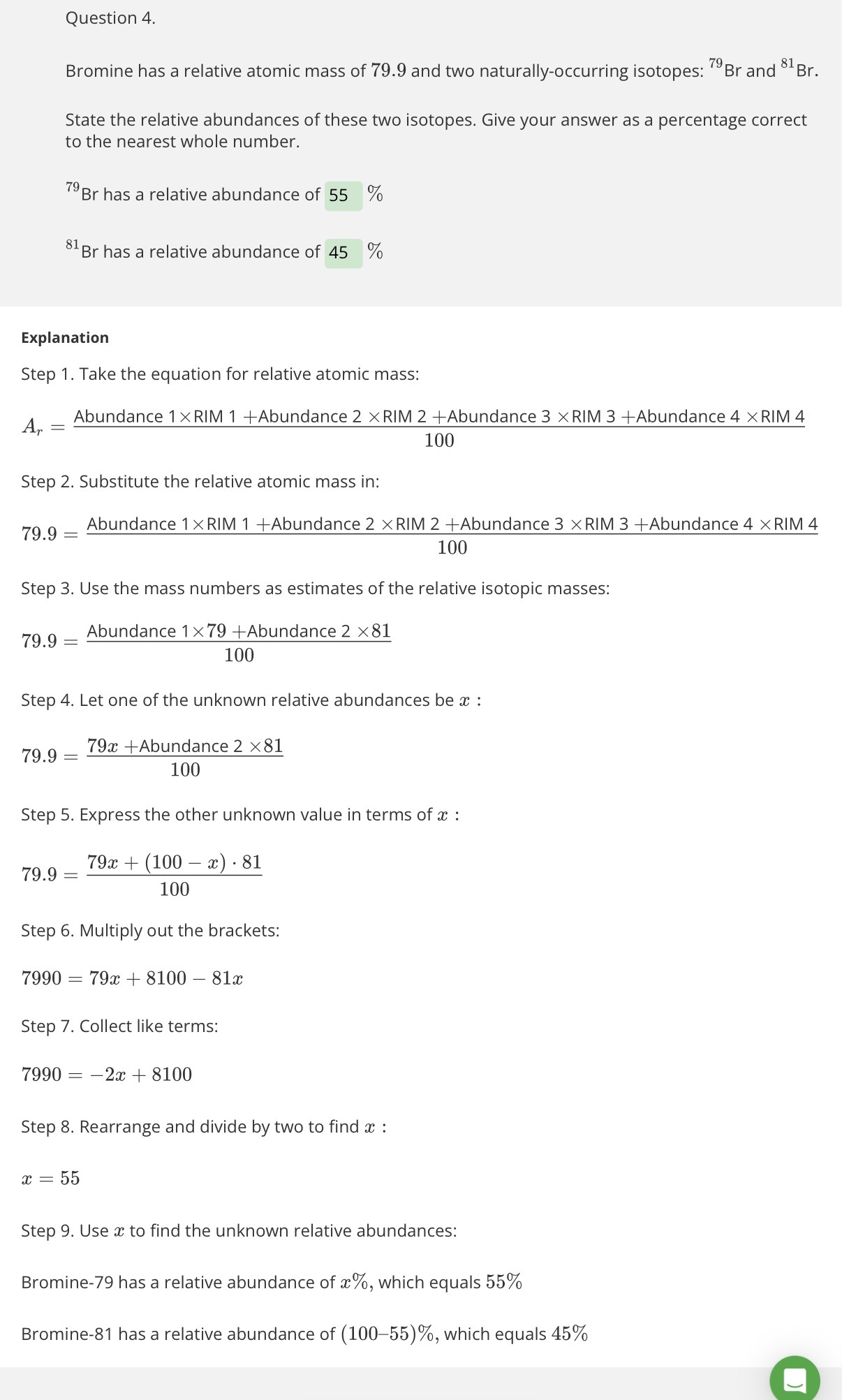
Calculating abundances from RAM
The relative abundances of all the naturally-occurring isotopes sum to…
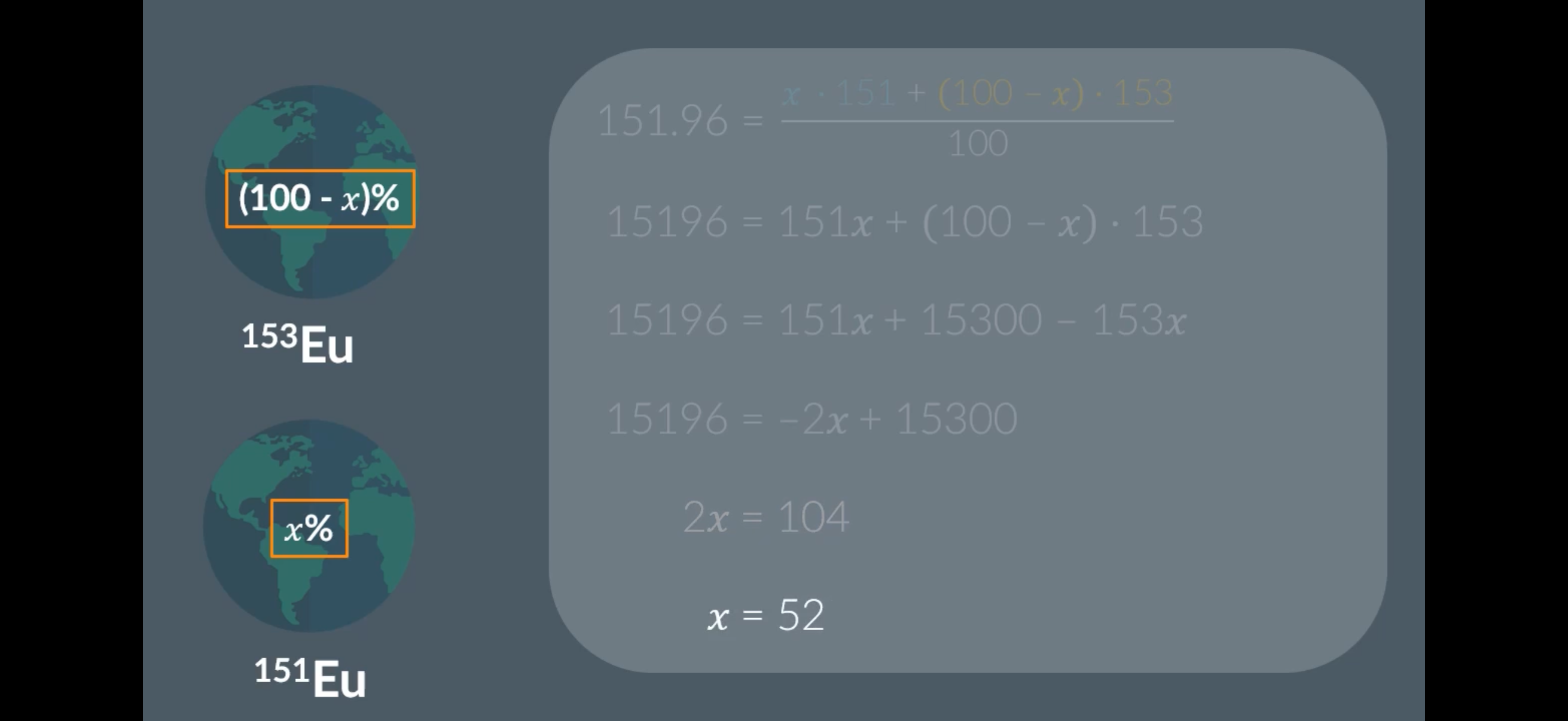
If the relative abundance of 151Eu is x,then the relative abundance of the only other naturally-occurring isotope must be…
(Express your answer in terms of x.)Answer image question?
The relative abundance of europium-151 is 52%.
State the relative abundance of europium-153 (which is the only other naturally-occurring isotope of europium)Give your answer to the nearest whole number.
If the two relative abundances sum to 100%, then we can solve the equation by letting one relative abundance be x, and letting the other relative abundance be …?
100%
100(%) - X
48%
100 - X
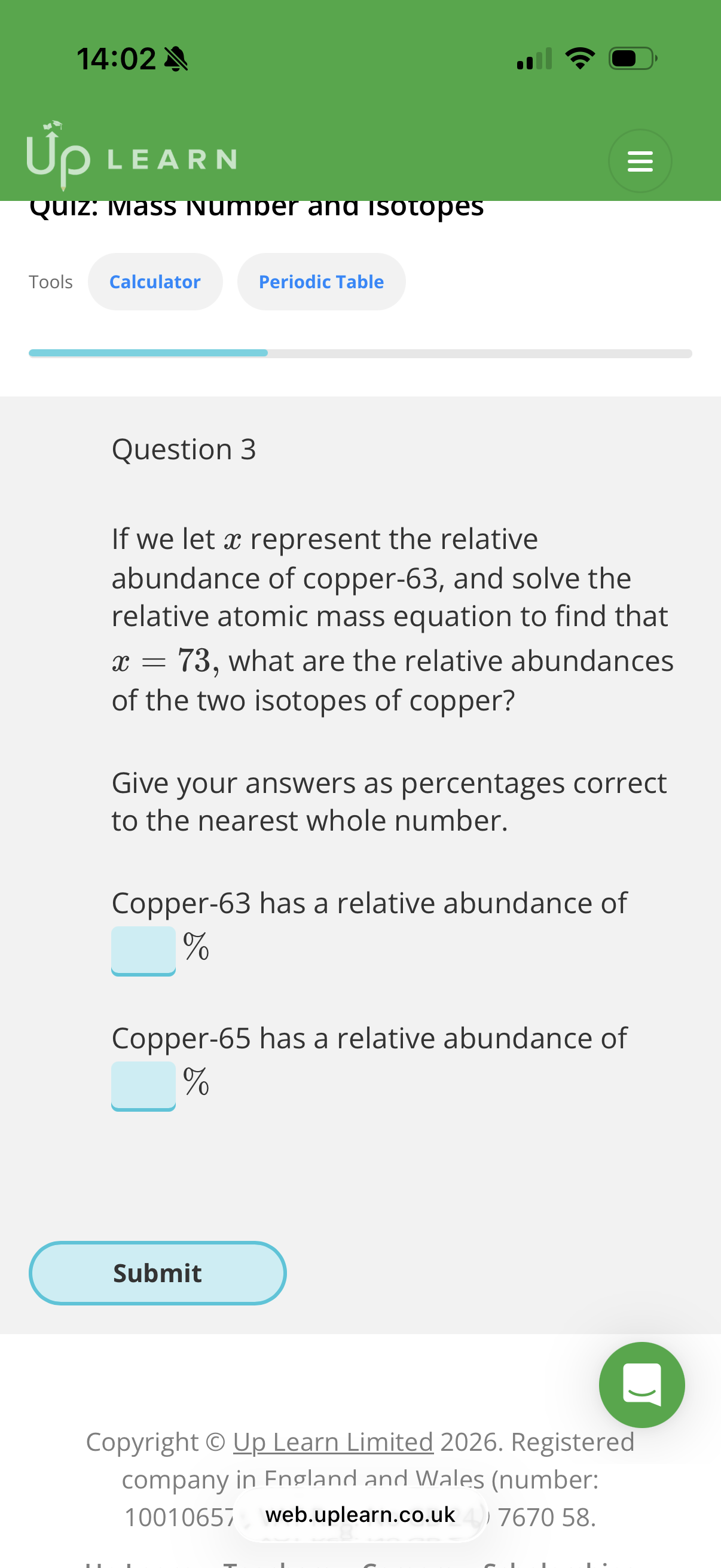
Answer image question?