GI Physiology 1 - Liver (Dr. Sun)
 Call Kai
 Learn
Learn Practice Test
 Spaced Repetition
 Match
Match Flashcards
 Knowt Play
1/60

There's no tags or description
Looks like no tags are added yet.
Name | Mastery | Learn | Test | Matching | Spaced | Call with Kai |
|---|
No analytics yet
Send a link to your students to track their progress
61 Terms
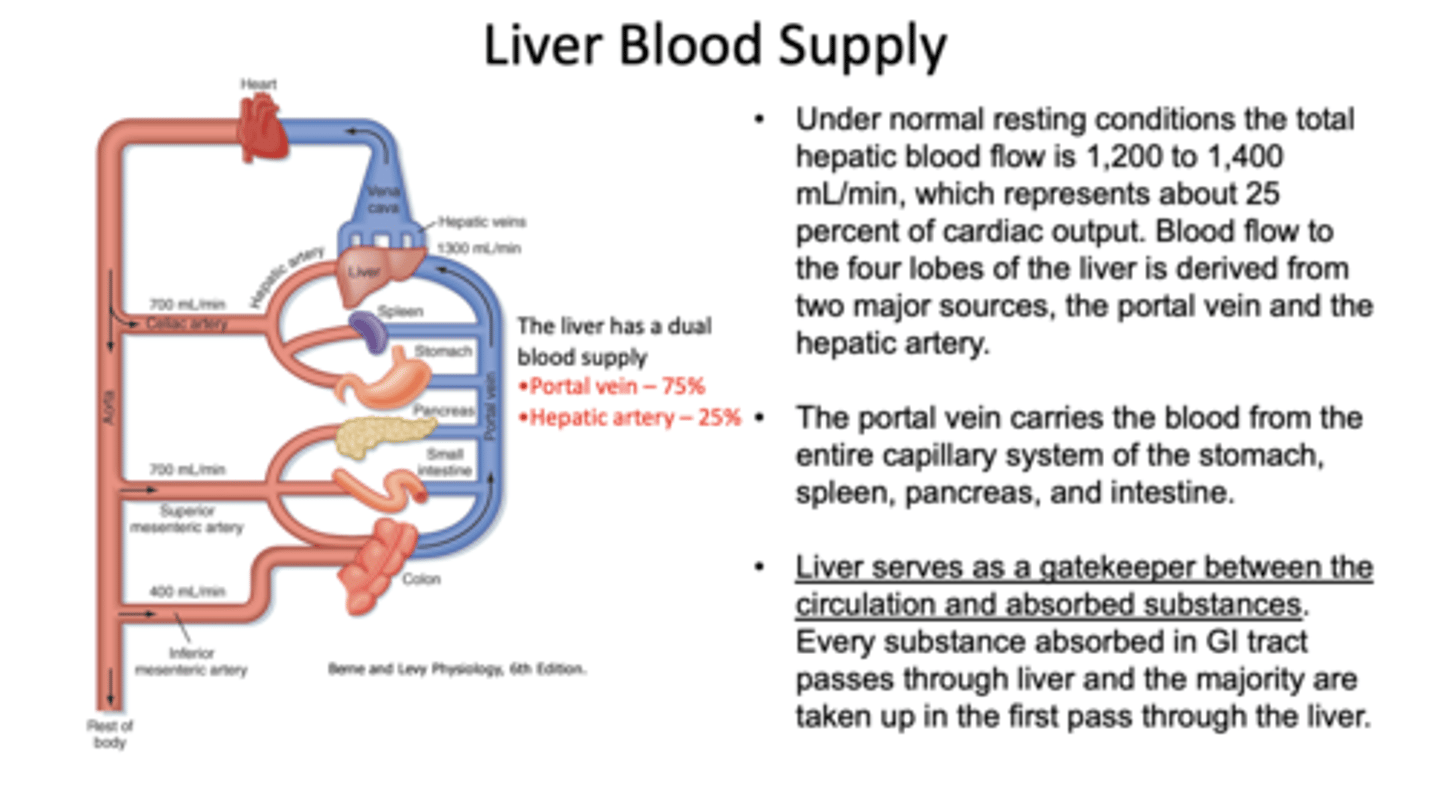
All materials absorbed from the GI tract first pass through the _________ prior to entering into the general circulation
Liver
What are the two main blood supplies of the liver?
- portal vein
- hepatic artery
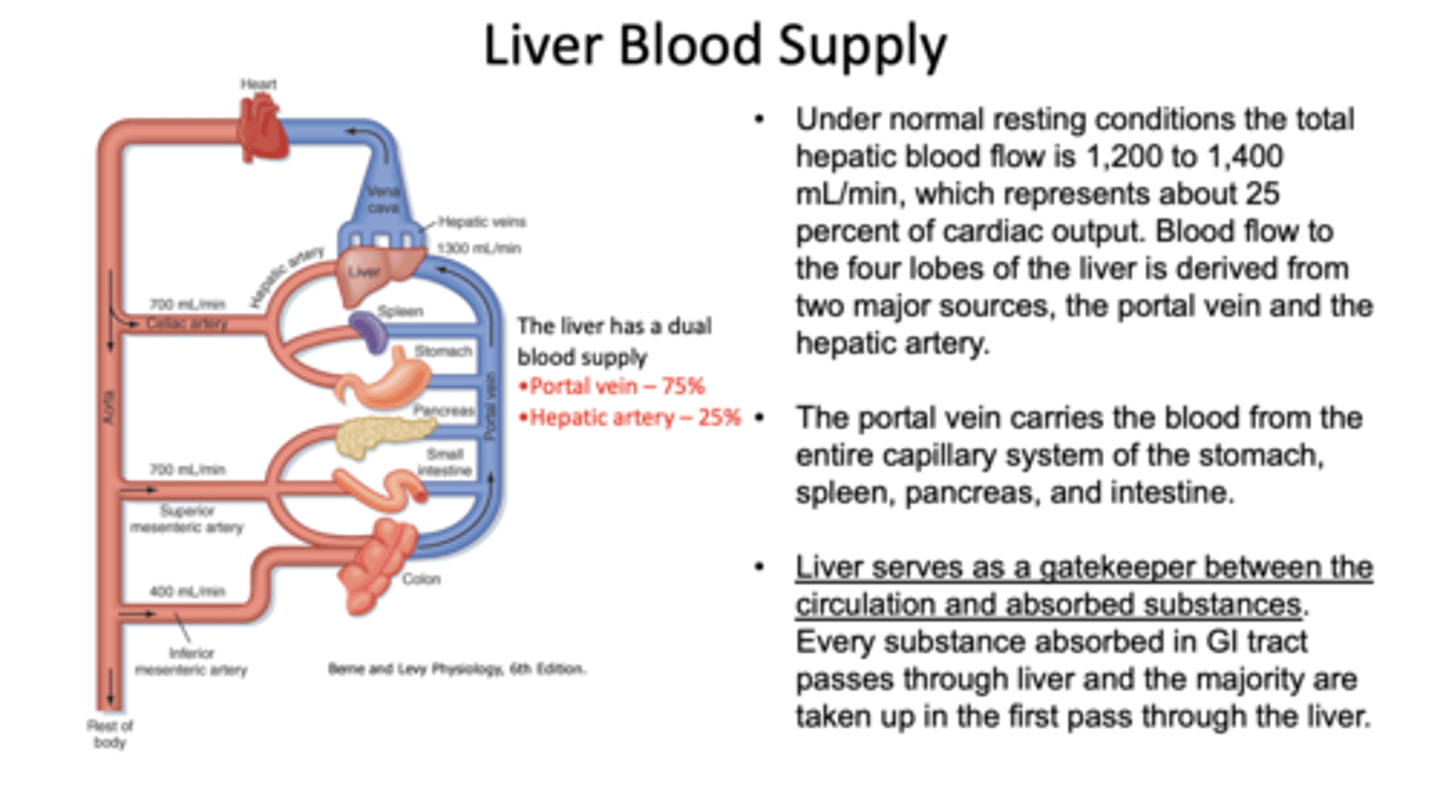
What percentage of blood to the liver comes from the portal vein?
75%
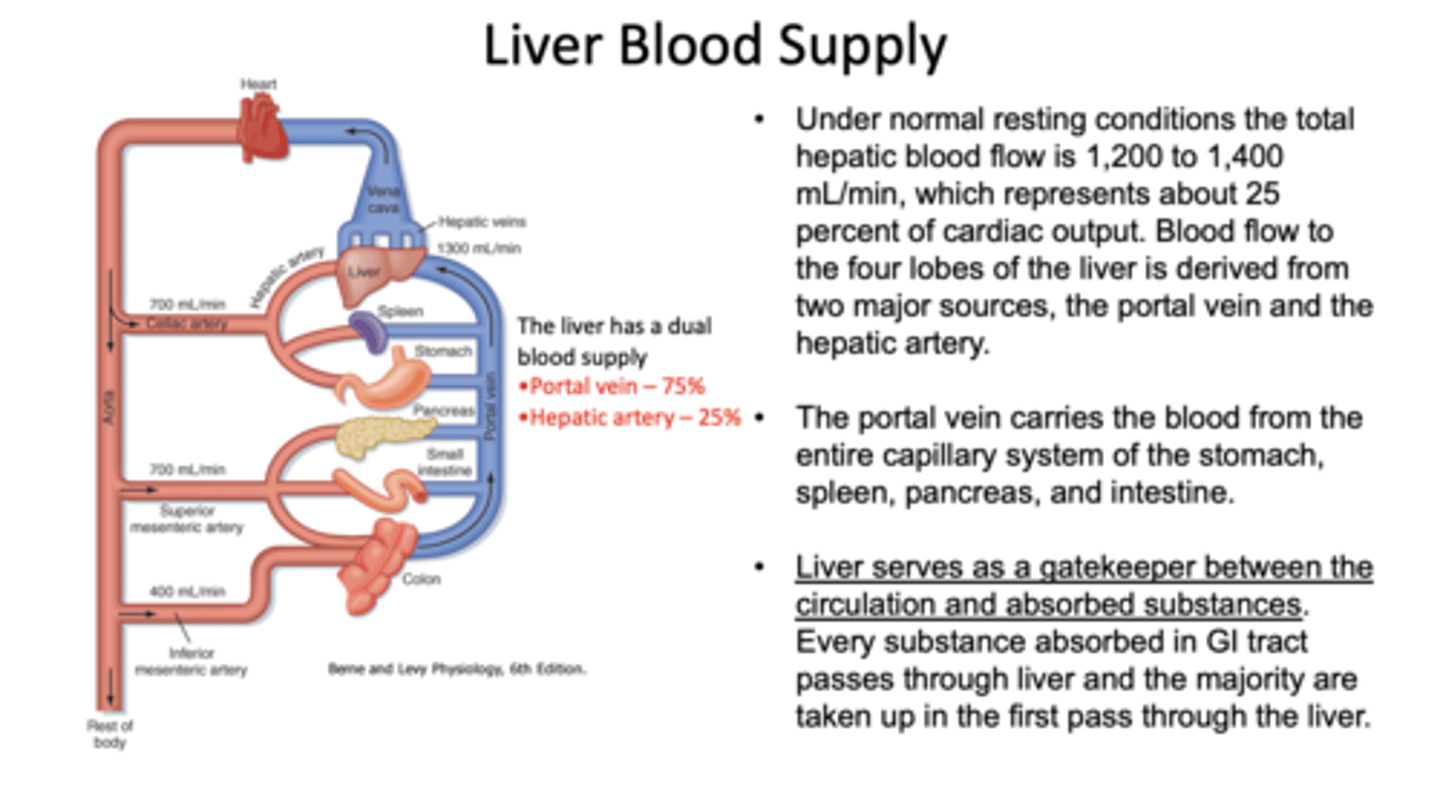
What percentage of blood to the liver comes from the hepatic artery?
25%
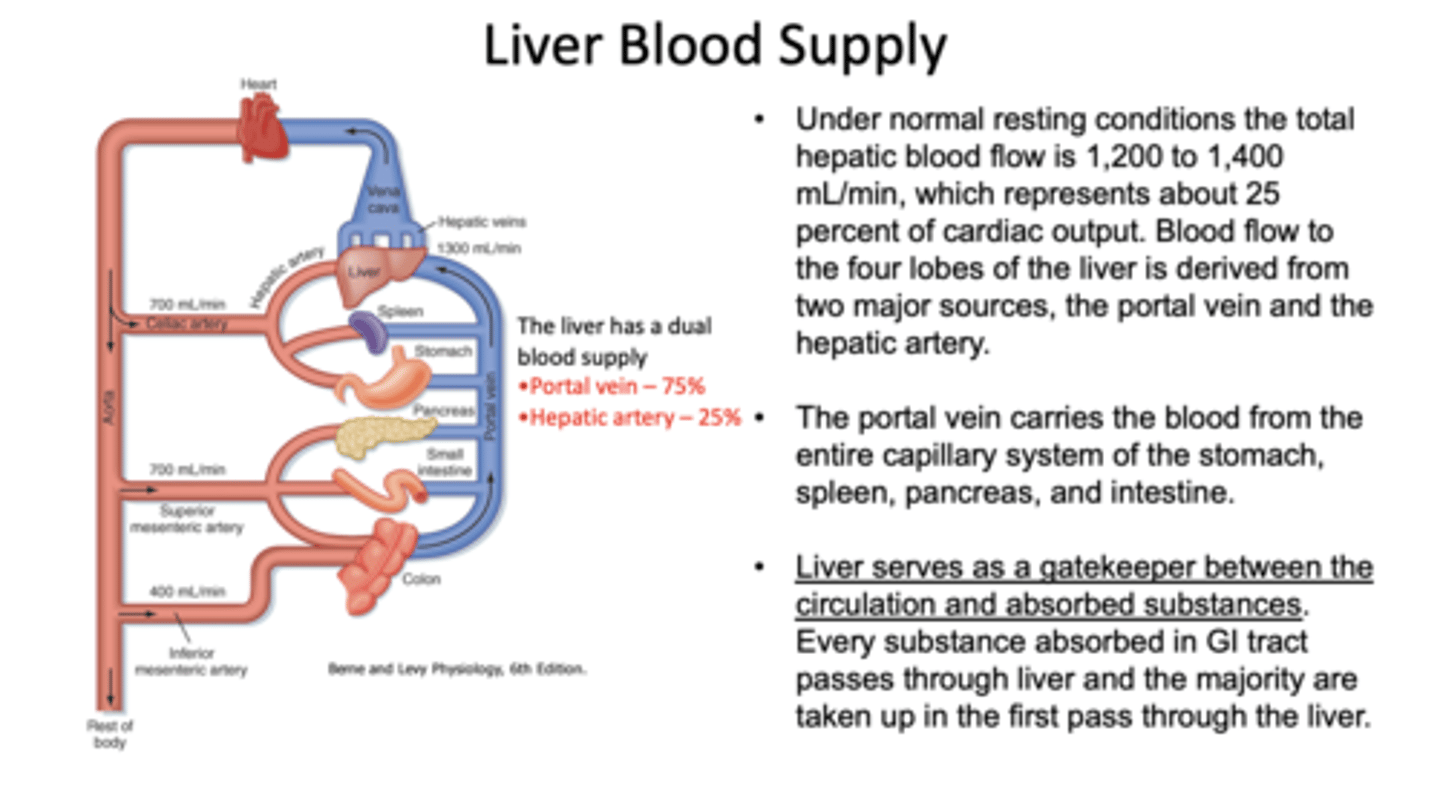
What serves as a gatekeeper between the circulation and absorbed substances?
liver
_____ and ______ levels need to be controlled in order to maintain the osmolarity of the blood and surrounding tissue
- sugar
- salt
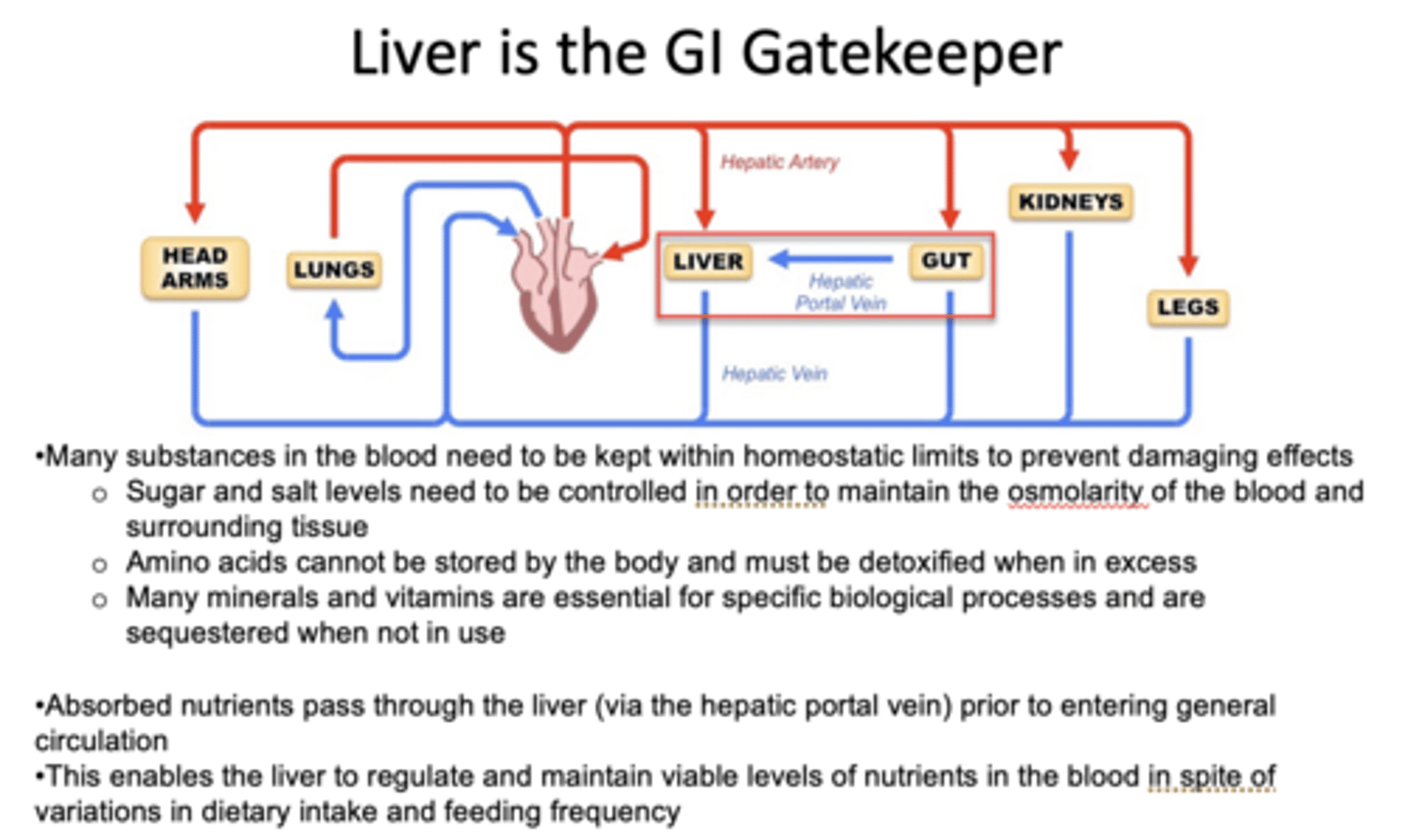
_____________ cannot be stored by the body and must be detoxified when in excess
amino acids
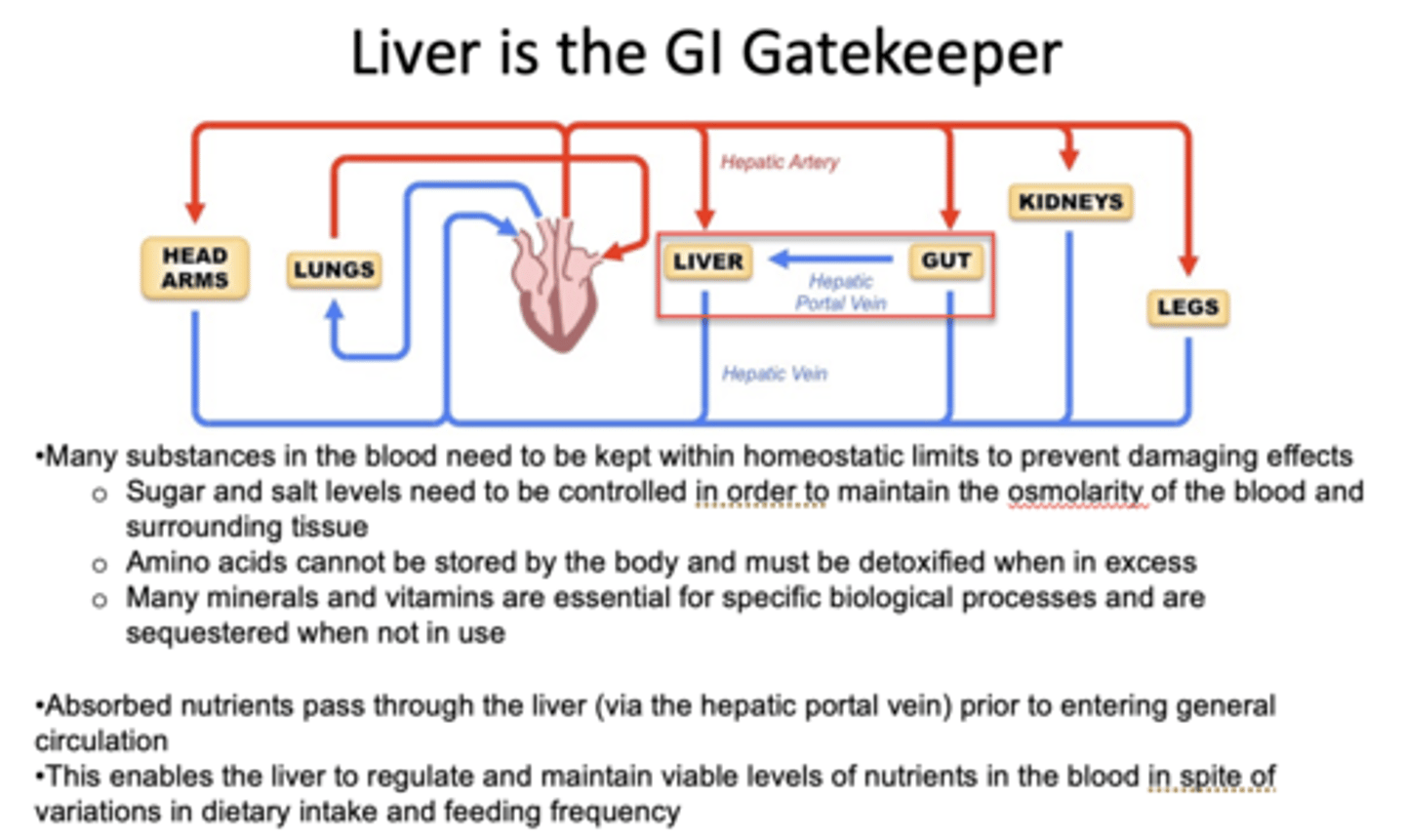
Many _______ and _________ are essential for specific biological processes and are sequestered when not in use
- vitamins
- minerals
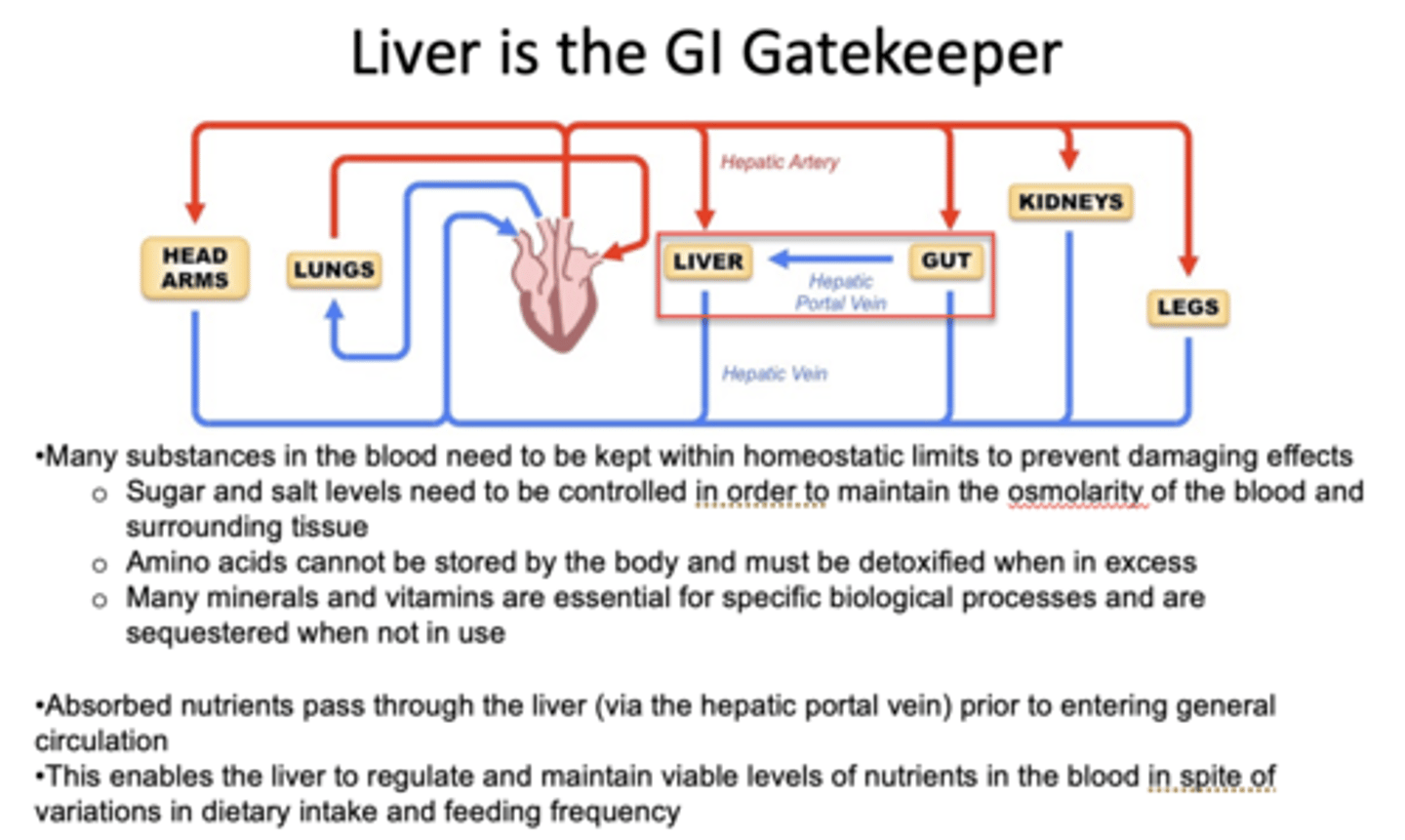
Absorbed nutrients pass through ________ prior to entering general circulation. This enables the __________ (same word) to regulate and maintain viable levels of nutrients in the blood in spite of variations in dietary intake and feeding frequency
liver
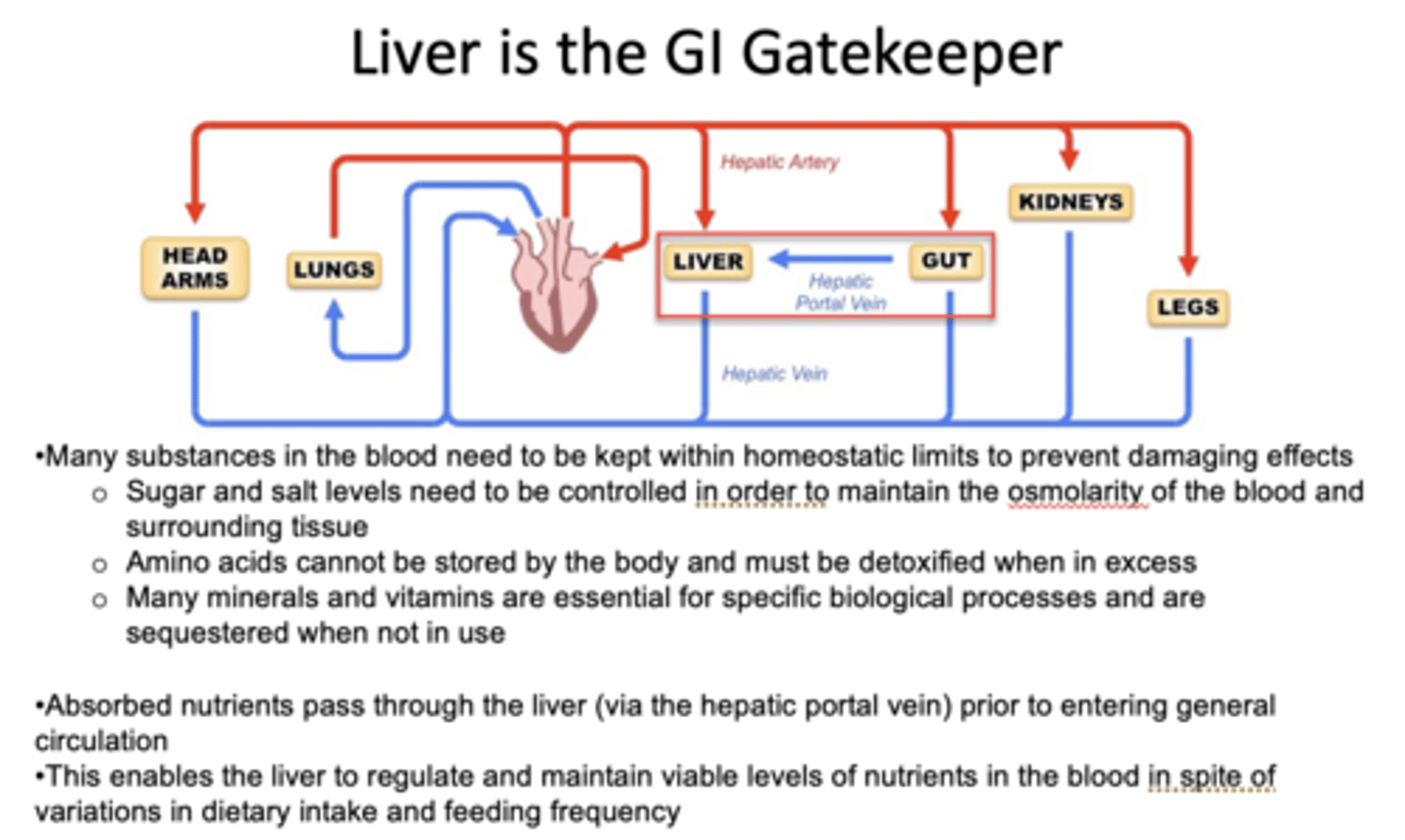
What are the primary functions of the liver?
•Bile production and excretion
•Excretion of bilirubin, cholesterol, hormones, and drugs
•Metabolism of fats, proteins, and carbohydrates
•Enzyme activation
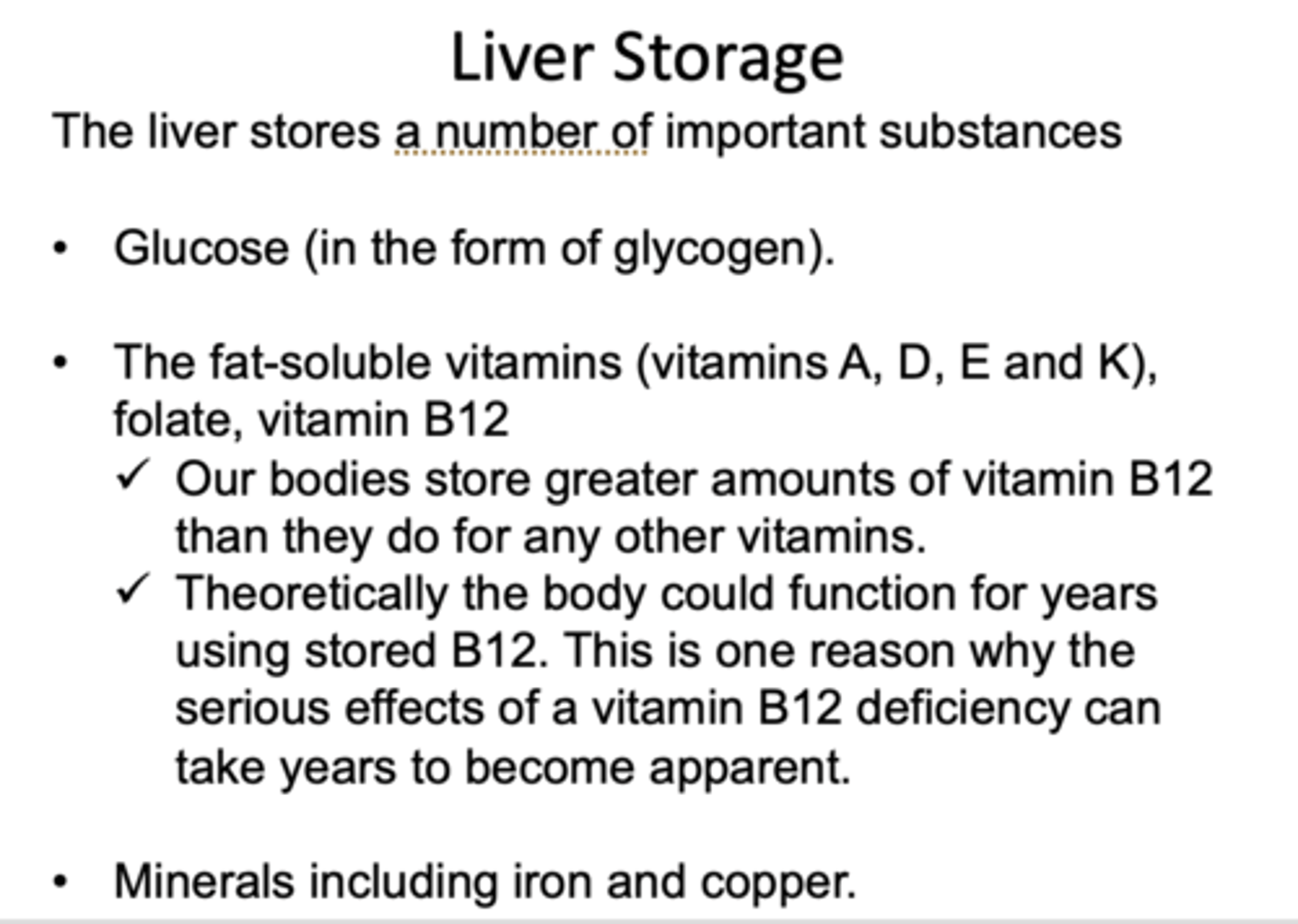
•Storage of glycogen, vitamins, and minerals
•Synthesis of plasma proteins, such as albumin, and clotting factors
•Blood detoxification and purification
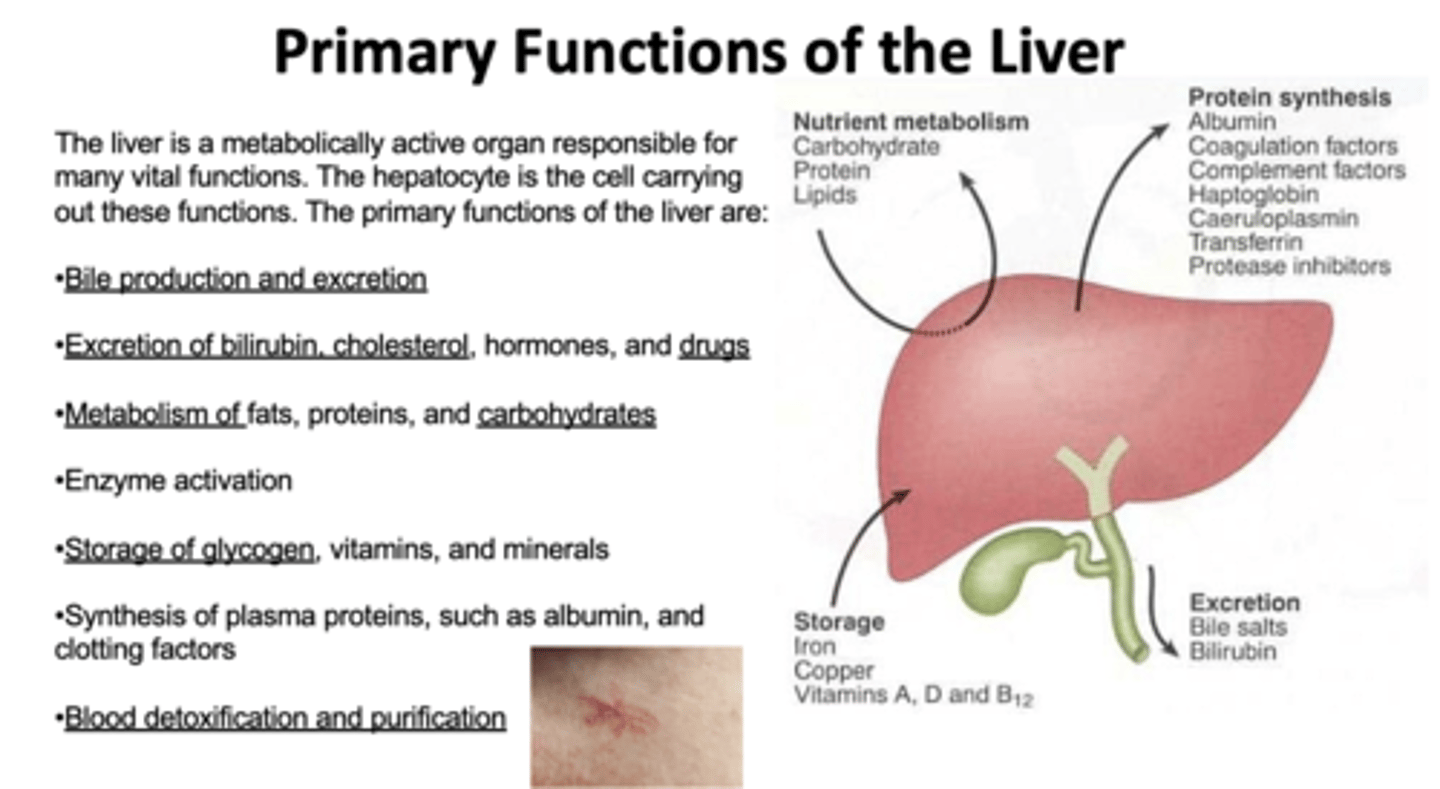
What is the liver cell?
hepatocyte
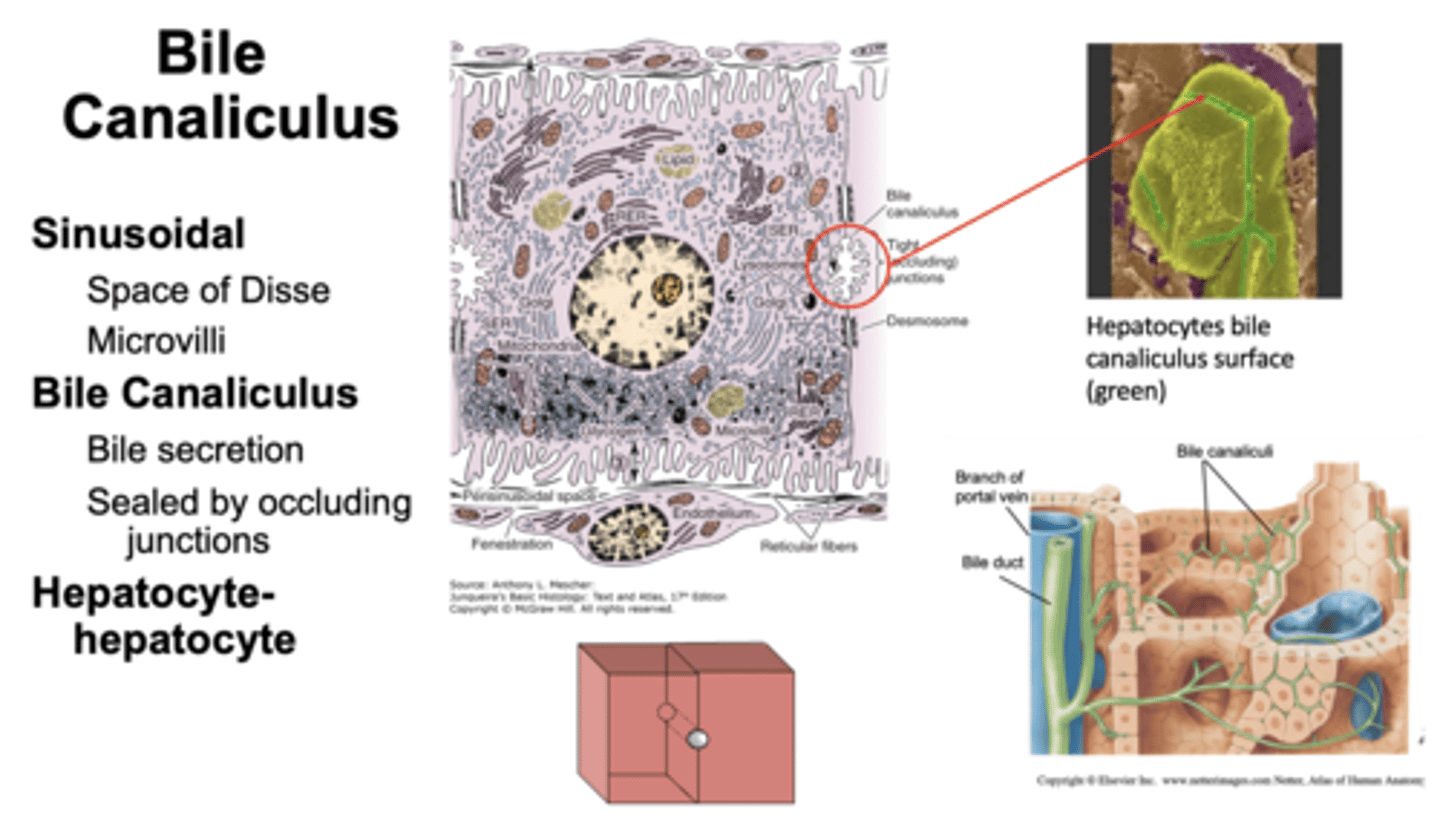
Increased estrogen can lead to what pathology?
spider angioma
Facing the capillaries is what space?
sinusoidal (space of disse)
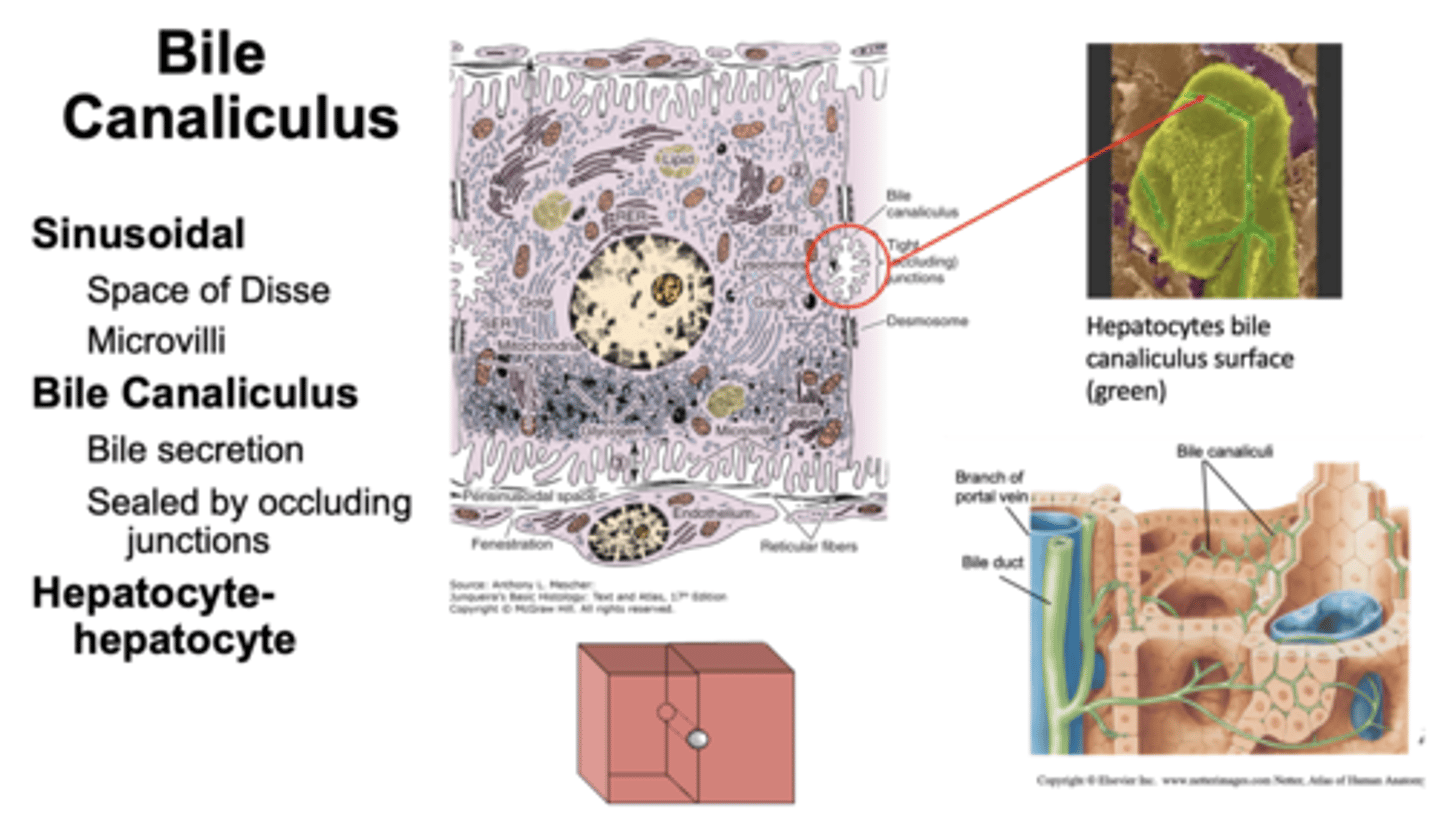
Between hepatocytes are ______ __________ that form tight junctions
bile canaliculus
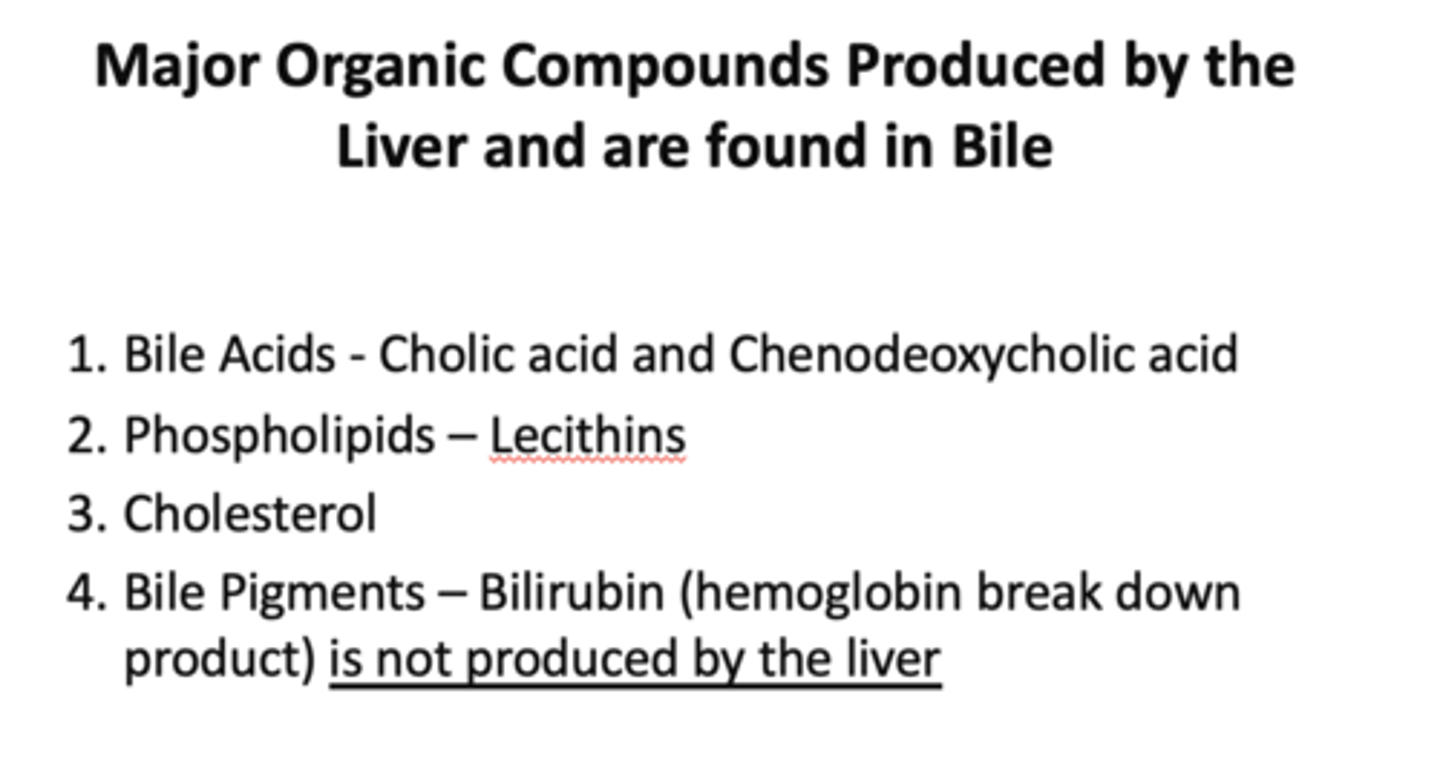
What 4 major organic compounds are found in bile?
- Bile acids (cholic acid/chenodeoxy)
- Phospholipids (lecithins)
- Cholesterol
- Bile pigments (bilirubin)
Of the major organic compounds found in bile, which is NOT produced by the liver?
A. bile acids (cholic acid/chenodeoxy)
B. bile pigments (bilirubin)
C. cholesterol
D. phospholipids (lecithins)
B. bile pigments (bilirubin)
How is glucose stored in the liver?
glycogen
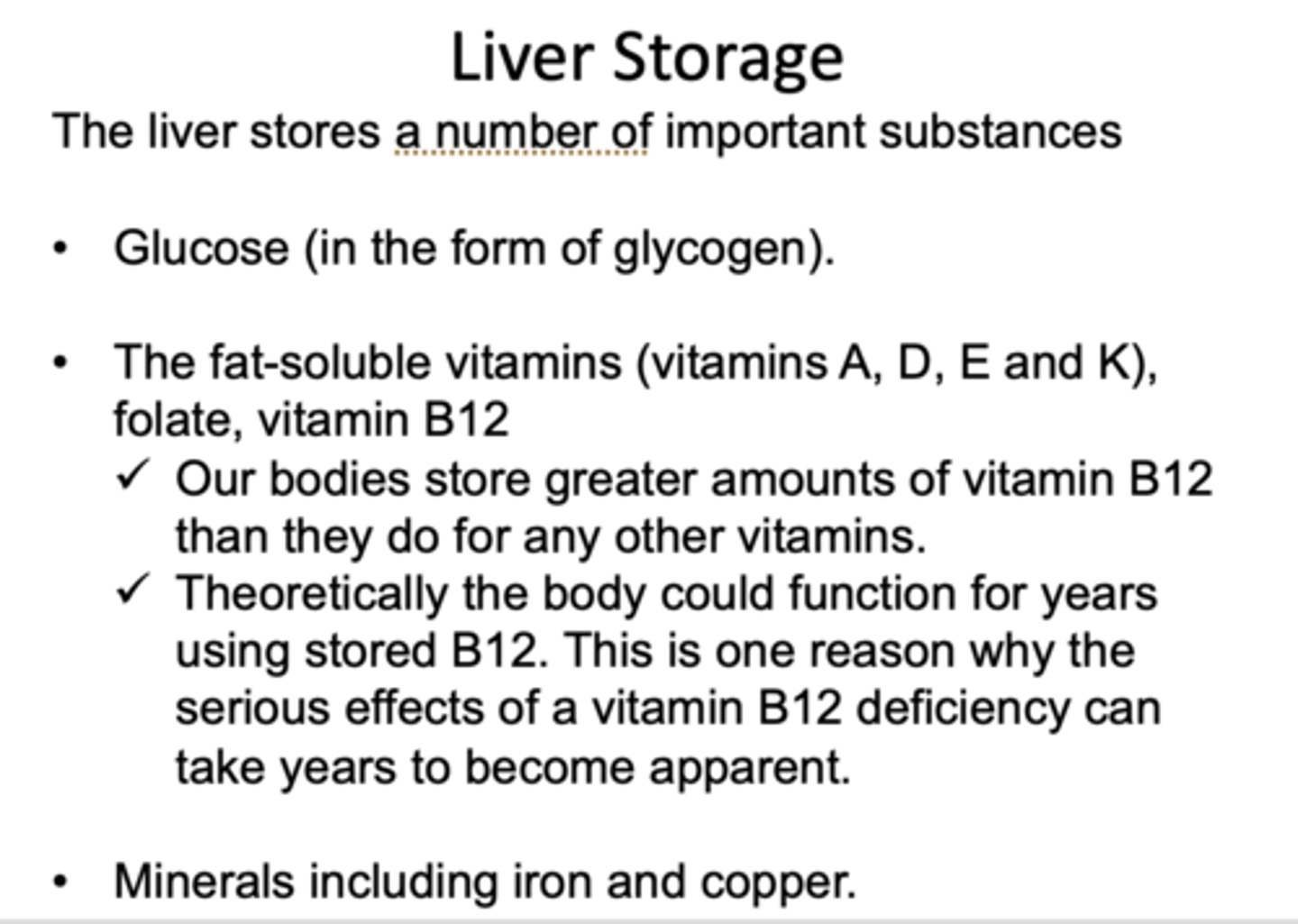
What vitamins are found in the liver?
- Fat soluble (A, D, E, K)
- Folate
- B12
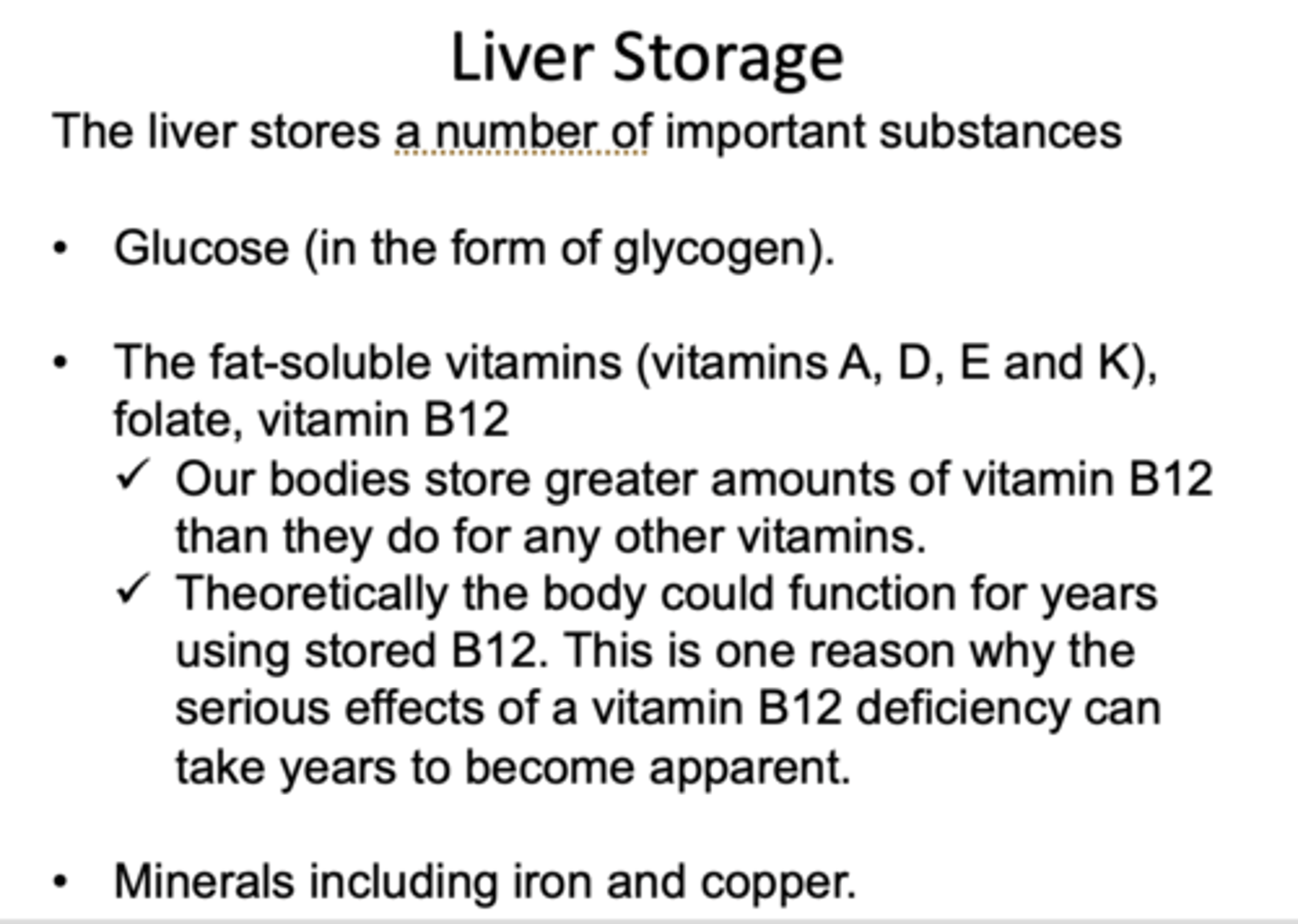
Our bodies store greater amounts of vitamin _____ than they do for any other vitamins
B12
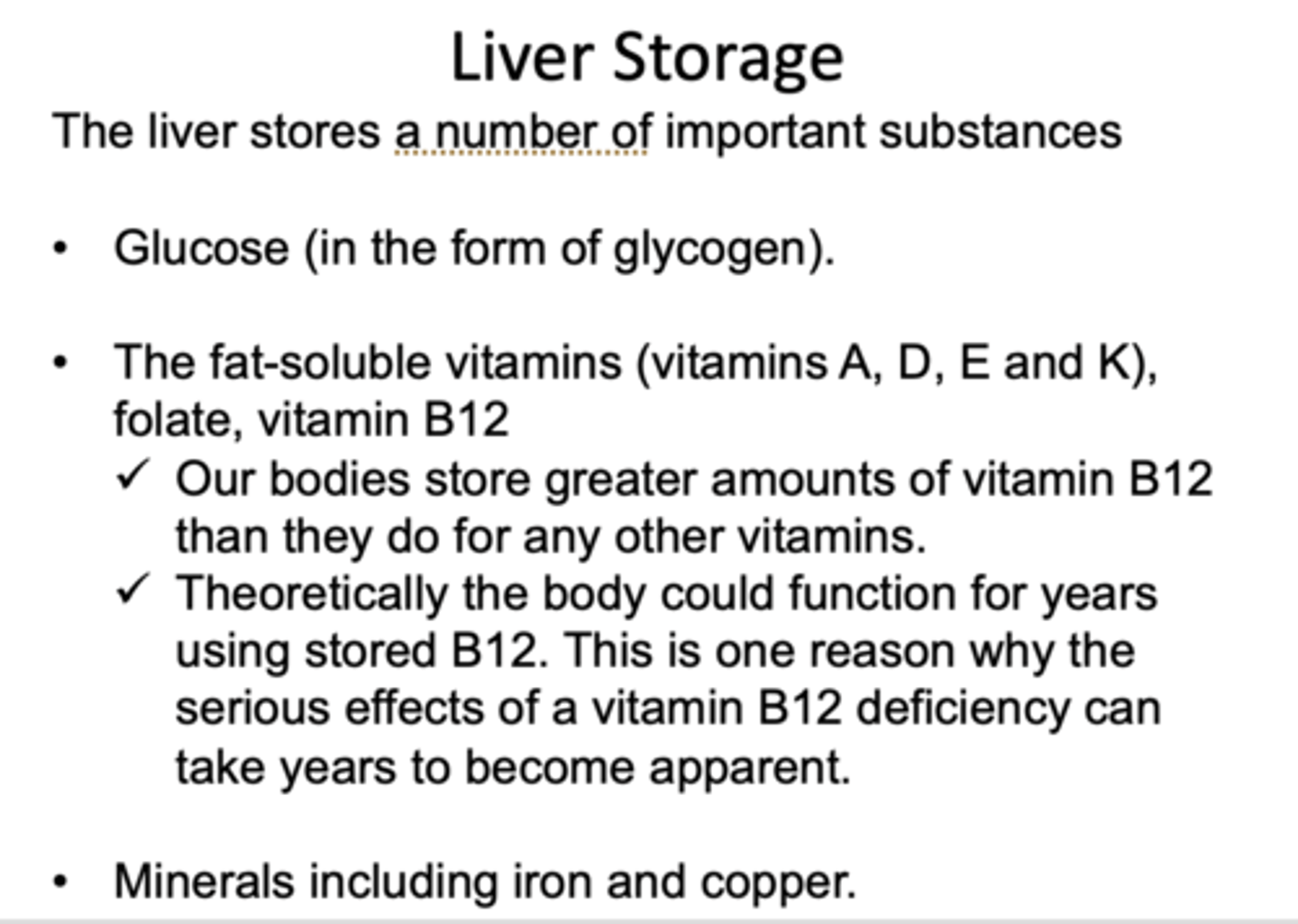
What two minerals are stored in the liver?
- iron
- copper
The liver synthesizes essential or nonessential amino acids?
nonessential
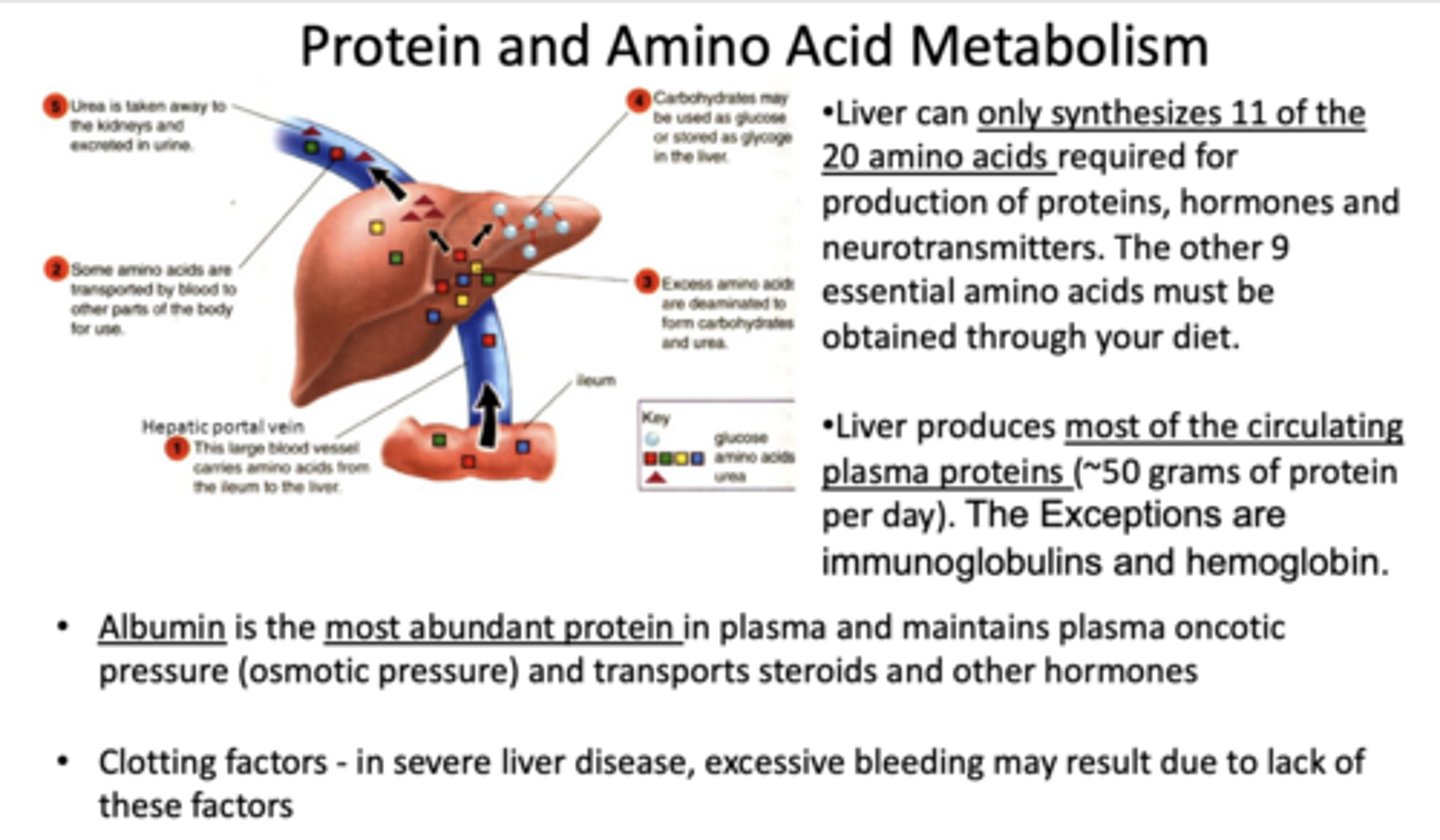
Since the liver produces most of the circulating plasma proteins, what are the exceptions?
- immunoglobulin
- hemoglobin
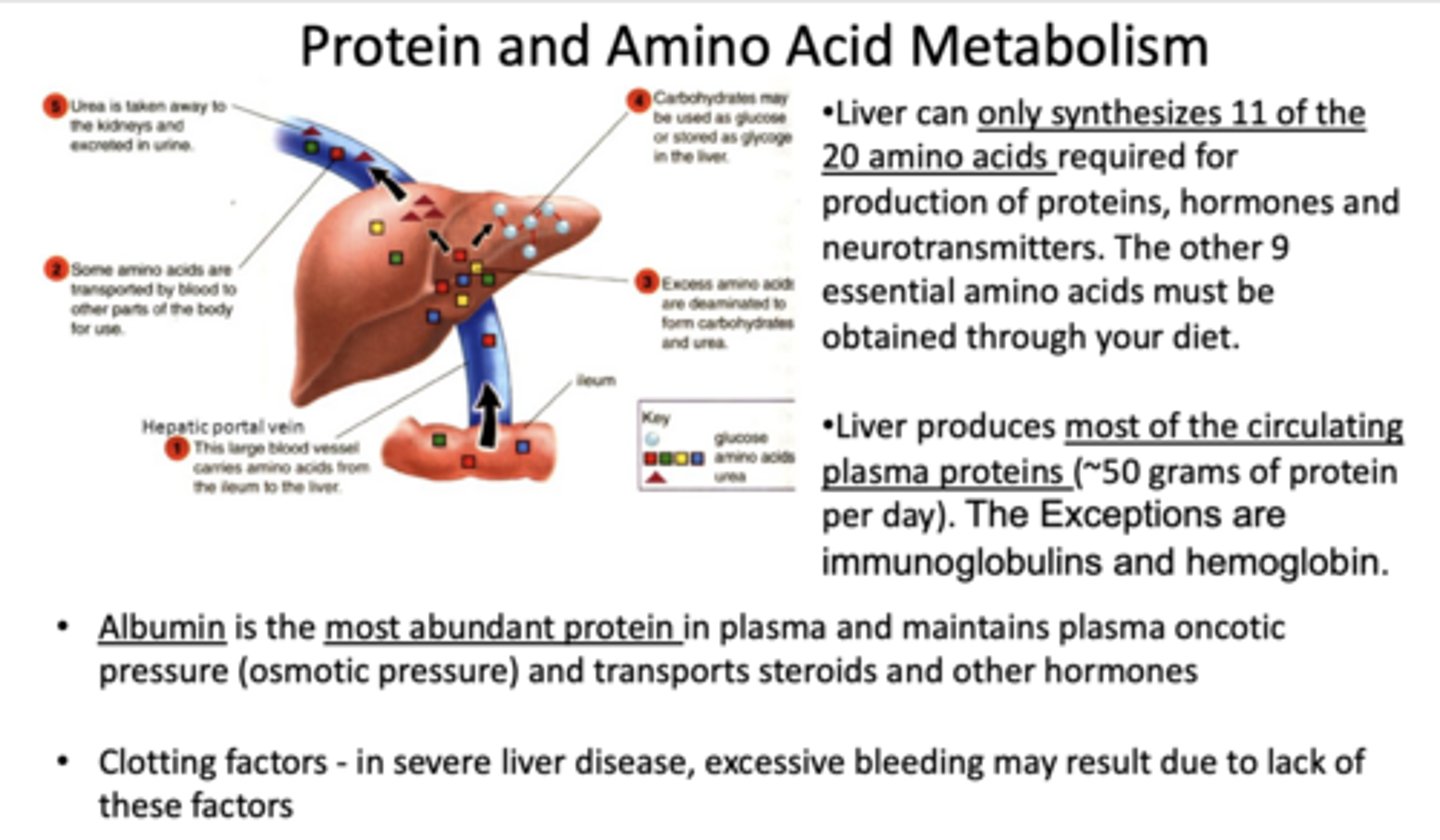
What is the most abundant protein in plasma?
albumin (maintains plasma oncotic pressure, transports steroids and other hormones)
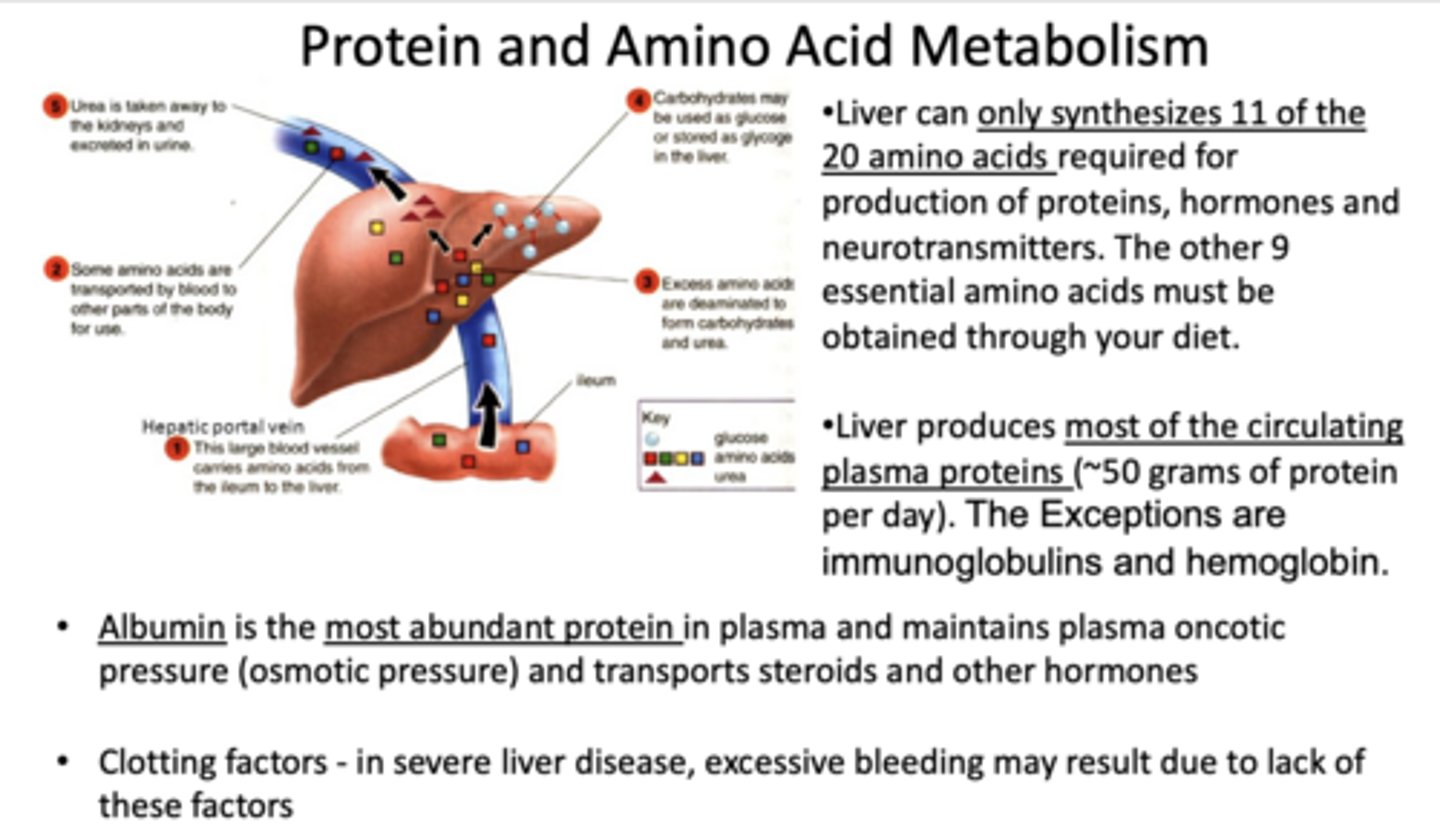
In severe liver disease, excessive bleeding may result due to lack of ______________
clotting factors
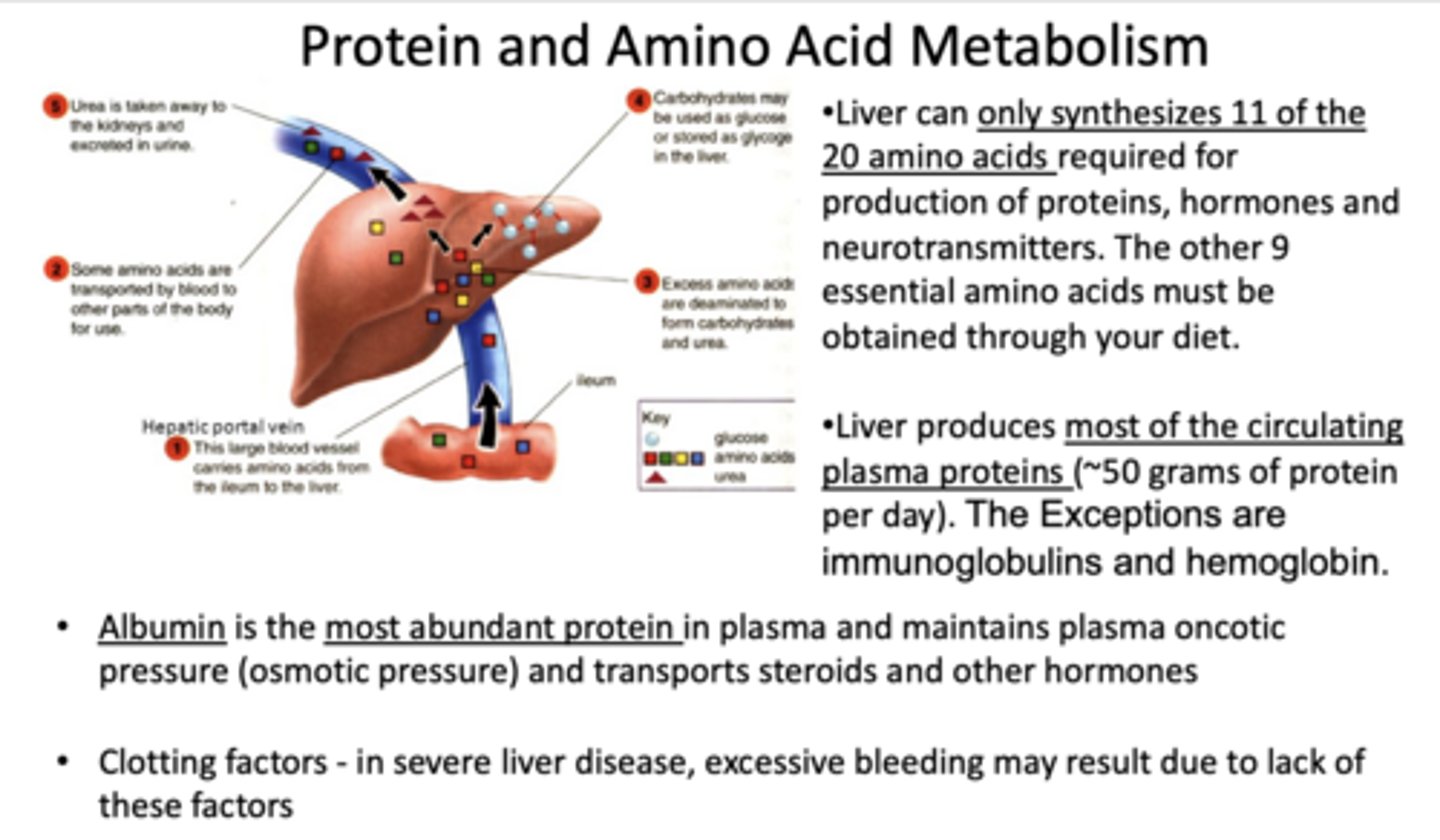
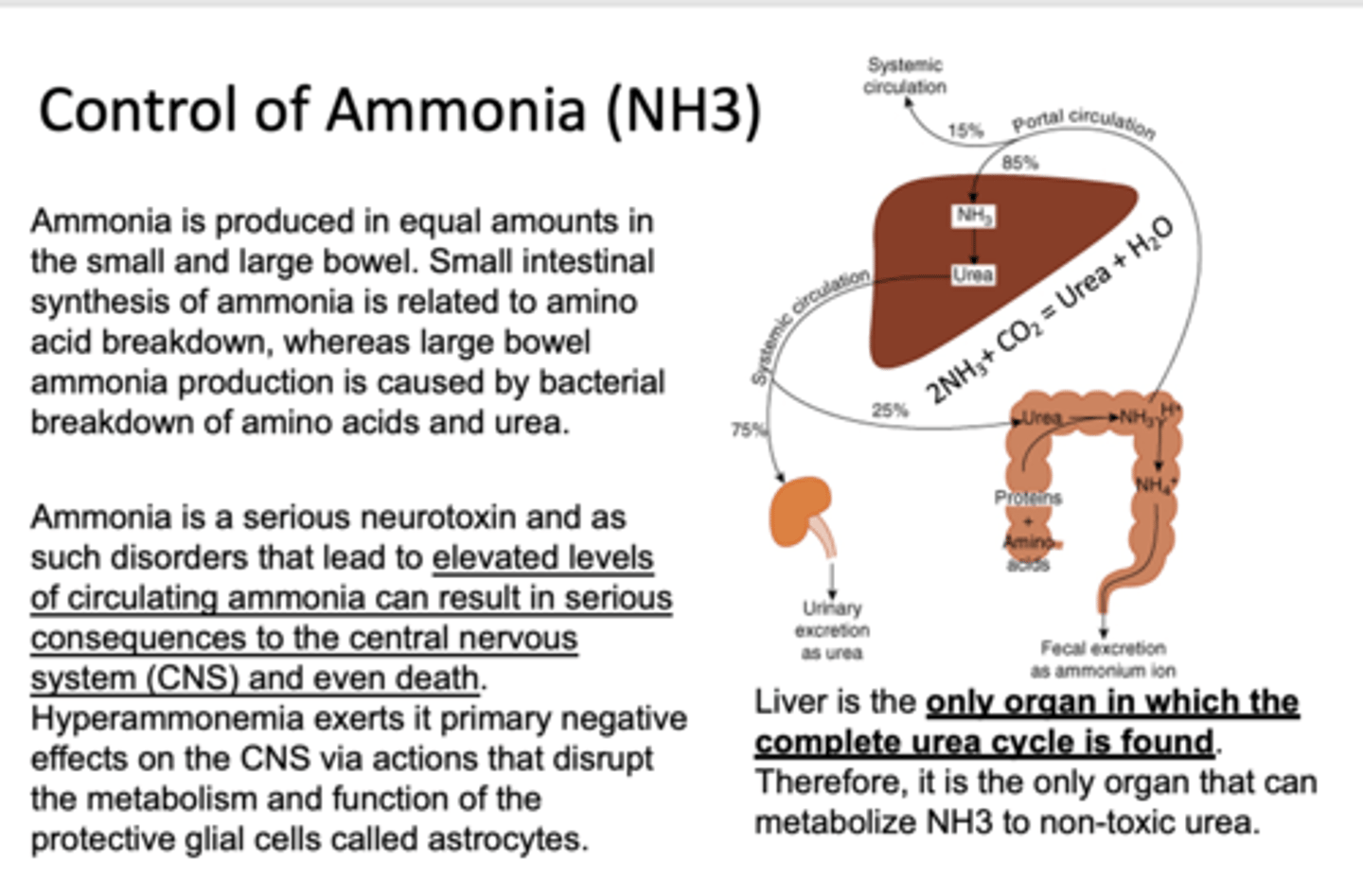
Small intestinal synthesis of ammonia is related to...
amino acid breakdown
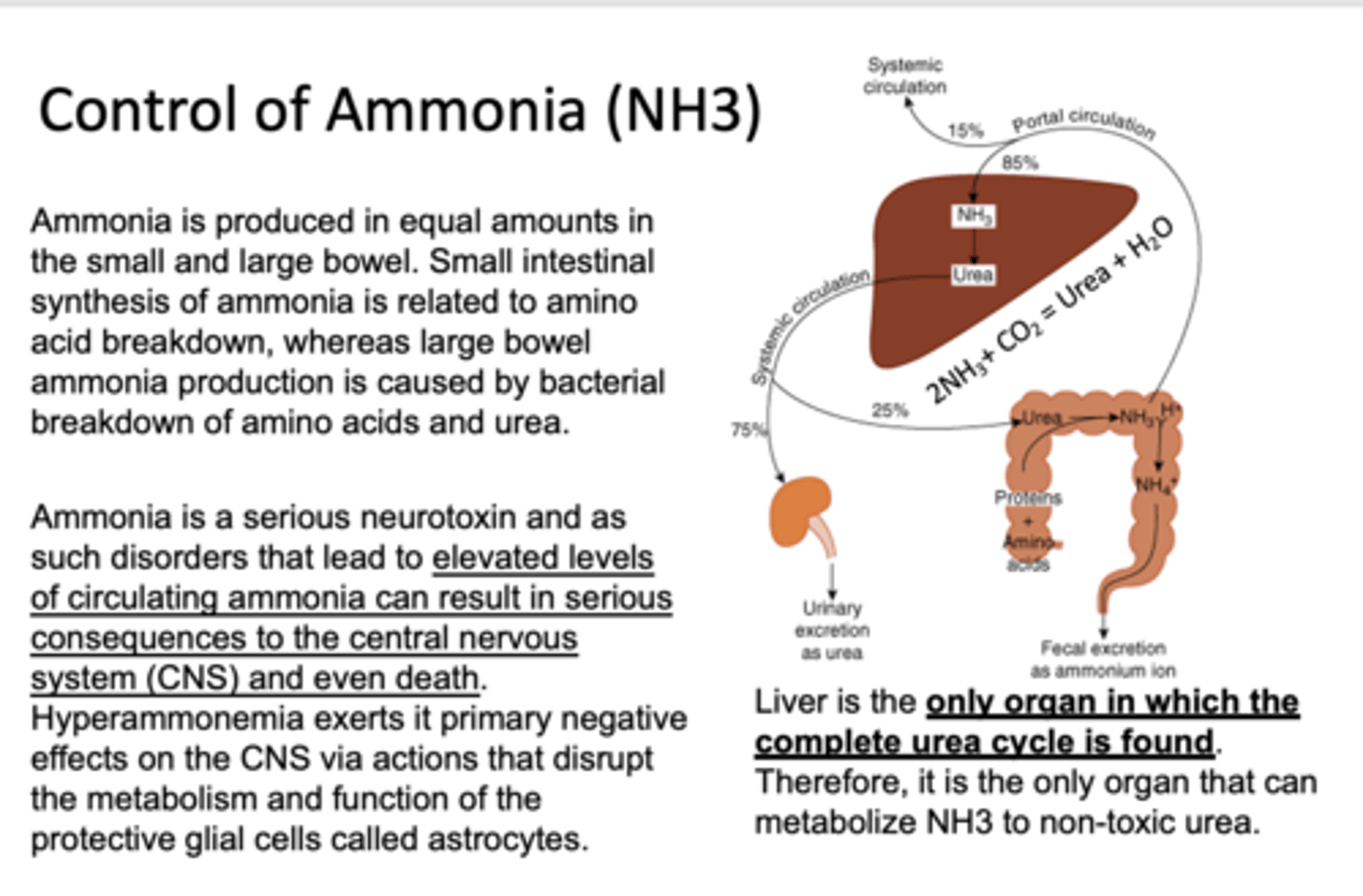
Large intestinal synthesis of ammonia is caused by...
bacterial breakdown of amino acids and urea
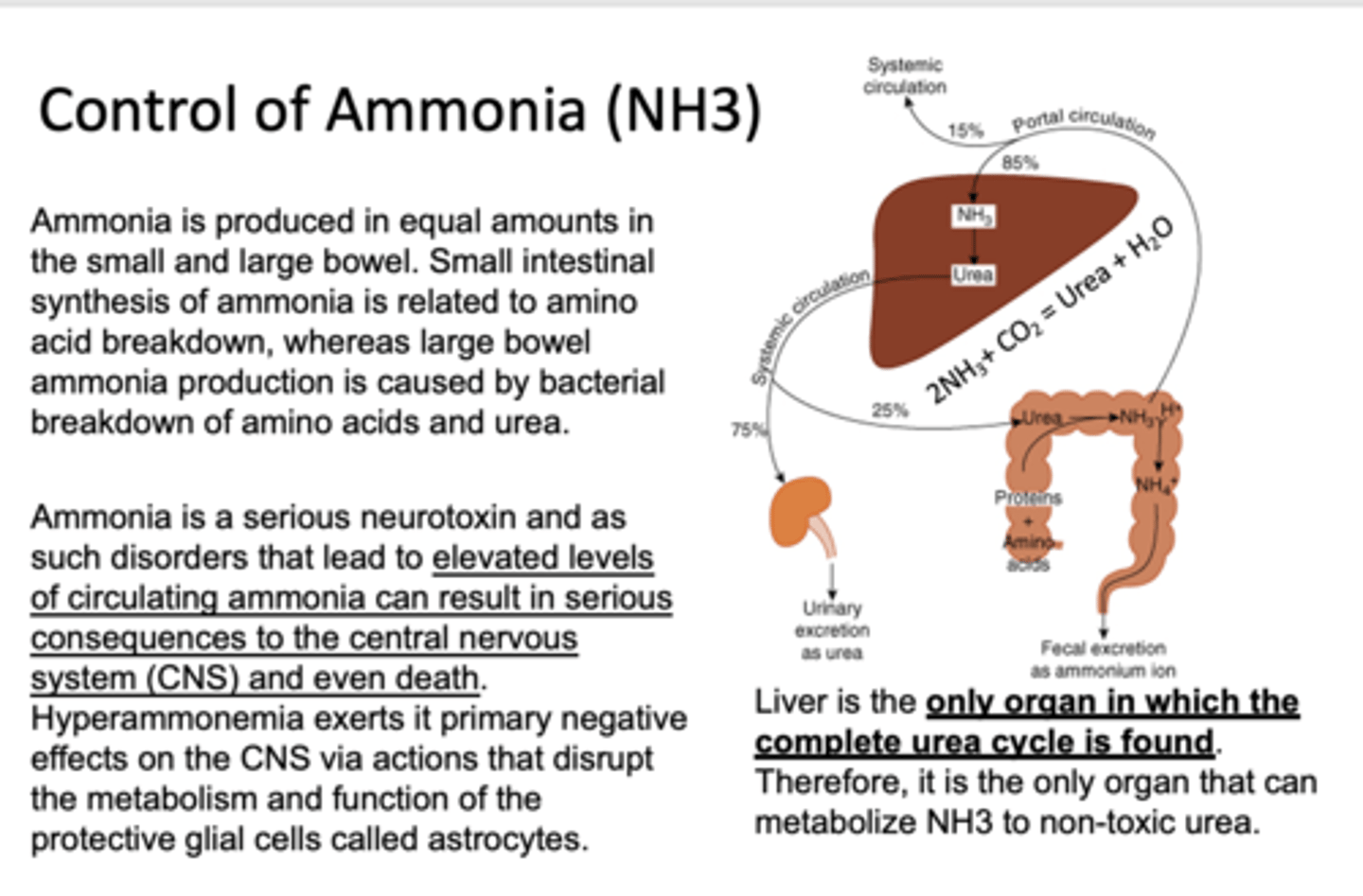
Elevated levels of circulating __________ can result in serious consequences to the central nervous system (CNS) and even death.
ammonia
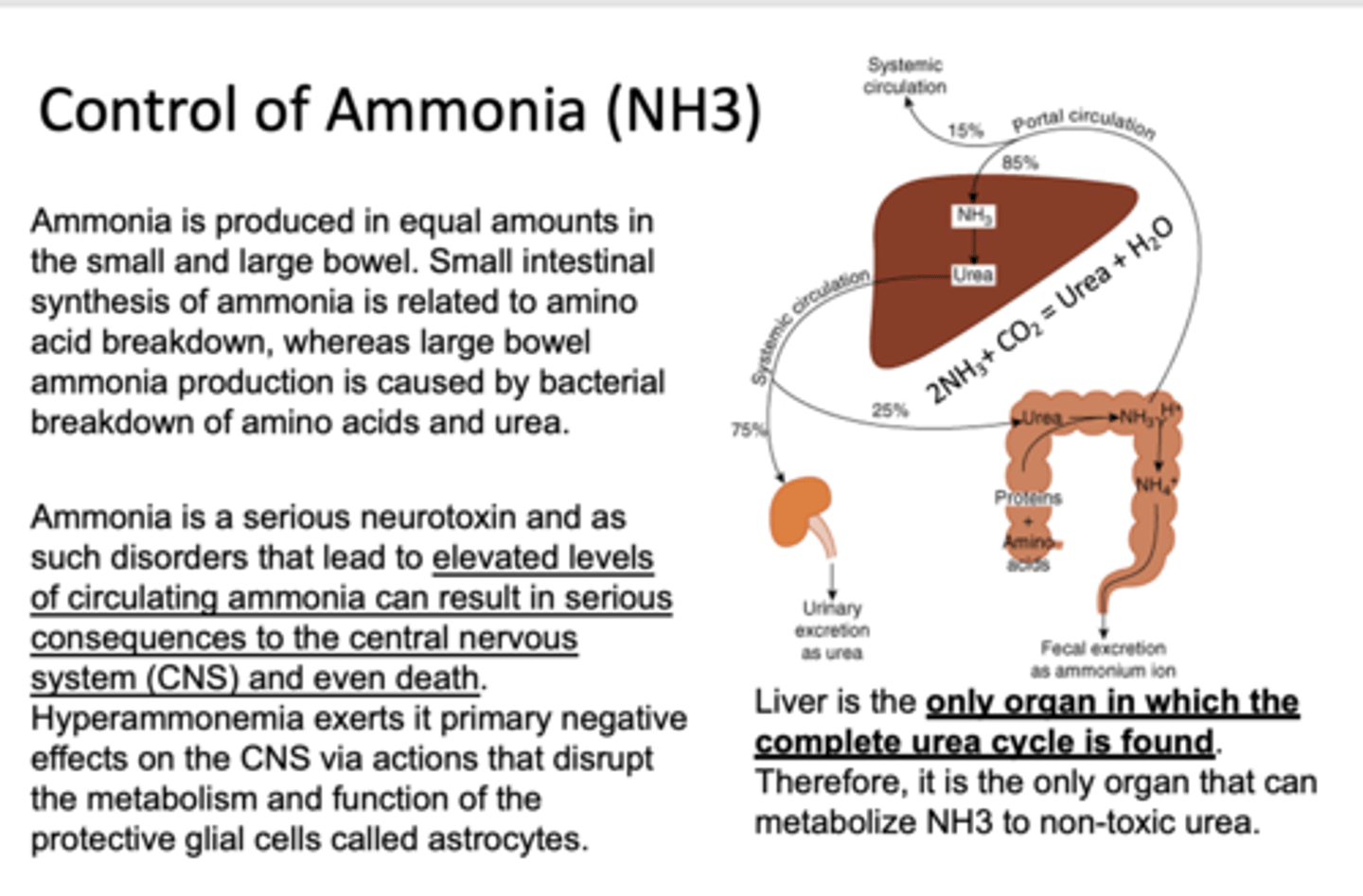
____________ exerts it primary negative effects on the CNS via actions that disrupt the metabolism and function of the protective glial cells called astrocytes
Hyperammonemia
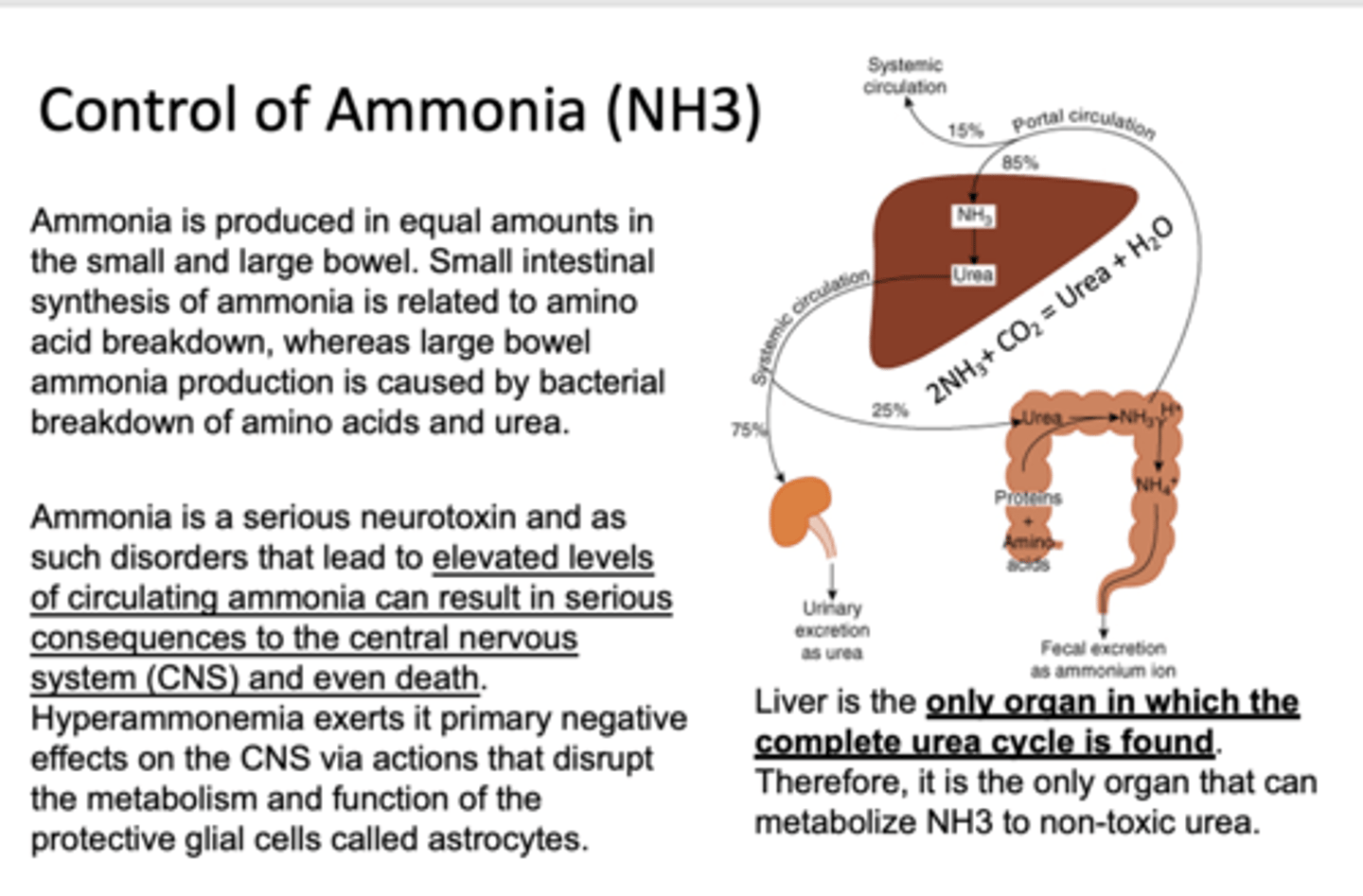
What is the only organ in which the complete urea cycle is found?
liver
Excess glucose entering the blood after a meal is rapidly taken up by the liver and sequestered as the large polymer, known as ___________
glycogen
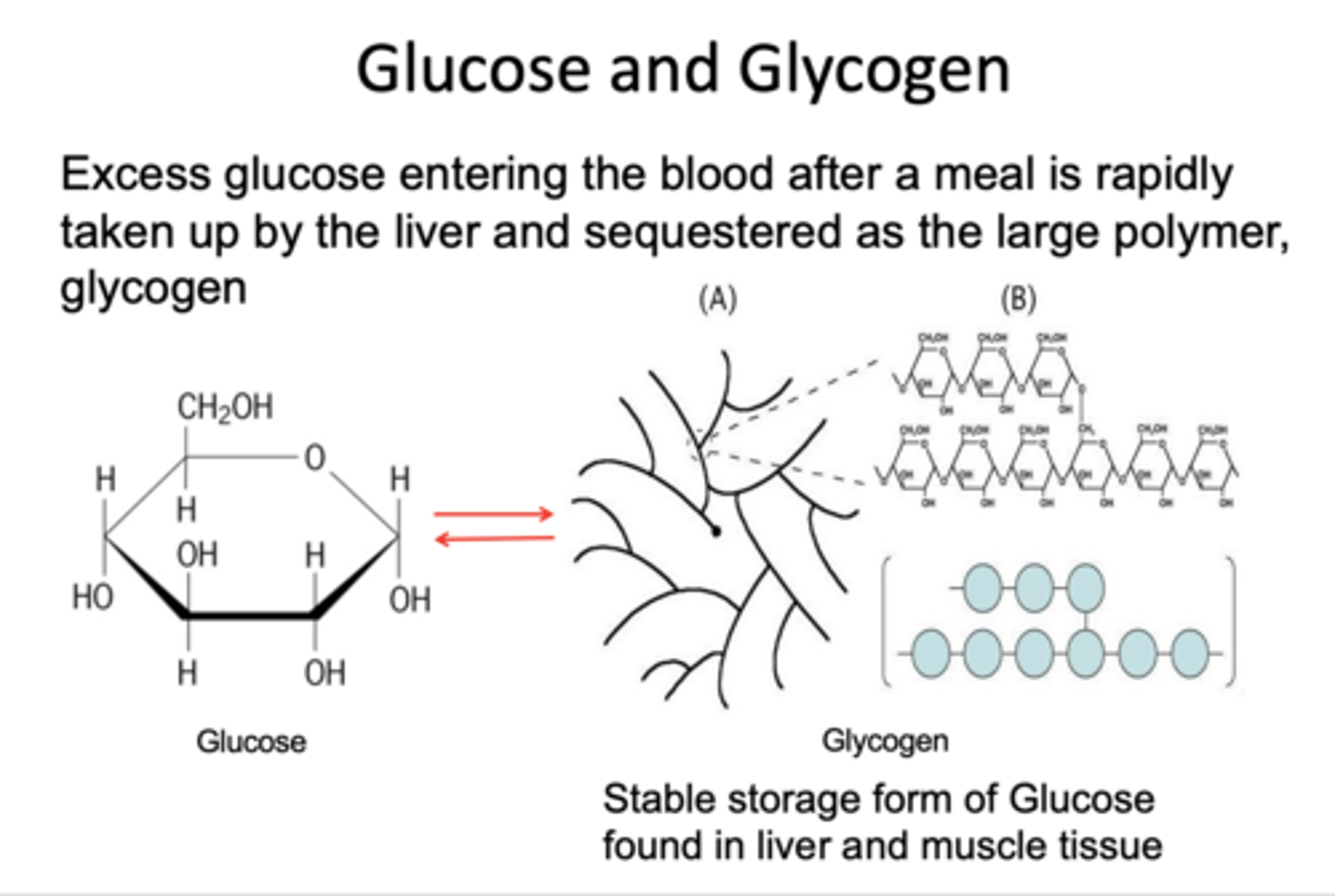
Glycogen is formed in what?
liver
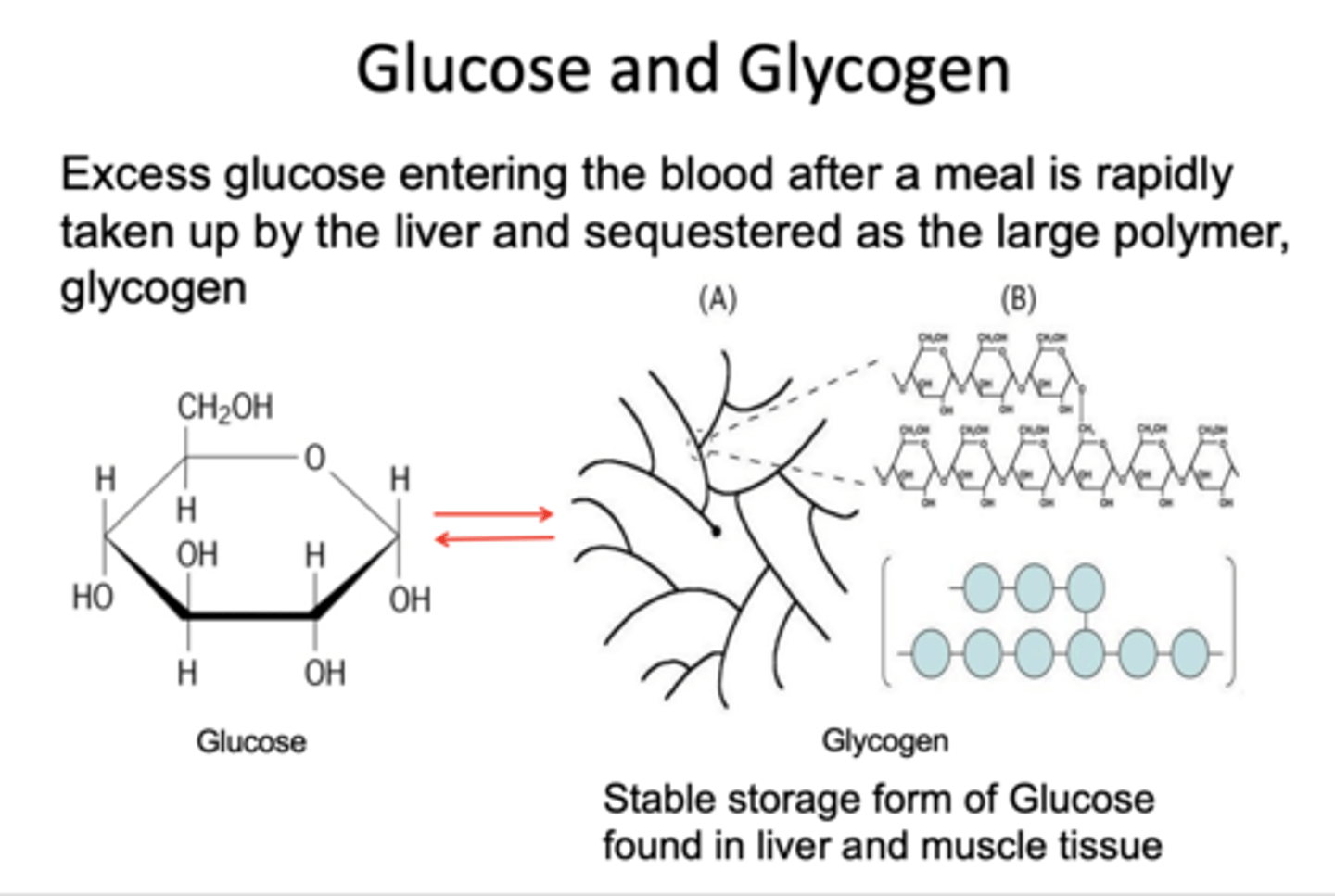
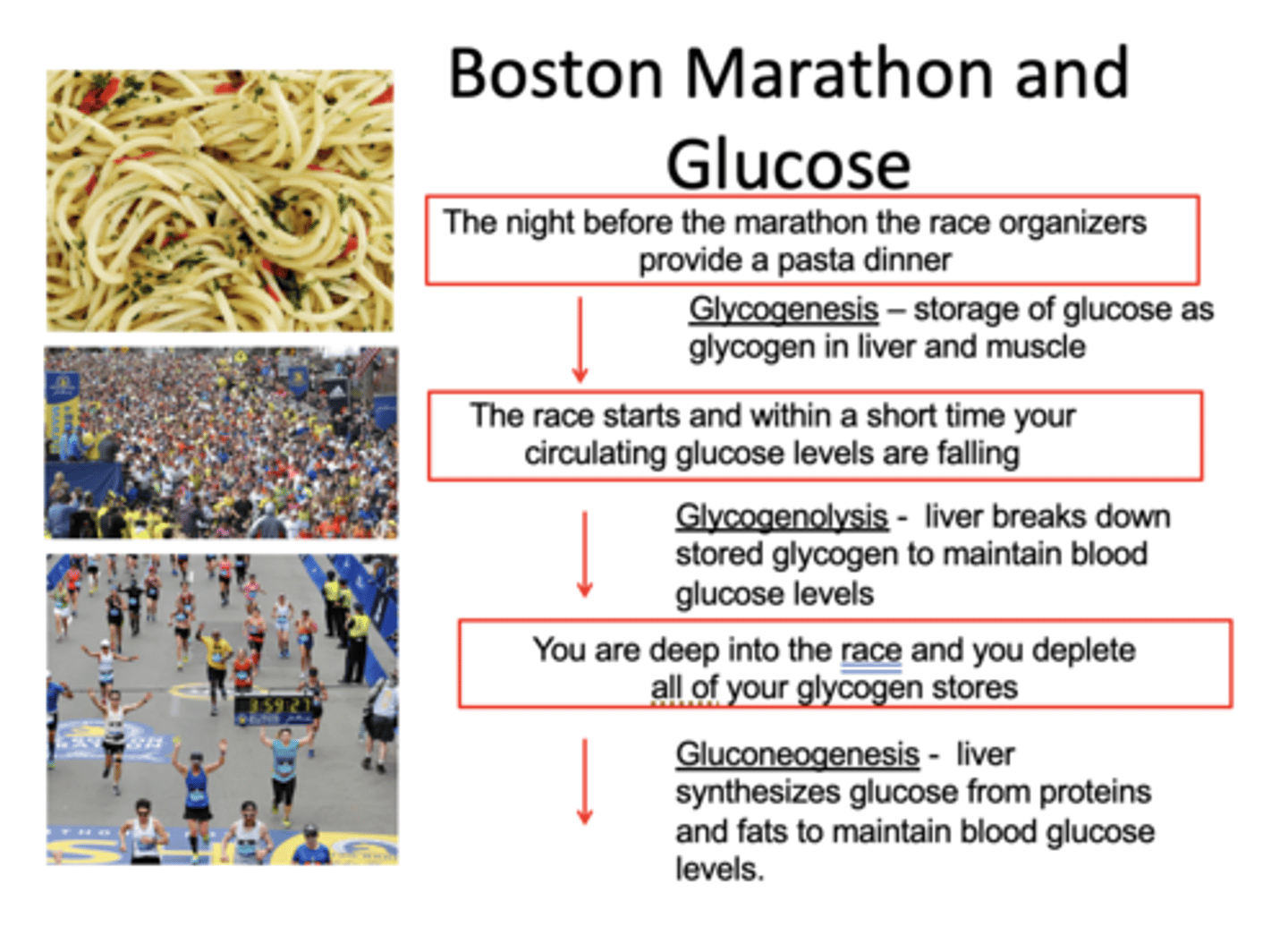
What is the storage of glucose as glycogen in liver and muscle?
glycogenesis
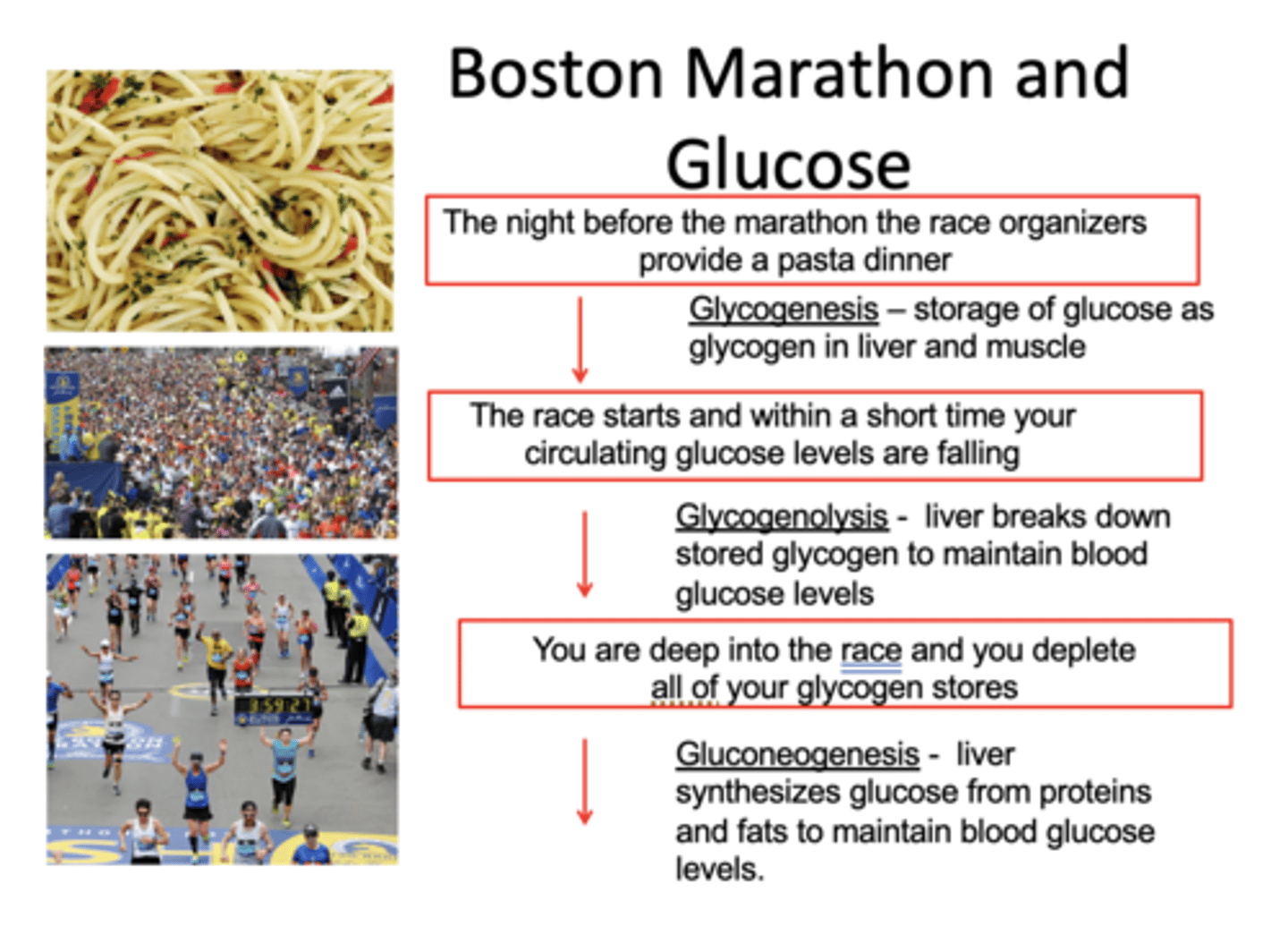
What is the process in which the liver breaks down stored glycogen to maintain blood glucose levels?
glycogenolysis
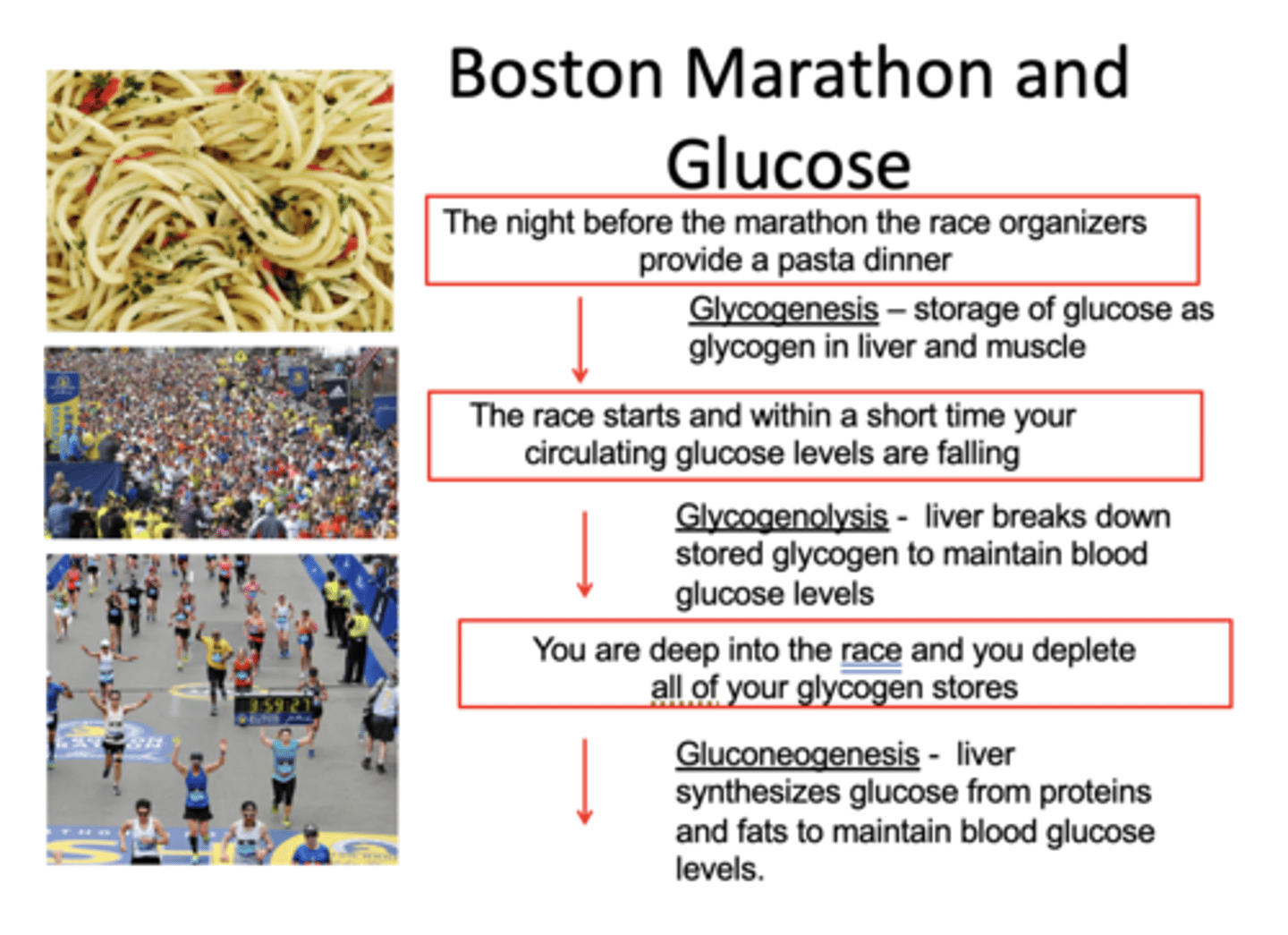
What is the process in which liver synthesizes glucose from proteins and fats to maintain blood glucose levels?
gluconeogenesis
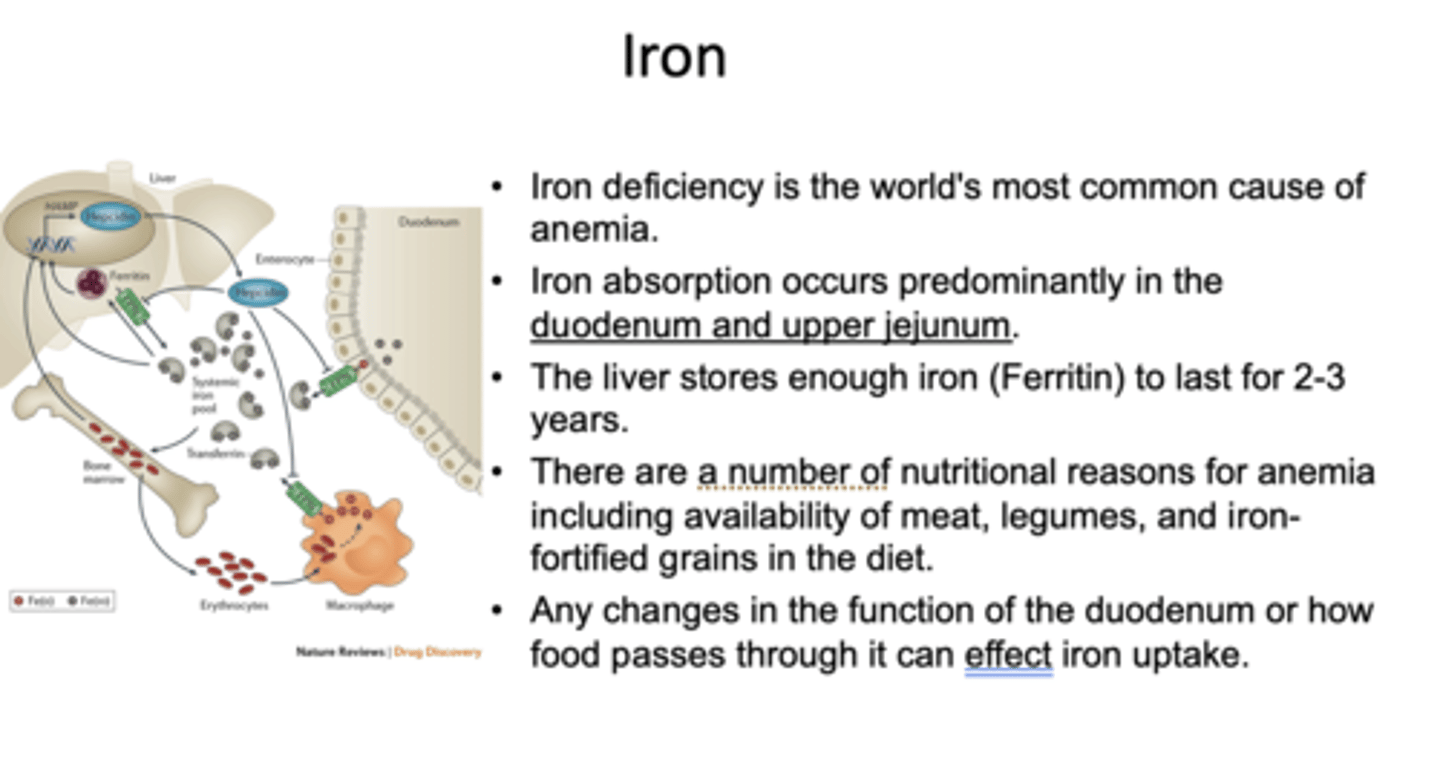
What is the most common cause of anemia?
iron deficiency
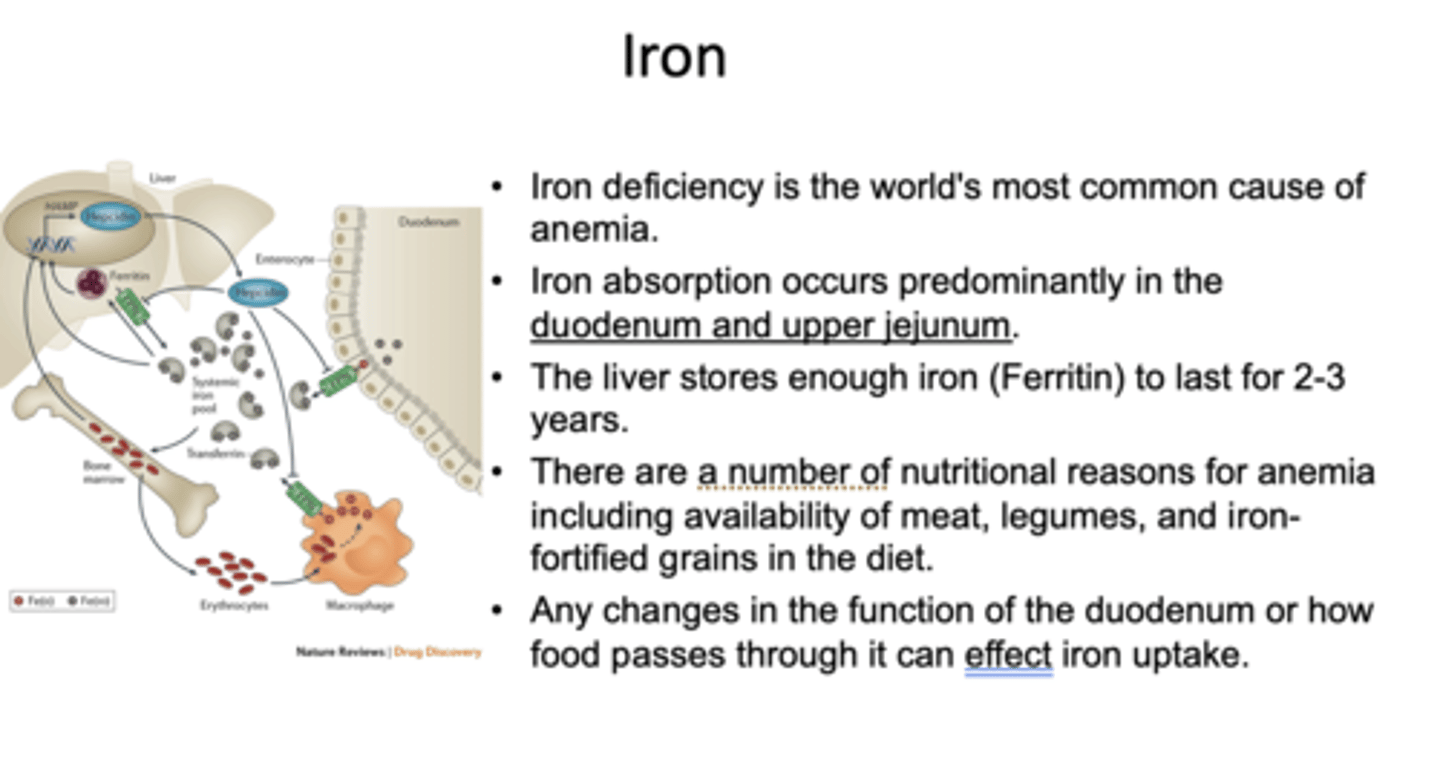
Iron absorption occurs predominantly in which two areas?
- duodenum
- upper jejunum
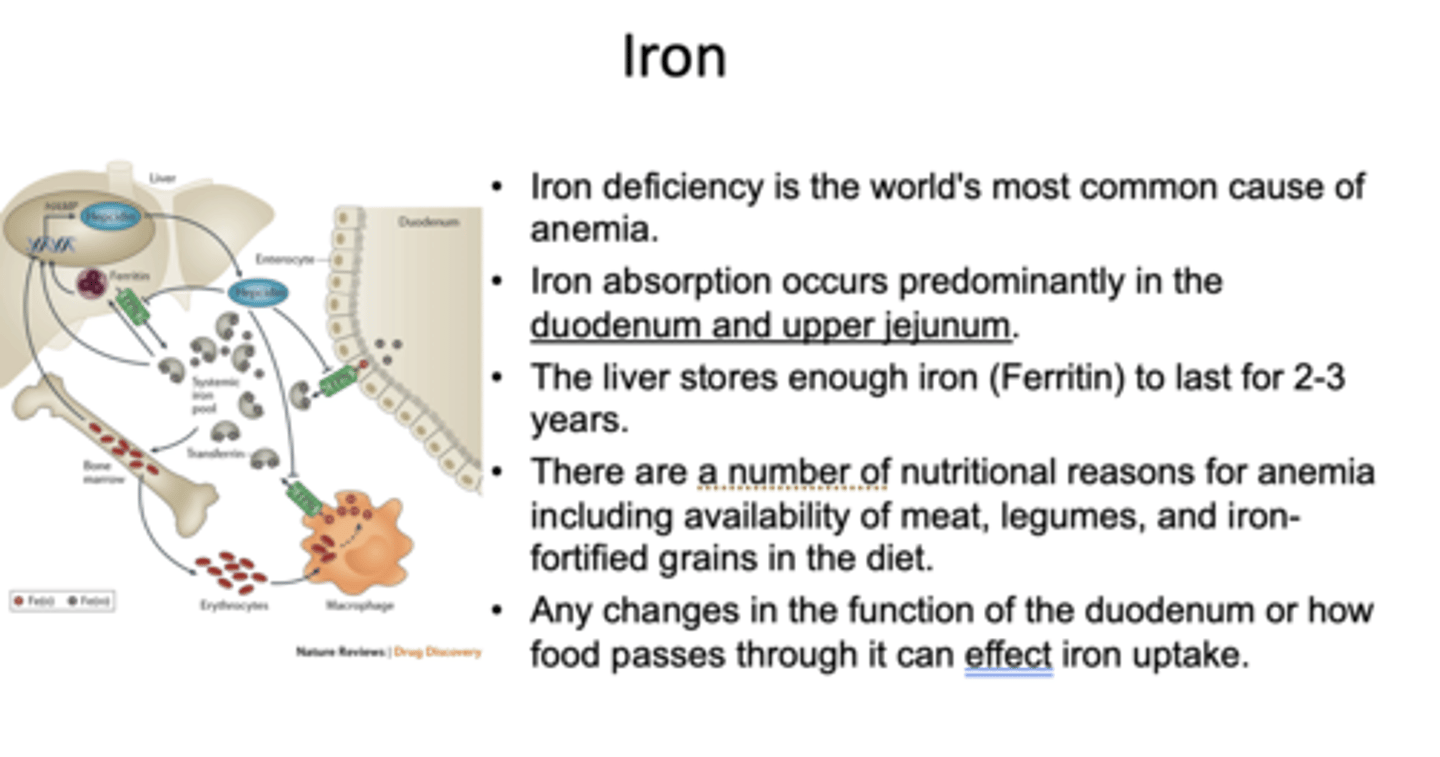
The liver stores enough iron (Ferritin) to last for ____-____ years
2-3
Where are the bulk of lipoproteins synthesized?
Liver
What is the major site for converting excess carbohydrates and proteins into fatty acids and triglyceride?
liver
What does the liver synthesize in large quantities (fat metabolism) ?
- Cholesterol
- Phospholipids
The liver controls the serum levels of a number of compounds, for example... (4)
• Hormones
• Vitamins
• Inflammatory molecules
• Signaling compounds
As blood from the digestive organs passes through the hepatic portal circulation, the __________ of the liver monitor the contents of the blood and removes or modifies many potentially toxic substances.
hepatocytes
How do enzymes in hepatocytes metabolize toxins?
turn to inactive metabolites (keeps homeostasis)
Once the liver breaks down/turns substances into less harmful compounds, they are excreted into _______ or ________ and removed from body by stool or urine
bile, circulation
Define the following:
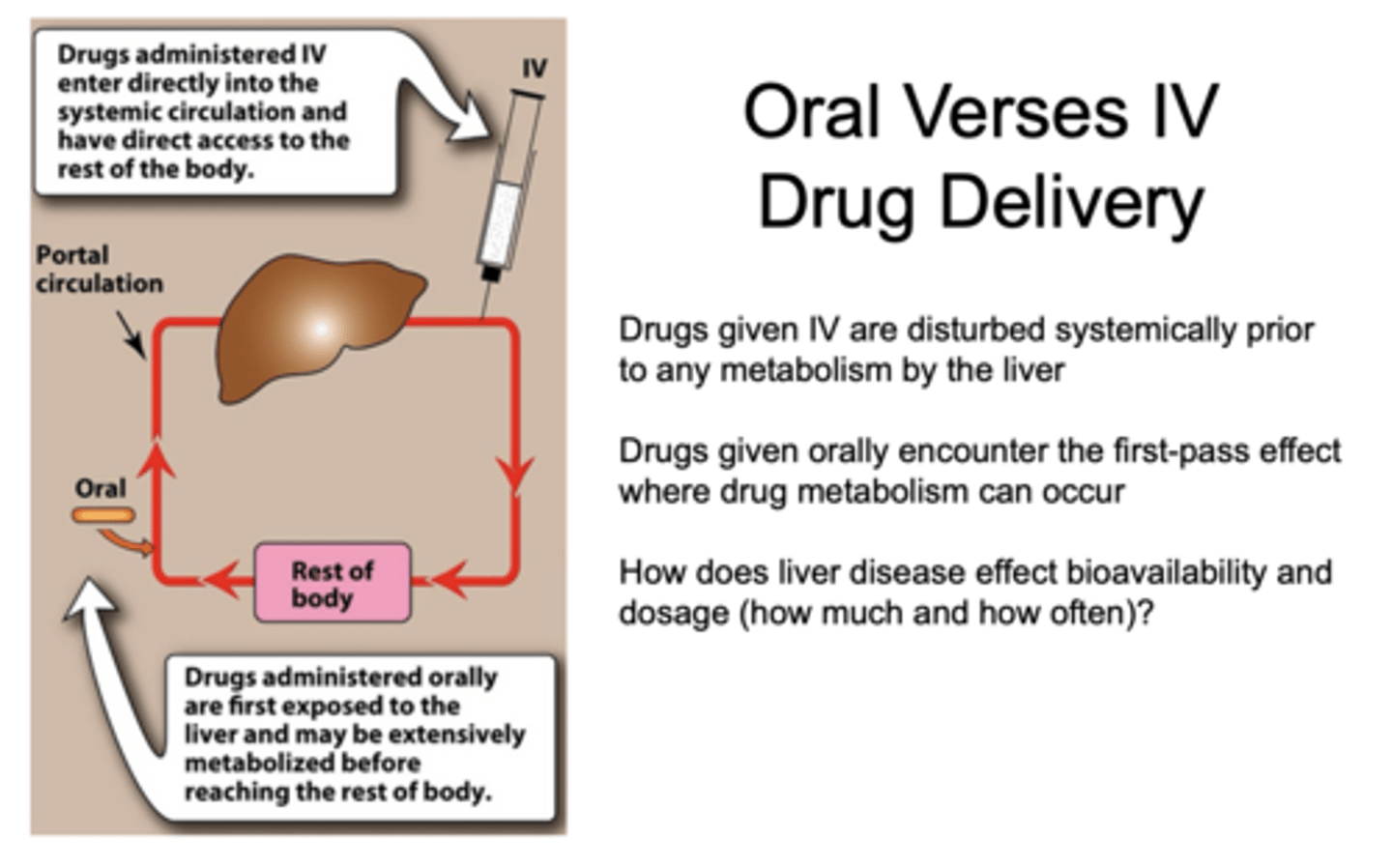
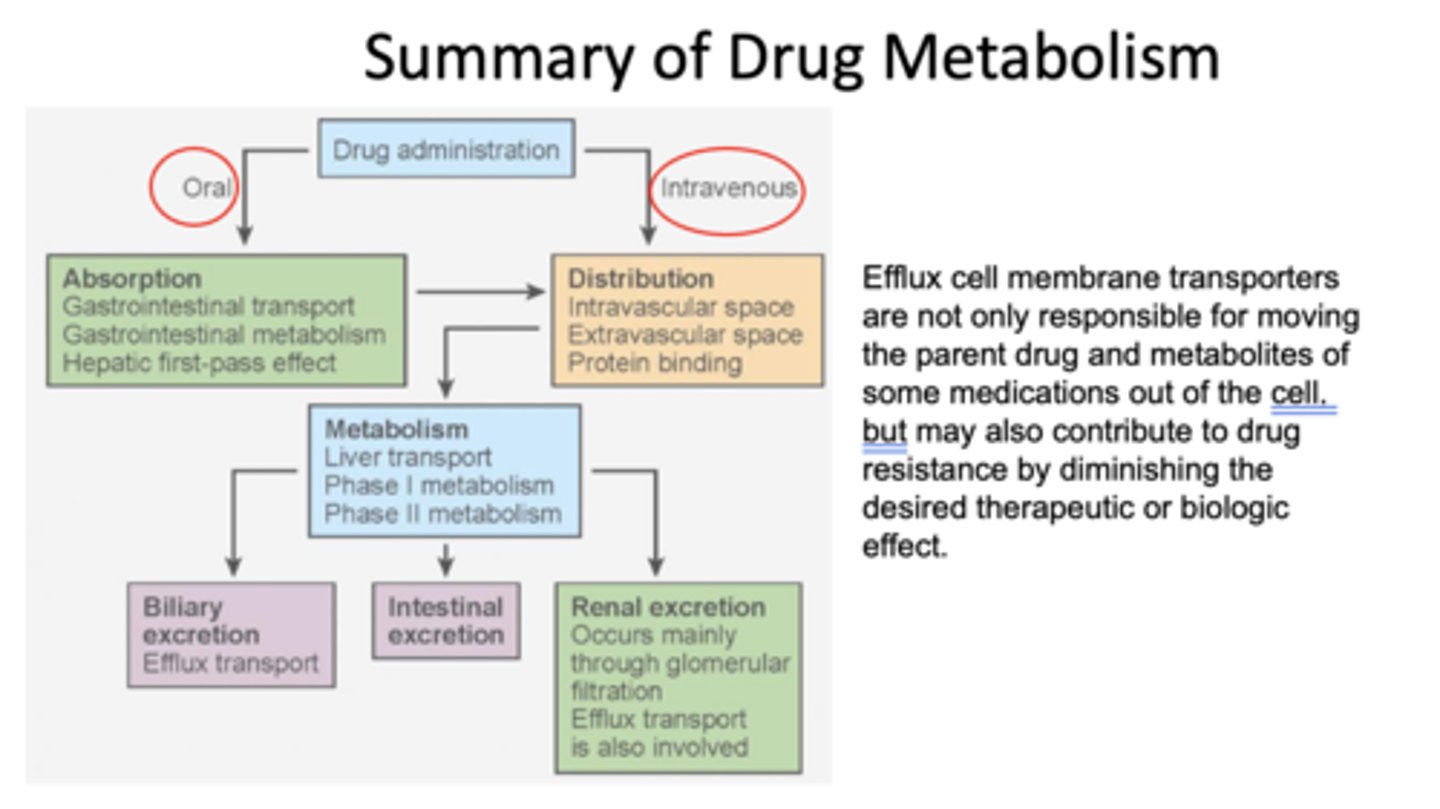
The hepatic metabolism of a pharmacological agent when it is absorbed from the gut and delivered to the liver via the portal circulation
First-pass effect
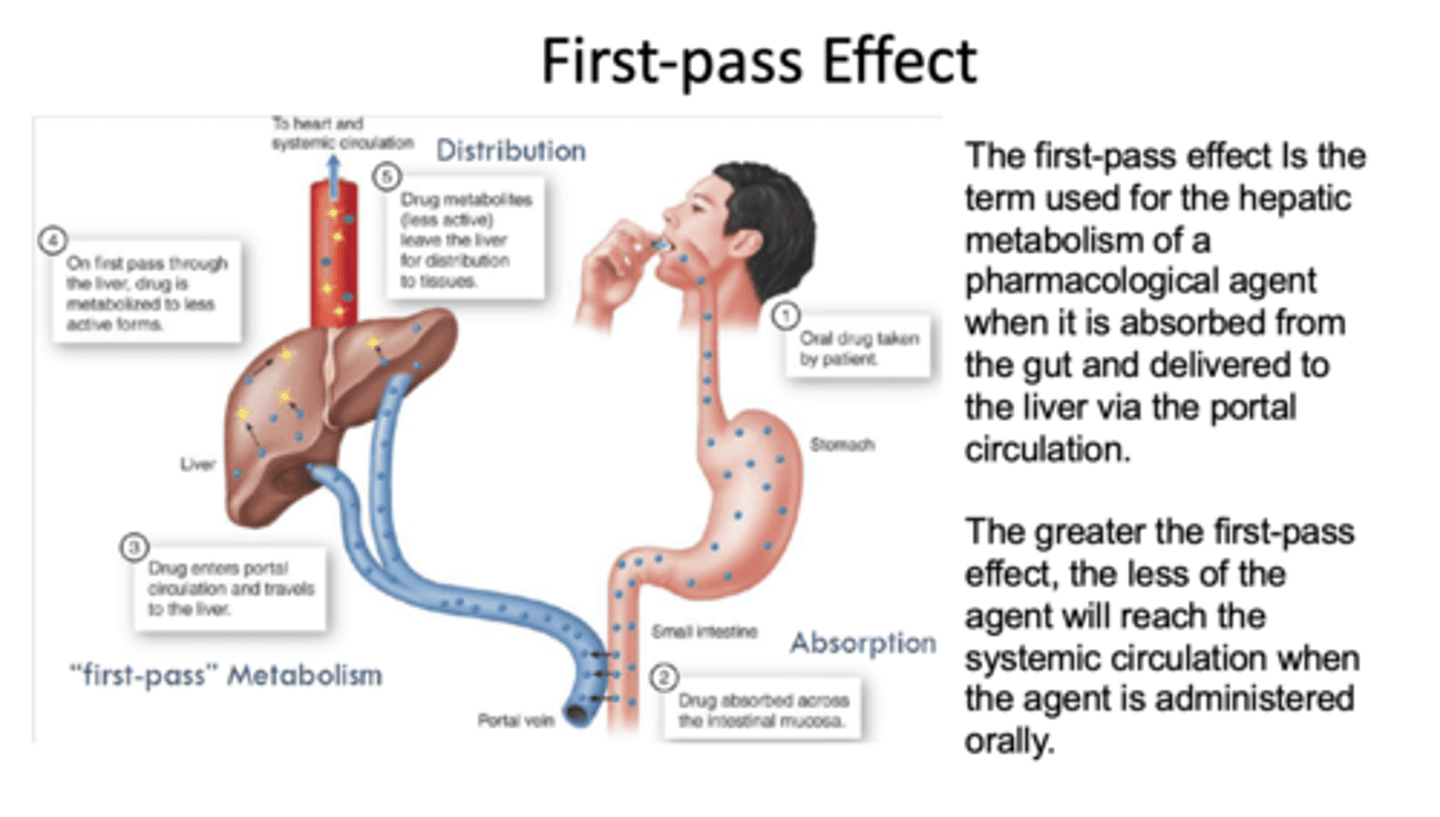
The greater the ____________, the less of the agent will reach the systemic circulation when the agent is administered orally
first pass effect
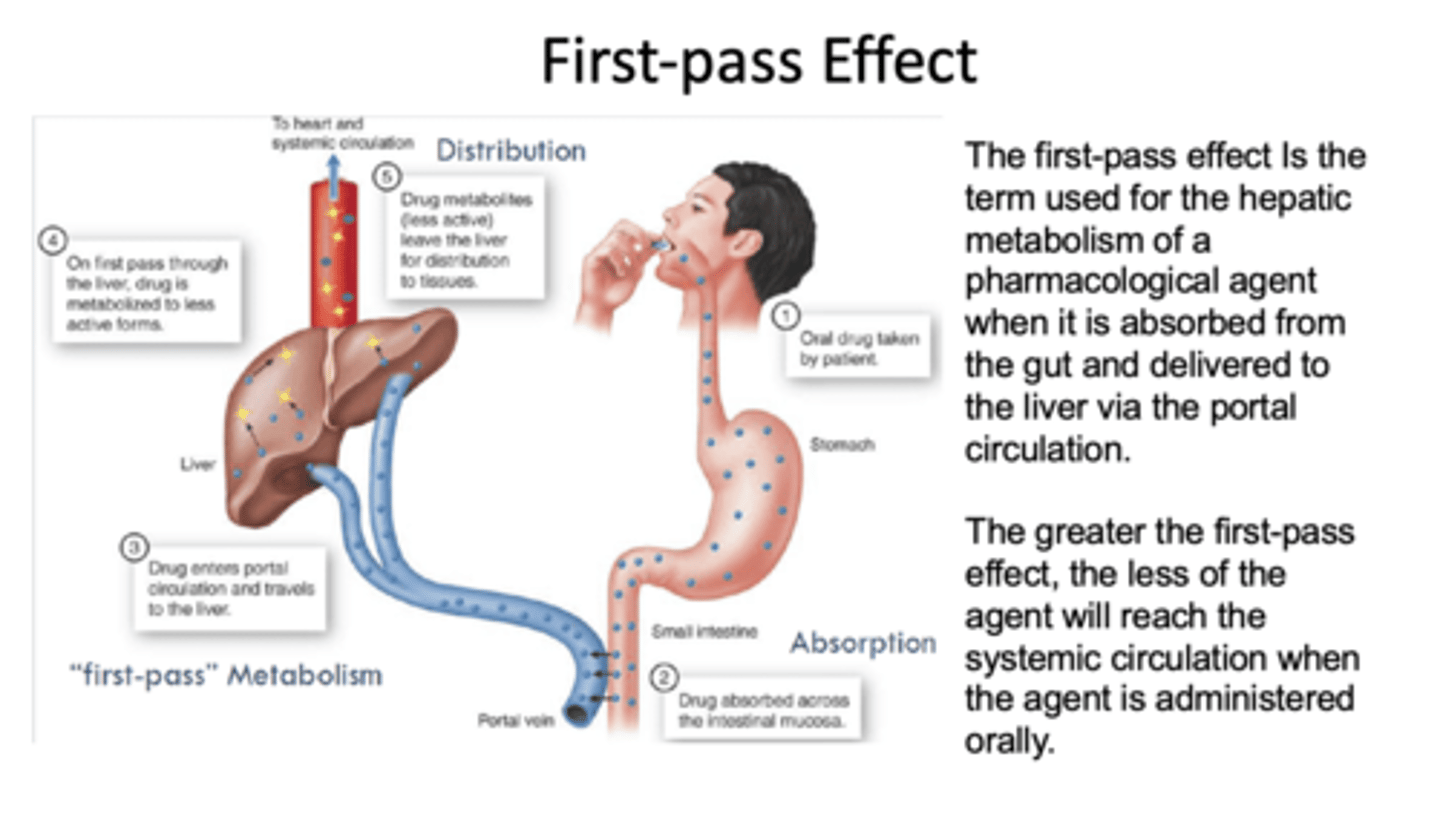
When a drug is taken orally, it is first absorbed across ...?
intestinal mucosa
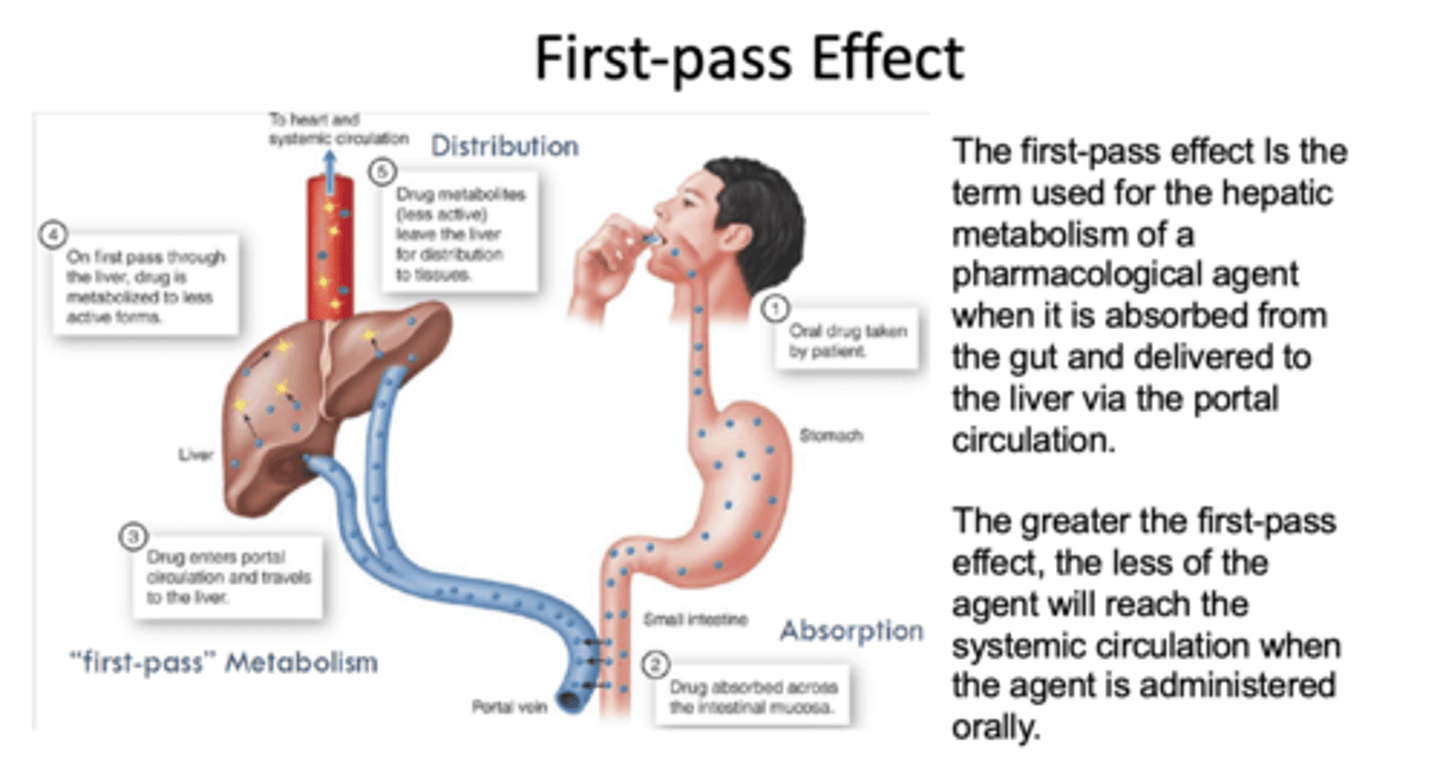
Once a drug is taken orally and passes across the intestinal mucosa, it then enters portal circulation and travels to the liver where it is ....
metabolized to less active form
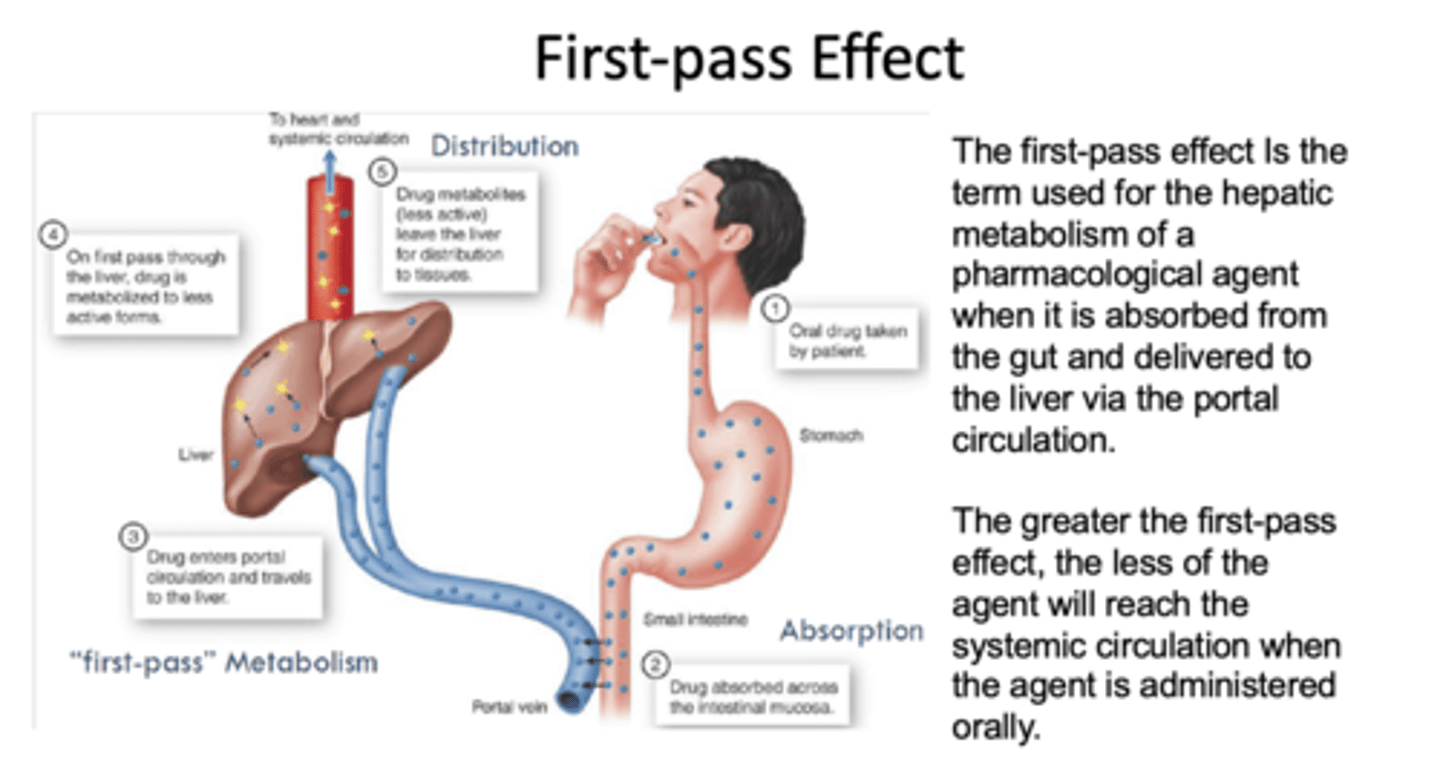
Why are IV drugs preferred over oral?
IV are distributed systemically
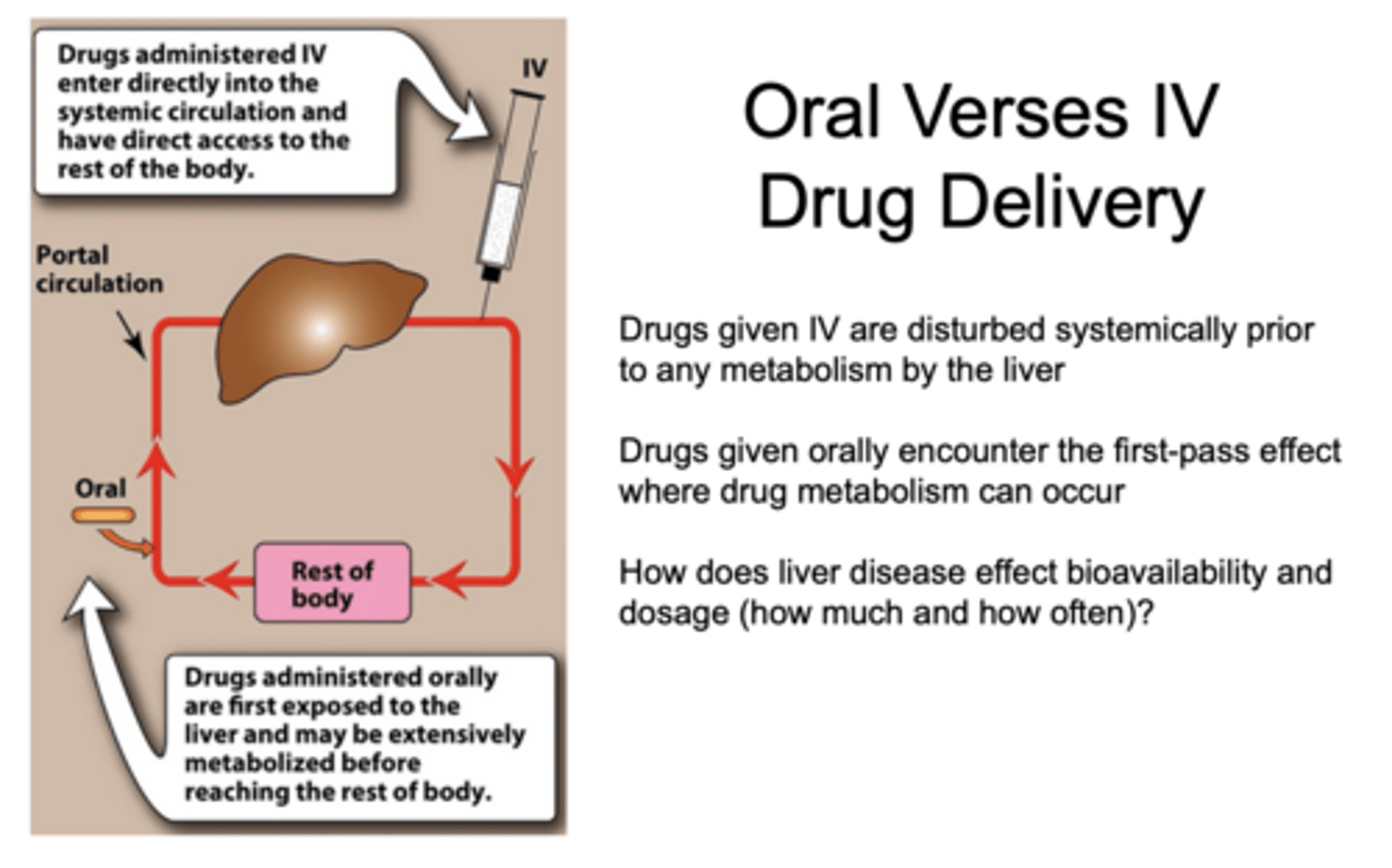
Drugs given orally encounter what?
first pass effect
Drugs are usually _____________ substances so they can pass plasma membranes of cells and reach the site of action.
lipophilic
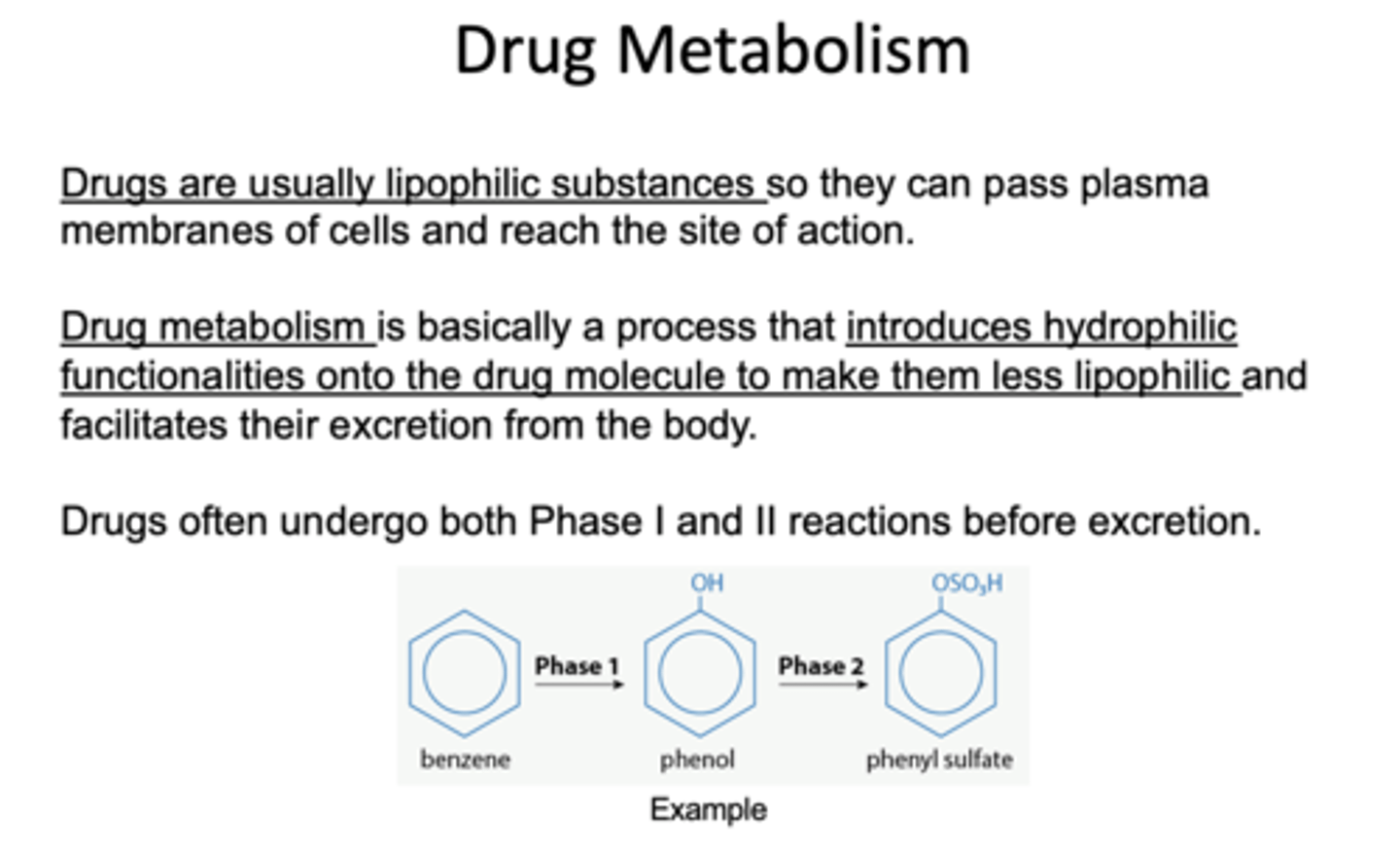
________ ________ is basically a process that introduces hydrophilic functionalities onto the drug molecule to make them less lipophilic and facilitates their excretion from the body
drug metabolism
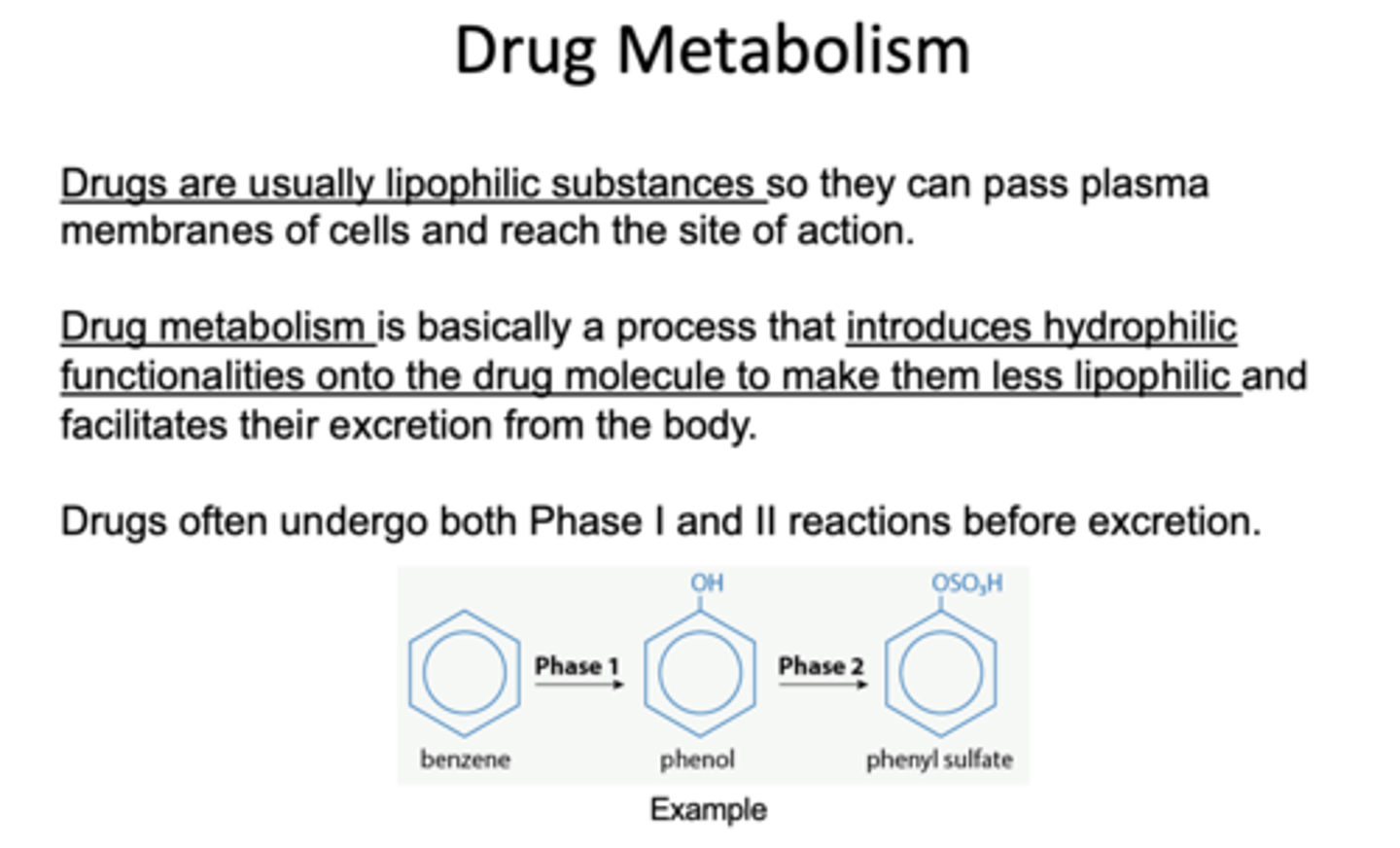
Which phases do drugs undergo before excretion?
1 and 2
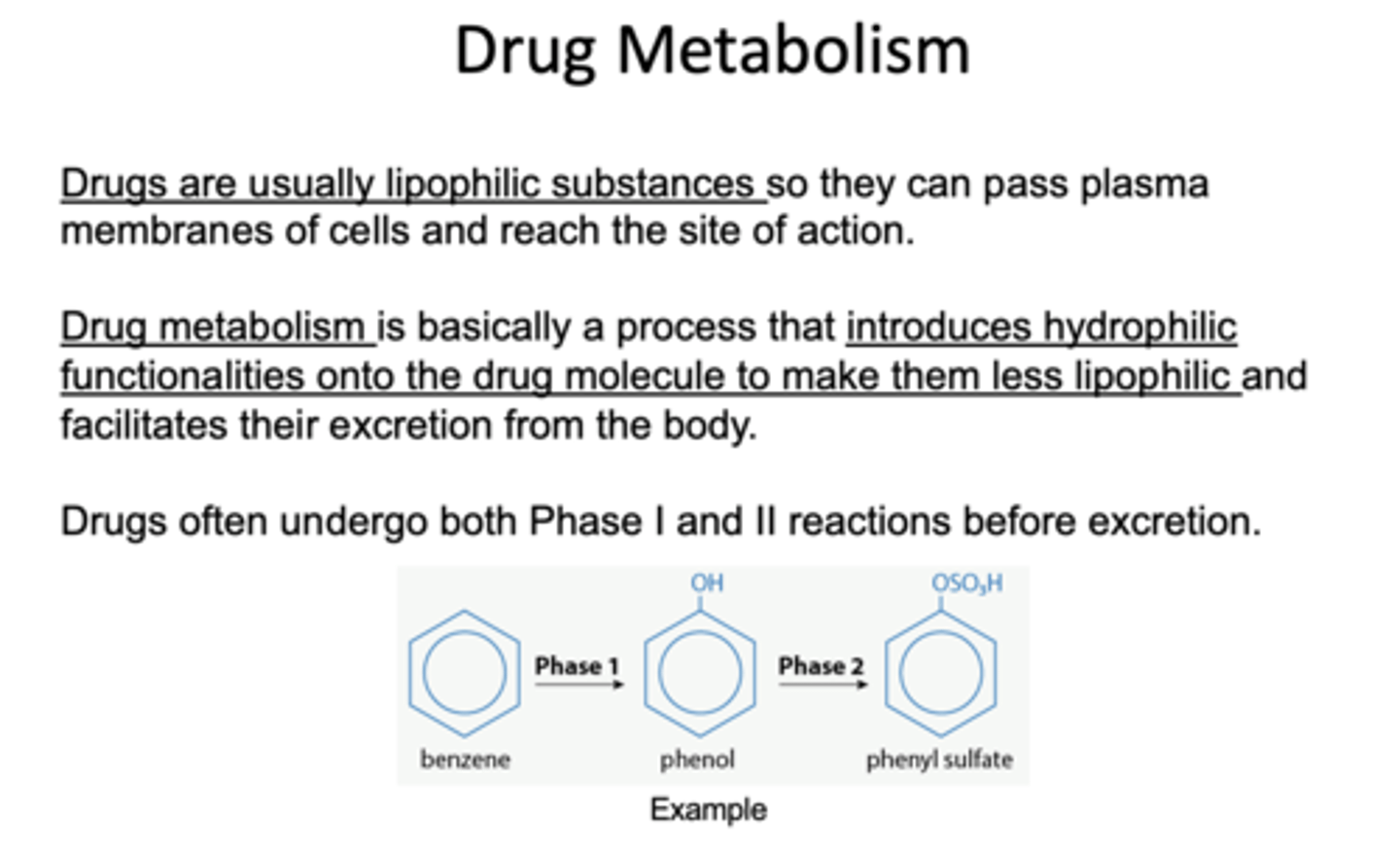
Which phase?
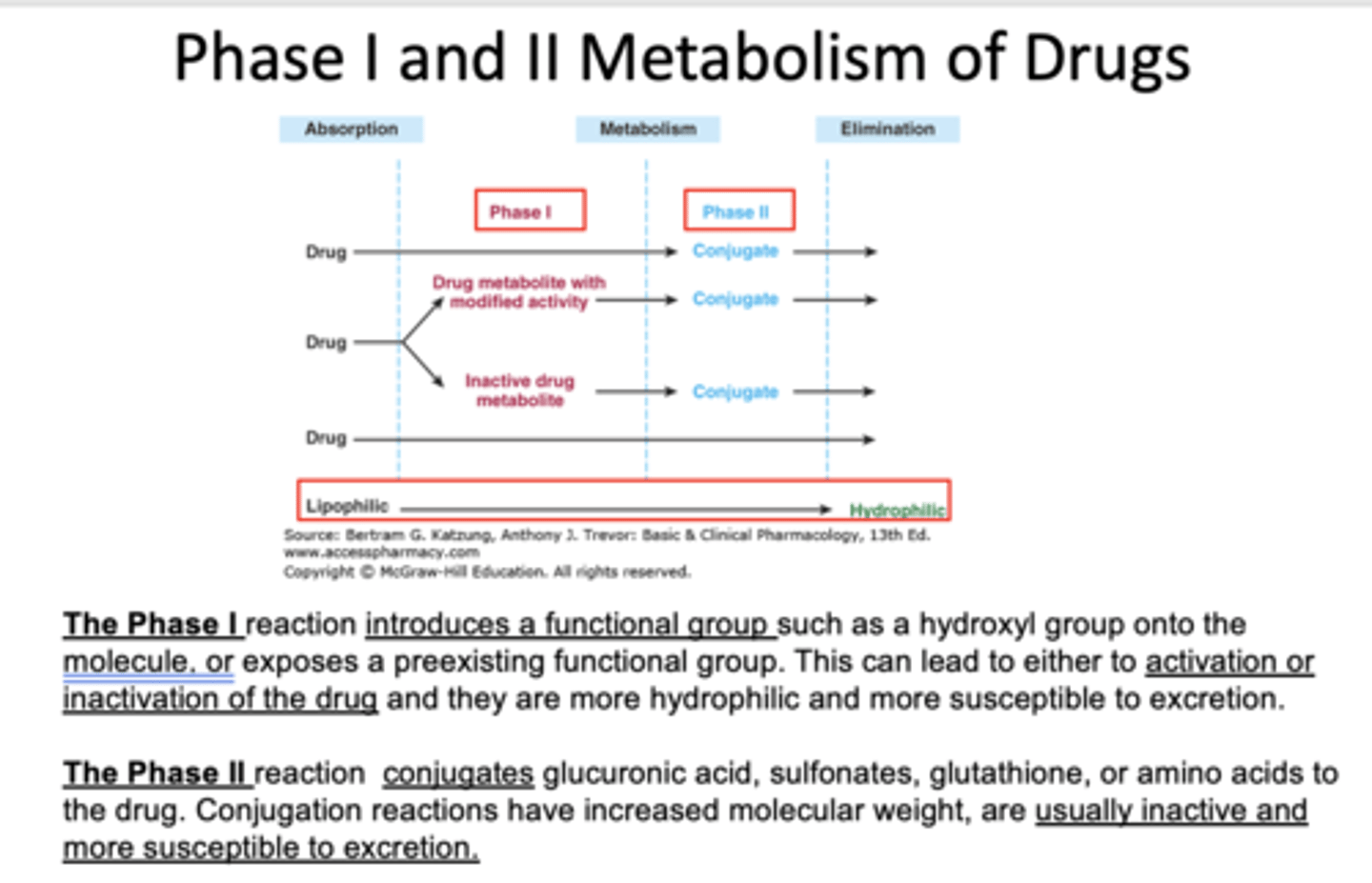
Reaction introduces a functional group such as a hydroxyl group onto the molecule, or exposes a preexisting functional group. This can lead to either to activation or inactivation of the drug and they are more hydrophilic and more susceptible to excretion.
phase 1
Which phase?
Reaction conjugates glucuronic acid, sulfonates, glutathione, or amino acids to the drug. Conjugation reactions have increased molecular weight, are usually inactive and more susceptible to excretion.
phase 2
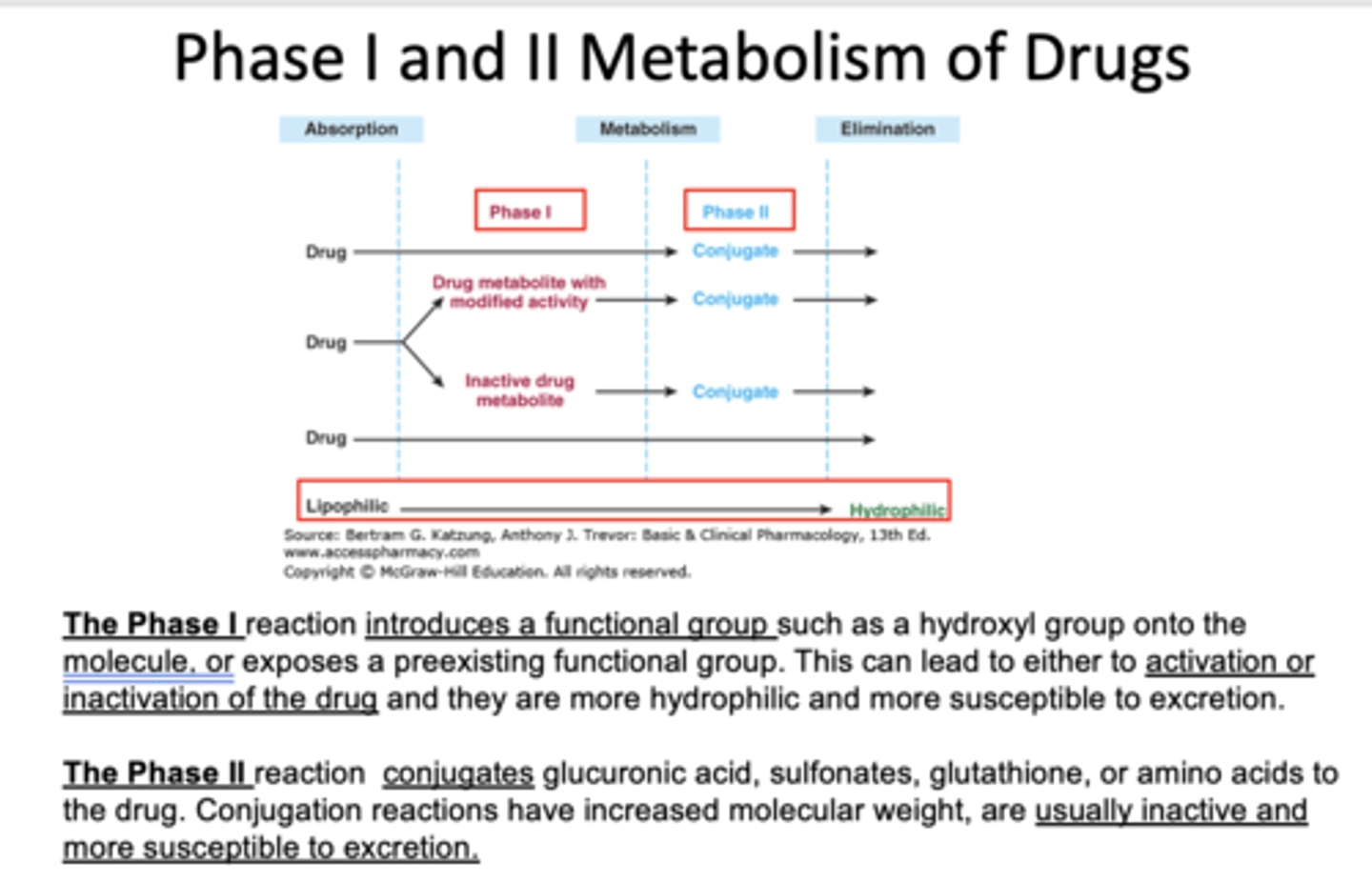
What drug is an exception that does not go through phase I and II of metabolism?
Penicillin (Lipophilic to hydrophillic)
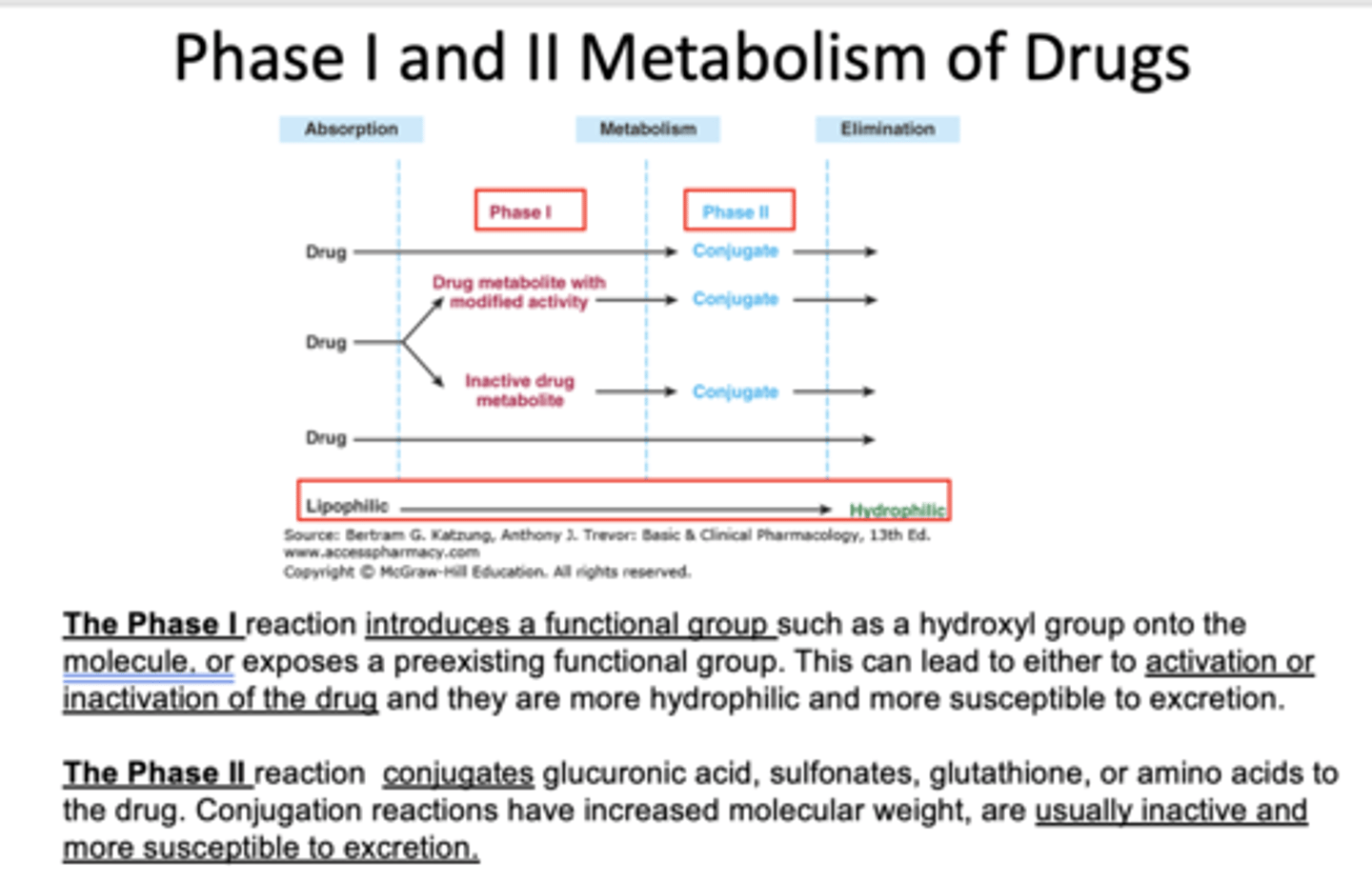
What are responsible for moving parent drug and metabolites of some medications out of cell?
efflux cell membrane transporters
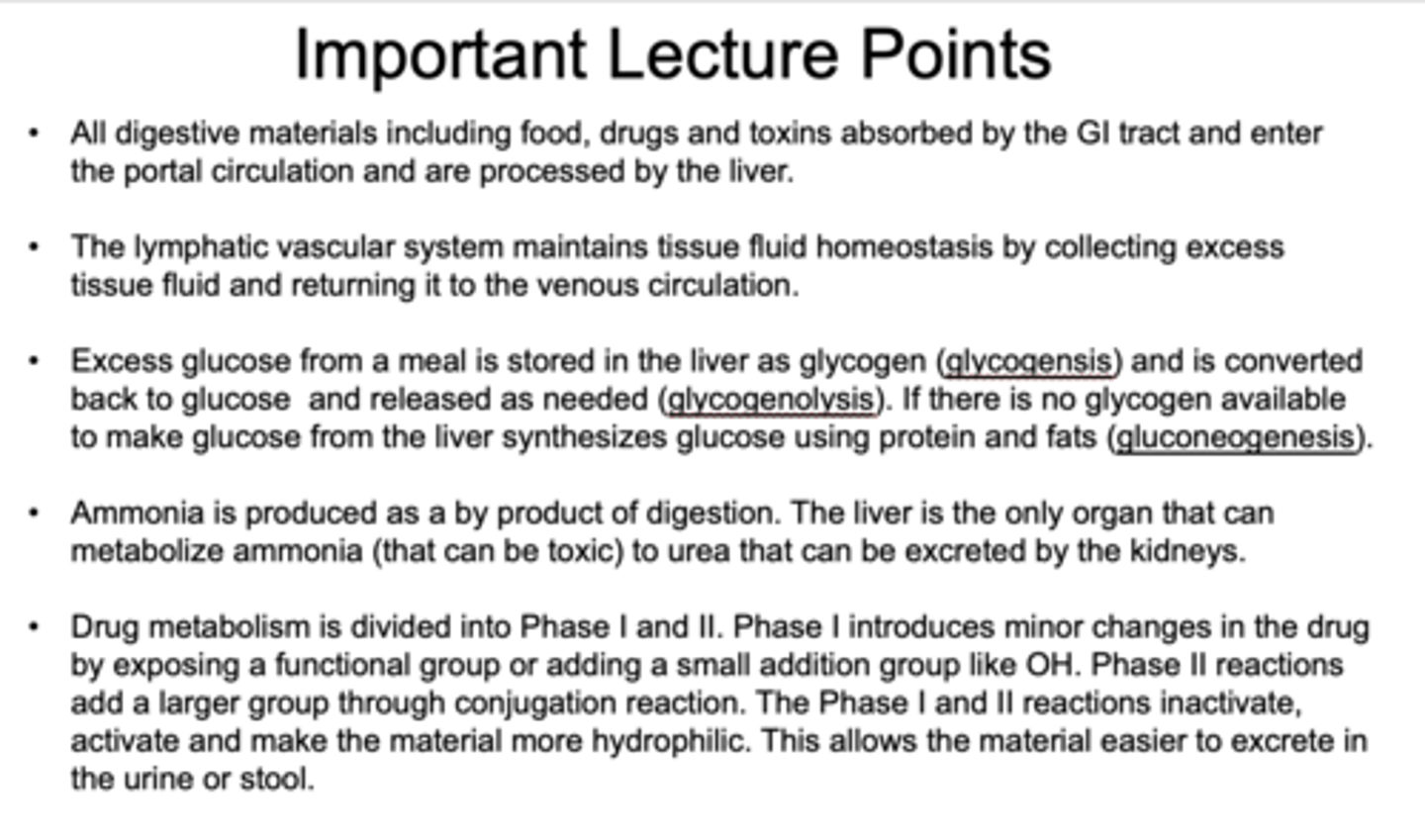
All digestive materials including food, drugs and toxins absorbed by the GI tract and enter the portal circulation and are processed by the ___________
liver
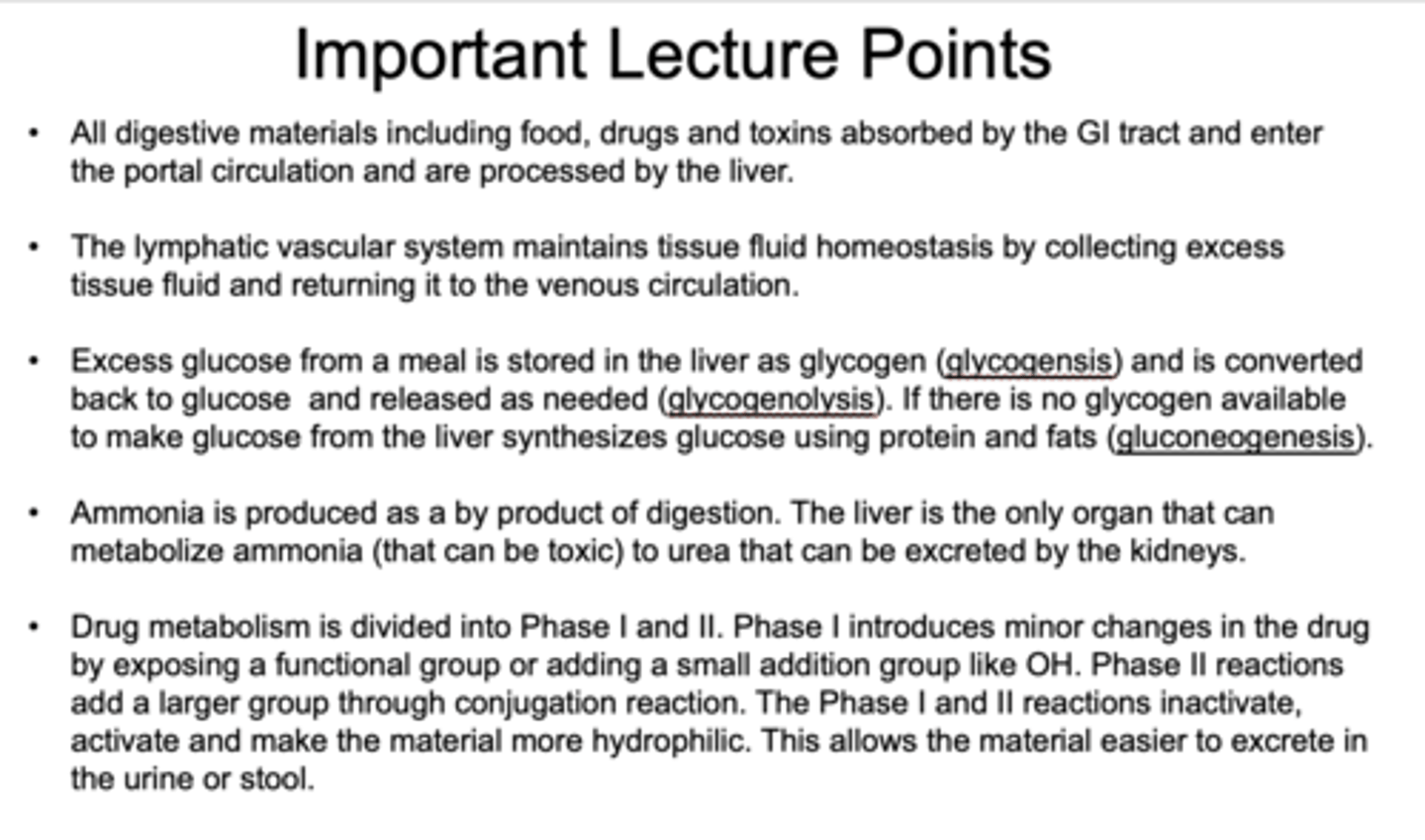
Excess glucose from a meal is stored in the liver as glycogen (_____________) and is converted back to glucose and released as needed (_____________). If there is no glycogen available to make glucose from the liver synthesizes glucose using protein and fats (_____________).
- glycogensis
- glycogenolysis
- gluconeogenesis
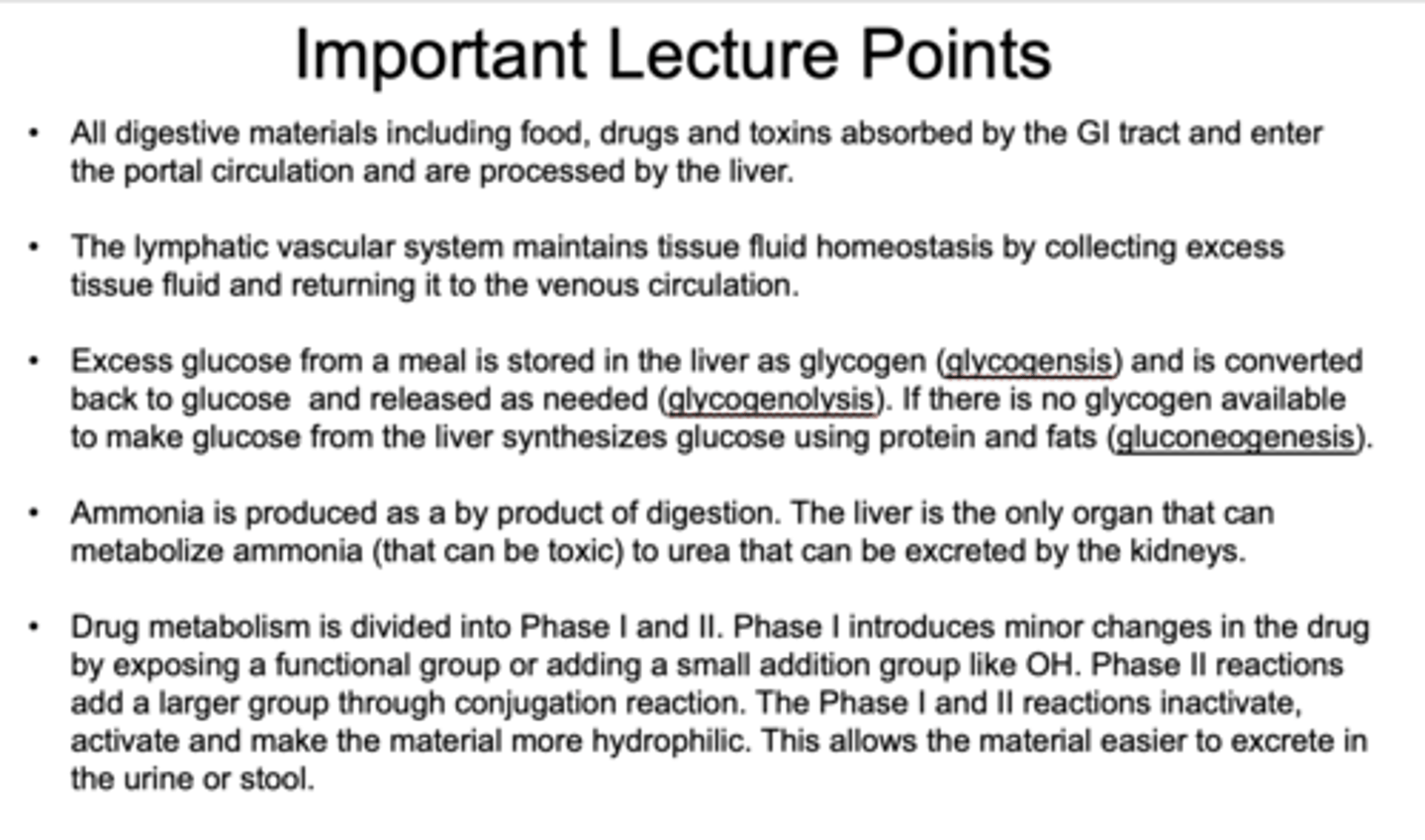
_________ is produced as a by product of digestion. The liver is the only organ that can metabolize _________ (that can be toxic) to urea that can be excreted by the kidneys.
Ammonia
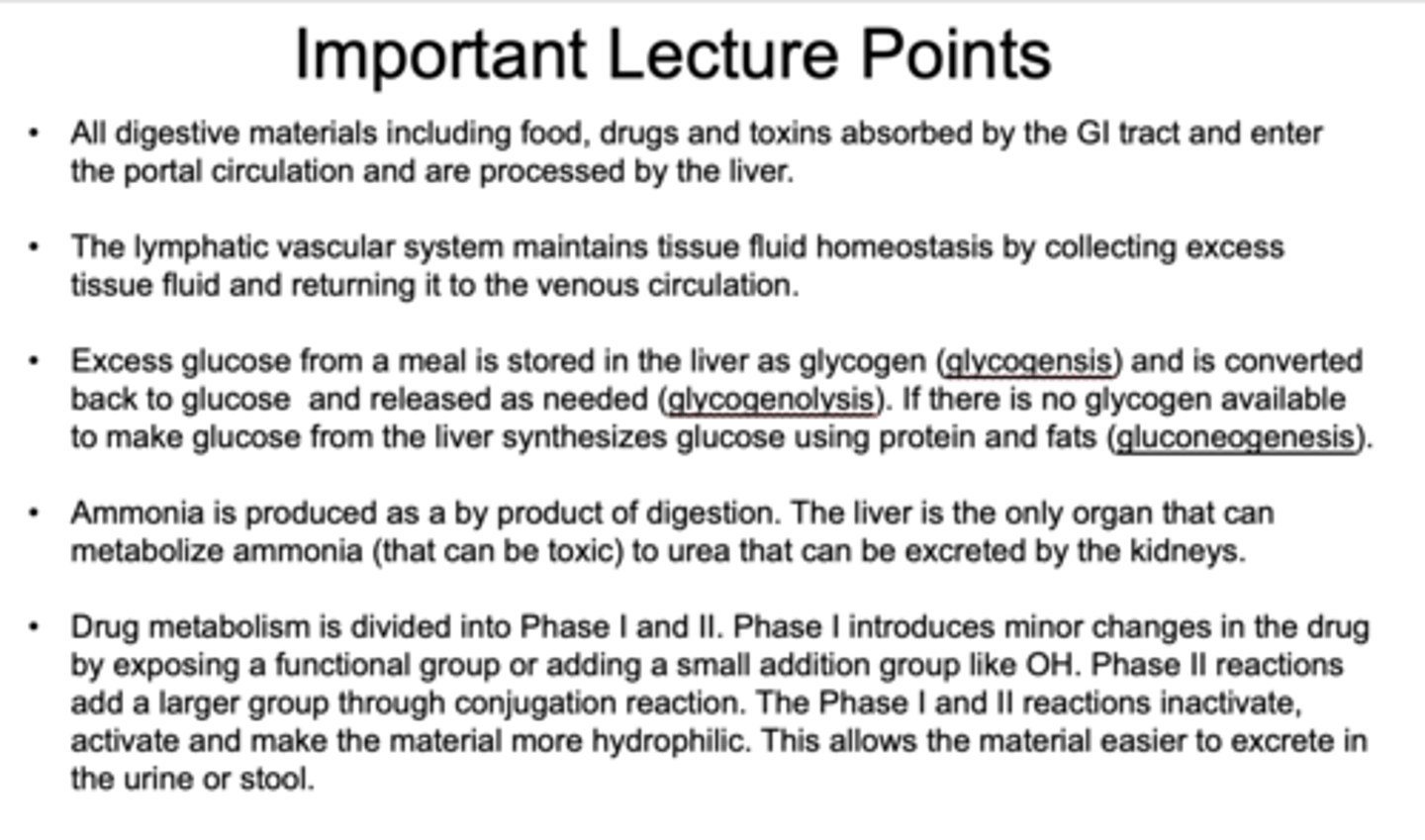
Drug metabolism is divided into Phase I and II. Phase I introduces minor changes in the drug by exposing a functional group or adding a small addition group like OH. Phase II reactions add a larger group through conjugation reaction. The Phase I and II reactions inactivate, activate and make the material more hydrophilic. This allows the material easier to excrete in the _______ or _______.
Urine, stool