MAR 3203 Chapter 12: Inventory Management
 Call Kai
 Learn
Learn Practice Test
 Spaced Repetition
 Match
Match Flashcards
 Knowt Play
1/25

Earn XP
Description and Tags
Name | Mastery | Learn | Test | Matching | Spaced | Call with Kai |
|---|
No analytics yet
Send a link to your students to track their progress
26 Terms
Inventory management
The objective is to strike a balance between inventory investment and customer service
Two basic issues are how much to order and when to order
Importance of inventory
One of the most expensive assets of many companies representing as much as 50% of total invested capital
Less inventory lowers costs but increases chances of running out
More inventory raises costs but always keeps customers happy
Functions of inventory
To provide a selection of goods for anticipated demand and to separate the firm from fluctuations in demand
To decouple or separate various parts of the production process
To take advantage of quantity discounts
To hedge against inflation
Types of inventory
Raw material
Work-in-process (WIP)
Maintenance/repair/operating (MRO)
Finished goods
Raw material
Materials that are usually purchased and have yet to enter the manufacturing process
Work-in-process (WIP) inventory
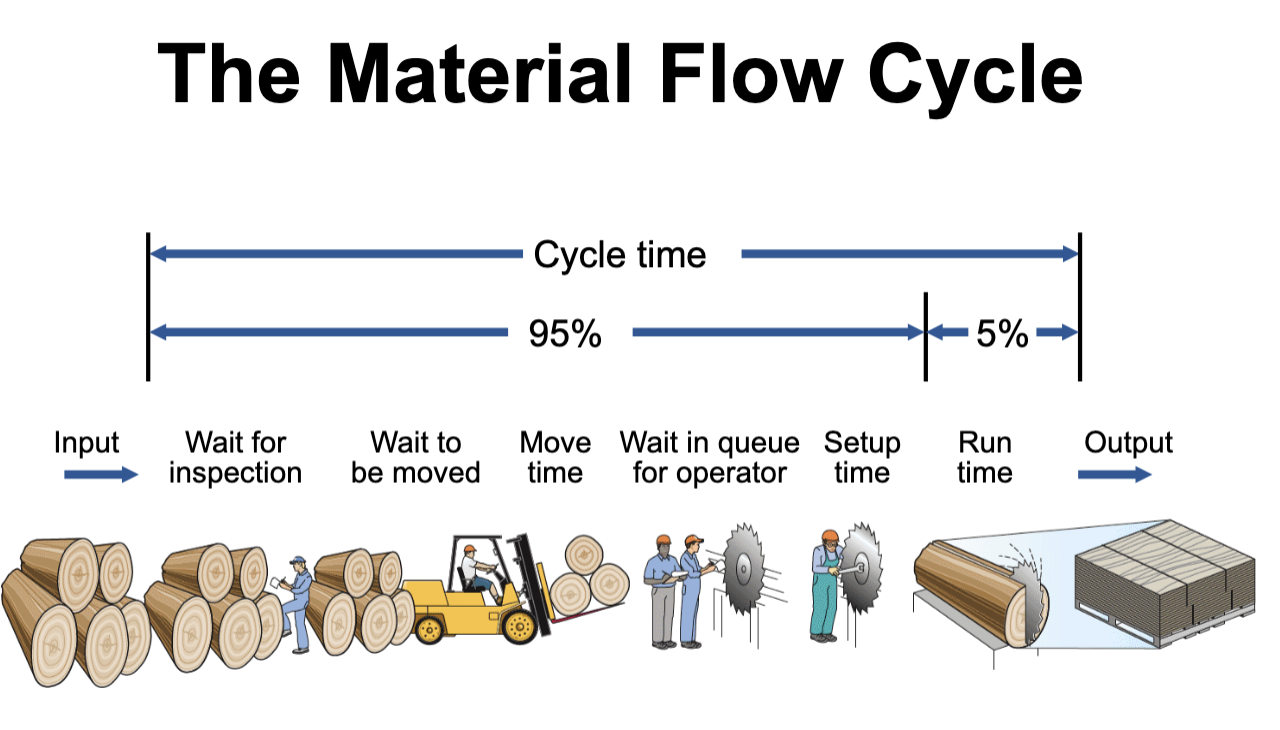
Products or components that are no longer raw materials but have yet to become finished products; a function of cycle time for a product
MRO inventory
Maintenance, repair, and operating materials necessary to keep machinery and processes productive
Finished-goods inventory
An end item ready to be sold but still an asset on the company’s books
Managing inventory
How inventory items can be classified
How accurate inventory records can be maintained
ABC analysis
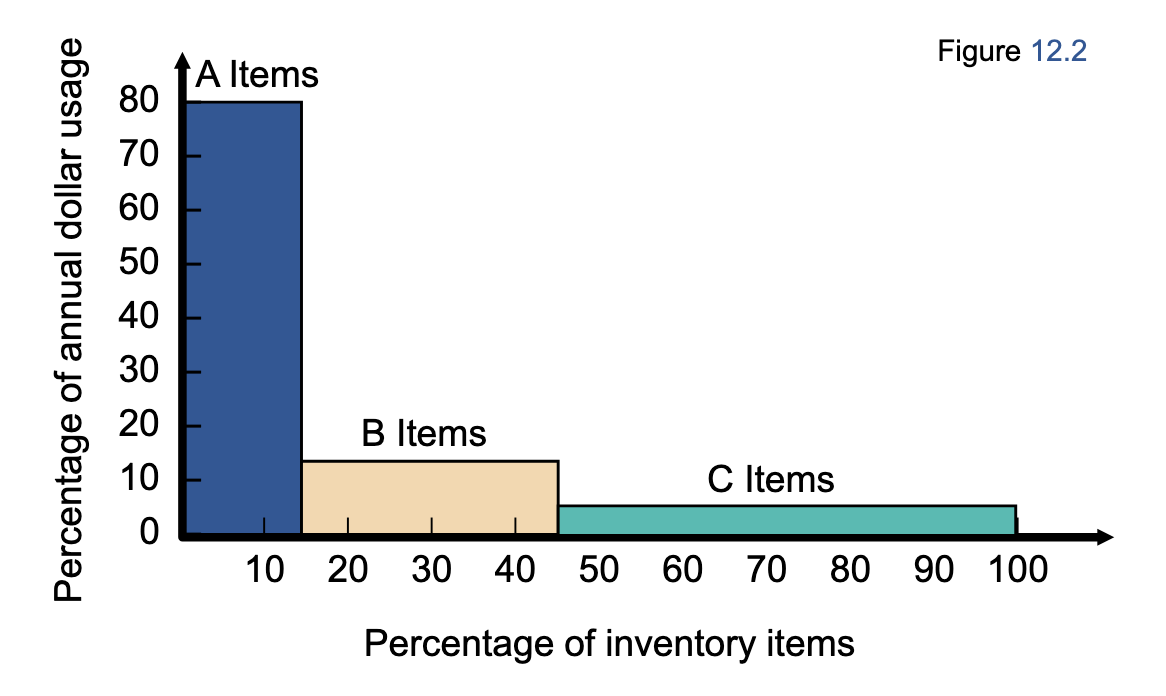
A method for dividing on-hand inventory into three classifications based on annual dollar volume
Class A - high annual dollar volume
Class B - medium annual dollar volume
Class C - low annual dollar volume
Record accuracy
Accurate records are a critical ingredient in production and inventory systems
Period systems require regular checks of inventory (i.e. two-bin system)
Perpetual inventory tracks receipts and subtractions on a continuing basis (may be semi-automated)
Cycle counting
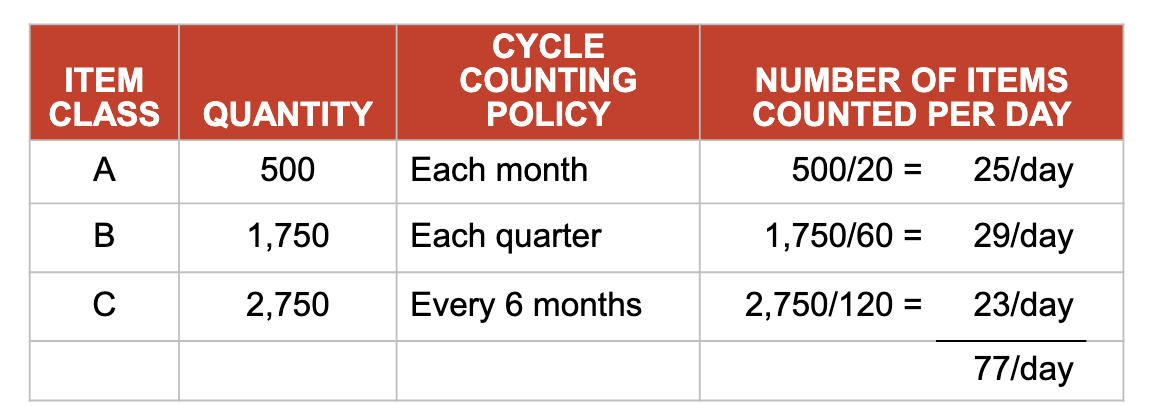
A continuing reconciliation of inventory with inventory records that is often used with ABC analysis
Advantages:
Eliminates shutdowns and interruptions
Eliminates annual inventory adjustment
Trained personnel audit inventory accuracy
Allows causes of errors to be identified and corrected
Maintains accurate inventory records
Control of service inventories
Can be a critical component of profitability
Losses may come from shrinkage or pilferage
Applicable techniques include:
Good personnel selection, training, and discipline
Tight control of incoming shipments
Effective control of all goods leaving facility
Shrinkage
Retail inventory that is unaccounted for between receipt and sale
Pilferage
A small amount of theft
Economic order quantity (EOQ) model
Tells how much to order
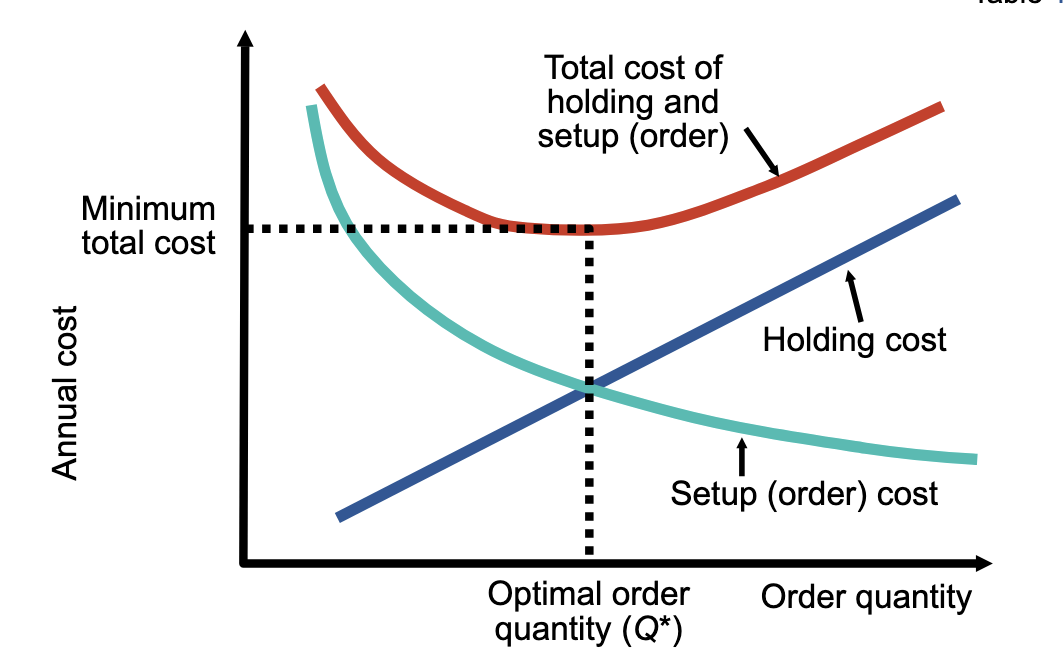
An inventory-control technique that minimizes the total of ordering and holding costs
Assumes that:
Demand is known, constant, and independent
Lead time is known and constant
Receipt of inventory is instantaneous and complete
Quantity discounts are not possible
Only variable costs are setup (or ordering) and holding
Stockouts can be completely avoided
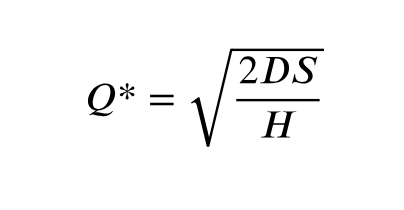
Economic order quantity (EOQ) formula
Q = Number of units per order
Q* = Optimal number of units per order (EOQ)
D = Annual demand in units for the inventory item
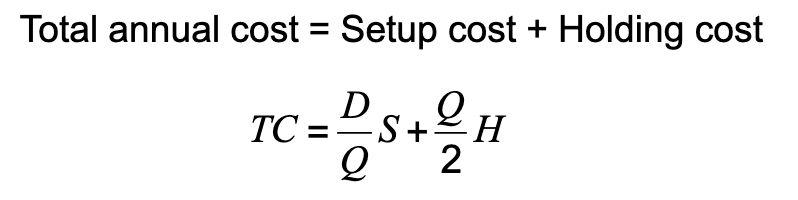
S = Setup or ordering cost for each order
H = Holding or carrying cost per unit per year
Robust
Giving satisfactory answers even with substantial variation in the parameters
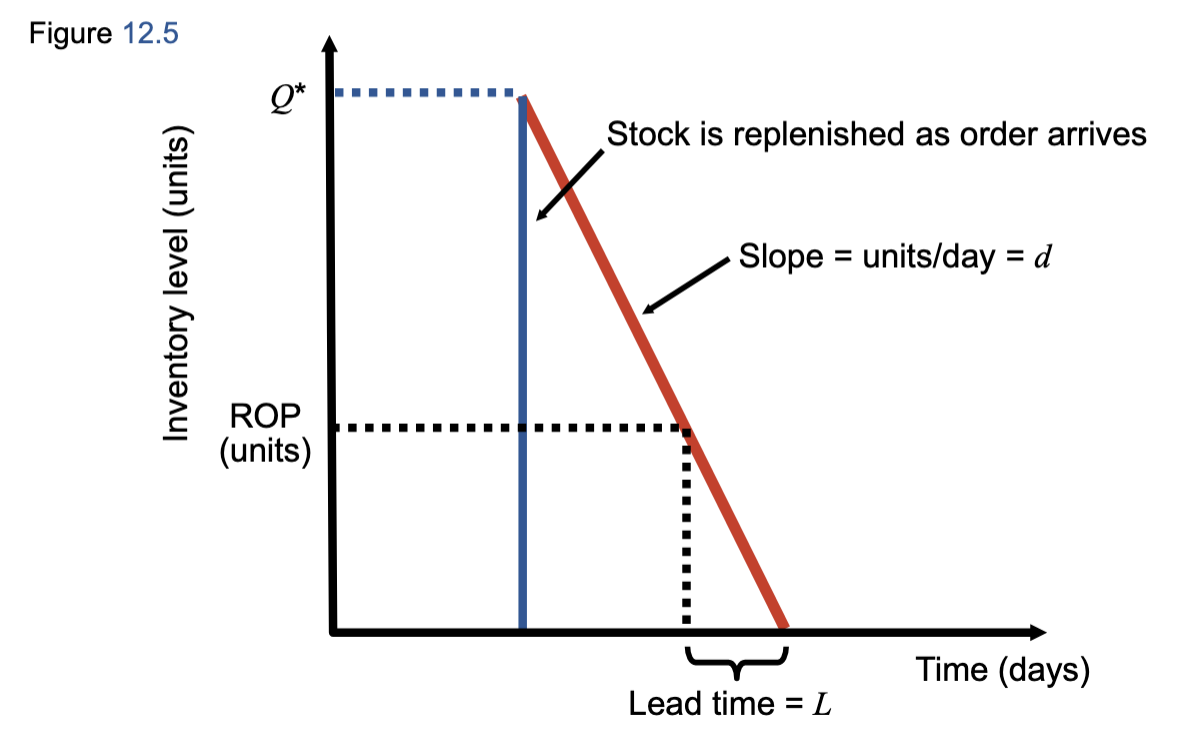
Lead time
In purchasing systems, the time between placing and receiving an order AKA delivery time
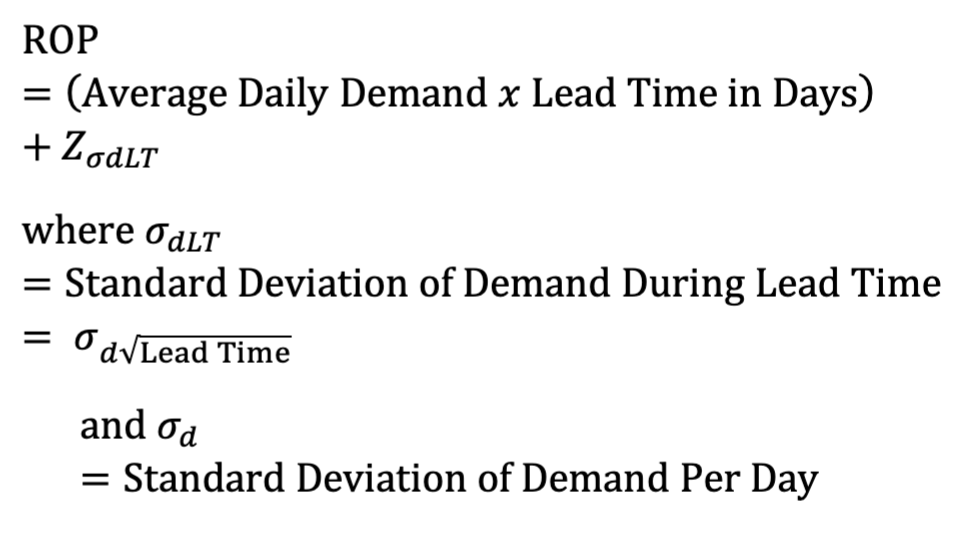
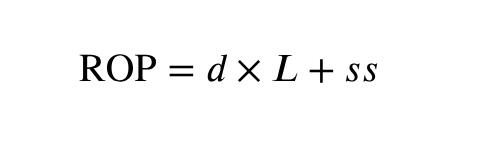
Reorder point (ROP)
Tells when to order
The inventory level (point) at which action is taken to replenish the stocked item
Reorder point (ROP) formula
Total annual cost (TC) formula
Single-period model
Only one order is placed for a product
Units have little or no value at the end of the sales period
Cs = Cost of shortage = Sales price/unit - Cost/unit
Co = Cost of overage = Cost/unit - Salvage value
Service level = Cs / (Cs + Co)
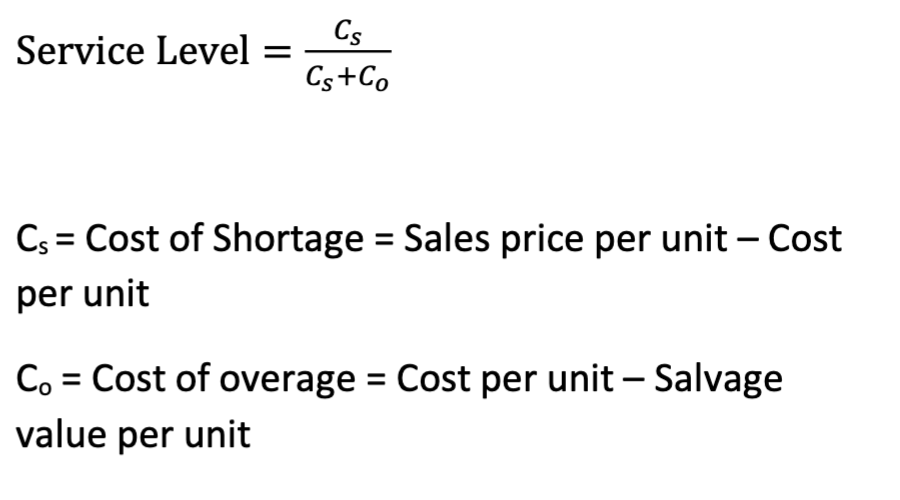
Service level
The complement of the probability of a stockout
Example: probability of a stockout is 0.05 (5%), then the service level is .95 (95%)
Probabilistic model
A statistical model applicable when product demand or any other variable is not known but can be specified by means of a probability distribution
Most inventory models attempt to minimize ____.
total inventory costs