[ORGANIC CHEMISTRY] Introduction
 Call Kai
 Learn
Learn Practice Test
 Spaced Repetition
 Match
Match Flashcards
 Knowt Play
1/21

There's no tags or description
Looks like no tags are added yet.
Name | Mastery | Learn | Test | Matching | Spaced | Call with Kai |
|---|
No analytics yet
Send a link to your students to track their progress
22 Terms
c. CO₂ and CO₃²⁻ are under organic chemistry.
CO₂ and CO₃²⁻ are INORGANIC compounds even though its C containing.
True except:
a. Organic chemistry is the study of compounds most containing carbon.
b. Not all carbon containing compounds are organic.
c. CO₂ and CO₃²⁻ are under organic chemistry.
d. Family and class or organic compounds ha similar structure and reactivity.
e. None
a. 1s2 2s2 2p2
Atomic number of C is 6.
Electron configuration of C.
a. 1s2 2s2 2p2
b. 1s2 2s2 2p3
c. 1s2 2s2 2p4
d. 1s2 2s2 2p5
b. 1s2 2s2 2p3
Atomic number of N is 7.
Electron configuration of N.
a. 1s2 2s2 2p2
b. 1s2 2s2 2p3
c. 1s2 2s2 2p4
d. 1s2 2s2 2p5
c. 1s2 2s2 2p4
Atomic number of O is 8.
Electron configuration of O.
a. 1s2 2s2 2p2
b. 1s2 2s2 2p3
c. 1s2 2s2 2p4
d. 1s2 2s2 2p5
d. 1s2 2s2 2p5
Atomic number of F is 9.
Electron configuration of F.
a. 1s2 2s2 2p2
b. 1s2 2s2 2p3
c. 1s2 2s2 2p4
d. 1s2 2s2 2p5
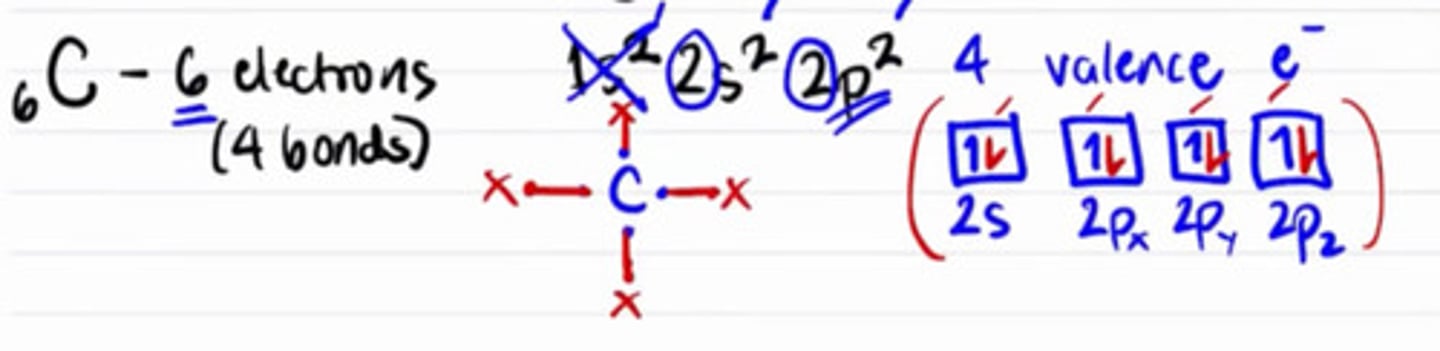
b. 4
Valence electrons of C.
a. 1
b. 4
c. 5
d. 6
e. 7
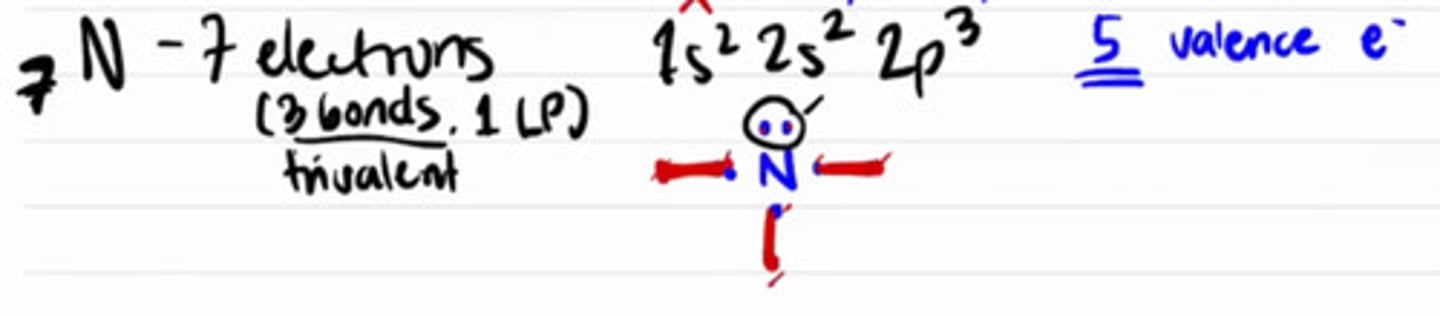
c. 5
Valence electrons of N.
a. 1
b. 4
c. 5
d. 6
e. 7
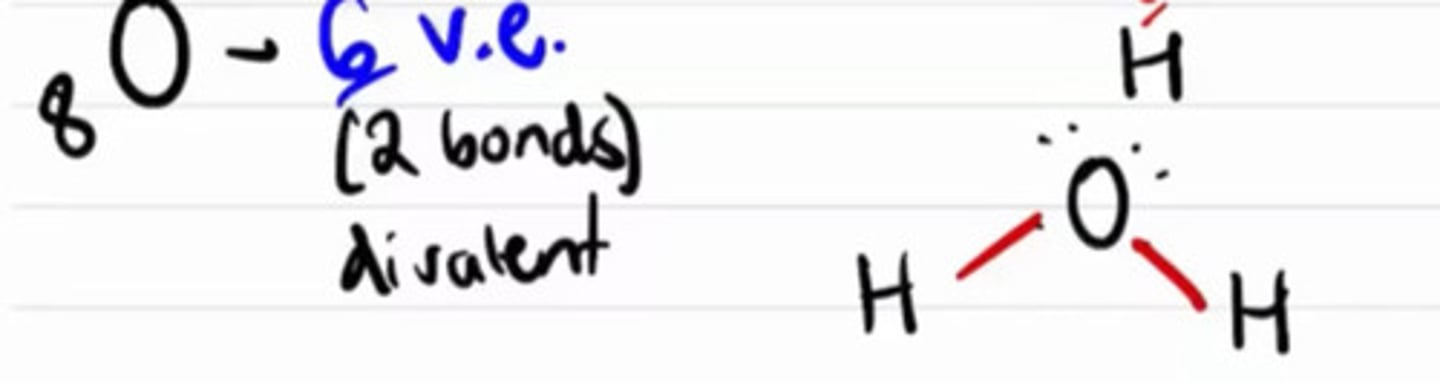
d. 6
Valence electrons of O.
a. 1
b. 4
c. 5
d. 6
e. 7
e. 7
Valence electrons of halogens.
a. 1
b. 4
c. 5
d. 6
e. 7
a. 1
Valence electrons of H.
a. 1
b. 4
c. 5
d. 6
e. 7
d. 4 - tetravalent
4 more electrons to satisfy the Octet rule which requires 8 electrons to be stable.
Number of electrons or bonds needed by C.
a. 1
b. 2
c. 3
d. 4
c. 3 - trivalent
3 more electrons to satisfy the Octet rule which requires 8 electrons to be stable. (8 - valence electrons)
Number of electrons or bonds needed by N.
a. 1
b. 2
c. 3
d. 4
b. 2 - divalent
2 more electrons to satisfy the Octet rule which requires 8 electrons to be stable. (8 - valence electrons)
Number of electrons or bonds needed by O.
a. 1
b. 2
c. 3
d. 4
a. 1 - monovalent
1 more electrons to satisfy the Octet rule which requires 8 electrons to be stable. (8 - valence electrons)
Number of electrons or bonds needed by halogens.
a. 1
b. 2
c. 3
d. 4
a. 1
Although (8 - valence electrons of H) will be 7, H only have 1 electron or bond needed. It is excused from the Octet rule since 1st energy level only need 2 electrons.
Number of electrons or bonds needed by H.
a. 1
b. 2
c. 3
d. 4
a. 0
Number of lone pairs of H in stable compound.
a. 0
b. 2
c. 3
d. 4
e. 6
f. 1
a. 0
Valence electrons of carbon is 4.
Carbon needs 4 electrons for bonding.
There will be no remaining valence electrons thus 0 lone pair.
Number of lone pairs of C in stable compound.
a. 0
b. 2
c. 3
d. 4
e. 6
f. 1
f. 1
Valence electrons of nitrogen is 5.
Nitrogen needs 3 electrons for bonding.
The other 2 valence electrons will be 1 lone pair.
Number of lone pairs of N in stable compound.
a. 0
b. 2
c. 3
d. 4
e. 6
f. 1
b. 2
Valence electrons of oxygen is 6.
Oxygen needs 2 electrons for bonding.
The other 4 valence electrons will be 2 lone pairs.
Number of lone pairs of O in stable compound.
a. 0
b. 2
c. 3
d. 4
e. 6
f. 1
c. 3
Valence electrons of halogens is 7.
Halogens need 1 electron for bonding.
The other 6 valence electrons will be 3 lone pairs.
Number of lone pairs of halogens in stable compound.
a. 0
b. 2
c. 3
d. 4
e. 6
f. 1
a. H
Which of the following only requires 1 bond to be stable?
a. H
b. F
c. O
d. N
e. None
• Catenation is the ability to form chain.
• Isomers are compounds with same molecular formula but different structure.
Property of carbon compounds except:
a. Catenation
b. Stability is based on octet rule
c. Can exists as compounds with same molecular formula but different structure
d. Hybridization
e. None