Gross Anatomy - Unit 1-1 Skin and Superficial Fascia
 Call Kai
 Learn
Learn Practice Test
 Spaced Repetition
 Match
Match Flashcards
 Knowt Play
1/64

There's no tags or description
Looks like no tags are added yet.
Name | Mastery | Learn | Test | Matching | Spaced | Call with Kai |
|---|
No analytics yet
Send a link to your students to track their progress
65 Terms
Body Wall
This includes the skin, superficial fascia, deep fascia surrounding the skeletal muscle, bone.
Body cavity
This contains organs and related structures. Primarily in the thoracic and abdominal regions
Limbs
These are outgrowths of the body wall and do not contain cavities
Superficial fascia
This is a type of subcutaneous tissue.
Composed of LOOSE CONNECTIVE TISSUE, and STORED FAT.
Includes sweat glands, superficial blood vessels, lymphatic vessels, cutaneous nerves. (sensations)
Deep Fascia
This is deep to the skin, and superficial fascia.
Composed of dense connective tissue, NOT FAT.
Extensions include INVESTING FASCIA around the neurovascular bundle, and FASCIAL COMPARTMENTS around muscles separated by intermuscular septa.
Neurovascular bundle
This includes the bundling of nerves (spinal and cranial) and Blood vessels (arteries vein)
Away from
Arteries carry blood ... the heart.
Arteries
Do arteries or veins have thicker walls?
Toward the
Veins carry blood ... the heart.
More abundant and more viariation
A unique quality of veins
Veins
Are arteries or veins more superficial?
Spinal nerves
Part of the PNS, emerge at regular intervals from the spinal cord.
Cranial Nerves
Part of the PNS, emerge from the brain
Afferent neurons
Another name for sensory neurons
Efferent neurons
Another name for motor neurons
Afferent
neurons that conduct impulses from the body to the CNS
Efferent
Neurons that conduct impulses to the body from the CNS
White matter
is gray matter or white matter myelinated?
Dendrites
These receive information from outside of the cell and deliver signals to the cell body of a neuron.
Axon
The part of a neuron that carries electrical impulses away from the cell body.
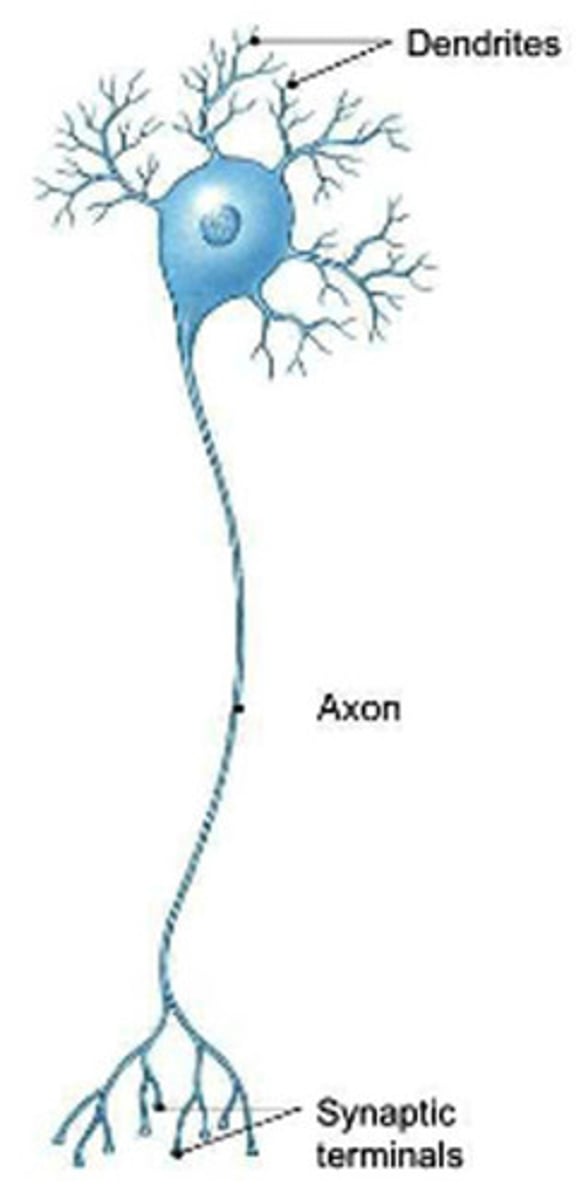
Multipolar neurons
This type of neuron has:
- One axon
- Many dendrites
- Cell body in CNS
- Axons n PNS
Mostly Motor Neurons
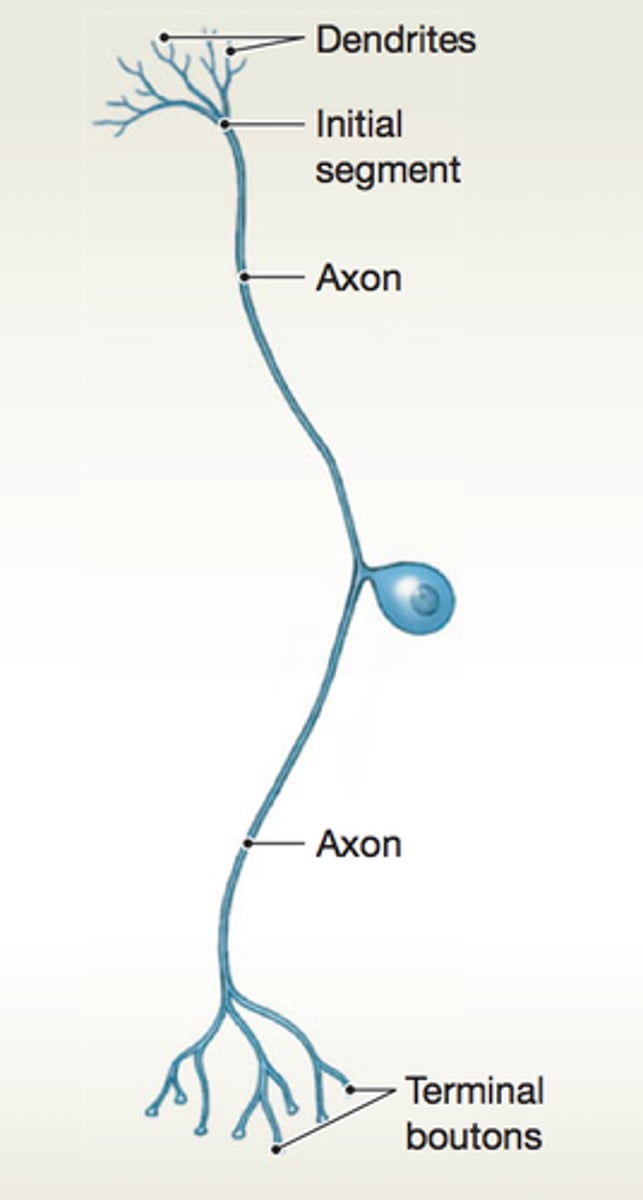
Pseudounipolar Neurons
This type of neuron has:
- Central process
- Peripheral process (conducts impulse toward cell body)
- Cell body in PNS
- Most axons in PNS, some CNS
Mostly Sensory
Somatic and Autonomic
The PNS is divided into what two categories?
Motor and Sensory (Efferent and Afferent)
The somatic nervous system is divided into what two somatic neurons?
Motor and Sensory (Efferent and Afferent)
The Autonomic/visceral nervous system is further divided into what two types?
Sympathetic and Parasympathetic
The Autonomic/visceral motor nervous system is further divided into what type categories?
Interneurons
These neurons will relay sensory information from Afferent neurons, to efferent neurons.
Ventral horn
are somatic efferent cell bodies located in the ventral or the dorsal horn of the spinal cord?
Dorsal horn
are somatic afferent cell bodies located in the ventral or dorsal horn of the spinal cord?
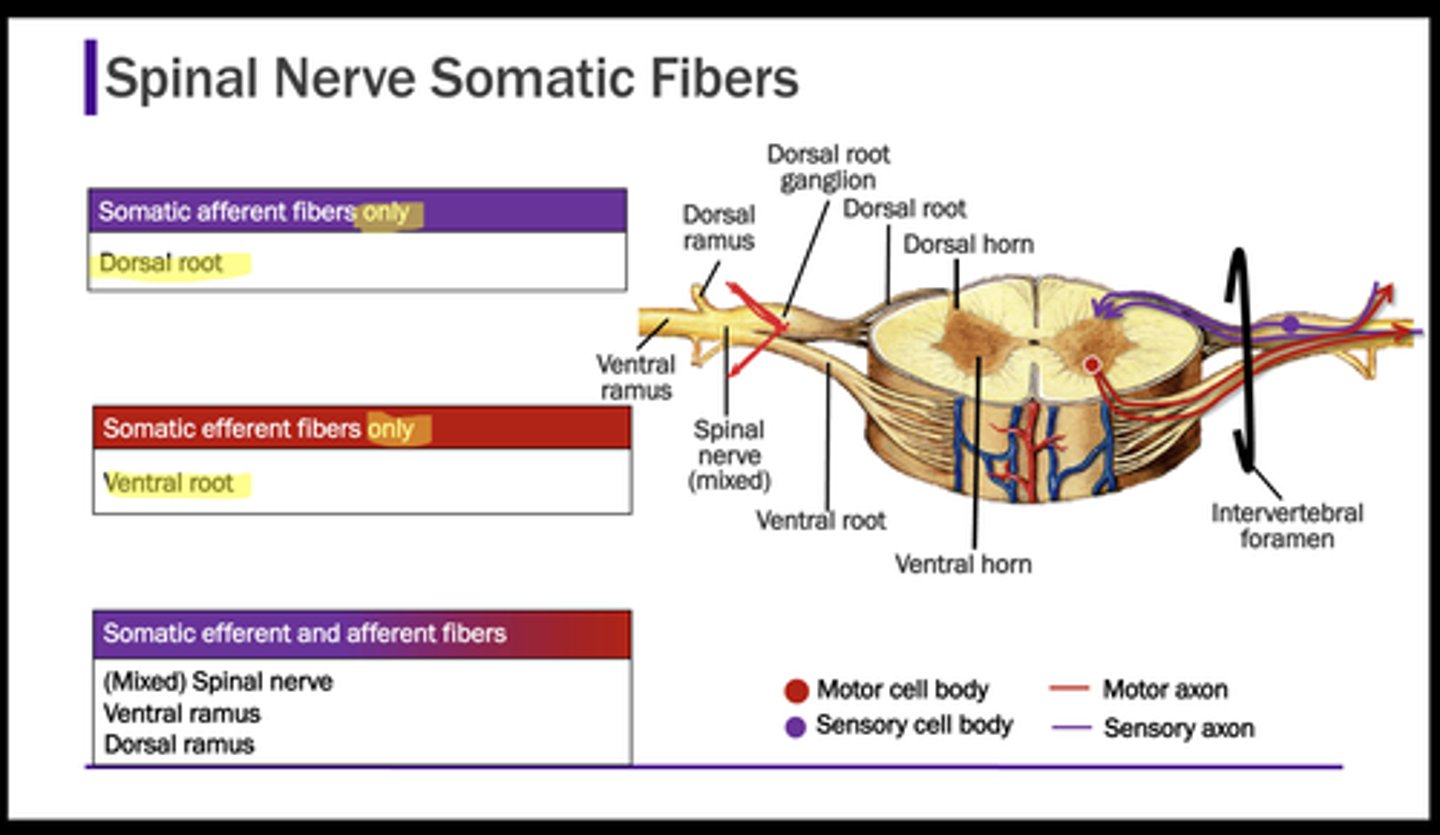
Understand the pathways of the Afferent and Efferent nerves.
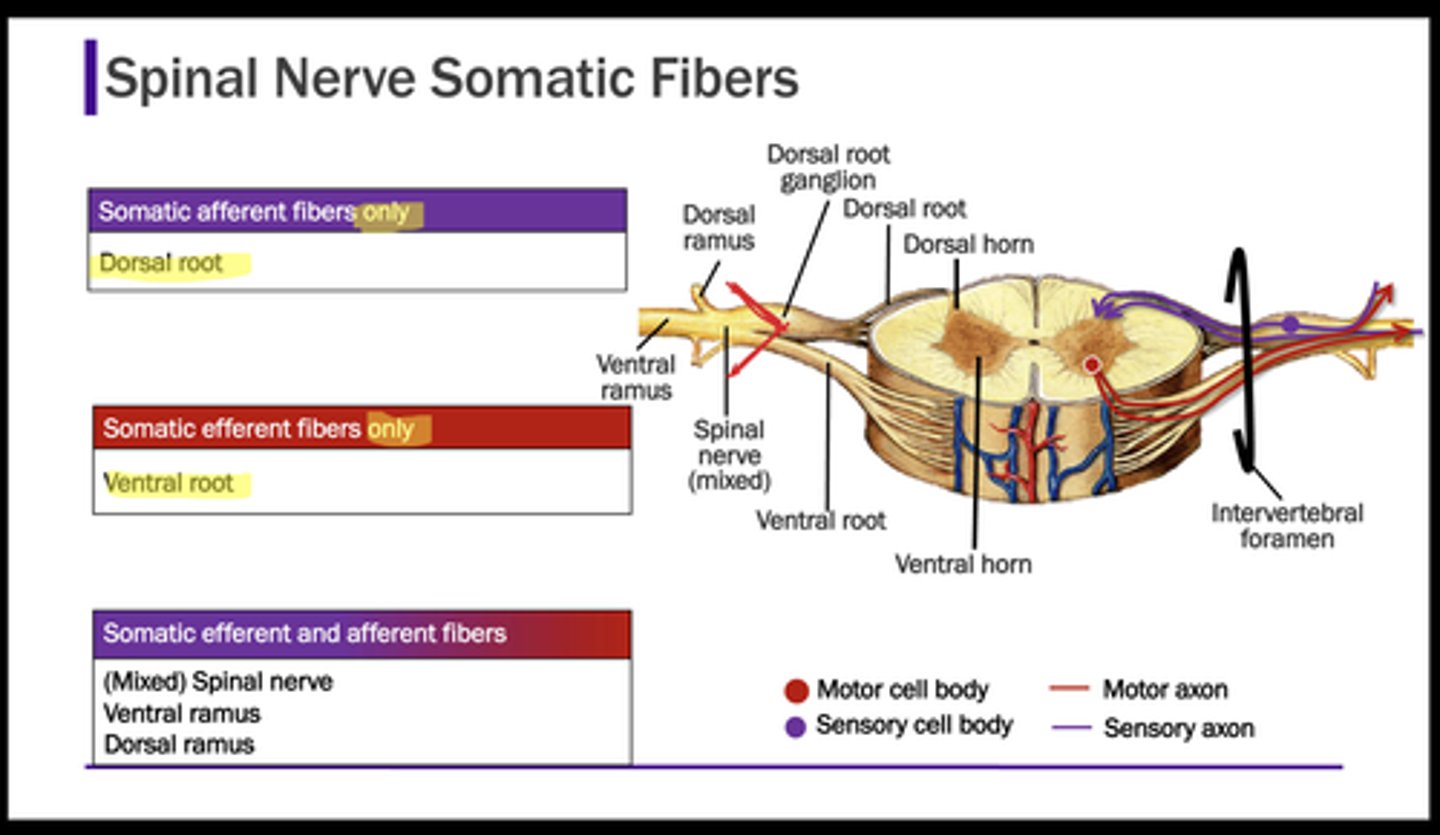
Ganglions (has to do with the fact that somatic afferent neurons are pseudounipolar)
Dorsal neural pathway has what that the ventral pathway does not have?
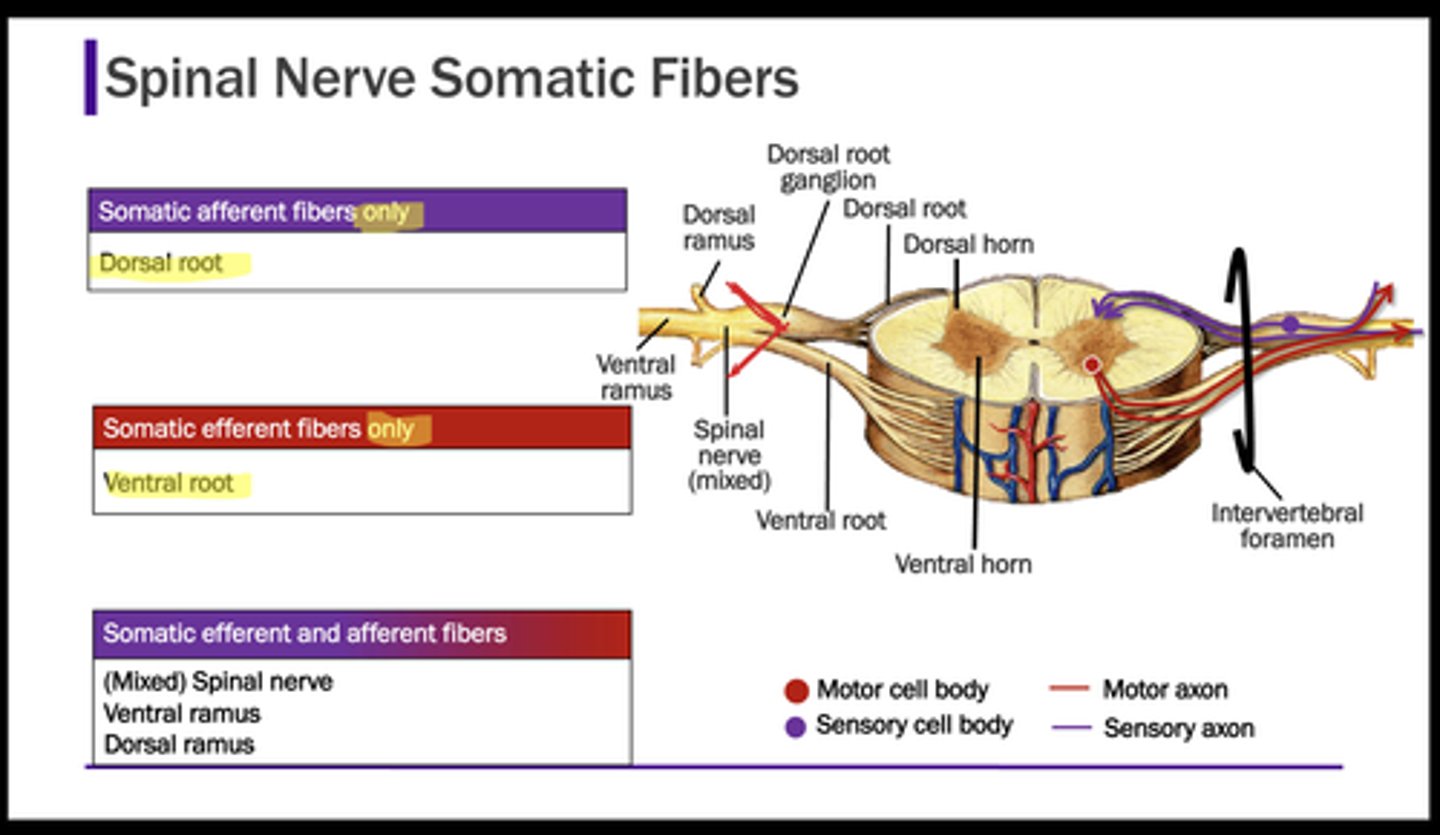
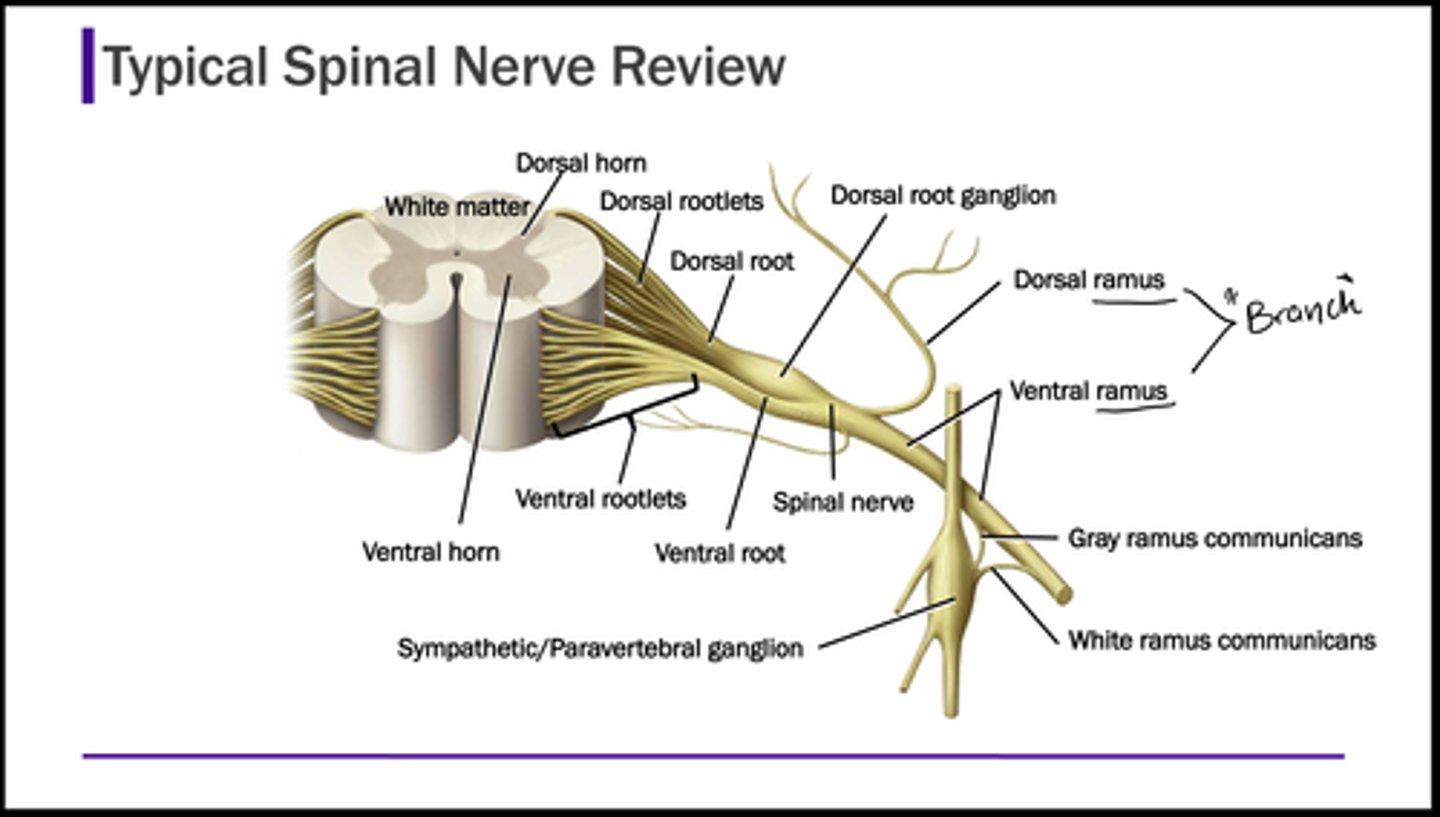
Spinal Nerves
when the efferent and afferent fibers combine, they form what?
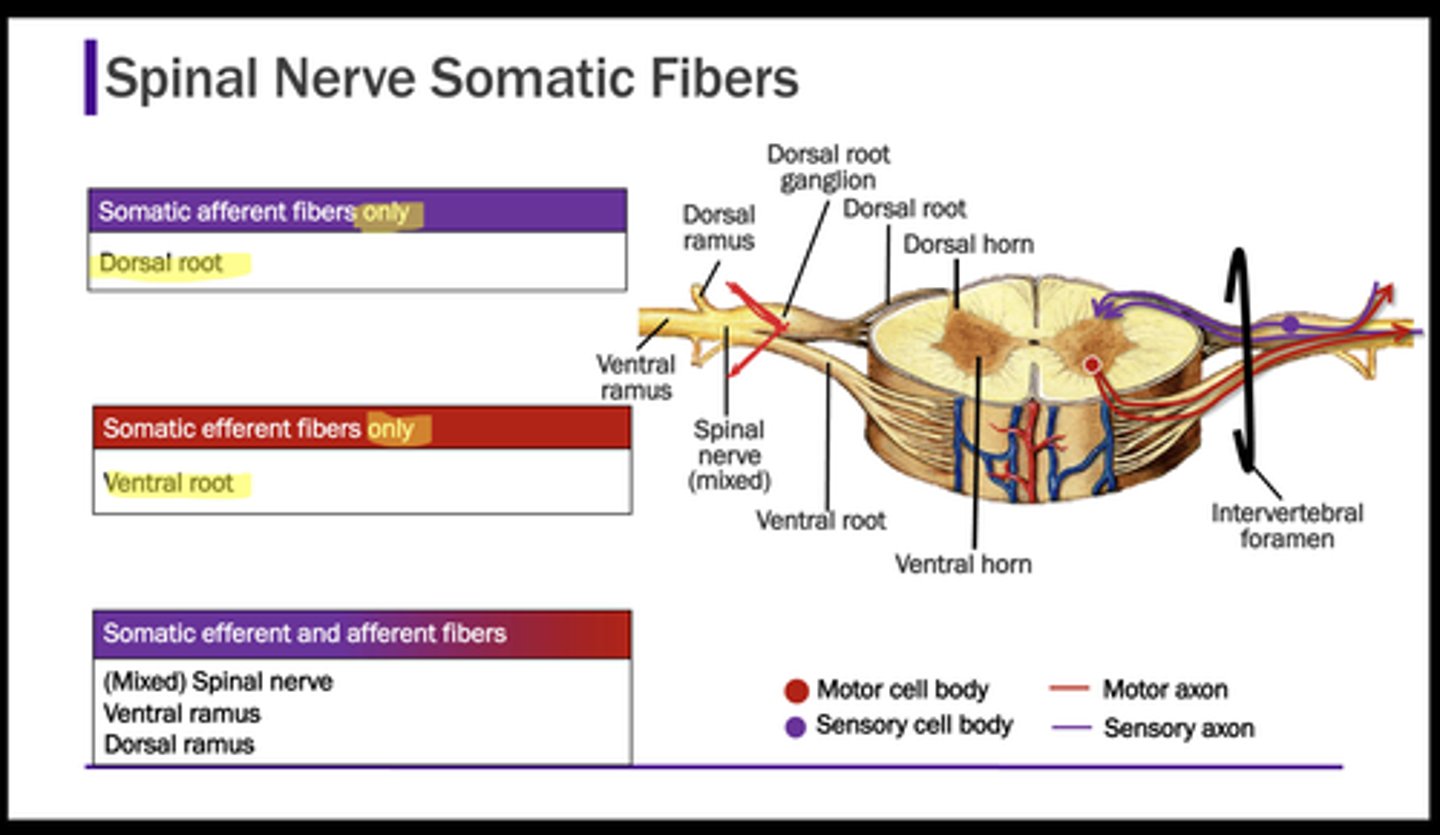
Branch (dorsal/ventral ramus are nerves that branch from the spinal cord.
Ramus mean what?
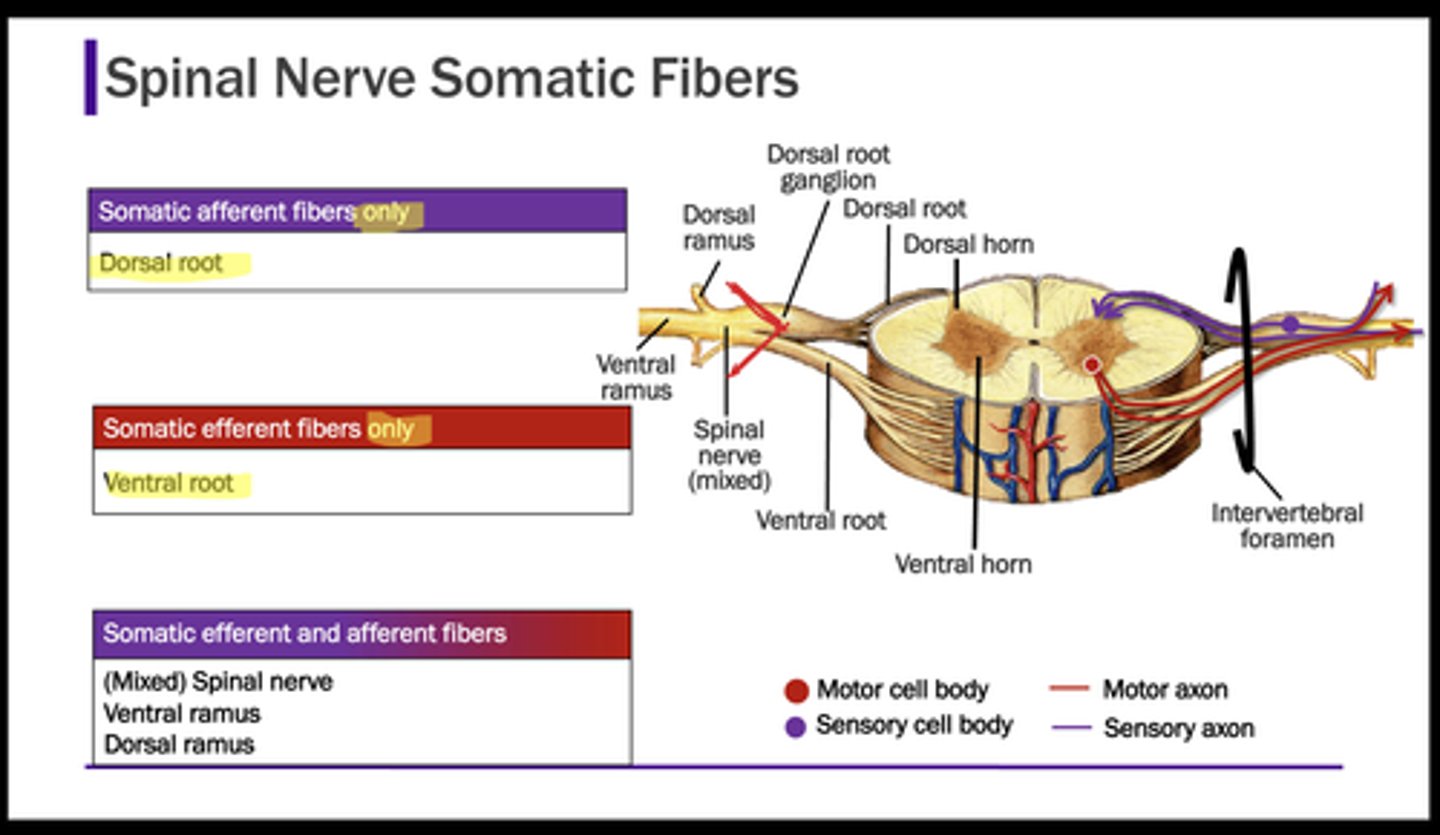
Dorsal roots/rootlets
Contain sensory (afferent) fibers from sensory neurons in dorsal root ganglia and conduct impulses from peripheral receptors.
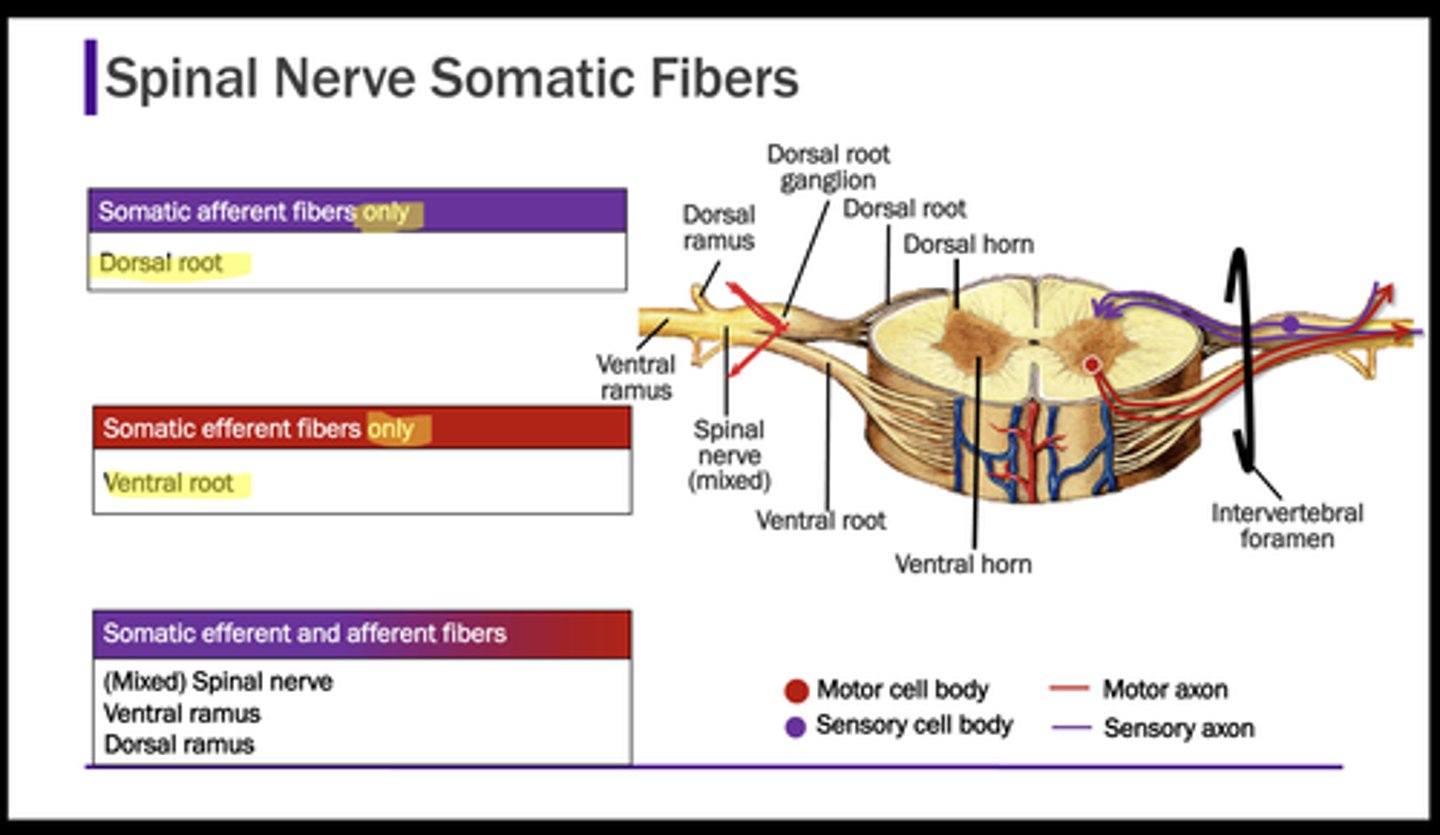
Ventral roots/rootlets
Contain Motor (efferent) fibers from ventral horn motor neurons. The fibers innervate skeletal muscles.
Back
Epaxial means what?
Front (all other trunk, most neck and all limbs)
hypaxial
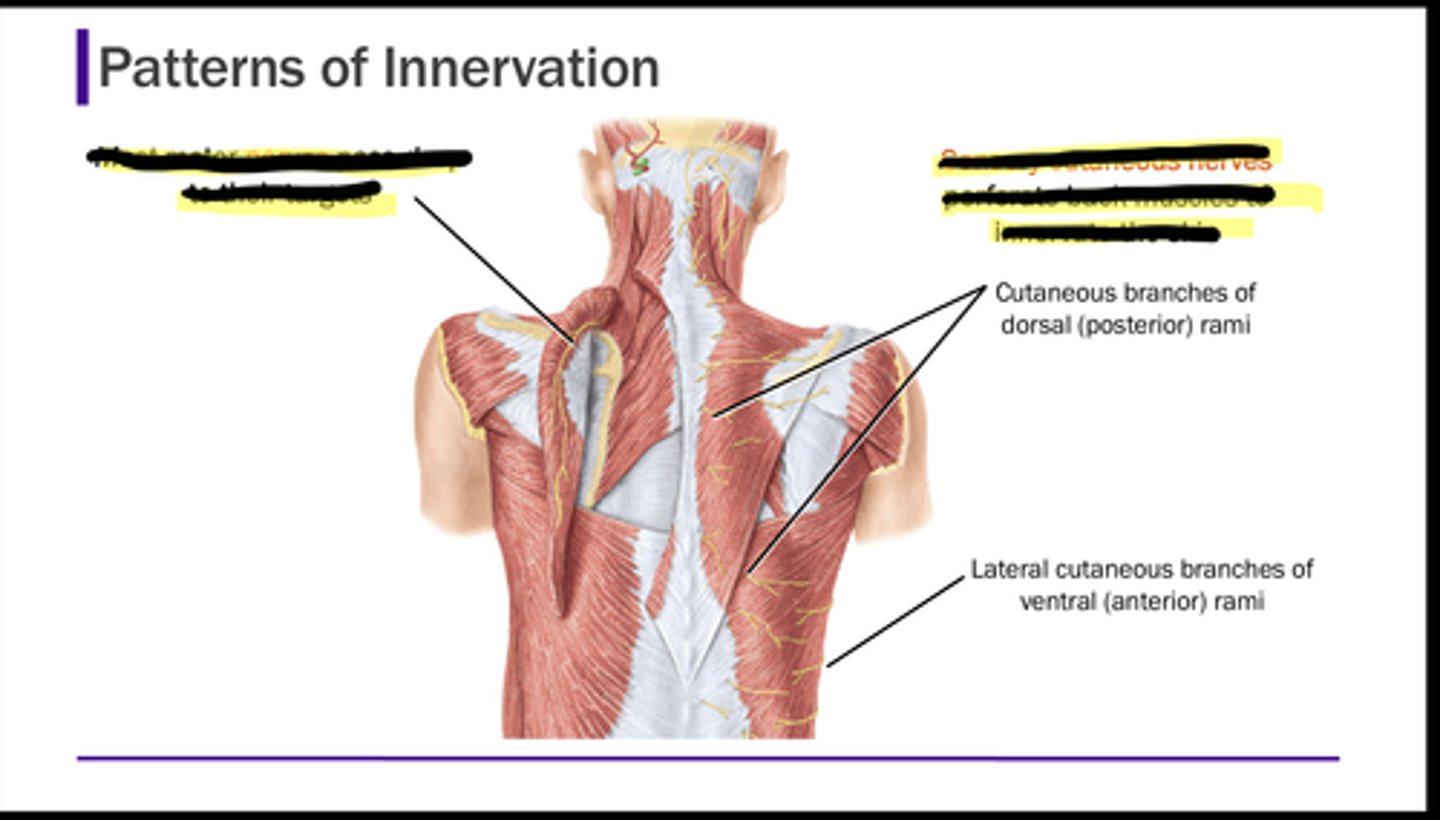
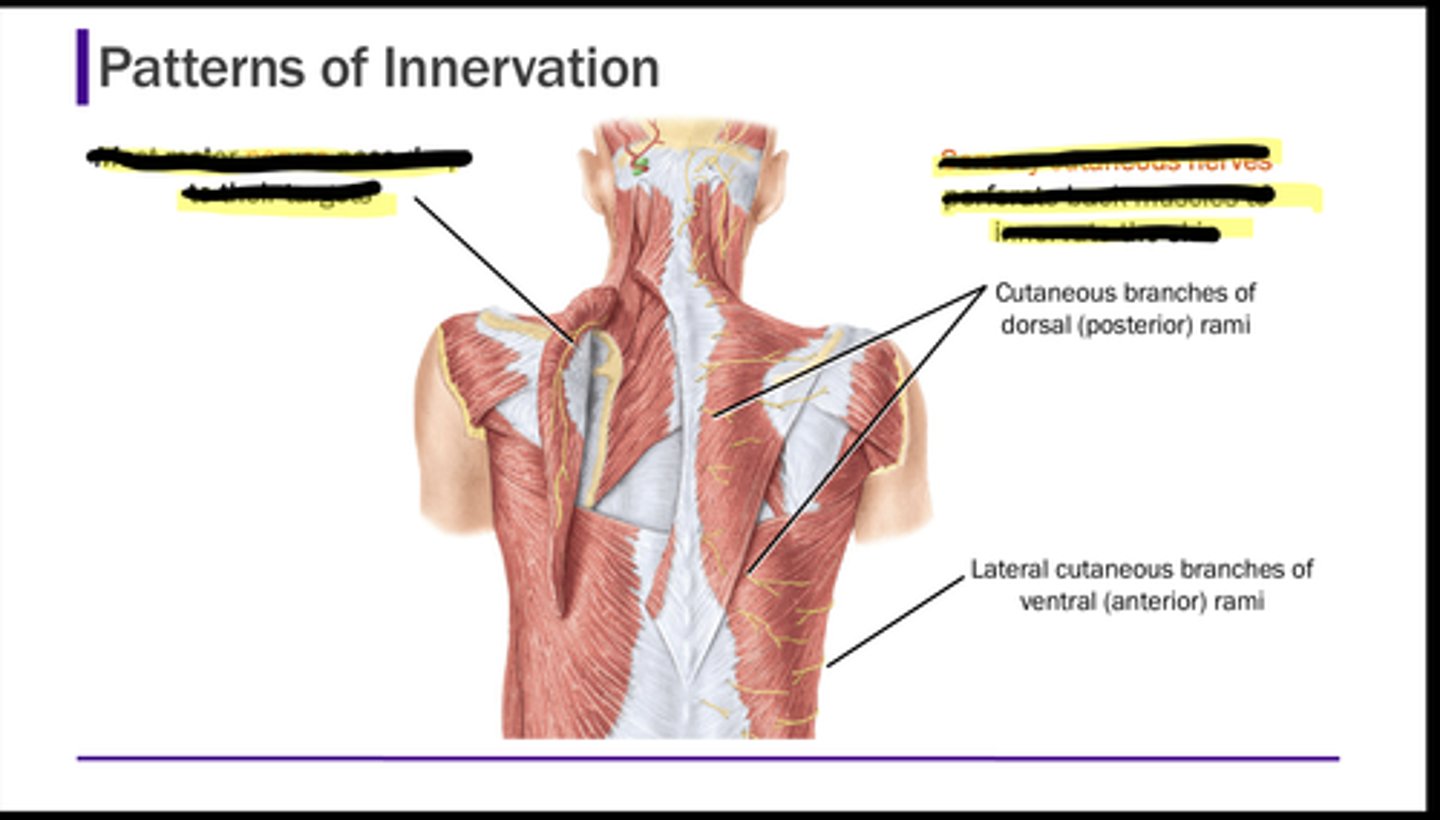
Cutaneous nerves
these are branches that innervate the skin.
Deep
Most motor nerves pass ... to their targets
perforate
Sensory cutaneous nerves ... back muscles to innervate the skin.
Scapula, arm
The back muscles (extrinsic back/hypaxial) move and stabilize the ... and move the ...
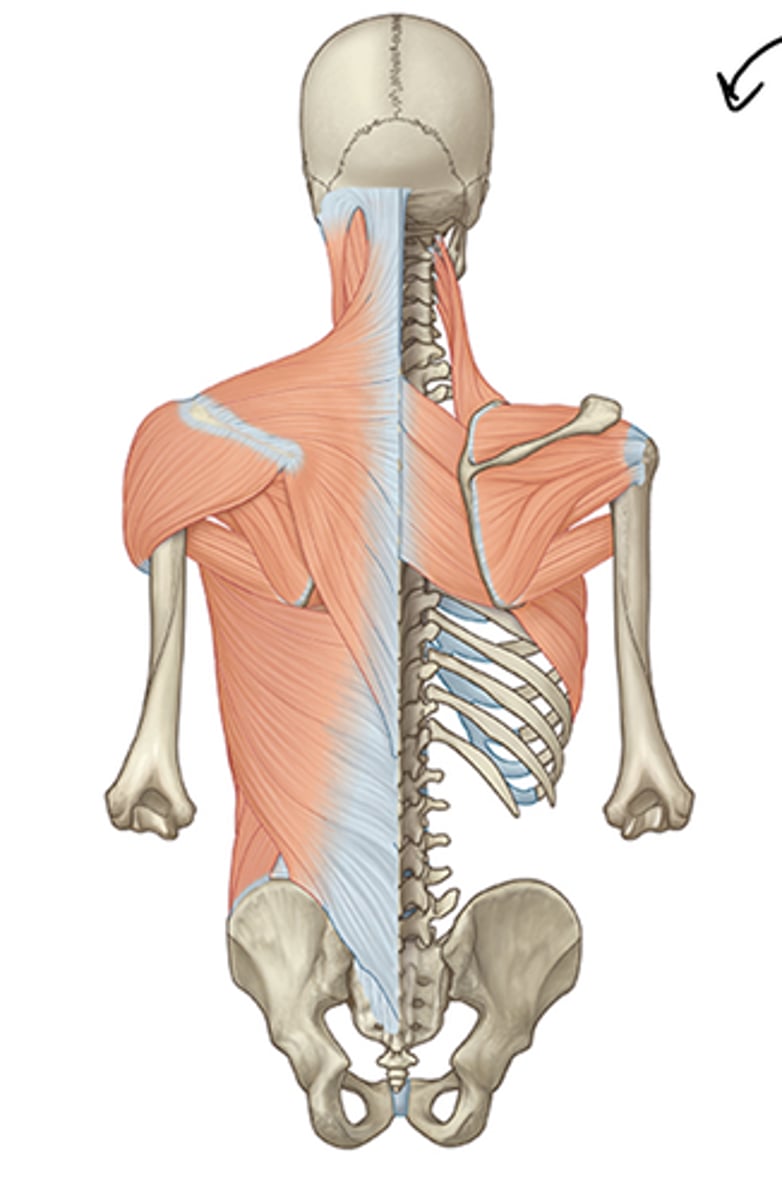
1 attachment
The extrinsic back/hypaxial muscles generally have ... ... outside of the back (not posterior)
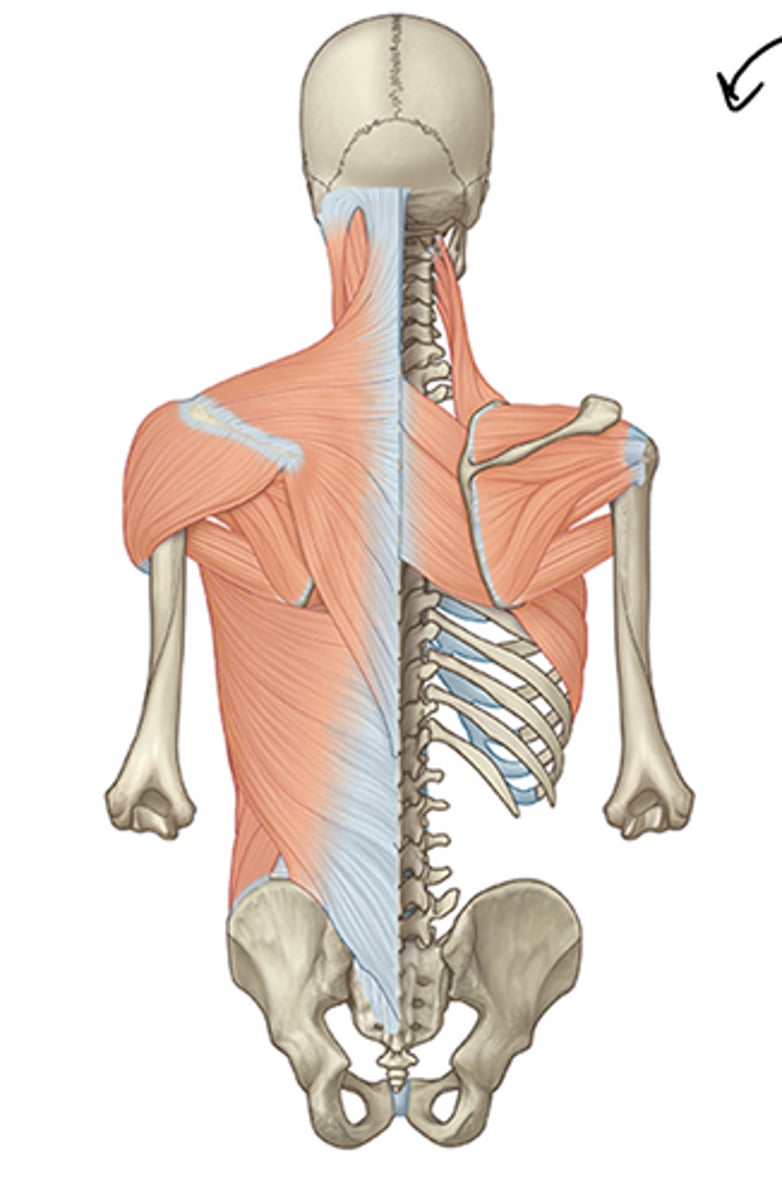
Dorsal Ramus
The intrinsic back/epaxial muscles are innervated by the ... ... of the spinal nerve.
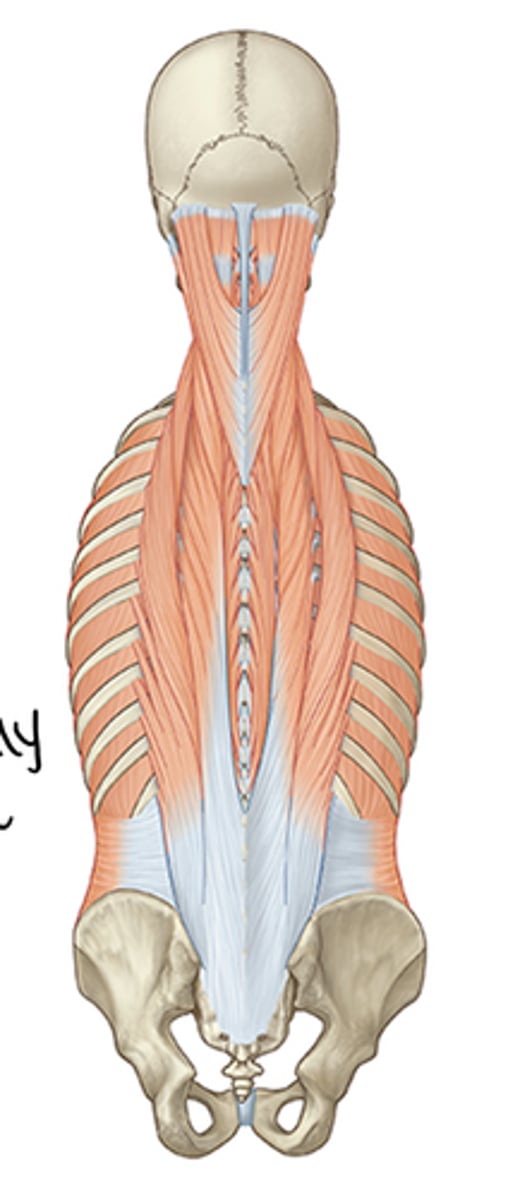
head, neck and vertebral column
The primary action of the intrinsic back/epaxial muscles are to stabilize the ..., ... ... ... ...
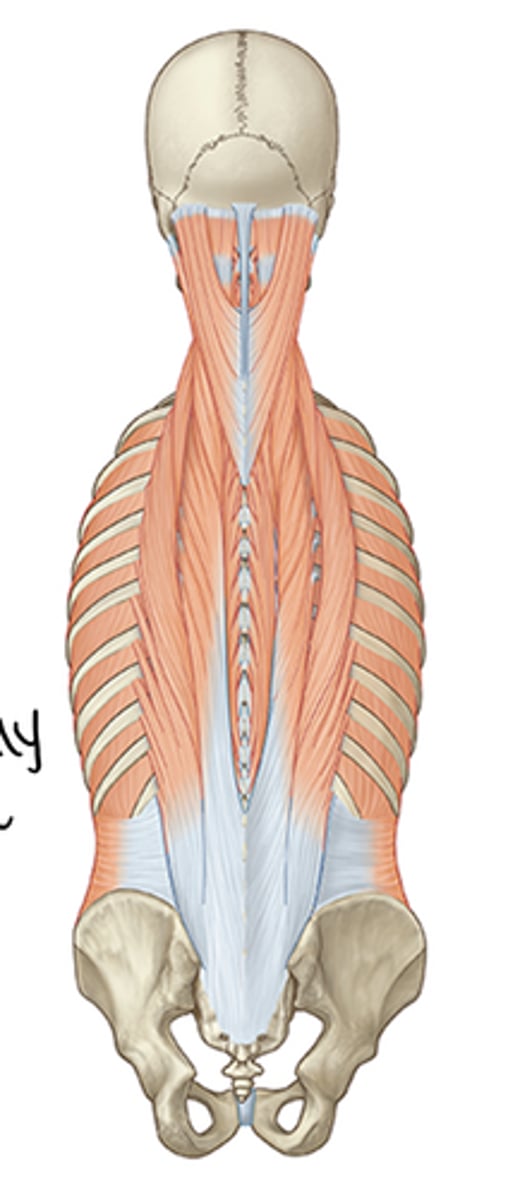
Be able to label this entire image.
SAME DAVE
Sensory - Afferent - Motor - Efferent
Dorsal - Afferent - Ventral - Efferent
Gray matter
Is the dorsal and ventral horn in the white or gray matter?
Dorsal Root
The convergence of many dorsal rootlets; contains sensory (afferent) fibers that divide into central processes that enter the spinal cord and peripher processes to spinal nerves; from the dorsal hron of the spinal cord to spinal nerve.
Ventral Root
Convergence of many ventral rootlets at each body segment; consists of motor (efferent) fibers from ventral horn to spinal nerve; located ventral to the denticulate ligament.
Dorsal Root Ganglion
Contains sensory cell bodies, each cell body sends out an axon that divides into a central process to the spinal cord and a peripheral process to the spinal nerve.
Intervertebral foramen
Spinal nerve exits through a ... ...
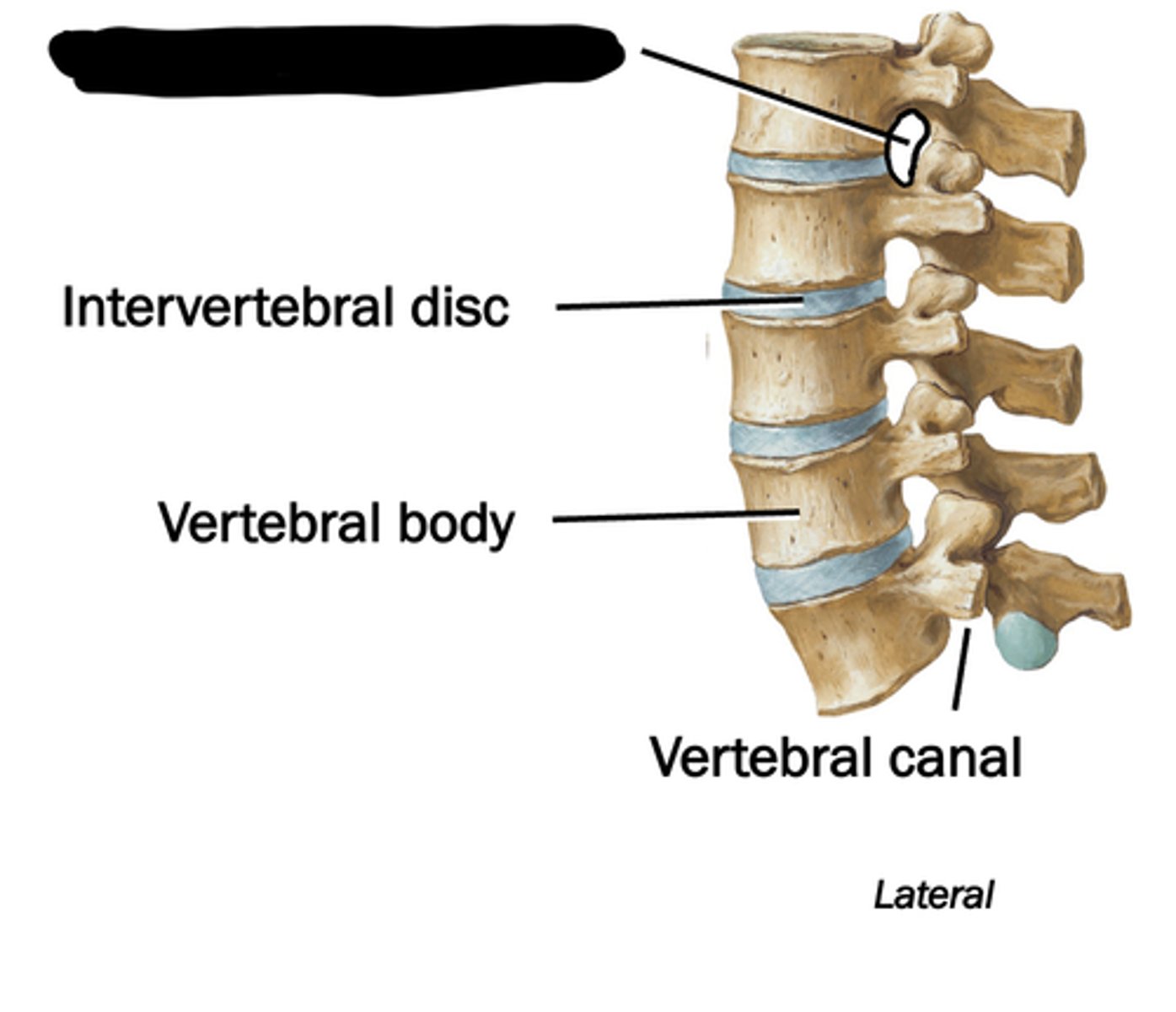
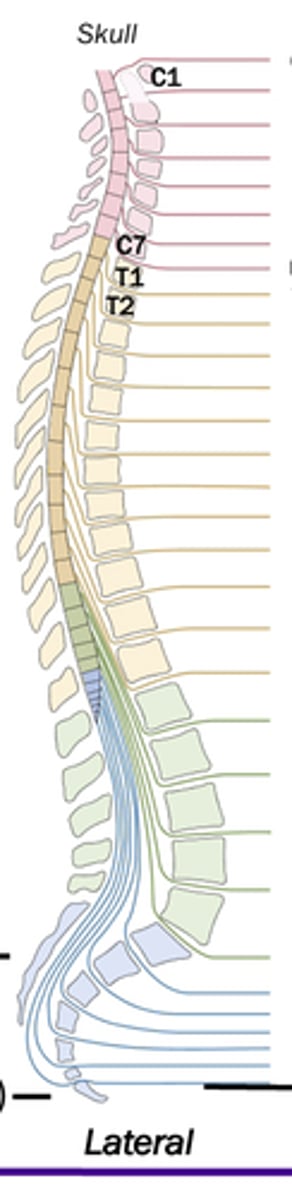
8
How many cervical nerves are there?
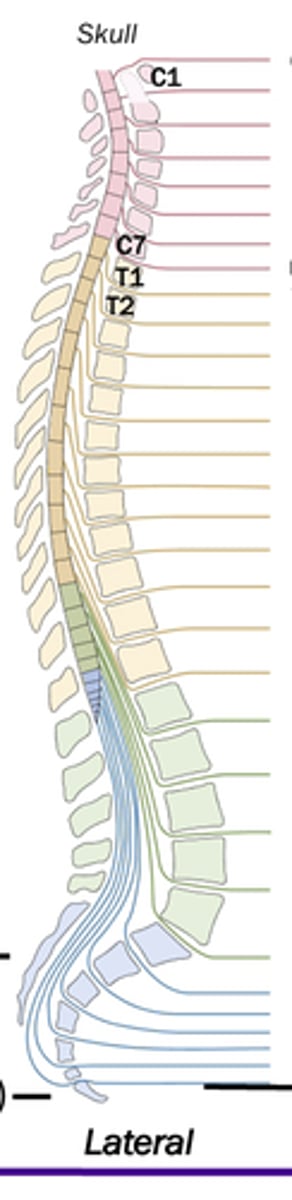
7
How many cervical vertebrae are there?
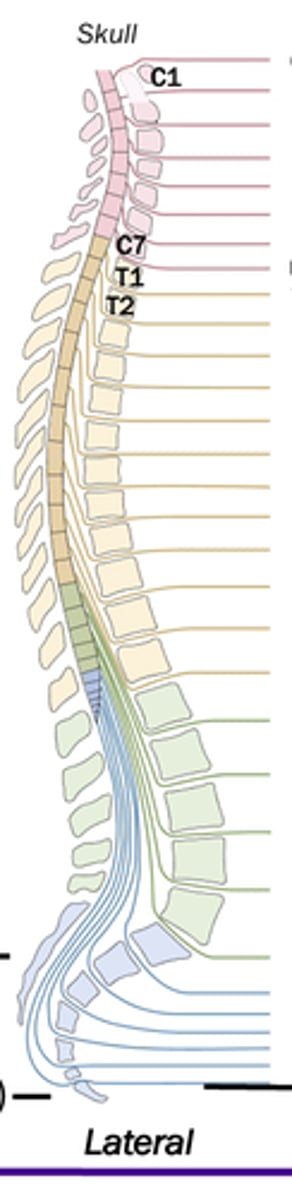
above the T1 vertebrae
Where is the 8th cervical spinal nerve located?
12
How many thoracic vertebrae are there?
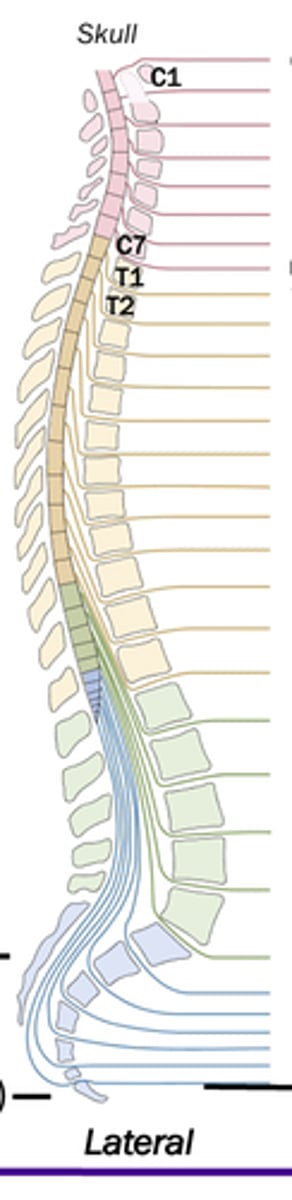
12
How many thoracic nerves are there?
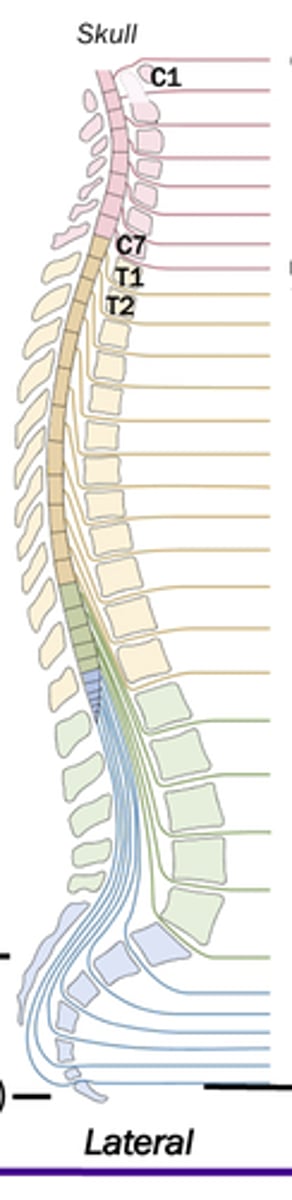
5
How many lumbar vertebrae are there?
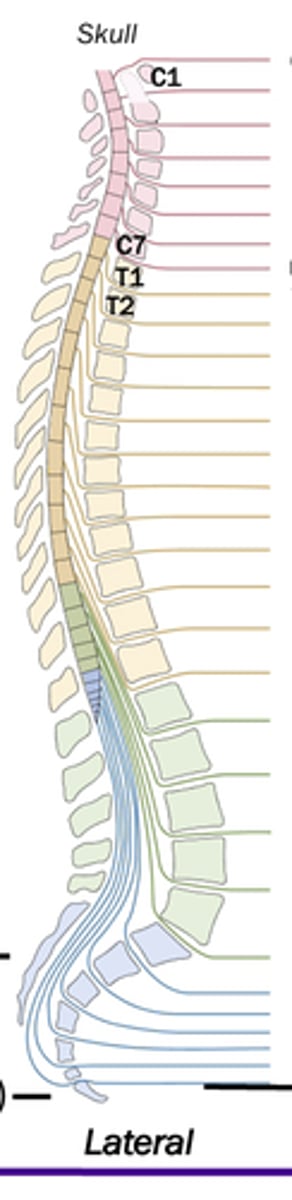
5
How many lumbar nerves are there?
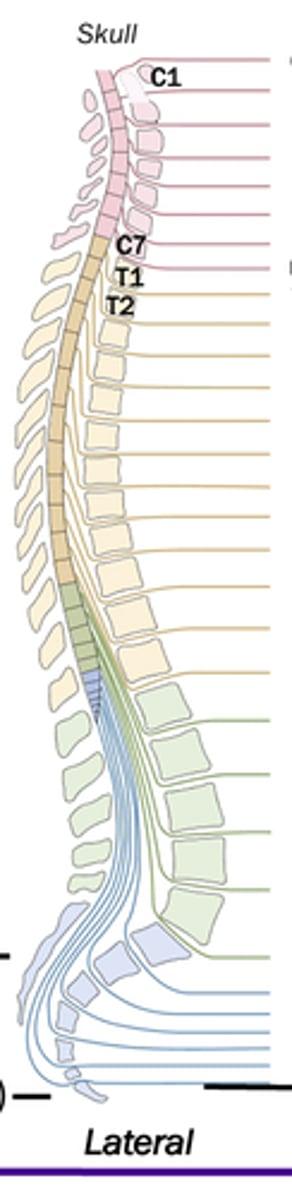
5
How many sacral vertebrae are there?
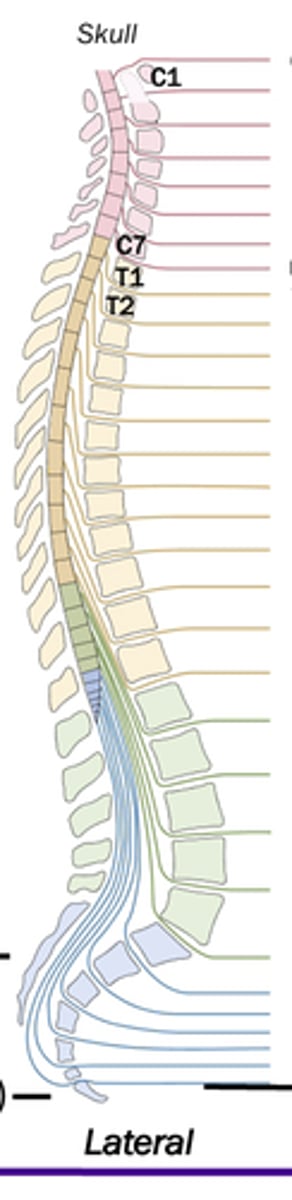
5
How many sacral nerves are there?
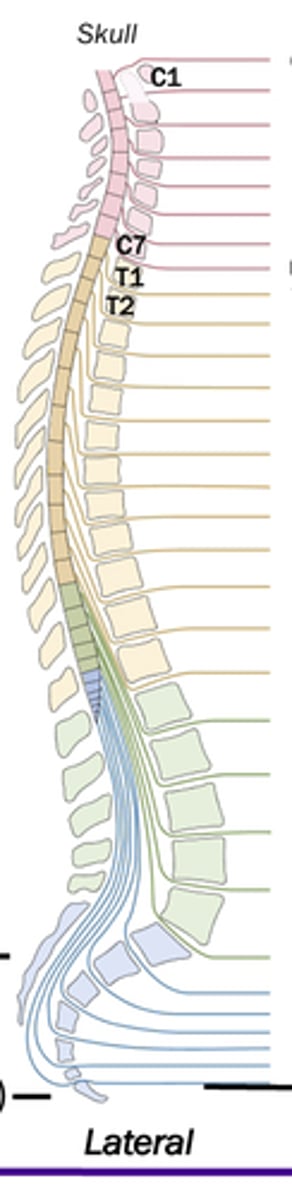
4 (fused)
How many coccygeal vertebrae are there?
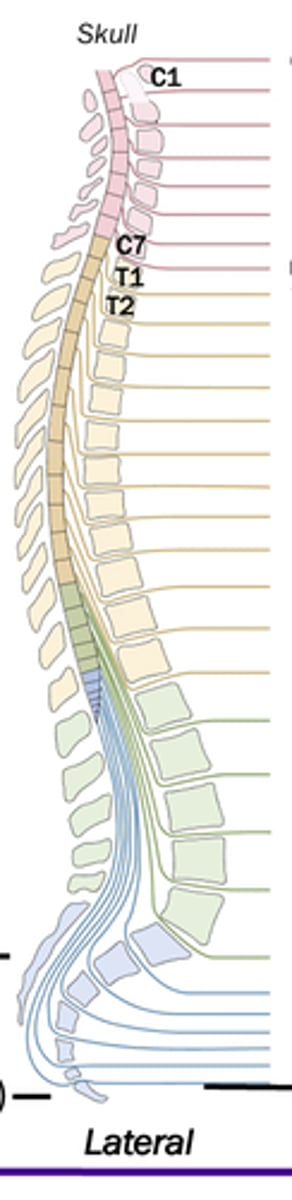
1
How many coccygeal nerves are there?
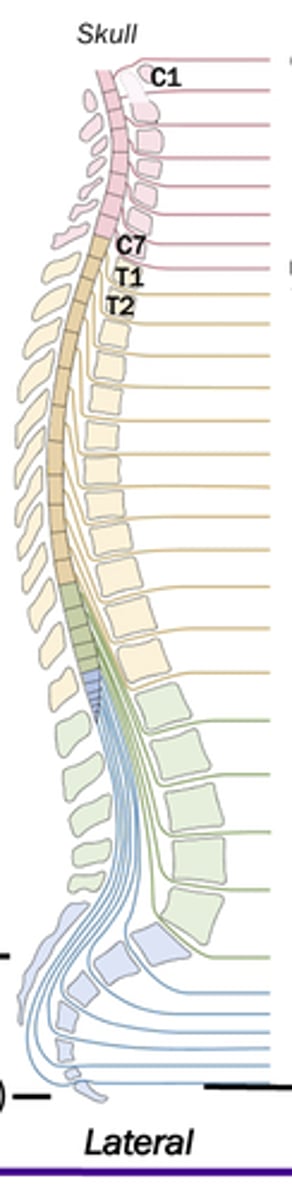
C2
The greater occipital nerve stems from the dorsal ramus of which cervical vertebrae.
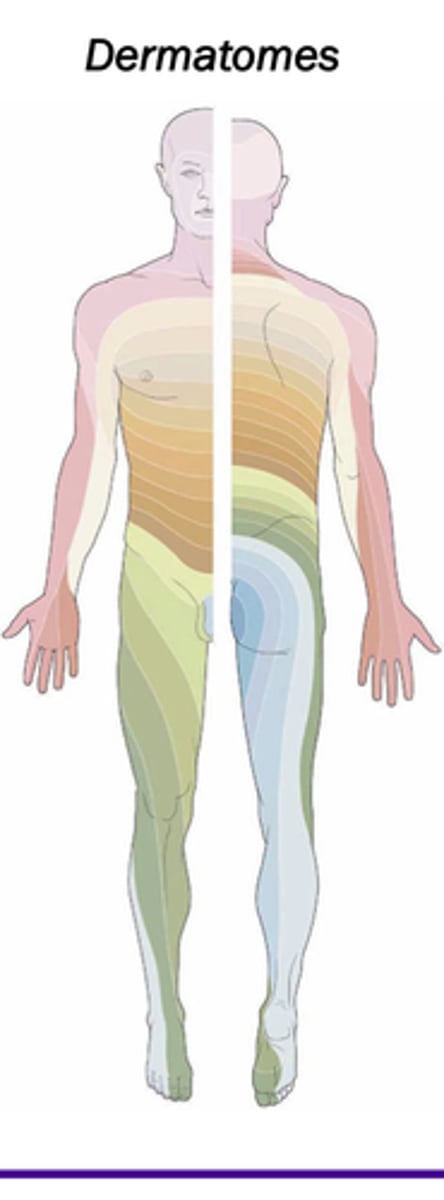
Dermatome
One strop of skin innervated by one spinal nerve
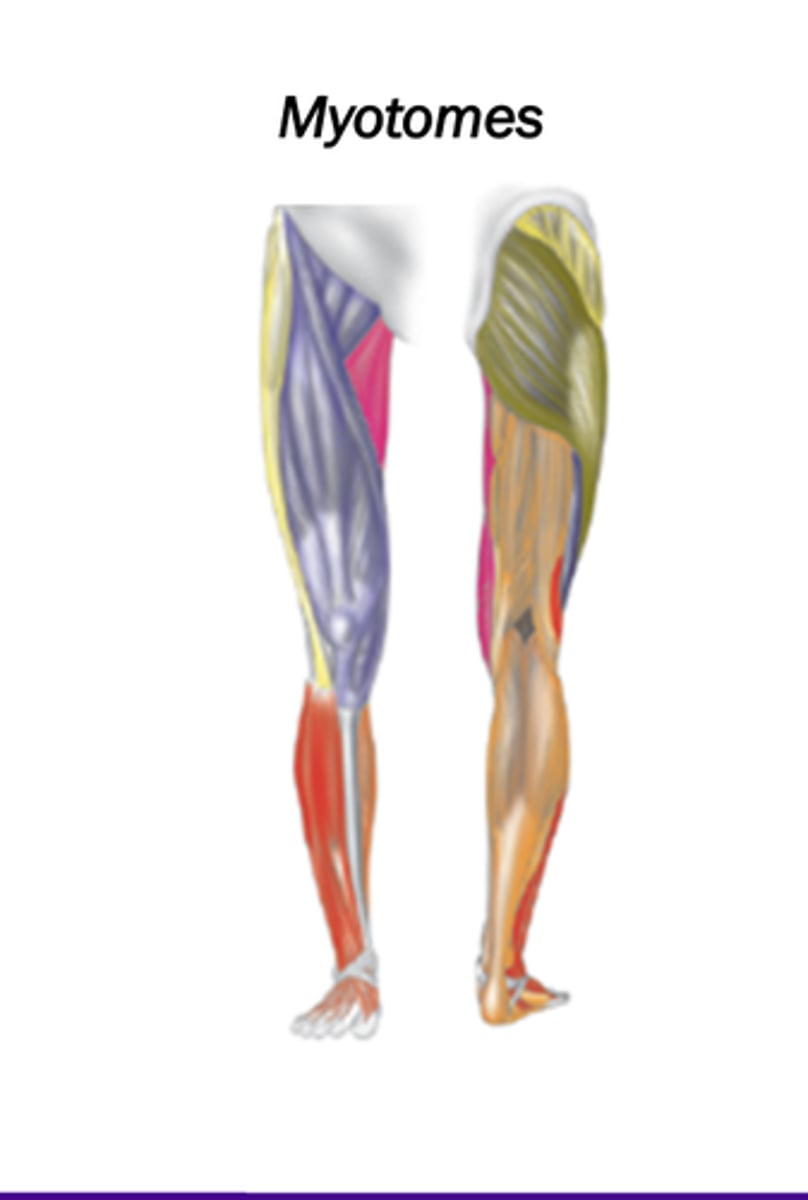
Myotome
Collection of muscle fibers innervated by one spinal nerve.