L3. Gastric Motility and Secretion
 Call Kai
 Learn
Learn Practice Test
 Spaced Repetition
 Match
Match Flashcards
 Knowt Play
1/99

There's no tags or description
Looks like no tags are added yet.
Name | Mastery | Learn | Test | Matching | Spaced | Call with Kai |
|---|
No analytics yet
Send a link to your students to track their progress
100 Terms
-storage
-mixing and emptying (called antral pump)
What are the 2 main physiological functions of the stomach?
orad region
What is the region of the stomach that is more proximal (closer to mouth) called?
caudad region
What is the region of the stomach that is more distal (closer to anus) called?
-filling
-emptying
-emesis and nausea
What are the 3 main motor activities of the stomach?
receptive relaxation
What reflex is responsible for stomach (gastric) filling?
rate is chyme-dependent
What is the rate of gastric emptying dependent on?
neural (ex: vagus) and hormonal (ex: gastrin, histamine) mechanisms; enterogastrones and enterogastric reflex (ex: small instestine signals stomach to slow down)
What 2 mechanisms is gastric emptying governed by, and explain?
mechanisms for emptying stomach contents via reverse peristaltic wave; memories from an event can cause food avoidance behavior
What is the mechanism of emesis and nausea, and what is the potential consequence of these processes?
-mucus
-bicarb
-water
What are the secretory products of mucous surface cells and mucous neck cells of the oxyntic gland area of the stomach?
*H+
*Cl-
*intrinsic factor! (important for B12 absorption)
*water
What are the secretory products of oxyntic (parietal) cells of the oxyntic gland area of the stomach?
-pepsinogen (inactive zymogen -> becomes pepsin via gastric acid)
-water
What are the secretory products of peptic (chief) cells of the oxyntic gland area of the stomach?
endocrine cells that secrete gastrin and somatostatin
What type of cells, considering function, do gastric glands in the pyloric area of the stomach consist of?
the duodenum is much smaller than the antrum of the stomach -> food needs to be made very small by the stomach for it to fit into duodenum
What is important to note about the structure of the duodenum in relation to the stomach, and explain?
stomach anatomy:
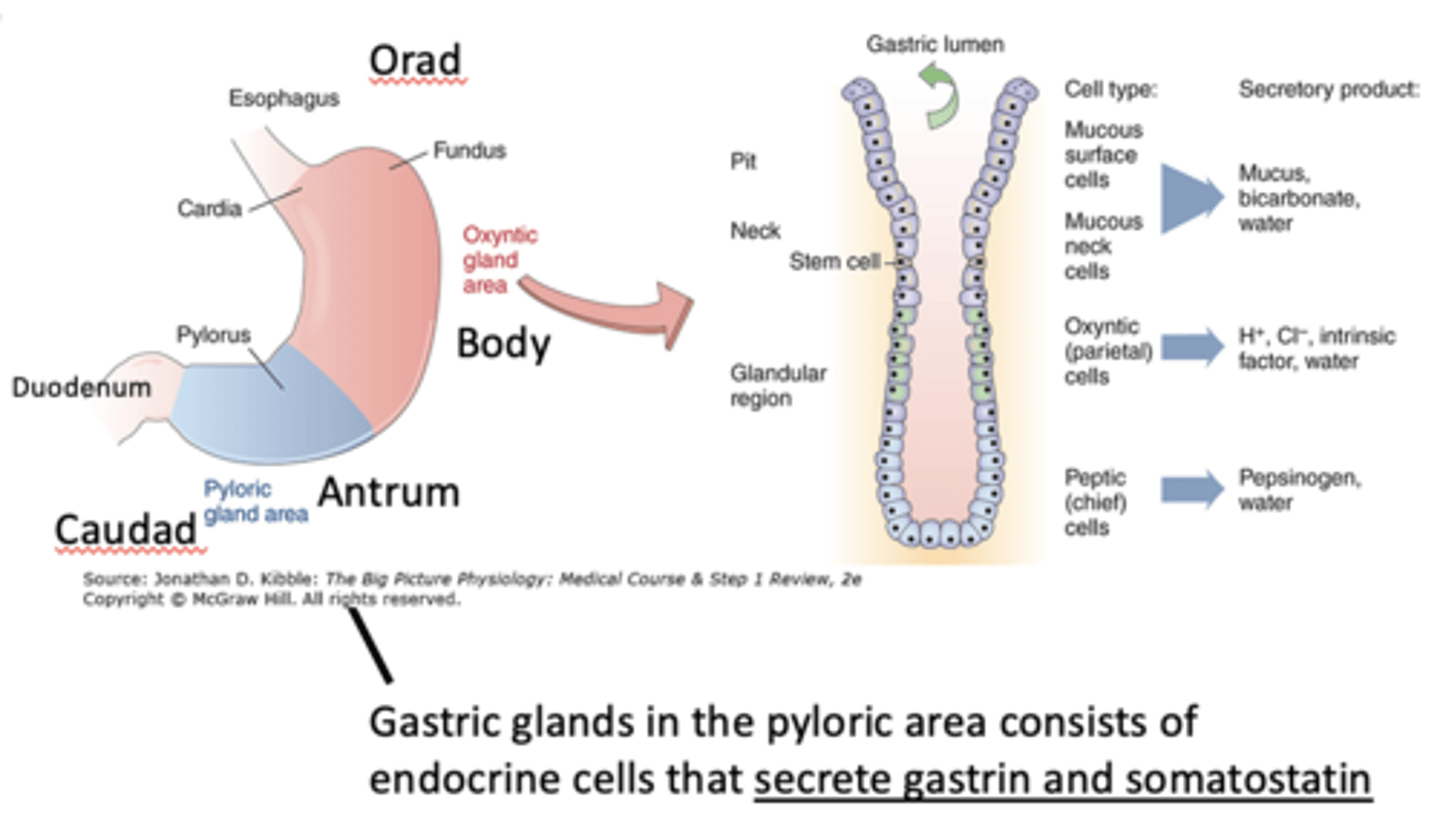
divided into 2 areas; storage area and mixing/trituration area
How is the stomach divided, and explain?
the orad region
What region of the stomach is the storage area?
has a thin muscular wall -> so it can receive the food bolus (receptive relaxation)
What is the muscular wall like in the orad region of the stomach (storage region), and explain?
it reduces the pressure and increases the volume
How does receptive relaxation affect pressure and volume?
by BOTH the afferent and efferent limbs of the vagus nerve (ex: vasovagal reflex)
How is receptive relaxation mediated?
-vasoactive intestinal peptide (VIP)
-nitric oxide (NO)
What 2 NTs are involved in receptive relaxation?
it will eliminate receptive relaxation
How will a vagotomy affect receptive relaxation?
the caudad region
What region of the stomach is the mixing/trituration area?
has a thick muscular wall and produces the contractions necessary for mixing and digesting food
What is the muscular wall like in the caudad region of the stomach (mixing/trituration region), and explain?
retropulsion -> for further reduction in particle size and more mixing until particles are small enough to exit the small pyloric sphincter into duodenum
What major action occurs in the caudad region of the stomach (mixing/trituration region), and explain?
a gastric outlet obstruction can lead to increased emesis because food cannot progress to the duodenum
What is the clinical significance of the small pyloric sphincter between the stomach and duodenum?
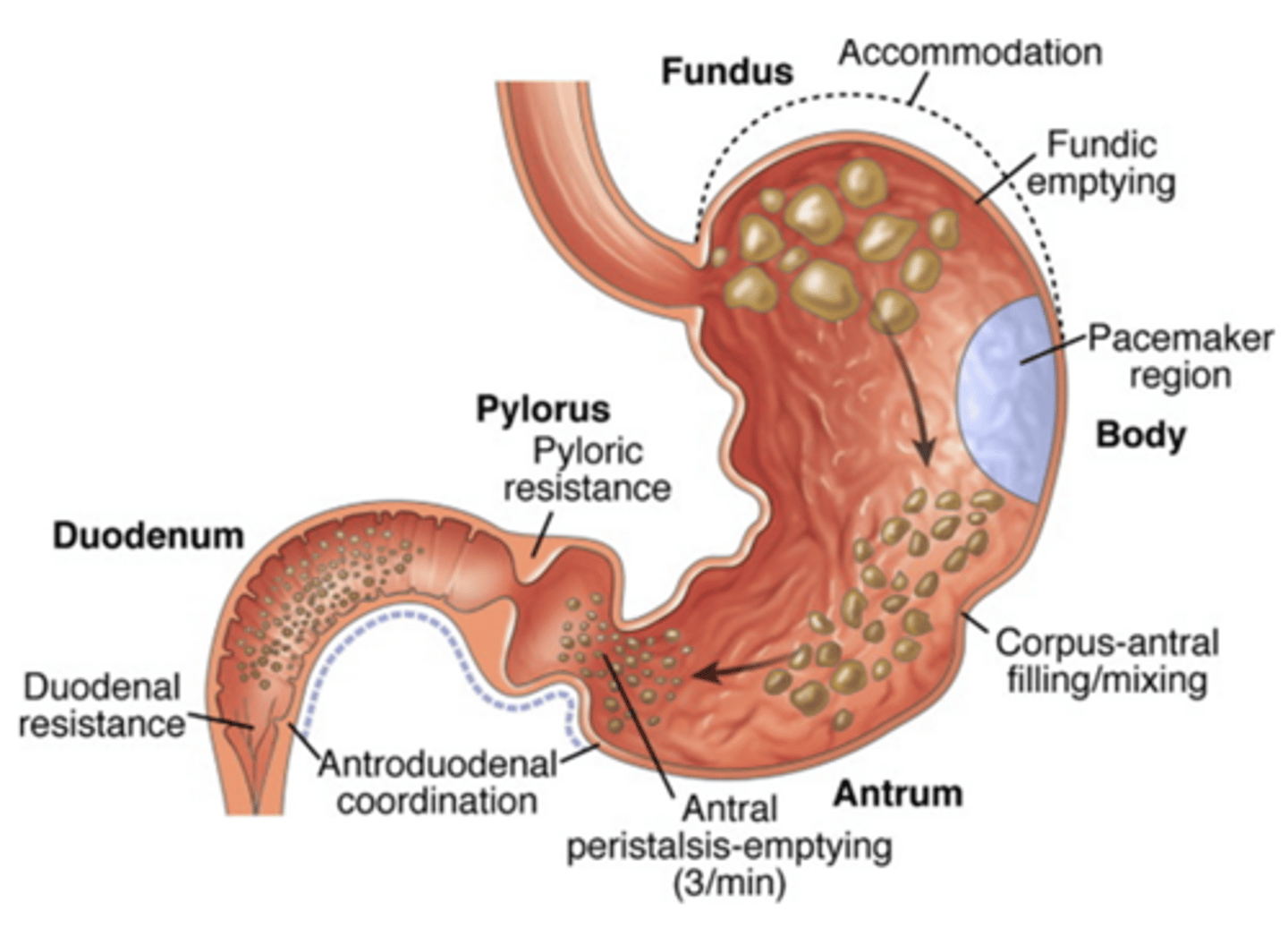
the stomach is richly endowed with both intrinsic and extrinsic neural inputs
What are neural inputs to the stomach like?
via the ENS
Where does intrinsic innervation of the stomach originate?
it can operate without CNS
(aka stomach can mix & contract w/o any input from the brainstem or cerebral cortex)
How does intrinsic innervation of the stomach via the ENS relate to the CNS?
myenteric neurons of the stomach
What neurons provide coordination of gastric motility?
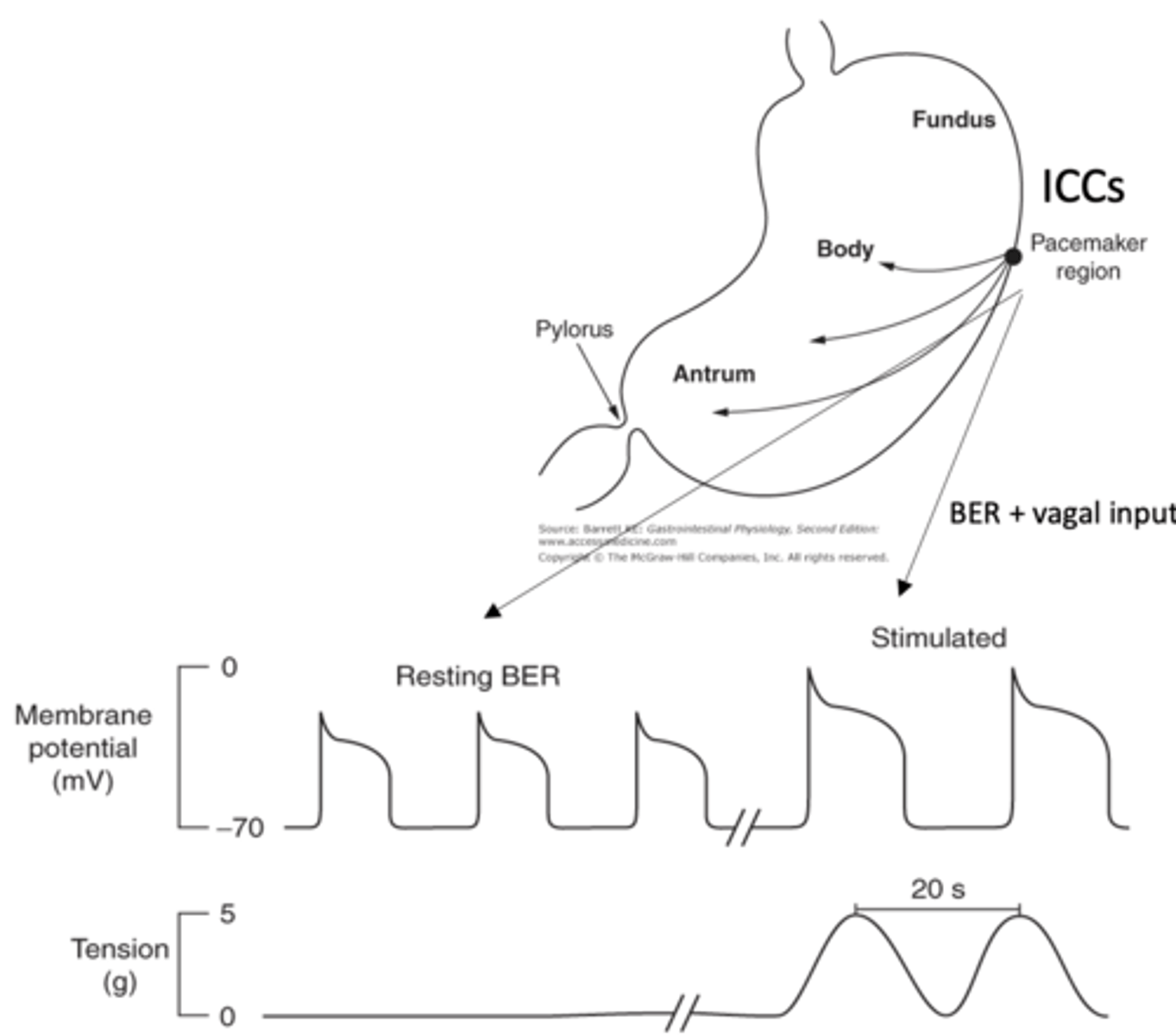
pacemaker cells -> establish the rate or frequency of contractions and set up the basal electric rhythm (BER)
What is the function of Interstitial Cells of Cajal (ICCs)?
they direct the propagation of the contraction (sweeps it to the pylorus)
What else do ICCs do, besides act as pacemaker cells?
the BERs are not APs; APs require a stimulus in order to exceed threshold
How do basal electric rhythms (BERs) compare to APs, and explain?
there are different paces in different parts of the GI tract (ex: 3 cycle/min in stomach and 12 cycle/min in the duodenum)
How does the pace of basal electric rhythm (BER) occur throughout the GI tract?
basal electric rhythm (BER):
-intrinsic reflex
-vasovagal reflex
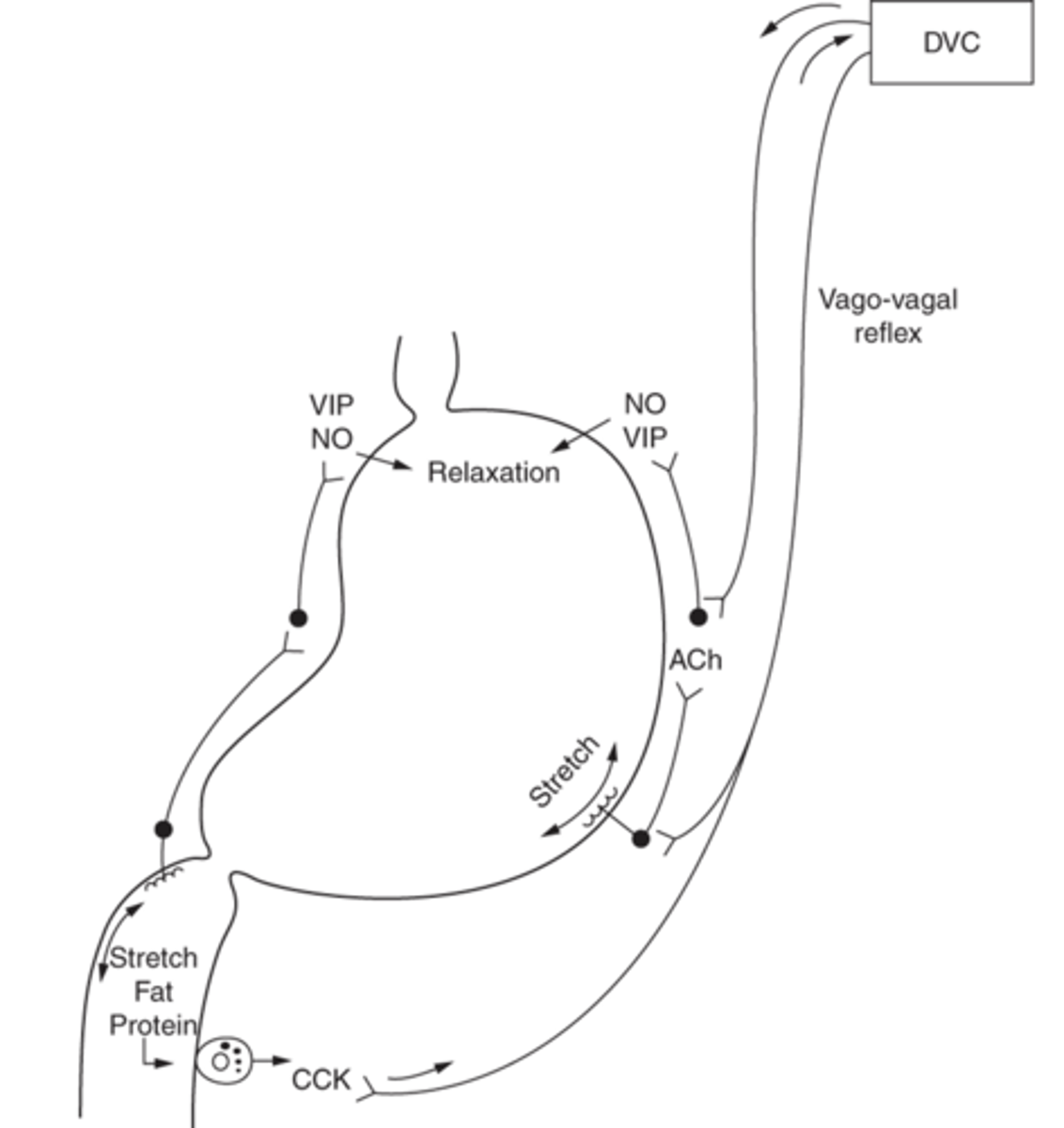
What 2 reflexes are involved in receptive relaxation of the stomach?
a drop in intra-gastric pressure
What is required for relaxation of the stomach?
they trigger activation -> then SM relaxation occurs through VIP and NO
How do mechanoreceptors function in receptive relaxation of the stomach, and explain?
they signal up through afferents to dorsal vagal complex (DVC)
How do mechanoreceptors trigger activation of receptive relaxation?
-distal segments of the GI tract, such as the duodenum
-colonic distension -> relaxes the stomach
-perfusion of glucose or fat into the ileum -> relaxes the stomach (absorptive capacity has been exceeded, so everything slows down)
(prevent exceeding the absorptive capacity of the small instetine)
What 3 things can gastric tone be influenced by, and explain?
from stomach to the colon
How can the gastrocolic reflex be signaled?
causes for the ileocecal valve to relax and the urge to defecate shortly after ingesting a meal
What does signaling to trigger the gastrocolic reflex result in?
intrinsic and vagovagal reflexes involved in receptive relaxation of the stomach:
-frequency of spike potentials
-increase contractile force
What 2 aspects of GI motility can neural and hormonal input affect?
periodic gastric contractions occur -> called migrating myoelectric complexes
What are contractions like during fasting, and explain?
to prevent stagnant fluid -> which can enable bacterial growth and development of thing such as small intestine bacterial overgrowth (SIBO)
Why is GI motility still needed during fasting, and explain?
by motilin (a peptide released during fasting)
How are periodic gastric contractions, called migrating myoelectric complexes, mediated during fasting?
help to clear the stomach from any previous meal
What is the function of periodic gastric contractions, called migrating myoelectric complexes?
both parasympathetic and sympathetic neural stimulation is involved
What is neural stimulation to the stomach during fasting like?
will increase the frequency of spike potentials
What is the function of parasympathetic neural stimulation to the stomach during fasting?
gastrin and motilin
What 2 peptide hormones can have the same effect as parasympathetic neural stimulation during fasting (increase the frequency of spike potentials)?
will decrease the frequency of spike potentials
What is the function of sympathetic neural stimulation to the stomach during fasting?
secretin and GIP
What 2 peptide hormones can have the same effect as sympathetic neural stimulation during fasting (decrease the frequency of spike potentials)?
in (B), note how pain slows things down!
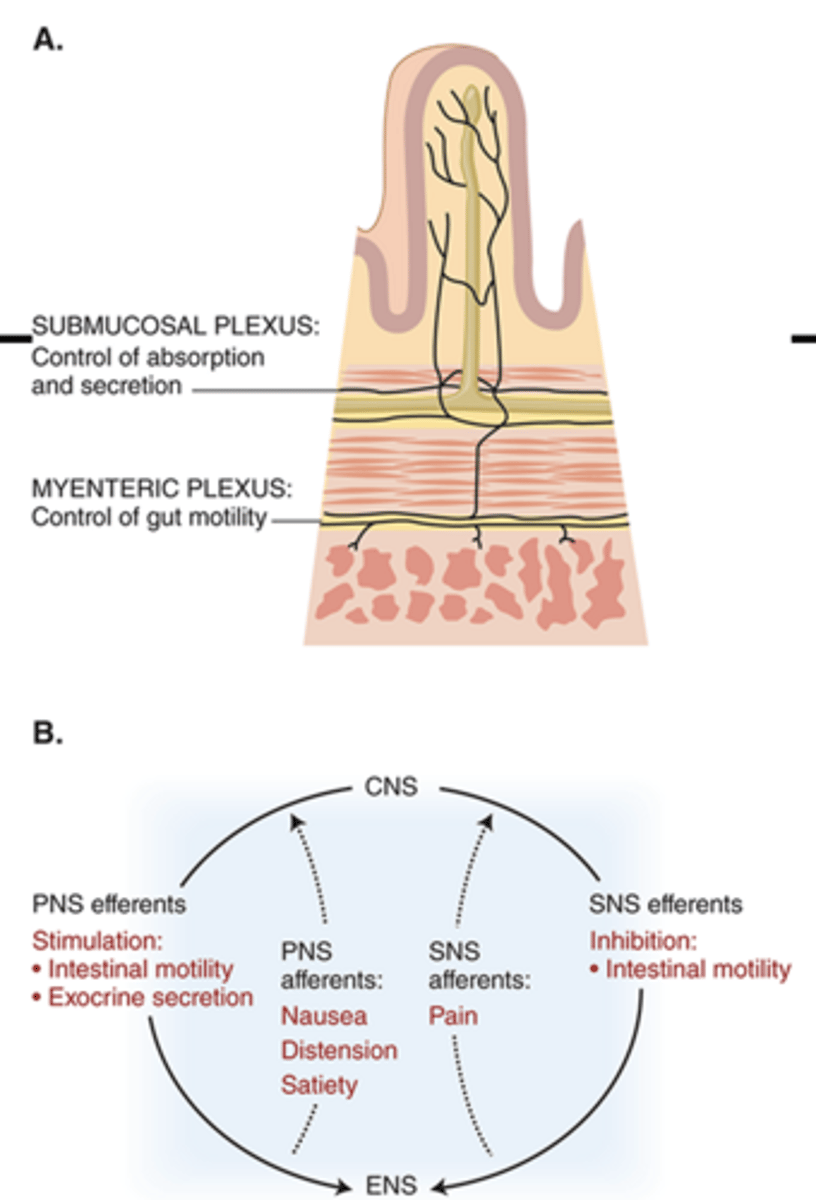
-receptive relaxation
-contractions (peristalsis)
-retropulsion
What are the 3 main components of gastric motility?
receptive relaxation of the orad region of the stomach allows for receiving of a food bolus from the esophagus
How does receptive relaxation function as a main component of gastric motility?
reduce the size of the bolus and mix it with gastric secretions to initiate digestion
How do contractions (peristalsis) function as a main component of gastric motility?
antral systole results in retropulsion, which allows further mixing and grinding of the bolus
How does retropulsion function as a main component of gastric motility?
mostly hormonally regulated; to ensure adequate time for digestion and absorption of nutrients
How is rate of delivery of chyme regulated, and explain?
propels chyme into the small intestine
What is the function of gastric emptying?
gastric motility:
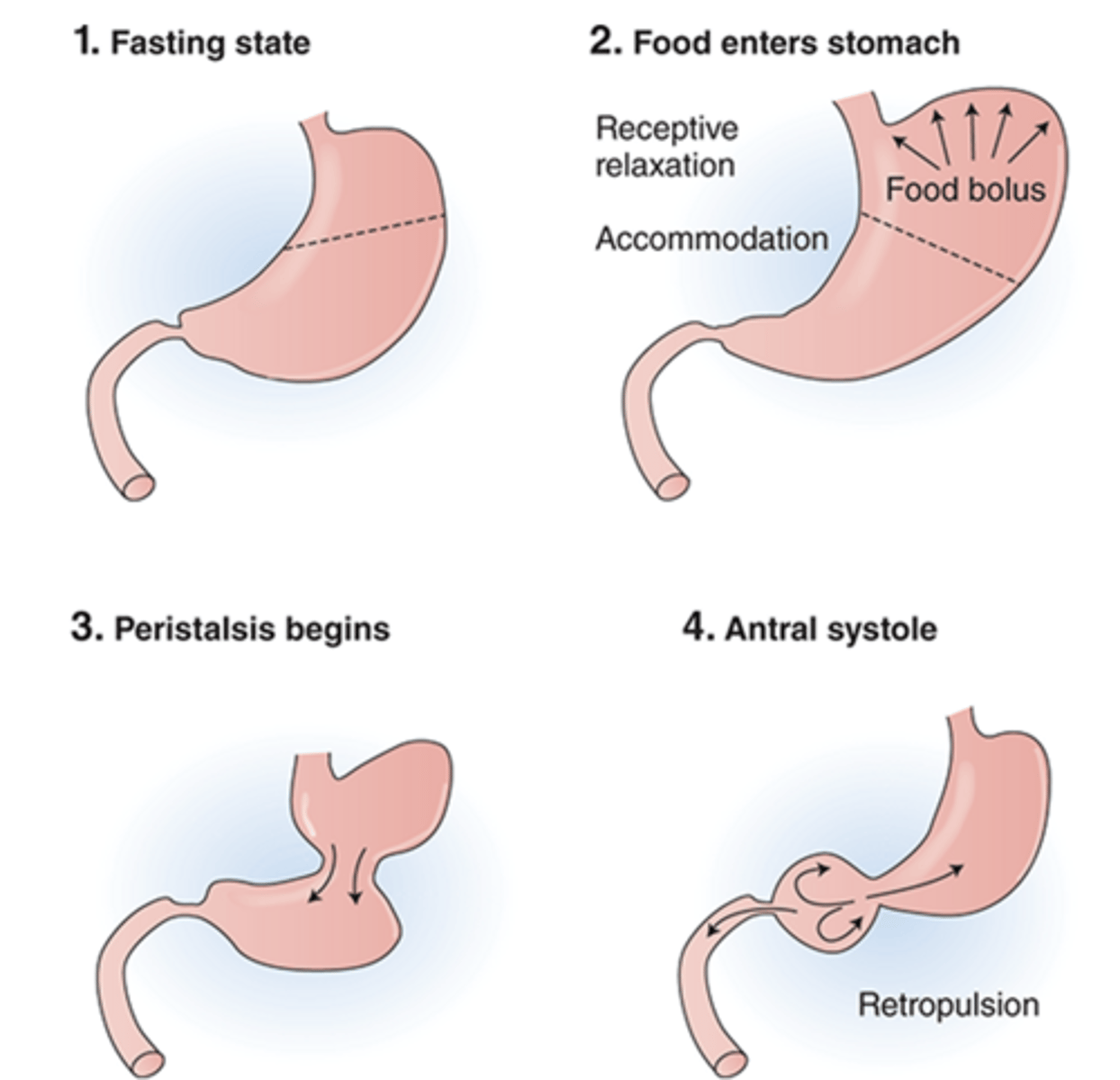
there will be circumferential contractions
What are contractions like in the fed state?
both anterograde and retrograde of material
What do circumferential contractions in the fed state lead to?
-during the fed state, there will be circumferential contractions ("A") -> results in both anterograde and retrograde movement of material
-as contraction "A" lessens and contraction "B" starts, there will be mixing of material. Contraction B will now cause a transient opening of the pylorus and material smaller than 1 mm can now exit the stomach. Larger particles are propelled backwards.
-contractions "C" and "D" help to repeat the process, continuing to mix and grind the food bolus until the entire meal is emptied from the stomach
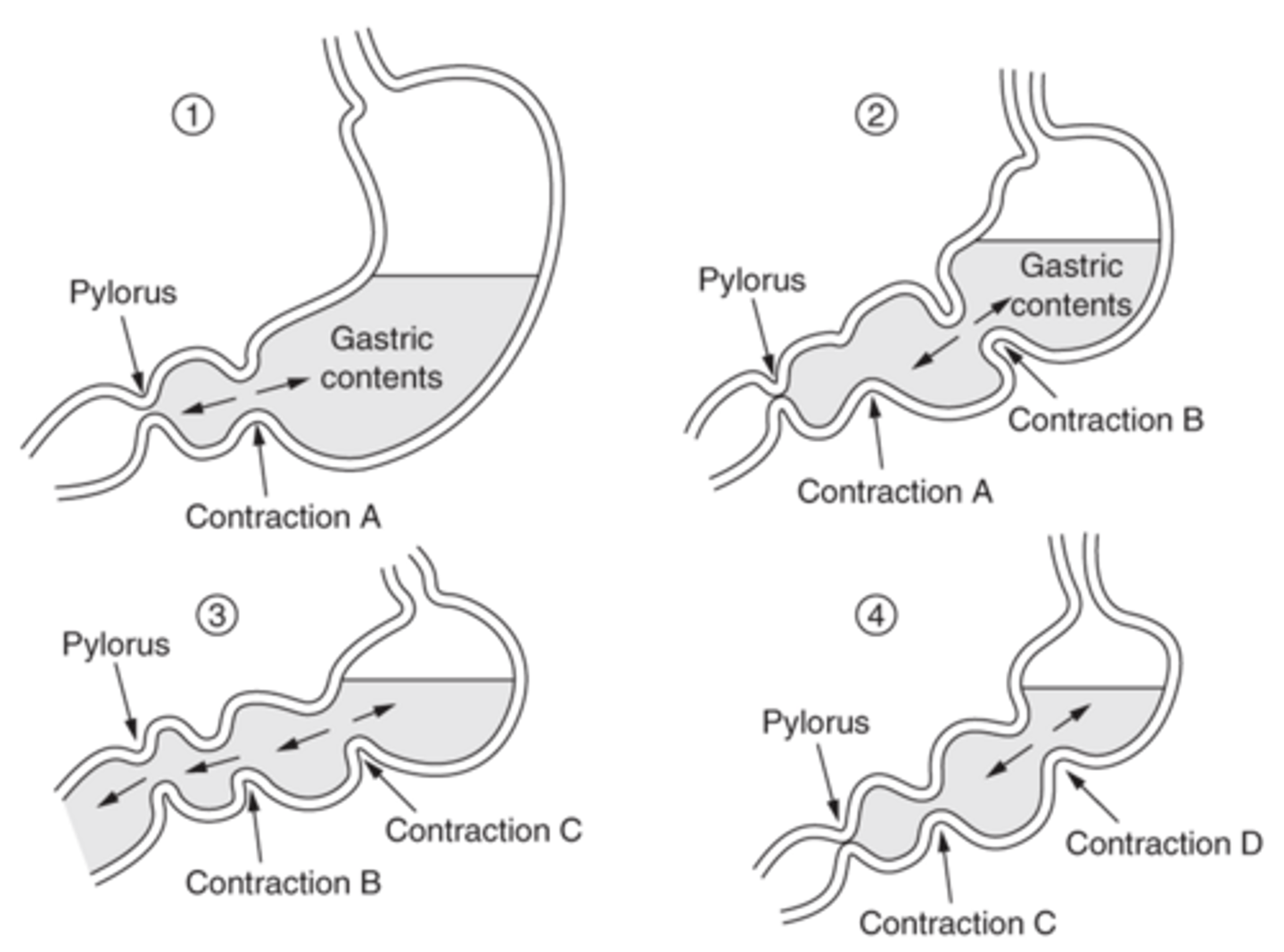
segmentation -> allows mixing of gastric contents
What term describes the aforementioned process of gastric mixing and grinding that occurs in the fed state?
segmentation is both forward and backward mixing movement, while peristalsis is forward movement only
How does segmentation differ from peristalsis?
about 3 hours; slows with aging
How long does emptying of the gastric contents to the duodenum take, and how does this change over time?
must be enough time to neutralize stomach acid -> because enzymes released from the pancreas (to duodenum) will not survive low pH
What must the time for emptying of the gastric contents to the duodenum be like, and explain?
-liquids empty more rapidly than solids
-isotonic solutions empty more rapidly than hyper- or hypo-tonic solutions
How does the rate of gastric emptying of different substances compare?
because substances need to be made iso-osmotic to progress to the duodenum (to prevent osmotic shifts/fluid imbalance)
Why do isotonic solutions empty more rapidly than hyper- or hypo-tonic solutions?
-fats -> mediated by CCK
-H+ ions -> mediated by reflexes of the ENS
What are 2 major factors that will slow or inhibit gastric emptying, and explain what each is mediated by?
gastric emptying:
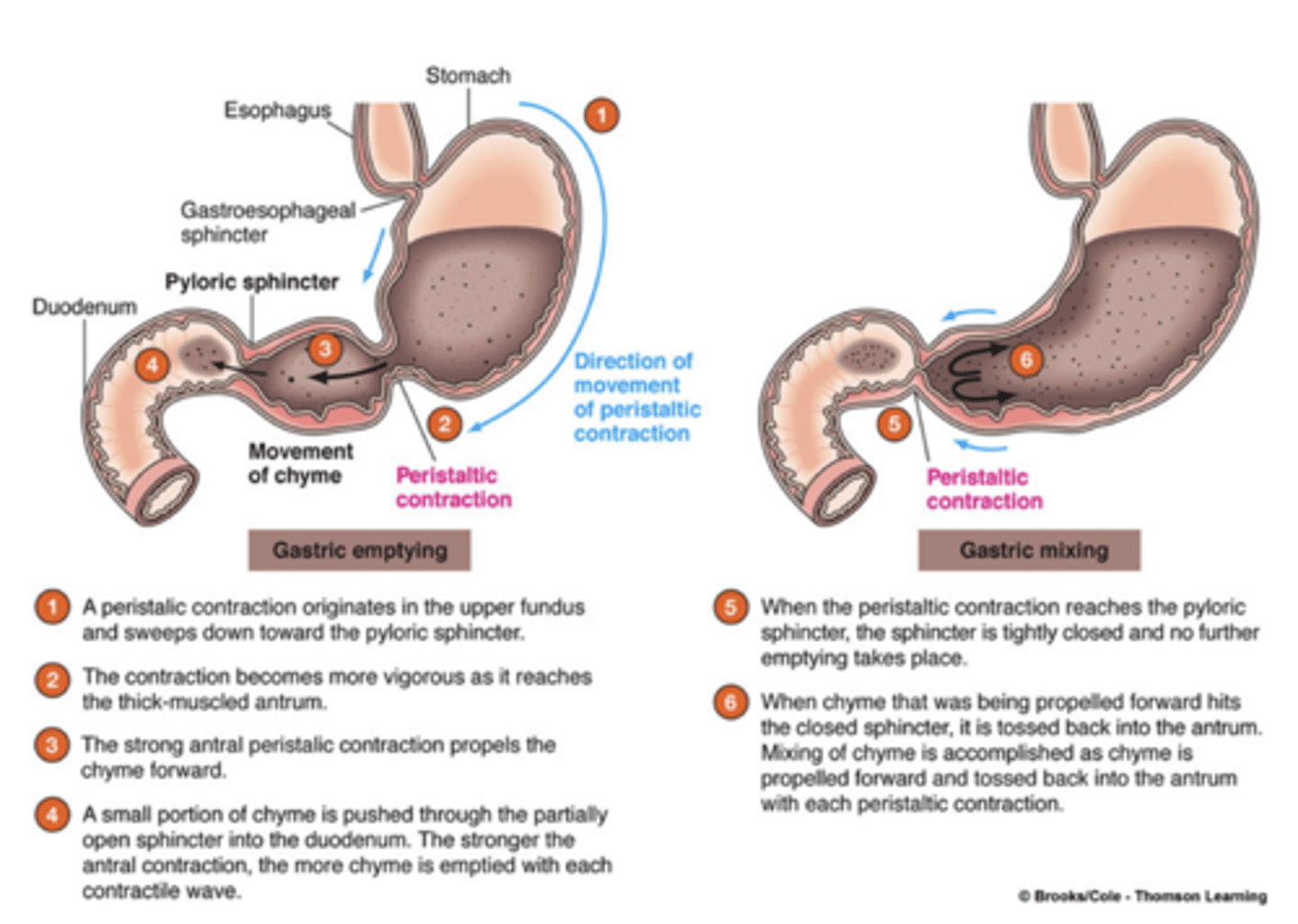
*nerves
*high-calorie or dense meals
*hyperosmolarity
*food particle size
*distension of duodenum
What are 5 other factors, besides fats and H+ ions, that can slow the rate of gastric emptying?
H+ ions can stimulate the enterogastric reflex, which has both a short loop (within ENS, serotonin) and long loops (CNS, decrease ACh)
How do nerves slow the rate of gastric emptying?
a dense meal will slow gastric emptying in order to avoid saturation of absorptive mechanisms in the remaining GI tract
How do high-calorie/dense meals slow the rate of gastric emptying?
a term used to describe abnormally slow gastric emptying
What is gastroparesis?
altered neurotransmission, and can also be present in patients with obesity, T1 or T2 diabetes
What may gastroparesis be a consequence of?
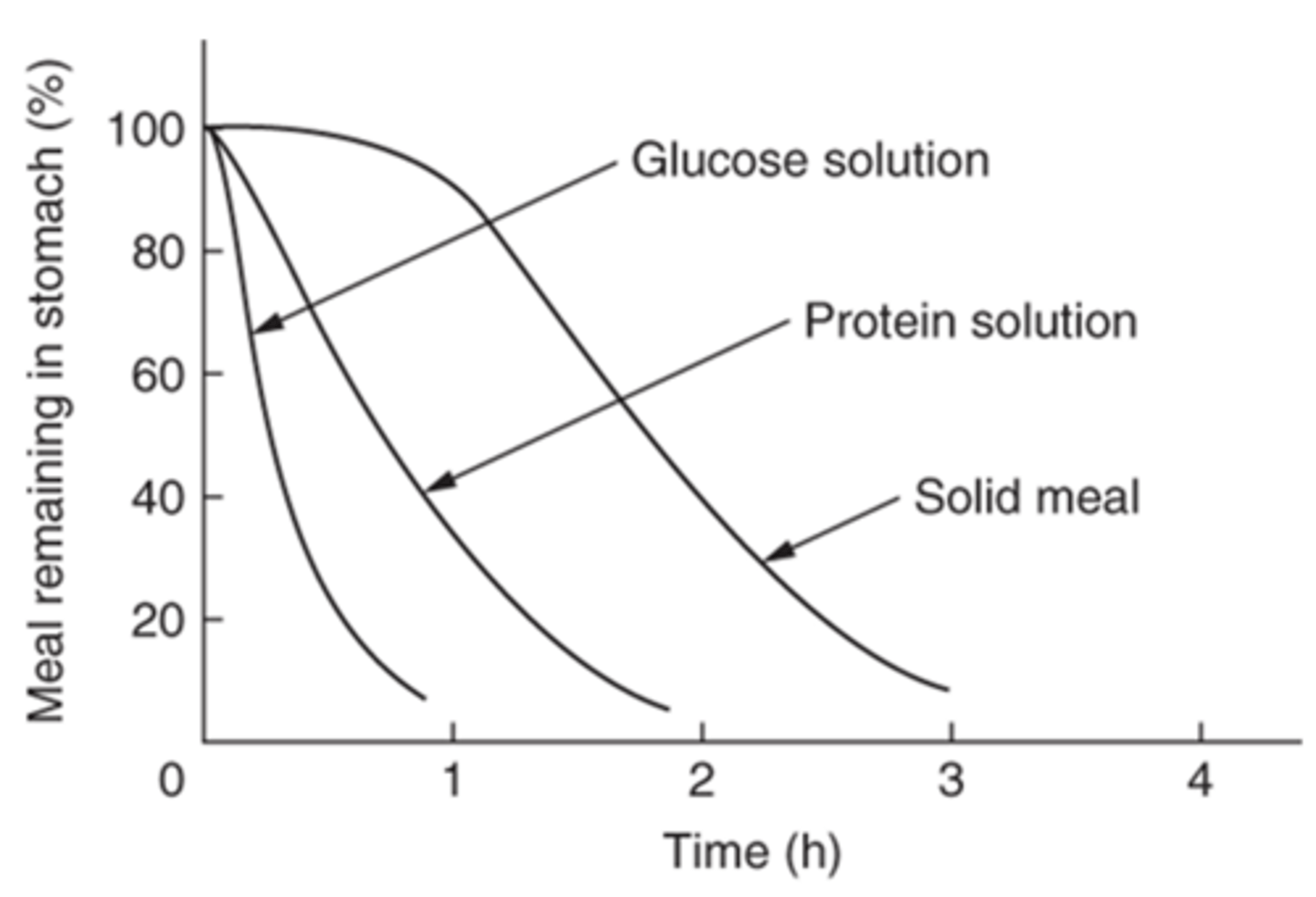
food particle size affects rate of gastric emptying -> lipid = quick, protein = slow, solid = slowest
they release R-protein to bind with cobalamin (vitamin B12)
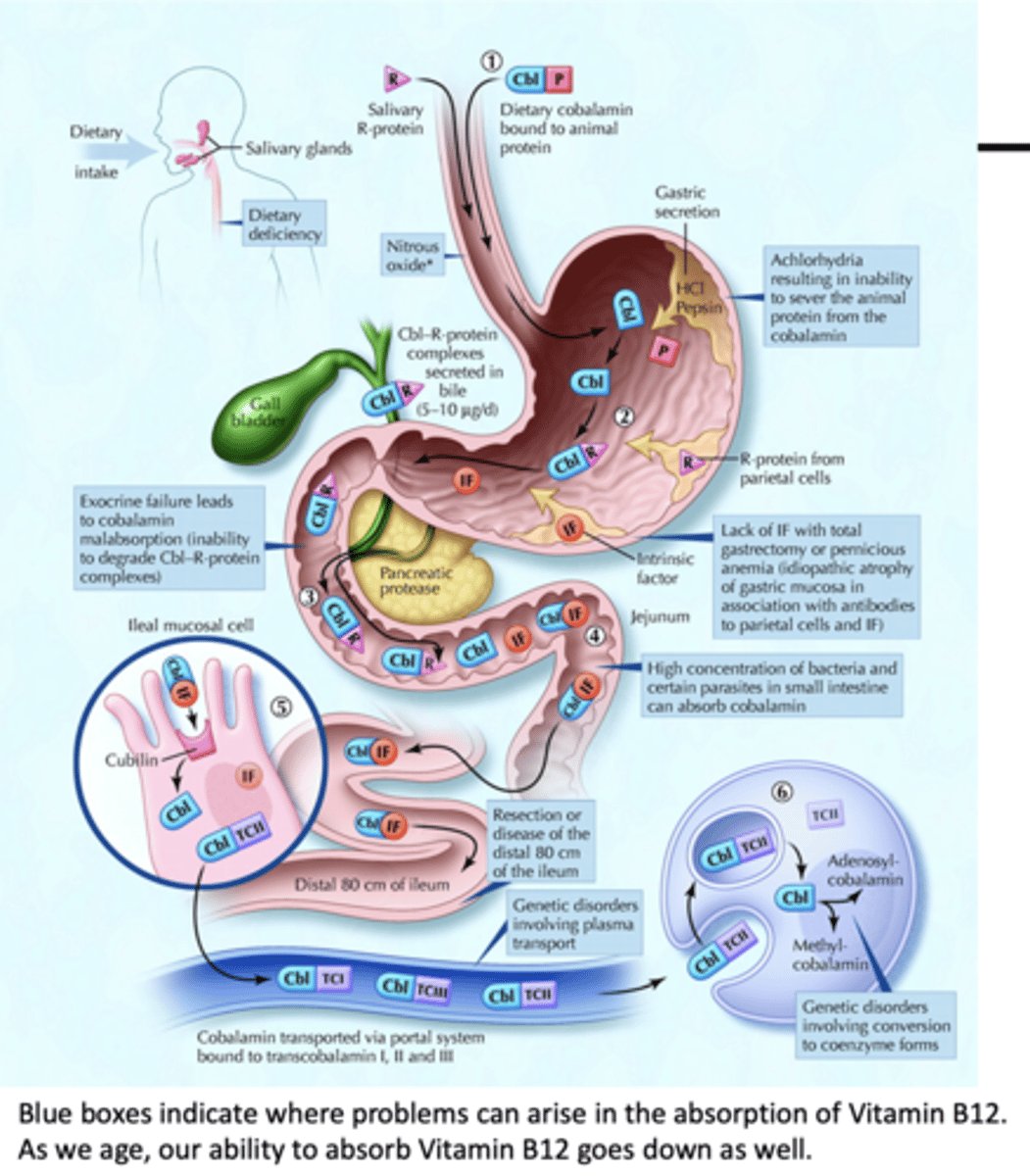
How do the salivary glands function in vitamin B12 absorption?
parietal cells release intrinsic factor (IF), and it is the only place where this release occurs
How does the stomach function in vitamin B12 absorption?
they must be given IF injections; otherwise they will become vitamin B12-deficient and develop pernicious anemia (macrocytic anemia)
What must happen to a patient who has undergone a gastrectomy, and explain?
autoimmune gastritis; can target and disable IF, making it non-functional
What other medical condition can target IF, and explain?
IF has a receptor in the ileum called cubulin, which allows for uptake of B12
How does IF affect the uptake of vitamin B12?
binding proteins transcobalamin I and II help in the transport and delivery of vitamin B12 in the blood and tissues, respectively
How is vitamin B12 transported in the body, and explain?
vitamin B12 absorption:
hunger contractions
What can occur when the stomach has been empty for several hours?
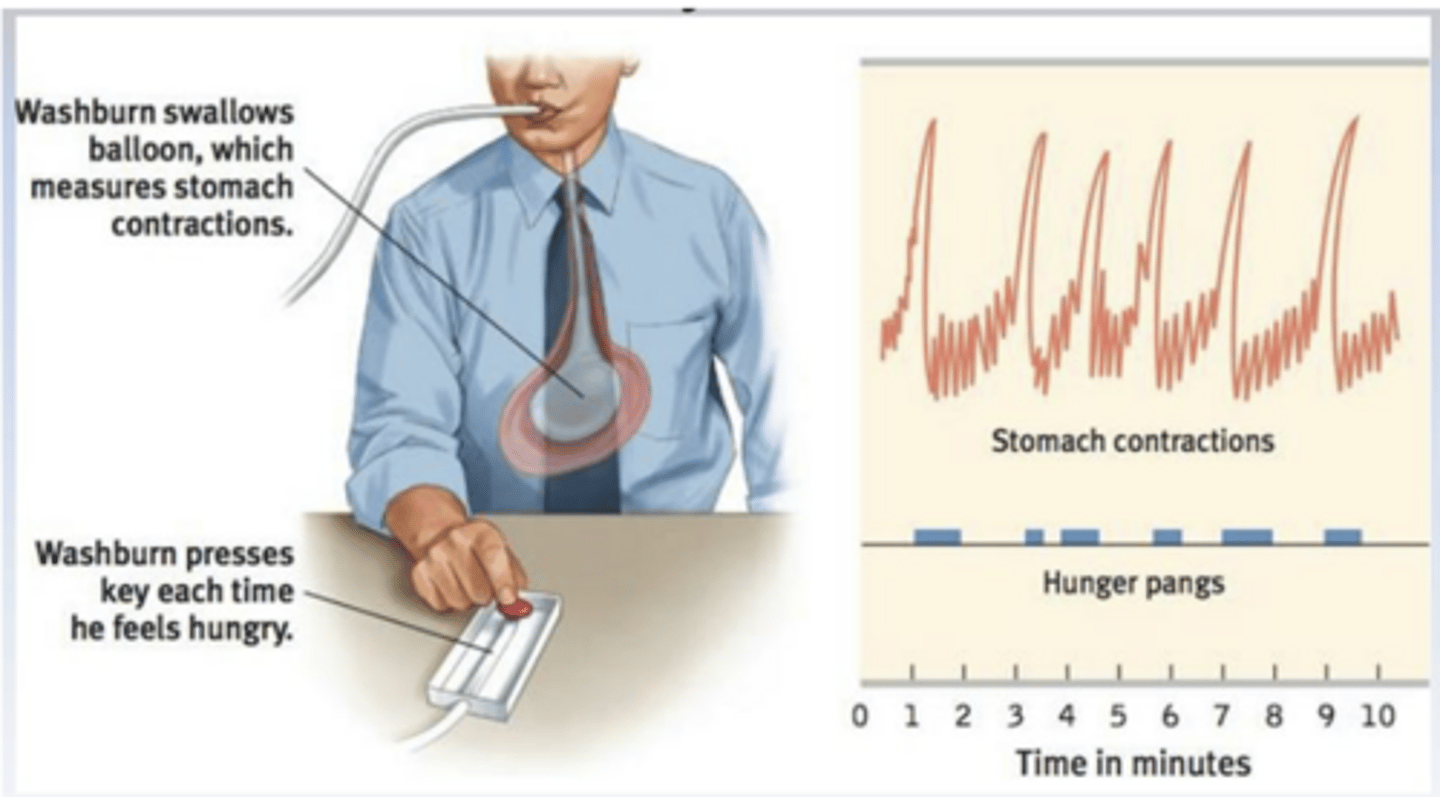
looked at stomach contractions during the inter-digestive periods and found that during hunger, strong peristaltic contractions would occur -> these contractions will fuse, causing a tetanic-like contraction that can last for 2-3 minutes
What was discovered in the Washburn study?
-young individuals
-those that have a low level of blood sugar
In what individuals are hunger contractions more intense?
pain that occurs in the pit of the stomach and usually needs 3-4 days of starvation to occur
What are hunger pangs?
hunger contractions occur when stomach has been empty for several hours:
it is co-secreted with insulin
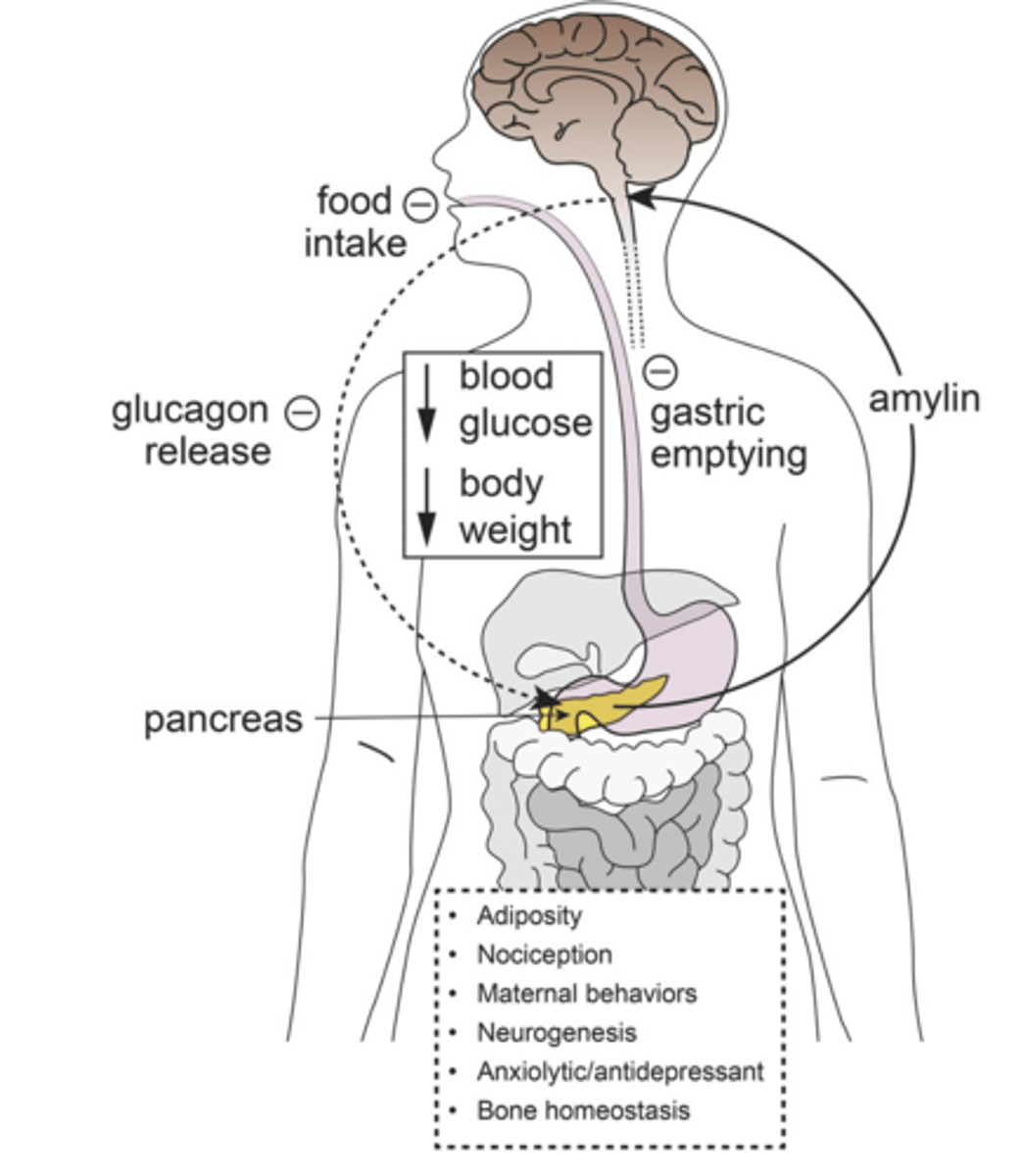
What is the secretion of amylin like?
it slows gastric emptying and secretion
What is the function of amylin, which is co-secreted with insulin?
decreases pancreatic exocrine and bile acid secretions
What is the specific effect of amylin on secretion?
it stimulates satiety via circumventricular organs
How does amylin affect satiety?
slows gastric emptying
What is the effect of amylin on gastric emptying?
slows glucagon secretion, in addition to gastric emptying; reducing the post-prandial plasma glucose spike
What else does amylin slow, besides gastric emptying, and what is the effect?
Pramlintide (Symlin) is a drug that is an amylin mimetic; sometimes used as an adjunctive drug in a patient with diabetes (prevents spiking when pt takes glucose)
What is the pharmacotherapeutic application of amylin, and explain?
amylin is co-secreted with insulin and slows gastric emptying and secretion:
vomiting, a normal protective reflex to rid the body of potentially harmful substances
What is emesis?
direct stimulation can occur through sensory afferent pathways to a higher center and initiate the vomiting reflex
What is direct stimulation of emesis like?
through the chemoreceptor trigger zone (CTZ, or area postrema)
What is a more common pathway of stimulating emesis?