Reproductive system 1 (male)
 Call Kai
 Learn
Learn Practice Test
 Spaced Repetition
 Match
Match Flashcards
 Knowt Play
1/9

Earn XP
Description and Tags
Male Reproductive Organs
Name | Mastery | Learn | Test | Matching | Spaced | Call with Kai |
|---|
No analytics yet
Send a link to your students to track their progress
10 Terms
What are the functions of the reproductive system?
Production of gametes
Fertilization
Development and nourishment of a new individual
Production of reproductive hormones
What is the role of meiosis in gamete formation?
Meiosis is a special type of cell division that leads to the formation of haploid gametes (sperm in males, oocytes in females), each containing 23 chromosomes (half the normal number).
How does the scrotum regulate testicular temperature?
The scrotum keeps the testes outside the body cavity. Muscles (cremaster and dartos) alter how near or far the testes are from the body wall, allowing spermatogenesis to occur at a lower temperature.
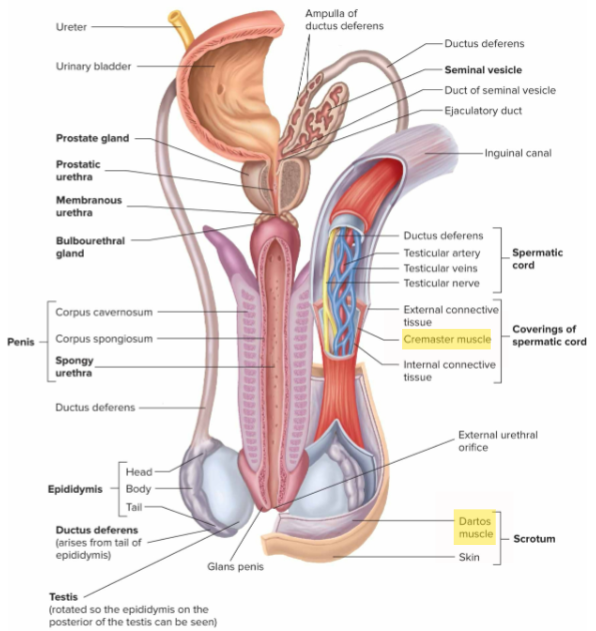
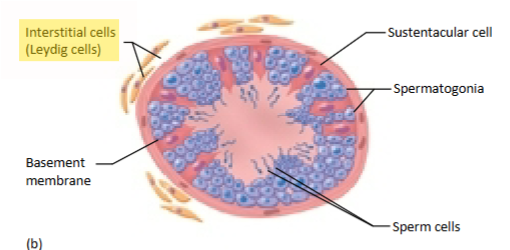
What are the main structures and cell types inside the testes?
Seminiferous tubules – produce sperm
Interstitial cells – secrete testosterone
Germ cells (spermatogonia) – cells that sperm arise from
Sustentacular cells – nourish germ cells and produce hormones
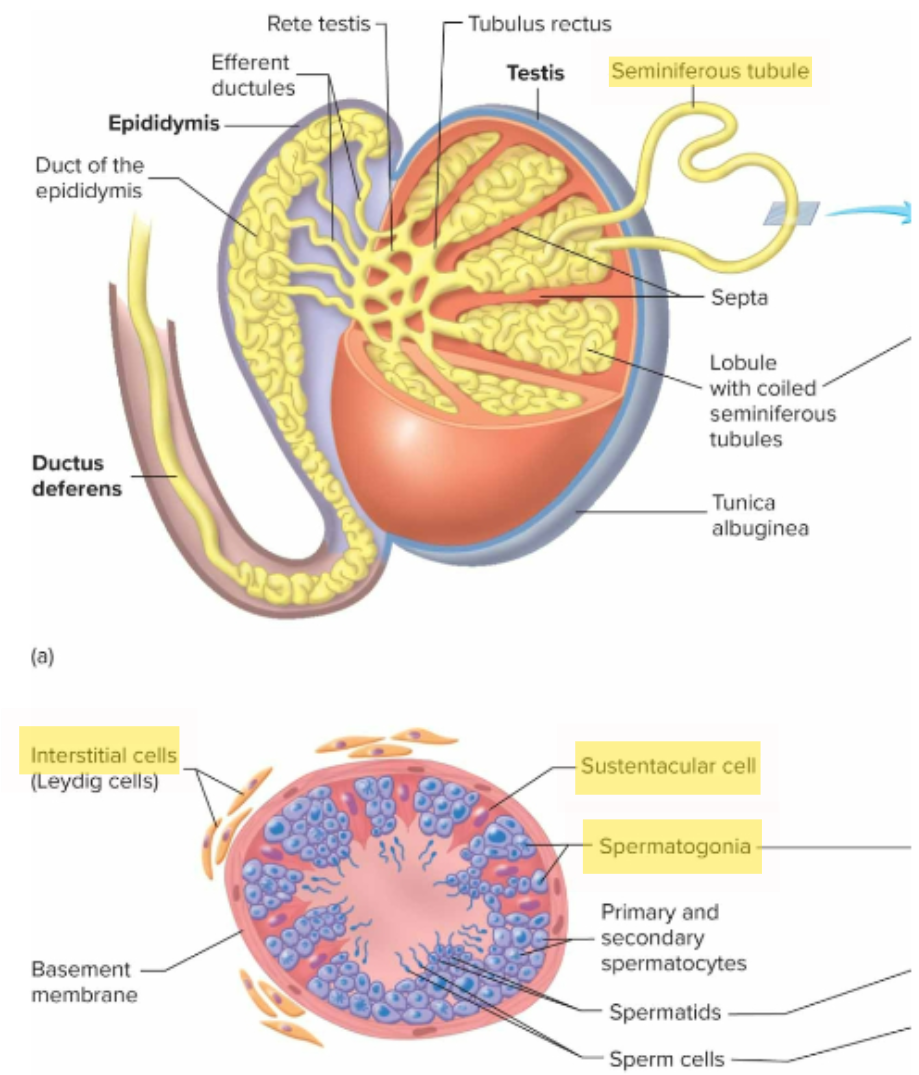
What are the structures of the penis?
Corpus cavernosum
Corpus spongiosum
Spongy urethra
Glans – distal cap of the penis
External urethral orifice – opening to the exterior
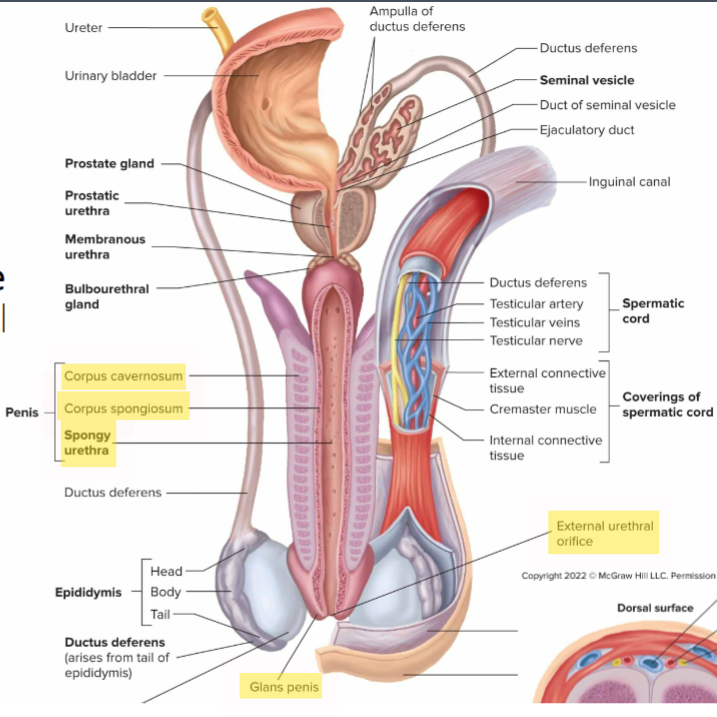
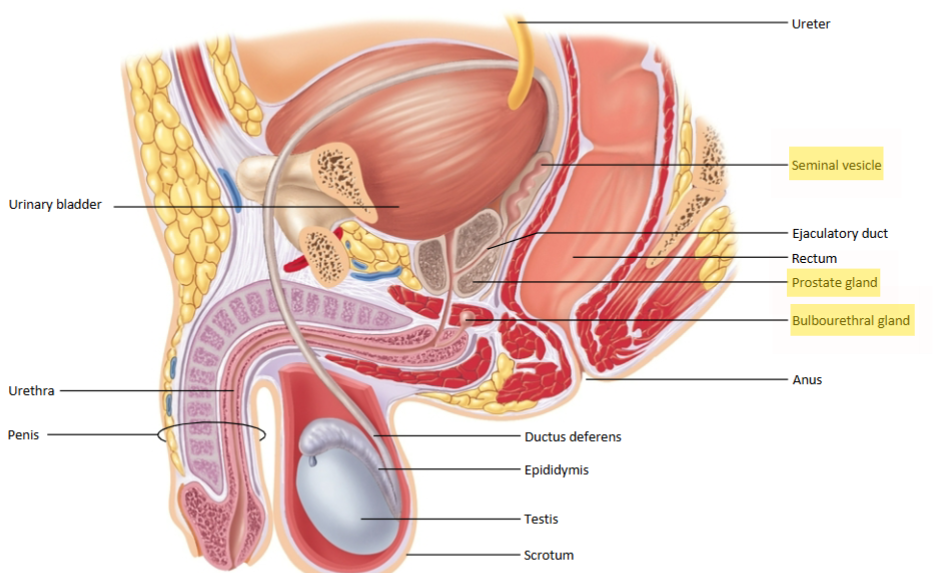
What are the functions of the accessory glands?
Seminal vesicles – secrete 60% of seminal fluid
Prostate gland – secretes 30% of seminal fluid; surrounds urethra
Bulbourethral glands – secrete 5% of seminal fluid; neutralize acidity of male urethra
What is the function of GnRH (Gonadotropin-releasing hormone), LH (Luteinizing Hormone), and FSH (Follicle-stimulating hormone) in males?
GnRH (hypothalamus) – stimulates secretion of LH and FSH
LH (anterior pituitary) – stimulates testosterone secretion from interstitial cells
FSH (anterior pituitary) – prompts spermatogenesis in seminiferous tubules
What is the main male hormone and where is it produced?
Testosterone, secreted by interstitial cells in the testes.
What happens during male puberty?
Begins at 12–14, ends around 18
Testosterone is the major hormone
Secondary sexual characteristics develop: skin texture changes, fat redistribution, hair growth, skeletal muscle growth, larynx changes (voice deepens)
Irreversible changes in body shape and voice
What are the three main events of the male sexual act?
Erection – Parasympathetic nerves dilate arteries to erectile tissue; blood fills tissue and compresses veins
Emission – Movement of sperm and seminal fluids into urethra
Ejaculation – Sympathetic nerves cause smooth muscle contraction in urethra and skeletal muscles at base of penis to expel secretions