GEL Week 2- Hotspots and supercontinents (5)
 Call Kai
 Learn
Learn Practice Test
 Spaced Repetition
 Match
Match Flashcards
 Knowt Play
1/10

There's no tags or description
Looks like no tags are added yet.
Name | Mastery | Learn | Test | Matching | Spaced | Call with Kai |
|---|
No analytics yet
Send a link to your students to track their progress
11 Terms
Plate motion
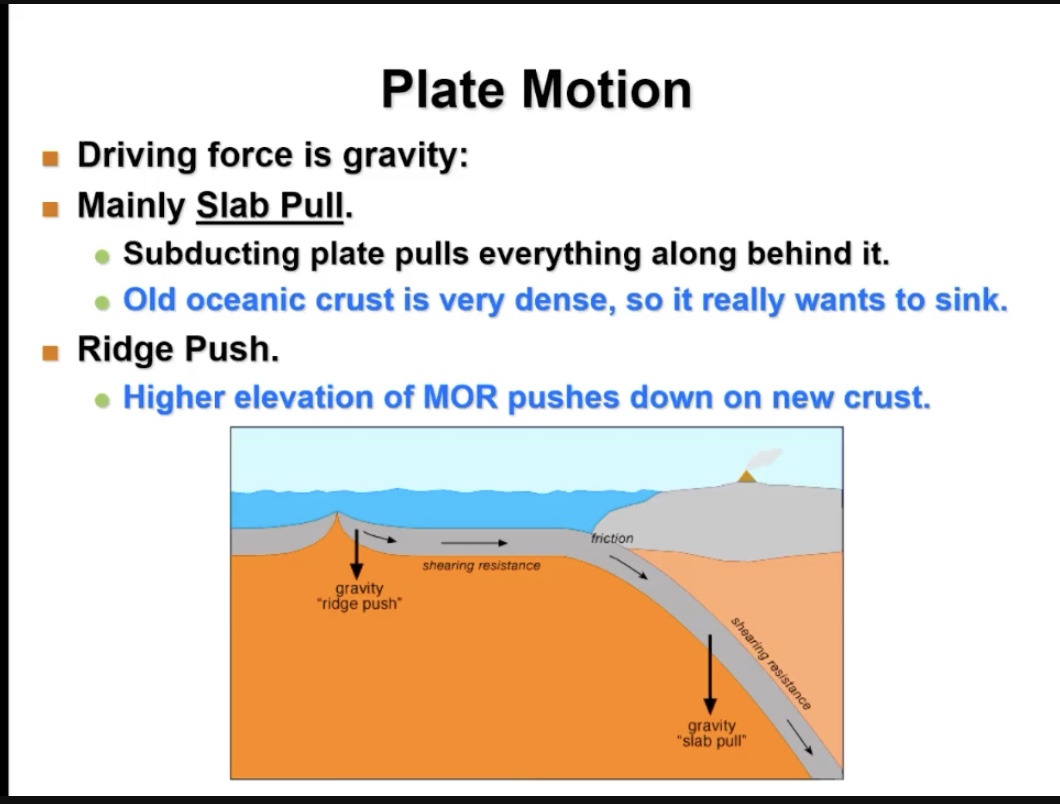
Driving force is gravity, mainly slab pull and ridge push
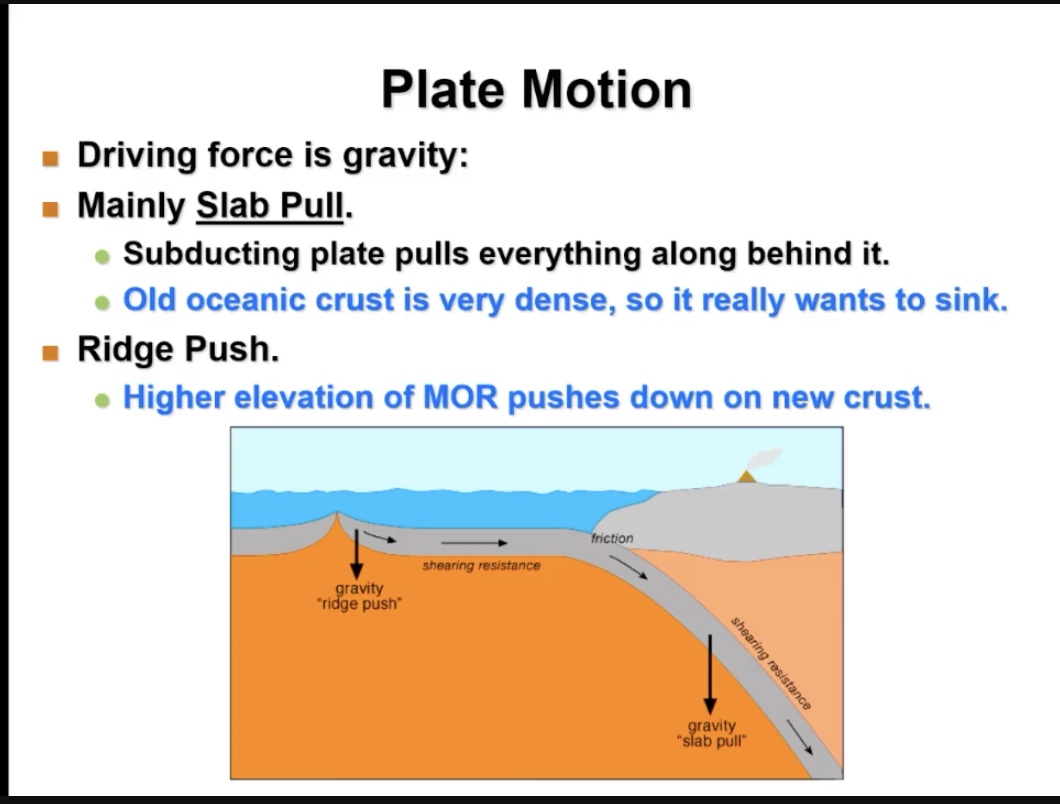
Slab pull
Subducting plate pulls everything along behind it.
(old oceanic crust is dense, so it sinks)
Ridge push
HIgher elevation of MOR pushes down on new crust
How can we see which way plates are moving?
Hot spots- Volcanic plumes independent of tectonic plates
(volcanoes that are not associated with plate boundaries)
Why are hot spots important?
Hot spots reveal how plates move, the direction they move in, and the speed
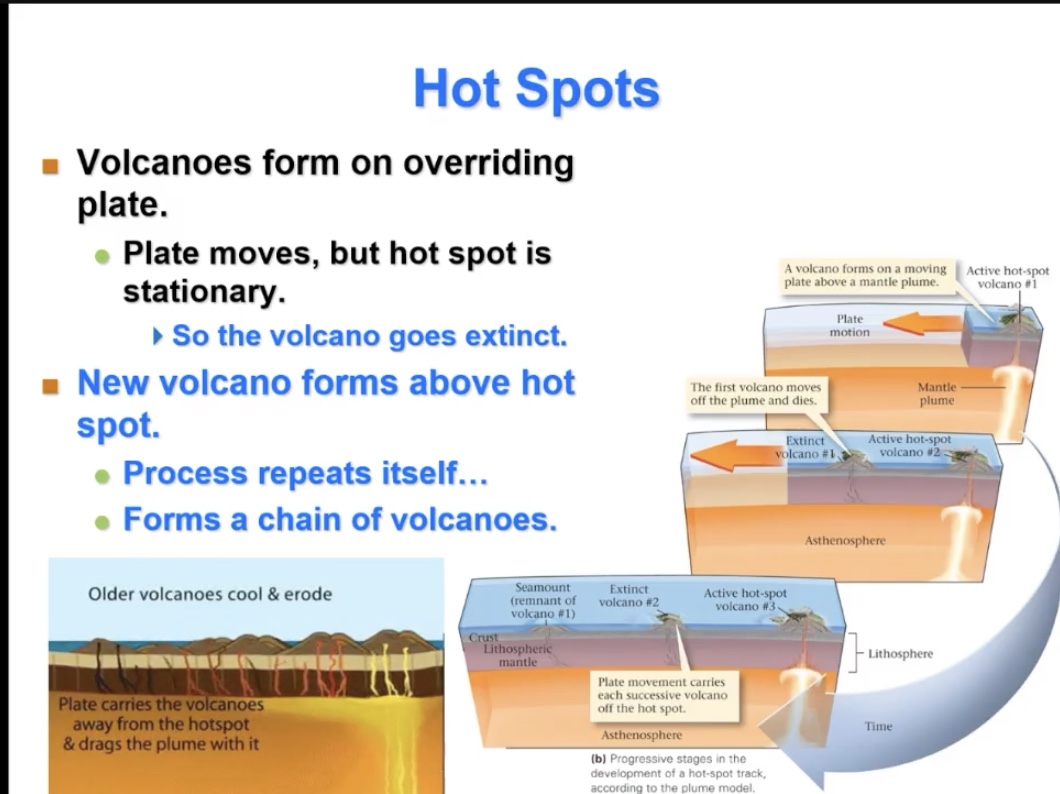
Hot spot process:
1- Volcanoes form on the overriding plate.
2- Plate moves, but hot spot is stationary, so volcano goes extinct
3- New volcano forms above hot spot
4- Process repeats, forms a chain of volcanoes
Why do hotspots erode?
Hot spots eventually erode beneath waves and lack of active volcanoes
What are seamounts?
Eroded extinct volcanoes
What is the role of age in plate motion?
Age change marks direction of plate motion.
T/F: Pangea was the first supercontinent
False
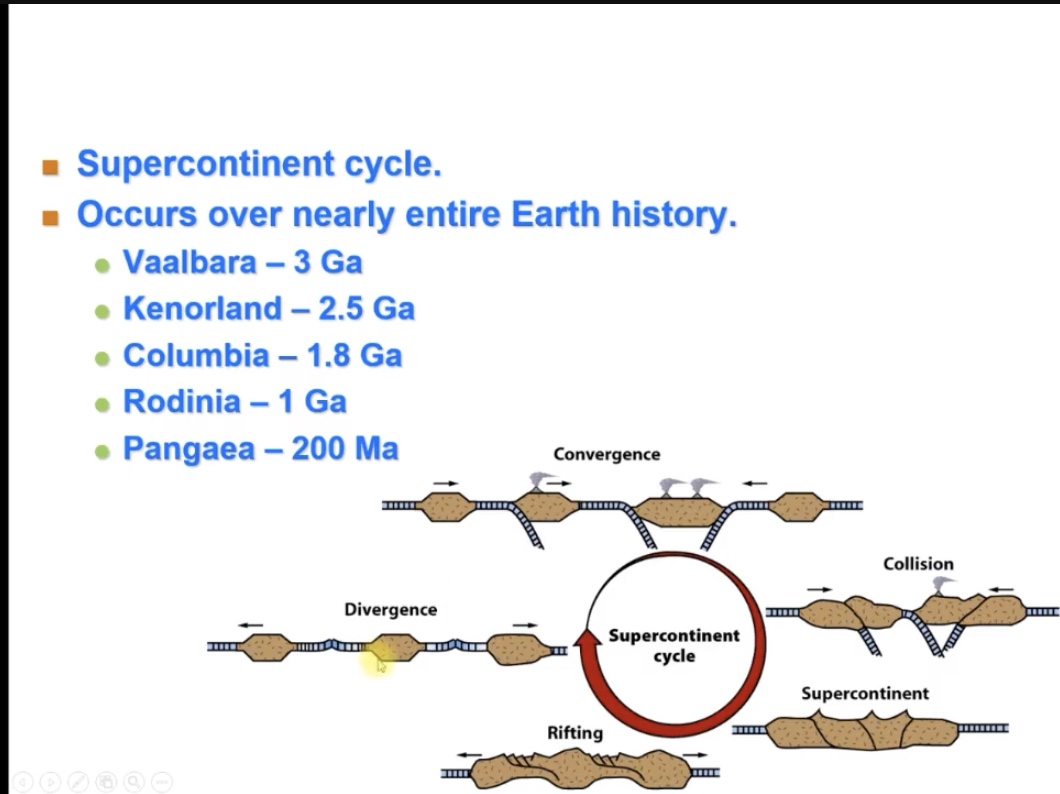
Supercontinent cycle
1- Supercontinent breaks apart
2- Starts to spread apart
3- Subduction occurs, it slams together
4- Cycle repeats (every 300 to 500 mil yrs)