Week 8 Masculinized Reproductive System
 Call Kai
 Learn
Learn Practice Test
 Spaced Repetition
 Match
Match Flashcards
 Knowt Play
1/14

There's no tags or description
Looks like no tags are added yet.
Name | Mastery | Learn | Test | Matching | Spaced | Call with Kai |
|---|
No analytics yet
Send a link to your students to track their progress
15 Terms
Germ cells known as Gamates
Sperm in male, oocytes in women
gonads produce gametes and secrete sex hormones
Offspring
Two haploid gamates fuse to form a diploid zygote.
Male gamete has motility, contains Y chromosome
Female gamete contains nutrients for developing zygote, contains X chromosome
Primary sex organs
Organs that produce the gametes (testes or ovaries)
Secondary sex organs (essential for reproduction)
Male is ducts, glands, and the penis that deliver the sperm cells
Female is uterine tubes, uterus, vagina, that receive the sperm and nourish fetus
Secondary sex characteristics
Public, axillary and facial hair, scent glands, body morphology, and low-pitches voice in males
Sex Chromosomes (Gametes) Role
Our sperm or egg cells are haploid; they contain 23 individual chromosomes
22 autosomes
1 pair of sex chromosomes (XY males; XX females)
all eggs carry the X chromosome
Sex of the child is determined by the type of sperm that fertilizes the mother’s egg
Sex differentiation
Gonads begin to develop at 6 weeks as gonadal ridges
2 sets of ducts at that time
SRY gene (sex determining region of Y gene)
in males, codes for a protein that causes development of the testes
female development occurs in absence of male or female hormones
Androgen insensitivity syndrome
genetically male
testosterone is secreted
target cells lack receptors for the hormone
no masculinizing effects occur
Somatic cells (diploid cells)
23 pairs of chromosomes for a total of 46
each pair is homologous since contain similar genes in same order
one member of each pair is from each parent
22 autosomes and 1 pair of sex chromosomes
sex chromosomes are either X or Y
females have two X chromosomes
males have an X and a smaller Y chromosome
produced by mitosis
Gametes (haploid cells)
single set of chromosomes for a total of 23
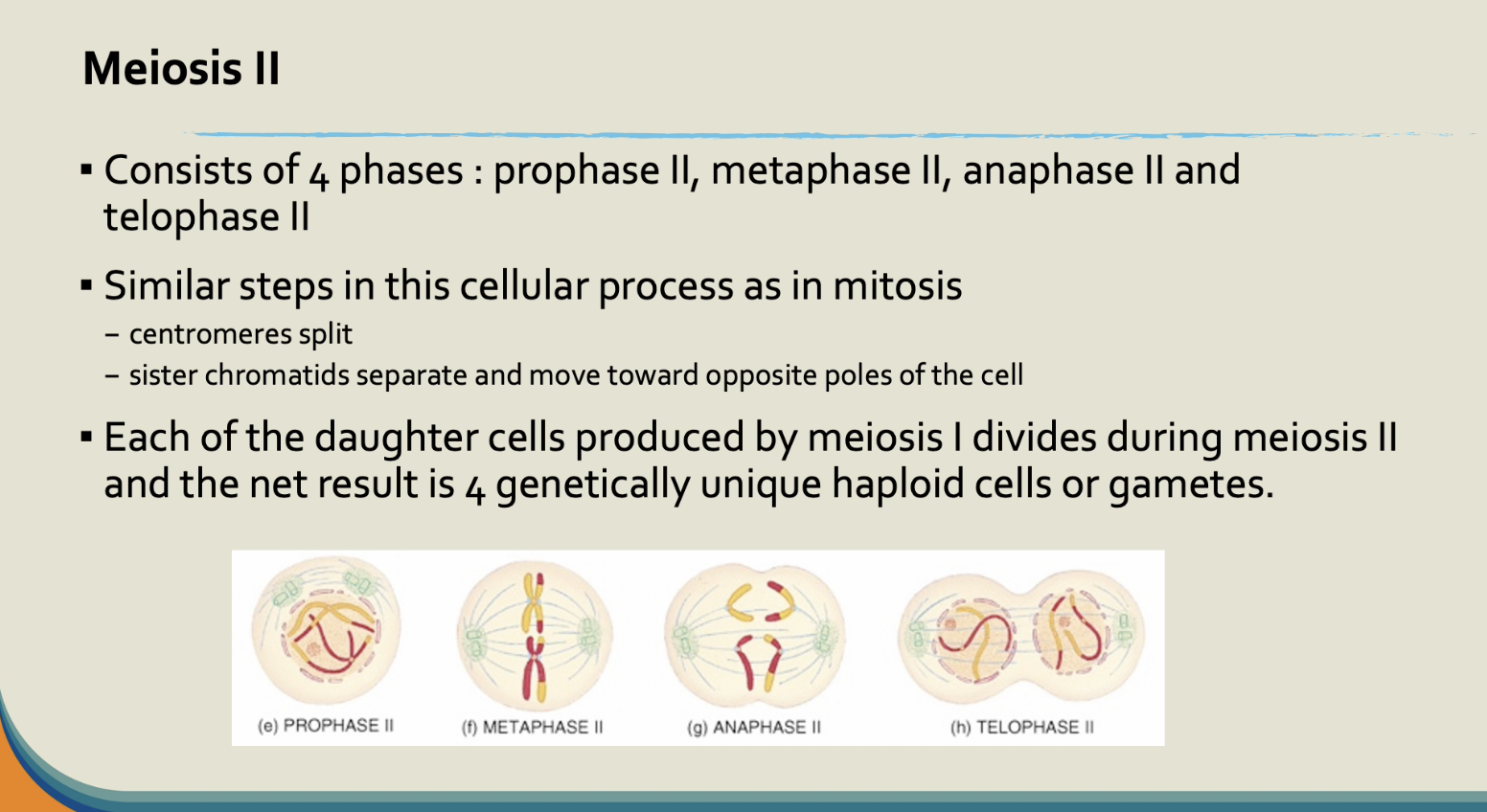
produces by special type of division called meiosis
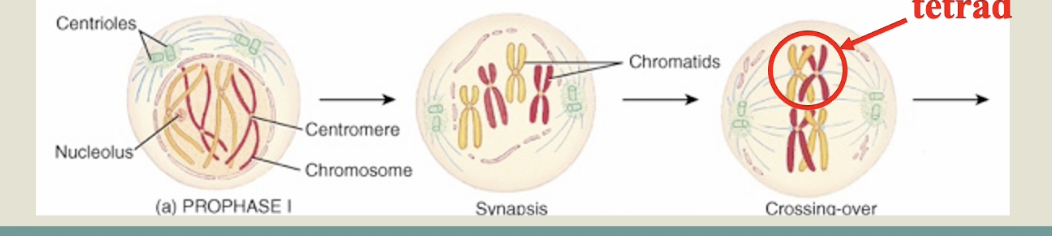
Meiosis I — Prophase I
chromosomes become visibile, mitotic spindle appears, nuclear membrane and nucleoli disappear
events not seen in prophase or metaphase of meiosis II
synapsis: all copies of homologous chromosomes pair off forming a tetrad
crossing over: portions of chromatids are exchanged between any members of the tetrad and parts of maternal chromosomes may be exchanged with paternal ones
genetic recombination produces gametes unlike either parent
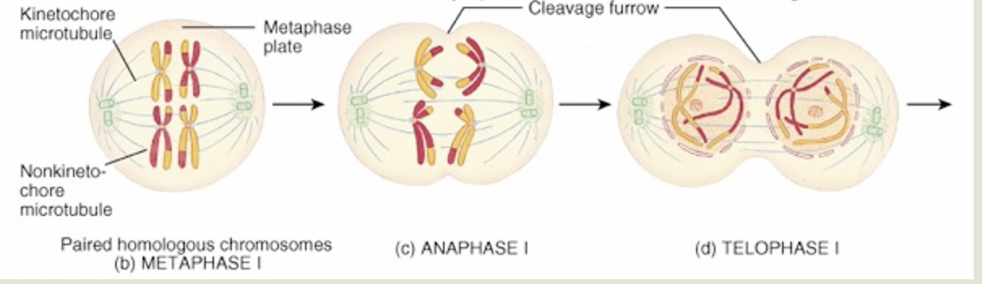
Meiosis I — Metaphase I, Anaphase I, and Telophase I
In metaphase I, homologous pairs of chromosomes line up along metaphase plate with attached microtubules
In anaphase I, each set of homologous chromatids held together by a centromere are pulled to opposite ends of the dividing cell
Telophase I and cytokinesis are similar to mitotic division
Result is 2 cells with haploid number of chromosomes