Accounting Final Chapters
 Call Kai
 Learn
Learn Practice Test
 Spaced Repetition
 Match
Match Flashcards
 Knowt Play
1/94

There's no tags or description
Looks like no tags are added yet.
Name | Mastery | Learn | Test | Matching | Spaced | Call with Kai |
|---|
No analytics yet
Send a link to your students to track their progress
95 Terms
Current Liability
a debt that a company expects to pay within one year or the operating cycle, whichever is longer
current liabilities inlcude
notes payable
accounts payable
unearned revenues
accrued liabilities - taxes payable, salaries and wages payable, and interest payable
notes payable
write a promissory note
frequently issued to meet short-term financing needs
requires the borrower to pay interest
issued for varying periods
accounts payable
typically just a vendor offering a customer 30 days to pay an invoice as a courtesy
sales taxes payable
sales taxes are expressed as a stated percentage of the sales price
selling company (vendor or retailer)
payroll and payroll taxes payable
similar to the requirement for collecting sales tax, employers (businesses) are requires to withhold certain taxes on behalf of their employees
The term “payroll” pertains to both
salaries and wages
salaries
managerial, administrative, and sales personnel (monthly or yearly rate)
wages
store clerks, factory employees, and manual laborers (rate per hour)
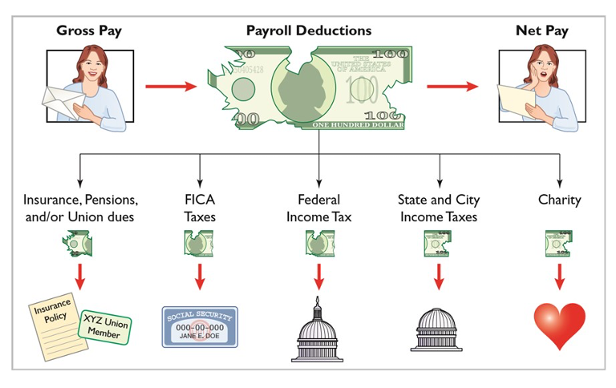
determining the payroll involves computing three amounts
gross earnings
payroll deductions
net pay
net pay =
gross pay - payroll deductions
payroll tax expense
results from additional taxes that governmental agencies levy on employers
payroll taxes include
employer’s share of FICA (social security and medicare)
federal unemployment taxes
state unemployment taxes
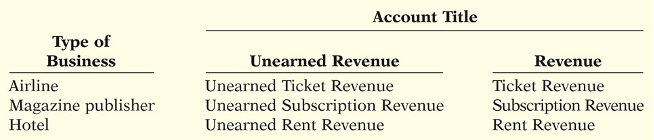
unearned revenues
revenues received by the company, delivers goods or provides services
Current Maturities of Long-term debt
portion of long-term debt that comes due in the current year, no adjusted entry required
long-term liabilities
obligations that are expected to be paid more than one year in the future
bonds
a form of interest bearing notes payable - sold in small denominations, attract many investors, a corporation issuing bonds is borrowing money, the person who buys the bonds (bondholder) is lending money
types of bonds
secured, unsecured, convertible, and callable bonds
the board of directors must stipulate
the number of bonds to be authorized, the total face value, and the contractual interest rate
bond indenture
bond terms are set forth in a legal document
bond certificate
typically a $1,000 face value
represents a promise to pay
sum of money at the designated maturity date, plus periodic interest at a contractual (stated) rate on the maturity amount (face value)
bond trading
bondholders can sell their bonds on national exchanges, bond prices are quoted as a percentage of the face value
current market price (present value) is a function of three factores
dollar amounts to be received
length of time until the amounts are received
market rate of interest
market interest rate
the rate investors demand for loaning funds
determining the market value of a bond calculation
the current market price of a bond is equal to the present value of all the future cash payments promised by the bond

a corporation records bond transactions when it
issues (sells)
redeems (buys back) bonds
when bondholders convert bonds into common stock
if bondholders sell their bond investments to other investors, the issuing compnay recieves no further money on the transaction,
nor does the issuing company journalize the transaction
accounting for bond transaction
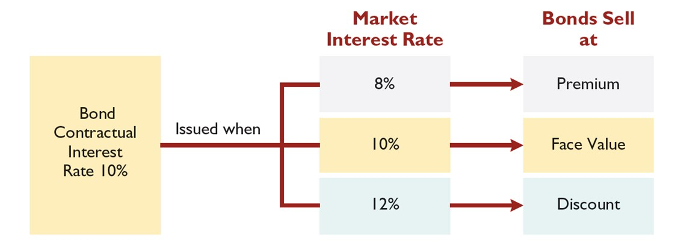
issuing bonds at a discount
sale of bonds below face value (discount) =
total cost of borrowing > interest paid
borrower is required to pay the bond discount at the maturity date
Therefore, the bond discount is considered to be an increase in the cost of borrowing
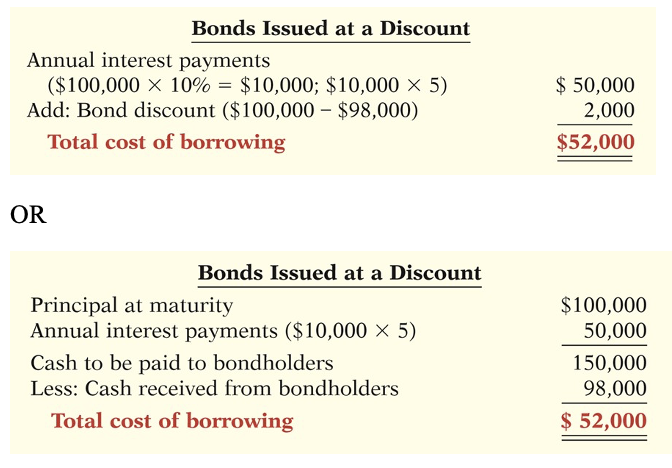
issuing bonds at a premium
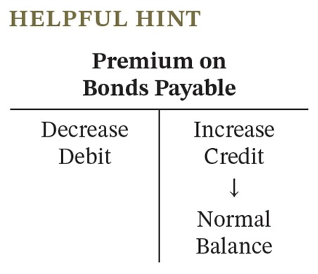
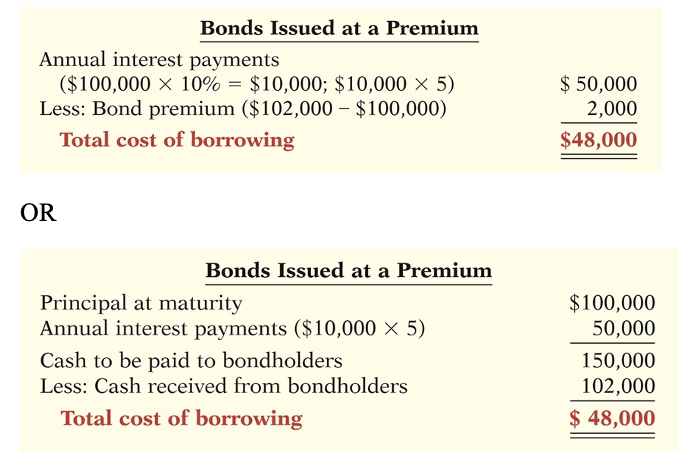
sales of bonds above face value (premium) =
total cost of borrowing < interest paid
borrower is not required to pay the bond premium at the maturity date of the bonds
Therefore, the bond premium is considered to be a reduction in the cost of borrowing
When bonds are redeemed before maturity, it is necessary to
eliminate carrying value of bonds at redemption date
record cash paid
recognize gain or loss on redemption
the carrying value of the bonds
is the face value of the bonds less any remaining bond discount or plus any remaining bond premium at the redemption date
long term notes payable
may be secured by a mortgage that pledges title-specific assets as security for a loan
terms require the borrower to make installment payments over the term of the loan (interest on the unpaid balance of the loan and a reduction of the loan principal)
Companies initially record mortgage notes payable at face value
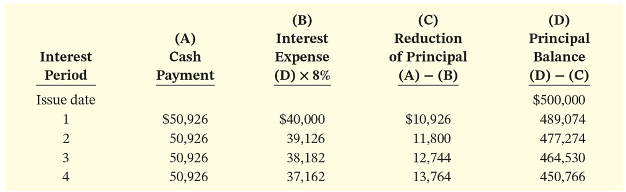
each payment on a mortgage note payable consists of
interest on the unpaid balance of the loan and a reduction of the loan principal
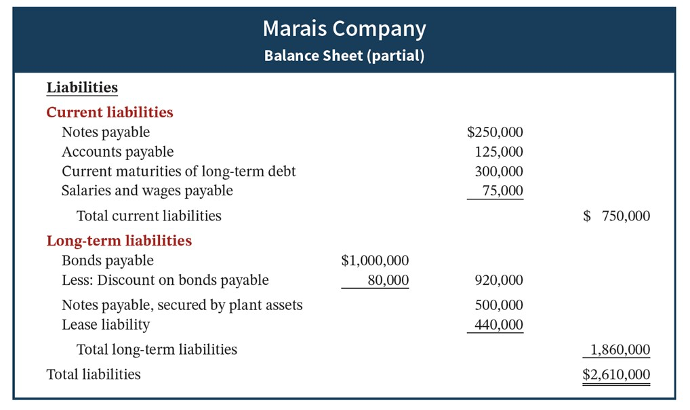
Balance sheet current liabilities and long term liabilities
liquidity
the ability to pay maturing obligations and meet unexpected needs for cash
the relationship of current assets to current liabilities is critical in analyzing liquidity we can express this relationship as
dollar amount (working capital) and ratio (current ratio)
working capital
the excess of current assets over current liabilities

current ratio
permits us to compare the liquidity of different sized companies and of a single company at different times

solvency
the ability of a company to survive over a long period of time
two ratios that provide information about long run solvency and the ability to meet interest payments as they come due are
debt to assets ratio and times interest earned

the higher the percentage of debt to assets
the greater the risk that the company may be unable to meet its maturing obligations
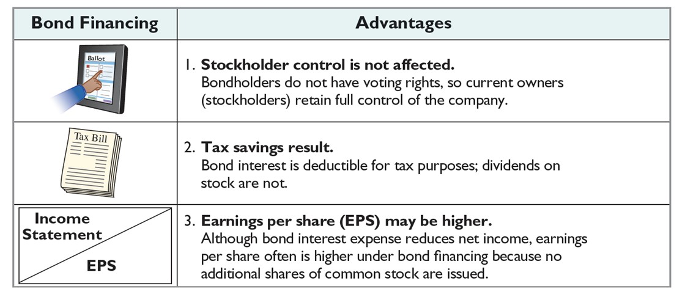
bond financing
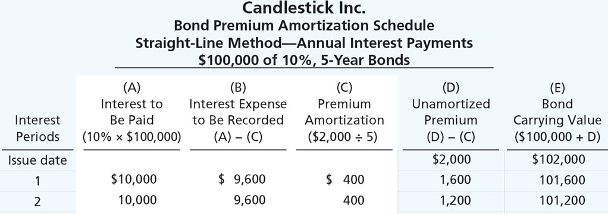
amortizing bond premium
Dec. 31 | Interest Expense | 9,600 | |
Premium on Bonds Payable | 400 | ||
Interest Payable ($100,000 x 10%) | 10,000 |
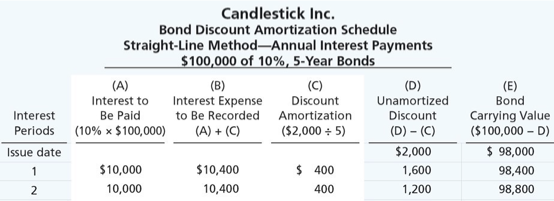
amortizing bond discount
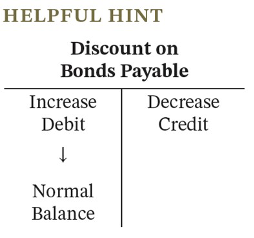
Dec. 31 | Interest Expense | 10,400 | |
Discount on Bonds Payable | 400 | ||
Interest Payable ($100,000 x 10%) | 10,000 |
major characteristics of a corporation
an entity separate and distinct from its owners, privately held corporations are also referred to as closely held corporations
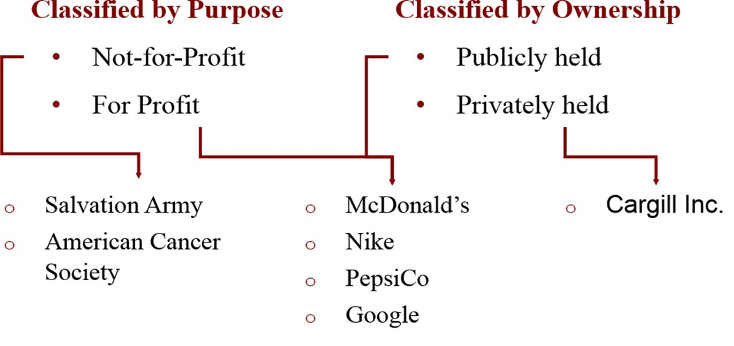
characteristics that distinguish corporations from proprietorships
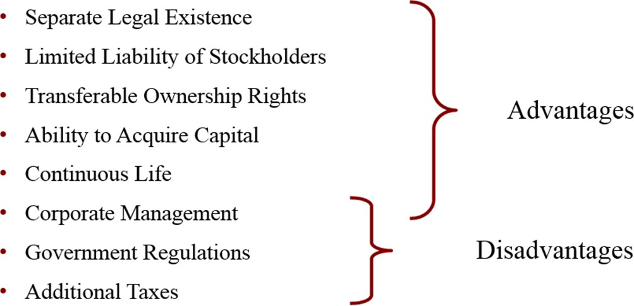
separate legal existence
corporation acts under its own name rather than in the name of its stockholders
transferable ownership rights
shareholders may sell their stock
ability to acquire capital
a corporation can obtain capital through the issuance of stock
continuous life
continuance as a going concern is not affected by the withdrawal, death, or incapacity of a stockholder, employee, or officer
corporation management
separation of ownership and management often reduces an owners ability actively manage the company
government regulations
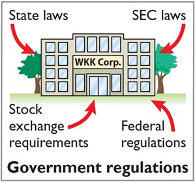
additional taxes
corporations must pay income taxes as separate legal entity, and in addition, shareholders must pay taxes on cash dividends
forming a corporation initial steps
file an application with the secretary of state
the state grants a charter
the corporation develops bylaws
corporations engaged in interstate commerce must obtain a
license from each state in which they do business
stockholders rights
vote in election of board of directors at annual meeting and vote on actions that require stockholder approval
share the corporate earnings through receipt of dividends
keep that same percentage ownership which new shares of stock are issued (preemptive right)
share in assets upon liquidation in proportion to their holdings
residual claim
owners are paid with assets that remain after all other claims have been paid
charter indicates the maximum number of shares that a corporation is
authorized to sell
issuance of stock
companies issue common stock directly to investors or indirectly through an investment banking firm
factors in setting the price for a new issue of stock
the company’s anticipated future earnings
expected dividend rate per share
current financial position
current state of the economy
current state of the securities market
years ago par value determined the legal capital
per share that a company must retrain in the business for the protection of corporate creditors
no-par value stock
is fairly common today
in many states, the board of directors assigns a
stated value to no-par shares
corporate capital - proprietorship versus corporation
comparison of owners equity (stockholders equity) accounts reported on the balance sheets of a proprietorship and a corporation
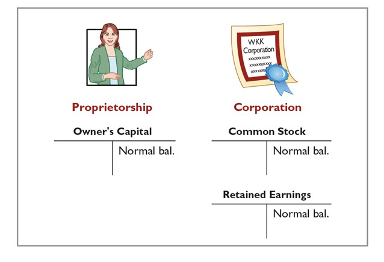
paid in capital
is the total amount of cash and other assets paid in to the corporation by stockholders in exchange for capital stock
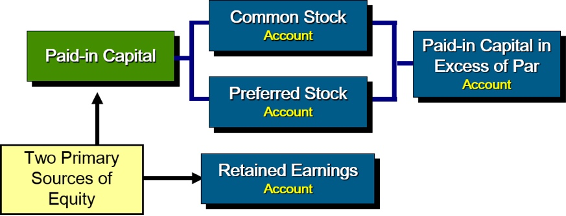
retained earnings
is net income that a corporation retains for future use
accountings for common stock primary objectives
identify the specific sources of paid-in capital
maintain the distinction between paid-in capital and retained earnings
corporations also may issue stock for
services (attorneys or consultants)
non-cash assets (land, buildings, and equipment)
cost is either the fair value of the consideration given up
or the fair value of the consideration received, whichever is more clearly determinable
preferred stockholders have a priority as to
distributions of earnings (dividends)
assets in the event of liquidation
accounting for preferred stock
generally do not have voting rights
accounting for preferred stock at issuance is similar to that for common stock
preferred stock may have a par value or no-par value
Treasury stock
is a corporations own stock that is has reacquired from shareholders but not retired
corporations acquire treasury stock for various reasons
to reissue the shares to officers and employees under bonus and stock compensation plans
to enhance the stocks market value
to have additional shares available for use in the acquisition of other companies
to increase earnings per share
companies generally use the
cost method
debit treasury stock for
the price paid to reacquire the shares
treasury stock is a
contra stockholders equity account, reduces stockholders equity
treasury shares do not have
dividend rights or voting rights
sale of treasury stock
above cost
below cost
both increase total assets and stockholders equity
distribution
of cash or stock to stockholders on a pro rata (proportional to ownership) basis
types of dividends
cash divdends
property dividends
stock dividends
scrip (promissory notes)
cash dividends
retained earnings, adequate cash, and declared divdends
retained earnings
payment of cash dividends from retained earnings is legal in all states
holders of cumulative preferred stock
must be paid any unpaid prior year dividends and their current year dividend before common stockholders receive dividends
if stock is noncumulative
preferred stockholders are only entitled to receive their share of dividends declared in the current year (not prior years)
stock dividends
a pro rata (proportional to ownership) distribution of the corporations own stock to stockholders
reasons why corporations issue stock dividends
satisfy stockholders dividend expectations without spending cash
increase marketability of the corporations stock
emphasize a portion of stockholders equity has been permanently reinvested in the business
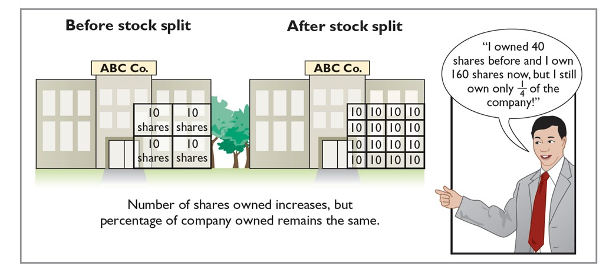
A stock split changes
the par value per share but does not affect any balances in stockholders equity
retained earnings is net income that a company retains in the business
part of the stockholders claim on the total assets of the corporation
debit balance in retained earnings is identified as a deficit
restrictions can result from
legal restrictions
contractual restrictions
voluntary restrictions