Modern Biology Chapter 45: Defenses against Disease
 Call Kai
 Learn
Learn Practice Test
 Spaced Repetition
 Match
Match Flashcards
 Knowt Play
1/58

There's no tags or description
Looks like no tags are added yet.
Name | Mastery | Learn | Test | Matching | Spaced | Call with Kai |
|---|
No analytics yet
Send a link to your students to track their progress
59 Terms
Every organism is constantly exposed to pathogens, so the body has three lines of defense against pathogens, being?
Physical Barriers
Innate immune system
Adaptive immunse system
Their are many Physical Barriers like the? (Hint: Next few slides will go over Physical barriers)
Tight junctions between epithelial cells of the body surface keep most pathogens and toxins from entering
What is secreted by many epithelial cells?
A mucus layer to protect against pathogens, toxins, and other chemicals
In the respiratory tract, what is their?
Ciliated cells that sweep away mucus, trapped bacteria, and other foreign matter
Some mucus layers will do what?
Produce chemicals (acids, digestive enzymes, lysozyme) that are hostile to pathogens
Name some types of Physical Barries (Aren’t part of the immune system)
-Skin, Hair, Cilia
-Mucus membranes
-Mucus and chemical secretions
-Digestive enzyme in mouth
-Stomach Acid
Their are two different immune systems being?
Innate and Adaptive (acquired)
Innate immunity will provide an?
Immediate, nonspecific response to cellular pathogens such as bacteria and viruses
Innate Immunity will not have?
Memory of prior exposure to the pathogen
Innate immunity only has?
Inherited mechanisms that protect the body from pathogens in a nonspecific way
Adaptive is specific, meaning it?
Recognizes individual pathogens and mounts an attack that directly neutralizes or elimates them
Adaptive immunity will retain a?
Cellular memory of a pathogen and react quickly upon second exposure
Inherited mechanism will lead to the?
Synthesis of molecules that target pathogens in a specific way
Comparison of Innate and Adaptive Immune Systems
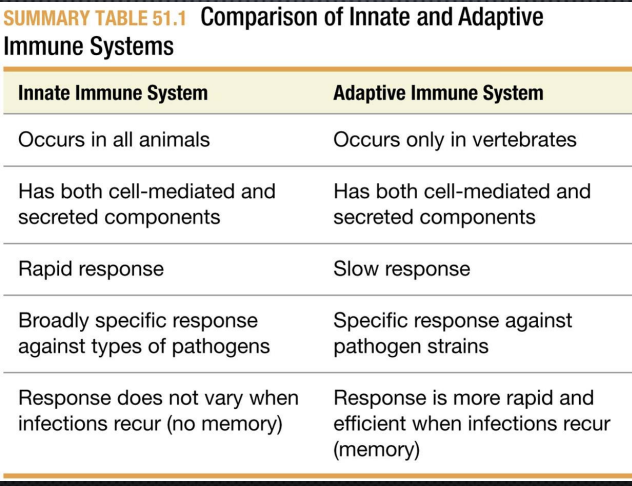
Name the main facts of Innate Immunity
-Its in all animals
-Recognitions of traits shared by broad ranges of pathogens, using a small set of receptors
-Rapid responses
Name the main facts about Adaptive Immunity
-Vertebrates Only
-Recognitions of traits specfic to particular pathogens, using a vast array of receptors
-Slower responses
Barrier Defenses, and Humoral Response
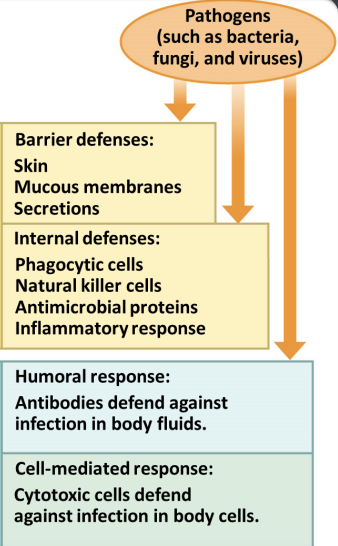
The innate immune system provides some protection against invading pathogen, while the?
A more powerful, specific response system is mobilized, which can take several days
The two components of the immune system will?
Interconnect and communicate at chemical and cellular levels
When a pathogen is encountered for the first time, the body will need?
7 to 10 days to develop an effect specific response
During that time what will occur?
The innate immunity will hold off invading pathogens, killing or containing them until adaptive immunity is devloped
Innate immunity has both?
Molecular and cellular components
Most white blood cells (leukocytes) will originate from?, and be released into?
Originate from Stem Cells in Bone Marrow
Are released into the blood
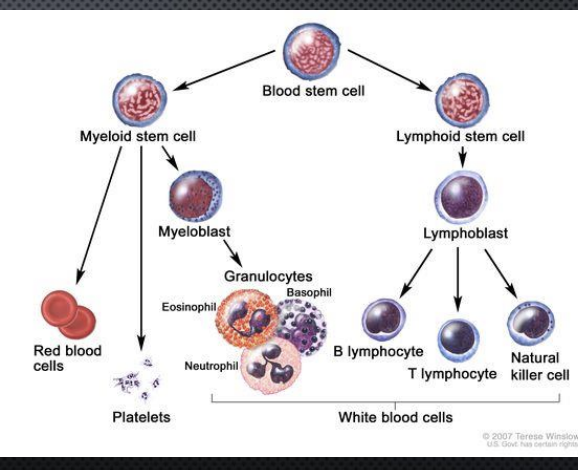
Lymphocytes will form in the?
Bone marrow and then migrate to the thymus
Leukocytes and their derivates along with several type of plasma proteins are responsible for?
The activites of the two immune systems
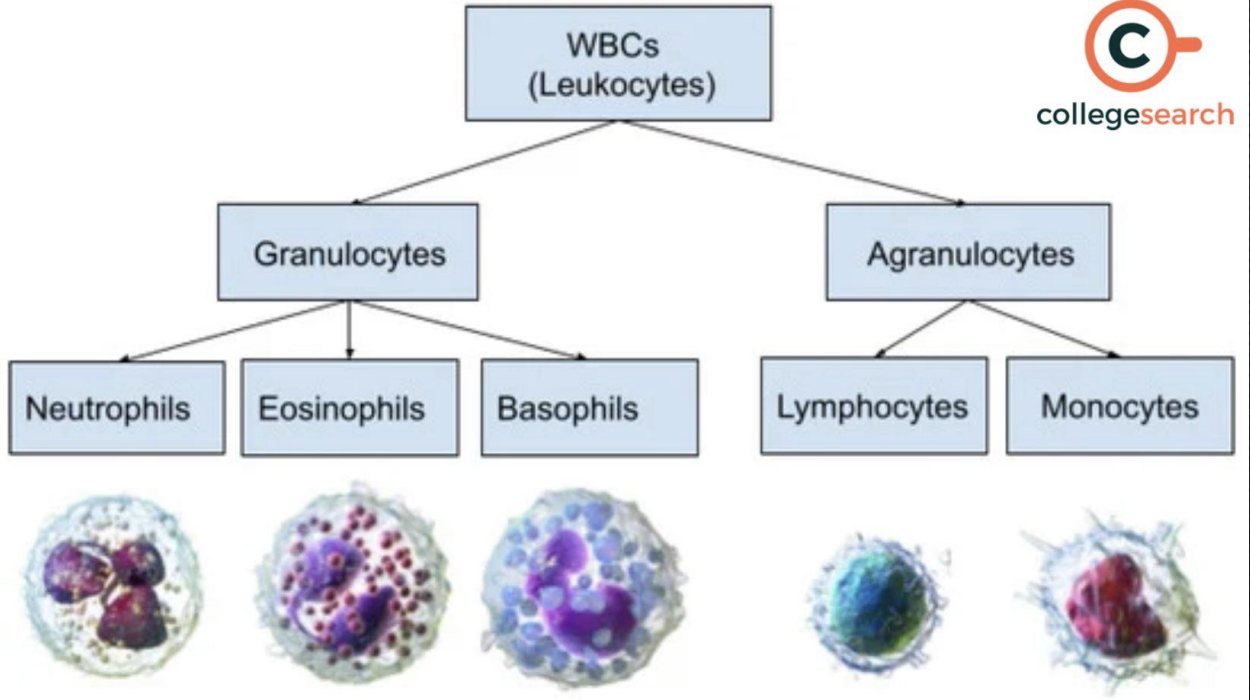
Some white blood cells are?
Phagocytes that engulf foreign particles
White Blood Cell Diagram
How do most cellular pathogens (microorganisms) usually enter the body?
When injuries break the skin of epithelial surfaces
Specific Cell-Surface receptors in the host recognize?
Various type of molecules on microbial pathogens
Depending on the receptor, the response may?
Secrete antimicrobial peptides that kile the microbe
Trigger the host cell to engulf and destroy the pathogen, initiating inflammation
Activate the complement system
All our epithelial surfaces, inside and out, are protected by?
Antimicrobial peptides called defensins
Epithelial cells secrete defensins when?
Attacked by a microbial pathogen
Defensins attack the?
Plasma membrane of pathogens, eventually disrupting them, thereby killing the cells
-Recruit immune cells (chemotaxis)
-Neutralize toxins
In particular, Defensins play a signficat role in?
Innate immunity of the Mammalian Intestinal Tract
The innate immune system recognizes?
Pathogen-Associated Molecular Pattern that are associated with Pathogenic Organisms but are absent in the host
The patterns are recognized by?
Pattern Recognition Receptors of Phagocytic cells
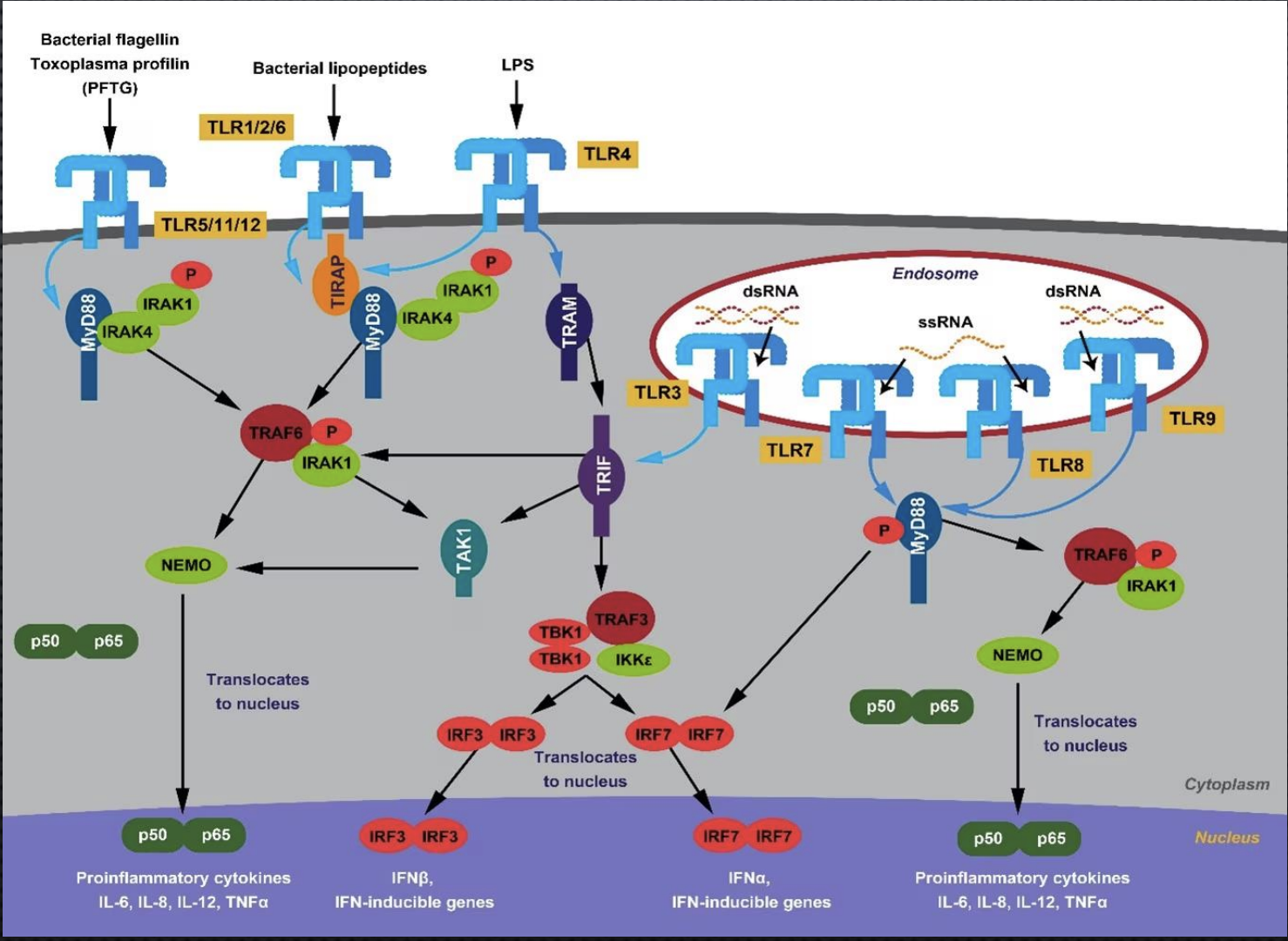
Toll-Like Receptors are?
Receptors found on cell surface, and within the cell on various membrane-bound compartments
Humans have how many Toll-Like Receptors?
10
Diagram of Hematopoietic Stem and Progenitor Cell Reprogramming
The diagram shows that hematopoietic stem and progenitor cells (HSPCs) can be reprogrammed by microbial signals (like BCG, β‑glucan, LPS, CpG DNA, chitin, helminths, CMV). This reprogramming changes how the HSPC behaves, causing it to produce innate immune cells (monocytes, macrophages, dendritic cells, NK cells, neutrophils) that have enhanced or altered functional responses. This process is called trained immunity.
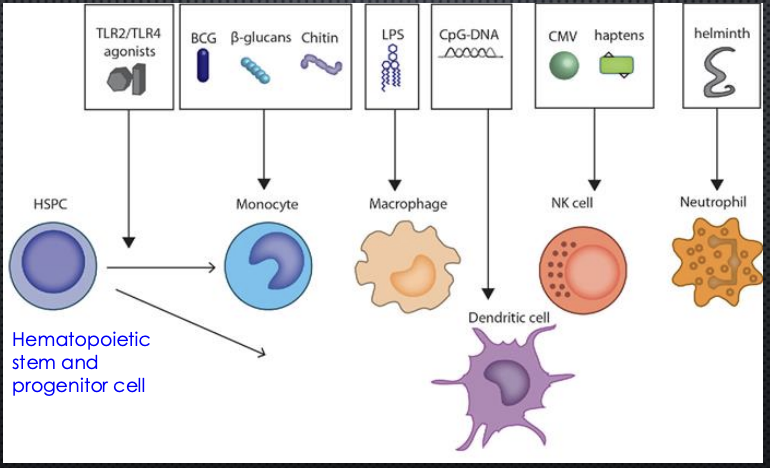
Diagram of different Toll Like Receptors
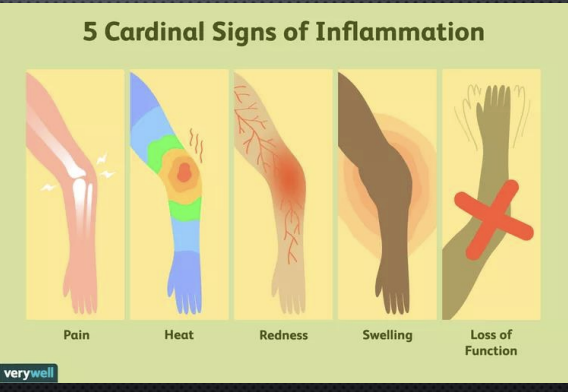
Infection by most pathogens involves?
Inflammation - the heat,pain, redness, and swelling aht initially or exclusively occur at site of infection
At the site of an infection
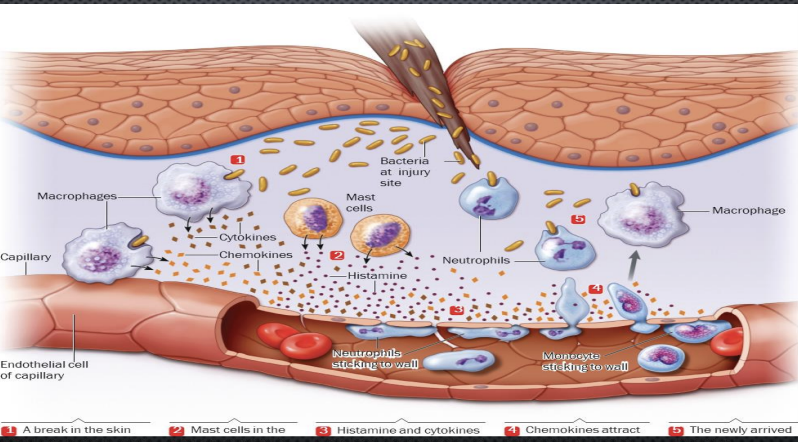
Cell-Surface Receptors on Macrophages will?
Recognize and bind to pathogen, activating the macropahge
Activated macrophages will?
Secrete Cytokines which bind host cells and trigger a response
Tissue damage will activate?
Mast Cells, which release histamine (an inflammatory signaling molecule)
Histamine and Cytokines will?
Dilate local blood vessels, and increase their permeability
Cytokines will do what to the Blood Vessel wall?
Make it stickier, causing circulating neutrophils and monocytes to attach to it
Neutrophils and monocytes are attracted to the infection site by?
Chemokines secreted by activated macrophages
Monocytes differentiate into?
Macrophages and work with Neutrophils to engulf the pathogens
When pathogens (such as parasitic worms) are too large to be engulfed, what will occur?
Macrophages, Neutrophils, and Eosinophils cluster around the pathogen, and kill it be secreting large amounts of Lysosomal enzymes and Defensins
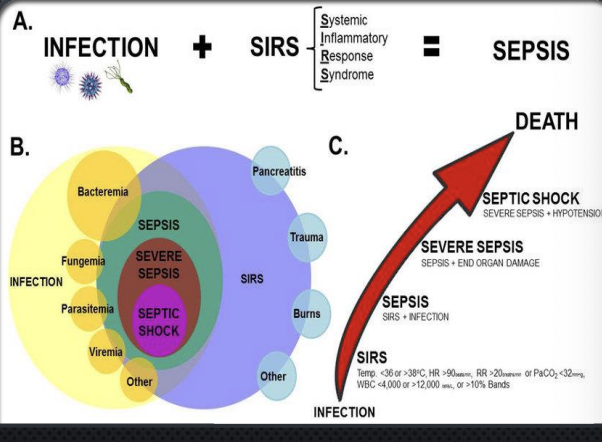
Systemic inflammation may involve the onset of?
Fever
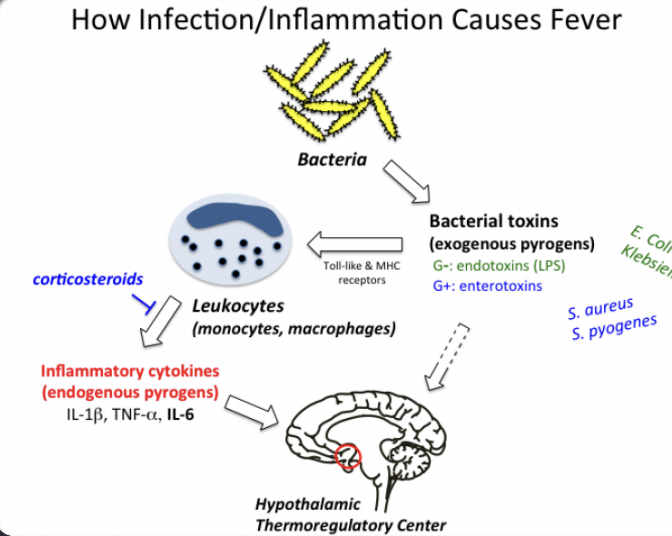
Macrophages release _______ that stimulate the?
Pyrogens that stimulate the Hypothalamus to release locally-acting prostaglandins
Prostaglandins signal the?
Hypothalamic thermostat that regulates body temperature to produce the fever
How may fever help fight against infection?
By enhacing phagocytosis or by interfering with bacterial propagation
The Complement System is a System that includes more than 30 interacting plasma proteins that will?
Circulate in blood and interstitial fluid, and are activated by molecules on the surface of pathogens
Some will assemble into?
Membrane Attack Complexes
These MAC’s will do what?
Insert into the plasma membrane of bacterial cells, and create pores that allow ions and small molecules to pass through
What is a result of allowing these ions to pass through?
Bacteria can’t maintain osmotic balance, forcing them to swell and lyse
For viral pathogens, the innate immune system is unable to detect the virus as it is contained inside host cell, so instead it will use two main strategies being?
Interferon
Natural Killer Cells