ch 9: lipids and membranes
 Call Kai
 Learn
Learn Practice Test
 Spaced Repetition
 Match
Match Flashcards
 Knowt Play
1/63

There's no tags or description
Looks like no tags are added yet.
Name | Mastery | Learn | Test | Matching | Spaced | Call with Kai |
|---|
No analytics yet
Send a link to your students to track their progress
64 Terms
What are lipids?
molecules that are not soluble in water
amphipathic lipids
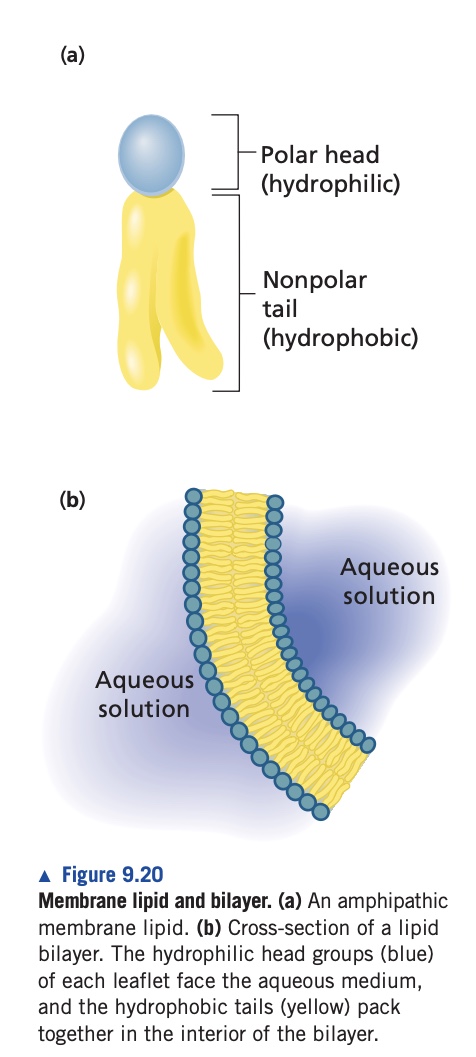
Lipids that contain a hydrophilic (polar head) and a hydrophobic (non-polar tail).
What are the structures of a fatty acid?
A carboxyl group (-COOH) at the head, long hydrophobic tail and polar heads. They are usually cis.
Saturated Fatty Acids
Fatty acids that do contain a carbon-carbon double bond.
Unsaturated Fatty Acids
Fatty acids that contain carbon-carbon double bonds.
Monounsaturated vs Polyunsaturated acids
One double bond = mono
More than one = poly
Physical properties of saturated fatty acids
Presented as waxy solids
Longer hydrocarbon chains influence their melting points.
Physical properties of unsaturated fatty acids
Presented as liquids
Cis-unsat. fatty acids have lower melting points, this causes them to appear as liquids.
Precursor for fatty acids
Most fatty acids are esterified to glycero to create complex lipid molecules.
Essential fatty acids
linolate and linolenate
Structure of Triaglycerols
Three fatty acyl residues that are esterified to glycerol using dehydration synthesis.
Their long saturated fatty acyl groups are solids.
unsat fats in triacyglycerols are liquids
Hydrophobic
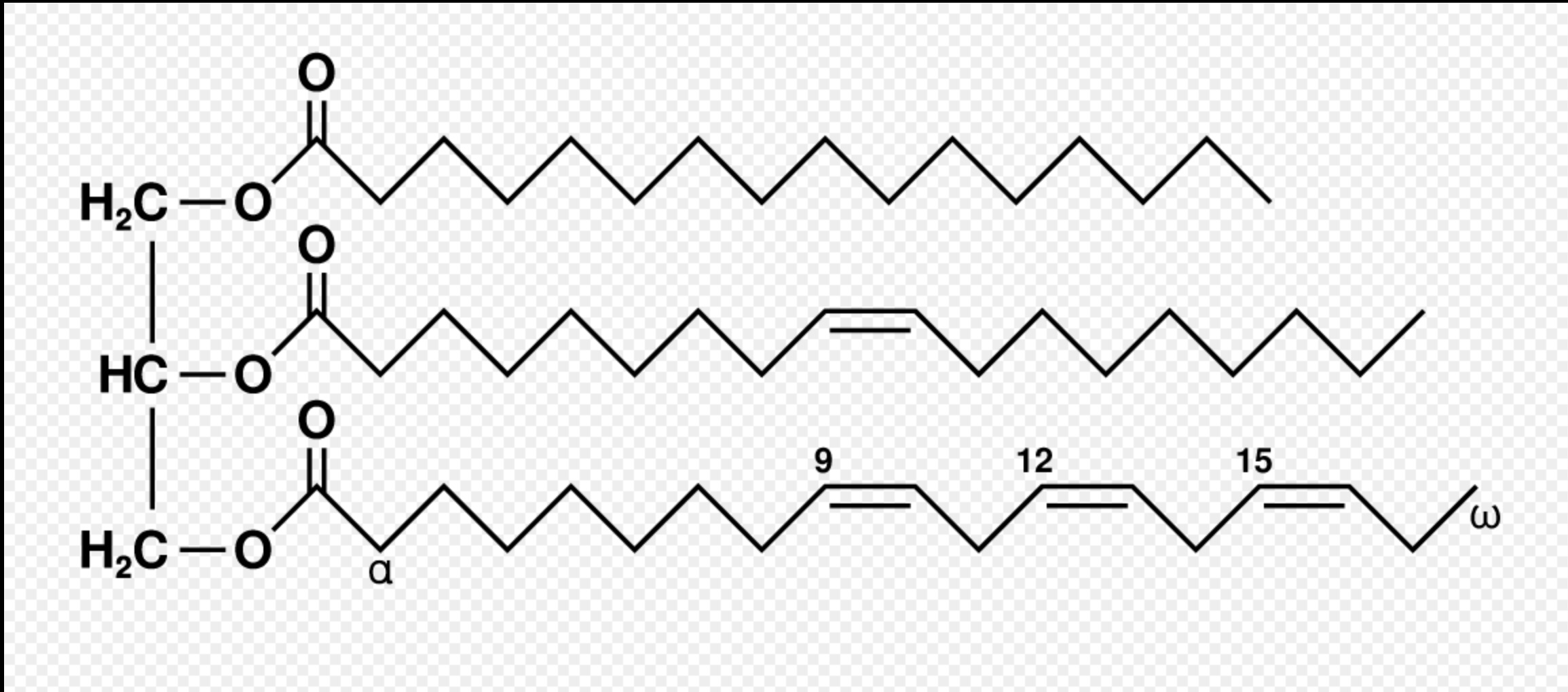
What are fats and oils made up of?
Triaglycerols
Glycerophosphlipids structure
consists of TWO fatty acyl groups that are esterified to C-1 (saturated) and C-2 (unsaturated) of glycerol 3-phosphate.
They are amphiphatic molecules with a polar head and long, nonpolar tails.
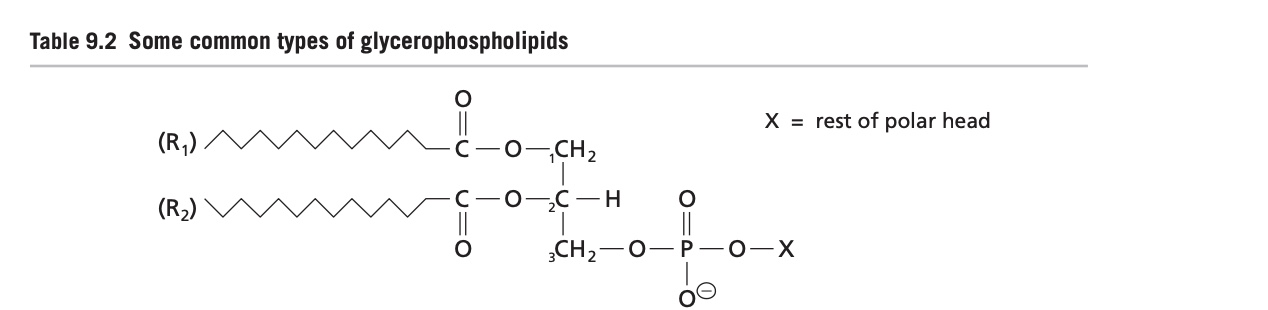
Phosphatidates
a type of glycerophospholipids shown in small amounts such as intermediates in biosynthesis.
Phosphate grp is esterified to glycerol and another compound bearing an -OH grp.
What are the three types of glycerophospholipids
phosphatidylethanolamine
phosphatidylserine
phosphatidylcholine
Plasmalogens
type of glycerophospholipids
Attached to a vinyl ether instead of ester
Sphingolipids
2nd most found lipid in plany + animal membrane
Structure of sphingolipids
Trans 4-sphingeine, unbranched C18 alcohol with a trans double bond between C-4 and C-5, an amino grp at C2, hydroxyl groups at C-1 and C-3.
Ceramide
Mteabolic precursors of sphingolipids.
Consists of fatty acyl grps linked to C-2 amino groups.
3 major families of sphingolipids
cerebrosides: glycosphingolipids that have one monosaccharide residue attached by a beta-glycosidic linkage to C-1 of a ceramide.
gangliosides: glycosphingolipid that has oligosaccharide chains containing NeuNAc attached to a ceramide.
sphingomyelins: phospholcholine attached to c-1 hydroxyl grp of ceramide.
What disease do gangliosides arise?
Tay-sachs disease which is caused by excessive storage of GM2 gangliosides in lysosomes.
Steroids
found in membranes of eukaryotes and rarely found in bacteria.
Classified as isoprenoids b/c of its 5-carbon molecule: isoprene.
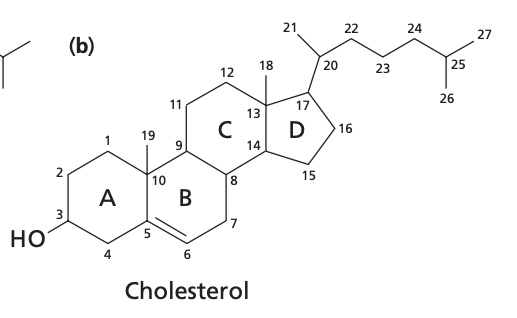
Structure of steroids
four fused rings: three six-carbon rings (A/B/C) and a five carbon ring (D.)
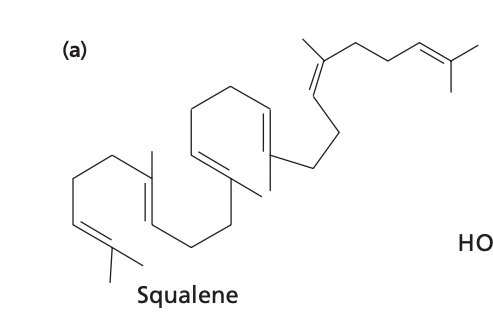
Squalene
precursor of most steroids
Cholesterol
found in plant membranes and is a sterol b/c of its hydroxyl grp at C-3
Precursor of steroid hormones and bile salts.
Testosterone
steroid hormone involved in male development
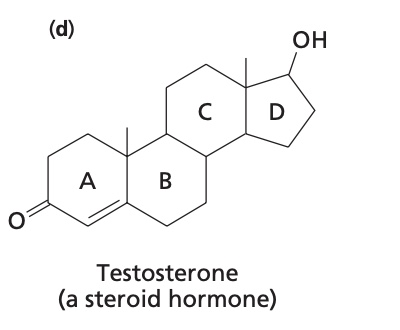
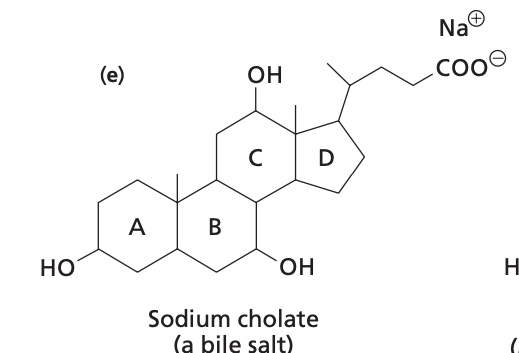
Sodium cholate
bile salt
What are Waxes? What is an example of a wax?
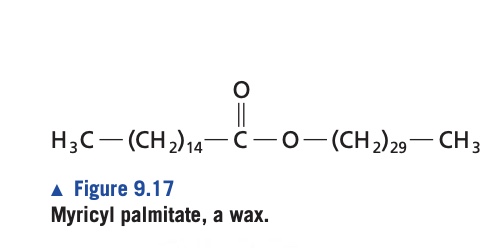
nonpolar esters of long-chain fatty acids and long-chain monohydroxylic alcohols.
Ex: myricyl palmitate, component of beeswax, ester of palmitate and 30-carbon myricyl alcohol. Hydrophobicity of myricyl palmitate makes beeswax very insoluble and has a high melting point b/c of its hydrophobicity and long saturated chain.
What are Eicosanoids?
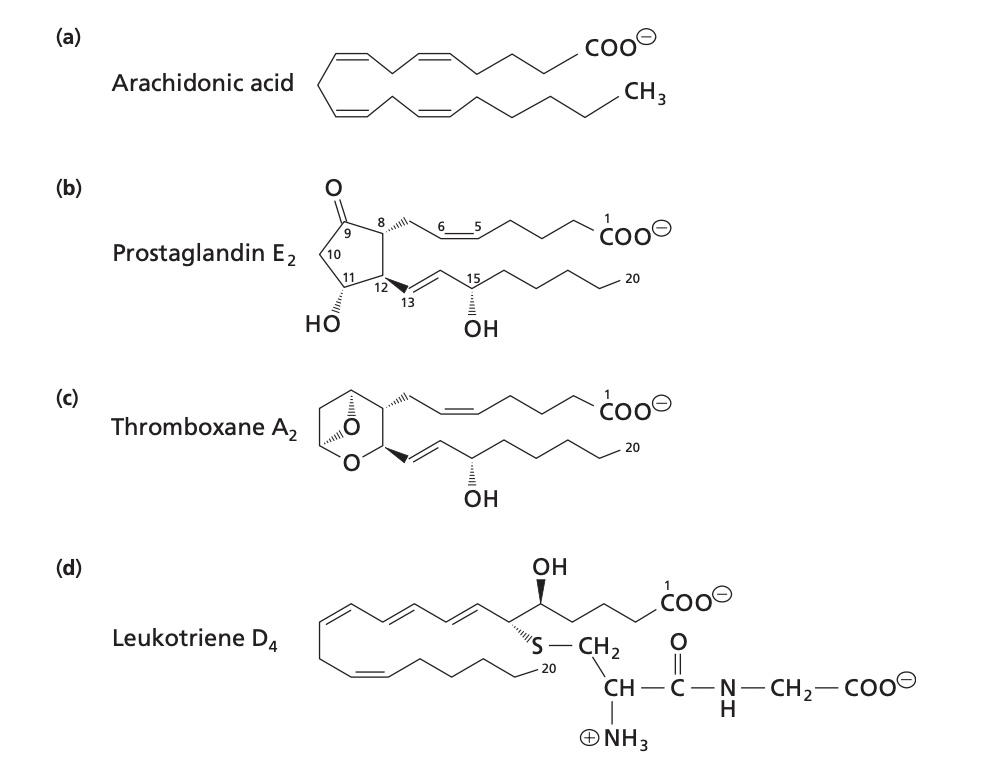
Oxygenated derivatives of C20-polyunsaturated fatty acids, such as arachidonic acid.
What is an example of an eicosanoid?
Prostaglandins: eicosanoids that have a cyclopentane ring.
E2: causes vonstriction of blood vessels. and thromboxane A2 is involved in the formation of blood clots.
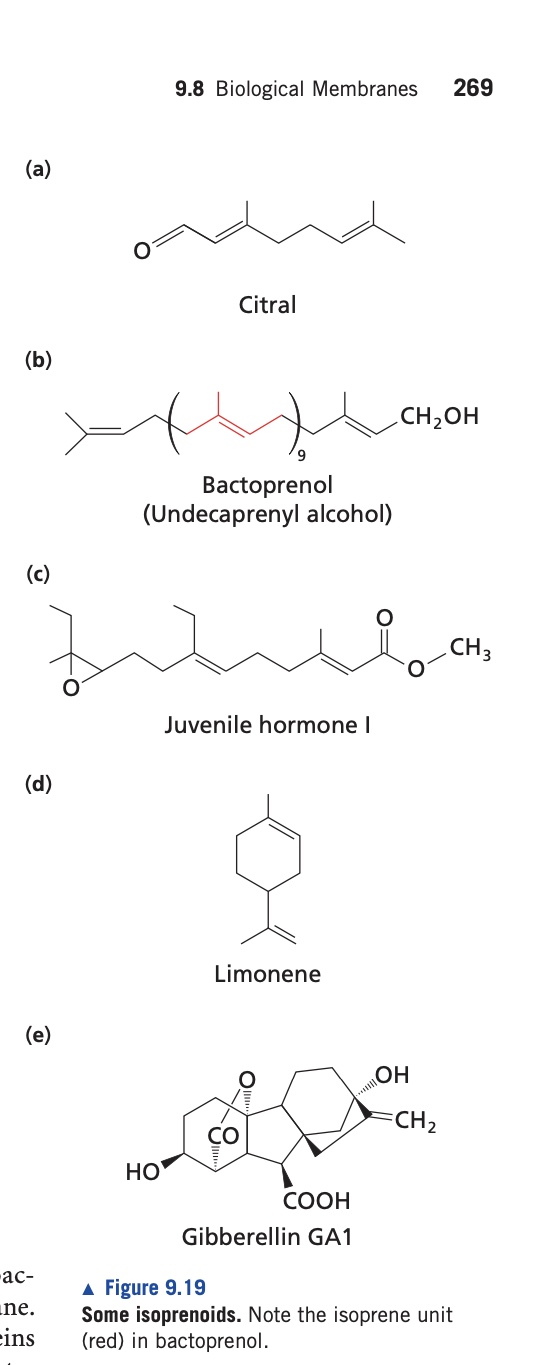
Isoprenoids
called terpenes —> used to modify and form a complex class of lipids called terpenoids.
NOT STEROIDS
Vitamins A,E, and K are isoprenoids that contain long hydrocarbon chains or fused rings.
Bilogical membranes
membranes that define external boundaries of cells and seperate components within the cell.
Structure of biolgical membranes
Two layers of lipid molecules and proteins.
Functions of biplogical membranes
controls transport of ions
generates and maintains the proton concentration gradients (essential for production of atp.)
Lipid Bilayer
formbed by hydrophobic interactions
Main structual component for membrames, is the plasma membrane and internal membrane of eukaryotic cells
Non-coalent interaction occurs in the lipid molecules to allow them to be flexible and self seal.
Triaglycerols CANNOT
Form bilayers and cholesterol.
What are the three types of membrane proteins?
Integral membrane proteins:
Peripheral membrane protein:
Lipid-Anchored Membrane Proteins:
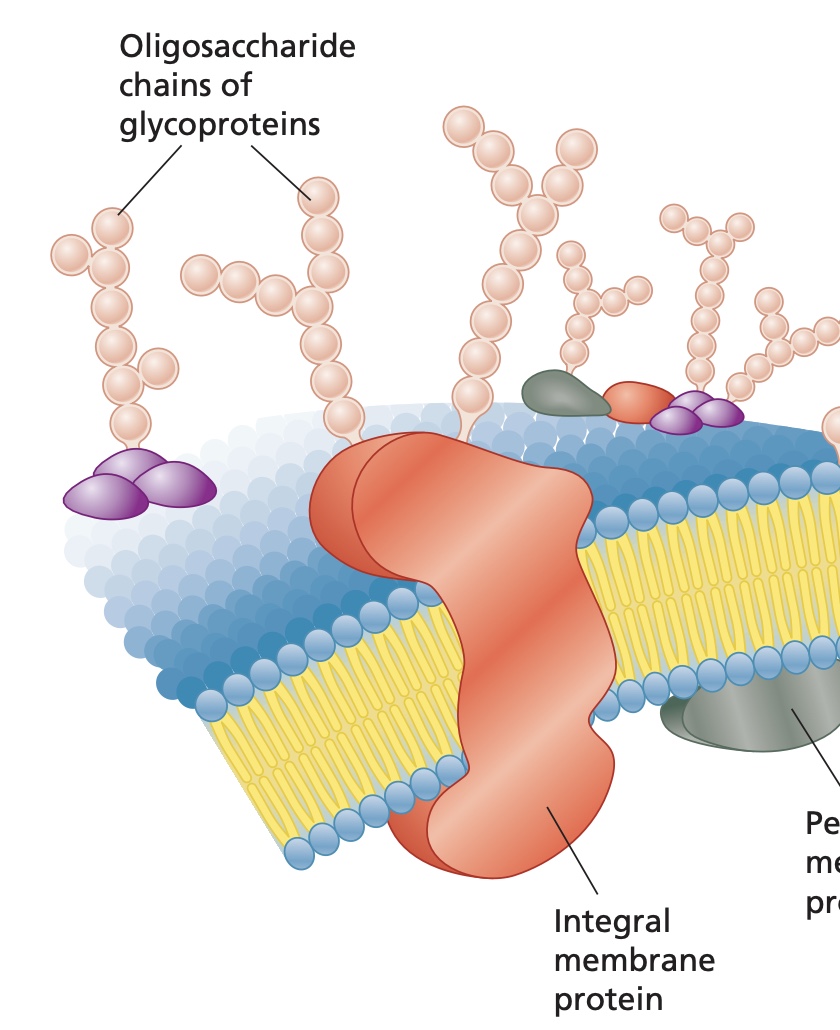
Integral membrane proteins:
Structure: Hydrophobic regions embedded in the hydrophobic cone of the lipid bilayer.
Spanning throughout the bilayer, one part of the protein is exposed and one part is found in the inner surface.
Ex of inegral membrane protein
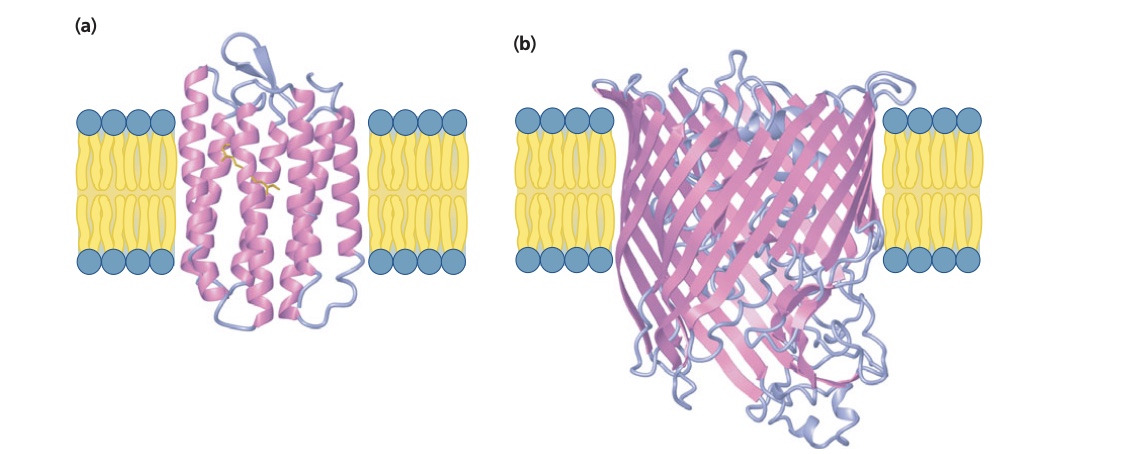
Bacteriorhodopsin, found in the cytoplasmic membrane at halobacterium halobium
Structure: seven alpha-helices exterior surface of the helix is hydrophobic and interacts with lipid molecules in the membrane.
Two classes of integral membrane proteins
ALPHA-Helix bundle:
B-barrel fold proteins (exterior surface:exterior surface of the b-strands contacts the membrane lipids and center of the barrel often serves as a pore or channel for passing molecules from one side to the other.
Peripheral membrane protein:
Assoicated with one face of the membrane thru charge interactions and hydrogen bonding with integral membrane proteins or with the polar head groups of membrane lipids.
Dissociate from membranes by changes in pH or ionic strength.
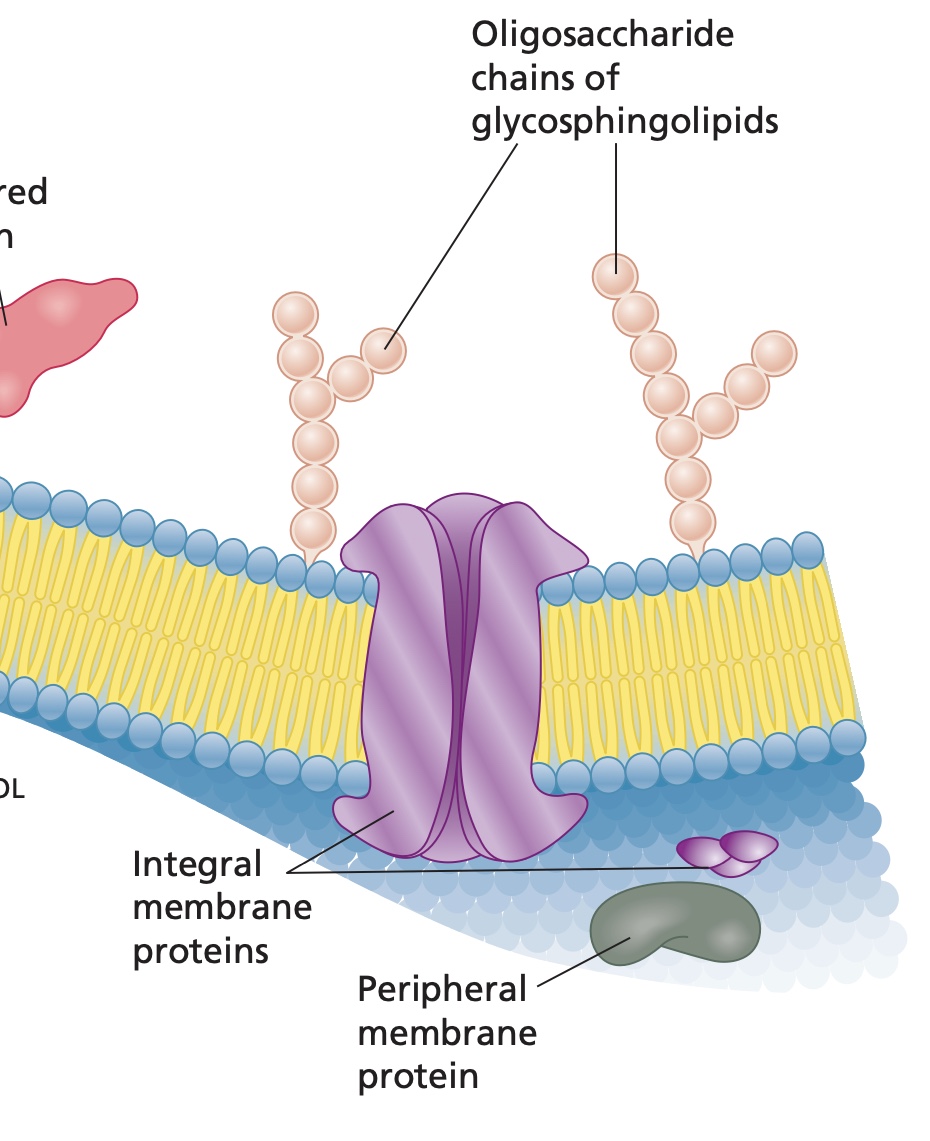
Lipid-Anchored Membrane Proteins:
Tethered to a membrane thru a coalent bodn to a lipid anchor.
Lipid anchor:
A lipid anchor is an amino acid side chain linked by an amide or ester bond to a fatty acyl group from myristate or palmitate.
Covalently linked to isoprenoid chains thru gthe sulfur atom of a cysteine reside.
Prenylated proteins are found on the cytoplasmic face of both plasma and intracellular membranes,
Can also be linked to glycosylphosphatidylinositol.
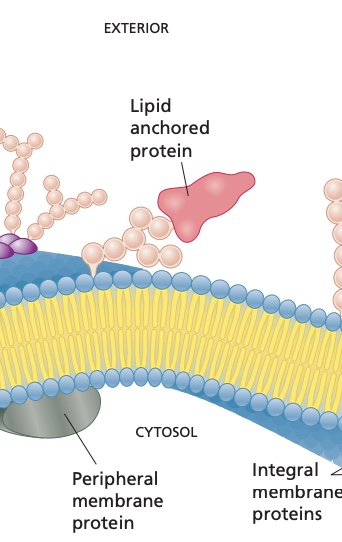
Fluid mosiac model of biological membranes.
describes the arrangement of lipid and proteins in a membrane.
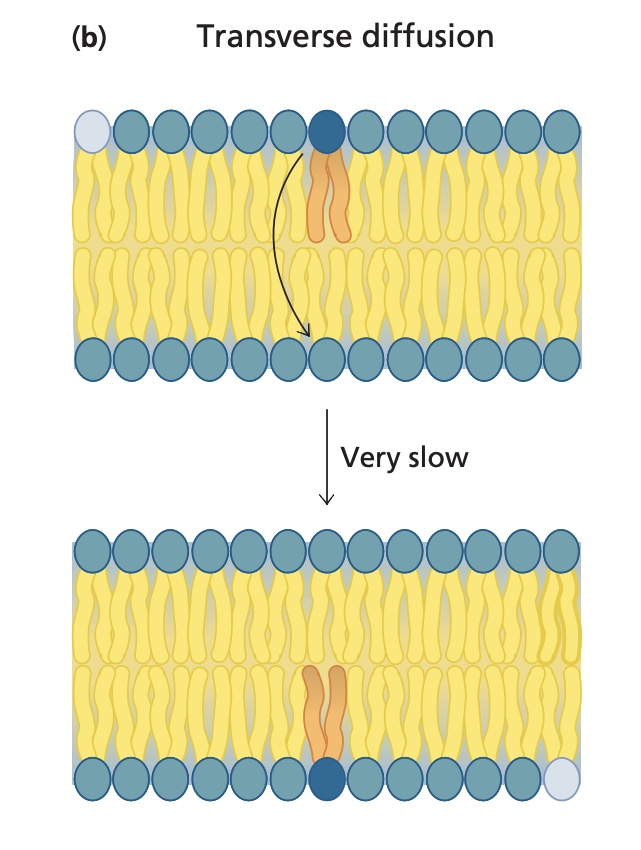
transverse diffusion (flip-flop) ( sec 9.9)
passage of lipids from one mono layer of the bilayer to the other.
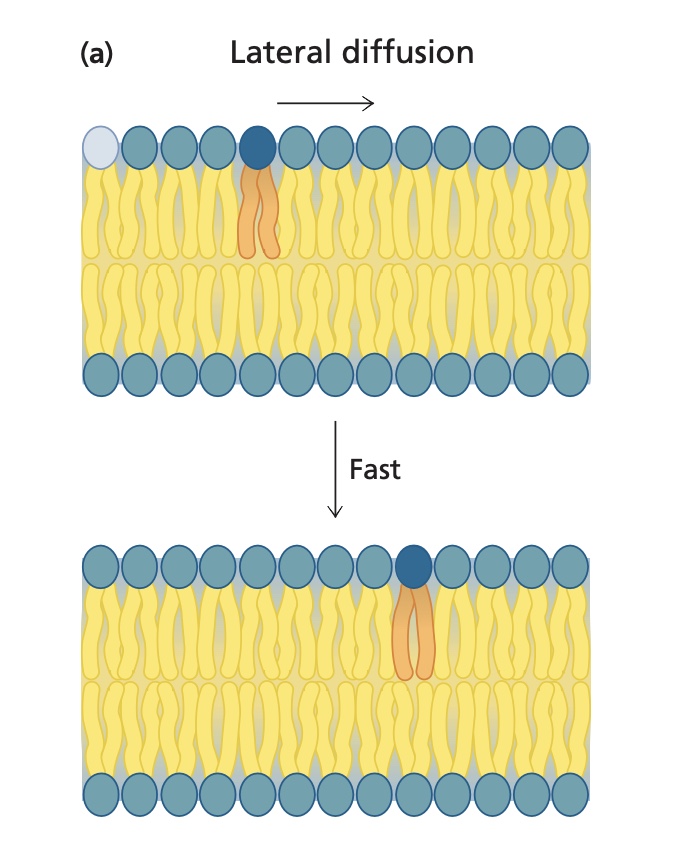
two-dimensional lateral diffusion (sec 9.9)
rapid movement of lipids within the plane of ONE monolayer
Lipid asymmetry (sec 9.9)
generated by adding newly synthesized lipids to only one of the monolayers
generated and maintained by the activity of membrane bound flipases and flopases enzymes that use the energy of ATP to move specific phhospholipids from one monolayer to another.
Eukaryotic cells make membrane lipids in an asymetric arrangement in the endoplasmic reticulum or golgi apparatus
What do fluid properties of lipid bilayers depend on? (sec 9.9)
flexibility of their fatty acyl chains.
Saturated acyl chains are fully extended at low temps, creating a crystalline array with maximal van der Waals contact between the chains.
Unsaturated acyl chains: the hydrophobic core of the bilauer is fluid well below room temp (23 C).
Structure: a hydrocarbon chain on a fatty acid with a cis double bond has a kink that disrupts packing and increases fluidity.
What accounts for 20-25% of the mass in lipds for a typical mammalian plasma membrane?
cholestrerol.
What does cholesterol do in lipid bilayers? sec 9.9
disrupts the ordered packing of extended fatty acyl chains and increases fluidity at low temperatures.
Helps maintain the fluidity in animal cell membranes despite fluctuations in temperature or degree of fatty acid saturation.
Lipid rafts
Lipid rafts are areas of the plasma membrane that are cholesterol-rich and contain a higher concentration of the phospholipid sphingomyelin. Because the tails of sphingomyelin are fully saturated, lipid rafts tend to be thicker than the rest of the membrane. This means that proteins with long transmembrane domains preferentially exist in lipid rafts. They also act as signaling hotspots for the cell