Pharynx and Larynx
 Call Kai
 Learn
Learn Practice Test
 Spaced Repetition
 Match
Match Flashcards
 Knowt Play
1/26

There's no tags or description
Looks like no tags are added yet.
Name | Mastery | Learn | Test | Matching | Spaced | Call with Kai |
|---|
No analytics yet
Send a link to your students to track their progress
27 Terms
Innervation to the pharynx
Pharyngeal plexus
Motor: Vagus nerve (CNX) (except stylopharyngeus)
Sensory = Glossopharyngeal nerve (CNIX)
Sympathetic supply from superior cervical ganglion (SCG)
Blood supply to the pharynx
Branches of external carotid artery:
Ascending pharyngeal branch
Pharyngeal branches of maxillary artery
Palatine / tonsillar branches of facial artery
Venous drainage of the pharynx
Pharyngeal venous plexus into the IJV
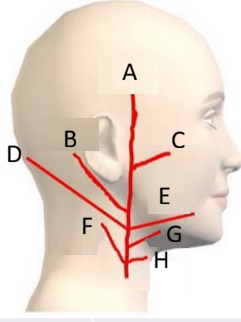
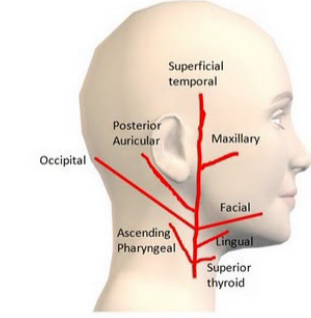
Branches of external carotid artery (inferior to superior)
1. Superior thyroid
2. Ascending pharyngeal
3. Lingual
4. Facial
5. Occipital
6. Posterior auricular
7. Maxillary
8. Superficial temporal
SALFOPMS
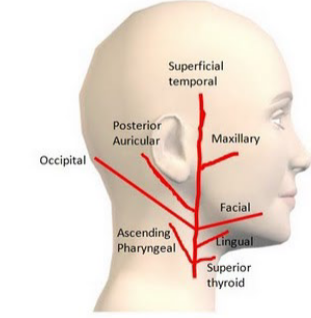
Functions of the different parts of the pharynx
Nasopharynx: resonance and speech
Oropharynx: coordination of swallowing
Hypopharynx (laryngopharynx): airway protection and diversion of food bolus
What is found at C6?
cricoid cartilage
level of oesophageal inlet
***
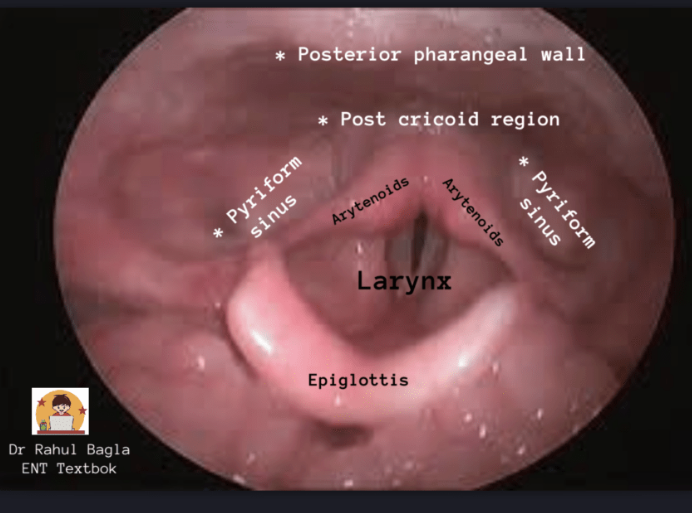
Name the circular pharyngeal muscles and their function
Superior constrictor
Middle constrictor
Inferior constrictor (cricopharyngeus/ thyrophayngeus)
Function: Enable propulsive movements (peristalsis)
Name the longitudinal pharyngeal muscles and their function
Palatopharyngeus
Stylopharyngeus
Salpingopharyngeus
Function: Elevatory movements
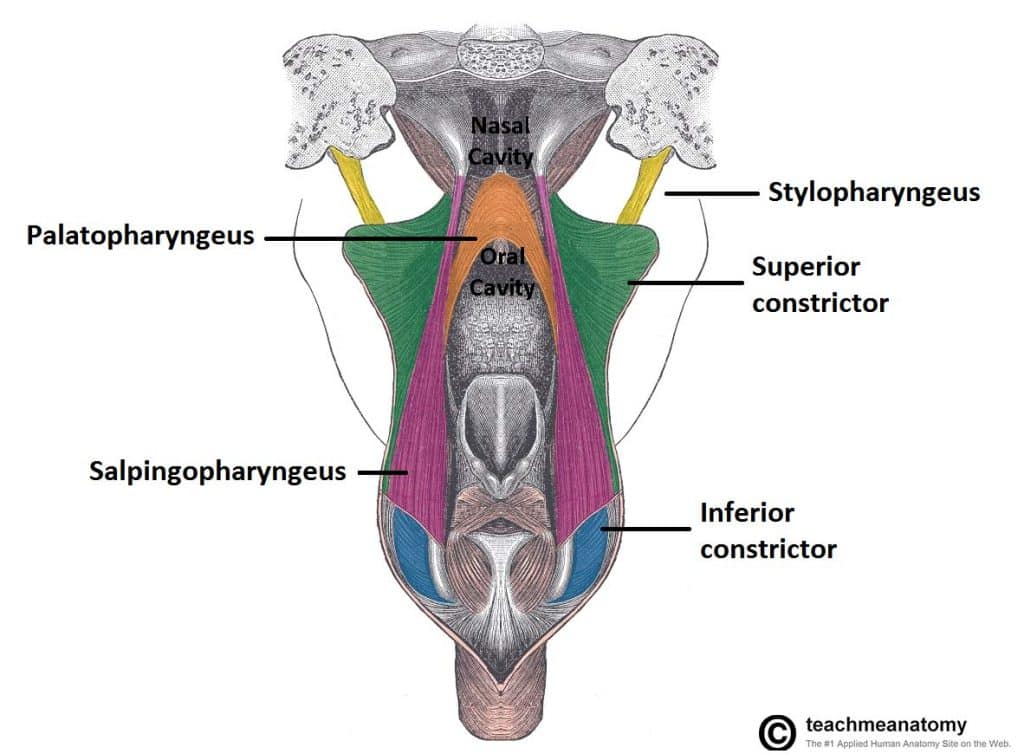
What is a pharyngeal diverticulum and how is it caused?
also called the Zenker's diverticulum
may be caused by a failure of the cricopharyngeus muscle → increase pressure → pouch
Usually found in older adults
Do a barium study to test
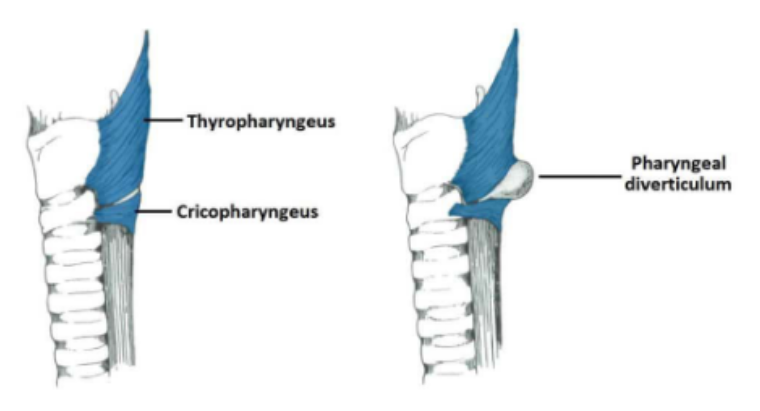
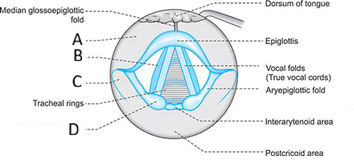
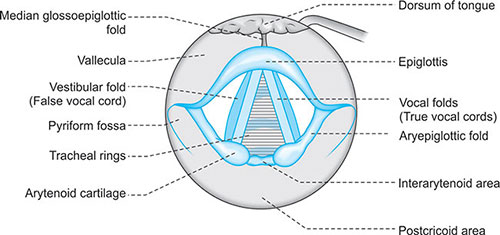
Boundaries and function of the larynx
C3-6
Function: protection of the airway, phonation
Guards the entrance to the tracheobronchial tree
Vocalisation
Raises intra-abdominal pressure (valsalva manouvre)
Innervation of the larynx
Branches of vagus nerve (motor and sensory)
Recurrent laryngeal nerve:
Sensation to subglottis
Motor supply to all muscles of larynx, except cricothyroid
Superior laryngeal nerve:
Sensation to supraglottis
Motor supply to cricothyroid (external branch)
Blood supply to the larynx
Laryngeal branches of superior and inferior thyroid arteries
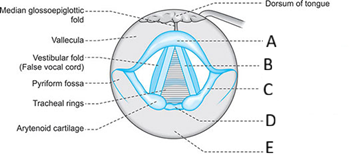
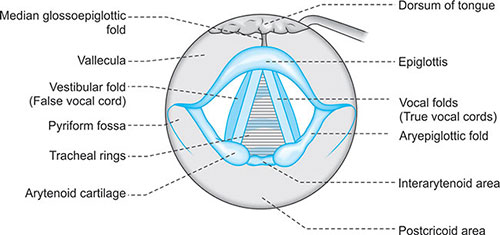
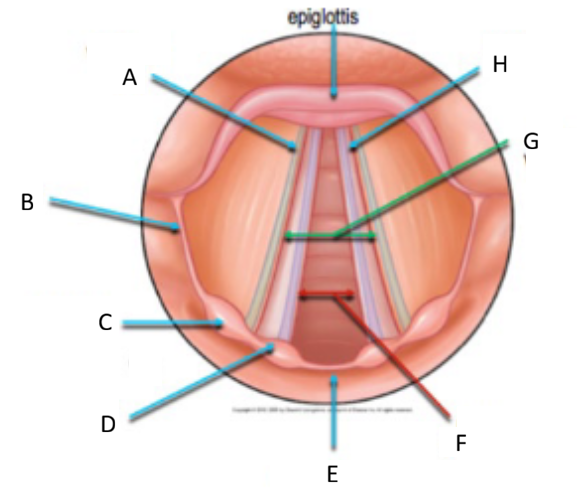
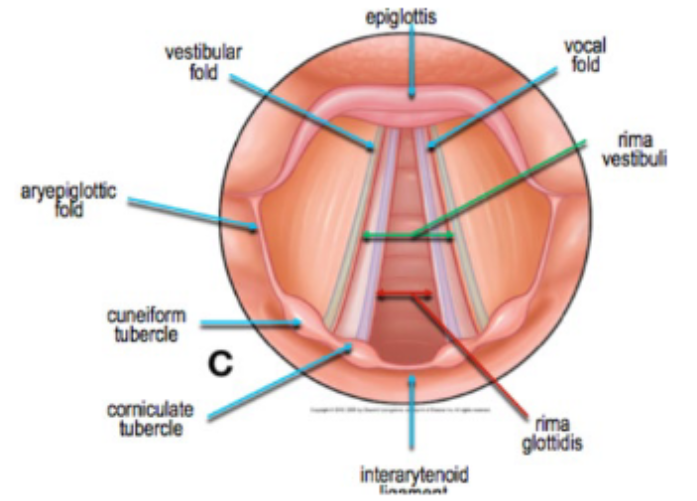
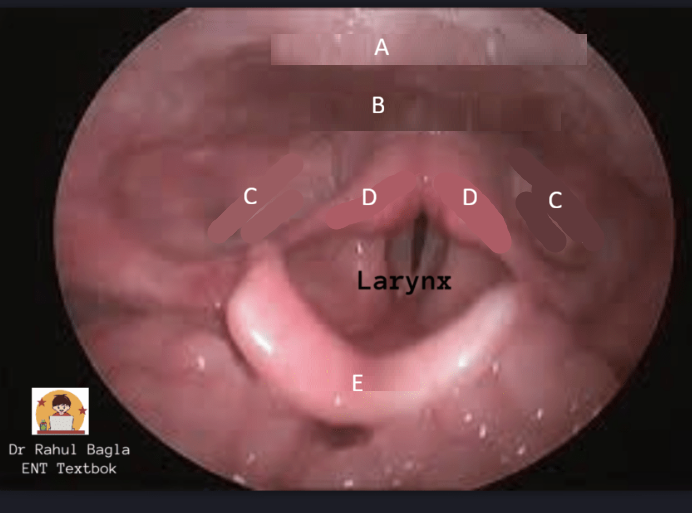
Name the unpaired thyroid cartilages and their function
epiglottis
thyroid
cricoid
Function: move vocal folds, protect the airway and alter pitch of the voice
Name the paired thyroid cartilages
arytenoids
corniculates
cuneiforms
Function: produce movement of the folds for voice production
Where does the recurrent laryngeal nerve enter the larynx?
Enters immediately posterior to the cricothyroid joint
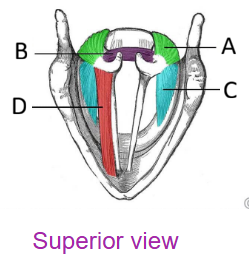
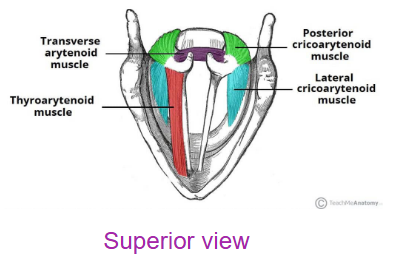
How do the vocal cords move?
The vocal folds are opened (abducted) and closed (adducted) by movements at the cricoarytenoid joints
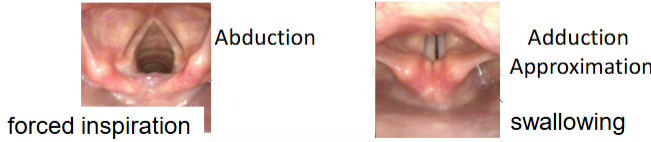
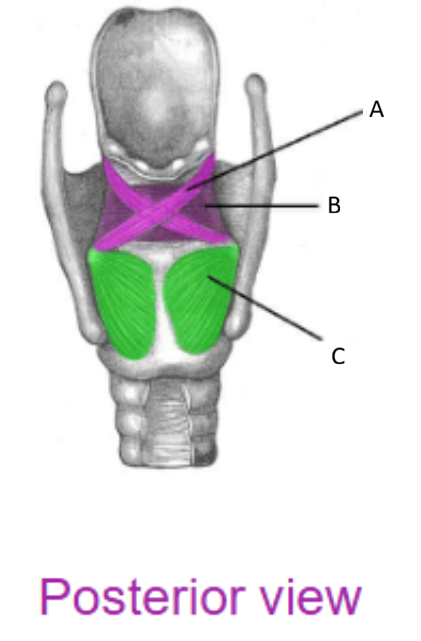
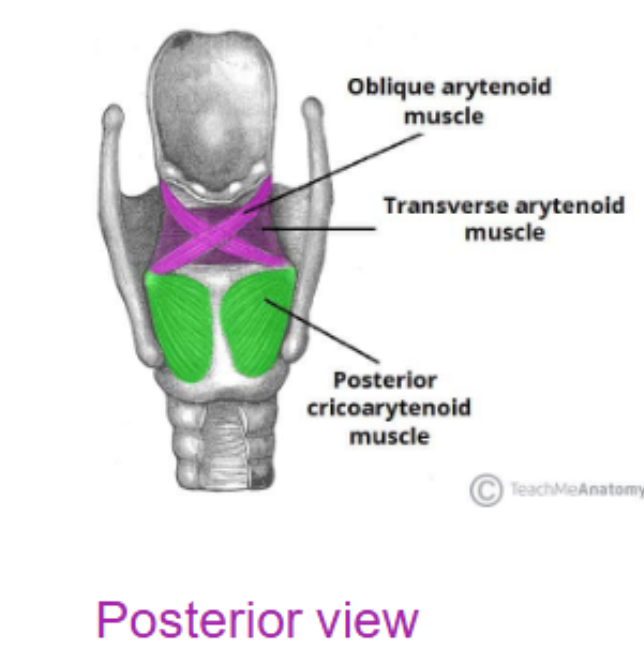
What muscles Adduct vocal folds?
** Adjusts volume
Lateral Cricoarytenoids
Thyroarytenoids
Transverse and obliques arytenoids (interarytenoids)
What muscles Tense vocal folds?
** adjust pitch
Cricothyroid (EBSLN)
Vocalis
What muscles abduct vocal folds?
** opens the airway
Posterior Cricoarytenoids
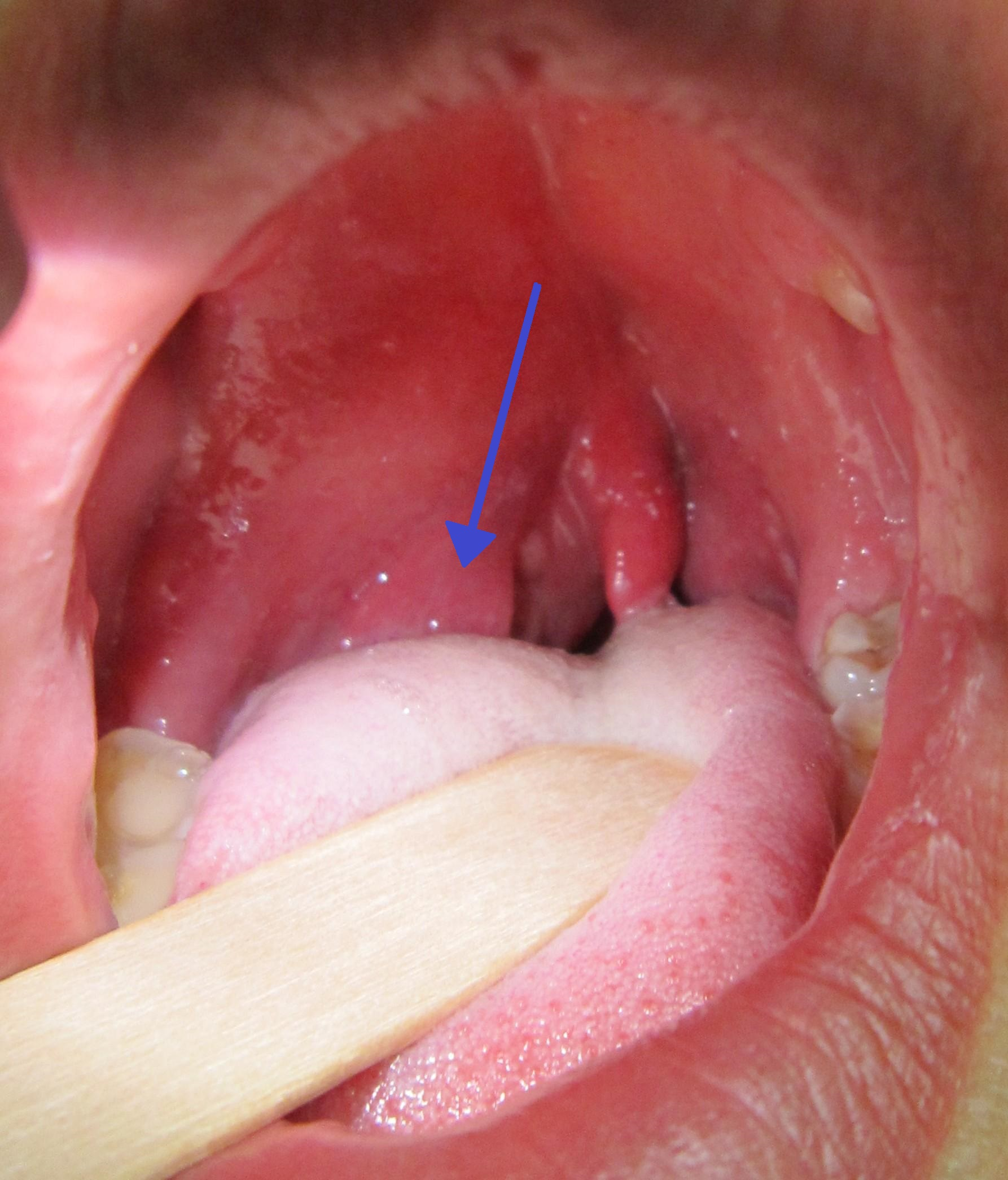
What is this?
Quinsy (peritonsillar abscess)
Treatment: drainage of the abscess, antibiotics