Sedative-Hypnotics: Barbiturates and Benzodiazepines
 Call Kai
 Learn
Learn Practice Test
 Spaced Repetition
 Match
Match Flashcards
 Knowt Play
1/16

There's no tags or description
Looks like no tags are added yet.
Name | Mastery | Learn | Test | Matching | Spaced | Call with Kai | Chat |
|---|
No analytics yet
Send a link to your students to track their progress
17 Terms
what are sedative-hypnotics & anxiolytics
diverse group of compounds that depress CNS and behaviour
alcohol
barbiturates
non-barbiturate hypnotics e.g. GHB
anxiolytics (tranquillisers)
also other, structurally-unrelated drugs with similar effects - e.g. Methaqualone (Quaaludes - date rape drug)
dose-dependent effects of sedative hypnotics
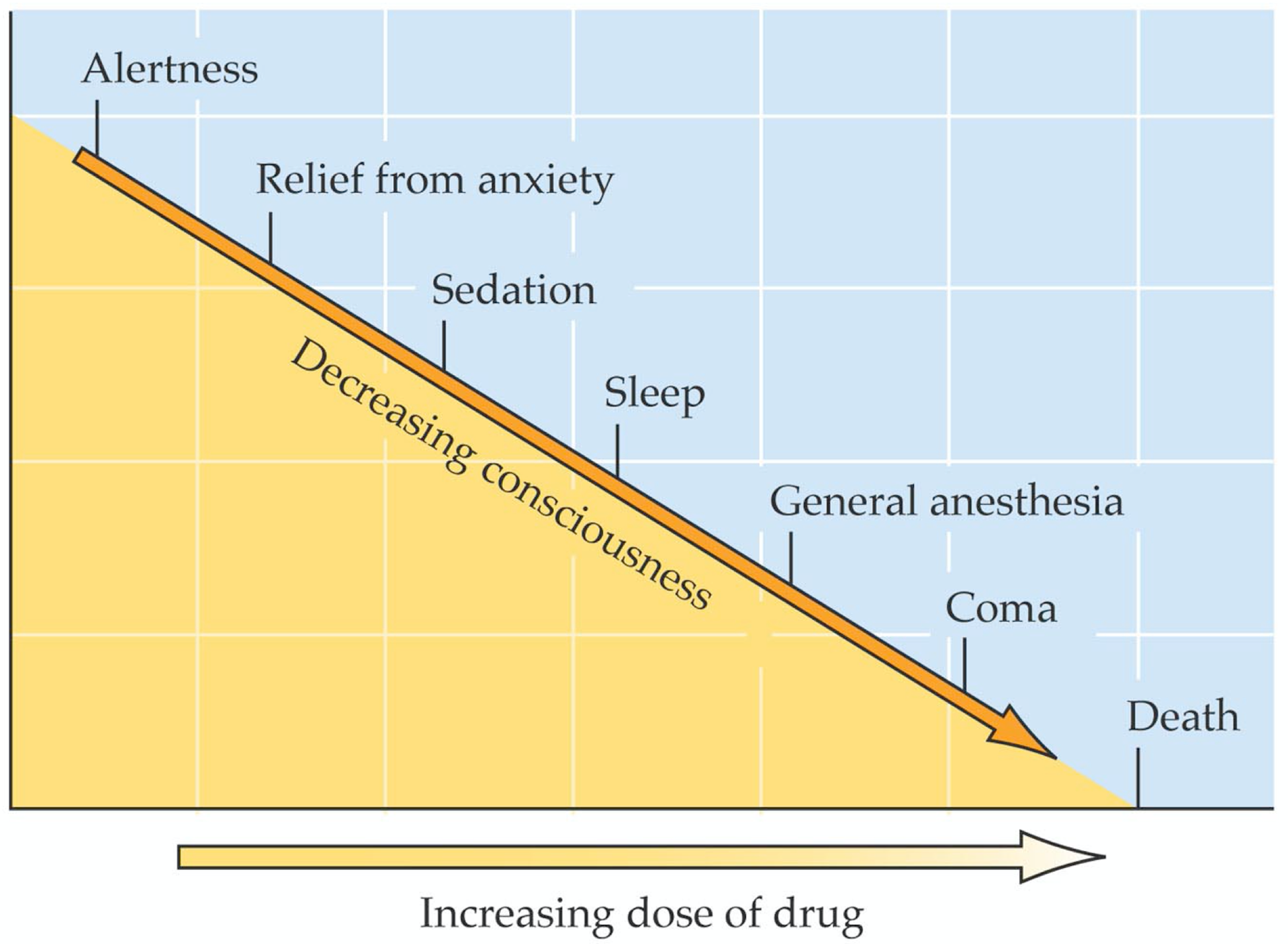
barbiturates - history and use
von Baeyer (1864) first made barbituric acid - foundation of all barbiturates
first drugs to be marketed:
barbital (1903)
phenobarbital (1912)
sedatives, anticonvulsants and anaesthetics
became widely used, still used in veterinary medicine
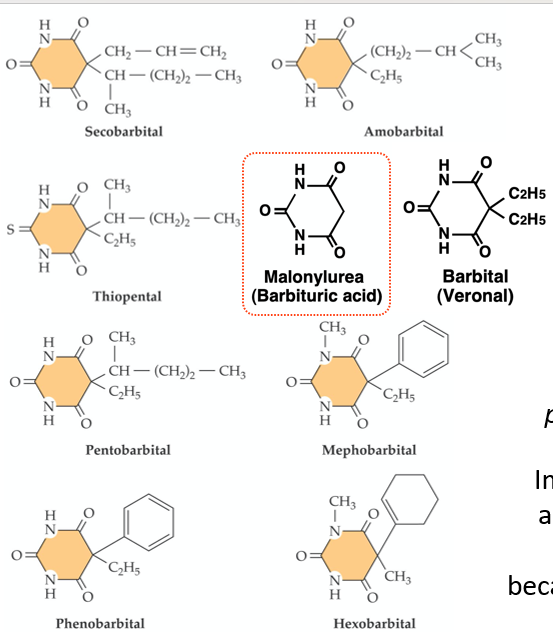
duration of action and uses of major barbiturates
all barbiturates have very similar effects, but differ primarily in their speed and duration of action
pharmacokinetic factors: high lipid solubility so reach the brain fast, but then get redistributed to body fat stores so brief duration (differences between drugs mainly occur in distribution and metabolic pathways)
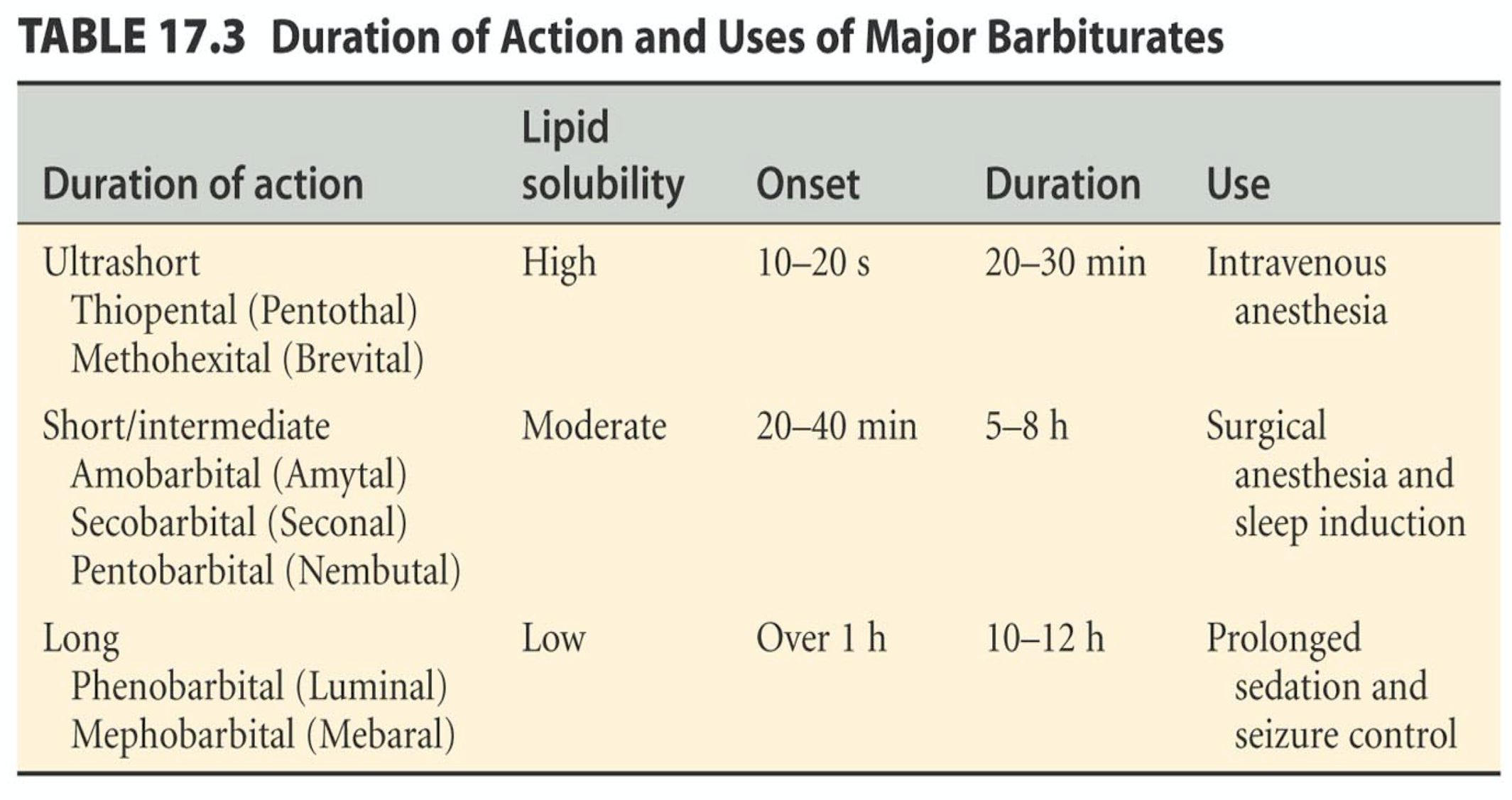
ultrashort duration barbiturates
thiopental (Pentothal), methohexital (Brevital)
high lipid solubility
onset:10-20s
duration: 20-30mins
use: IV anaesthesia
short/intermediate duration barbiturates
amobarbital (Amytal), secobarbital (Seconal), pentobarbital (Nembutal)
moderate lipid solubility
onset: 20-40mins
duration: 5-8 hours
use: surgical anaesthesia and sleep induction
long duration barbiturates
phenobarbital (Luminal), mephobarbital (Mebral)
low lipid solubility
onset: over 1 hour
duration: 10-12 hours
use: prolonged sedation and seizure control
barbiturate use and abuse
“downers”
desirable effects are very similar to alcohol i.e. relief of anxiety, loss of inhibitions, “take the edge off” other drugs such as cocaine
street names associated with colour of pill e.g. blue angels, barbiturates in general called e.g. downers, stumblers, idiot pills
barbiturates and operant behaviour
barbiturates are readily self-administered by animals
both people and lab animals prefer the more rapidly acting barbiturates
have to be careful not to give too much so that the animal is sedated e.g. FR160 lever-press schedule with 3 hour time-out after each injection
another striking effect of barbiturates: they enhance responding that has been suppressed by punishment (e.g. FR10 schedule for food, VR15 for electric shock, barbiturates will reduce withdrawal behaviour / conflict)
barbiturates: medical uses (past and current)
sleep induction
anticonvulsants
anaesthetics
sedatives
alcohol withdrawal
anxiolytics
barbiturates and sleep
disrupt sleep regulation
initially helpful in getting to sleep
but with repeated use, reduction in both REM sleep and deep (slow-wave) sleep - plus harder to get to sleep
(slow wave = stage 2/3)
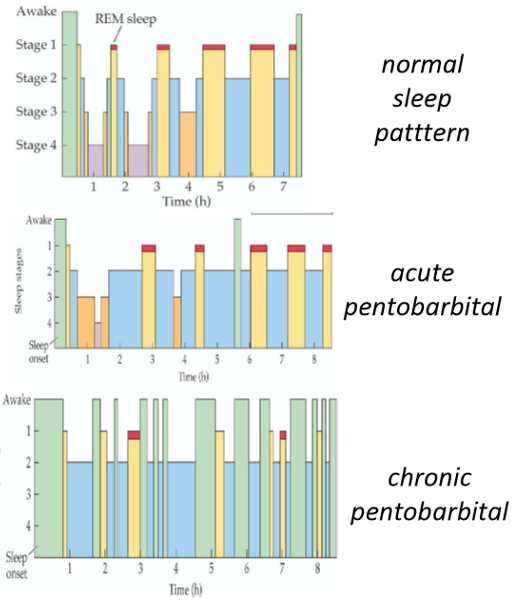
problems with barbiturates
rapid tolerance (dose escalation)
severe withdrawal (seizures)
low safety margin (therapeutic index and safety index both poor)
barbiturates are no longer widely prescribed for insomnia and anxiety because they are too dangerous
barbiturate overdose - common means of suicide / euthanasia (used for capital punishment in US)
still sometimes used for convulsions, brain surgery (but rarely)
benzodiazepines - anxiolytics
widely used:
anxiolytics
sedatives (calm agitation, induce sleep)
anticonvulsants
treatment of alcohol withdrawal
surgical sedation / amnesia (in combination with other drugs) - presurgical sedation
progressively replaced barbiturates for many of these uses
difference between barbiturates and benzodiazepines: pre surgery sedation rather than anaesthesia
first drugs to market: Librium (~1959), Valium (1963)
medical uses for benzodiazepines
pathological anxiety
severe emotional distress
relief from agitation and alcohol withdrawal
sedation (sleep-inducing)
pre-surgery sedation and amnesia
anticonvulsants
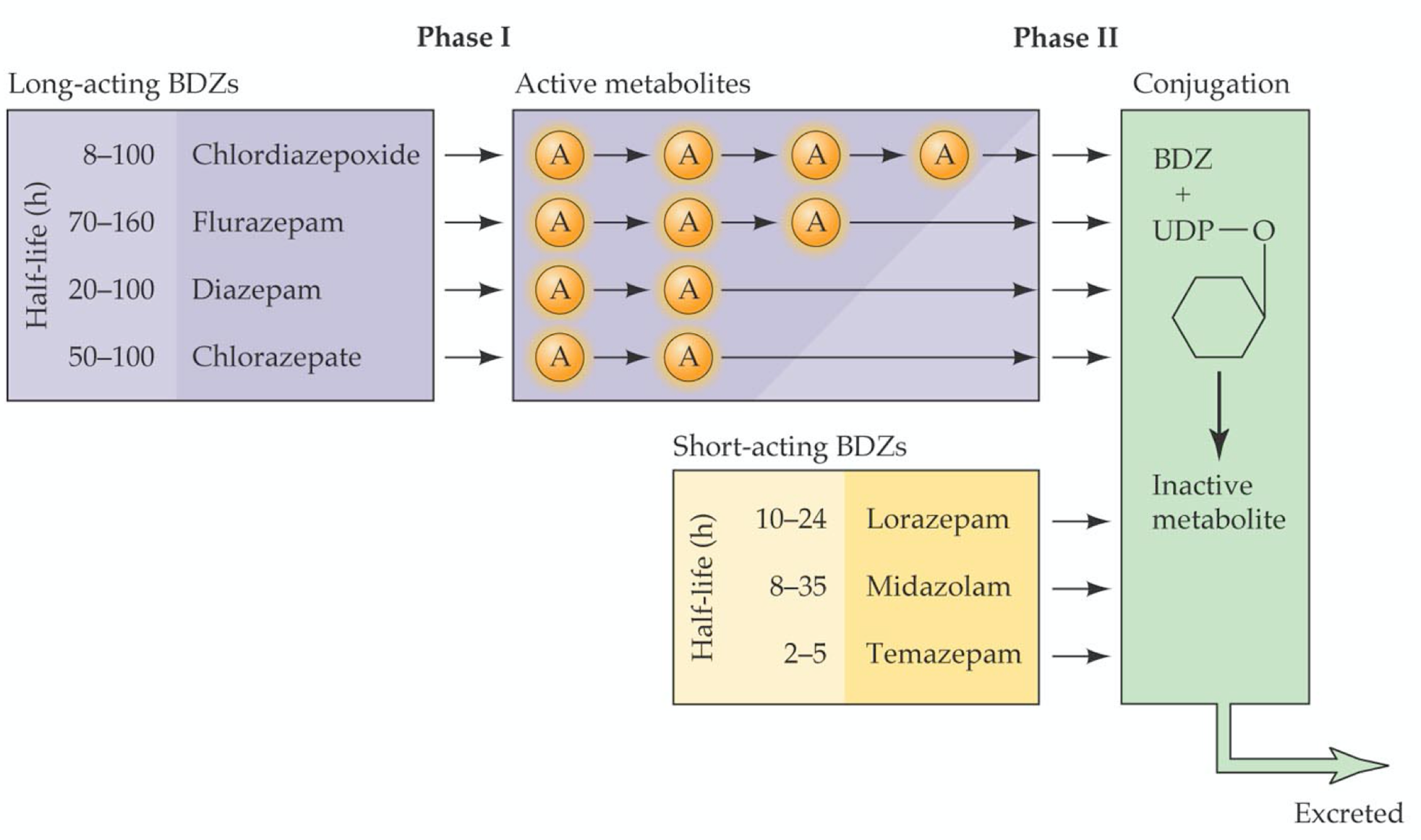
benzodiazepine metabolism
benzodiazepines are also primarily chosen by duration of action
duration in brain again depends partly on redistribution to other sites, but also metabolic pathways
longer-acting BZs are those with multiple metabolite steps
benzodiazepines compared to barbiturates: safety
benzodiazepines are much safer than barbiturates
compared to barbiturates: less tolerance, less safety withdrawal, higher therapeutic index
it is much harder to take a lethal overdose of benzodiazepines - very rare in humans unless taken in combination with other CNS depressants (which is quite common)
abuse of benzodiazepines
BZs are clearly less liable to being abused by humans than barbiturates
illicit use: usually in combination with other drugs
they are also much harder to get animals to self-administer (but rapid onset BZs are easier)