Physical Oceanography
0.0(0)
Studied by 4 people Call Kai
 Learn
Learn Practice Test
 Spaced Repetition
 Match
Match Flashcards
 Knowt Play
Card Sorting
1/113

Earn XP
Description and Tags
Last updated 10:38 PM on 4/18/23
Name | Mastery | Learn | Test | Matching | Spaced | Call with Kai |
|---|
No analytics yet
Send a link to your students to track their progress
114 Terms
1
New cards
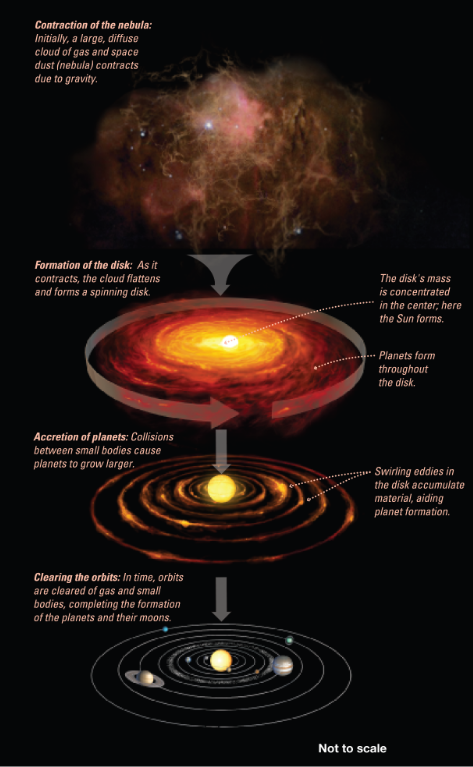
Nebular Hypothesis
1. Gravity concentrates material at center of sun
2. Nebula evolves into a rotating disk
3. protoplanets form from smaller matter concentrations
4. Orbits are cleared of gas and small bodies completing their formation
2
New cards
Protoearth
Larger than today’s earth, homogeneous composition, bombarded with meteorites. Moon formed from collision
3
New cards
Density Stratification
In the earths formation, highly dense materials settled at the core and les dense formed concentric spheres around it
4
New cards
Outgassing
Volcanic activity releasing large amounts of water vapor into atmosphere
5
New cards
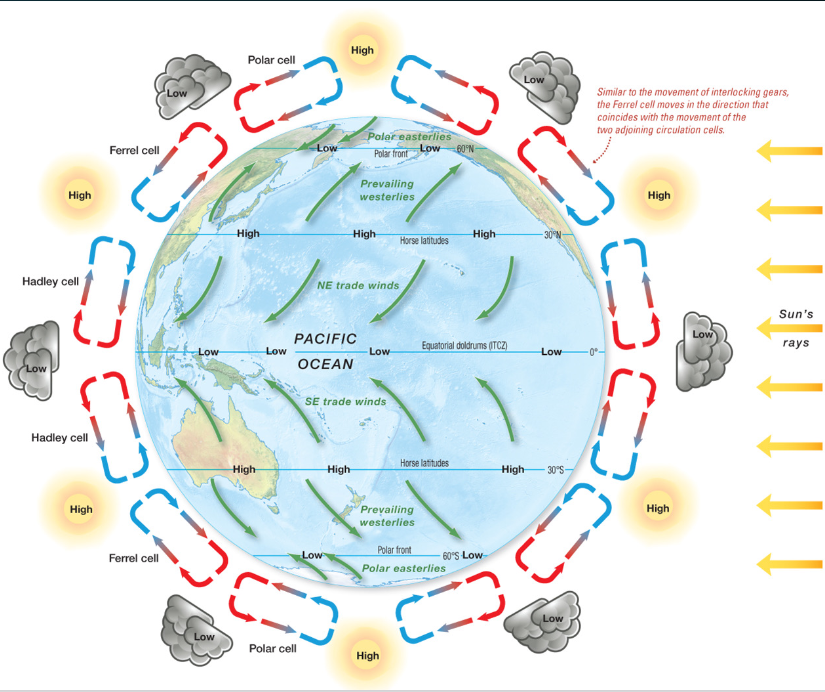
Early Atmospheric composition
water vapor, carbon dioxide, hydrogen, other gases
6
New cards
Origin of earth’s oceans
1. Outgassed water vapor fell as rain
2. first permanent ocean formed 4 billion years ago
1. salinity developed from dissolved rock elements
7
New cards
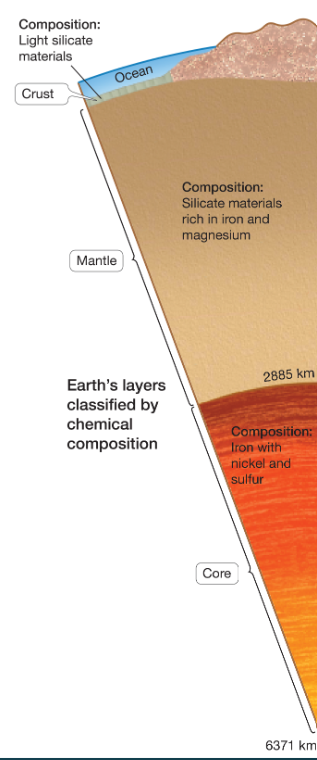
Earth’s Chemical Layers
1. Crust
2. Mantle
3. Core
8
New cards
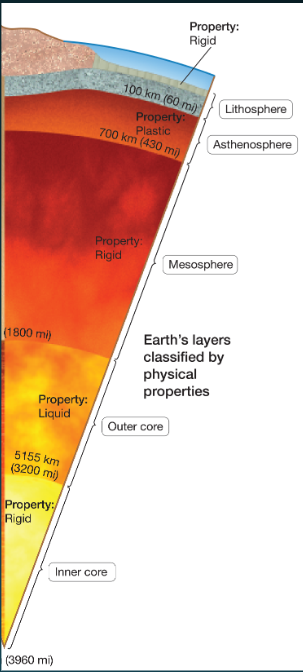
Earth’s Physical Layers
1. Lithosphere
2. Asthenosphere
3. Mesosphere
4. Outer Core
5. Inner Core
9
New cards
Lithosphere
Cool, rigid shell, includes upper crust and some mantel, approx 100km thick
10
New cards
Asthenosphere
Relatively hot plastic, high viscosity flow, 100-700km deep, mantel convection, rock flow
11
New cards
Mesosphere
Rigid due to increased pressure, 700-2885km
12
New cards
Outer Core
Liquid and capable of flowing 2885-5155km
13
New cards
Inner COre
Solid from pressure, does not flow, 5155-6371
14
New cards
Continental Drift
Pangaea: One large continent from 200 million years ago
\
Panthalassa: One large ocean, including tethys sea
\
Panthalassa: One large ocean, including tethys sea
15
New cards
Radiometric Dating of Ocean Rocks
* Can date ocean rocks
* oldest on ocean floor is only 180 million years, hence our ocean is always recycling
* oldest continental is 4billion like the ocean itself cause it doesn’t recycle the same way
* oldest on ocean floor is only 180 million years, hence our ocean is always recycling
* oldest continental is 4billion like the ocean itself cause it doesn’t recycle the same way
16
New cards
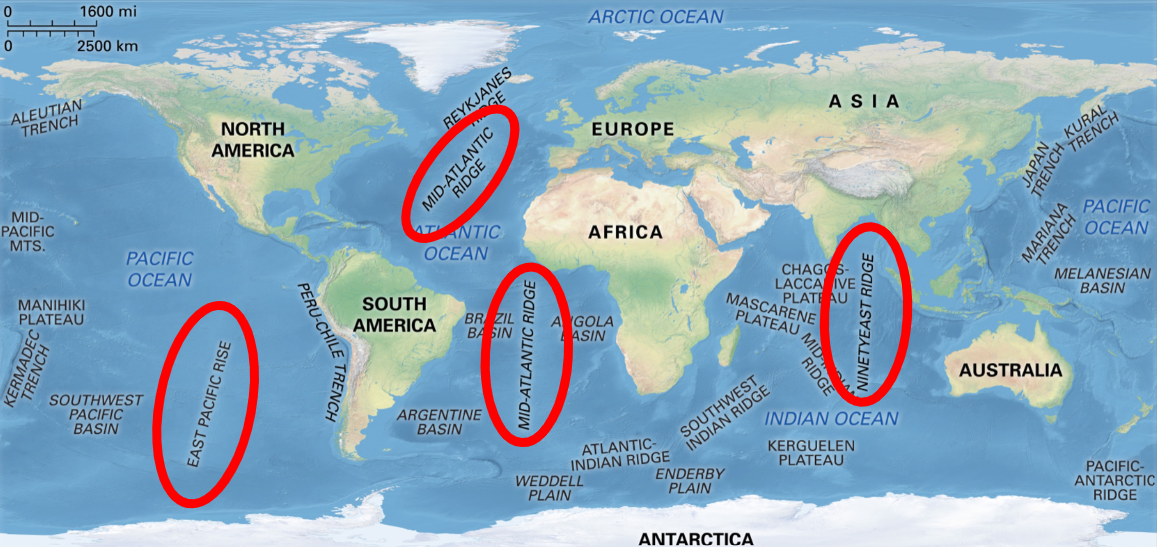
Ocean Ridges
* Continuous submarine mountain chain extending through the world’s oceans.
* Rise from 5km to 2.6km and are roughly symmetrical in cross section. Thousands of km’s wide
* associated with youngest crust
\
* Rise from 5km to 2.6km and are roughly symmetrical in cross section. Thousands of km’s wide
* associated with youngest crust
\
17
New cards
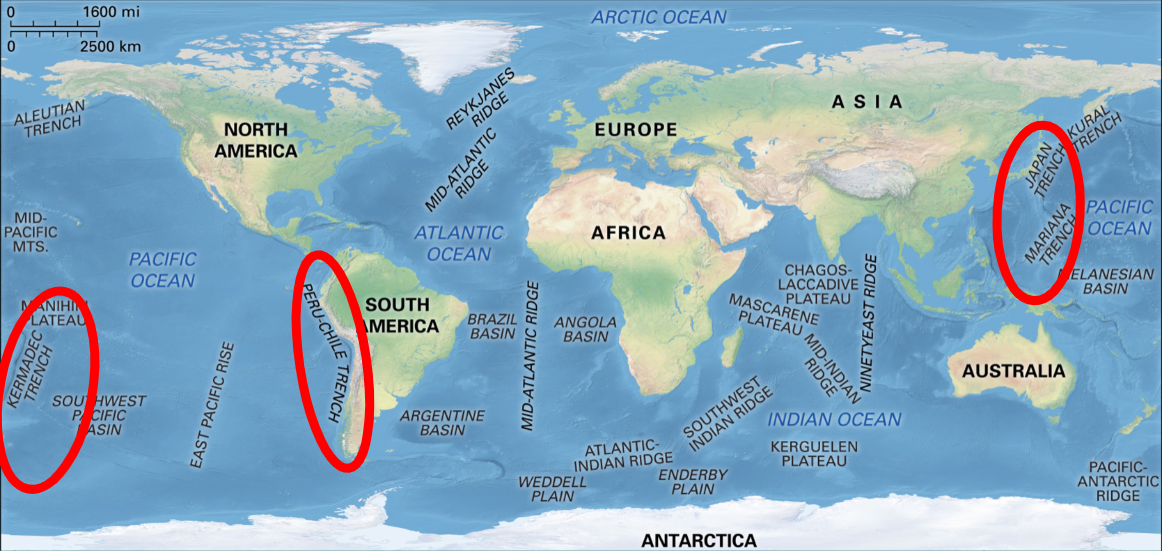
Ocean Trenches
* Long, narrow, steep sided depression in the bottom of the ocean associated with max depths from 7300m-11000m
* Form at subduction zones when one plates subducts under another
* some of the oldest oceanic crust is found in trenches
\
* Form at subduction zones when one plates subducts under another
* some of the oldest oceanic crust is found in trenches
\
18
New cards
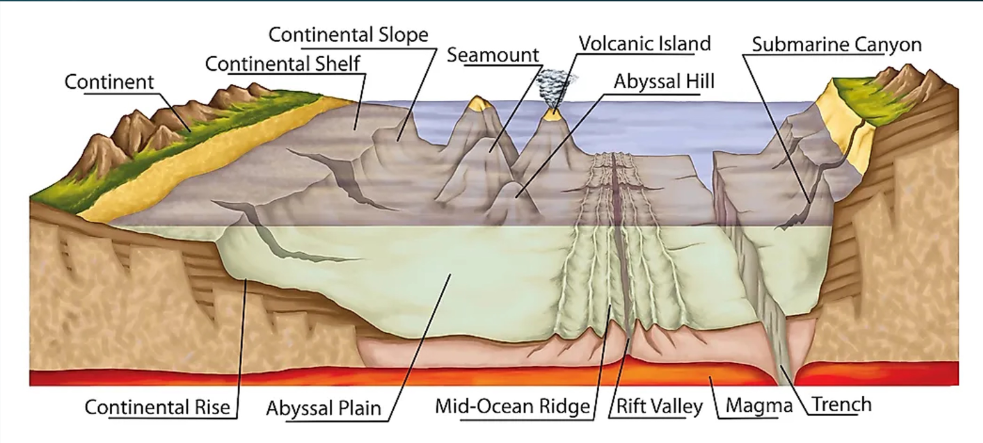
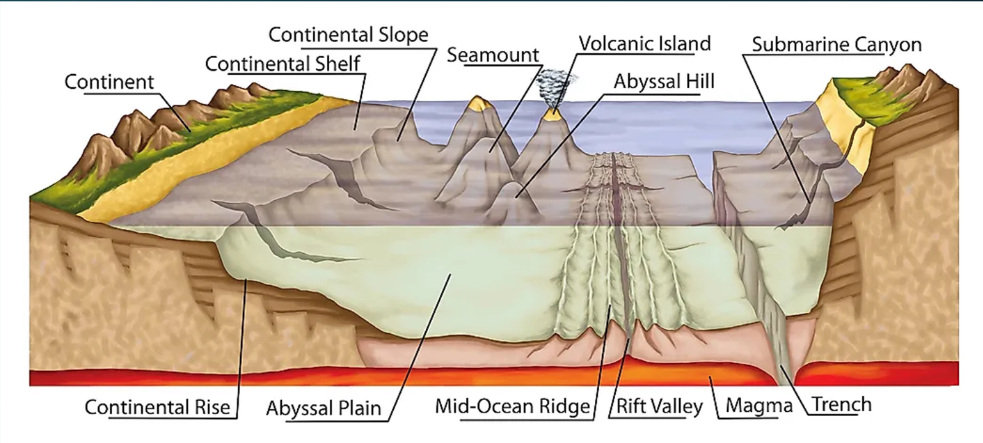
Abyssal Plains
Flat, seafloor area at abyssal depth (4000-6000m), adjacent to continent, majority are found in atlantic ocean. Silt, sediment and sand
19
New cards
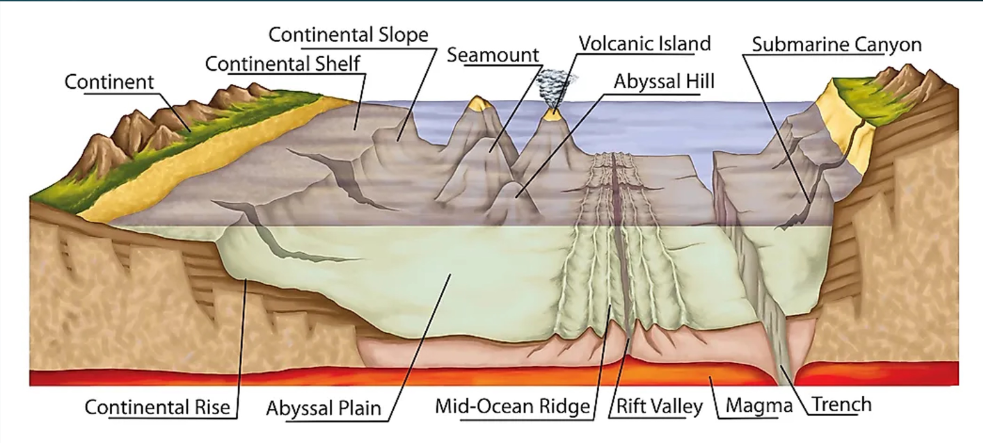
Continental Shelf
Broad shallow submarine terrace of crust at edge of continent. Similar geology to continent. 8% of oceans floor, 100-200 meters depth. average slope of 0.1 degree
20
New cards
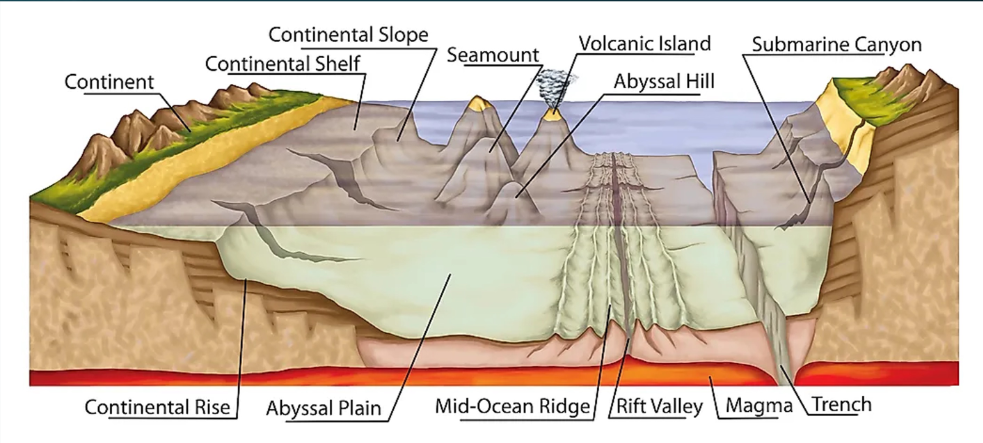
Continental Rise
Found at base of continental slope, between 3000-400m
21
New cards
Continental Slope
Extends from the shelf at an average depth of 135 m. Slopes steeply down from 1-25 degrees with an average of 4. ends at about 2000m depth.
22
New cards
Submarine Canyons
* V-shaped canyons cut into continental slopes
* up to 1200m deep
* can lead to large waves
* often associated with rivers
\
* up to 1200m deep
* can lead to large waves
* often associated with rivers
\
23
New cards
Equatorial Buldge
Due to the earth’s rotation the earth is ellipsoidal
24
New cards
The Geoid
* If the ocean surface was at rest it would be aligned with an equipotential surface
* Bottom bathymetry such as seamounts influence the gravitational field and deflect the surface of the ocean
* only about 10m elevation over 200km
* this deviation in surface is ‘ocean or dynamic topopgrahpy”
* Bottom bathymetry such as seamounts influence the gravitational field and deflect the surface of the ocean
* only about 10m elevation over 200km
* this deviation in surface is ‘ocean or dynamic topopgrahpy”
25
New cards
Earth’s Oceans
1. Pacific 50%
2. Atlantic 26%
3. Indian 20.5%
4. Artic 3.4%
5. Antarctic
\
Oceans cover 70.8 % of earths surface and make up 97.2% of our water
26
New cards
Mediterranean Seas
Surrounded by land and have limited connections with global ocean
27
New cards
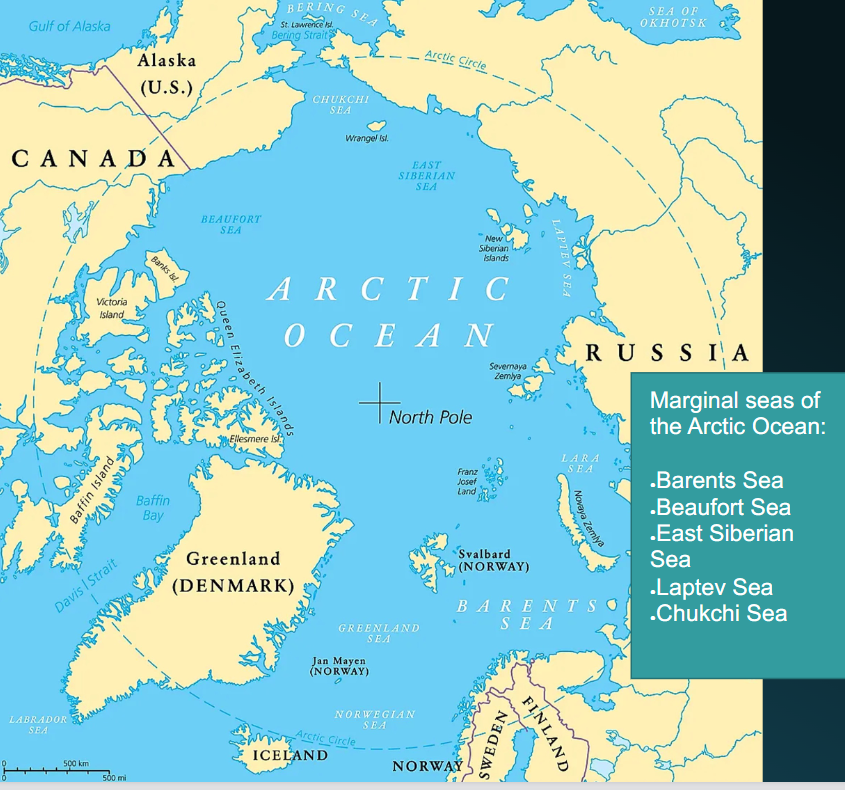
Marginal Seas
Defined by only an indentation in the coast
28
New cards
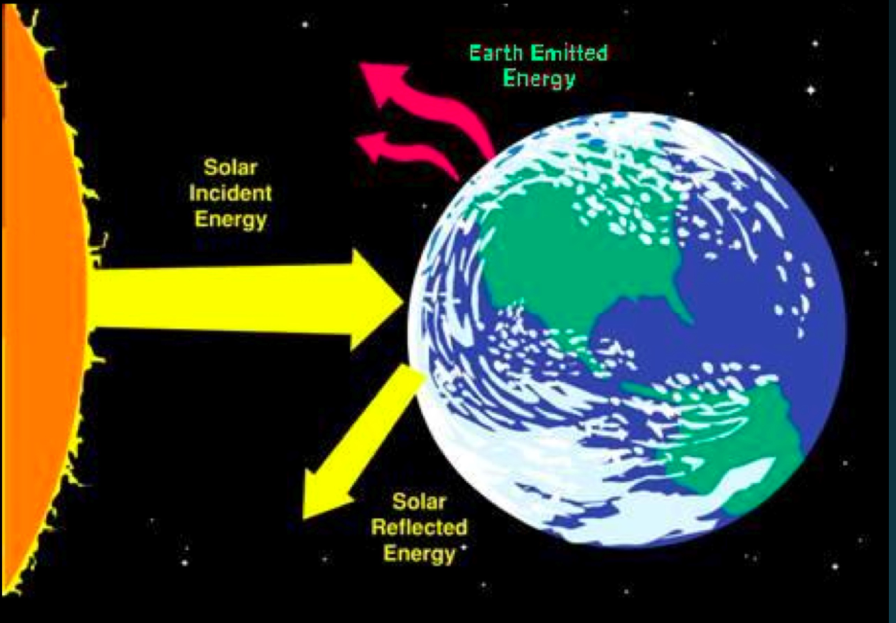
Planetary Energy Balance
Earth must radiate energy away at same rate it is received
29
New cards
Solar Lumoinosity
Sun puts out a nearly constant flux of energy called the solar lumonisty, Lo=3.827x10^26. Average flux density, Sd=Lo/4pid^2
30
New cards
Solar Constant
The intensity of the solar irradiation directly outside the earth’s atmosphere on horizontal surface is constant at So=1.360W/m^2
31
New cards
Planetary Albedo
* Not all of the solar energy pointed at earth is absorbed
* some is reflected back into space
* This reflection back is the albedo, a
* average is about 30%
\
* some is reflected back into space
* This reflection back is the albedo, a
* average is about 30%
\
32
New cards
Sun’s Radiation
Distribution of EM energy(stream of massless particles), close to theoretical blackbody theorem. Emits mostly in the visible part of the spectrum
33
New cards
Blackbody Radiation
High temperatures mean small wavelengths i.e higher frequencies
34
New cards
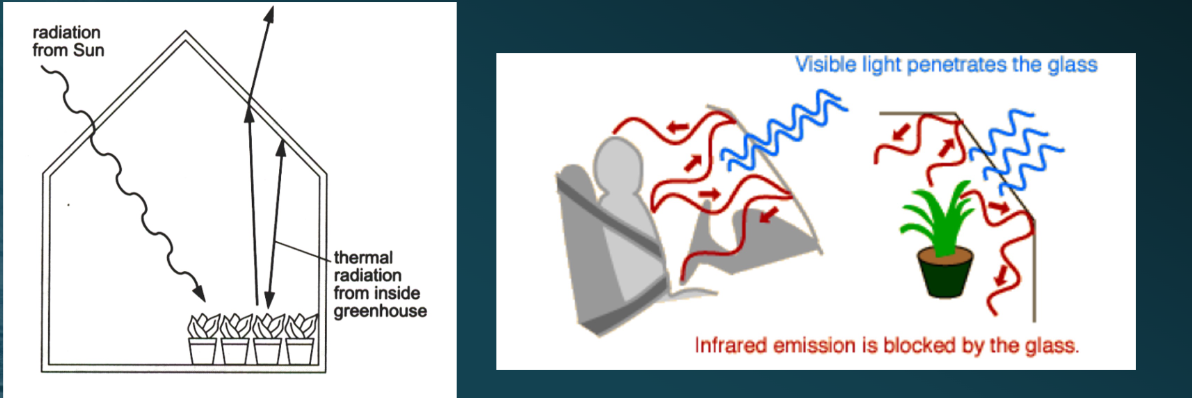
Earth’s Radiation
The earth radiates in the far infrared.
Much of the radiation from the earth is absorbed by the atmosphere and then re-emitted. We get a greenhouse effect
Much of the radiation from the earth is absorbed by the atmosphere and then re-emitted. We get a greenhouse effect
35
New cards
Leaky Greenhouse Effect
We would think the solar flux=earths absorbed solar radiation, but that is to cold, so than we account for the greenhouse effect of infrared radiation being trapped inside and remitted. but this is to hot. We need to use the leaky greenhouse model where we trap some but not all giving us our earth temp
36
New cards
Atmospheric Circulation
Driven by solar heating
37
New cards
Distribution of solar energy
* Near the equator (at low latitudes) photons are distributed over a smaller area whereas they diffuse more at higher latitudes hence colder
* Atmospheric absorption/thickness
* Albedo
* Angle of sun
* Atmospheric absorption/thickness
* Albedo
* Angle of sun
38
New cards
Excess Radiation
The earth receives excess radiation in the tropics and emits more than it receives in the poles. The atmosphere/ocean must move 10^16 W of heat towards the poles to balance the excess/deficits.
39
New cards
Convection Cell
Rising and sinking air: warm air rises it is less dense, cool air sinks and is more dense
40
New cards
Three Cell Model of Circulation
* Hadley Cell 0-30 degrees latitude (strongest)
* Ferrel Cell 30-60 degrees latitude
* Polar Cell 60-90 degrees latitude
* same in both hemispheres (6 total cells)
* Rising and descending air from cells generates high and low pressure zones
* Ferrel Cell 30-60 degrees latitude
* Polar Cell 60-90 degrees latitude
* same in both hemispheres (6 total cells)
* Rising and descending air from cells generates high and low pressure zones
41
New cards
Troposphere
* Lowest layer of the atmosphere
* Atmosphere is mostly transparent
* where weather occurs
* Temperature decreases with altitude
\
* Atmosphere is mostly transparent
* where weather occurs
* Temperature decreases with altitude
\
42
New cards
Stratosphere
* Next layer of atmosphere
* Temperature increases with height
* Ozone heating
* Temperature increases with height
* Ozone heating
43
New cards
Upper Atmosphere
* Very Thin low density
* Ideal gas law breaks down
* Ideal gas law breaks down
44
New cards
Subtropical and Subpolar Jets
* Two jet streams flow along the top of the troposphere between 9-17km above
* \
* \
45
New cards
Polar Jet Stream
* Westerly jet at the upper boundary of the troposphere
* Warm moist air from the tropics moves north in the lower ferrel cell
* cool dry air moves south in the lower branch of the polar cell
* The Polar front is where these two air masses meet
* Associated with meridional temperature gradient
\
* Warm moist air from the tropics moves north in the lower ferrel cell
* cool dry air moves south in the lower branch of the polar cell
* The Polar front is where these two air masses meet
* Associated with meridional temperature gradient
\
46
New cards
Global Wind Belts
* Trade Winds
* Northeasterly trade winds
* Southeasterly trade winds
* Prevailing westerly winds (30-60’ degrees) Stronger in the southern hemisphere because lack of land and corolis
* Polar Easterly wind belts (60-90’ degrees)
* Doldrums (equator)
* Horse Latitude (30 degrees)
\
* Northeasterly trade winds
* Southeasterly trade winds
* Prevailing westerly winds (30-60’ degrees) Stronger in the southern hemisphere because lack of land and corolis
* Polar Easterly wind belts (60-90’ degrees)
* Doldrums (equator)
* Horse Latitude (30 degrees)
\
47
New cards
Wind Stress
* Wind stress drives the ocean, transfer of momentum from wind to ocean
\
\
48
New cards
Latent Heat
Latent heat is the heat released or absorbed per unit mass when water changes phase. Is it an efficient way of transferring energy globally and is an important energy source for earth’s weather climate including weather and hurricanes.
* Loss (energy out of the ocean and into atmosphere)
* Loss (energy out of the ocean and into atmosphere)
49
New cards
Sensible Heat Flux
is the conductive heat flux from the earths surface to the atmosphere
* Loss (energy out of the ocean and into atmosphere)
* Loss (energy out of the ocean and into atmosphere)
50
New cards
Hydrogen Bonding
Hydrogen bonds are weaker than covalent bonds, create weird characteristics in water
* high surface tension
* Unusual density/ thermal properties
* high latent heat
* high heat capacity
* high melting point
\
* high surface tension
* Unusual density/ thermal properties
* high latent heat
* high heat capacity
* high melting point
\
51
New cards
Melting/ boiling points of water
are unusually high compared to compounds of similar mass
52
New cards
Salinity
total amount of dissolved solids in water including dissolved gasses
53
New cards
Determining Salinity
* Evaporation
* Weigh water and weigh evapourated salts
* Principle of Constant Proportions:
* Chemical analysis via titration
* Salinometer
* Measures waters electrical conductivity
* Weigh water and weigh evapourated salts
* Principle of Constant Proportions:
* Chemical analysis via titration
* Salinometer
* Measures waters electrical conductivity
54
New cards
Equation of State
The density of a parcel of seawater is determined by its temperature salinity and pressure. Usually calculated by observations. Using the equation of state of seawater
\
\
55
New cards
Density and Salinity: Brine Rejection
* When salty water freezes, the salts no longer fit into the crystal structure of the ice
* Salts are drained into the surrounding seawater creating saltier denser brine
* The heavier brine can then sink influencing ocean circulation
* Salts are drained into the surrounding seawater creating saltier denser brine
* The heavier brine can then sink influencing ocean circulation
56
New cards
In-Situ Temperature
Actual local values of T and rho/sigma, for a fluid parcel at its current position and depth.
57
New cards
Energy Budget
Net heat flux= solar in - longwave - latent - sensible
58
New cards
Salinity Distribution
* Lesser in poles due to run off of fresh water from land
* Decreasing rapidly with depth than is relatively constant
\
* Decreasing rapidly with depth than is relatively constant
\
59
New cards
Archimdedes Prinicipal
Bouyant force on ocean fluid parcel
* Causes parcel to sink if density> water
* Cause parcel to float if density< water
Leads to Normal Stable ocean stratification
* Causes parcel to sink if density> water
* Cause parcel to float if density< water
Leads to Normal Stable ocean stratification
60
New cards
Unstable Stratification
Heating atmosphere from below, puts warm bouyant particles beneath
Cooling from above puts cold heavy ones on top
Cooling from above puts cold heavy ones on top
61
New cards
Ocean Water Masses
Atmospheric conditions effect parcel characteristics but once they sink they are pretty constant
62
New cards
Ocean Convection
Contact with cold atmosphere causes surface water to sink
* global themohaline circulation
* transports heat globally
* global themohaline circulation
* transports heat globally
63
New cards
Dense Water formation
Formed in med/marginal seas
* Small volume is trapped and exposed to intense evaporation or cooling so large density increase for a small volume. It will overflow the sea and topple into the ocean. The sinking and circulation or high density fluids helps drive ocean circulation
* Small volume is trapped and exposed to intense evaporation or cooling so large density increase for a small volume. It will overflow the sea and topple into the ocean. The sinking and circulation or high density fluids helps drive ocean circulation
64
New cards
Lagrangian (material Approach)
Break fluid up into water parcels and follow individually
65
New cards
Eulerian of Field Approach
Track a point and see how it changes over time with the parcels moving through it
66
New cards
Atmospheric Transparency
1. Transparent to visible spectra
2. opaque to UV Spectra
3. variable opaque to infrared spectra
4. opaque to green house gases
5. transparent to atmospheric contsituents
67
New cards
Material Deriviative
Rate of change of a quantity following a material fluid parcel
68
New cards
Variables describing ocean state
P: Pressure
T: Temperature
rho: density
S: Salinity
T: Temperature
rho: density
S: Salinity
69
New cards
Continuity Equation
Drho/Dt=toh(gradient\*u)
70
New cards
Divergence in Continuity
Parcel is expanding but mass is remaining constant thus the density is decreasing
71
New cards
Convergence
Parcel size is shrinking and mass is remaining constant, thus the density is increasing
72
New cards
Pressure Force
Fluids exert pressure forces on surfaces. Fluid particles bounce off and momentum flux is imported into the wall
73
New cards
Viscous Force
Molecular motions also redistribute momentum in the pressure velocity gradients. It is the force of a fluid resistance the change in velocity
74
New cards
Gravitational Force
Attraction force acting on every mass
75
New cards
Inertial Reference Frame
Stationary of moving at a constant velocity
76
New cards
Non Inertial
accelerating frames
77
New cards
Laplacian Operator
Sum of second derivatives
78
New cards
Pressure Gradient
The rate of pressure change over a distance
79
New cards
Dynamic Viscosity
Quantity measuring the force required to overcome internal fluid friction in m^2/s
80
New cards
N^2 Levels
N2>0 = Stable stratification, harmonic oscillation
N2=0, = Neutral stratification, buoyancy=weight
N2<0 = Unstable stratification, fluid parcels rise to areas of higher density/heavier. Larger displacement from initial position
\
* The more rapidly density changes the higher the frequency oscillations
N2=0, = Neutral stratification, buoyancy=weight
N2<0 = Unstable stratification, fluid parcels rise to areas of higher density/heavier. Larger displacement from initial position
\
* The more rapidly density changes the higher the frequency oscillations
81
New cards
Water Mass depths
Central Water Mass 0-500m
Intermediate 500-1500m
Deep Water 1500-3000m
Bottom Water 3000+
Intermediate 500-1500m
Deep Water 1500-3000m
Bottom Water 3000+
82
New cards
Ocean Conveyor
In the poles, the surface water cools and sinks cause highly dense water, feeding deep water currents. Warm currents replenish this and the cycle goes on an on
83
New cards
2 Apparent Forces
Centrifugal Force and Coriolis Force
84
New cards
Centrifugal Force
* Directed Radially Outwards
* Responsible for ellipsoidal shape of earth
* Can be absorbed by gravity force
* not important to oceanography
* Responsible for ellipsoidal shape of earth
* Can be absorbed by gravity force
* not important to oceanography
85
New cards
Coriolis Force
* Apparent Force on moving parcels
* very important for geophysical fluids
* effects navier stokes eq
* orthogonal to direction of motion
* very important for geophysical fluids
* effects navier stokes eq
* orthogonal to direction of motion
86
New cards
Cartesian Approximation of the f-plane
Rotation of the earth is central to many phenomenon in geophysical fluid dynamics. We can often ignore the sperecity of the earth and get a tangential plane
\
Traditionally we just keep the omega terms with z in them
f=2Ωsinθ
* f>0 in northern hemisphere
* f<0 in southern hemisphere
* strongest at poles where θ=pi/2
\
Traditionally we just keep the omega terms with z in them
f=2Ωsinθ
* f>0 in northern hemisphere
* f<0 in southern hemisphere
* strongest at poles where θ=pi/2
87
New cards
Northern/Southern Hemisphere Parcel Deflection
Parcels are deflected to the right in NH and Left in SH
88
New cards
Fridtjof Nansen
* helped establish norway as an indpendent country
* developed Nansen bottle
* two nobel peace prizes
* cofounder of UNICEF
* developed Nansen bottle
* two nobel peace prizes
* cofounder of UNICEF
89
New cards
Niskin Bottle
A device used to collect water samples at specific depths in the ocean. It consists of a cylindrical container with two caps that can be triggered to close simultaneously, capturing a water sample at a desired depth.
90
New cards
Ekman Spiral
Explains balance between friction and Coriolis effect. Describes direction and flow of surface waters at different depths. In the northern hemisphere, wind driven surface water is directed at 45 degrees to the right of the wind while the transport is 90 degrees to the right. Ekman Spiral is unstable we’re better off using transport
91
New cards
Ekman Transport
Average movement of surface waters, 90 degrees to right in NH and 90 degreees to left in SH
92
New cards
Upwelling
Vertical movement of cold nutrient rich water to the surface. There is high biological productivity an abundance of algae down at the bottom.
93
New cards
Downwelling
Vertical movement of surface water downward in the water column
94
New cards
Equatorial Upwelling
Near the equator, the trade winds move from east to west, this means in the NH transport is to the north and in the SH it is to the south. Upwelling occurs along the equator to replenish surface water moving out.
95
New cards
Costal Upwelling
Ekman transport moves surface seawater away from shore, cool nutrient rich deep water comes up to replace the displaced surface water
96
New cards
Coastal Downwelling
Ekman transport moves surface seawater toward the shore, water piles up and moves downward in columns, lack of marine life
97
New cards
Loop Current
Warm ocean surface current in gulf of mexico, generates warm loop current eddies and hurricanes intensify when passing over warm cores
98
New cards
Ekman Pumping / Convergence
When water is forced together having no where to go it will sink out of the surface layer. This is called Ekman Pumping but is also, sinking, downwelling, convergence
if curl of Τ/ρ\*f is < 0 it is pumping
if curl of Τ/ρ\*f is < 0 it is pumping
99
New cards
`Ekman Suction/Divergence `
When water is forced away from the middle, water must be replaced with upwelling this is called Ekman Suction, rising divergence or upwelling
if curl of Τ/ρ\*f is > 0 it is suction
if curl of Τ/ρ\*f is > 0 it is suction
100
New cards
Dominant Balance
The idea that only two terms are important at the same time, they balance each other out and are enough for an accurate explanation of the solution