Topic 29: Actin Binding Proteins & Intermediate Filaments
 Call Kai
 Learn
Learn Practice Test
 Spaced Repetition
 Match
Match Flashcards
 Knowt Play
1/32

There's no tags or description
Looks like no tags are added yet.
Name | Mastery | Learn | Test | Matching | Spaced | Call with Kai |
|---|
No analytics yet
Send a link to your students to track their progress
33 Terms
what are the 5 mechanisms by which cells regulate the actin cytoskeleton?
controlling monomer availability
controlling timing and localization of nucleation
capping
serving
stabilizing and crosslinking
what do profilin and tymosin bind to? What do they do?
bind to actin monomers and regulate their availavility
cells maintain a large excess of what?
soluble actin subunits (well above critical concentration)
how is uncontrolled polymerization prevented?
prevented by regulating monomer availability
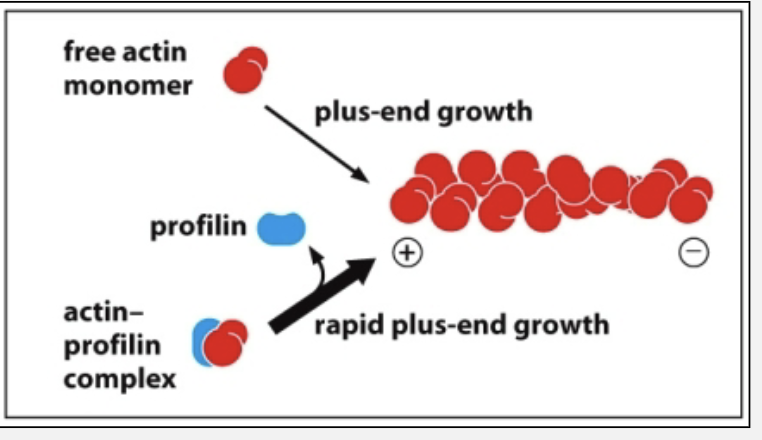
describe what way profilin bind monomers
profilin binds monomers in a way that inhibits spontaneous polymerization but can promote rapid addition to the plus ends of pre-existing filaments
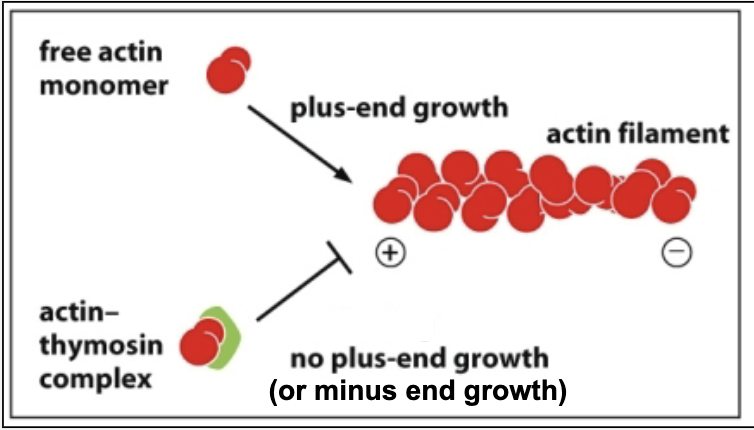
describe what way tymosin binds monomers
tymosin binds monomers in a way that inhibits addition at both ends of actin filaments
how can cells spatiotemporally control actin polymeration?
by regulating the activity of filament nucleating complexes (and by regulating the competition of profilin and thymosin for actin monomers)
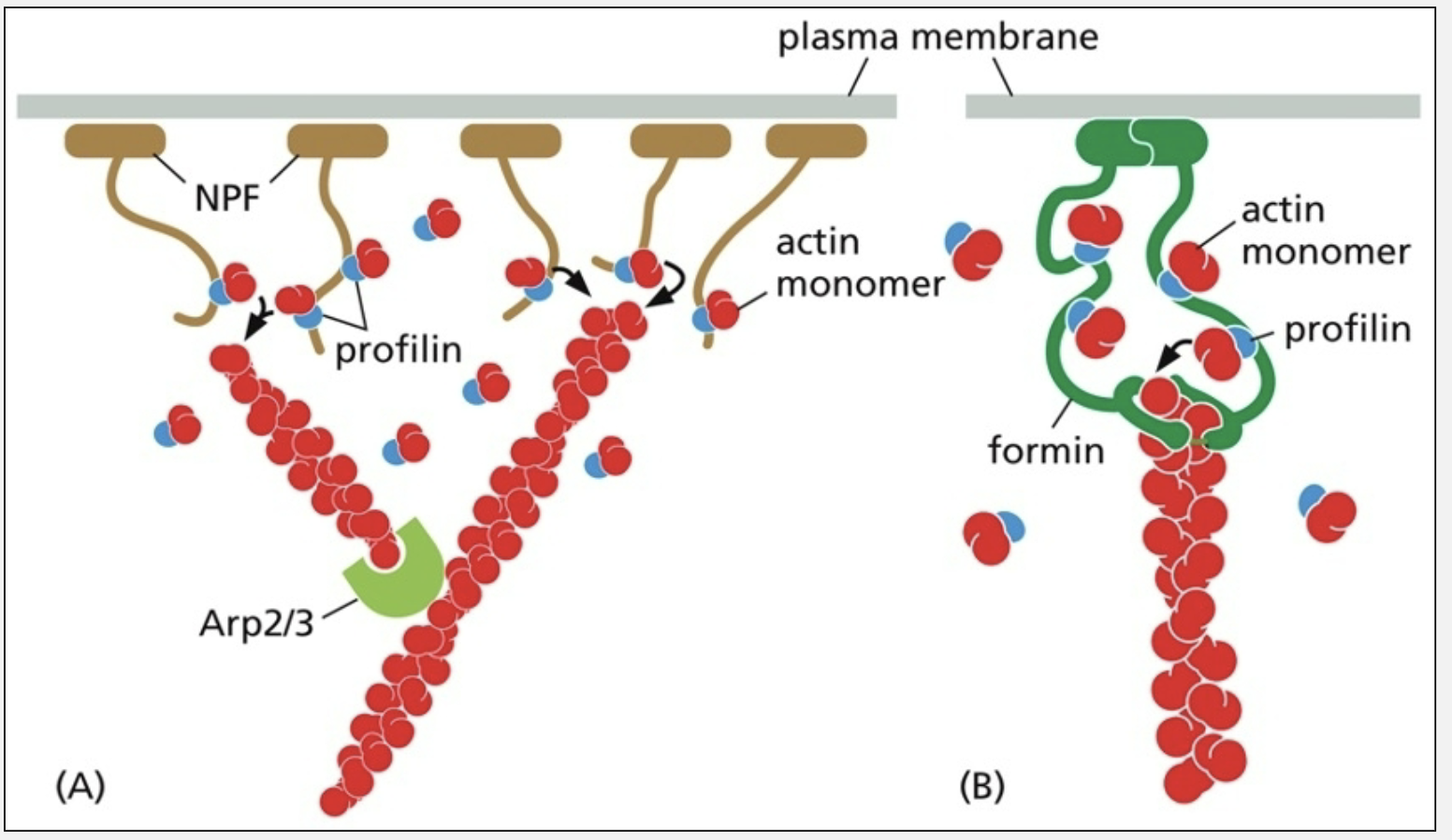
what are major actin filament nucleators we talked about in class?
Actin realted proteins 2 & 3 (Arp2/3)
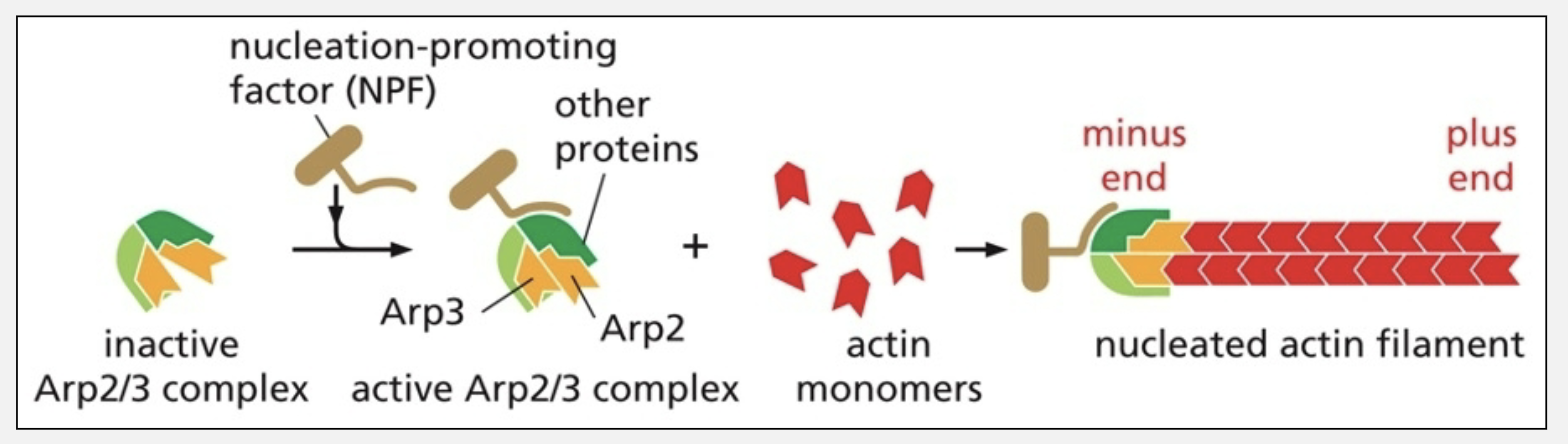
structure of Arp2 and Arp3
very similar to actin
they don’t form filaments, but they provide a complex that functions like a pre-formed seed to promote polymerization
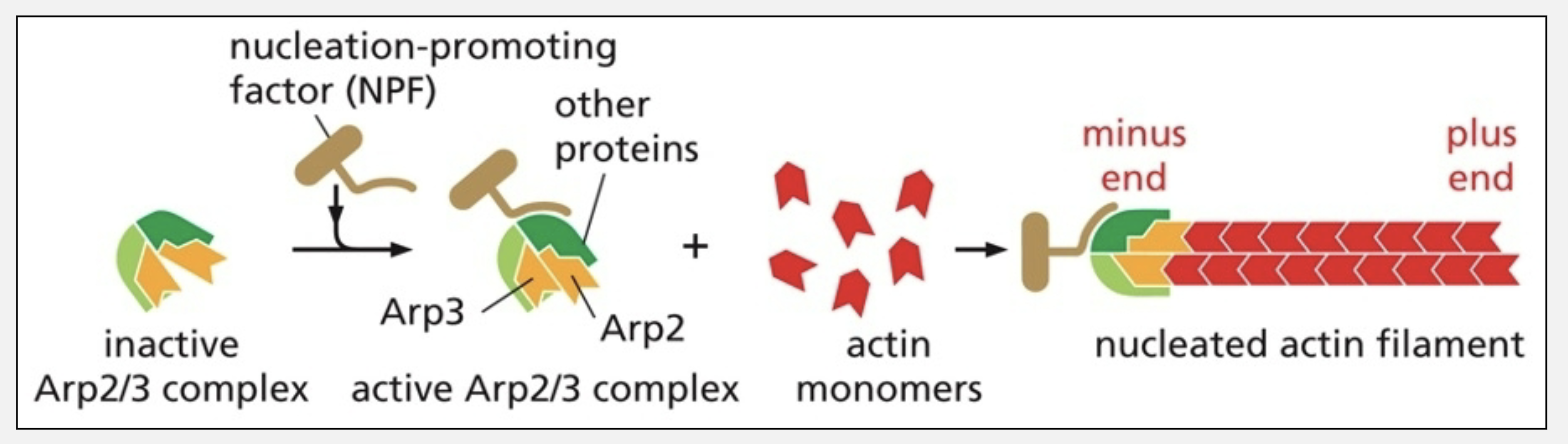
what stimulates the Arp2/3 complex?
NPFs (nucleation promoting factros)
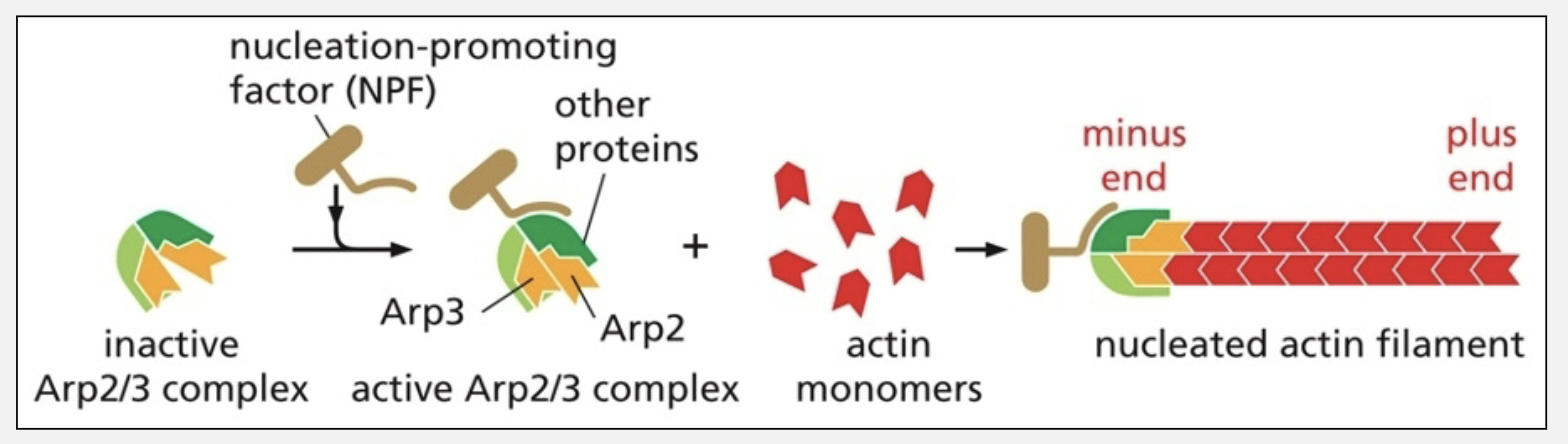
what does Arp2/3 do?
nucleates new actin filaments
they adopt a shape that creates an ideal platform for new filament growth
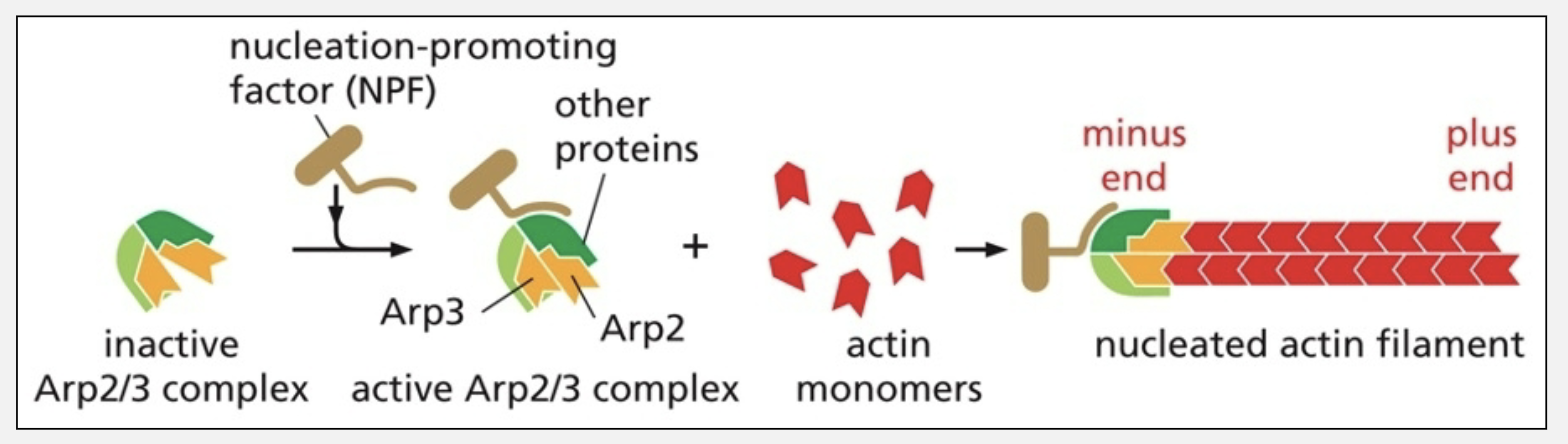
While Arp2/3 complex is bound, what does it also prevent?
prevents depolymerization at the minus end
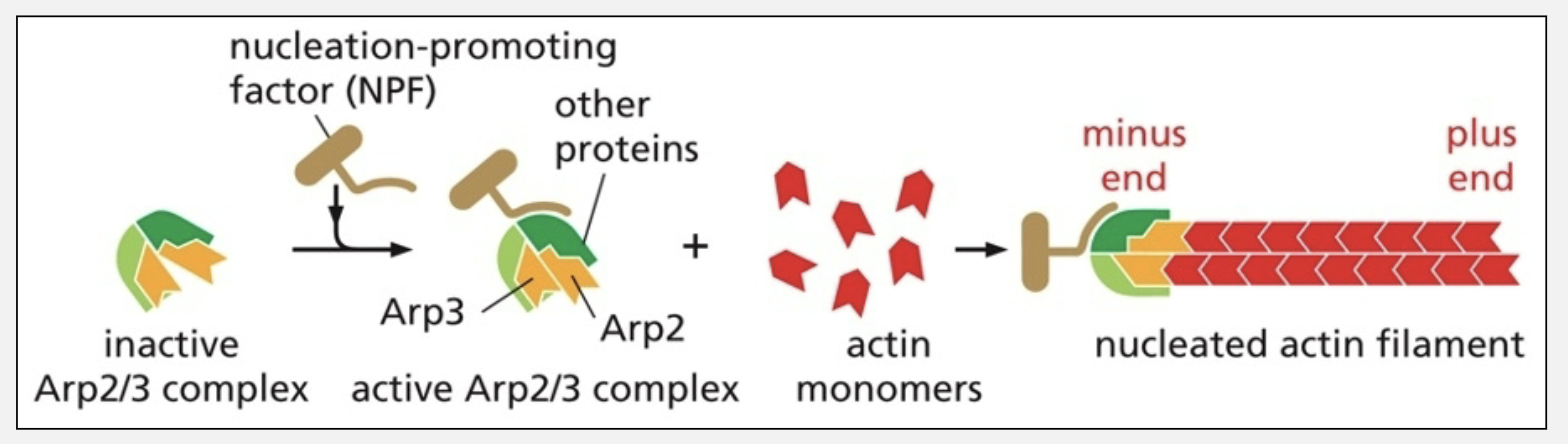
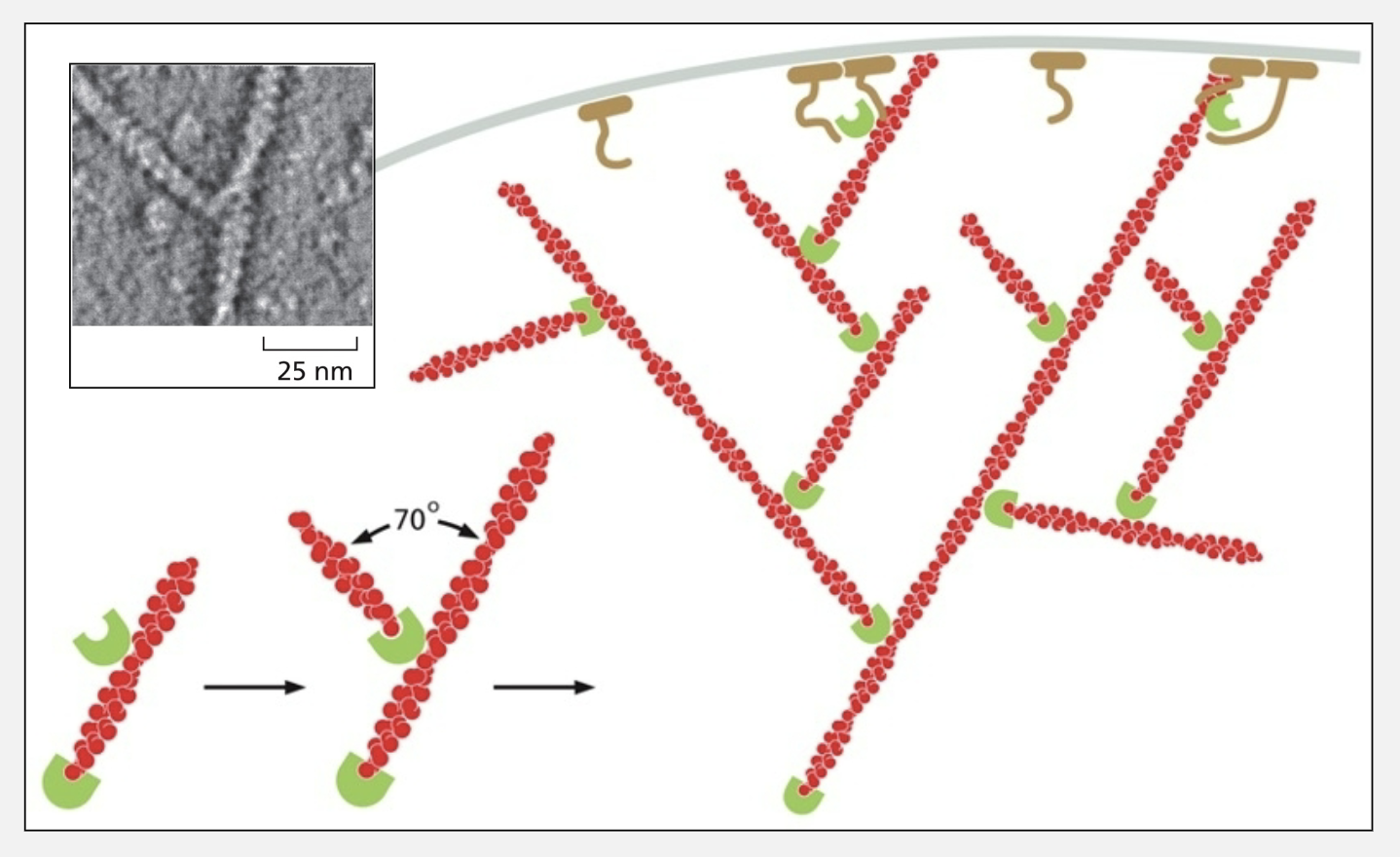
What does Arp2/3 promote?
promotes formation of branched actin networks
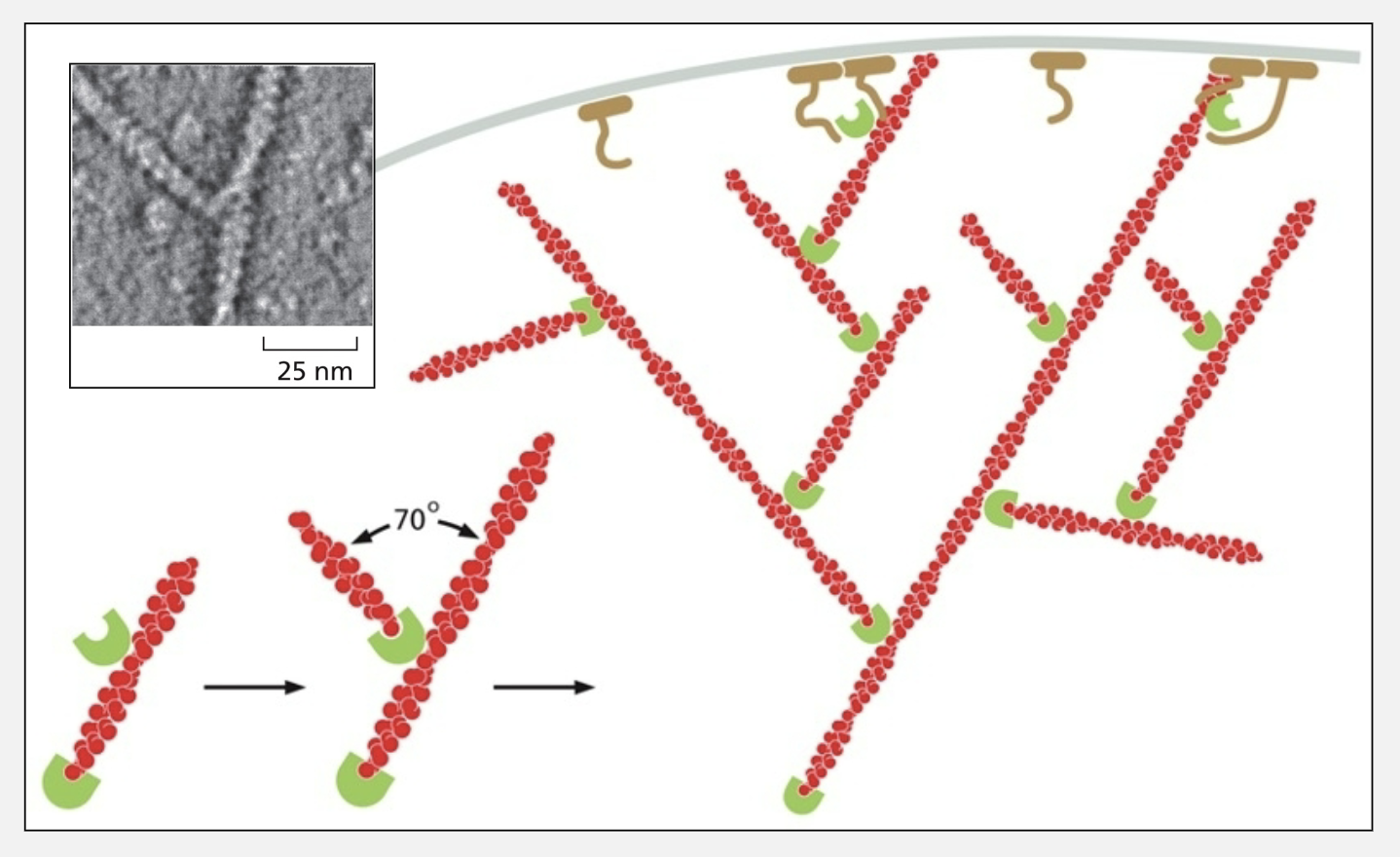
How does ARp2/3 promote the formation of branched actin networks?
by binding the sides of existing filaments
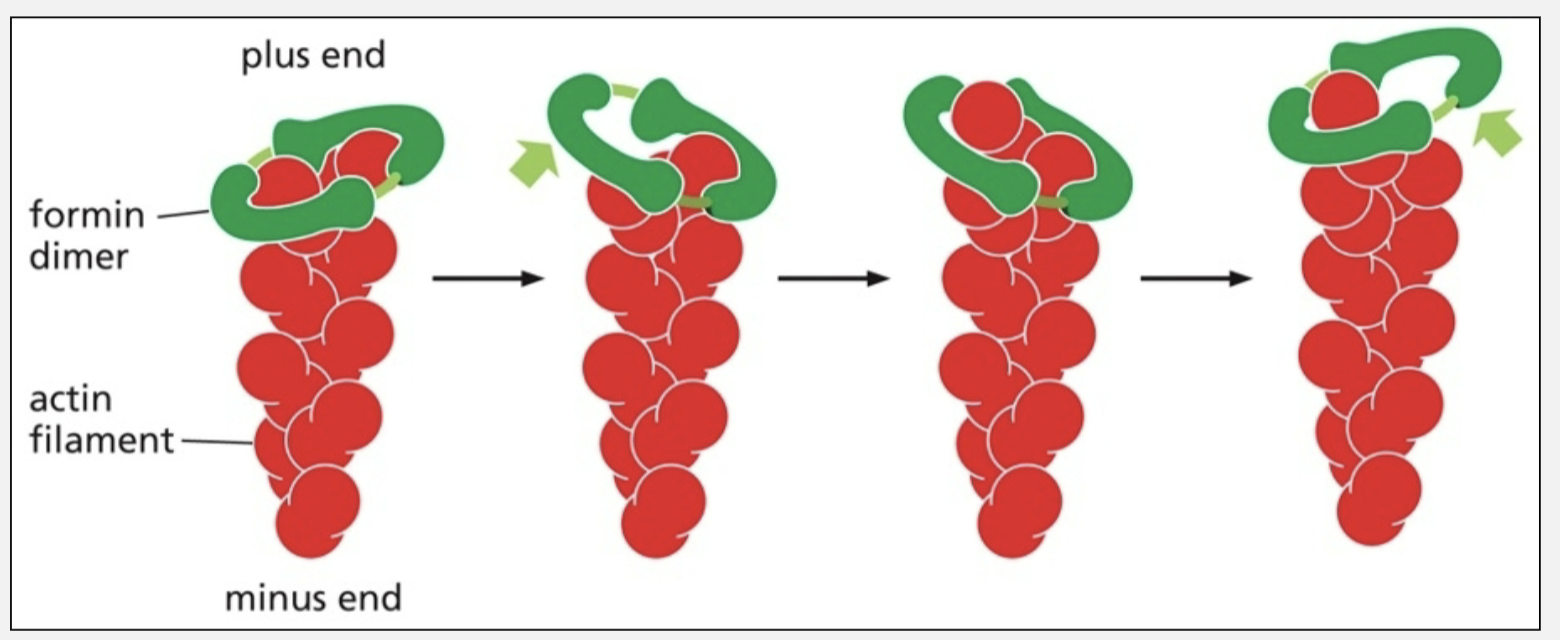
What do formins do?
nucleate linear arrays of polymerized actin
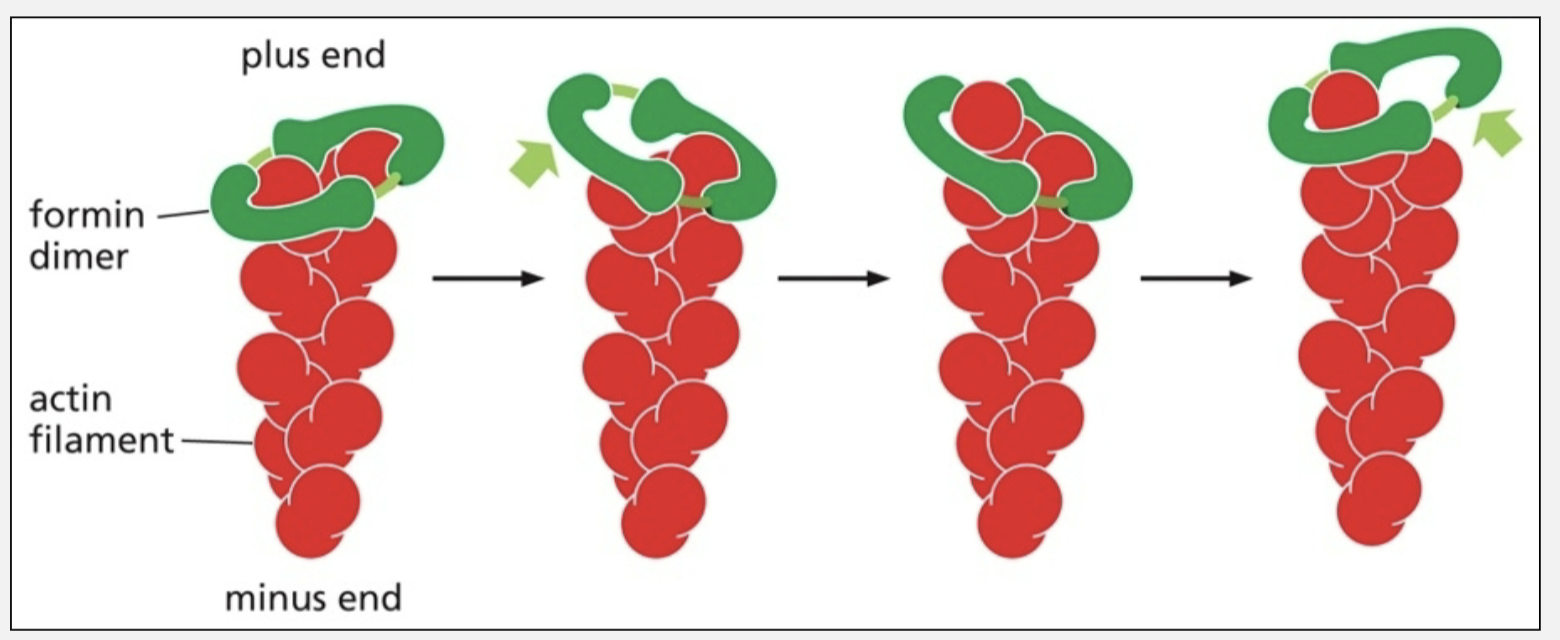
What end of actin filaments do activated formins interact with? What does this promote?
interact with plus ends of actin filaments
promote the growth of linear arrays of actin filaments
what does profilin stimulate? How?
actin filament elongation
profilin binding sites on NPFs and formins position actin monomers near the plus end of actively elongating actin filaments
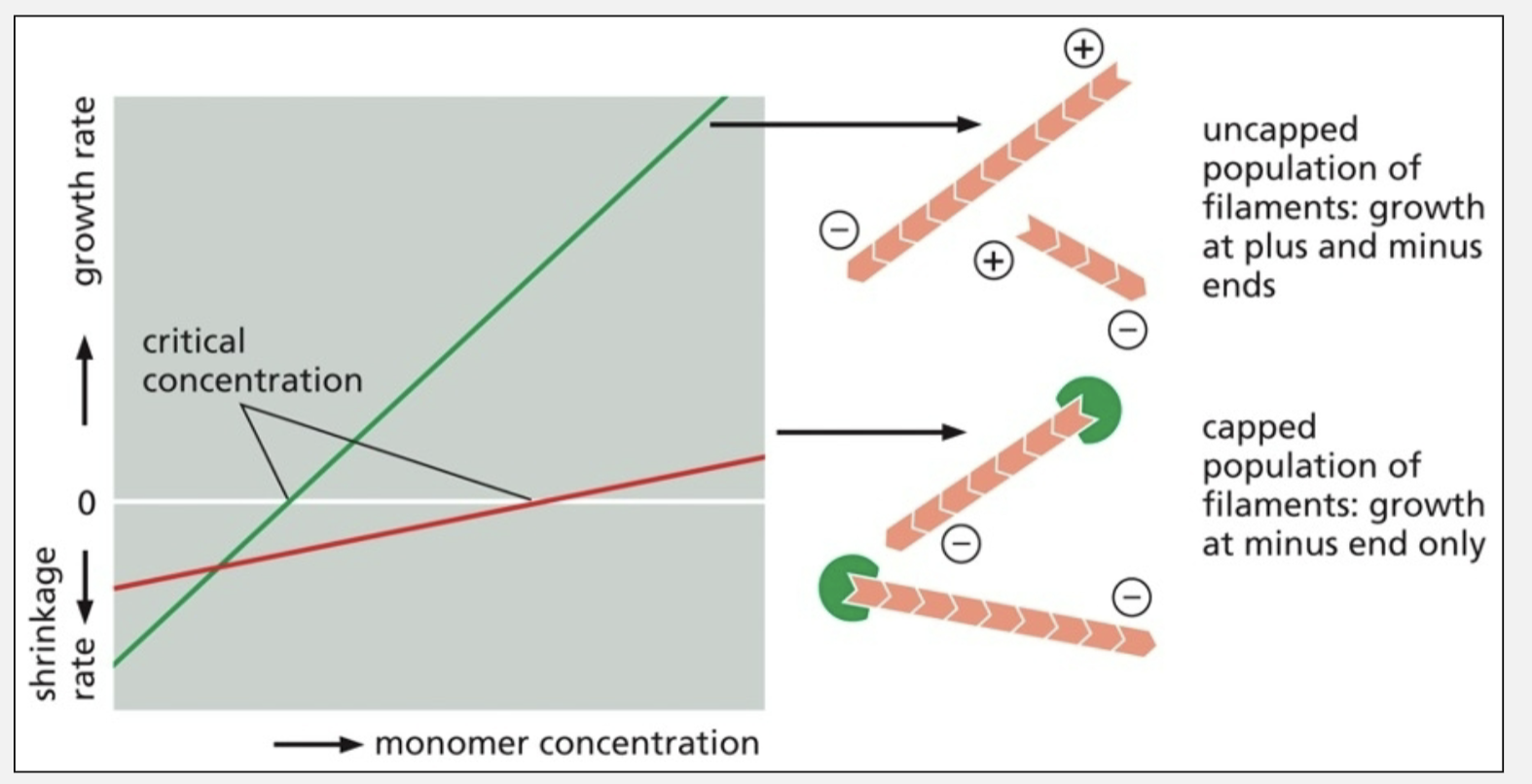
What do capping proteins do if added to (+) ends?
If plus ends are all capped, growth rate, shrinkage rate, and critical concentration will be controlled by the minus end
what do actin serving proteins promote?
promote more rapid actin disassembly OR assembly
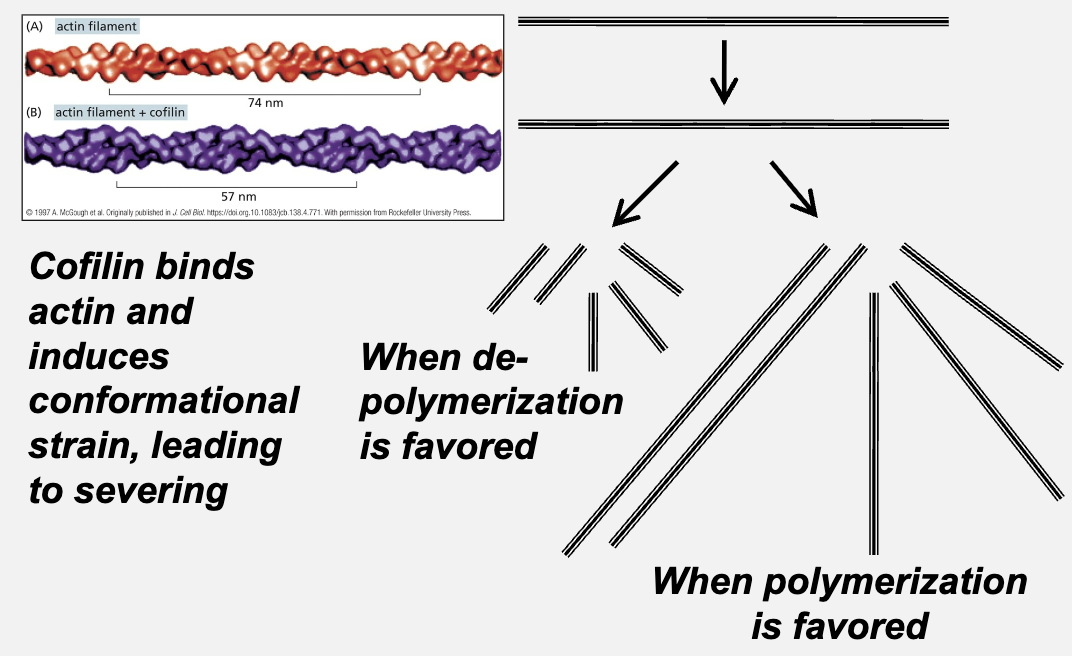
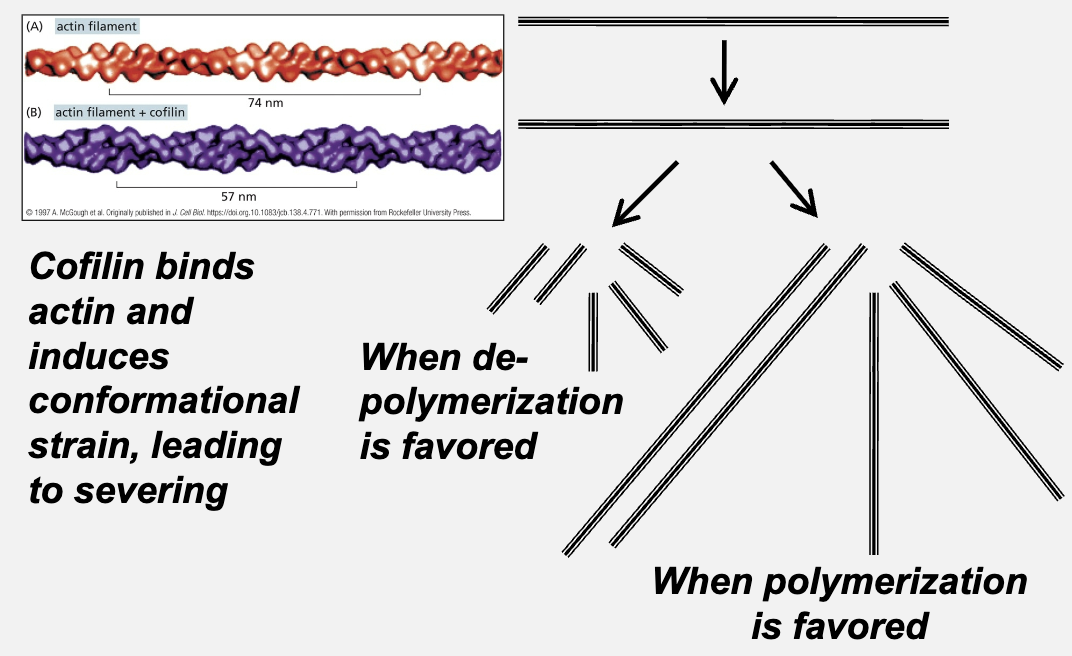
what happens when cofilin binds actin?
indices conformational strain, leading to severing
what supports the organization of actin in different regions of migrating cells?
different actin binding proteins
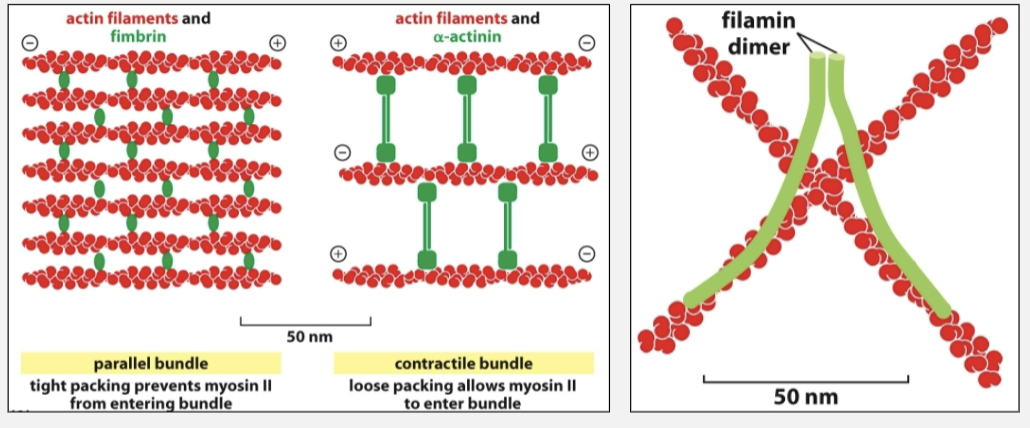
what are 4 different actin configurations?
anti-parallel linear array, looser
mixed (branched and unbranched)
branched array
parallel linear array, tighter
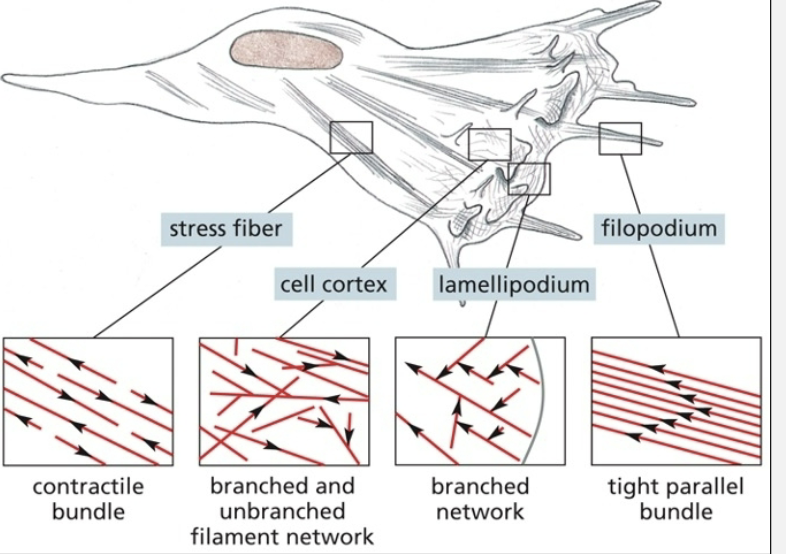
What can establish different geometries of actin filament networks?
activation of different actin binding proteins in different regions of the cell
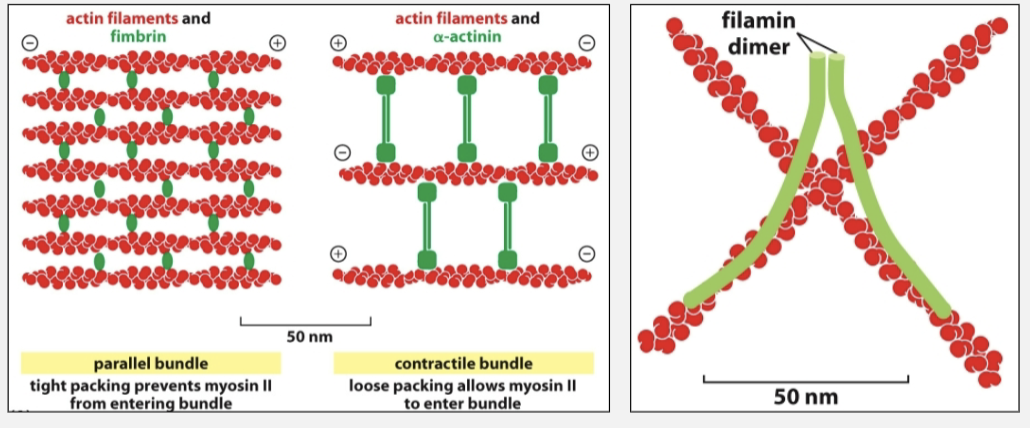
actin-parallel filaments can be pulled in both directions by what?
myosin motor proteins
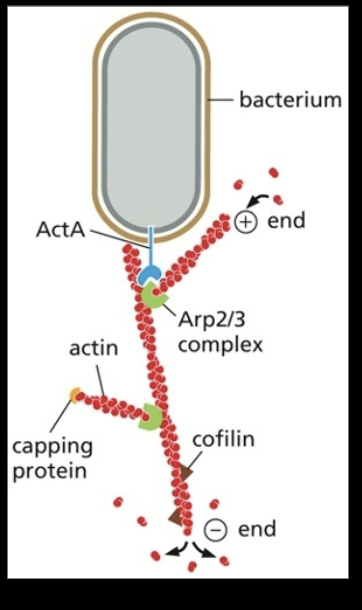
what can highjack the actin control machinery?
pathogens (ex: listeria)
In listeria, ActA proteins recruits and activates the Arp2/3 complex
this promotes cell-to-cell spreading
uptake of bacterium from one cell by a neighboring cell via phagocytosis
Describe structure of Intermediate filaments. Key feature?
form rope-like fibers
lack polarity
Soluble: domers and tetramers are the soluble subunits
Key feature: very high tensile strength and no polarity (no plus or minus end)
what does keratin provide for epithelial cell layes?
mechanical support
keratin filaments form an interconnected network that mechanically couples epithelial cells within epithelial cell layers
What does a defective keratin network result in?
very fragile epidermal cell layers
What is the result of a keratin mutant that can incorporated into keratin filaments but fails to make all of the proper contacts?
results in a blistering phenotype when co-expressed in cells expressing wild type keratin
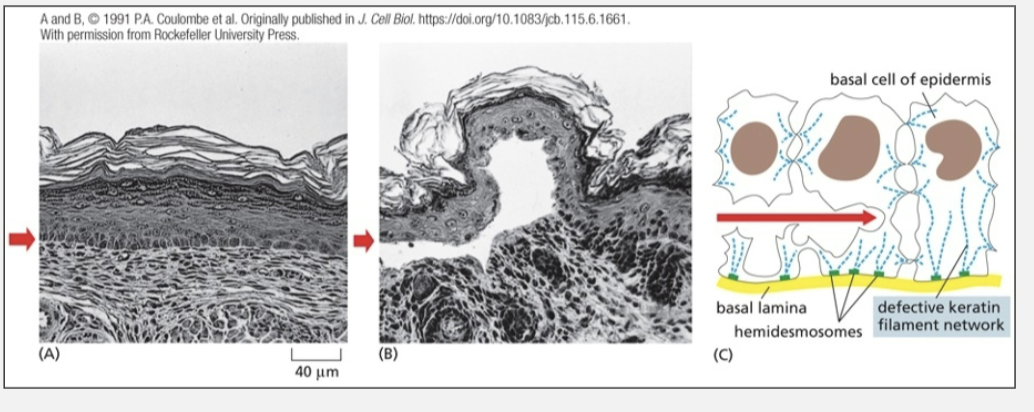
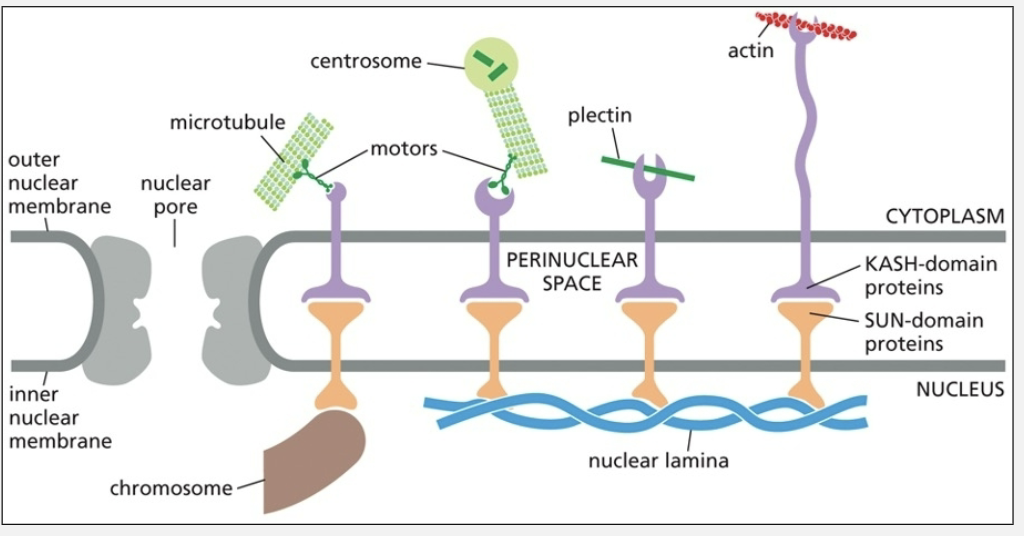
the cytoskeleon is physically coupled to the “nuceloskeleton” by what?
SUN-KASH complexes
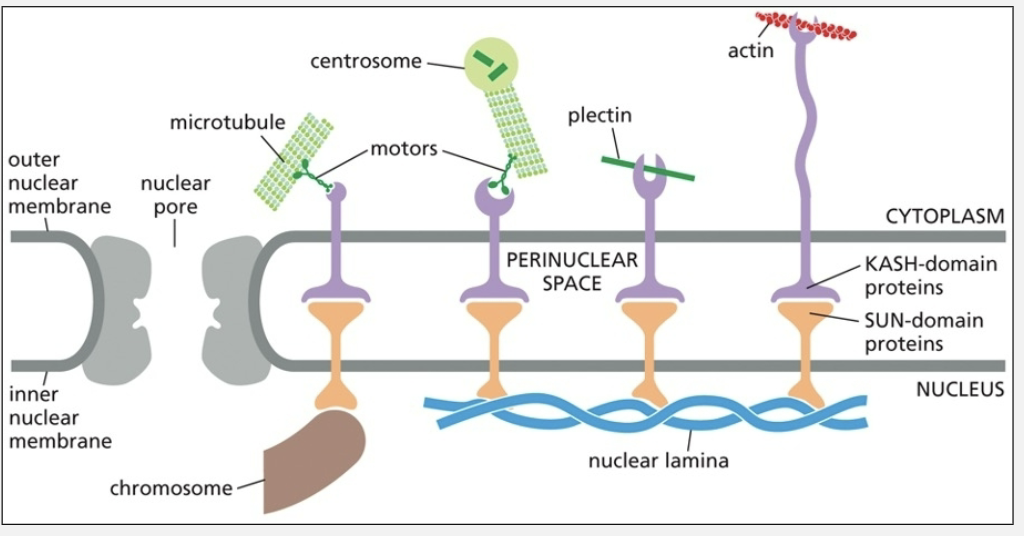
what are Nuclear lamins?
ancient ancestros of cytoplasmic intermediate filaments
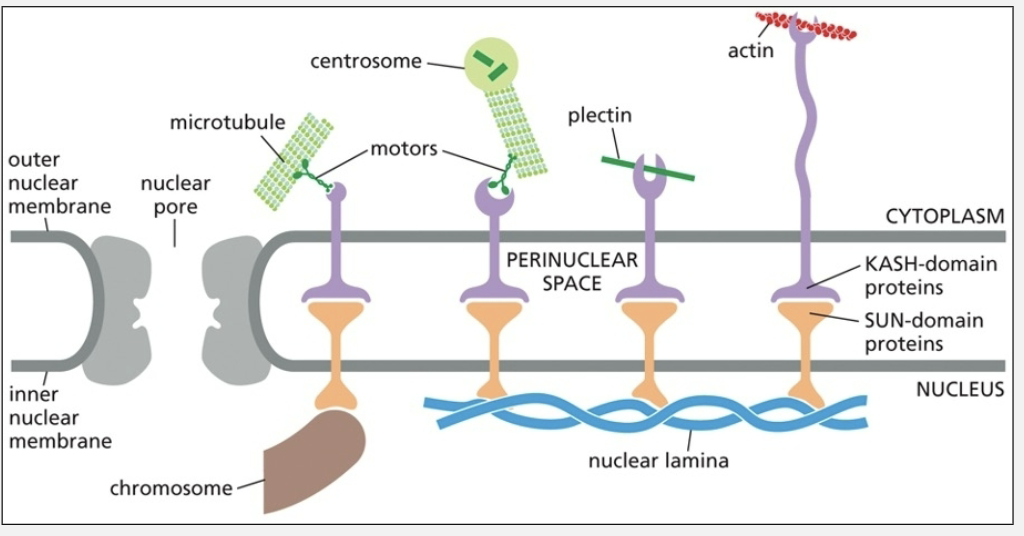
what links nuclear lamins to all 3 cytosolic filaments systems?
SUN-KASH complexes
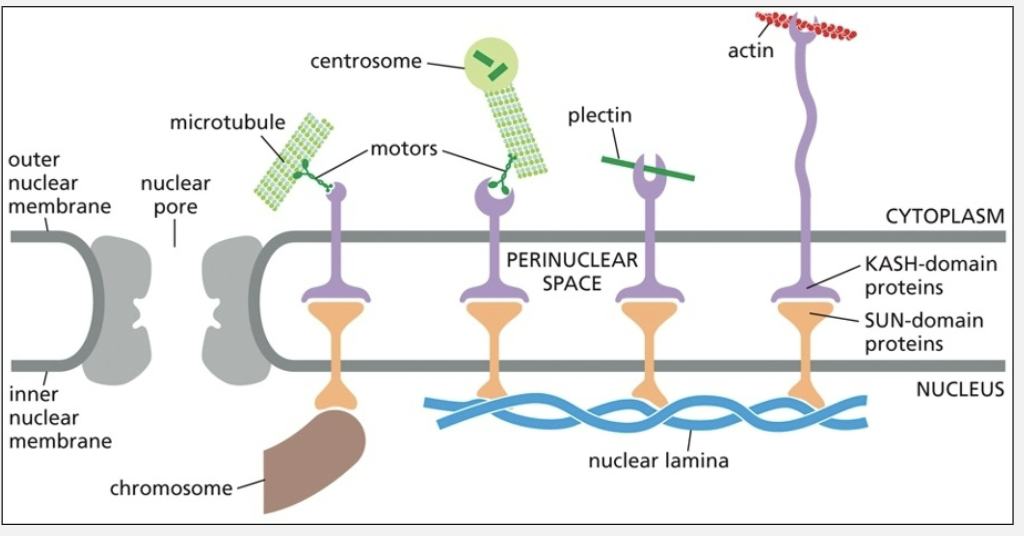
What does Plectin provide?
crosslinks to diverse cytoskeletal elements, including intermediate filaments