Ch. 5 - Eukaryotic Diversity
 Call Kai
 Learn
Learn Practice Test
 Spaced Repetition
 Match
Match Flashcards
 Knowt Play
1/86

There's no tags or description
Looks like no tags are added yet.
Name | Mastery | Learn | Test | Matching | Spaced | Call with Kai |
|---|
No analytics yet
Send a link to your students to track their progress
87 Terms
What does coccoid mean?
Spherical or circular; not perfectly round
What is a protist?
Old term for any eukaryote that is not a plant, fungus, or animal
What are the two types of protists?
Protozoa
Algae
What is the distinguishing characteristic of protozoa?
No cell wall
What is Giardia known for?
Supergroup: Excavata
Most common protozoa within human internal parasite within the U.S.
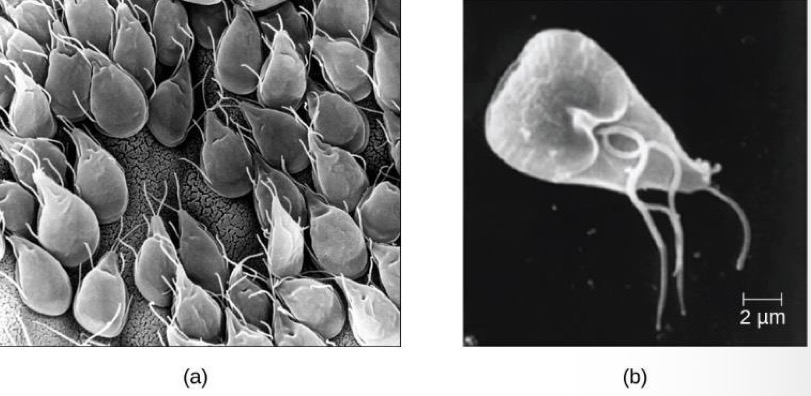
How many pairs of flagella does Giardia have?
Supergroup: Excavata
Four pairs of flagella
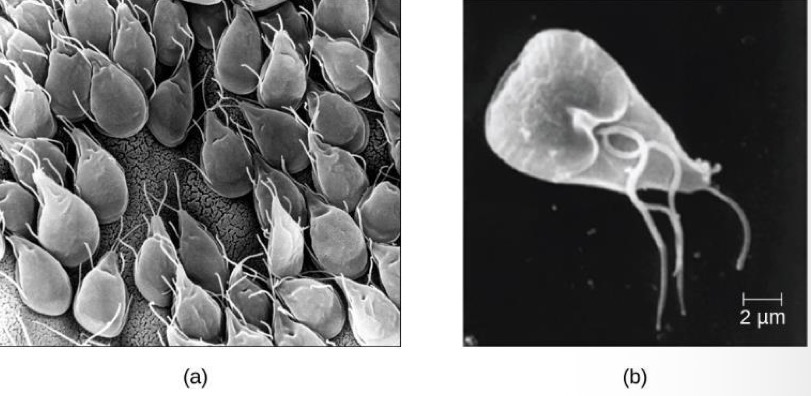
What is the supergroup of the genus Giardia?
Supergroup: Excavata
What is the most common species within Giardia? What does it cause?
Supergroup: Excavata
Giardia lamblia: causes Giardiasis
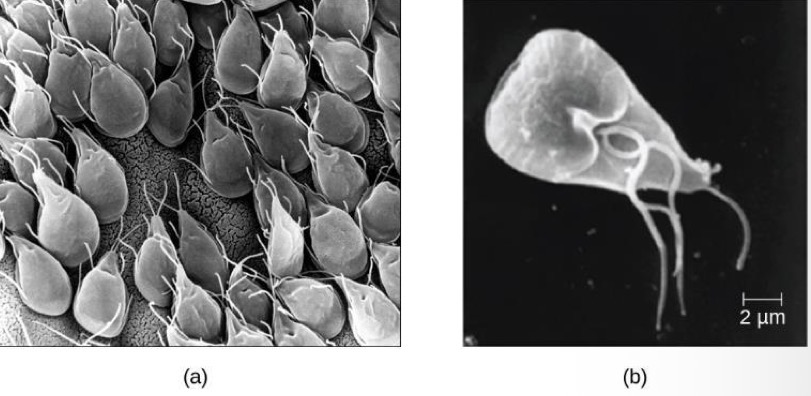
What two reproductive structures does Giardia contain?
Cyst; outside of human
Trophozoite; once inside host
What group is the genus Eimera from?
Supergroup: Chromeolavata
Group: Apicomplexan
What types of reproduction does Eimera have?
Sexual and asexual reproduction
What 5 structures does Eimera use for reproduction?
Protist Life Cycle
Sporozoites
Trophozoites
Schizogeny/Schizonts
Merozoite
Syngamy
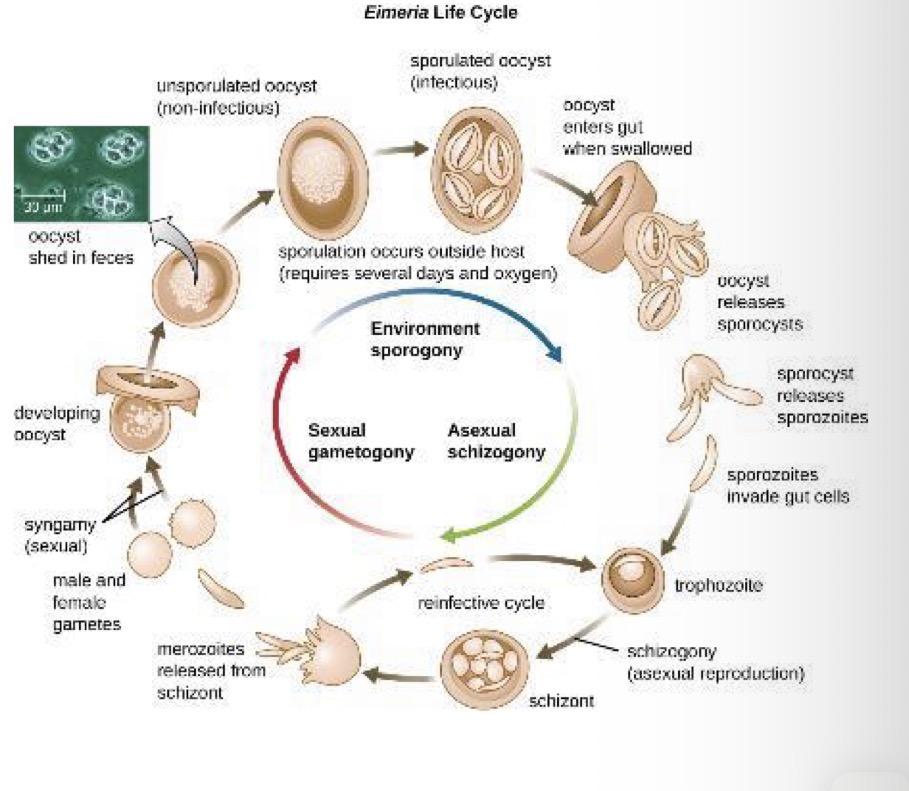
What preliminary reproductive structure do eimerias and other genuses exist as outside of hosts?
Eimera
Oocysts exist outside of chickens in feces; then transmitted
What do sporozoites consist of in the life cycle of the protist?
Motile, spore like stage
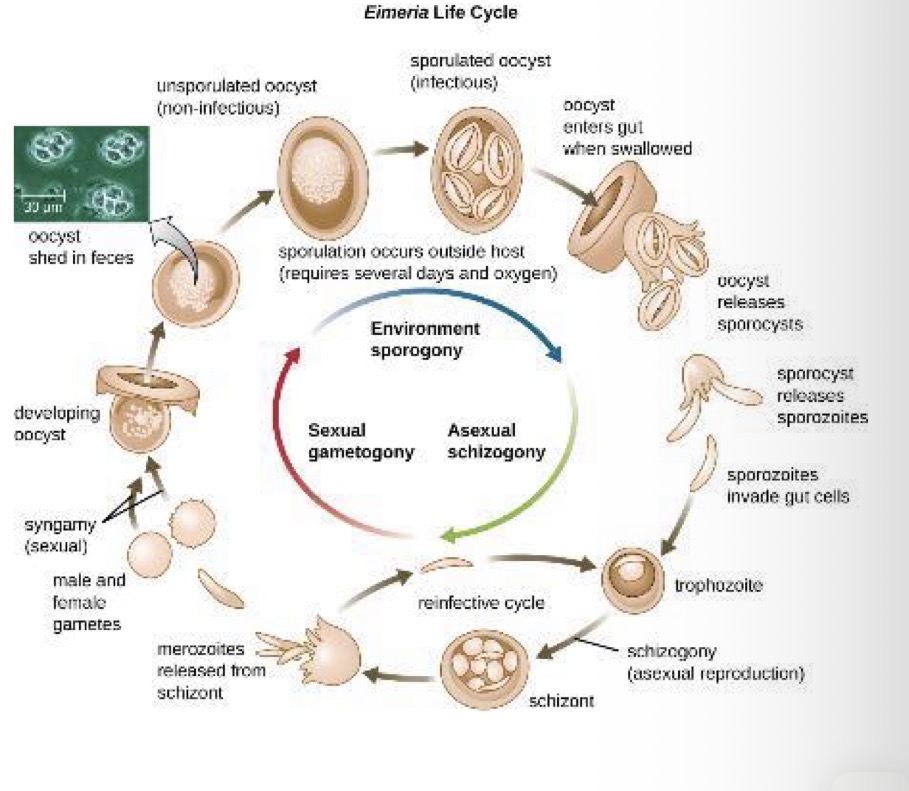
What are the trophozoites during the life cycle of the protist?
Growing and feeding stage (inside human)
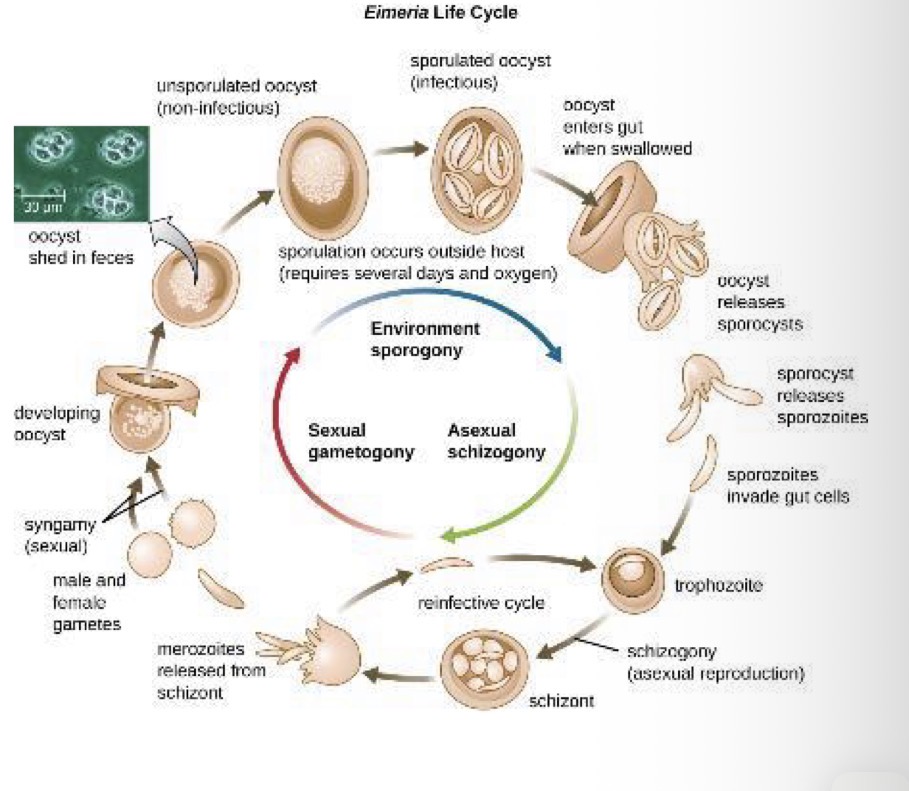
What occurs in sphizogeny? What are the products of this called?
Asexual reproduction of protists/protozoa (1 —> 8 nuclei)
daughter cells called schizonts
What are the merozoites in the life cyccle?
After the nucleus divides; many smaller nuclei released from schizonts
What occurs in syngamy?
Sexual reproduction
What is polyphyletic?
Many phyla or groups; don’t share evolutionary origin, not really related
What are the six supergroups of eukaryotic microbes?
Archaeplastida
Amoebazoa
Opisthokonta
Excavata
Rhizaria
Chromalveolata
What are 5 common protist structures?
Plasmalemma
Contractile vacuole
Endoplasm
Ectoplasm
Nucleus
What is the plasmolemma within a protist?
Under the cell membrane, provides support
What is the function of the contractile vacuole?
Protist
Takes up water, aka osmoregulation
What is the endoplasm?
Protists
Inner cytoplasm
What is the ectoplasm?
Protist
Outer cytoplasm
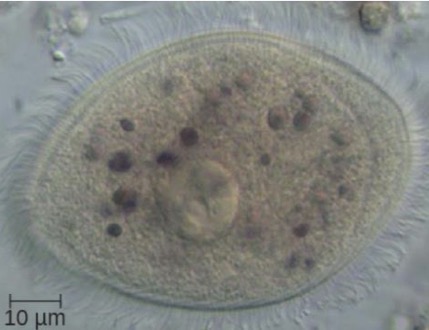
What is the supergroup of the genus Paramecium?
Supergroup: Chromalveolata
How is Paramecium described? Where is it found?
Supergroup: Chromalveolata
Free living ciliated often in aquatic habitats
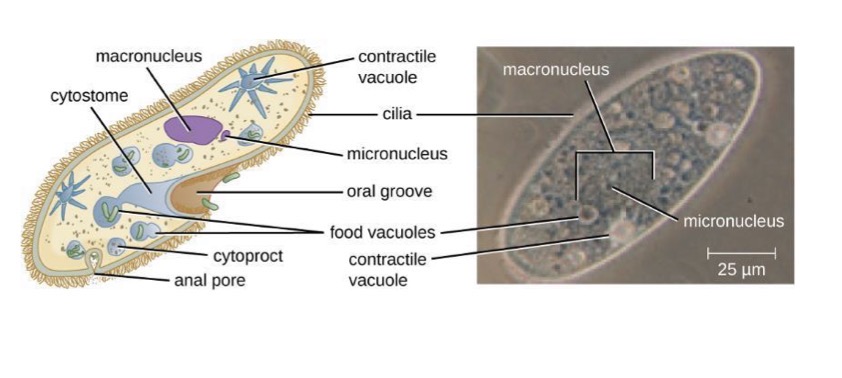
What is cilia?
Hair like appendages
Is Paramecium generally pathogenic?
Supergroup: Chromalveolata
Nonpathogenic (can become pathogenic via plasmid with virulence)
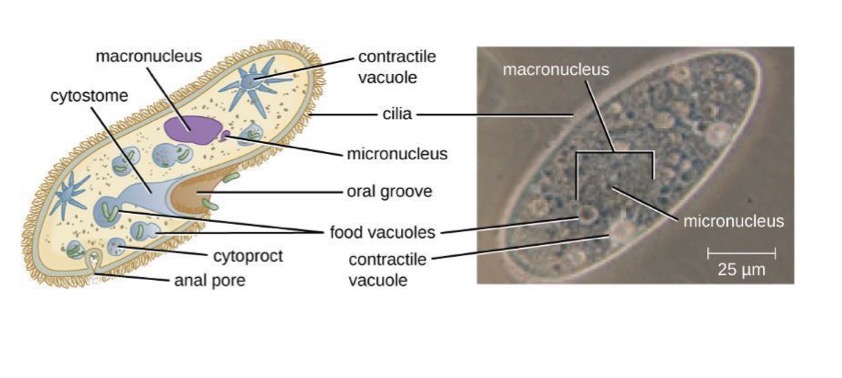
What is the supergroup and of Balantidium/Paramecium Coli? What can only do as a ciliate?
Supergroup: Chromalveolata
Only ciliate that can parasitize humans
What is the supergroup of the Group: Apicomplexan?
Supergroup: Chromalveolata
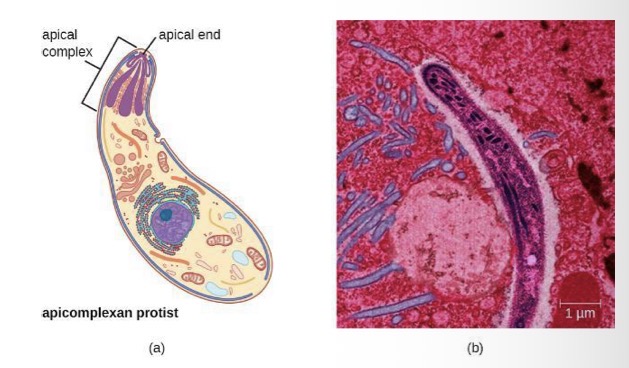
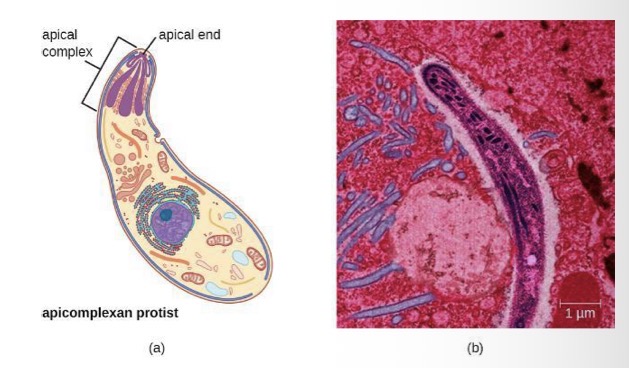
What kind of structures does the group apicomplexans have? Its function?
Supergroup: Chromalveolata
Apical complex organelles and microtubules: for attachment to host cells
What are the two most common species within Plasmodium?
Supergroup: Chromalveolata
Group: Apicomplexan
Plasmodium falciparum
Plasmodium vivax
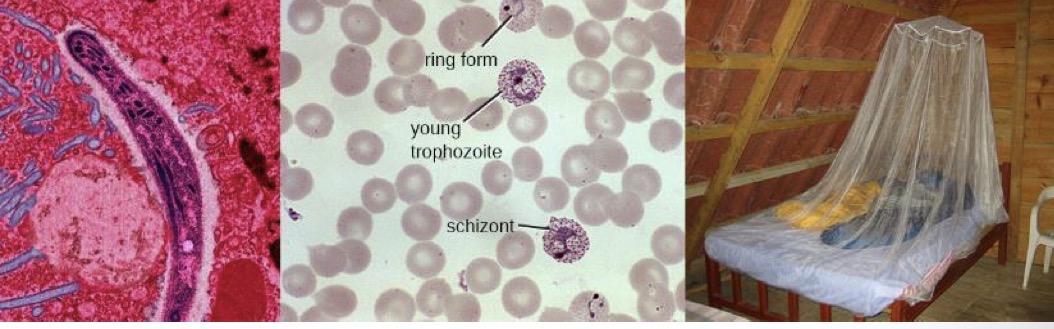
What is P. falciparum known for? What does it cause?
Supergroup: Chromalveolata
Group: Apicomplexan
Species causing the most lethal form of malaria malignant malaria
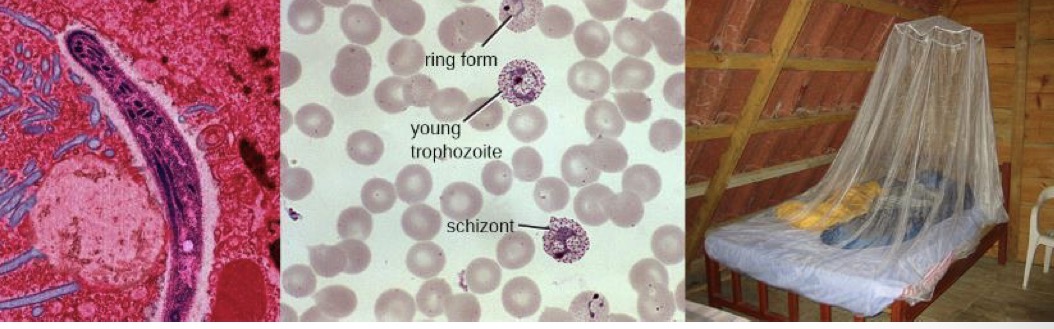
What organ does P. falciparum multiply in humans? To enter what?
Supergroup: Chromalveolata
Group: Apicomplexan
Grows in liver; to enter blood stream
How does T. gondii affect the hosts it invades? Why?
Supergroup: Chromalveolata
Group: Apicomplexan
Lessens the fear within an animal to become violent releasing blood; to reach its preferred host—felines
high mortality rate
What kind of movement does the Group: Entamoeba use?
Supergroup: Amoebaza
Protozoan with amoeboid movement
What structure do entamoebas use for movement?
Supergroup: Amoebaza
Pseudopods: false feet/fingers
What two species are found within the group entamoeba?
Supergroup: Amoebaza
Entamoeba histolytica
Naegleria fowleri
What does Entamoeba histolytica cause?
Supergroup: Amoebaza
Group: Entamoeba
Causes dysentery (most studied apart from giardia)
What is Naegleria fowleri known as?
Supergroup: Amoebaza
Group: Entamoeba
Brain eating amoeba
What is the supergroup of the group euglena?
Supergroup: Excavata
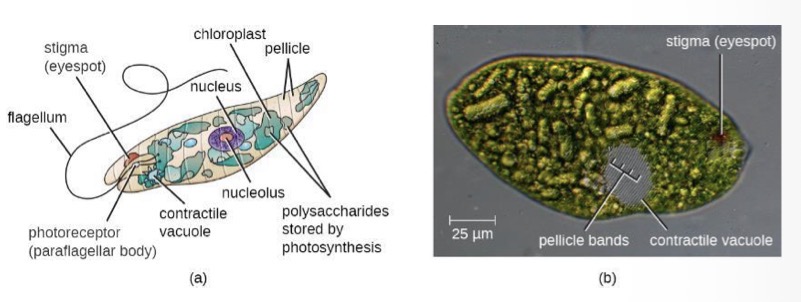
What structures does group euglena contain?
Supergroup: Excavata
Chloroplasts; photosynthesis
Stigma: light sensing organism
Are euglena pathogenic?
Supergroup: Excavata
Generally nonpathogenic
How is euglena a fierce predator?
Supergroup: Excavata
Fierce predator; for ciliates and microbes
What is the supergroup of parasitic helminths (worms)?
Supergroup: Opisthokonta
What are the two groups within the supergroup opisthokonta? What are they also known as?
Group: Nematodes (roundworms)
Group: Platyhelminthes (flatworms)
What two types of flatworms are there?
Supergroup: Opisthokonta
Group: Platyhelminthes
Flukes; trematodes
Tapeworms; cestodes
What structure do cestodes or tapeworms have aid as a parasite? How are their reproductive organs arranged?
Supergroup: Opisthokonta
Group: Platyhelminthes
Hooks at the head to latch on to intestines: scolex
hemaphrodites
About how many of helminths are parasitic? Multi or singlecelled?
Supergroup: Opisthokonta
1/2 are parasitic; multicelled animals
What is the example of a nematode?
Supergroup: Opisthokonta
Group: Nematode
Pinworms
What symptom do pinworms cause?
Supergroup: Opisthokonta
Group: Nematode
Sleeplessness
About how much of the US population has antibodies for pinworms? What are they called?
Supergroup: Opisthokonta
Group: Nematode
14% has pinworm antibodies; toxocara canus and cati
cats and dogs
What is the example the group platyhelminthes? Segmented or nonsegmented?
Supergroup: Opisthokonta
Group: Platyhelminthes
Blood flukes (trematodes); non segmented flatworm
How do flukes or trematodes feed?
Supergroup: Opisthokonta
Group: Platyhelminthes
Oral sucker
What infection do flukes or trematodes cause?
Supergroup: Opisthokonta
Group: Platyhelminthe
Schistosomiasis; second most parasitic infection
What does schistomiasis cause?
Supergroup: Opisthokonta
Group: Platyhelminthes
Trematodes (flukes)
Erosion of blood vessels, blood urine, inflammation of genitals
Where is schistomiasis prevalent?
North Africa
What occurs in stage 1 of the life cycle of schistosoma?
Supergroup: Opisthokonta
Group: Platyhelminthes
Class: Trematodes (flukes)
In infected persons urine or feces
What occurs in stage 2 of the life cycle of schistosoma?
Supergroup: Opisthokonta
Group: Platyhelminthes
Class: Trematodes (flukes)
Eggs hatch, enter snail to develop releasing sporocytes
What occurs in stage 3 of the life cycle of schistosoma?
Release eggs free swimming into water
What occurs in stage 4 of the life cycle of schistosoma?
Penetrates skin of people in water
What occurs in stage 5 of the life cycle of schistosoma?
Enters circulation, live in GI vessels
What occurs in stage 6 of the life cycle of schistosoma?
Migrate to rectum, liver, bladder; lay eggs again to be in water
Are fungi multicelled or single celled?
Both multicellular and unicellular, macro or microscopic
What is the purpose of fungi?
To recycle nutrients
How are fungi heterotrophs?
Eat others, to obtain nutrients
How are fungi saprobes?
Feed off of dying material, decomposers
What are opportunistic versus true pathogens in fungi?
True pathogen: always pathogenic
Opportunistic pathogen: normally not pathogenic, but take over when immunocompromised
What are the cells wall in fungi made up of?
Made up of chitin
How is mold different from fungi?
Mold; multicellular
Fungi; unicellular
What does fungi produce?
Produce antibiotics and food
What type of lipids does fungi have in the cell membrane?
Ergosterol; type of lipid
What is the example of fungi given?
Histoplasma capsulatum
Is histoplasma capsulatum yeast or mold? What is this called?
Dimorphic; yeast or mold depending on environment
In what environment is fungi mold? Yeast?
Mold; in soil
Yeast; in lungs
What kind of fungus is histoplasma capsulatum?
Soil fungus
Where does histoplasma capsulatum grow best?
Grows best in. the presence of bird or bat droppings
What fungal structures are sexual?
Canada Albicans
Ascus and ascospores
What fungal structures are asexual?
Hyphae and sporangium
What are hyphae?
Multicelled strands of molds
How does septate hyphae appear?
With division
Molds
How does coenocytic (nonseptate) hyphae appear?
No division
Molds
What is budding?
Asexual reproductive process of yeast
What are pseudohyphae?
False hyphae; chains of budding on yeast
What are lichen?
symbiotic relationships between fungi and algae
What is the function of lichen?
Can function to assess air quality