Biology 101 Lab 9: Cell Division
 Call Kai
 Learn
Learn Practice Test
 Spaced Repetition
 Match
Match Flashcards
 Knowt Play
1/29

There's no tags or description
Looks like no tags are added yet.
Name | Mastery | Learn | Test | Matching | Spaced | Call with Kai |
|---|
No analytics yet
Send a link to your students to track their progress
30 Terms
Gene
-Specific nucleotide sequence of DNA and codes everything a polypeptide
Genome
-Complete set of an organisms genes
Mitosis
-Results in two daughter cells that are identical to the parent cells
Somatic Cells
-Body Cells
-Used by mitosis
Meiosis
-Occurs in germ cells and results in gametes (sex cell) which are four daughter cells that are unique from the parent cells
Meiosis
-Chromosome number is divided in half
-Reduces the chromosome number to 46 to 23
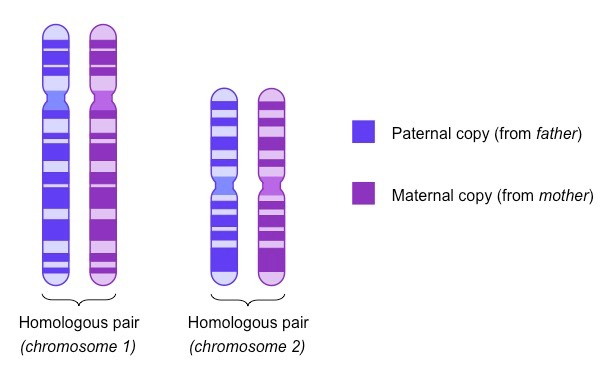
Homologous Chromosomes
-A pair of chromosomes with similar length, and genes in similar locations
-One inherited from the father and one inherited from the mother
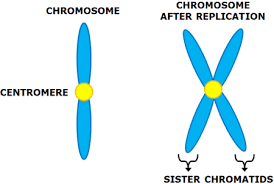
Sister chromatids
-Two copies of a duplicated chromosome; therefore they are identical
-Only found when a cell is preparing to divide
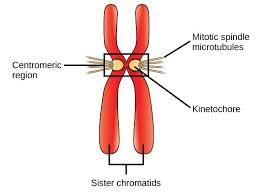
Centromere
Region where two sister chromatids “connect”
Haploid
(n)
A cell containing one set of chromosomes
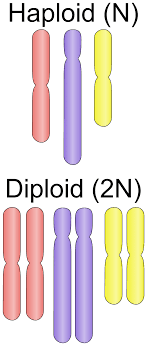
Diploid
2n
A cell containing two sets of chromosomes, one set inherit from each parent
Interphase
-Cell actively prepares for the next stage by growing, acquiring nutrients, and replicating DNA
-Three stages: G1, S, G2
G1 Phase
-Cell acquires energy from its environment along with molecules needed to build additional DNA and Proteins
S Phase
-Duplication of the chromosomes by the cell
-Then each chromosome is now made up of two sister chromatid
G2 Phase
-Cell replenishing energy and protein stores
Prophase
-Chromosomes condense
-Nuclear envelope breaks down
-Spindle begins to form
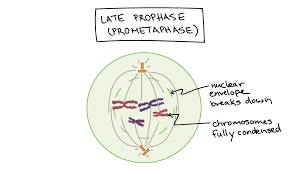
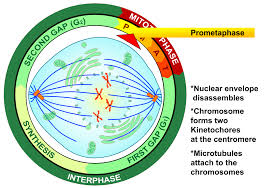
Prometaphase
-Chromosomes continue to condense and are more visible
-Kinetochores appear at the centromere, and kinetochore microtubules attach
-Centrosomes continue to more towards opposite poles
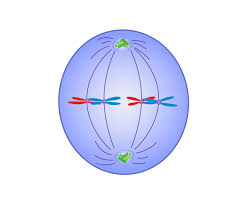
Metaphase
-Sister chromatids line up at metaphase plate
Anaphase
-Chromosomes (sister chromatids) are pulled to opposite plates
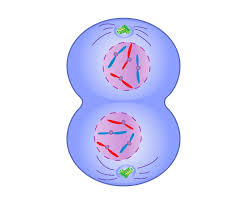
Telophase
-Chromosomes reach opposite poles
-Chromosomes decondense
-Nuclear envelope assembles around chromosomes
-Spindle Breaks down
Cytokinesis
-Division of the cytoplasm occurs
Cleavage Furrow
-In animal cells
-A rip before it is split into two cells
Cell Plate
-In plate cells
-Forms between the two daughter cells to separate them.
Meiosis
-Cellular division that produces gametes and reduces the chromosome number by half
-Diploid cells divide to produce haploid cells
Anaphase I
-Separates homologous chromosomes
Anaphase II
-Separates sister chromatids
Synapsis
-Occurs in Prophase I
-A pair of homologous chromosomes are zipped together
Crossing Over
-Occurs in Prophase I
-Genetic material is swapped between the two chromosomes at a point where they cross called the chiasma
Recombinants
-New sets of homologous chromosomes after synapsis and crossing over
Independent Assortment
-Event that increases genetic variation during meiosis.
-Occurs during Metaphase I, homologous chromosomes align at the metaphase plate independently of one another