Lesson 121 - Wounds and Skin Conditions in Equines
 Call Kai
 Learn
Learn Practice Test
 Spaced Repetition
 Match
Match Flashcards
 Knowt Play
1/85

There's no tags or description
Looks like no tags are added yet.
Name | Mastery | Learn | Test | Matching | Spaced | Call with Kai |
|---|
No analytics yet
Send a link to your students to track their progress
86 Terms
What can cause infection in horses?
barn/farm environment
What are the clinical signs of infection in horses?
1. Heat
2. Redness
3. Swelling
4. Discharge
5. Odor
What are horses at high risk for?
tetanus
How can infections be managed?
1. Lavage and debridement
2. Topical antimicrobials
3. Antimicrobial dressings
When are systemic antimicrobials indicated with infections in horses?
only for synovial/osseus/cellulitis/large infected wounds
What should be considered with distal limb infections?
1. regional limb perfusion
2. concentration dependent antibiotics
What can movement of injured tissue cause?
disruption of capillary buds and increased collagen deposition leading to the development of exuberant granulation tissue
What should you do to wounds if possible?
stabilization with robert-jones bandage or casts
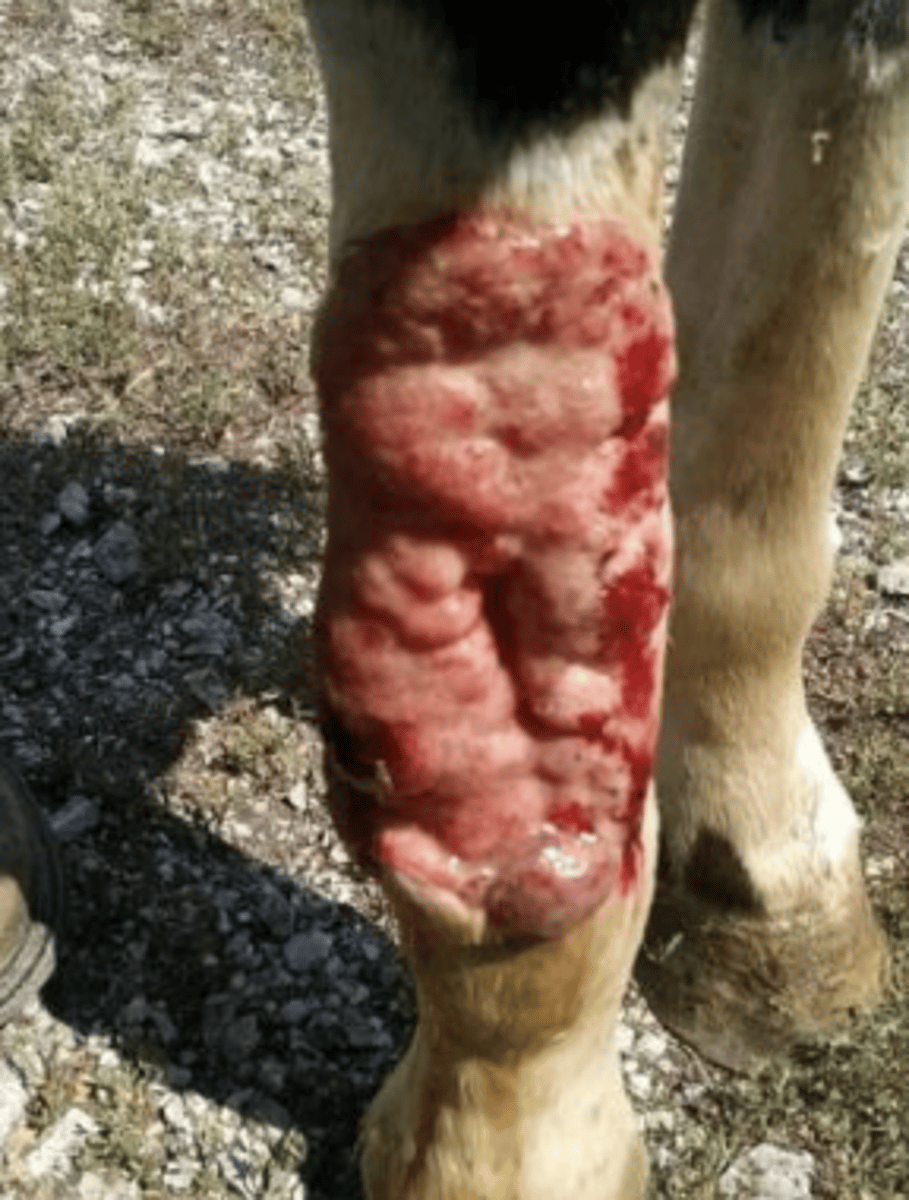
What is this?
exuberant granulation tissue
What is necessary for wound healing?
proper nutrition
What can slow wound healing in horses?
1. geriatric
2. emaciated
3. pituitary pars intermedia dysfunction (PPID)
4. hypoalbuminemia
5. deficiencies
What can cause poor blood supply to wounds?
1. Major vessel disruption with degloving or deep distal limb wounds
2. Thrombosis, oedema, contusion
3. Anaemia
4. Poor oxygenation
What is the importance of proper blood supply to wounds?
1. Eliminating infection
2. Collagen synthesis
3. Epithelialization
What can a delay in angiogenesis cause?
slower healing
How does a foreign body usually present?
nonhealing wound or recurrent abscess
What is a sequestrum?
dead bone
What sequele of a foreign body may not be apparent for some time?
1. dead tendon
2. necrotic tissue
How are foreign bodies diagnosed?
1. physical exam
2. radiographs
3. ultrasound
What is the treatment for foreign bodies?
removal
If the wound is infected, the only option is healing by second intention.
false
How can infection, movement, and foreign bodies cause exuberant granulation tissue?
prolonged inflammatory process
How can malnutrition cause exuberant granulation tissue?
lack of nutritional building blocks
How can poor blood supply cause exuberant granulation tissue?
delayed angiogenesis
What are the differential diagnoses for exuberant granulation tissue?
1. Habronemiasis
2. Sarcoid
3. Squamous cell carcinoma
4. Pythiosis ('swamp fever')
What is the treatment for exuberant granulation tissue?
1. remove inciting cause
2. sharp excision distal to proximal
3. steroid ointments
4. salt therapy
5. pressure bandage
What is the indication for skin grafting?
1. large wounds that are no longer contracting
2. distal limb injuries
How is skin grafting classified?
1. donor-host relationship
2. type
What are the types of skin grafts?
1. Pinch/punch
2. Tunnel
3. Mesh
4. Sheet
What is necessary for skin grafting?
healthy, ideally non-infected granulation bed
What should the donor site be?
large area with lots of skin (ex: neck, pectorals)
What are the characteristics of grafted skin?
maintains color/hair orientation of original site
How long should the bandage be in place without being disturbed with a skin graft?
7 days
What kind of skin graft requires full thickness skin?
mesh
What can cause pressure sores?
1. bandaging
2. recumbency
Where do pressure sores usually form?
over bony prominences
How are pressure sores managed?
remove inciting cause and treat as other wounds
What is the cause of subcutaneous emphysema?
secondary to deep axillary/inguinal wounds or tracheal perforation/rupture
What can subcutaneous emphysema lead to?
1. spontaneous resolution
2. pneumothorax
How is subcutaneous emphysema managed?
1. bening neglect
2. cover wounds and reduce movement
What can a synovial structure injury lead to?
end of career and potentially end of life
What should you never do to a joint on a cellulitic/swollen limb?
do not enter the joint
What is the treatment for injured synovial structures?
1. Arthroscopy
2. Flush with large volume of sterile saline
3. Remove debris, debride cartilage etc.
4. Administer antibiotics (e.g. amikacin)
5. Systemic antimicrobials
6. NSAIDs
What is the treatment for injured synovial structures in the field?
1. Tidal lavage
2. Through-and-through lavage
3. Regional perfusion of antibiotics (aminoglycoside)
4. Systemic antimicrobials
5. NSAIDs
What should be evaluated for involvement when assessing hoof injuries?
1. Coronary band
2. DIP joint
3. DDFT and sheath
4. Distal phalanx
5. Navicular apparatus
6. Ungular cartilages
What is the treatment for hoof injuries?
1. Clean and debride
2. Consider referral if synovial involvement
3. NSAIDs ± AB's
4. Bandage until infection under control then consider casting/shoeing
What should be assessed in degloving injuries?
1. Synovial cavities
2. Tendons
3. Bones
4. Vessels
5. Nerves
What can impaired blood supply of a degloving injury cause?
wound dehiscence
What kind of closure should be attempted with a degloving injury?
primary
What are some adjunct therapies for degloving injuries?
1. Cold salt hydrotherapy
2. Laser
3. Ultrasound
What treatment has the best prognosis for septic arthritis?
arthroscopic lavage
What is the most common cutaneous tumor in horses?
sarcoid
What are the common sites of sarcoids?
Face and muzzle, Ears, Periocular region, Distal limbs, Neck, Ventral abdomen, and Sites of previous injury
What can cause sarcoids?
1. bovine papilloma virus
2. genetic component
How are sarcoids diagnosed?
1. appearance
2. excisional biopsy and histopathology
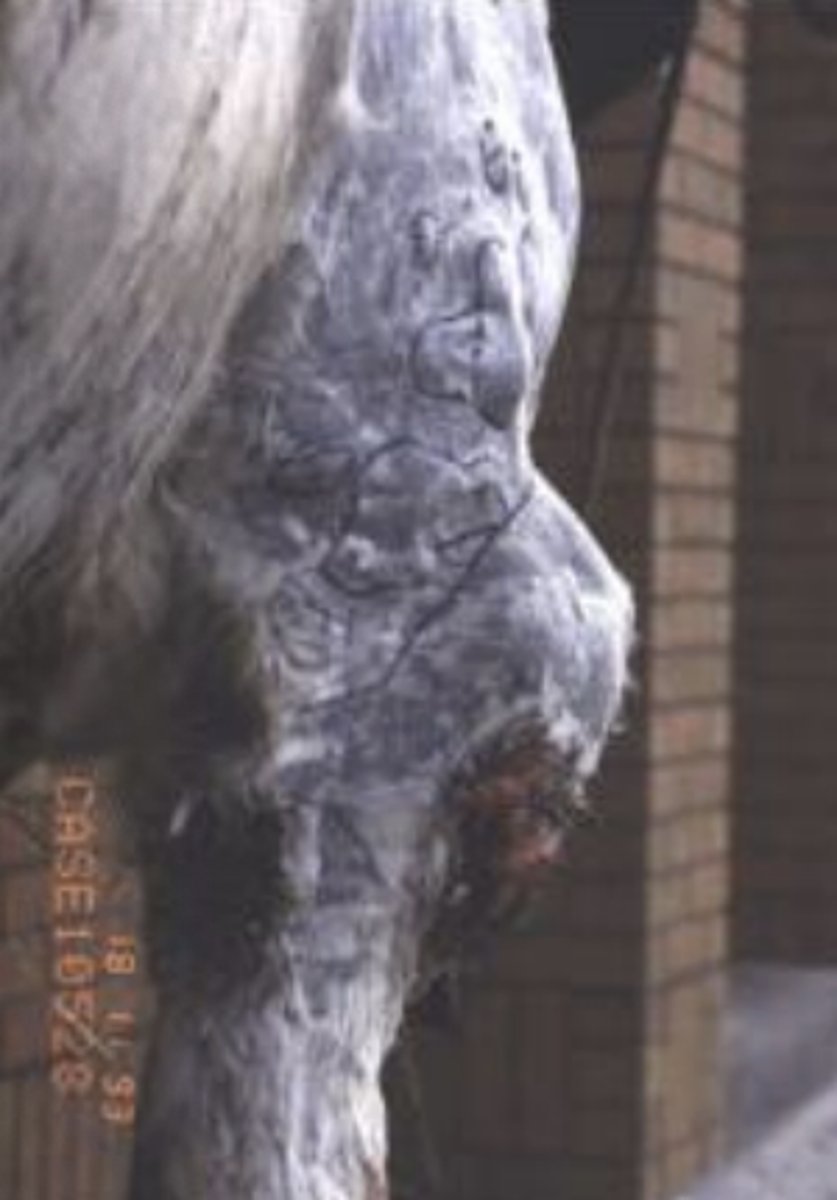
What kind of sarcoid is this?
malevolent
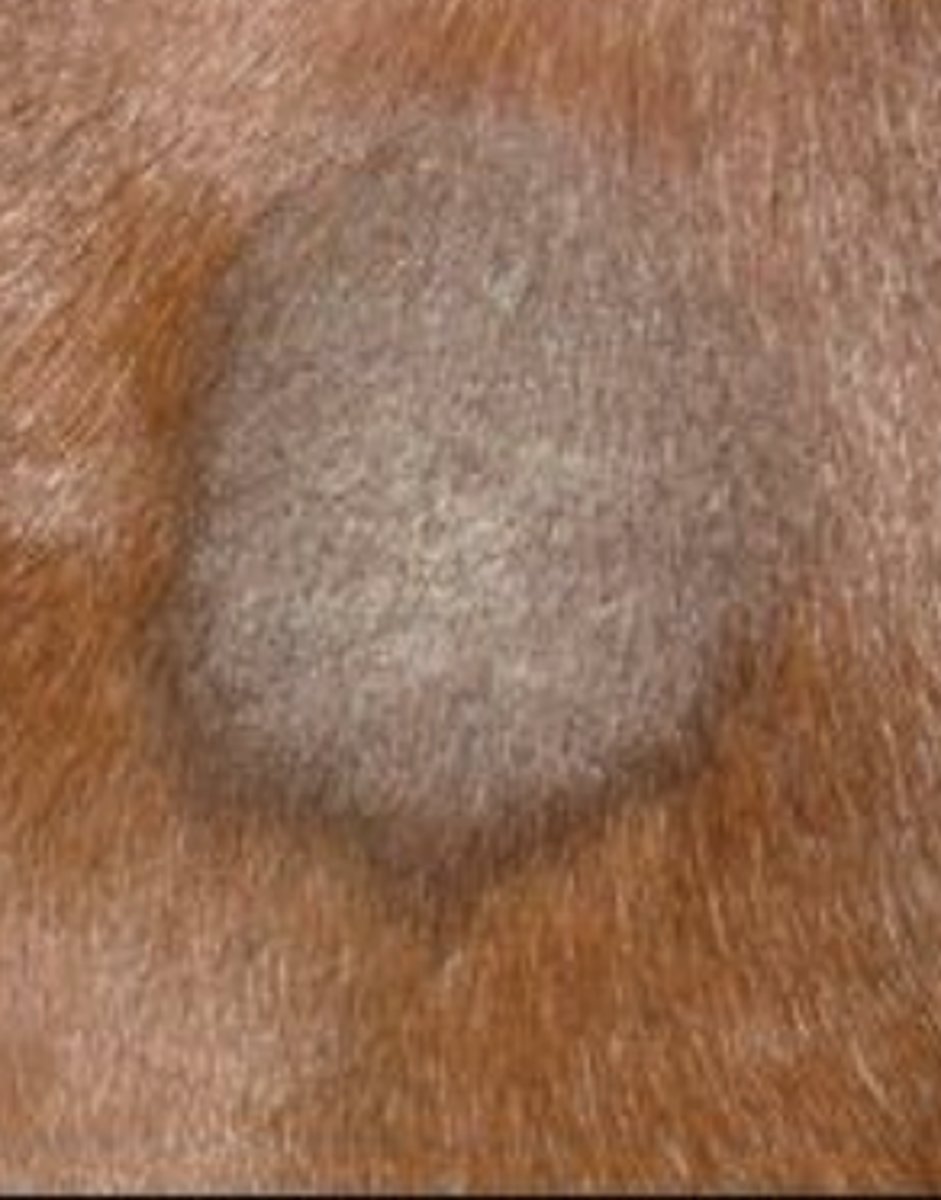
What kind of sarcoid is this?
occult
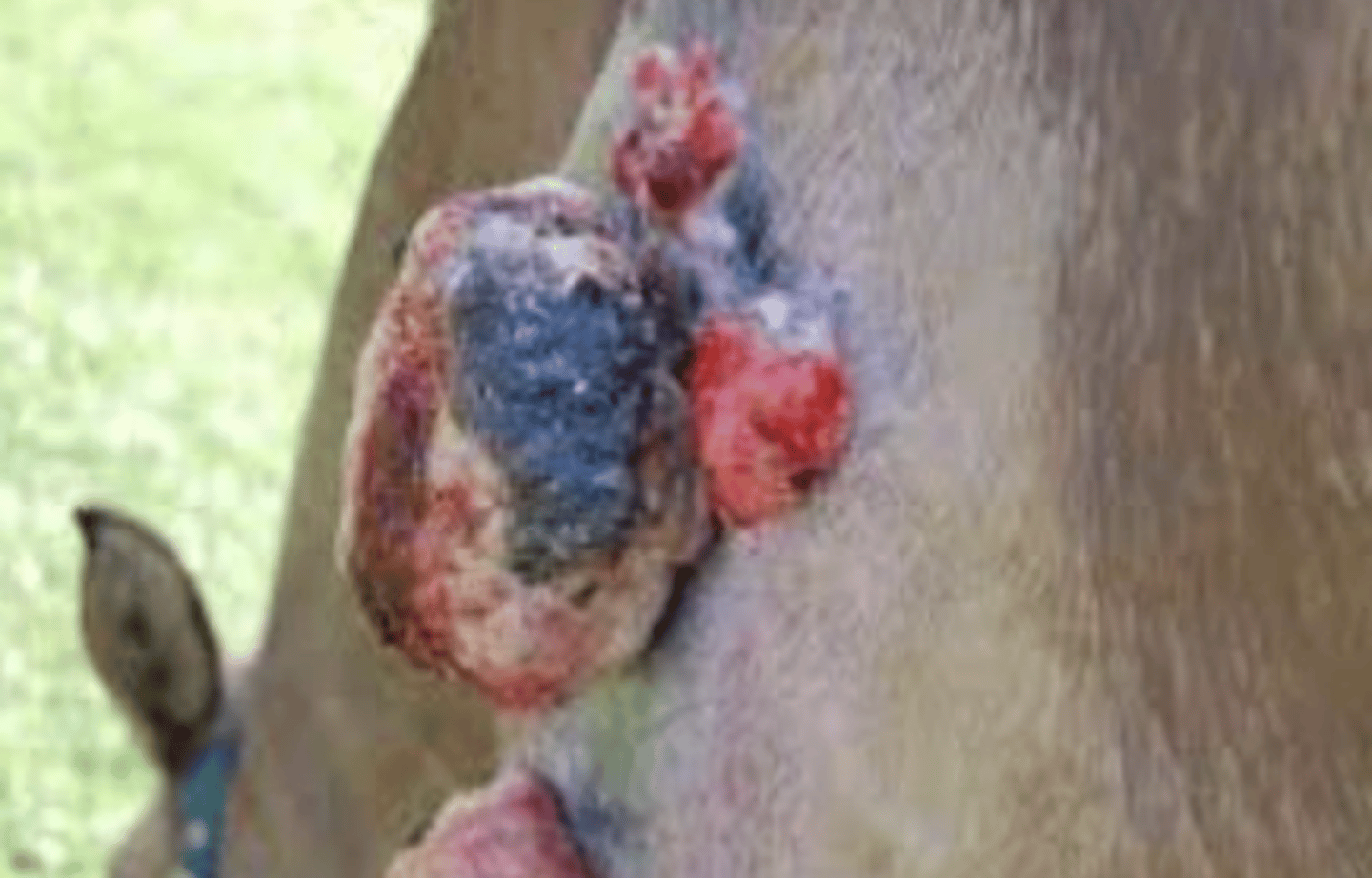
What kind of sarcoid is this?
fibroplastic
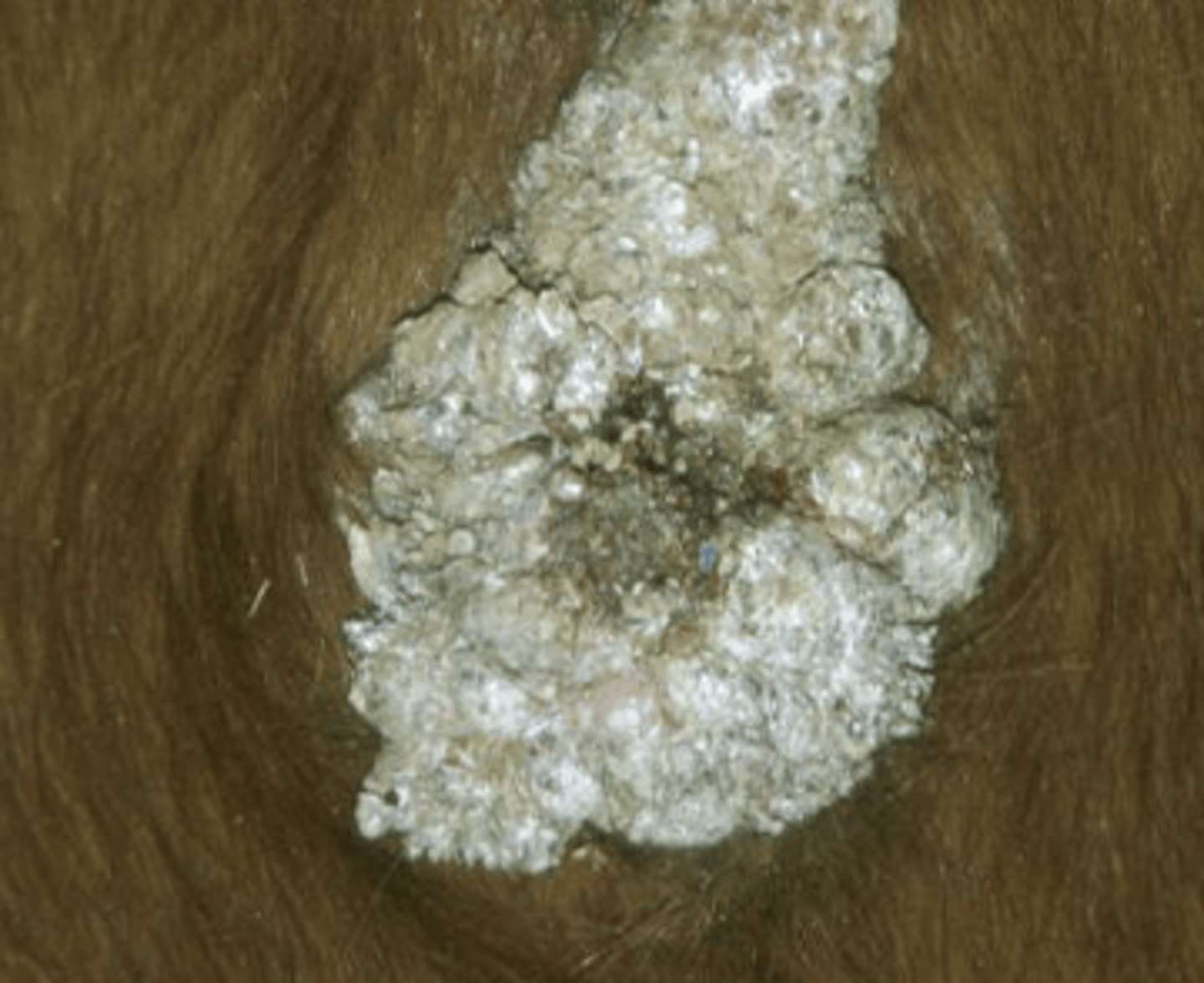
What kind of sarcoid is this?
verrucose
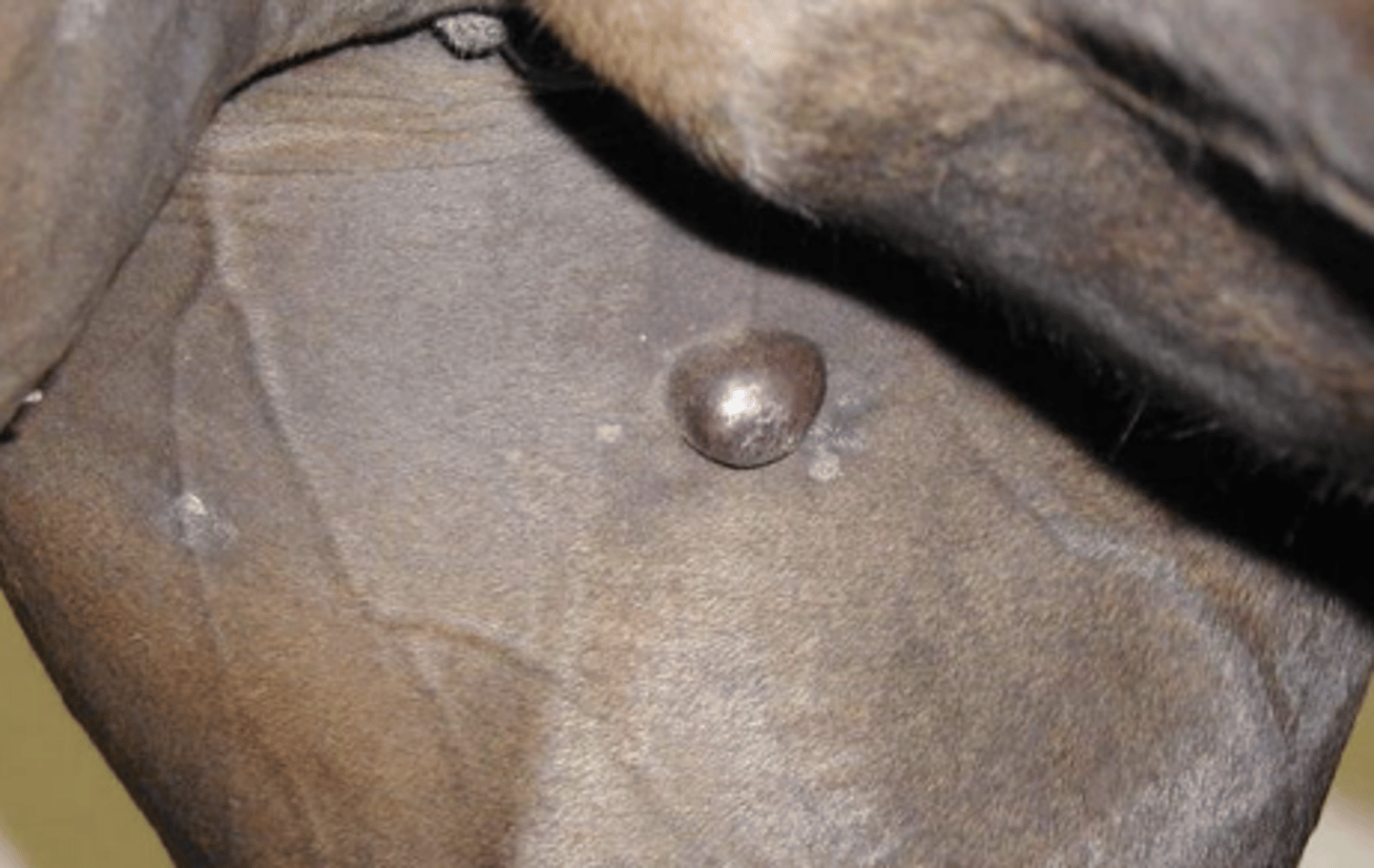
What kind of sarcoid is this?
nodular
What are the treatment options for sarcoids?
1. Sharp excision
2. Laser
3. Cryo
4. Banding if pedunculated
What is important to note about sarcoid treatment?
1. complex
2. get good surgical margins
3. send for histopathology
4. always use adjunctive therapy
5. high rate of reccurence
6. case audit helpful
What are the adjunct treatments for sarcoids?
1. Chemotherapy
2. Iridium wires
3. Immune stimulation
4. Acyclovir
What is the common signalment of melanoma in horses?
aged grey horses (>15yo)
What is the progression of melanoma?
slow
What are the common sites of melanoma in horses?
1. Perineum, perianal, periocular
2. Iris, guttural pouch
3. Internal organs (malignant spread)
What is the treatment for melanoma in horses?
1. surgical excision
2. cisplatin
3. vaccine
Where are the common sites of squamous cell carcinoma in horses?
1. Mucocutaneous junction
2. Periorbital, genitalia, face and pinnae, perianal, extremities
What causes squamous cell carcinoma?
UV exposure
How is squamous cell carcinoma diagnosed?
1. appearance and location
2. histopathology
What is the treatment for squamous cell carcinoma?
1. Wide excision
2. Cryosurgery
3. Chemotherapy
4. Photodynamic therapy
What can cause a congenital dentigerous cyst?
incomplete closure of first branchial cleft
Where can we see an intermittent draining tract with a dentigerous cyst?
base of ear
How are dentigerous cysts diagnosed?
1. clinical signs
2. radiographs
3. ultrasound
What is the treatment for dentigerous cysts?
1. bening neglect with cleaning
2. surgical excision
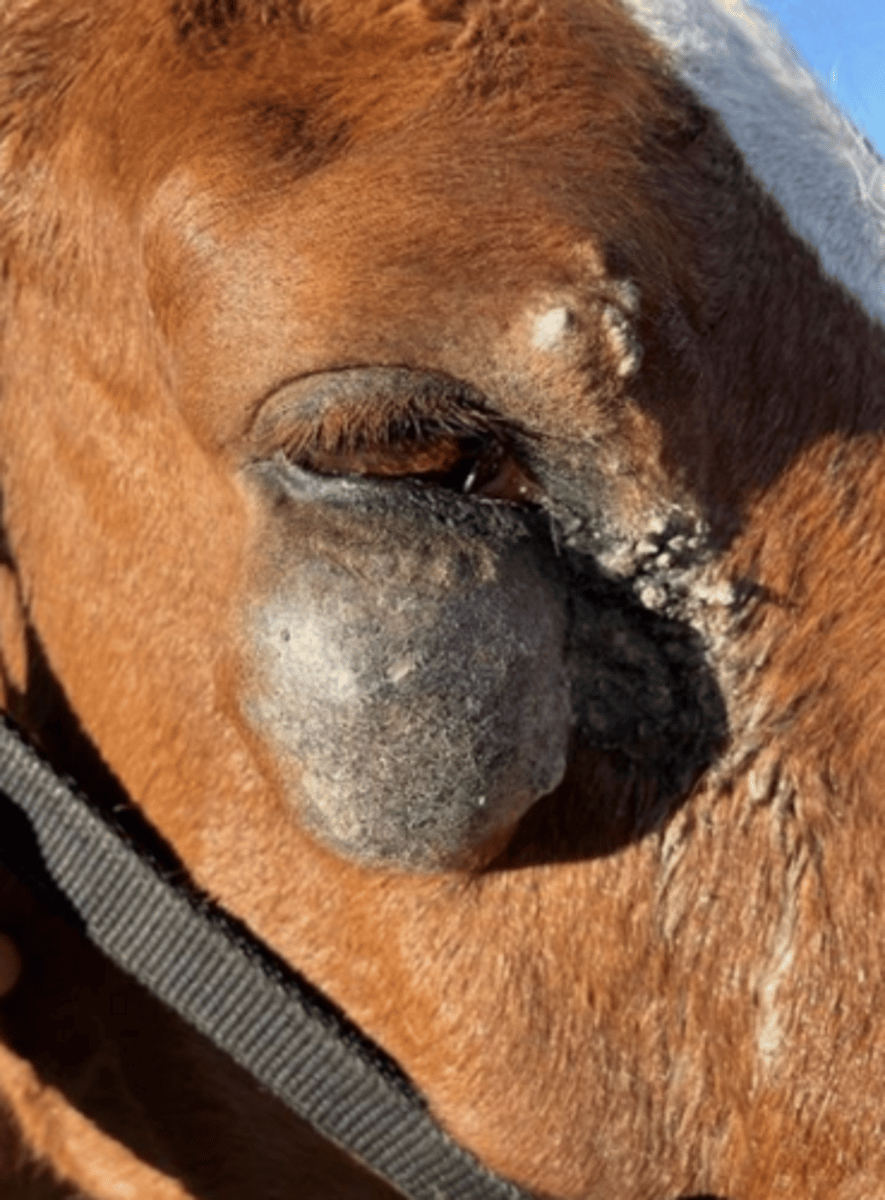
What is the most likely diagnosis for this presentation?
sarcoid
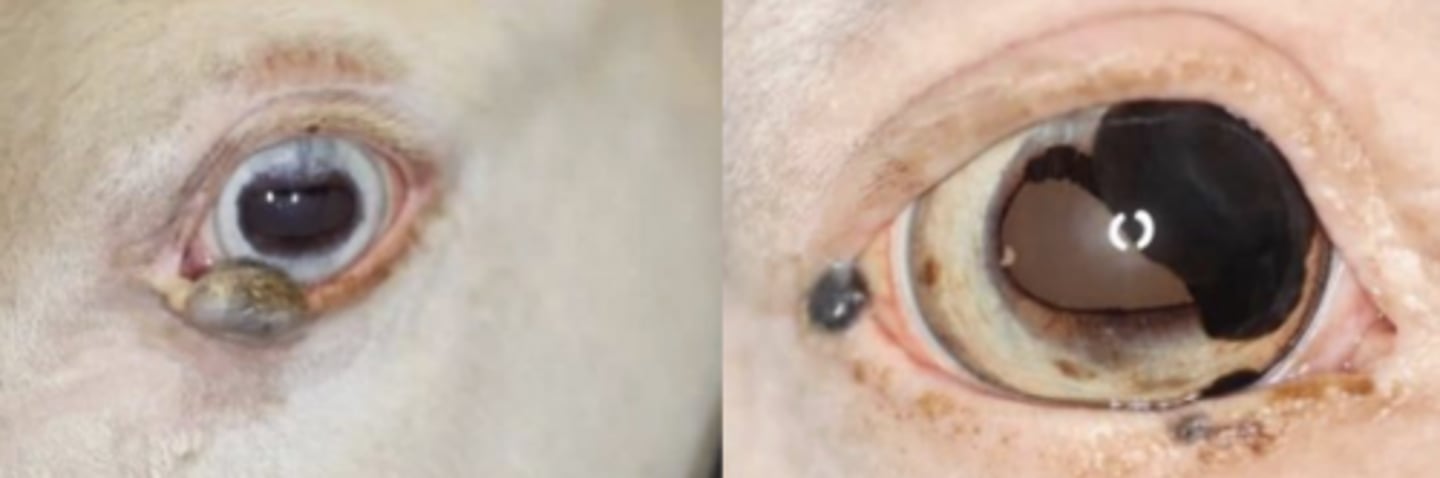
What is this?
melanoma
A 6-year-old Quarter Horse presents with a slowly enlarging, ulcerated mass on the medial canthus of the eye. The lesion began as a small flat area months ago but has become proliferative after a punch biopsy.
What is the most appropriate next step?
wide excision with adjunctive therapy
A horse presents with a flat, hairless, circular lesion on the neck that has remained stable for months. There is no ulceration or proliferation.
What type of sarcoid is most likely?
occult
A 6-year-old non-grey horse presents with a rapidly growing pigmented mass near the eye. Histopathology confirms melanoma.
Compared to melanomas in grey horses, this lesion is most likely:
more aggressive with higher metastatic potential
A 10-year-old Appaloosa presents with an ulcerative, proliferative lesion at the eyelid margin. The lesion is crusted, irregular, and has progressively worsened over several months.
Which feature most strongly supports SCC over other tumors?
location at mucocutaneous junction
A horse is diagnosed with SCC of the third eyelid. The lesion is localized with no evidence of metastasis.
What is the best treatment plan?
wide surgical excision ± adjunctive therapy
A horse presents with a distal limb wound that has failed to heal over several weeks. The wound bed is raised, red, and extends above the level of the surrounding skin. The horse has been moving freely without bandaging.
What is the most likely underlying cause of this condition?
disruption of capillary buds due to movement
A distal limb wound in a horse has developed exuberant granulation tissue.
What is the most appropriate treatment?
sharp excision of granulation tissue
A horse presents with a recurrent draining tract on the distal limb. The wound initially improved with antibiotics but repeatedly recurs. Radiographs reveal a small dense structure within the soft tissue.
What is the most likely underlying cause?
foreign body reaction
A contaminated distal limb wound is sutured closed immediately without proper debridement. Within 48 hours, the wound becomes swollen, painful, and begins to discharge purulent material.
What is the most likely reason for treatment failure?
closure of an infected wound trapping bacteria
A horse has a large distal limb wound that has stopped contracting and now has a healthy granulation bed with no evidence of infection.
What is the best next step?
perform skin grafting