LINGUISTICS: lesson 4
 Call Kai
 Learn
Learn Practice Test
 Spaced Repetition
 Match
Match Flashcards
 Knowt Play
1/3

There's no tags or description
Looks like no tags are added yet.
Name | Mastery | Learn | Test | Matching | Spaced | Call with Kai |
|---|
No analytics yet
Send a link to your students to track their progress
4 Terms
Speakers of the Sino-Tibetan language family
ca. 400 members
largest groups: Chinese and Tibeto-Burman
many small language communities
exact relationships difficult to establish
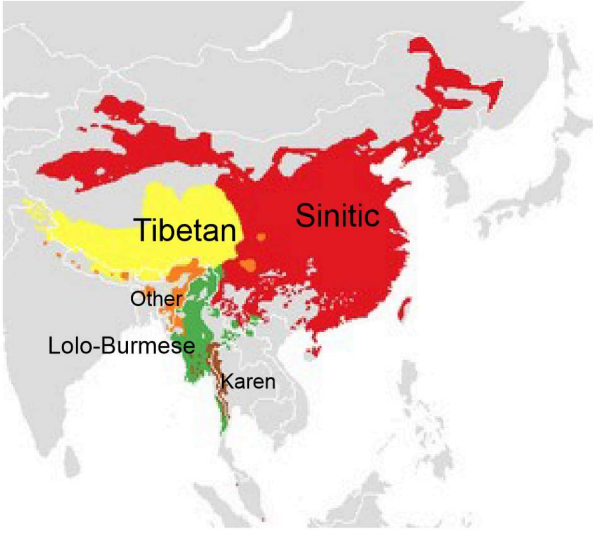
What is the Bai 白 language?
Sino-Tibetan language spoken in various parts of Yunnan
several dialects
8 tones
all open syllables
difficult to establish exact family relations: many layers of loan words from Chinese
own script adopted from Chinese
What is the Karen language?
spoken mostly in Myanmar
tonal language
SVO word order
script adapted from Burmese
Short history of research on Sino-Tibetan language family
18th century: 1st theories of similarities between Tibetan and Burmese
19th century: establishment of more relations
“Tibeto-Burman” by James Richard Logan (also added Karen)
mid 20th century:
Matisoff: “Sino-Tibetan Philology Project”
Paul Benedict: established the Sino-Tibetan Linguistics as a research field + Proto-Tibeto-Burman language reconstruction
Karlgren: reconstruction of Old and Middle Chinese