BSC2011L Midterm Billers
 Call Kai
 Learn
Learn Practice Test
 Spaced Repetition
 Match
Match Flashcards
 Knowt Play
1/52

There's no tags or description
Looks like no tags are added yet.
Name | Mastery | Learn | Test | Matching | Spaced | Call with Kai |
|---|
No analytics yet
Send a link to your students to track their progress
53 Terms
What are the two types of electron microscopes and what is their function
Scanning: Gives images of the surface of an object
Transmission: Gives image of cross sections of an organism
Dissecting microscopes are used to view what
Larger objects. Made for viewing at a much lower magnification compared to the compound light microscope
Prokaryotes lack what
Lack membrane bound organelles and a nucleus
What are the two types of prokaryotes
Archaea: Cannot perform photosynthesis because they lack chloroplasts
Bacteria: Only Cyanobacteria can perform photosynthesis because they contain chlorophyll
Most Archaea are what
Extremophiles
Gram positive bacteria show up as what color and why
They are purple because of their thick layer of peptidoglycan
Gram negative bacteria show up as what color and why
Pink because they have a thin wall of peptidoglycan
What are the steps of a gram stain in order
Heat fix bacteria onto slide so they do not move
Apply Crystal violet stain to dye all bacteria’s peptidoglycan wall
Apply Iodine to crystallize the crystal violet molecules making them bigger, so that only that gram positive bacteria will hold onto it after wash
Apply a decolorizer to remove all crystal violet from negative bacteria but keeping it in the positive
Apply safranin to stain gram negative bacteria pink

Study this graph

Archaea lack what in addition to chloroplasts
They lack peptidoglycan
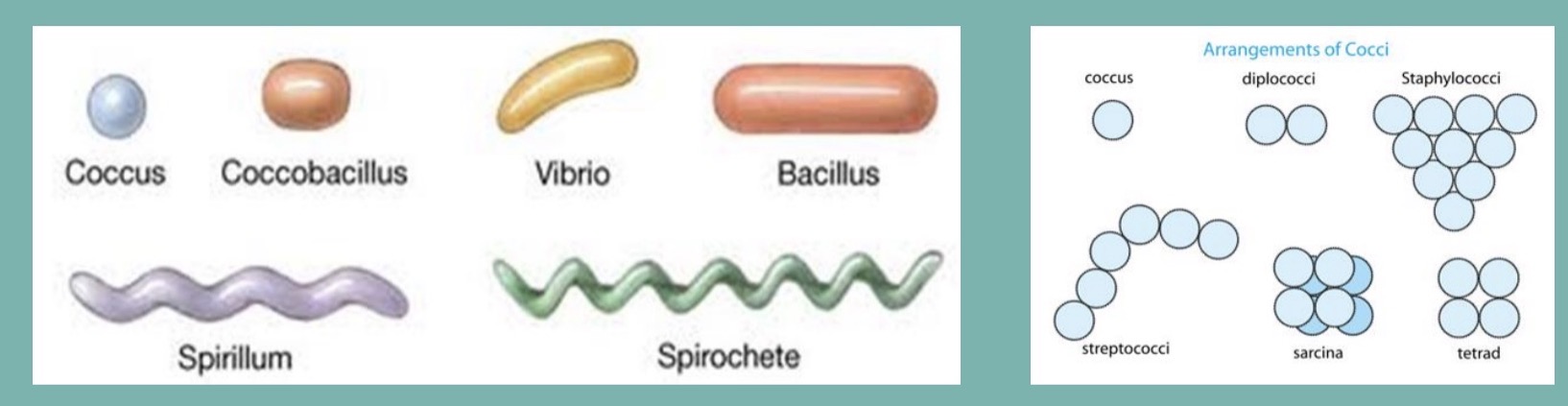
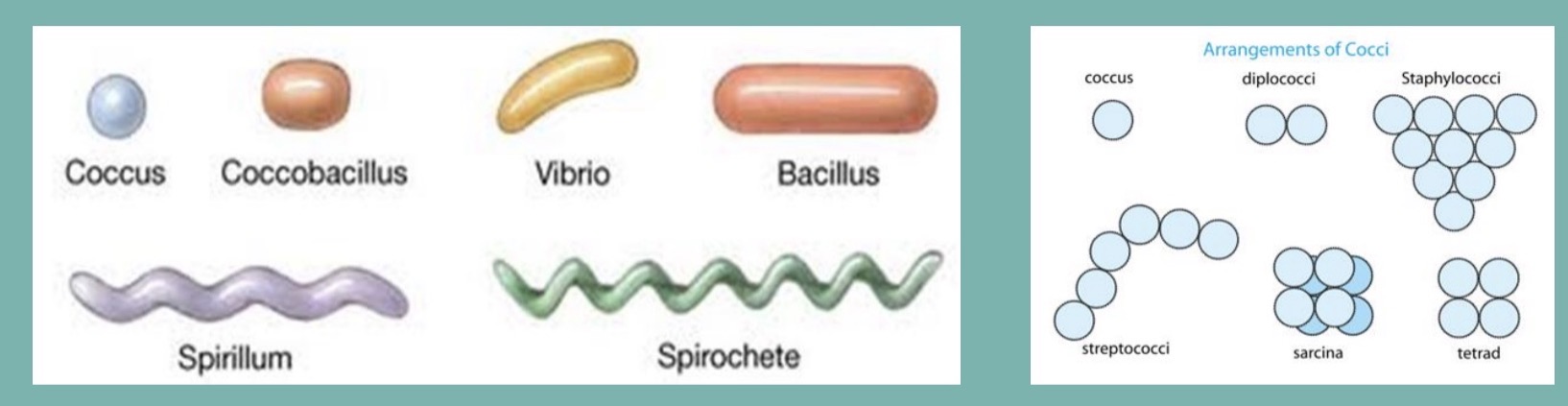
Study this image of the cyanobacteria shapes
Cyanobacteria shapes
Why is Cyanobacteria ecologically important
They produce oxygen via photosynthesis
Fix carbon dioxide and nitrogen out of the atmosphere
Are indicators of water quality
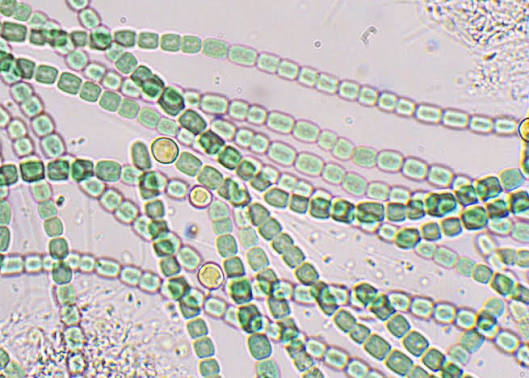
What type of Cyanobacteria forms symbiotic relationships with aquatic ferns
Anabaena
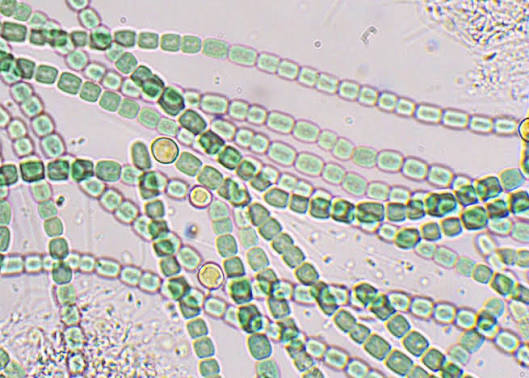

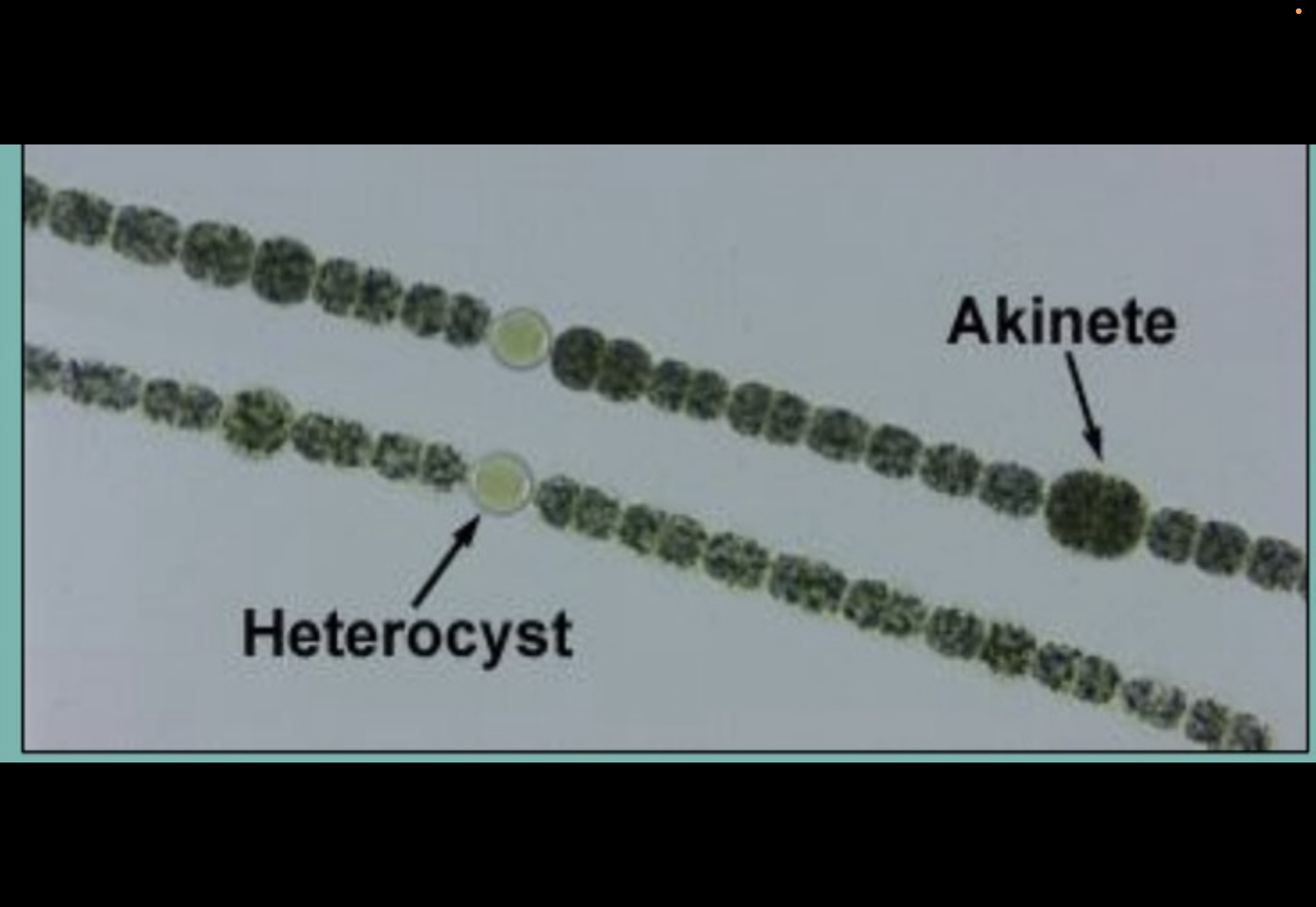
Identify the Akinete and heterocyst on the picture
Heterocyst and akinete

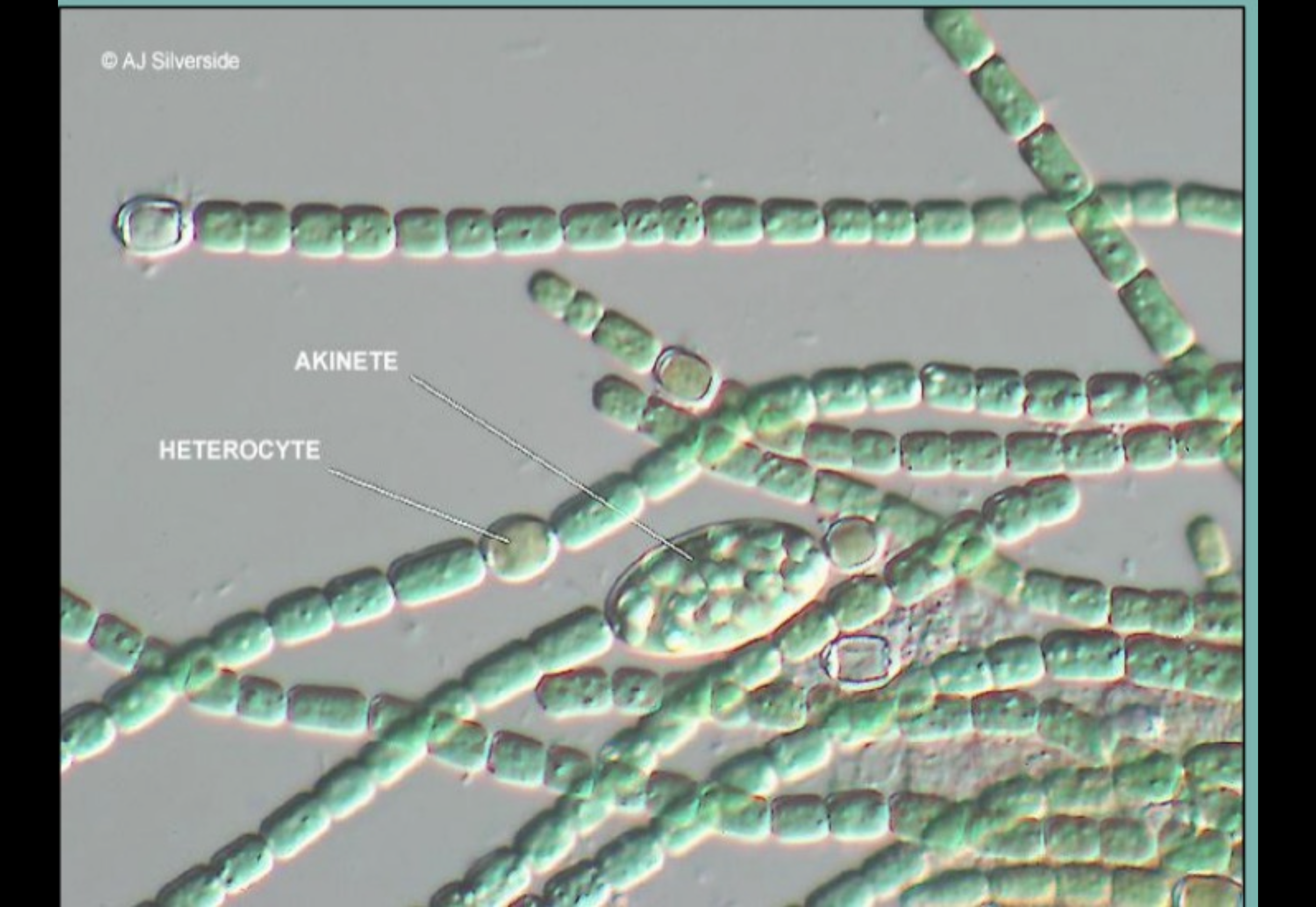
Identify the akinete and heterocyte on the image
Heterocyte and akinete
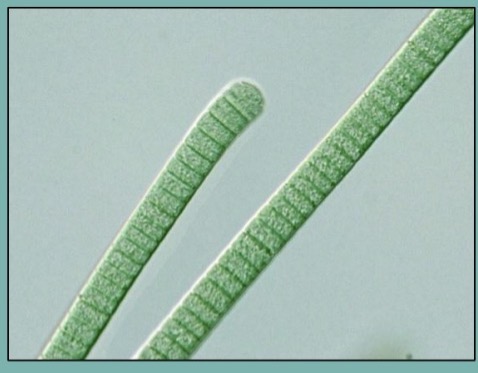
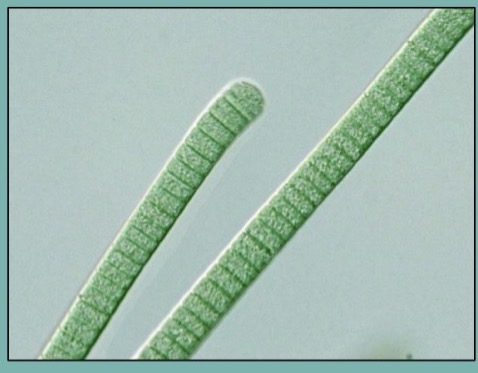
Filamentous Cyanobacteria are called what
Oscillatoria. Colonies are able to slide back and forth against each other to orient themselves to the light source
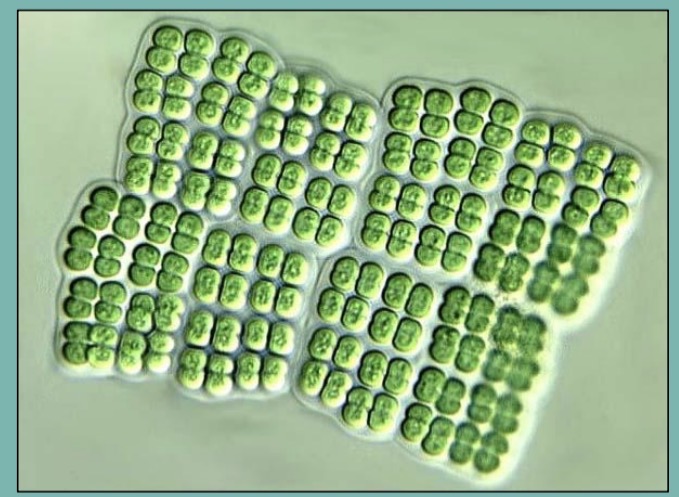
What do Merismopedia form relationships with and how do they hold their shape
Type of Cyanobacteria form symbiotic relationships with zooplankton. Their grid patterns are held together by mucilaginous sheath
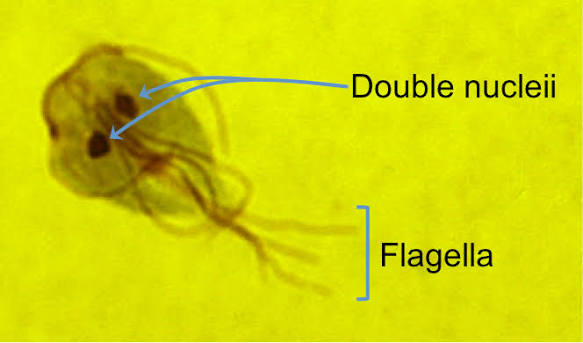
What has distinctive twin nuclei
Supergroup excavata, giardia
What does SAR clade stand for
Stramenopila, alveolata, Rhizaria
What makes stramenopila unique and what are some examples
Straw like hairs to help them swim, also responsible for 25% of all organic carbon fixation on the planet. Examples include diatoms and brown algae
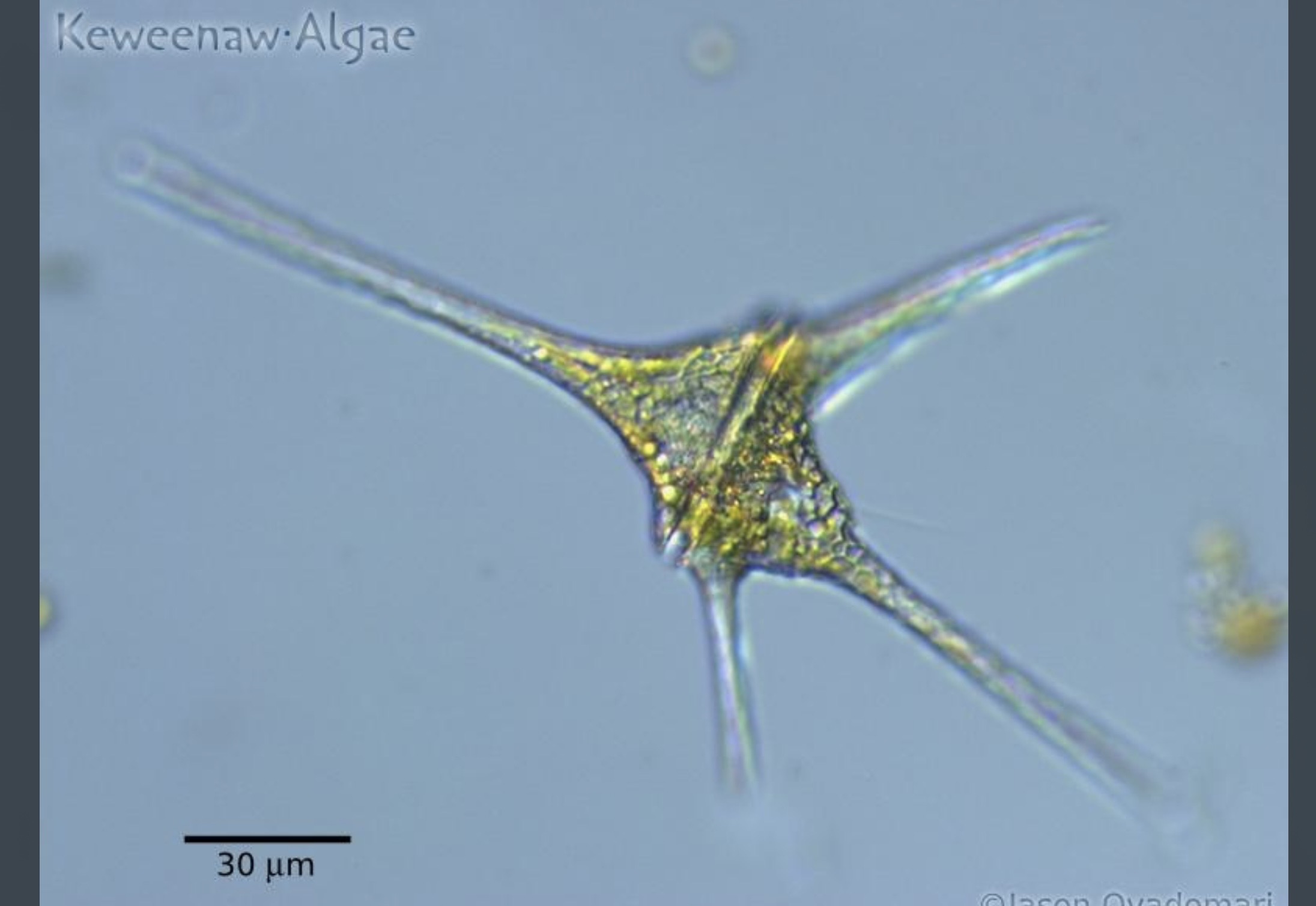
What makes alveolata unique and what are some examples
Have sac-like vesicles call alveoli and two flagellas. Examples include dinoflagellates
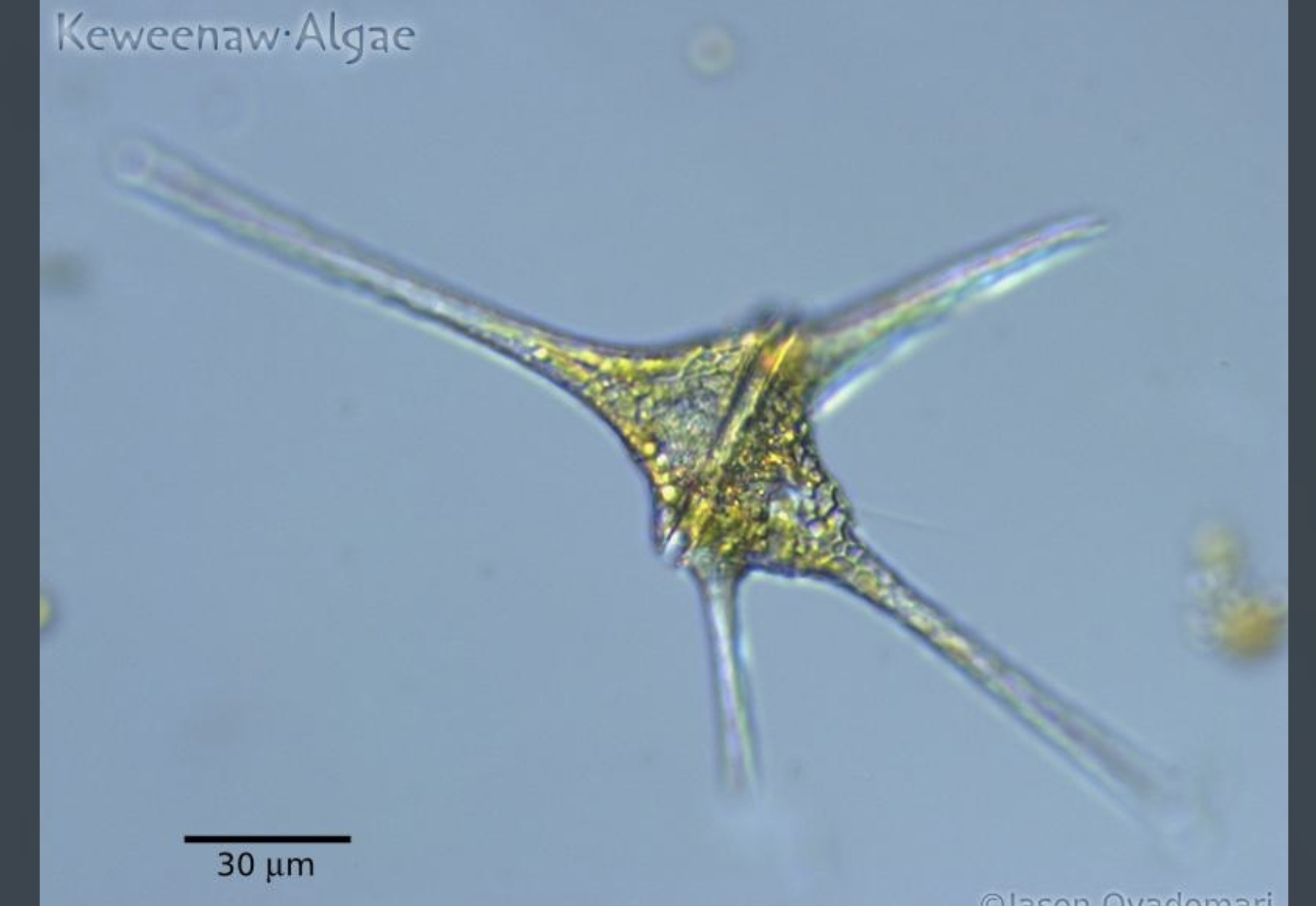
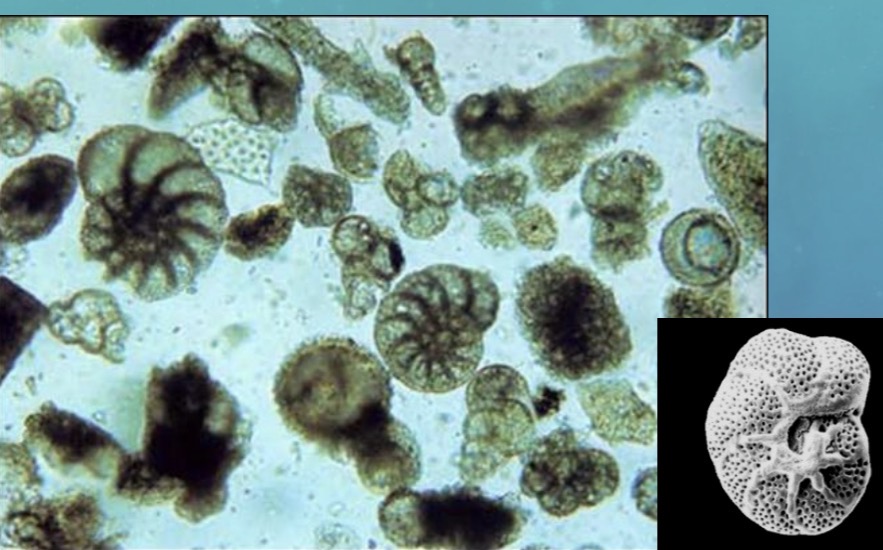
What makes Rhizaria unique and what are some examples
Planktonic organisms that have a very narrow axopodia although some use pseudopodia. Radiolarians and forminifera
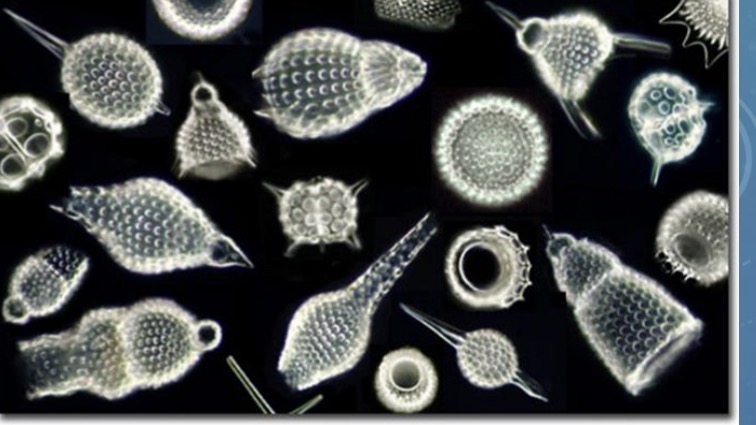
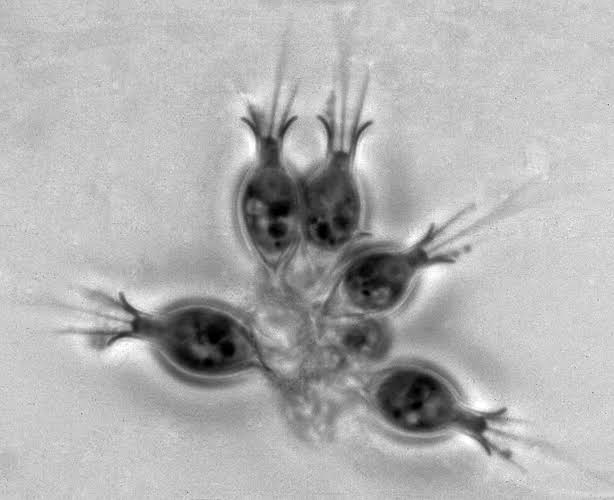
What organisms make up the unikonta supergroup
Amoebazoans and choanoflagellates.
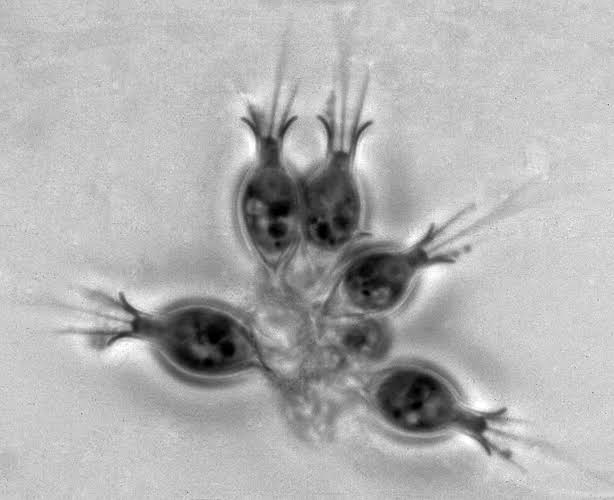
What is the difference between axopodia and pseudopodia
Axopodia are long, stiff, needle like projections. Used by rhizaria
Pseudopodia are temporary broad extensions. Used by amoebazoans
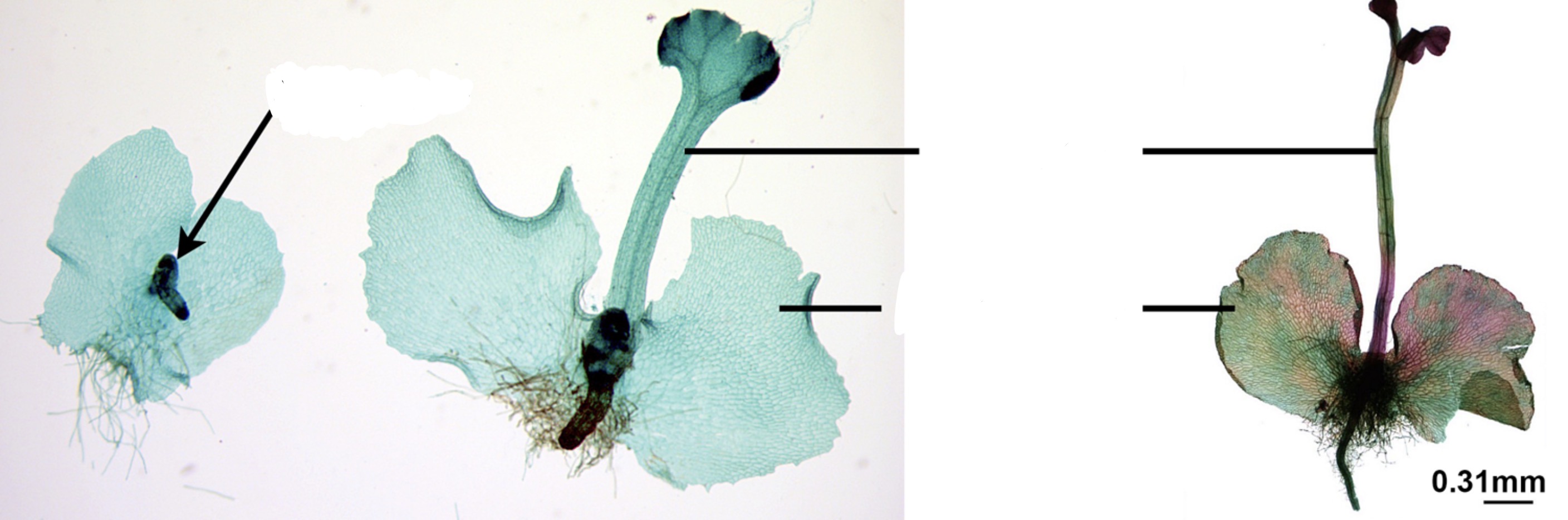
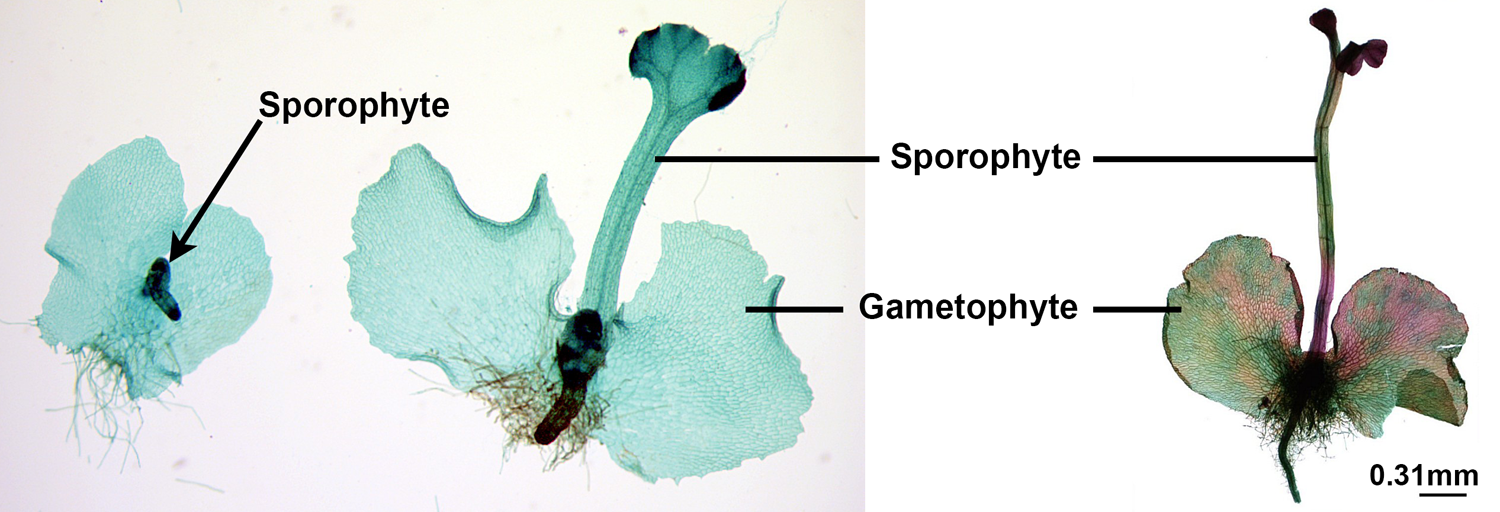
Identify the sporophyte and gametophyte on the image
Sporophyte and Gametophyte
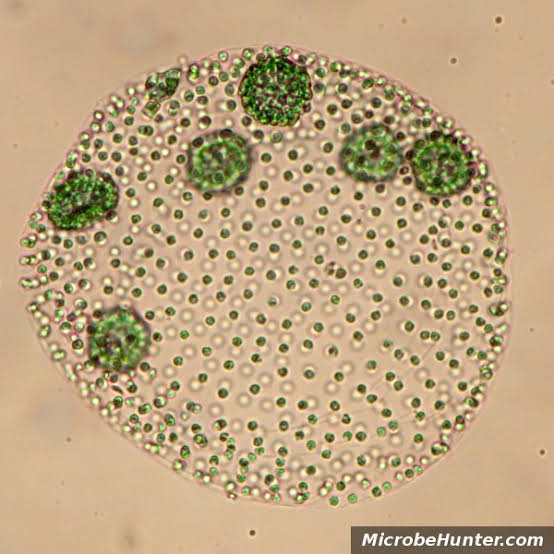
What is this specimen? Is it photosynthetic
Volvox, Yes able to undergo photosynthesis
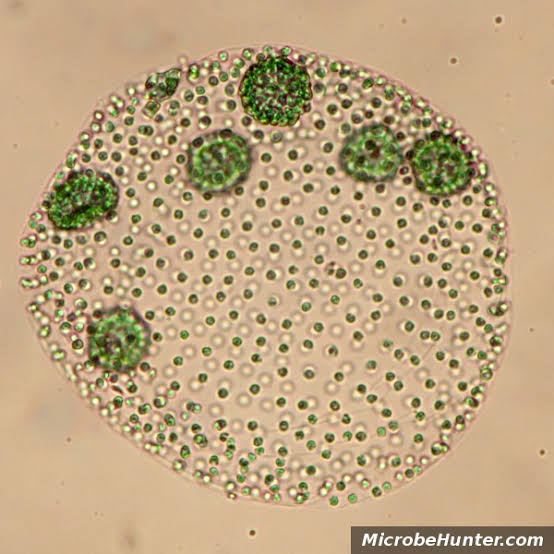
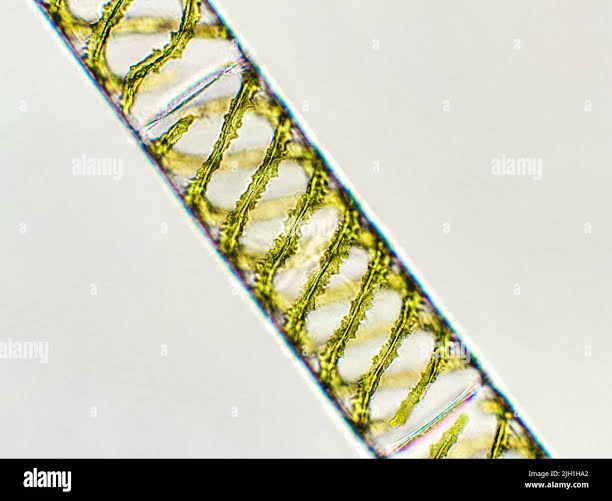
What is this specimen?
Spirogyra
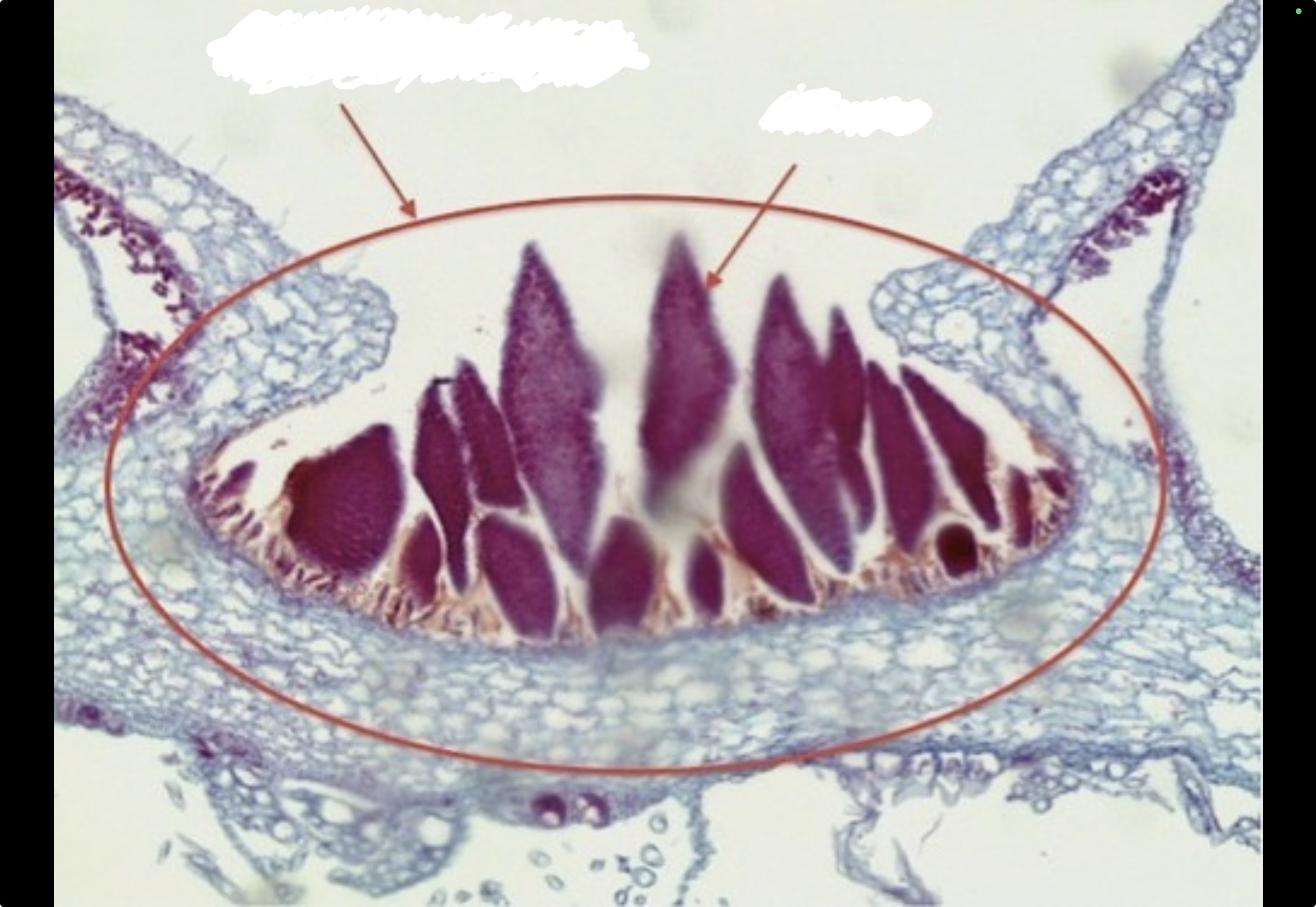
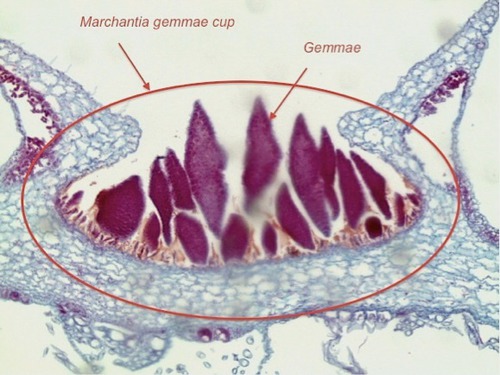
Identify the gamme and gamme cup
Top is gamme cup, bottom is gamme
Guard Cells and stomata control what
They control gas exchange and water loss in a plant
Define gymnosperms
Produce seeds found on cones. Examples include pine trees conifers
Define angiosperms
Produce seeds enclosed within a fruit. Examples include all flowering plants
In vascular plants, what is dominant
Diploid Sporophyte is dominant
In non vascular plants, what is dominant
The haploid gametophyte is dominant
What does the seed do
It protects the embryo and nourishes it
How many phyla are there for gymnosperms
4 phyla. Conifeophyta, Ginkgophyta, Cyadophyta, Gnetophyta
What is the stamen broken down into and is it male or female
Broken down into the filament and anther
When a gymnosperm is monoecious, what does this mean
It means that it is a single plant that contains male and female parts. Most Conifers
When a gymnosperm is dioecious, what does this mean
It means that it contains separate male and female plants. Male is pollen female is ovules and seeds. Cycads, Ginkos, and junipers
Most conifers are monoecious or dioecious
Monoecious
What phylum do angiosperms belong to
Phyla anthrophyta
What is the difference between angiosperms and gymnosperms
Angiosperms have flowers and fruit to allow for dispersal of gametes
Gymnosperms produce seeds found on cones
Dicot and monocots belong to angiosperms or gymnosperms
Angiosperms
Dicots have how many cotyledons, what type of root, and how many floral parts
Two colyedons, tap root system, and four or five floral parts
Dicots have what type of stems and leaves
Vascular bundles arranged in a ring pattern in stem, and broad leaves with netlike branching veins
Monocots have how many cotyledon, what type of roots, and how many floral parts
One cotyledon, fibrous root system, and 3 floral parts
Monocots have what type of stems and what type of leaves
Vascular bundles scattered throughout stem, and narrow leaves with parallel veins
Male pinecones produce what. This develops into pollen
Male pincones produce Microsporangium which contain microspores
Female pinecones produce what. These contain megaspores
They produce megasporangium
What are some examples of nonvascular plants
Liverworts, mosses, hornworts
What is the oldest and largest group of eukaryotic algae
Red algae
Red algae play an important role for what habitat
Tropical reefs
Why are red algae red
They contain the pigment phycoerythrin