Motility, digestion, and absorption
 Call Kai
 Learn
Learn Practice Test
 Spaced Repetition
 Match
Match Flashcards
 Knowt Play
1/41

There's no tags or description
Looks like no tags are added yet.
Name | Mastery | Learn | Test | Matching | Spaced | Call with Kai |
|---|
No analytics yet
Send a link to your students to track their progress
42 Terms
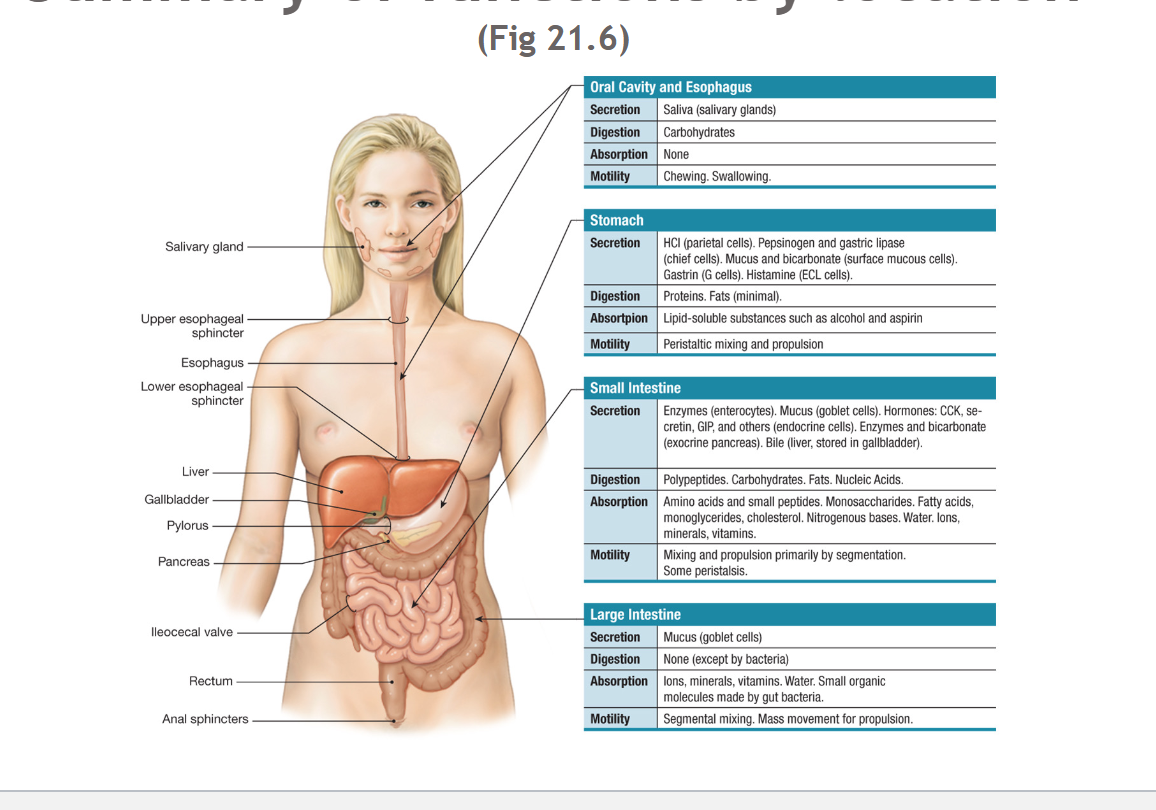
Summary of functions by location
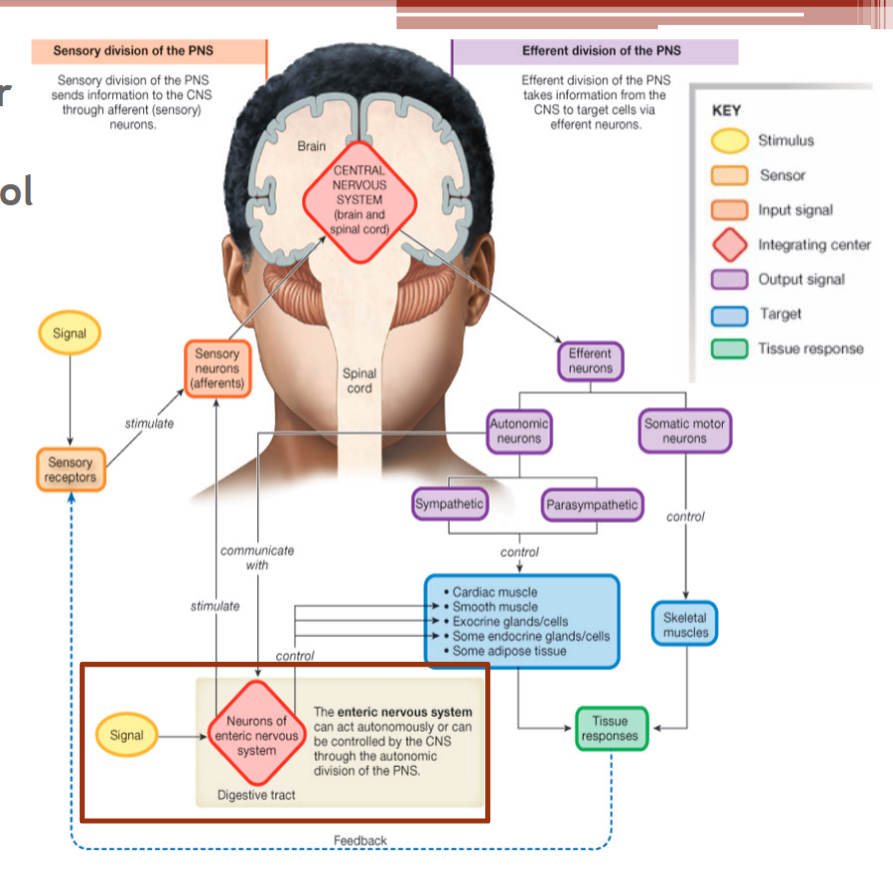
The digestive system is under neural and endocrine control
♡ the neural control comes primarily from the enteric nervous system, but there is also input from the parasympathetic branch of the ANS
What happens in the mouth?
♡ Motility
→ ingestion
→ mastication
→ deglutition
♡ salivary secretions
→ salivary amylase; begins digestion of complex carbohydrates into simple sugars
→ salivary lipase; small amount
♡ digestion
→ carbohydrates
→ fats minimally
♡ absorption
→ sublingual (under the tongue)
→ some drugs (antihypertensives, antipsychotics, analgesics) steroids, D-glucose (dextrose), THC, CBD
→ benefits…. doesn’t face harsh digestive processes further along (substances doesnt need significant protection)
→ can have a very fast effect on body function
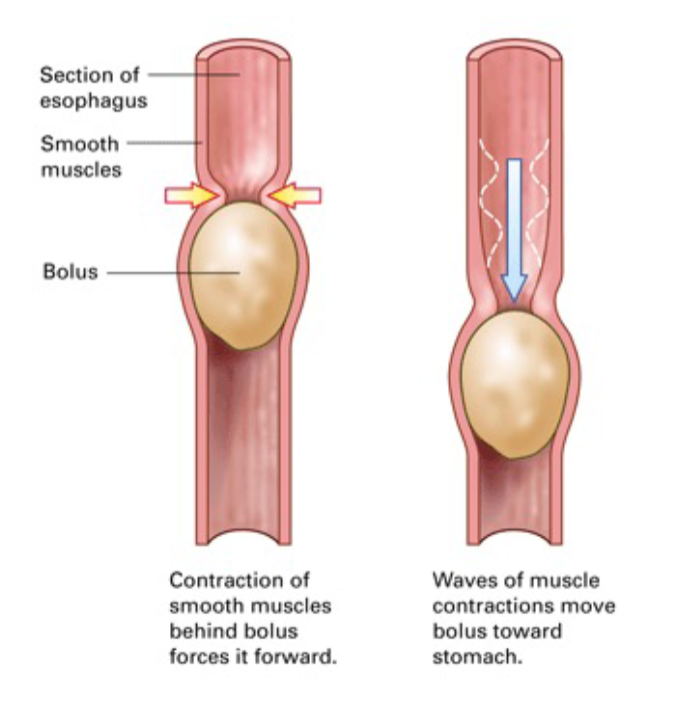
What happens in the esophagus?
♡ motility
→ peristalsis moves bolus to the stomach
♡ digestion
→ may continue from mouth, but the esophagus does not contribute directly
→ no new enzymes secreted
What happens in the stomach?
♡ motility
→ smooth muscle contractions
~ mix food via segmental contraction
~ direct small amounts into small intestine over time using peristalsis
What happens in the stomach?
♡ secretion
→ gastric juice
~ hydrochloric acid (HCl)
~ zymogens (ex: pepsinogen) are enzymes secreted in an inactive form and activate when they get to the digestive tract
~ HCl activates pepsinogen → pepsin
~ Gastric lipase
~ Mucus; bicarbonate (protects stomach lining from acid
— combination of all these secretions and food makes a soupy mixture called “chyme”
What happens in the stomach?
♡ digestion
→ proteins
~ HCl: protects against pathogens and denatures proteins
~ Pepsin: breaks peptide bonds
♡ Fats
→ <10% occurs here
→ fats not emulsified yet (happens later in the sm. intestine)
What happens in the stomach?
♡ Absorption
→ aspirin and alcohol
♡ storage
→ temporary
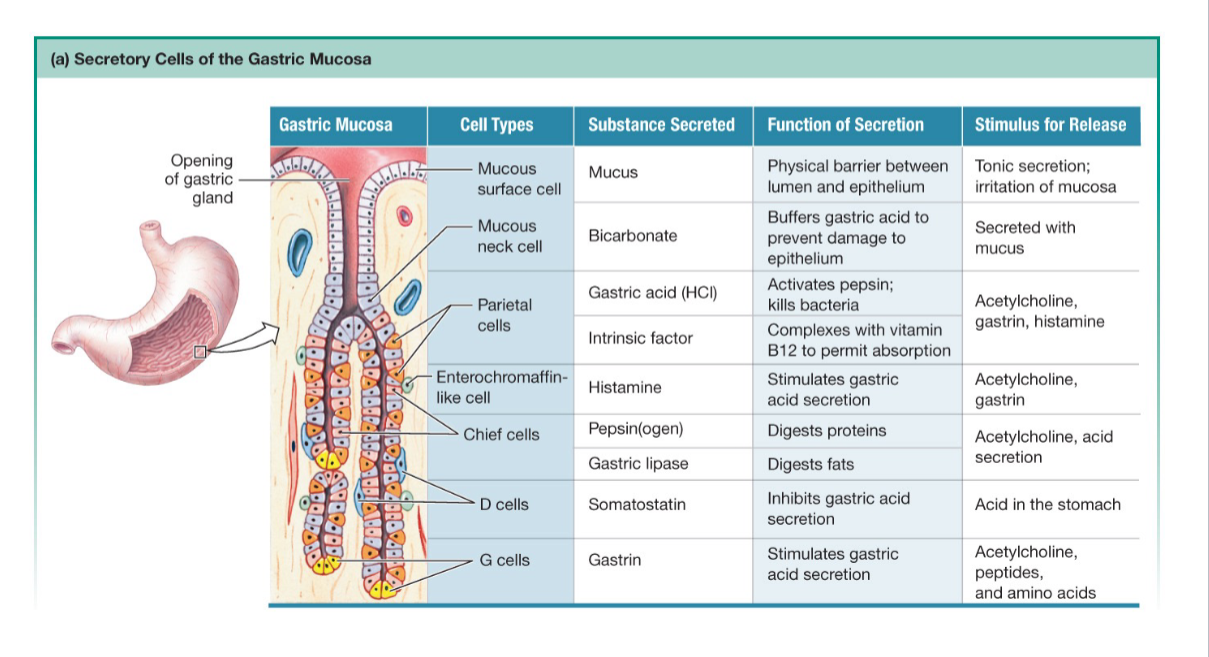
Gastric gland secretions
♡ stimulus not too important
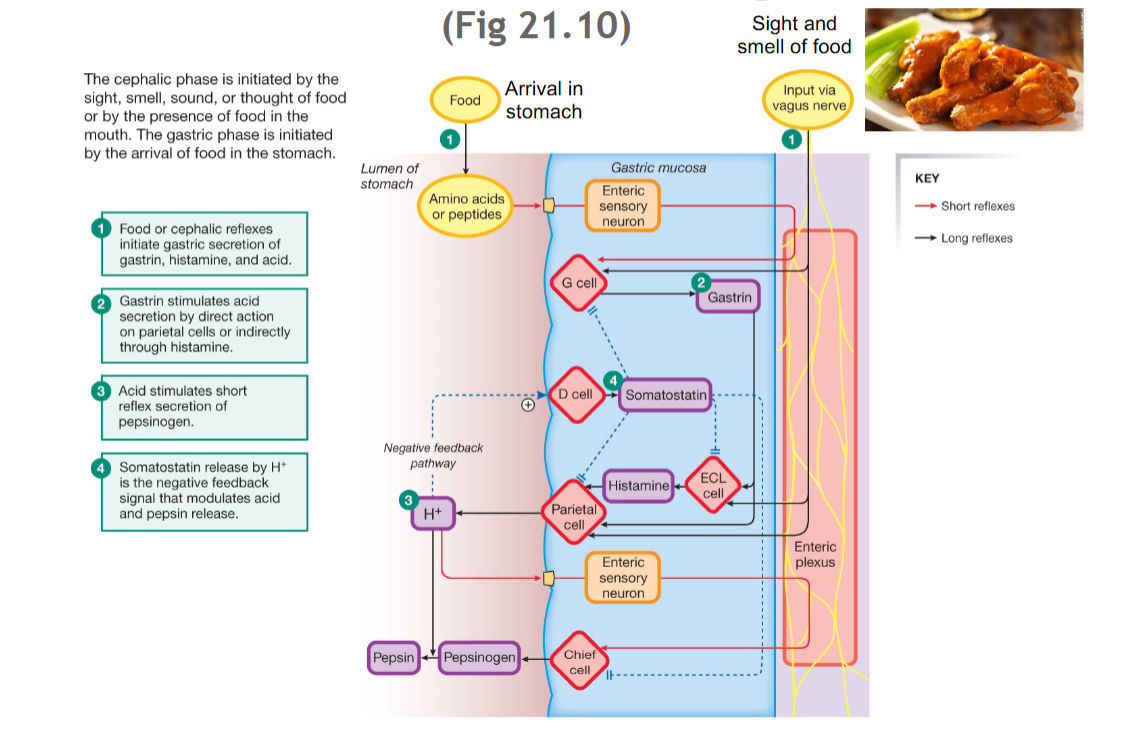
Stomach secretion regulation
♡ G-cells: secrete gastrin
♡ ECL: secrete histamine
♡ Parietal cells: secrete H+
♡ Chief cells: secrete pepsinogen
♡ D cell: secrete somatostatin ~ inhibits the whole pathway (the “off switch)
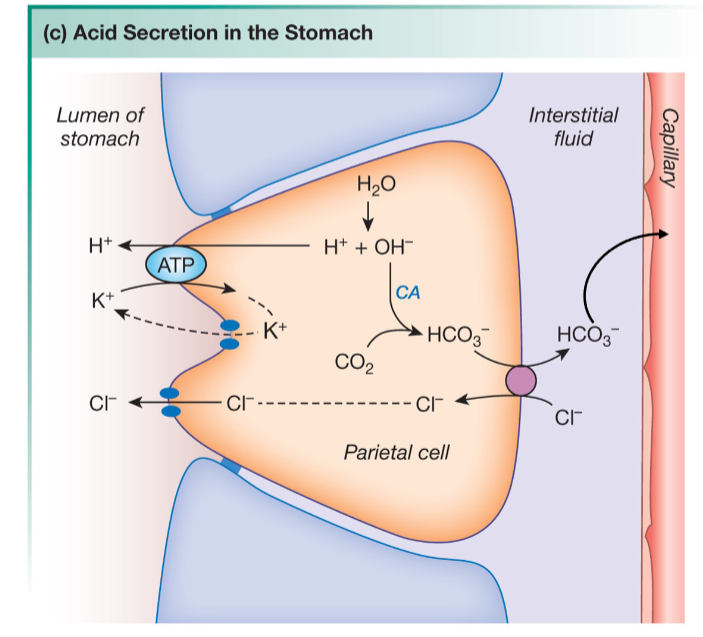
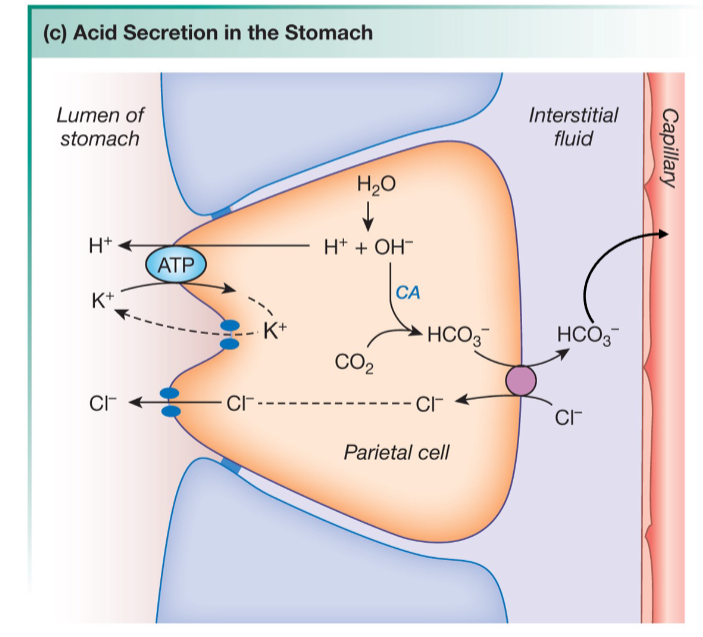
HCl secretion in the stomach
♡ Parietal cells secrete H+
♡ carbonic anhydrase must be present for this process to take place
♡ H+ movement onto the stomach is active (primary active transport on the diagram)
♡ Cl- follows to keep the charge equal (electro-chemical gradient)
♡ Bicarbonate enters blood
→ that adds pH buffering capacity to the blood
Remember what H+ is…
a proton!
♡ Proton pump inhibitors; are a class of drugs
→ Prilosec, Nexium, Protonix, etc
→ these proton pump inhibitors reduce stomach acid
→ can be prescribed for ppl with acid-reflux
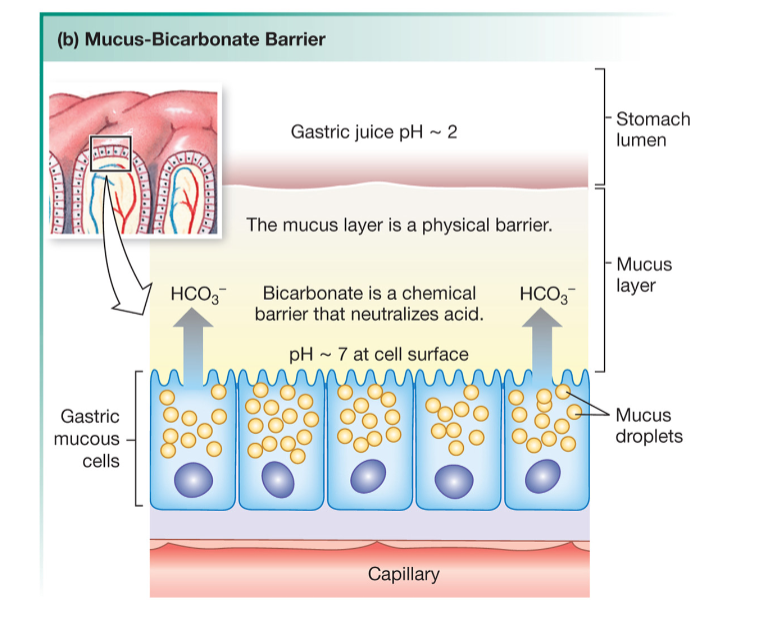
Dealing with the stomach acidic environment
♡ alkaline mucus layer protects the stomach from the strong acid!
→ the mucus layer…
→ contains bicarbonate which protects cells of stomach from extreme pH of gastric juice
♡ if we dont produce mucus…. stomach ulcers result
What happens in the small intestine?
♡ motility
→ peristalsis and segmentation
♡ Secretion
→ Bile: from liver, by the way of the gallbladder
→ Pancreatic juice
~ more zymogens (proenzymes)
~ bicarbonate
♡ Hormones
What happens in the sm. intestine?
Digestion (primary location)
♡ proteins
→ breaking of peptide bonds to release single amino acids or short polymers
♡ carbohydrates
→ amylase: breaks down complex carbohydrates
→ Di- and tri-saccharides continue digestion to monosaccharides
♡ Fats
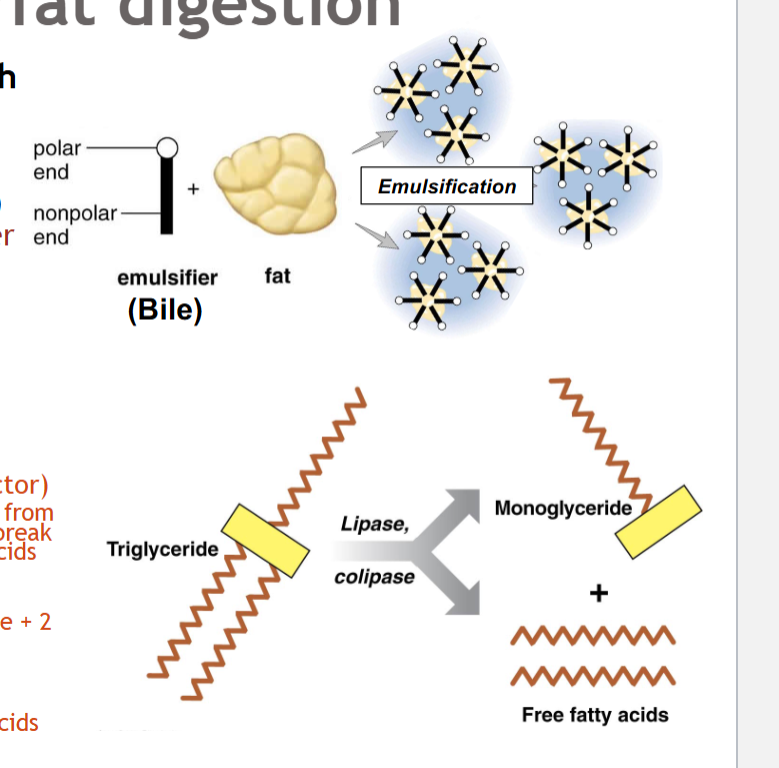
→ Bile salts: emulsify fats into smaller droplets (increases their surface area) which can then dissolve in aqueous digestive fluids)
→ Lipase and colipase: break down triglycerides
What happens in the sm. intestine?
♡ Monosaccharides- by transepithelial transport
♡ amino acids and short peptides by transepithelial transport
♡ monoglycerides, fatty acids, and cholesterol- by transepithelial transport
♡ electrolytes- by paracellular and transepithelial transport
♡ water- by osmosis
Overview of secretions into the small intestine….Bicarbonate
Neutralizes acidic chyme from stomach
Mucus (from goblet cells) and isotonic saline (from crypt cells)
To keep the chyme nice and soupy to ease its movement and keep it in contact with intestinal epithelial cells
Bile
♡ produced and secreted by liver
♡ temporary stored in gallbladder
—> gallbladder not absolutely necessary
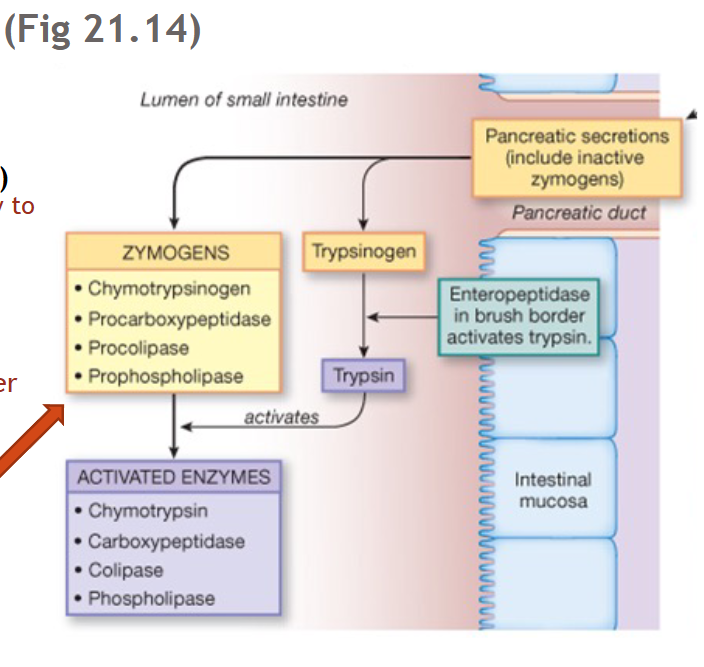
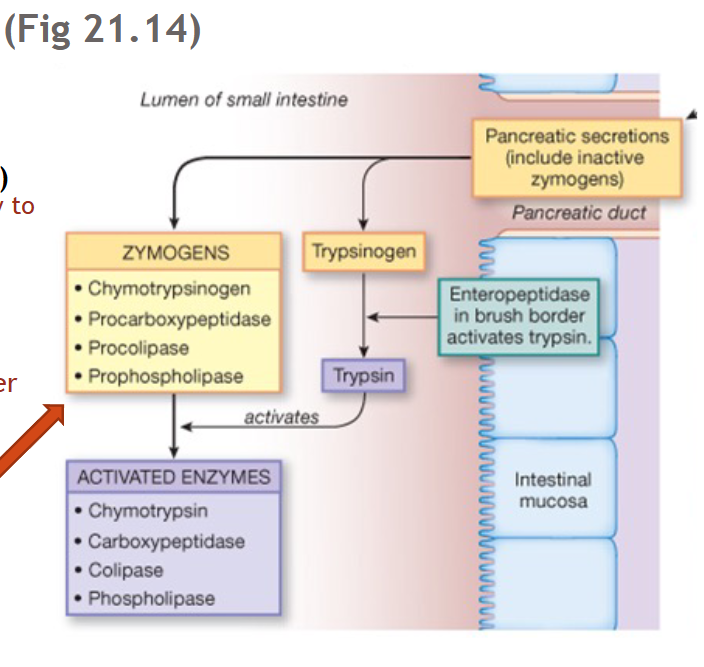
Pancreatic enzymes
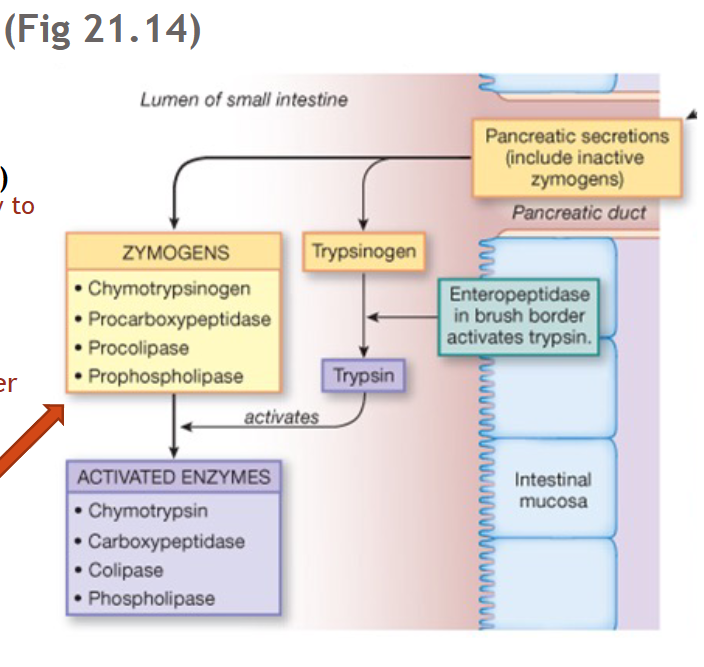
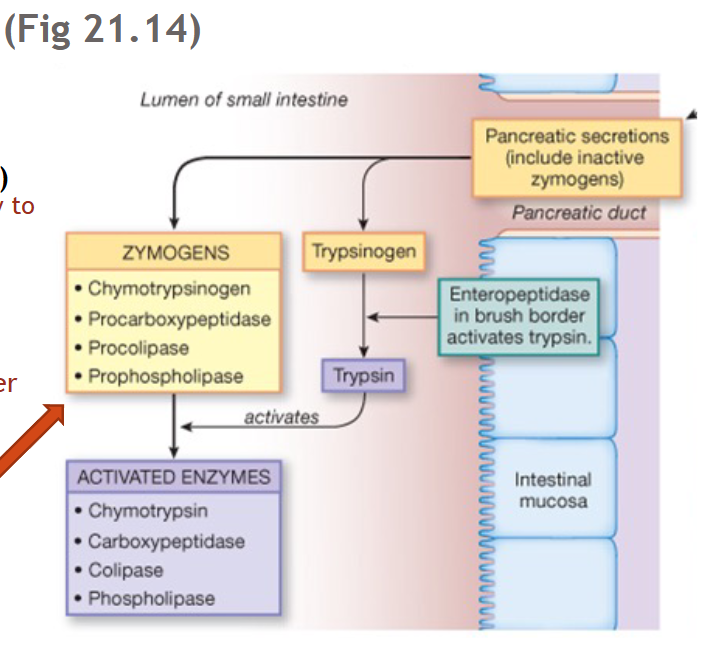
♡ secreted in an inactive state (they are zymogens)
→ activated in the small intestine with a helper (trypsin) because there’s no acidic environment in the sm. intestine
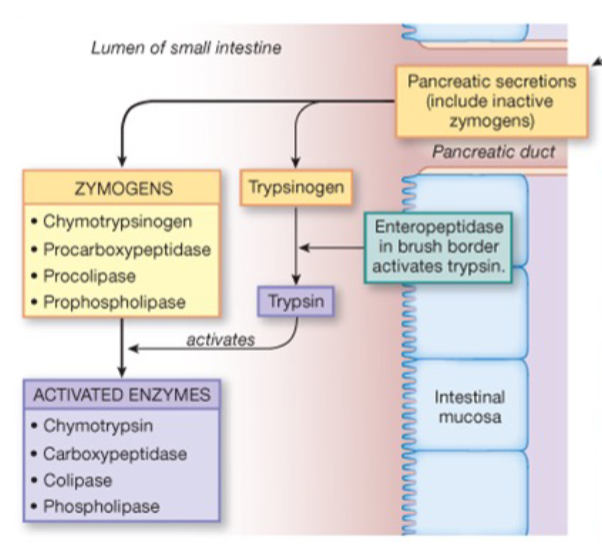
Activation of pancreatic enzymes
♡ if pancreatic enzymes were secreted in their active form, the cells that produce them would be digested
♡ they are activated in the sm. intestine
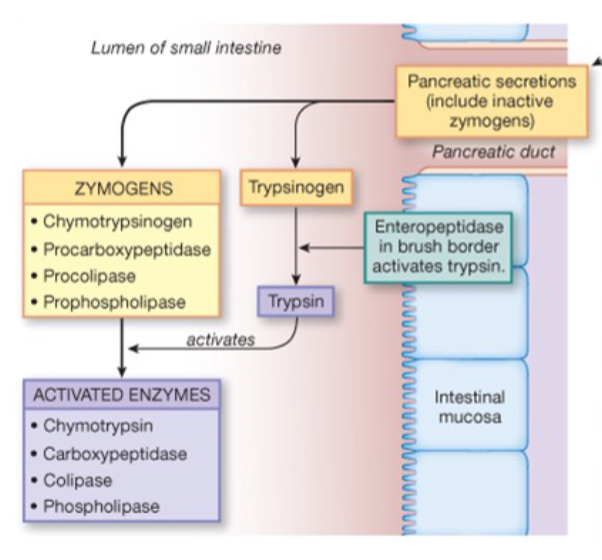
Enteropeptidase ( a brush border enzyme- attached to the walls of the instestine)
♡ activates Trypsin
~ Trypsinogen → Trypsin
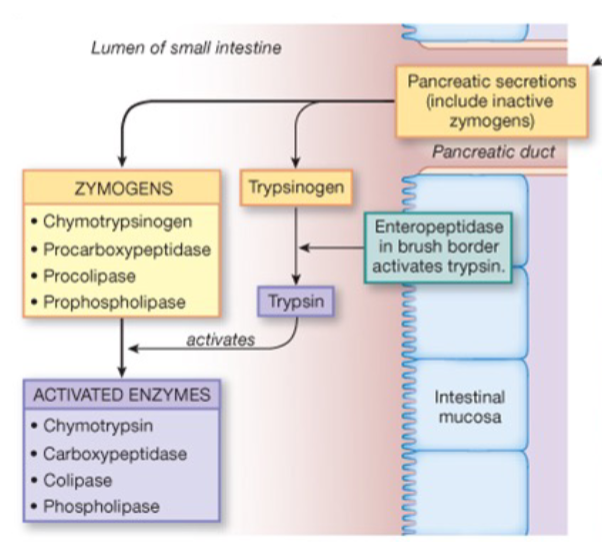
Trypsin activates all other enzymes
♡ Chymotrypsin
♡ Carboxypeptidase
♡ phospholipase
♡ colipase
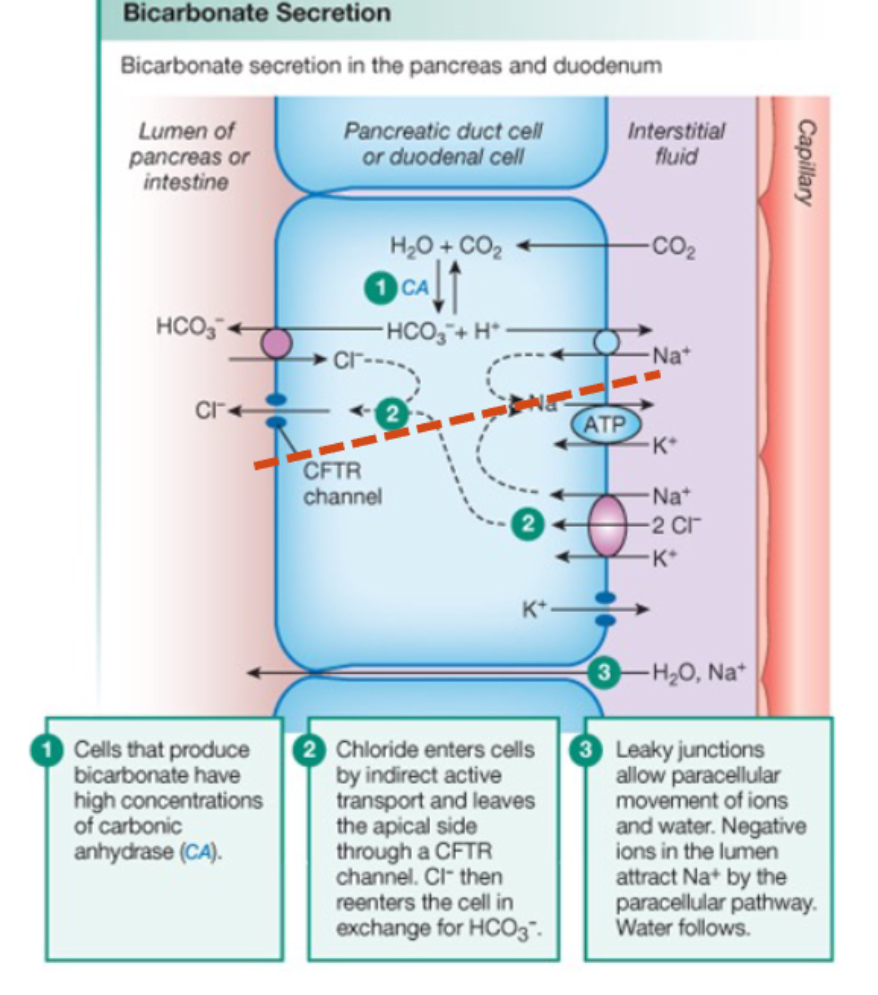
Bicarbonate secretion mechanism
produced by pancreatic duct or duodenal cells
→ same as before
→ what enzyme is needed?: Carbonic anhydrase
♡ transported into lumen in exchange for Cl
♡ NOTE: H+ ions left over from formation of bicarbonate enter the blood
→ blood pH balance achieved between HCO3- from stomach and H+ from sm. intestine
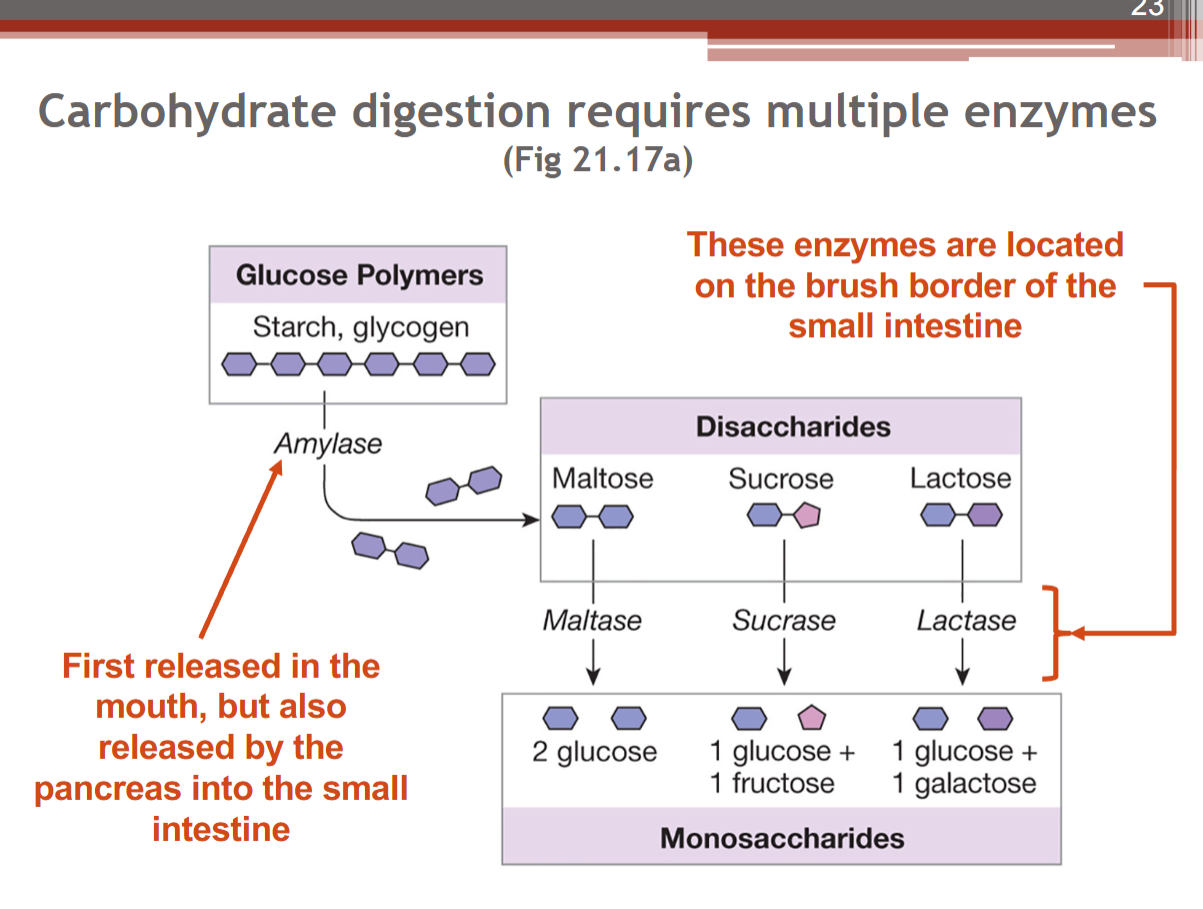
Carbohydrate digestion requires multiple enzymes
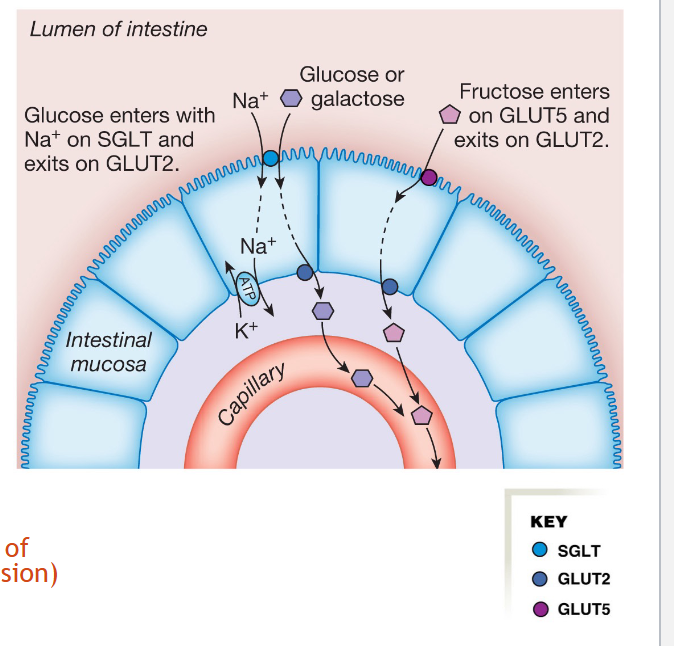
Carbohydrate absorption in the sm. intestine
♡ only monosaccharides are absorbed
♡ from lumen into epithelial cells lining of small intestine
→ glucose and galactose
~ Cotransport with Na+: SGLT!
~ Secondary active transport: active transport of Na+ maintains concentration gradient
~ Fructose: facilitate diffusion
♡ across basolateral membrane
→ Via GLUT-2 transporter
→ driven by concentration gradient of monosaccharide (facilitated diffusion)
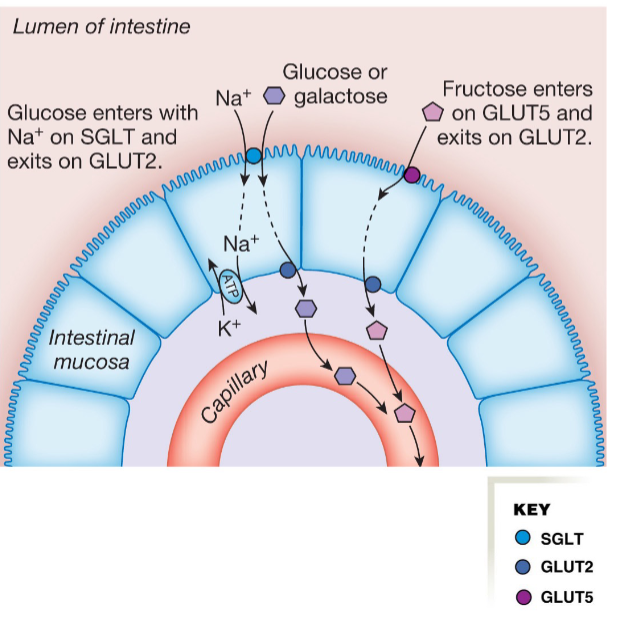
The hepatic portal vein then transports all monosaccharides to the…
liver!
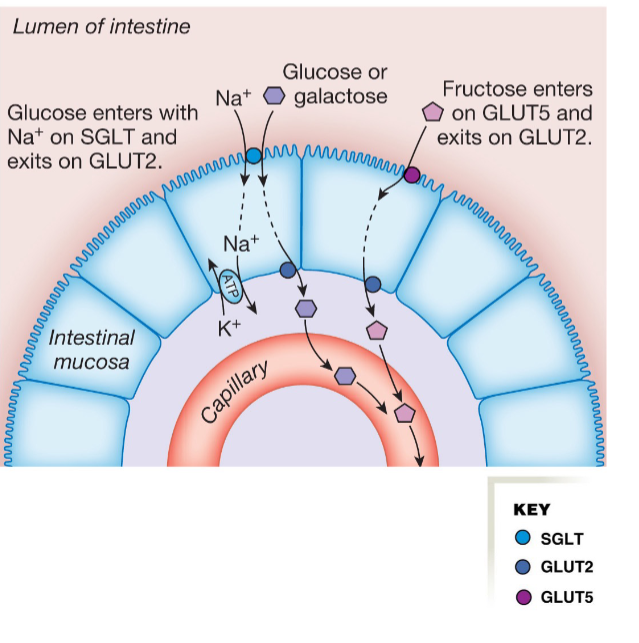
Fructose and galactose
♡ converted into glucose in the liver
♡ Fructose can also be readily converted to fat in adipocytes
→ foods w/ high fructose corn syrup therefore promote weight gain and obesity; which opens the door to diabetes, cancer, and cardiovascular disease
→ Natural fructose from fruits and vegies is fine for a healthy diet
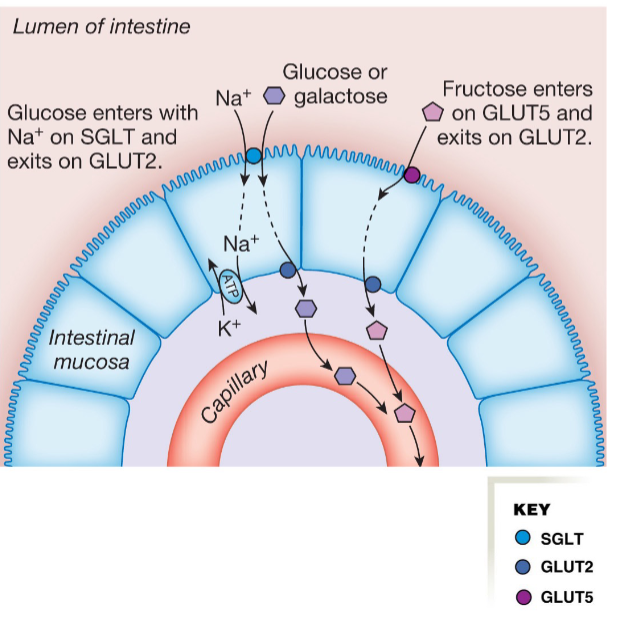
Glucose
♡ stores as glycogen in liver or muscle (or as fat in adipocytes)
OR
♡ delivered to other cells for immediate use in cellular resp.
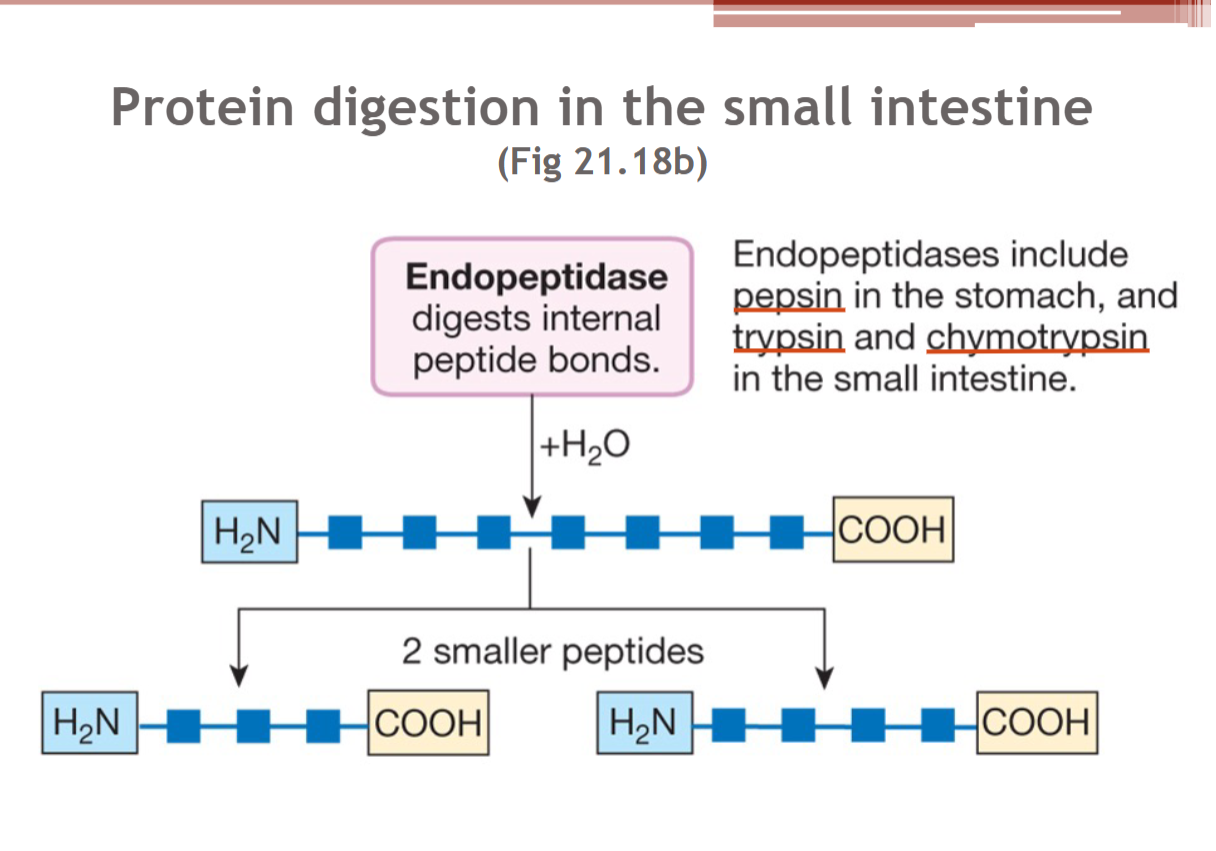
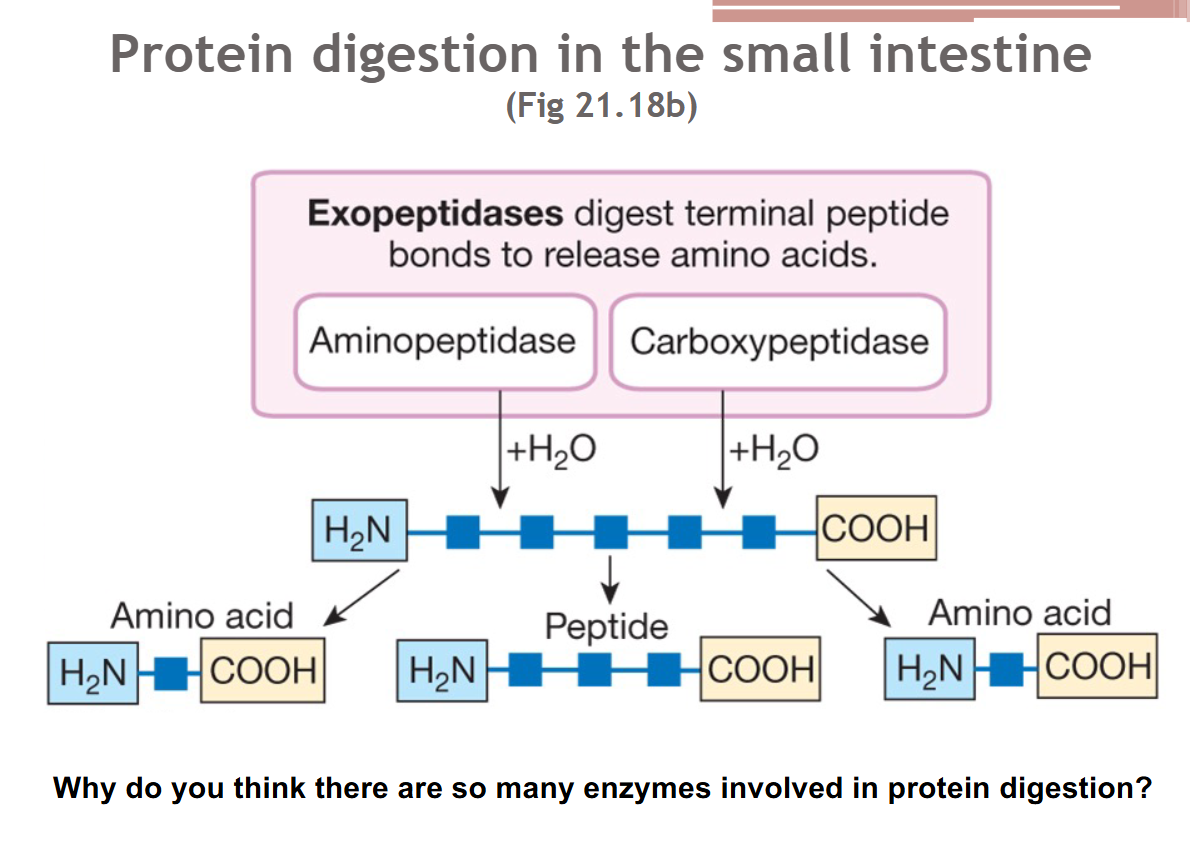
♡ proteins are very complicated and we need for protein synthesis for everything lol so we need lots of enzymes
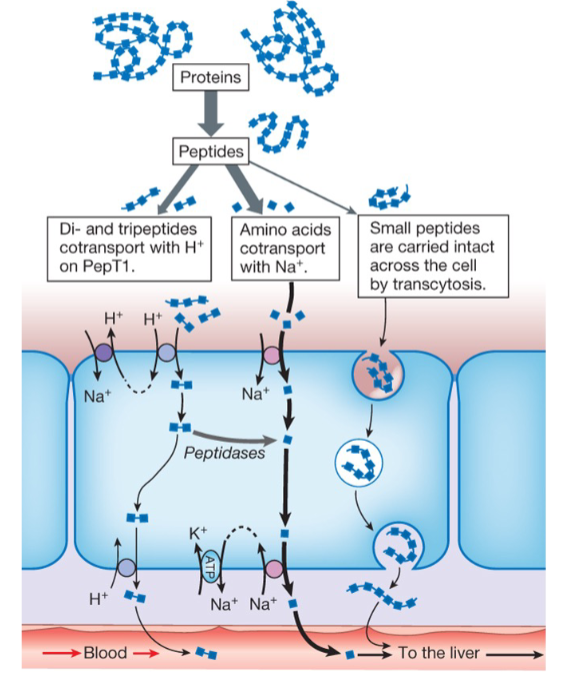
Protein absorption in the sm. intestine
♡ Free amino acids move out of lumen by co-transport with Na+ (symport)
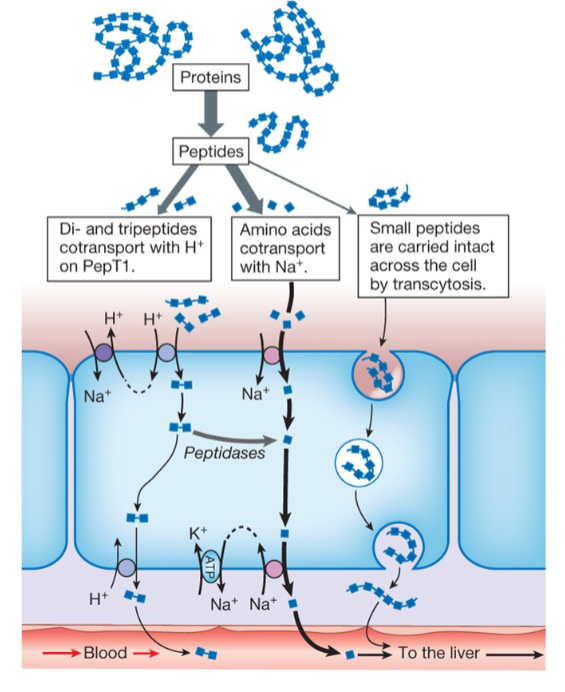
Dipeptides and tripeptides
♡ membrane transporters are required
→ secondary active transport with H+ into epithelial cells
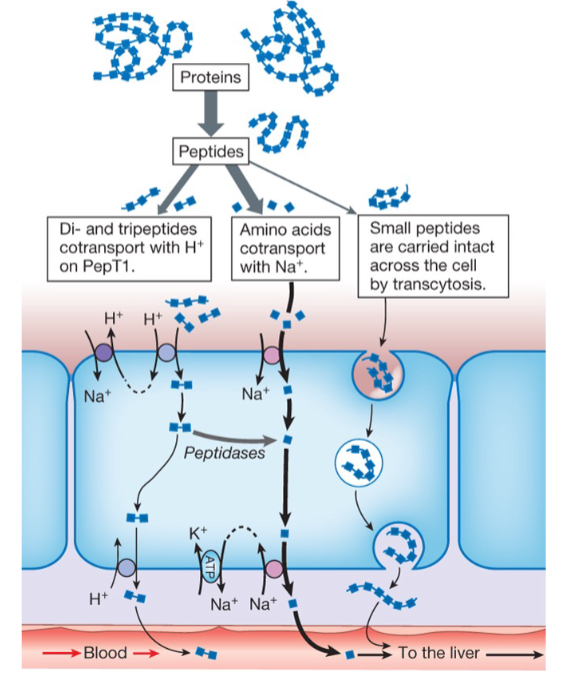
Inside epithelial cells
♡ contain di- and tri-peptidases
→ hydrolyze di-and tri-peptides into free amino acids
♡ free amino acids
→ leave cells via Na+ antiport
♡ remaining di- and tri-peptides
→ leave cell via H+ exchanger
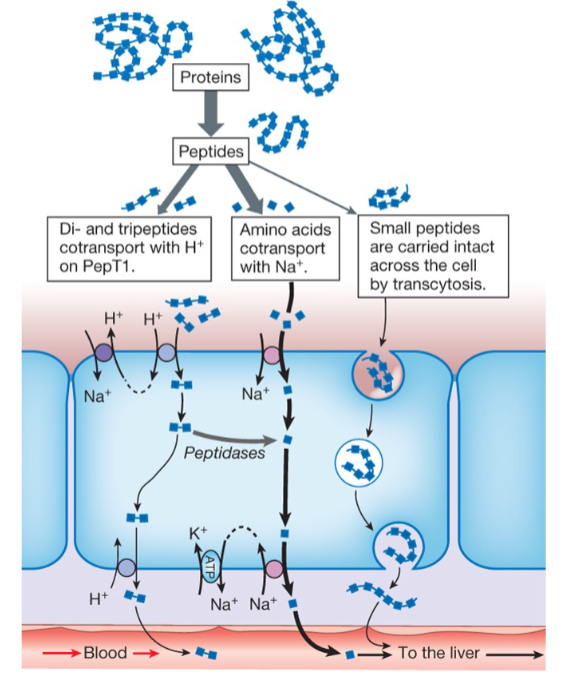
Amino acids, di- and tri peptides and peptide fragments enter hepatic portal vein….
delivered to liver - used to make glucose (biproduct of urea)
Lipid/fat digestion
♡ begins in mouth and stomach
→ some lipase activity
Small intestine (primary location of lipid digestion)
♡ bile from gallbladder and liver
→ emulsify fat (triglycerides) into small droplets
→ increases surface area for colipase lipase, and phospholipase activity
♡ pancreatic enzymes
→ lipase and colipase (a cofactor)
~ colipase displaces some bile from droplets, allowing lipase to break ester bonds between fatty acids and glycerol
~ triglyceride → monoglyceride + 2 free fatty acids
~ phospholipase: phospholipids → free fatty acids
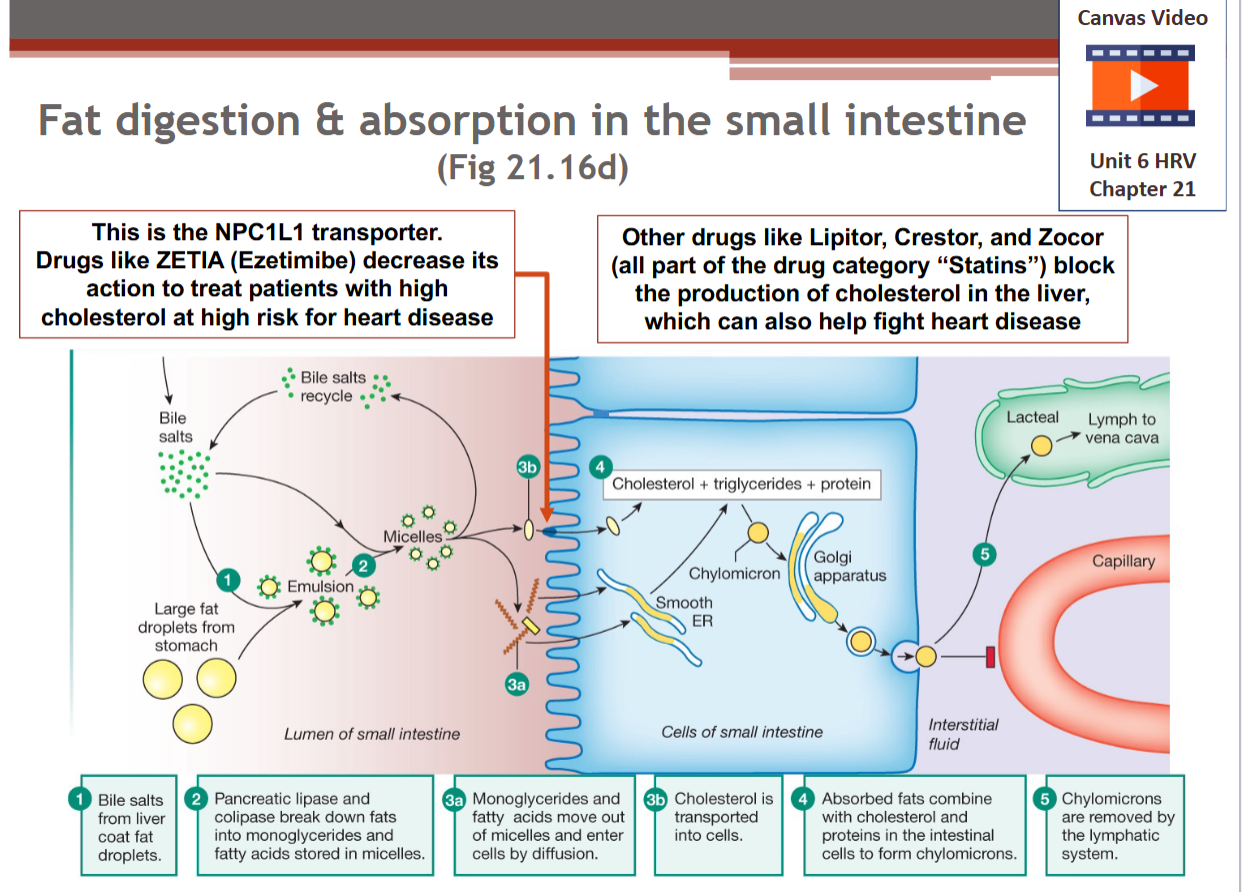
— fats bc theyre non polar = able to do facilitated diffusion
What happens in the large intestine?
♡ motility
→ peristalsis and segmentation
♡ secretion
→ mucus: goblet cells
♡ digestion
→ none except symbiotic microorganisms
~ they digest the last remaining proteins and polysaccharides and synthesize important vitamins
~ no new enzymes secreted
Absorption + storage+elimination
♡ electrolytes (same mechanisms as sm. intestine)
♡ water (same mechanism as sm. intestine) — osmosis
♡ vitamins (Bs, K)
→ folic acid and K vitamins are synthesized by microflora in the large intestine
→ absorbed by transepithelial transport using specific carrier proteins
♡ Storage and elimination
→ temporary storage
→ defecation