Healthcare Management Exam 3 Review
 Call Kai
 Learn
Learn Practice Test
 Spaced Repetition
 Match
Match Flashcards
 Knowt Play
1/52

There's no tags or description
Looks like no tags are added yet.
Name | Mastery | Learn | Test | Matching | Spaced | Call with Kai |
|---|
No analytics yet
Send a link to your students to track their progress
53 Terms
common healthcare sources of revenue
operating (medicare/medicaid, private insurance), non-operating (grants or donations)
factors that cause unpredictability in revenue flow
fluctuation in number of patients served
variable payment practices of third party payers
fines and penalties assessed due to billing errors
delays in collecting copay and deductibles
revenue never received (uninsured)
changes in reimbursement system
cash is king
enough cash must be kept on hand to cover the amount of outgoing bills and payroll
expenses: major budget categories
capital expenses (equipment)
supplies (consumables)
special expenses: equipment lease or rental, contractual services, maintenance and repairs, specialty references (books and software), software license fees, staff training and development
personnel budget (wages, salaries, benefits)
factors in wage and salary calculations
state/federal minimum wage laws
union contract stipulations
organizational wage and salary scale
cost of living increase
area wage and salary consideration
merit raise or bonus pay
special adjustments (ex: longevity employment)
budget
a plan expressed in terms of projected activity and proposed expenditures
principles of a sound budget
sound organizational structure: clear budget responsibility
a consistent, defined budget period
the development of adequate statistical data
a reporting system that reflects the organizational structure
a uniform code of accounts, which provides a standardized way to classify expenses and other transactions
an audit system for the timely explanation of variances is implemented
the budget as a plan
a statement of anticipated results (ex: expected revenue)
a basis for future or continuing plans
a statement of intended accomplishments; more than a forecast or guess
the budget as a control tool
provides accountability
a basis for monitoring the use of resources
a basis for comparison of planned vs actual performance
fiscal year
defined, sequential period
often the same as the calendar year, the most common cycle, with 12 accounting periods
another possible increment includes 13 4-week periods (ex: payroll)
long range budget
associated with special projects and/or capital improvements; may cover 3-5 years (or longer)
periodic moving budget
as each period (ex: three or six months) is completed, an equal time period is added; allows the manager to use the most up-to-date projections
milestone budgeting
associated with major initiatives; budget periods are not uniform; they are tied to the projected timeframe for the major activities of the project
types of budgets
master, composite
departmental
revenue and expense
personnel and labor
production (activity forecast)
fixed
variable (including the step budget)
FTE
full time equivalent, 1 FTE = 40 hours/week or 2080 hours/year (if a nurse works 39 hours in a 40 hour work week, that would be the equivalent of 0.75 FTE’s of work)
zero-based / planning-programming budgeting system (ppbs)
planning oriented
past dollar allocations are not the basis for new projections
cost justification based on various aspects of project
longer time periods (as years, for a major project)
time consuming: all basic assumptions questioned
potential downside of reopening old conflicts
best use: for one-time, major project
incremental budgeting
immediate past year(s) budget is increased by some percentage
generally used with annual budget period
an efficient, practical approach when no major changes anticipated
object oriented, categories of personnel, materials, etc
potential downside: significant changes might be overlooked
ongoing programs, methods, practices are not challenged
budget process: initial preparation
overall limits set by top level management
department manager reviews and updates assumptions
priorities and initiatives for coming year noted
detailed projections of income and cost developed
budget process: review and approval
budget justification review with senior officials
compromise, bargaining
cost containment review
external review by public review boards, if program is subject to such analysis
budget justification
support documentation for specific requests (ex: equipment specifications, cost comparison, projected training needs, detailed calculations of dollar amounts)
budget process: implementation
approved allocation is activated
periodic reconciliation of planned vs actual expenses
budget variances accounted for
potential for budget cuts or budget “freeze”; contingency plan made
periodic internal and external audit
budget cut
reduce or eliminate specific expenditures
tie to budget justification information
identify categories of desired vs essential expenditures
identify categories that cannot be cut (ex: a contracted sign on bonus)
variance analysis
the primary purpose is to obtain information with which to improve financial planning and to correct practices that affect expenditures
the general audit
audit trail: track each expenditure from its approved budget entry through its actual expenditure
ex 1: trace employee payment by employment record, job title, hours worked, paycheck issued and processed
ex 2: trace equipment purchase by purchase requisition, installation date, the actual location at time of audit, and entry of appropriate information in master inventory of equipment
training for quality and motivation
training and development programs have a huge role in molding the behavior of individuals to meet organizational needs
fosters a culture of excellence
help employees advance in their professional goals
stay up to date with latest trends
helps staff be more productive and satisfied in their work
inadequate orientation and training can result in an increase of short-term turnover
employee development
required as part of licensure and accreditation
sometimes included as a labor contract stipulation
part of continuity operations and succession planning
important aspect in promoting employee satisfaction
general orientation
brief history of the organization and its mission
identification of departments and services
employee policies
departmental orientation
department mission and goals
organization chart of department
policies and procedures
productivity and quality improvement monitors
standards of conduct and behavior
conflict of interest (financial interests, gifts and perks, employment relationships, etc)
use of organizational assets and information
referral practices
employee privacy
patient confidentiality
employee relationships
components of an effective training program
identify training needs
establish training objectives
select appropriate methods and techniques
implement the program
evaluate the training outcomes
identification of training needs
comparison of job requirements with current or new employee skill set
analysis of performance ratings
analysis of personnel records (ex: tardiness, absenteeism, safety)
analysis of short and long term plans
analysis of current trends, laws, and standards
“just in time” training
components of training objectives
statement of focus
level of mastery or acceptable performance
any conditions associated with the work tasks
a time frame or performance standard for each stage of the training program
training methods and techniques
job rotation
formal lecture presentation
seminars and conferences
role playing
committee assignments
case studies
mentoring and peer pals
coaching
implement the program
monitor the physical and psychological environment
provide the best possible educational impact while maintaining work output
control the pace and timing of the training to help maintain engagement
evaluation of outcomes
direct before and after comparison
fact tests
performance tests, based on the usual work content
evaluation in stages: practice activity; real work activity with continuous supervision; real work activity with decreasing supervision
clinical affiliation programs and contract
clinical affiliation is often used because it fulfills the mission of many healthcare organizations: research and education
organizational leadership will need to determine the overarching policies for receiving students and management will prepare the department and staff for receiving them
receiving students not only helps fulfill and organizational mission, but it allows sites to see potentially good future employees; conversely students can help identify good potential employers
clinical affiliation contract
element of contract/agreement include:
importance of definition of trainee
liability insurance is covered by the academic institution
intellectual property and copyrights
fostering integration into the organization
work rules (policies, procedures, customary practices)
sanctions (to induce compliance)
selection (for organizational fit)
training (for technical readiness)
identification with organization (enhanced)
the work group (and its reinforcement)
theories of motivation
the art of motivation is built on the recognition of human needs
motivation is the degree of readiness or desire within an individual to pursue some goal
as self-motivation increases, the need for discipline decreases
motivators
sense of accomplishment
acquire new knowledge
work is challenging and interesting
work is meaningful
can staff assume responsibility?
are staff involved in determining how the work is done?
dissatisfiers
salary administration is not perceived as fair
there is no potential for promotion or growth
personnel policies do not seem fair to the individual and/or relative to other employees
working conditions don’t seem to promote well-being relative to what is expected
communication in all its forms is lacking: responsiveness, regular feedback, confidentiality, organizational plans
motivational strategies
performance appraisal
job rotation, enrichment, and/or enlargement
delegation
awards and honors
career ladders and parallel-path progression system
appreciative inquiry
an approach to organizational change, development, and assessment
identify what is what is working well by actively recalling successes
affirm the best of the individual and group experiences
build on positive outcomes to envision continued improvement
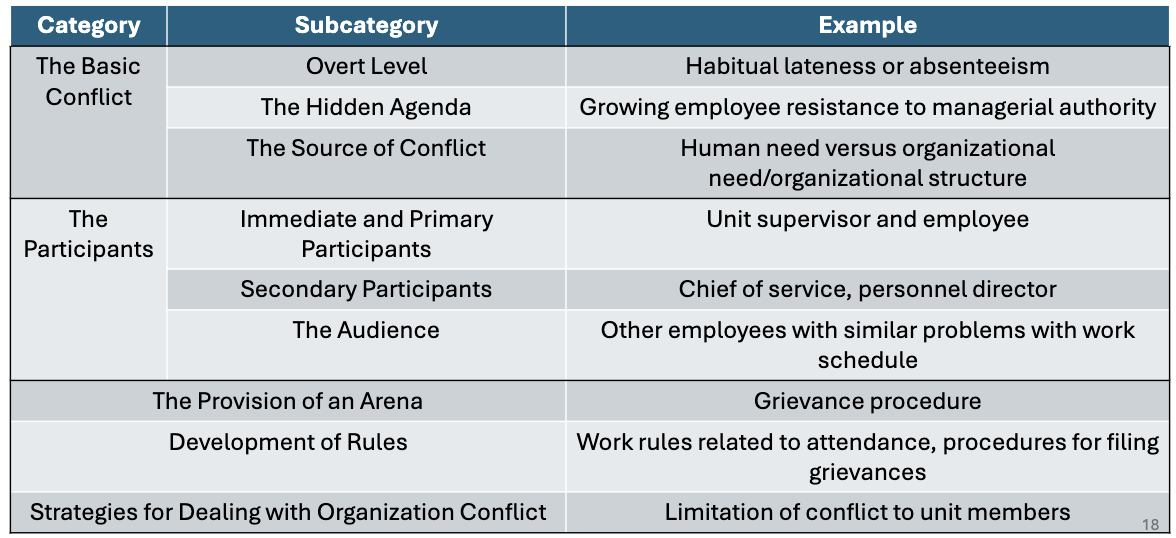
model for analyzing organizational conflict
the basic conflict:
overt; hidden agenda
source of conflict
the participants: immediate, secondary, audience
provision of arena
development of rules
strategies for dealing with the conflict
sources of conflict
the nature of the organization
the organizational climate and/or structure
individual vs organizational needs
solutions to previous conflicts
the conflict model
progressive discipline
counseling
oral warning
written warning
before suspension
suspension and discharge
discipline maintains order and ensures consistent performance
progressive discipline involves escalating consequences—verbal warnings, written warnings, suspension, and termination— allowing employees opportunities to correct their behavior
collective bargaining agreement
the typical collective bargaining agreement (“union contract”) will address all or most of the elements listed in the model agreement. in many instances, contractual conditions will limit decision-making flexibility, essentially providing “pre-made” decisions
communication definitions
the exchange of ideas, thoughts, or emotions between or among two or more people
the transfer of meaning and the development of mutual understanding
the process of exchanging information in such a way that mutual understanding is achieved between two or more people
includes: verbal (spoken) communication, nonverbal (intentional and spontaneous body language). these are inseparable and both critical
communication is a commonly overlooked skill
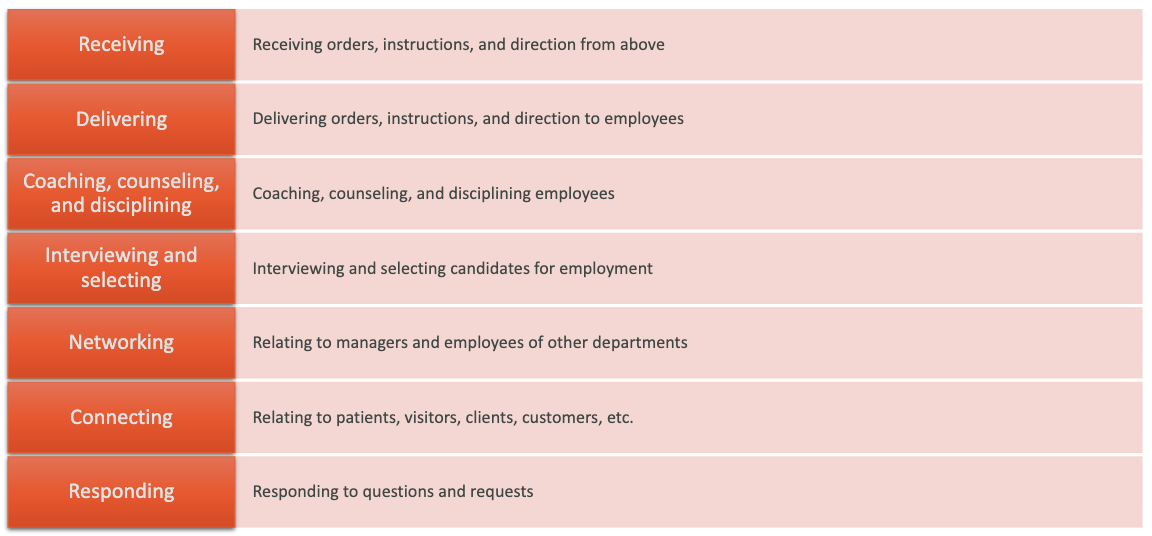
a manager’s day to day communications
face to face communication
involved parties hear the words, perceive vocal tones, observe facial expressions and body language, and have the opportunity for immediate feedback and response (includes hallway conversations and meetings)
strongest means of communication, however, there may be no record
communication via telephone
involved parties hear the words, perceive vocal tones, and have the opportunity for immediate feedback and response
using traditional tools, parties lack exposure to facial expressions and body language
video calls improve the ability to receive nonverbal communication
provides the opportunity for immediate feedback and response
there may be a record that it took place, but there may be no record of content, unless it was recorded