Plants
 Call Kai
 Learn
Learn Practice Test
 Spaced Repetition
 Match
Match Flashcards
 Knowt Play
1/35

There's no tags or description
Looks like no tags are added yet.
Name | Mastery | Learn | Test | Matching | Spaced | Call with Kai |
|---|
No analytics yet
Send a link to your students to track their progress
36 Terms
Chloroplasts, Cell Walls, Large central vacuole
Chloro: Photosynthesis
Cell Wall: rigid structure
Large Vacuole to reduce turgor pressure
The 4 Major Plant Classes
-Bryophytes
-Filicinophytes
-Coniferophytes
-Angiosperms
Bryophytes (Vas,Dif Tissue,size,seeds,sex, required for repro
no vascular system,
no differentiated tissue,
small,
no seeds,
plant is either male or female,
requires water for repro
Fillicinophytes (Vas,seeds,sex,required for repro)
vascular tissue
but no seeds,
plant is sporophyte (both male and female), water for repro
Coniferocytes (Coniferous Trees, Cones, Pine Trees)
Angiosperms
Pistil
female egg producing structure: contains the stigma, style and ovary
Stigma (Loc and Func), Ovary, Style
Stigma, tip of pistil, often produces nectar and receives pollen
Ovary: contains ovule, which produces female gametes
Style: tube which will allow for sperm to be transported to ovary
Pistil (photo, Stigma, Ovary Style)
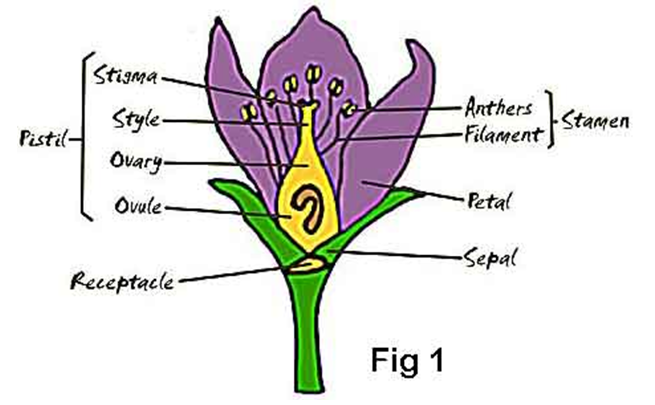
4 Aspects of Pollination (Who or what helps, type of Relationship, why do flowers and animals benefit, )
Pollination is helped by animals/insects, wind and water can also do it. its a mutalistic relationship (both benefit), insects get energy from nectar and pollen, flower gets pollen transferred to other plants. Flowers often produce scent to attract insects and makes vivid patterns of color.
Leaf Diagram
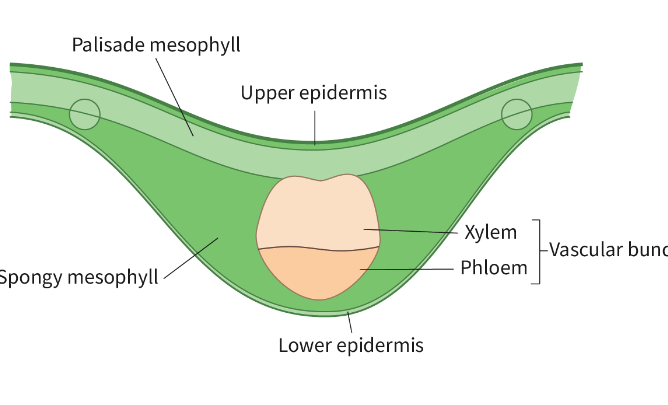
Where, what season, is sugar stored, what does do during the other season