The Energy Systems
 Call Kai
 Learn
Learn Practice Test
 Spaced Repetition
 Match
Match Flashcards
 Knowt Play
1/24

There's no tags or description
Looks like no tags are added yet.
Name | Mastery | Learn | Test | Matching | Spaced | Call with Kai |
|---|
No analytics yet
Send a link to your students to track their progress
25 Terms
What is the primary ‘currency’ of energy in the body?
Adenosine triphosphate (ATP)
ATP structure
Adenosine molecule bonded to 3 inorganic phosphate molectules
ATP chemical reaction to release energy worded formula
ATP + water + ATPase → ADP + 1 phosphate + energy
Power stroke
Myosin head binds to actin filament
Energy from ATP used to ‘tilt’ myosin head which drags actin filament towards it, shortening it (the power stroke)
ADP cycle def
The breakdown of ATP results in adenosine diphosphate (ADP) and a free phosphate molecule (Pi). To continue work, the body must re-synthesise these components back into ATP.
Why is ATP vital at all times? (2)
Muscle Tone: Maintaining a baseline level of contraction even during rest.
Rapid Response: Enabling immediate reactions to perturbations, such as a spinal reflex response to touching a hot object or tripping.
2 ways in which ATP synthesis is categorised
Aerobic (O2 required)
Anaerobic (O2 not required)
2 anaerobic systems
ATP-PCr (phosphocreatine system)
Lactic system
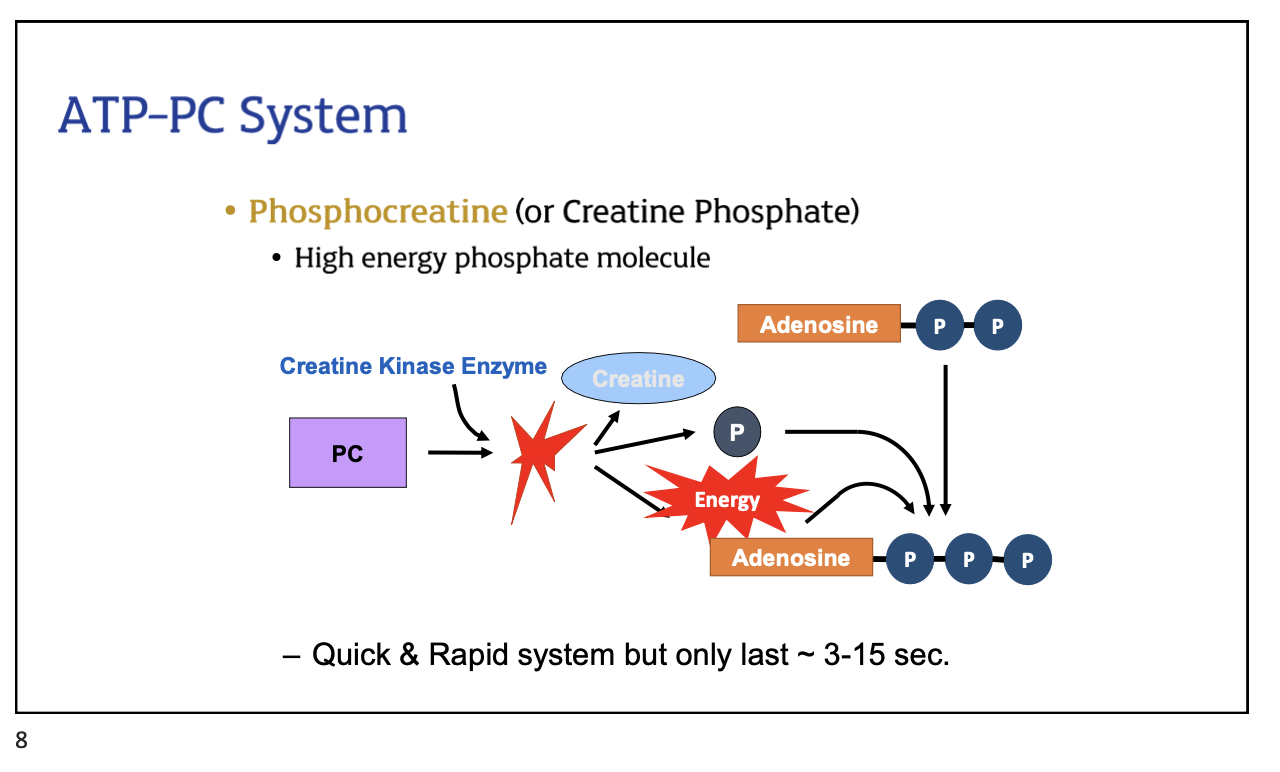
ATP-Cr system: fuel, O2 requirements, speed of ATP production, ATP yield, duration
Phosophocreatine
Nil
Fastest
Very limited
3-15 seconds (usually during very beginning of intense activity)
Lactic/glycolytic system: fuel, O2 requirements, speed of ATP production, ATP yield, duration
Glucose/glycogen
Nil
Fast
Limited (2-3 ATP)
30 sec - 2 mins
ATP yield from glycolysis of free glucose vs glucose released from glycogen chain
2 ATP
VS
3 ATP
Note on lactic system + O2 (3)
Doesn’t require O2, but without sufficient O2 → pyruvic acid converts to lactic acid
Lactic acid accumulation causes acidosis (decrease in muscle pH) → which inhibits further glycogen breakdown for energy + decreases muscle contractility (fatigue noticeable after 30 seconds of maximal effort)
In presence of O2, pyruvic acid is used for fuel in oxidative system
What happens to excess lactate during recovery? (1)
Re-synthesised to form glucose by liver + returned to muscle
Where do processes of oxidative system take place?
Mitochondria
2 types of oxidation that occur for energy production
Carbohydrate oxidation
Fat oxidation
Carbohydrate oxidation description + how many ATP it can yield
In presence of O2 → pyruvic acid enters mitochondria
Up to 39 ATP/glucose molecule
Fat oxidation: main energy source, benefit + note
Triglycerides
Can provide more kcals of energy compared to carb stores
Preferred source of fuel during rest (save carb stores for exercise)
Example of triglyceride + no. of ATP produced
Palmitic acid
129 ATP per molecule
Cons of fat oxidation
Requires more O2
Slower
Can’t exercise as intensely if carb stores are depleted
What is ‘hitting the wall’? (2)
When glycogen stores (~2,500 kcal capacity) are depleted
Must rely solely on fat oxidation, which produces ATP too slowly to maintain high-intensity work
Leading to a forced reduction in pace
Factor that influences rate of aerobic metabolism (1) + benefit
Size + number of mitochondria
Greater size + number of mitochondria → can metabolise pyruvic acid faster and exercise at higher intensities without accumulating too much lactic
Note on protein metabolism
Protein is not a primary energy source and is only utilised significantly during starvation or severe energy depletion
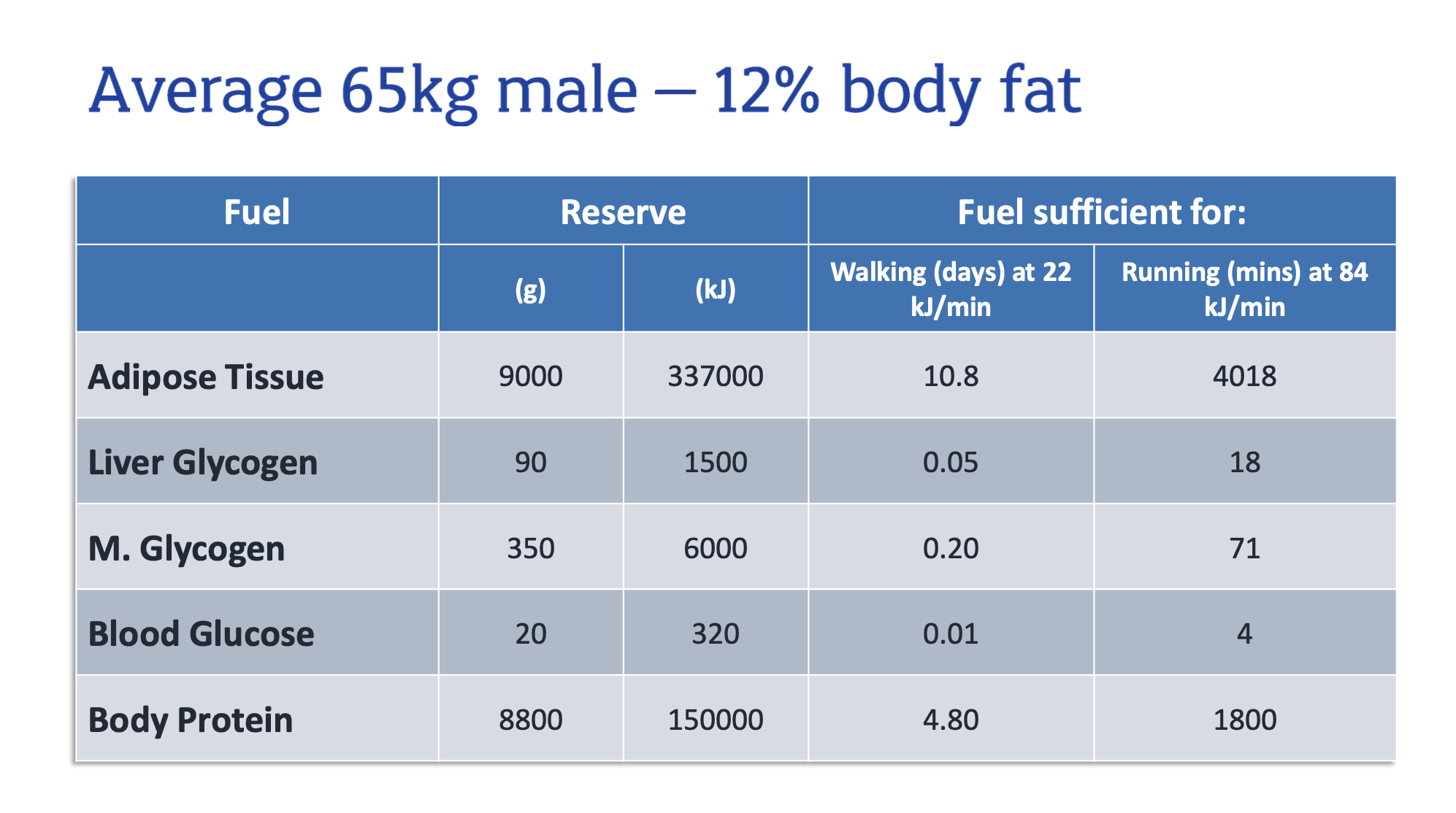
Fuel reserves greatest to smallest (5)
Adipose tissue (fat
Protein
Muscle glycogen
Liver glycogen
Blood glucose
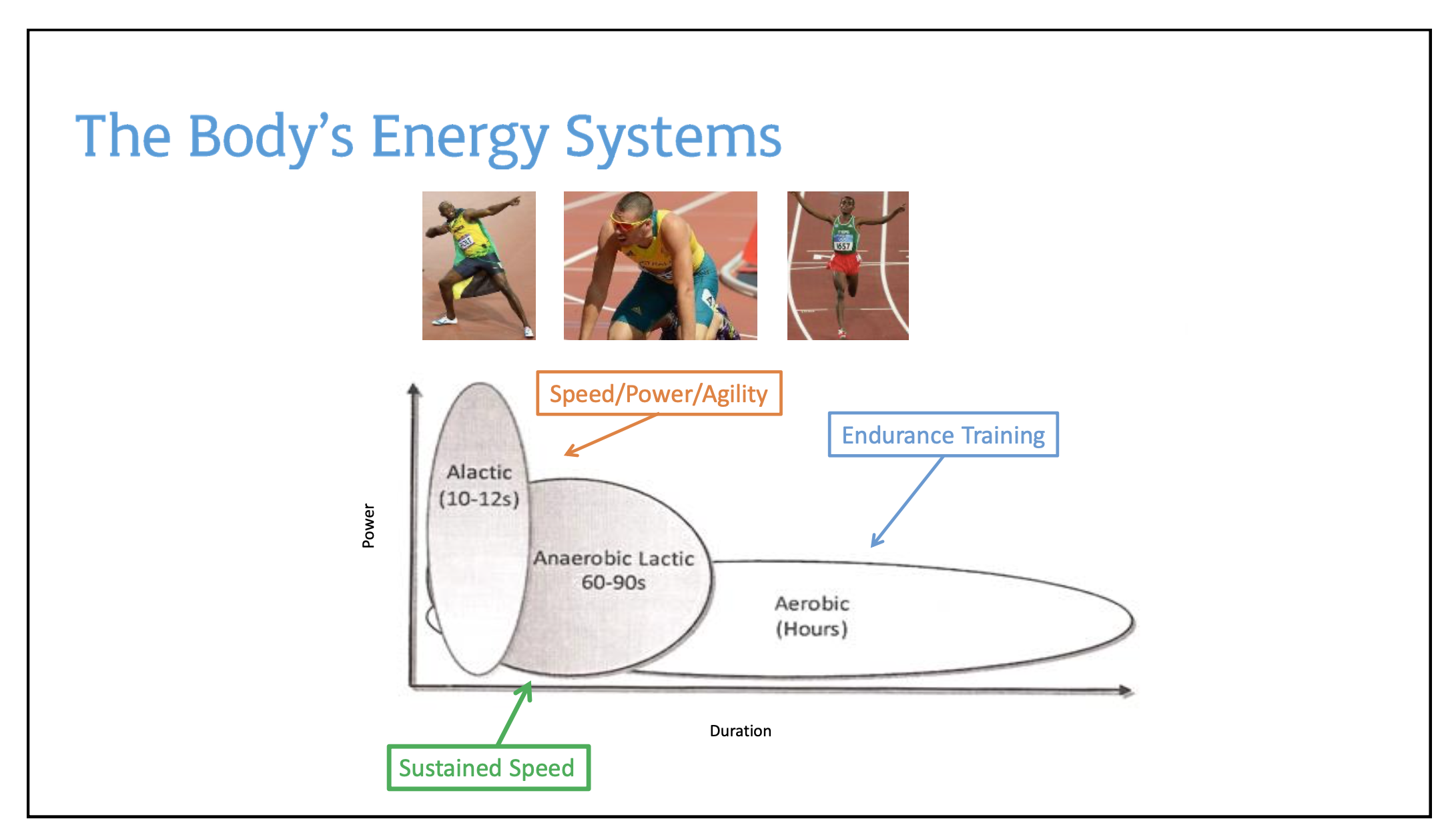
Note on interplay between systems
The system that is used doesn’t depend on exercise intensity; during all out exercise, every system will be active
Summary of energy systems (table)