BIO 211 Ch. 12 Practice Quiz
 Call Kai
 Learn
Learn Practice Test
 Spaced Repetition
 Match
Match Flashcards
 Knowt Play
1/62

There's no tags or description
Looks like no tags are added yet.
Name | Mastery | Learn | Test | Matching | Spaced | Call with Kai |
|---|
No analytics yet
Send a link to your students to track their progress
63 Terms
Progression beyond the G2 checkpoint into mitosis is triggered by which of the following molecules?
A) Cdk
B) MPF
C) PDGF
D) cyclin
MPF
Which of the following characteristics would be most important for a chemotherapeutic drug designed to treat cancer cells?
A) It is safe enough to prevent all apoptosis.
B) It specifically inhibits cells entering G0.
C) It specifically inhibits the cell division cycle in rapidly dividing cells.
D) It does not interfere with metabolically active cells.
It specifically inhibits the cell division cycle in rapidly dividing cells.
Through a microscope, you can see a cell plate beginning to develop across the middle of a cell and nuclei forming on either
side of the cell plate. This cell is most likely ________
A) a plant cell in metaphase of mitosis
B) a plant cell in the process of cytokinesis
C) an animal cell in the process of cytokinesis
D) an animal cell in anaphase of mitosis
a plant cell in the process of cytokinesis
If there are 24 centromeres in a cell at anaphase of mitosis, how many chromosomes will be found in each daughter cell
following cytokinesis?
A) 12
B) 6
C) 24
D) 48
12
Cell A has half as much DNA as cells B, C, and D in a mitotically active tissue. Cell A is most likely in ________.
A) G2
B) G1
C) prophase
D) metaphase
G1
Students in a biology lab isolated cells in various phases of the cell cycle. A population of cells that have twice the DNA of G1
phase cells was most likely isolated from which of the following part of the cell cycle?
A) in the G2 phase
B) between the G1 and S phase
C) immediately after cytokinesis
D) at the beginning of the S phase
in the G2 phase
The mitotic spindle plays a critical role in which of the following processes?
A) separation of sister chromatids
B) splitting of the cell (cytokinesis) following mitosis
C) triggering condensation of chromosomes
D) dissolving the nuclear membrane
separation of sister chromatids
Which of the following statements best describes cells in culture that do not exhibit either density-dependent inhibition or anchorage dependence?
A) The cells follow an altered series of cell cycle phases.
B) The cells show characteristics of tumors.
C) The cells have nonfunctional MPF.
D) The cells are unable to form spindle microtubules.
The cells show characteristics of tumors.
The decline of MPF activity at the end of mitosis is due to ________
A) the accumulation of cyclin
B) the destruction of the protein kinase Cdk
C) the degradation of cyclin
D) decreased synthesis of Cdk
the degradation of cyclin
Which of the following statements best describes what happens to MPF during mitosis?
A) It is phosphorylated by a Cdk, which inactivates it.
B) The Cdk component of MPF is degraded.
C) It is completely degraded.
D) The cyclin component of MPF is degraded.
The cyclin component of MPF is degraded.
One difference between cancer cells and normal cells is that cancer cells ________
A) continue to divide even when they are tightly packed together
B) are unable to synthesize DNA
C) are arrested at the S phase of the cell cycle
D) cannot function properly because they are affected by density-dependent inhibition
continue to divide even when they are tightly packed together
Certain unicellular eukaryotes, including diatoms and some yeasts, have mechanisms of nuclear division that resemble
intermediate steps in the evolution of mitosis. Which of the following is a characteristic feature of nuclear division in these
organisms?
A) They reproduce by binary fission in their early stages of development and by mitosis when they are mature.
B) They have circular chromosomes that are segregated by a mitotic spindle.
C) Chromosomes are segregated by attachment to the plasma membrane.
D) Chromosomes are segregated by a mitotic spindle, but the nuclear envelope remains intact during division.
Chromosomes are segregated by a mitotic spindle, but the nuclear envelope remains intact during division.
Vinblastine is a standard chemotherapeutic drug used to treat cancer. Because it interferes with the assembly of
microtubules, its effectiveness must be related to ________
A) suppression of cyclin production
B) inhibition of DNA synthesis
C) myosin denaturation and inhibition of cleavage furrow formation
D) disruption of mitotic spindle formation
disruption of mitotic spindle formation
Which of the following statements best explains how neurons and some other specialized cells divide infrequently?
A) They have entered into G0.
B) They no longer produce MPF.
C) They no longer have active nuclei.
D) They can no longer degrade cyclins.
They have entered into G0.
In which phase of mitosis do the sister chromatids become daughter chromosomes?
A) anaphase
B) telophase
C) metaphase
D) prophase
anaphase
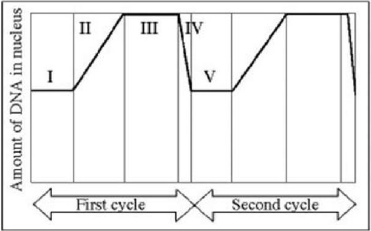
Amount of DNA per nucleus over the cell division cycle.
Which numbered regions of the accompanying figure represent the DNA content associated with cells at metaphase?
A) II and IV
B) IV only
C) III only
D) II only
III only
Which of the following statements best describes density-dependent inhibition?
A) As cells become more numerous, they begin to squeeze against each other, restricting their size.
B) As cells become more numerous, the protein kinases they produce begin to compete with each other, such that the proteins
produced by one cell essentially cancel those produced by its neighbor.
C) As cells become more numerous, the level of waste products increases, which slows metabolism and inhibits growth.
D) As cells become more numerous, the cell surface proteins of one cell contact the adjoining cells, and they signal each other
to stop dividing.
As cells become more numerous, the cell surface proteins of one cell contact the adjoining cells, and they signal each other
to stop dividing.
FtsZ is a bacterial protein that forms a contractile ring involved in binary fission. Its function is analogous to which of the
following structures in eukaryotic cells?
A) the mitotic spindle of eukaryotic cells
B) the cleavage furrow of eukaryotic animal cells
C) the microtubule-organizing center of eukaryotic cells
D) the cell plate of eukaryotic plant cells
the cleavage furrow of eukaryotic animal cells
What is the name of the region on duplicated chromosomes where the sister chromatids are most closely attached to each
other?
A) the chromatin
B) the centrosome
C) the centromere
D) the cohesin
the centromere
Besides the ability of some cancer cells to over proliferate, which of the following situations is most likely to result in a
tumor?
A) failure of cells to enter S phase
B) inability to form spindles
C) lack of appropriate cell death
D) changes in the order of cell cycle stage
lack of appropriate cell death
Which of the following events would be most likely to produce cells with several nuclei?
A) repeated mitosis without cytokinesis
B) multiple S phases without mitosis
C) repeated cytokinesis without mitosis
D) repeated mitosis with simultaneous cytokinesis
repeated mitosis without cytokinesis
In a diploid cell with four chromosome pairs (2n = 8), how many sister chromatids will be found in a nucleus at prophase
of mitosis?
A) 4
B) 16
C) 8
D) 32
16
Movement of the chromosomes during anaphase would be most directly affected by a drug that prevents which of the
following events?
A) elongation of microtubules
B) formation of a cleavage furrow
C) nuclear envelope breakdown
D) shortening of microtubules
shortening of microtubules
if a cell at metaphase of mitosis contains 32 sister chromatids, how many chromosomes will be present in a G1 cell?
A) 32
B) 64
C) 16
D) 8
16
Which of the following molecules is maintained at a relatively constant level throughout the cell cycle but requires a cyclin
to become catalytically active?
A) PDGF
B) cyclin
C) Cdk
D) MPF
Cdk
Which of the following pairs of molecules make up an active MPF?
A) ATP synthetase and a protease
B) cyclin and a cyclin-dependent kinase
C) cyclin and tubulin
D) a growth factor and mitotic factor
cyclin and a cyclin-dependent kinase
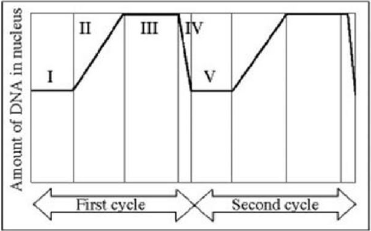
One type of eukaryotic cell (line 1) spends 24 minutes in S phase and another type of cell (line 2) spends 48 minutes in S phase. Which of the following statements is the best explanation for the difference in time spent in S phase by cell lines 1 and Amount of DNA per nucleus over the cell division cycle.
A) Line 2 contains more DNA than line 1.
B) Line 2 has plant cells and line 1 has animal cells.
C) Line 1 cells reproduce by binary fission and line 2 cells reproduce by mitosis and cytokinesis.
D) Lines 1 and 2 contain the same amount of DNA.
Line 2 contains more DNA than line 1.
The drug cytochalasin B blocks the function of actin. Which of the following aspects of the animal cell cycle would be most
disrupted by cytochalasin B?
A) cleavage furrow formation and cytokinesis
B) spindle attachment to kinetochores
C) cell elongation during anaphase
D) spindle formation
cleavage furrow formation and cytokinesis
t what stage of the cell cycle is the cyclin component of MPF destroyed?
A) in late M
B) in late G1
C) in early G2
D) at mid-S phase
in late M
What is the name of the microtubule-organizing center found in animal cells as an identifiable structure present during all
phases of the cell cycle?
A) kinetochore
B) centromere
C) centrosome
D) centriole
centrosome
A research team used a culture of lymphocytes with radioactively labeled T nucleotides to study the cell cycle. They found that the lymphocytes incorporated the labeled nucleotide at a significantly higher rate after a pathogen was introduced into the culture. Which of the following conclusions is most consistent with the results?
A) Infection causes lymphocytes to increase in size.
B) Infection causes lymphocyte cultures to skip some parts of the cell cycle.
C) The pathogen consumed radiolabeled nucleotides.
D) Infection causes lymphocytes to divide more rapidly.
Infection causes lymphocytes to divide more rapidly.
Which of the following statements best describes how cytokinesis differs between plant and animal cells?
A) The structural proteins of plant cells separate the two cells; in animal cells, a cell membrane separates the two daughter
cells.
B) Plant cells deposit vesicles containing cell wall building blocks on the metaphase plate; animal cells form a cleavage furrow.
C) Cytokinesis occurs between metaphase and anaphase in plant cells; it occurs after anaphase in animal cells.
D) The contractile filaments found in plant cells are structures composed of carbohydrates; the cleavage furrow in animal cells is composed of contractile proteins.
Plant cells deposit vesicles containing cell wall building blocks on the metaphase plate; animal cells form a cleavage furrow.
Which of the following cellular events occur in the G1 phase of the cell division cycle?
A) DNA replication
B) the beginning of mitosis
C) normal growth and cell function
D) break down of the nuclear membrane
normal growth and cell function
Eukaryotic chromatin is composed of which of the following macromolecules?
A) DNA and phospholipids
B) DNA and RNA
C) DNA and proteins
D) DNA only
DNA and proteins
Cells from advanced malignant tumors often have very abnormal chromosomes and an abnormal number of
chromosomes. Which of the following best explains the association between malignant tumors and chromosomal
abnormalities?
A) Cancer cells are no longer anchorage-dependent.
B) Cell cycle checkpoints are not in place to stop cells with chromosome abnormalities.
C) Transformation introduces new chromosomes into cells.
D) Cancer cells are no longer density-dependent.
Cell cycle checkpoints are not in place to stop cells with chromosome abnormalities.
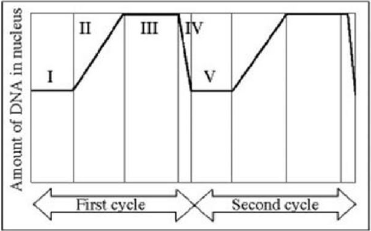
Amount of DNA per nucleus over the cell division cycle.
G1 is represented by which numbered part(s) of the cell division cycle in the accompanying figure?
A) III
B) IV
C) I and V
D) II
I and V
Taxol is an anticancer drug extracted from the Pacific yew tree. In animal cells, Taxol prevents microtubule
depolymerization, which interferes with which of the following processes?
A) chromosome condensation
B) centriole duplication
C) chromosome separation
D) cytokinesis
chromosome separation
he mass of DNA per nucleus in a certain fungus ranges from 4 to 10 picograms. Nuclei with 5 picograms of DNA are most
likely derived from cells in which of the following parts of the cell cycle?
A) G1
B) G2 C) early M
D) late S
G1
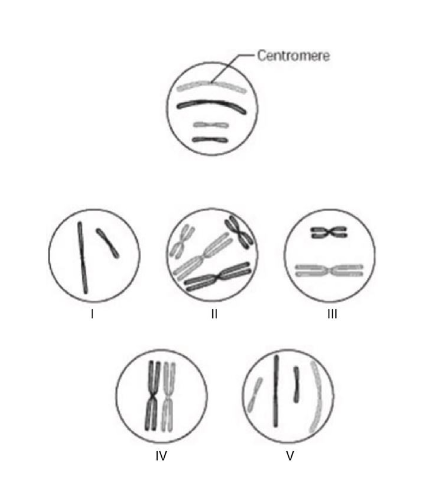
The unlettered circle at the top of the accompanying figure shows a diploid nucleus with four unreplicated chromosomes.
The circles labeled 1 to 5 show various combinations of these chromosomes.
Which chromosomal configuration would be observed at prometaphase of mitosis?
A) IV
B) V
C) II
D) III
II
Which of the following events characterizes the beginning of anaphase?
A) disappearance of the nuclear membrane
B) attachment of sister chromatids to each other by cohesin
C) loss of kinetochores from the chromatids
D) enzymatic cleavage of cohesin
enzymatic cleavage of cohesin
Which of the following structures or molecules is required in order for motor proteins to facilitate movement of
chromosomes toward the poles in mitosis?
A) intact cohesin
B) ATP as an energy source
C) actin microfilaments
D) intact centromeres
ATP as an energy source
After DNA replication, each duplicated chromosome consists of two of which of the following structures?
A) sister chromatids
B) daughter nucleosomes
C) sister chromatins
D) daughter chromosomes
sister chromatids
Students in a biology lab isolated cells in various phases of the cell cycle. A population of cells that have 1 1/2 times the
DNA of G1 phase cells was most likely isolated from which of the following parts of the cell cycle?
A) in the M phase
B) between the G1 and S phases
C) in the G2 phase
D) in the S phase
in the S phase
Which of the following statements best describes what would happen if MPF (maturation-promoting factor) is introduced
into immature frog oocytes that are arrested in G2?
A) The cells would enter mitosis.
B) The cells would remain arrested in G2.
C) The cells would enter G0.
D) The cells would begin DNA synthesis.
The cells would enter mitosis.
A group of cells is assayed for DNA content immediately following mitosis and is found to have an average of 10 picograms
of DNA per nucleus. Approximately how many picograms of DNA would be found in a nucleus at prophase of mitosis?
A) 5
B) 10
C) 40
D) 20
20
Which of the following statements best describes a cleavage furrow?
A) the separation of divided prokaryotes
B) a ring of vesicles forming a cell plate
C) a groove in the plasma membrane between daughter nuclei
D) the space that is created between two chromatids during anaphase
a groove in the plasma membrane between daughter nuclei
Which of the following events occurs during interphase of the cell cycle?
A) separation of the spindle poles
B) replication of the DNA
C) condensation of the chromosomes
D) spindle formation
replication of the DNA
Beginning with a fertilized egg (zygote), how many cells will be present in the embryo following five rounds of cell
division?
A) 6
B) 10
C) 32
D) 16
32
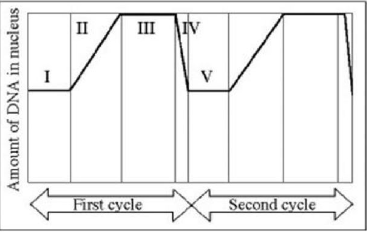
Amount of DNA per nucleus over the cell division cycle.
Which region of the accompanying figure represents S phase?
A) I
B) II
C) III
D) IV
II
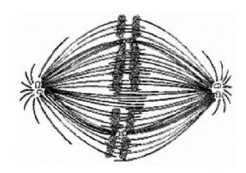
Use the figure to answer the question below.
If the cell whose nuclear material is shown in the accompanying figure continues toward completion of mitosis, which of the
following events would occur next?
A) formation of telophase nuclei
B) nuclear envelope breakdown
C) segregation of daughter chromosomes
D) spindle formation
segregation of daughter chromosomes
In a diploid cell with four chromosome pairs (2n = 8), how many centromeres will be found in a nucleus at G2 of the cell
division cycle?
A) 4
B) 32
C) 16
D) 8
8
In the cells of some organisms, mitosis occurs without cytokinesis. This will result in ________.
A) cells lacking nuclei
B) cell cycles lacking an S phase
C) cells with more than one nucleus
D) cells that are unusually small
cells with more than one nucleus
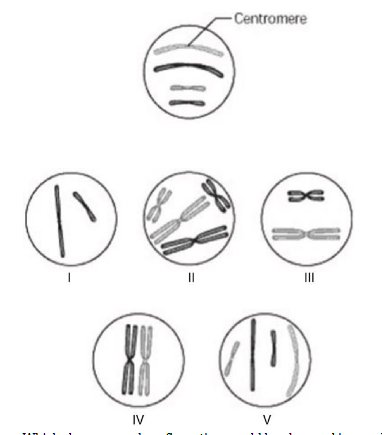
The unlettered circle at the top of the accompanying figure shows a diploid nucleus with four chromosomes that have not
yet replicated. The circles labeled 1 to 5 show various combinations of these chromosomes.
Which chromosomal configuration would be observed in one daughter cell after telophase of mitosis?
A) IV
B) III
C) II
D) V
V
Which of the following molecules is synthesized at specific times during the cell cycle and forms an active complex with a
kinase?
A) Cdk
B) MPF
C) cyclin
D) PDGF
cyclin
The drug cytochalasin B blocks the polymerization of actin microfilaments. Which of the following events of the cell cycle
in animal cells would be most directly disrupted by cytochalasin B?
A) cleavage furrow formation and cytokinesis
B) spindle attachment to kinetochores
C) spindle formation
D) movement of chromosomes to the poles during anaphase
cleavage furrow formation and cytokinesis
Of all chromosomes are not attached to the mitotic spindle at the M phase checkpoint, the cells would most likely be
arrested at which of the following points in the cell division cycle or mitosis?
A) metaphase
B) telophase
C) prophase
D) G2
metaphase
Which of the following occurs during S phase?
A) replication of the DNA
B) separation of sister chromatids
C) spindle formation
D) condensation of the chromosomes
replication of the DNA
Which of the following statements describes a characteristic feature of metaphase?
A) cytokinesis
B) alignment of chromosomes on the equator of the cell
C) separation of the centromeres
D) separation of sister chromatids
alignment of chromosomes on the equator of the cell
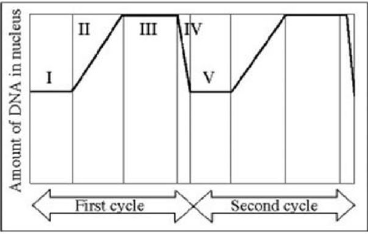
Amount of DNA per nucleus over the cell division cycle.
At which point in the accompanying figure does MPF reach its highest activity during the cell division cycle?
B) II
C) III
D) IV
III
Through a microscope, you can see a cell plate beginning to develop across the middle of a cell and nuclei forming on
either side of the cell plate. This cell is most likely ________
A) a plant cell in the process of cytokinesis
B) a plant cell in metaphase
C) an animal cell in the process of cytokinesis
D) a bacterial cell dividing
a plant cell in the process of cytokinesis
Exposure of zebrafish nuclei to cytosol isolated from eggs at metaphase of mitosis resulted in phosphorylation of NEP55
and L68 proteins by cyclin-dependent kinase 2. NEP55 is a protein of the inner nuclear membrane, and L68 is a protein of the
nuclear lamina. What is the most likely role of phosphorylation of these proteins in the process of mitosis?
A) They are involved in migration of centrosomes to opposite sides of the nucleus.
B) They are involved in the disassembly of the nuclear envelope.
C) They are involved in chromosome condensation.
D) They enable the attachment of spindle microtubules to kinetochores.
They are involved in the disassembly of the nuclear envelope.
Which of the following properties is associated with a cyclin-dependent kinase (Cdk)?
A) A Cdk is an enzyme that catalyzes the attachment of kinetochores to microtubules.
B) A Cdk is an enzyme that attaches phosphate groups to other proteins.
C) A Cdk is inactive, or "turned off," in the presence of a cyclin.
D) The number of Cdk molecules increases during the S and G2 phases and decrease during M.
A Cdk is an enzyme that attaches phosphate groups to other proteins.
At which phase of the cell cycle do centrioles begin to move apart in animal cells?
A) telophase
B) metaphase
C) prophase
D) anaphase
prophase