MOLBIO - MT 122 - Lecture 3 - Nucleic Acids and Proteins
 Call Kai
 Learn
Learn Practice Test
 Spaced Repetition
 Match
Match Flashcards
 Knowt Play
1/56

There's no tags or description
Looks like no tags are added yet.
Name | Mastery | Learn | Test | Matching | Spaced | Call with Kai |
|---|
No analytics yet
Send a link to your students to track their progress
57 Terms
DNA replication
The process in which each chromosome is duplicated before cell division.
Mitotic phase (M phase)
The time in which the cell divides to form two daughter cells.
Interphase
The time between two cell divisions or mitoses.
G1 phase
S phase
G2 phase
Interphase is subdivided into what phases?
d. S phase
A phase in which each chromosome has doubled its DNA content and is composed of two identical sister chromatids linked at the centromere?
a. G1 phase
b. M phase
c. G2 phase
d. S phase
e. None of the choices
a. G1 phase
A period of cellular growth preceding DNA synthesis.
a. G1 phase
b. M phase
c. G2 phase
d. S phase
e. None of the choices
b. First statement is incorrect. Second statement is correct.
G2 phase is a A period of cellular growth after DNA synthesis but PRECEDING mitosis.
G2 phase
A period of cellular growth after DNA synthesis and succeeding mitosis. Here, replicated DNA is checked for any errors before cell division.
a. First statement is correct. Second statement is incorrect.
b. First statement is incorrect. Second statement is correct.
c. Both statements are correct.
d. Both statements are incorrect.
d. Both A and B
methotrexate and hydroxyurea which target the S phase; vincristine and vinblastine target the M phase.
Which chemotherapeutic agent/s target/s S phase?
a. Methotrexate
b. Hydroxyuerea
c. Vinblastine
d. Both A and B
e. Both B and C
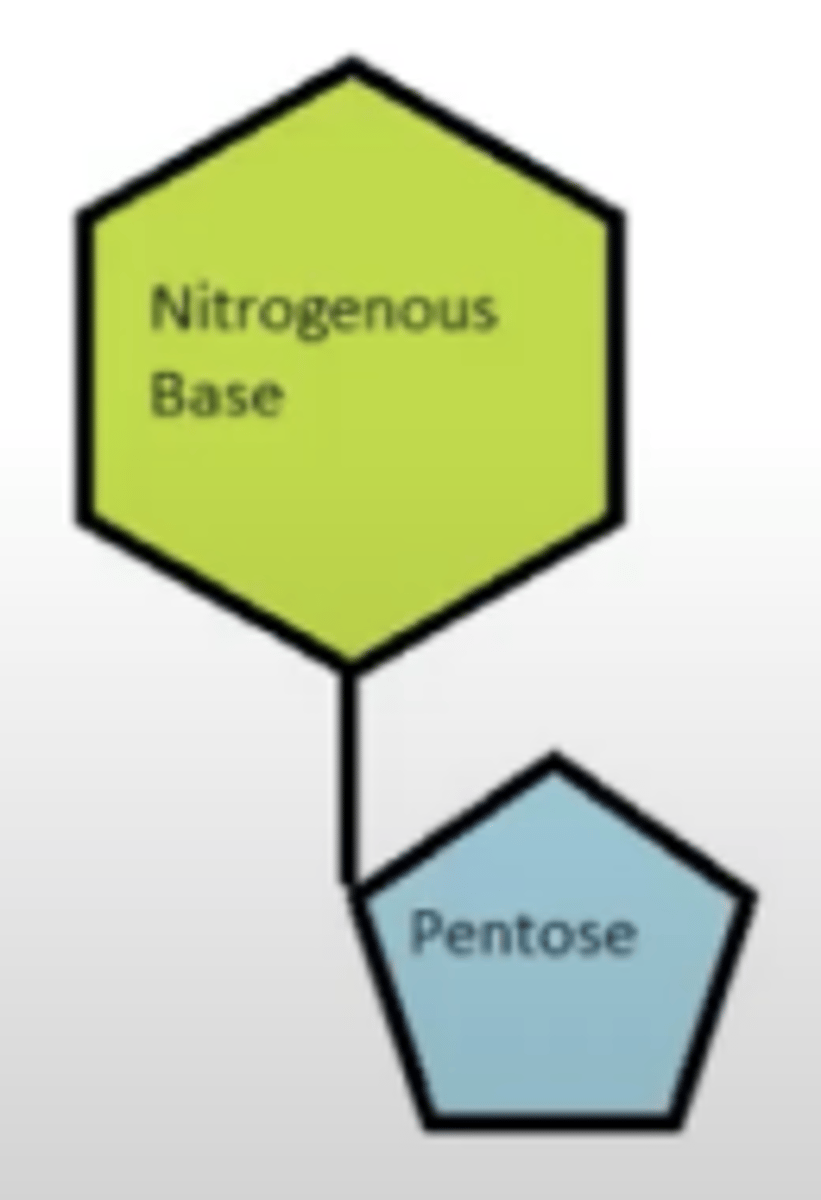
a. Nucleoside
Nitrogenous base + a 5-carbon sugar
a. Nucleoside
b. Nucleotide
c. Nucleic acid
d. None of the choices
c. Nucleic acid
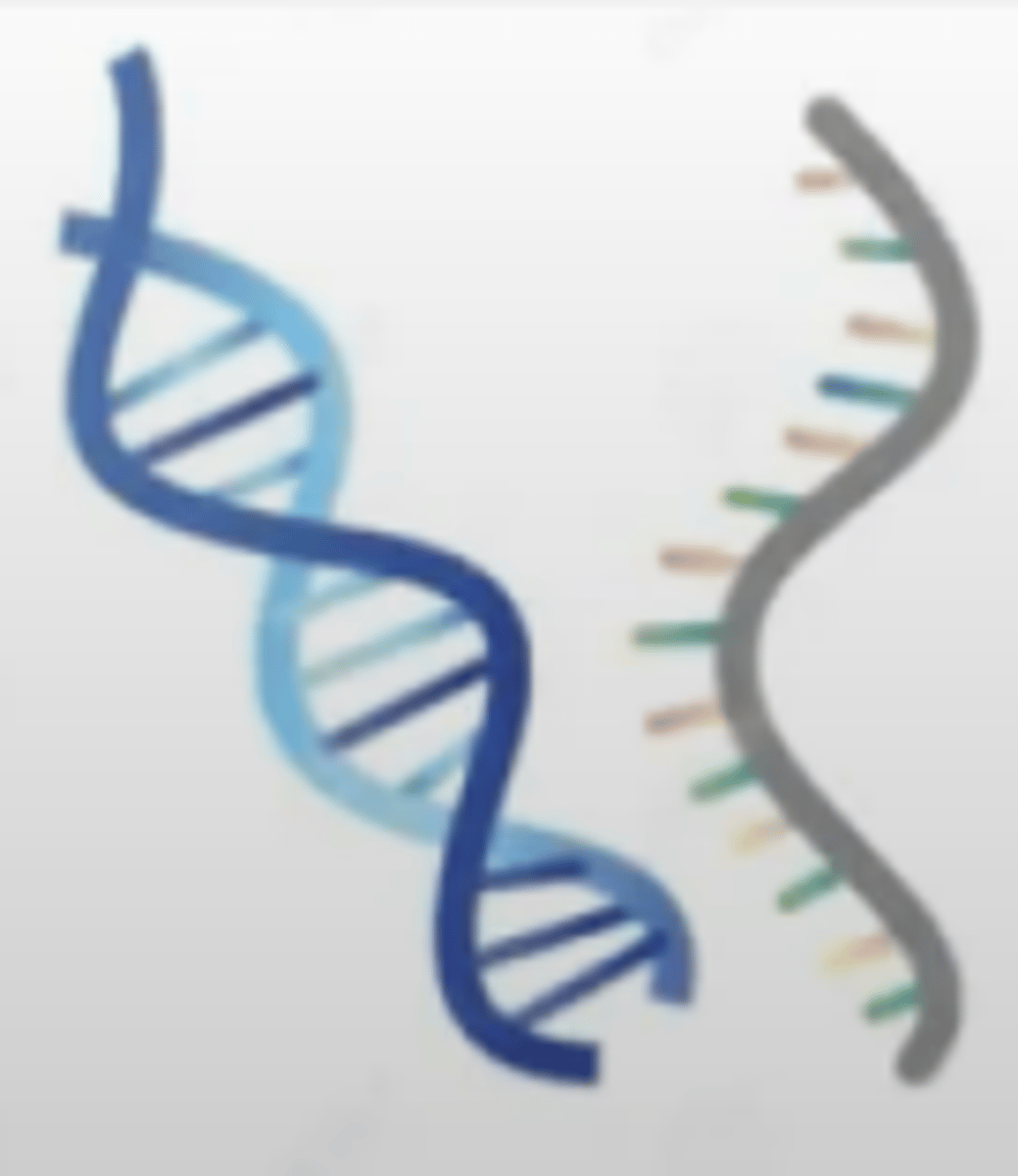
-Series of nucleotides or polynucleotides
-DNA or RNA (depending on sugar present)
a. Nucleoside
b. Nucleotide
c. Nucleic acid
d. None of the choices
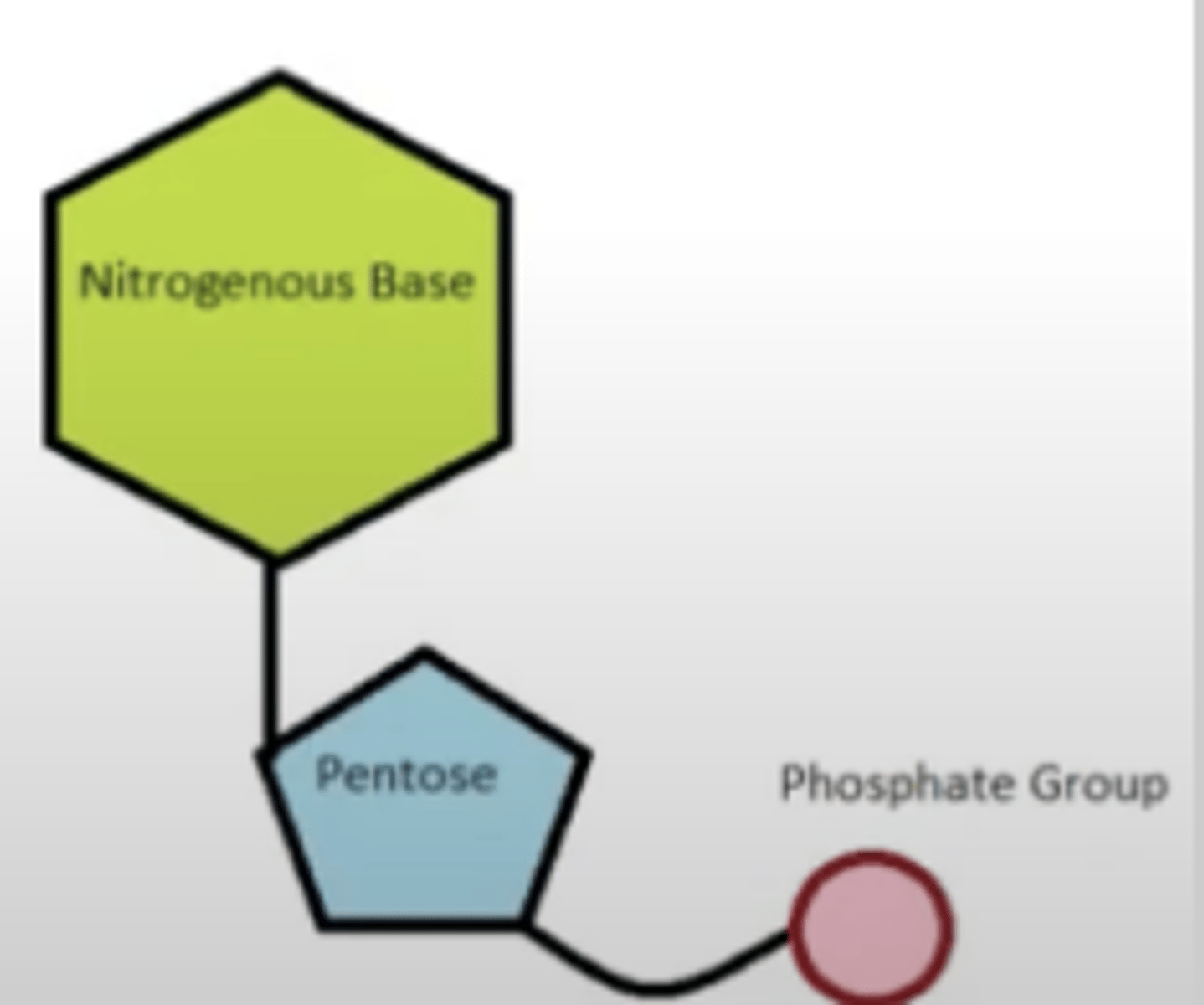
b. Nucleotide
Nitrogenous base + a 5-carbon sugar (nucleoside) + a phosphate residue
a. Nucleoside
b. Nucleotide
c. Nucleic acid
d. None of the choices
d. Both A and C
What are the two nitrogenous bases that are commonly found in nucleic acids both RNA and DNA?
a. Purines
b. Pyrimidines
c. Adenine and Guanine
d. Both A and C
e. Both A and B
dATP
dGTP
dCTP
dTTP
The four nucleotide building blocks of DNA are abbreviated as? (nomenclature)
TRUE
TRUE or FALSE
The base sequence of the nucleic acid is written by convention in the 5′→3′ direction.
10 base pairs
How many are the base pairs per complete turn of the helix?
Recombination
A person's DNA is unique, formed by the process of?
Watson- Crick DNA or B-DNA
The native form of DNA is an energetically favorable secondary structure: a right-handed, double-stranded helix, which is also known as?
c. Both statements are correct.
The hydrophilic sugar-phosphate backbone of each strand is on the outside of the double helix while the hydrogen-bonded base pairs are stacked in the center of the molecule.
a. First statement is correct. Second statement is incorrect.
b. First statement is incorrect. Second statement is correct.
c. Both statements are correct.
d. Both statements are incorrect.
-The two strands or polymers must run in opposite directions (antiparallel) as defined by the free hydroxyl groups at each end (3’-5’ vs. 5’-3’).
-The sequences of each molecule must be such that the two strands are complementary (i.e. “A” always pairs with “T” by two hydrogen bonds, and “G” always pairs with “C” by three hydrogen bonds).
For the two DNA polymers to form the proper hydrogen bonds between the bases, what are the two requirements that must be fulfilled?
pH 4-9
All dsDNA molecules, regardless of base sequence, retain the same shape and size within a pH range of?
TRUE
TRUE OR FALSE
RNA is less stable than DNA
23 chromosome pairs
The vast amount of genetic material is organized into how many homologous chromosome pairs?
b. Nucleosome
It is the basic packaging unit of chromatin is known as?
a. Chromatin
b. Nucleosome
c. Histone
d. 10-NM Chromatin fiber
c. Chromatin
Nuclear DNA in conjunction with its associated structural proteins, including histone and nonhistone proteins. is known as?
a. Histone H1
b. Nucleosome
c. Histone
d. 10-NM Chromatin fiber
d. 10-NM Chromatin fiber
A series of nucleosomes is sometimes called "beads on a string" but is more properly referred to as?
a. Histone H1
b. Nucleosome
c. Histone
d. 10-NM Chromatin fiber
a. Histone H1
It is associated with the linker DNA found between nucleosomes to help package them into a solenoid-like structure, which is a thick 30-nm fiber, is called?
a. Histone H1
b. Nucleosome
c. Histone
d. 10-NM Chromatin fiber
FALSE
It is MORE condensed during interphase
TRUE OR FALSE
Generally, chromatin is much more condensed during interphase, at which time DNA is replicated.
Euchromatin
It is known for its genomic regions rich in genes and less condensed chromatin.
Heterochromatin
It is known for its gene-poor regions and more densely packed and condensed chromatin.
Eukaryote chromosomes
Contain two specialized regions of heterochromatin, namely the centromeres and telomeres.
TELOMERE
CENTROMERE OR TELOMERE
Contain repetitive nucleotide sequences that are located on and protect the ends of chromosomes.
CENTROMERE
CENTROMERE OR TELOMERE
Play a role in directing the movement of chromosomes between daughter cells during cell division.
TRUE
TRUE OR FALSE
For replication to occur, the original double-stranded helix must be unwound by the enzyme Topoisomerase.
Okazaki fragments
One daughter strand is synthesized continuously (leading strand), while the other strand (lagging strand) must be synthesized discontinuously through the formation of short nucleotide sequences called?
Transcription
What is the process called In which involves copying a gene's DNA sequence to make an RNA molecule or template?
DNA Polymerases
Possess an exonuclease or "proofreading" function, this is called
DNA transcription
Involves the process of transferring the sequence of information from the coding regions of DNA to an mRNA (messenger RNA) strand.
Promoter region
RNA polymerase binds to sequences in the regulatory region of the gene called?
21 amino acids
How many amino acids are involves in protein synthesis?
Codon
These 21 amino acids may each be stratified in a three-nucleotide sequence known as a?
UAA, UAG, UGA
What are the three stop codons?
UGA
Which of the stop codons is able to code for the 21st amino acid known as Selenocysteine?
AUG
This is known as the start codon
Methionine
This is always the first amino acid in every protein that is synthesized.
TRUE
TRUE OR FALSE
When the stop codon sequence is reached, the synthesis is complete.
Coding mutations
There are aberrant times when different base pairs cause different codons to be presented. When this occurs, they are known as?
1 - b
2 - d
3 - c
4 - a
Correctly pair the following:
(e.g. 1 - a)
1. The codon encodes for a completely different amino acid (UUA→ GUA)
2. Involves the addition of a base, which will rearrange downstream codons into a completely different set of amino acid encodings.
3. The codon encodes for a stop codon, that causes the synthesis to be prematurely terminated, resulting in an abnormal protein.
4. A mutation changes one base into another, but it still encodes for the same amino acid.
a. Silent mutation
b. Missense mutation
c. Nonsense mutation
d. Frameshift mutation
a. First statement is correct. Second statement is incorrect.
Effective against gram NEGATIVE bacteria
Quinolones or Fluoroquinolones
(-floxacin)
Inhibit the enzyme DNA gyrase, which is the bacterial equivalent of the enzyme topoisomerase II. Effective against gram positive bacteria.
a. First statement is correct. Second statement is incorrect.
b. First statement is incorrect. Second statement is correct.
c. Both statements are correct.
d. Both statements are incorrect.
Reverse transcription
It involves the formation of a DNA strand from an RNA strand which is called?
Chargaff's rule
The rule that in DNA there is always equality in quantity between the bases A and T and between the bases G and C. Name the rule.
Tertiary structure
The structure that undergoes folding.
Secondary structure
The side chains or the R-groups of amino acids start to contort or associate with one another, this structure is called?
Quaternary structure
The structure we refer to as associations between one or more protein sub-unit.
Fibrous Proteins
Globular Proteins
Intermediate Proteins
Proteins can be further classified according to structure which are?
Simple Proteins
Conjugated proteins
Proteins can be also classified into composition which are?
Structural Proteins
Enzymes
Hormones
Pigments
Transport Proteins
Contractile Proteins
Storage proteins
Toxins
Proteins can be also classified into functions which are?
Post-translational Modification
A process in which the translation is done and the polypeptide is released from the ribosome, and the changes done to it after the translation process.