ECG Recognition
 Call Kai
 Learn
 Practice Test
 Spaced Repetition
 Match
 Flashcards
 Knowt Play
1/72

Earn XP
73 Terms
Each small box is what vertically?
0.1 mV and 1 mm
Each small box is what horizontally?
0.04 seconds 1mm
How many small boxs in a big box?
5
Each large box is how many millivotls?
0.5 mV
Each large box is how many second long?
0.20 seconds
2 large boxs is what?
1 mV & 0.40 seconds
How many large boxs in a 6 second strip?
30
A p-wave should be how many second long?
less than 0.12 second
or
3 small boxs
The PRI should be how many seconds long?
between 0.12 & 0.20 seconds
or
3 to 5 small boxs
What is the aplitude of the p-wave in limb leads?
Less than 2.5 mm
or
Less than 2 ½ small boxs
What is the amplitude of a p-wave in the precordial leads?
Less than 1.5 mm
or
1½ small boxs
The p-wave represents the heart doing what?
Atrial Depolarization
The QRS represents the heart doing what?
Ventricular Depolarization
The t-wave represents the heart doing what?
Repolarization of ventricles
What is the duration of the QRS
0.04-0.12 seconds
A normal t-wave should have an amplitude of how many millimeters in limb leads?
Less than 5 mm
or
less than 5 small boxs
or
less than 0.5 mV
A normal t-wave should have an amplitude of how many mm in the precordial leads?
Less than 10 mm
or
10 small boxs
or
1 mV
From what points is the Absolute Refractory Period
From Q to Apex-T
From what points is the Relative Refractory Period
Apex-T to end of the T
What is the 6 second method?
Count the # of complexes in a 6-second interval Multiple number X 10
What is the R to R Interval Method?
-Accurate only if the heart rhythm is regular
-Measure the duration between the R waves in seconds then divide 60 by this number
-Example-22 small boxes X 0.04 = 0.88 seconds 60 / 0.88 = 68 beats per minute
or
Accurate only if the heart rhythm is regular Count the number of big boxes between the R waves then divide 300 by this number 300 / 4 = 75
or
Accurate only if the heart rhythm is regular Count the number of small boxes between the R waves then divide 1500 by this number 1500 / 22 = 68
What is the Triplicate Method?
Find a R wave located on a big line Count over the big boxes till the next R wave 300, 150, 100, 75, 60, 50, 43 and 38

ECG Interpretation 3rd Step
Are P waves present? –Are P waves regular?–Do all P waves look the same?– Are P waves upright or inverted?– Is there a P wave for each QRS complex?

What is the ECG-Systematic Approach


Name this rhythm


Name this rhythm


Name the rhythm


Name the rhythm


Name the rhythm
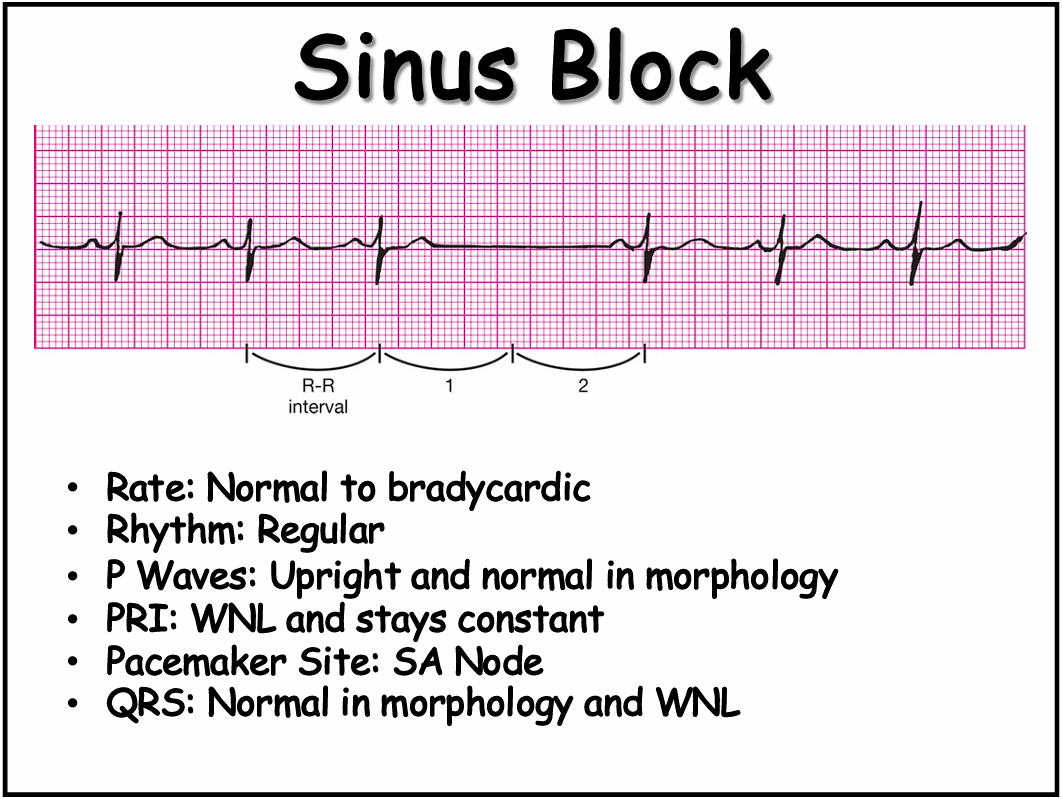

Name the rhythm
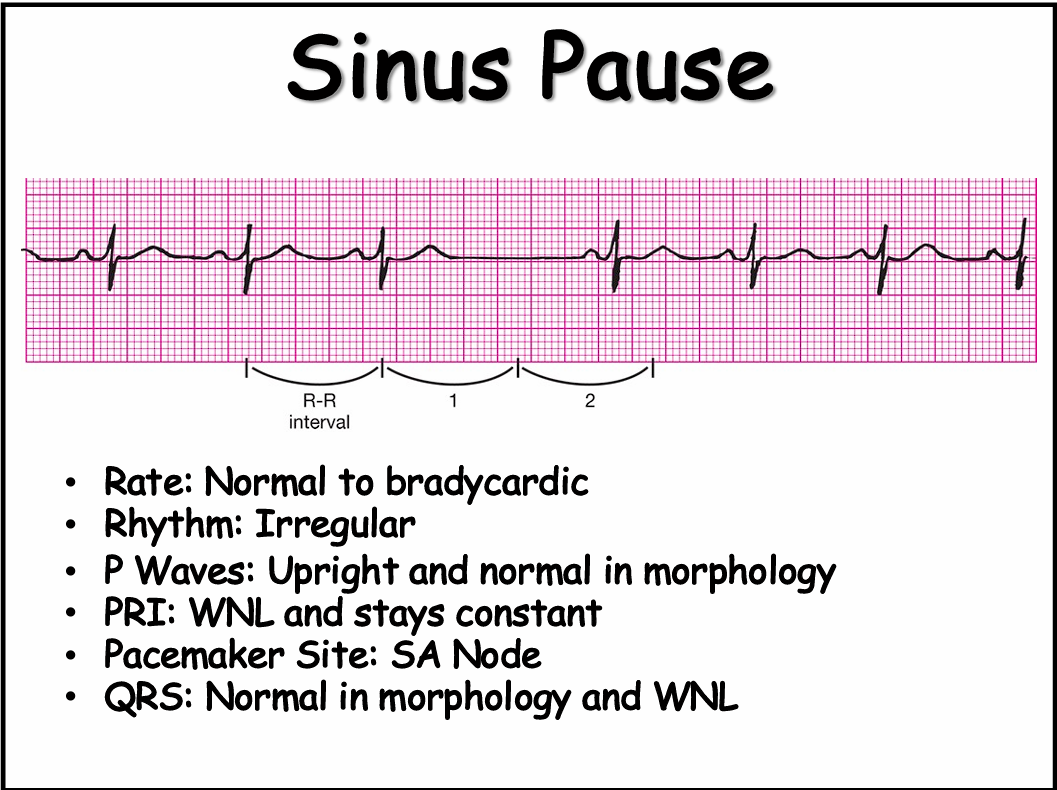

Name the rhythm
with a PVC


Name the rhythm


What leads are going to view the Septal Wall?

Which leads are going to view the Anterior Wall
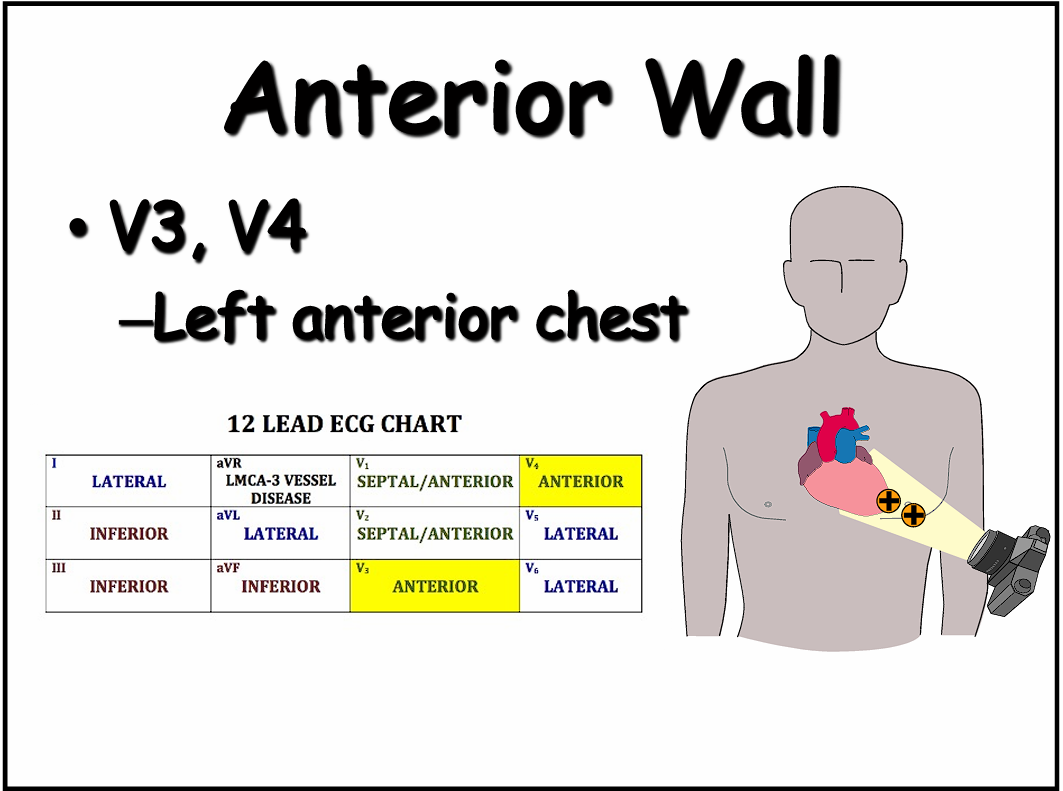
What leads are going to view the Lateral Wall?

What leads are going to view the Lateral Wall?

What leads are going to view the Lateral Wall?

Which lead are going to see the Inferior Wall?

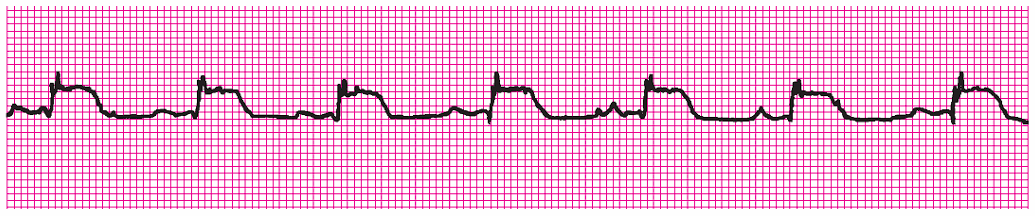
Name this rhythm


Name this rhythm


Name this rhythm


Name this rhythm

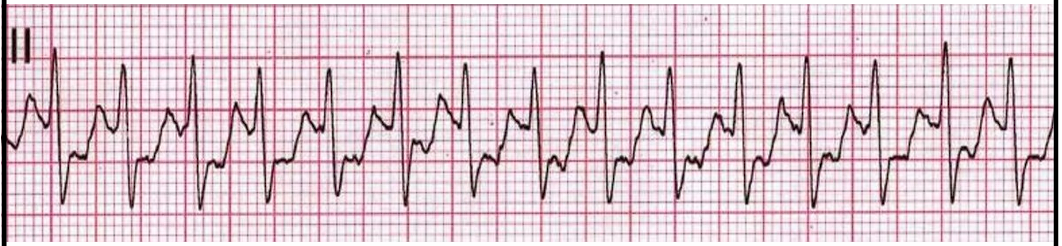
Name this rhythm

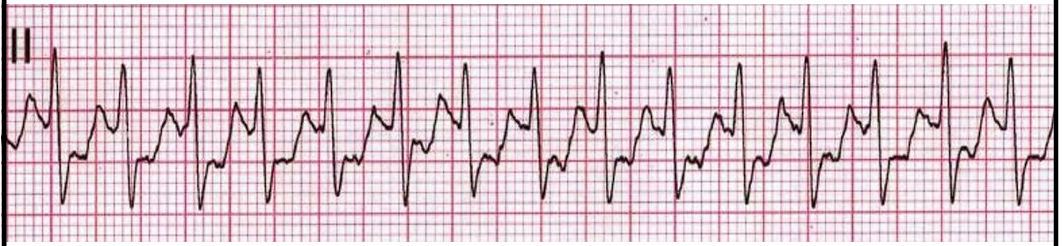
Name this rhythm
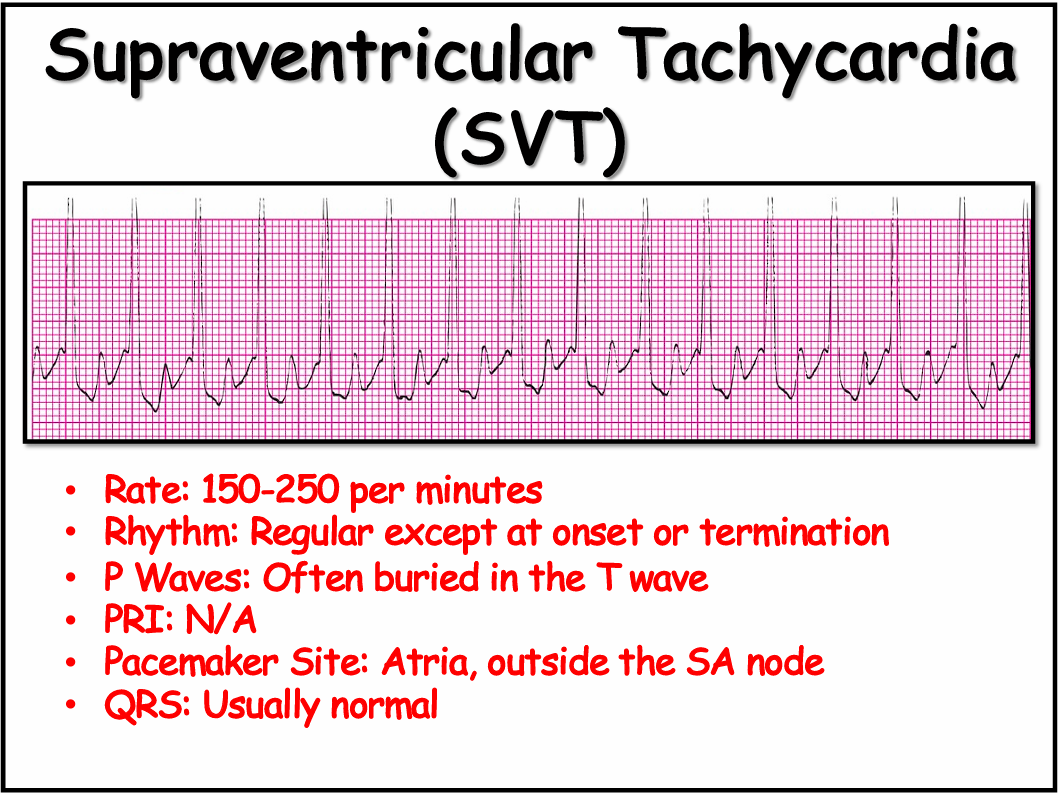

Name this rhythm



Name this rhythm


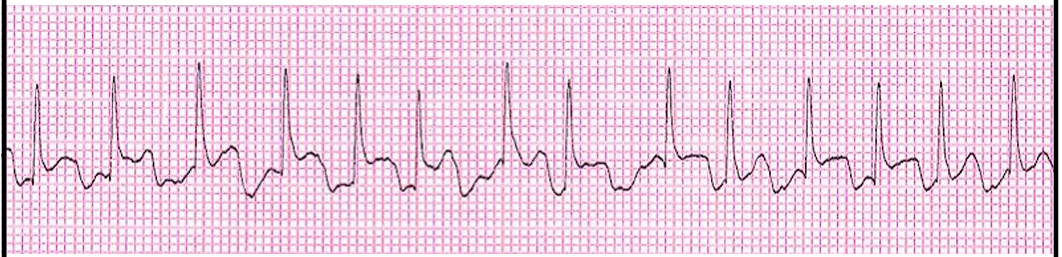


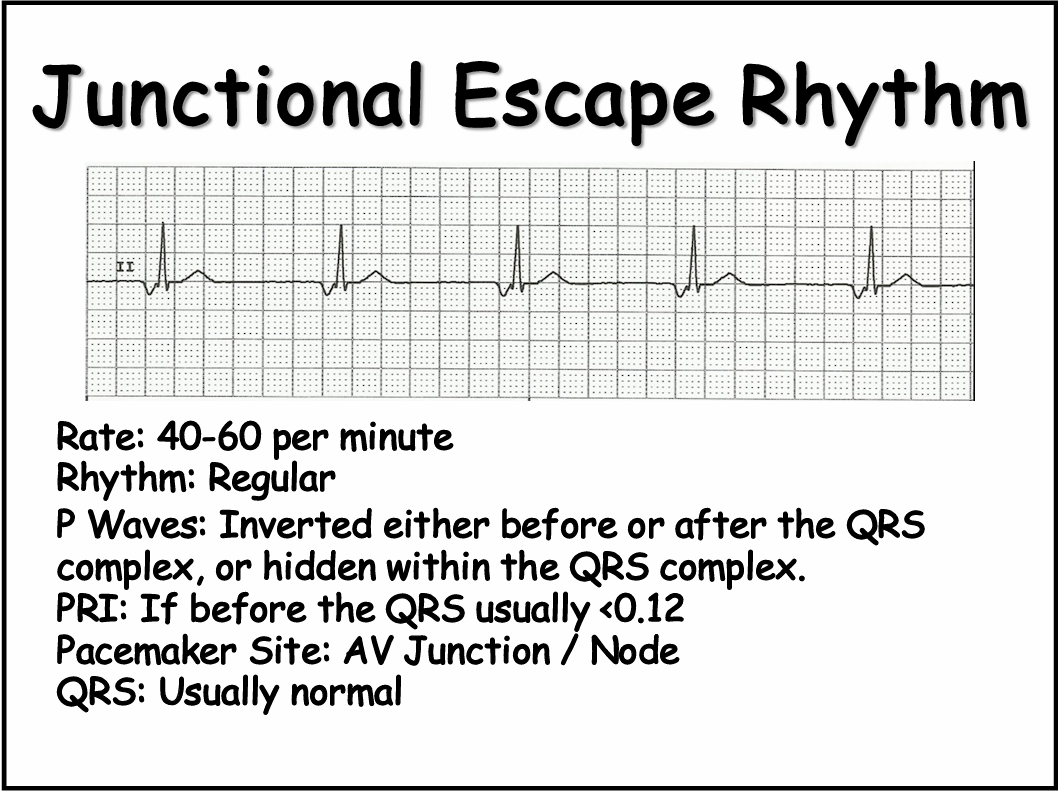


If the R is far from the P, then you have a FIRST DEGREE!
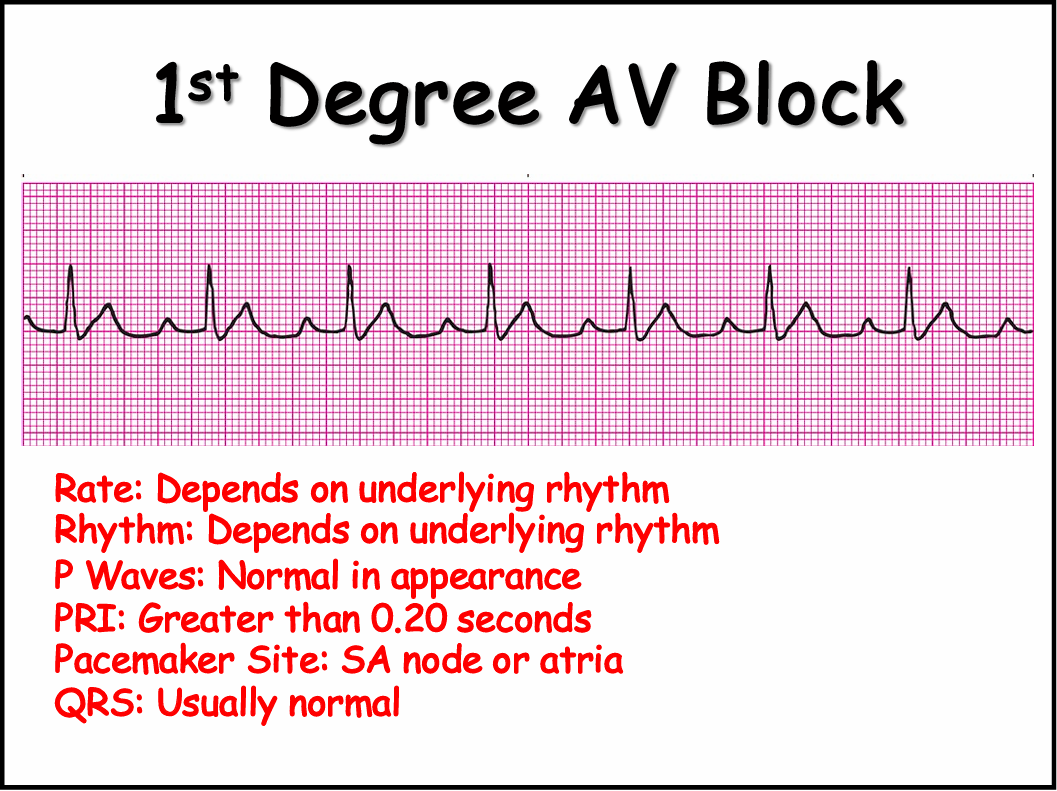
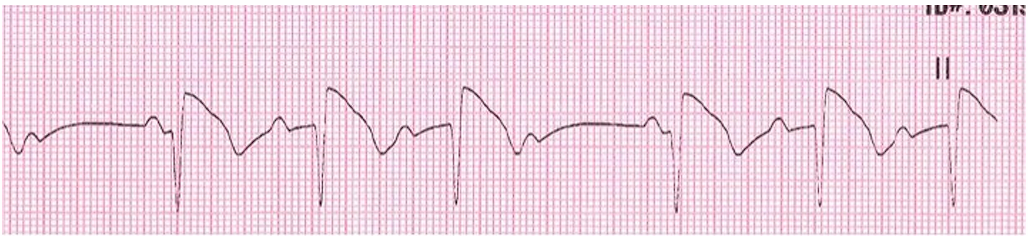
longer, longer, drop, then you have a WENCKEBACH!


If some Ps don’t get through, then you have a MOBITZ II!


If Ps and Qs don’t agree, then you have a THIRD DEGREE!


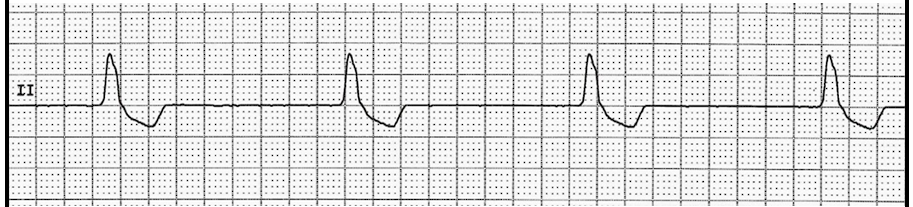





What medication is the preferred antiarrhythmic for the treatment of Torsades de Pointes (TdP)?
Magnesium Sulfate
What is the initial dose of Diltiazem for the control of Atrial Fibrillation with RVR
0.25 mg per kg max dose of 20 mg
What is the initial dose of Adenosine for the treatment of SVT?
6 mg rapid IV push with a 20 mL flush
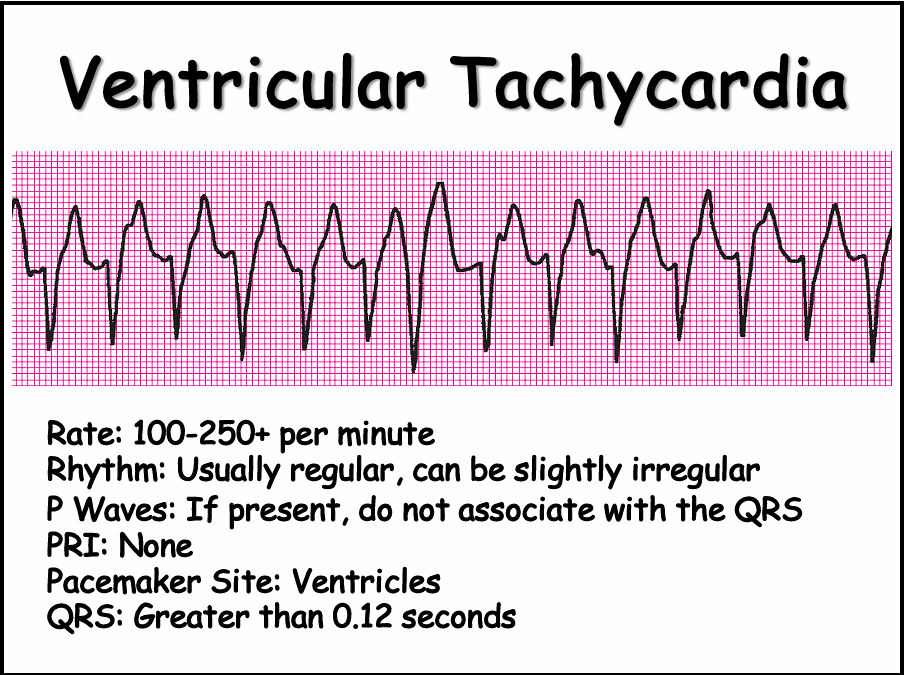
A Ventricular tachycardia rhythm would present with a ventricular rate greater than ____ beats per minute.
Greater than 100 beats per minute.