Biology - C1.2 Cell respiration
 Call Kai
 Learn
Learn Practice Test
 Spaced Repetition
 Match
Match Flashcards
 Knowt Play
1/28

There's no tags or description
Looks like no tags are added yet.
Name | Mastery | Learn | Test | Matching | Spaced | Call with Kai |
|---|
No analytics yet
Send a link to your students to track their progress
29 Terms
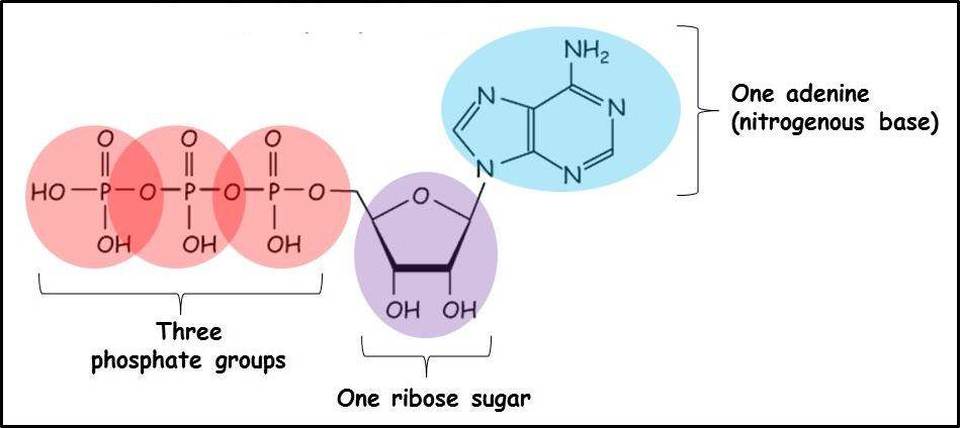
What is the structure of ATP?
ATP is a nucleotide with a nitrogenous base (Adenine), a pentose sugar (ribose) and 3 phosphate group.
Full name of ATP
Adenosine Triphosphate
What does ATP do?
ATP is the energy currency of the cell because it is used for energy storage and transport.
What are the properties of ATP fulfill this function?
It is soluble so it can move through the cell, it is stable at the pH level of cytoplasm, it can’t diffuse out of the cell so it can’t move freely through the membrane. The third phosphate group can be easily removed.
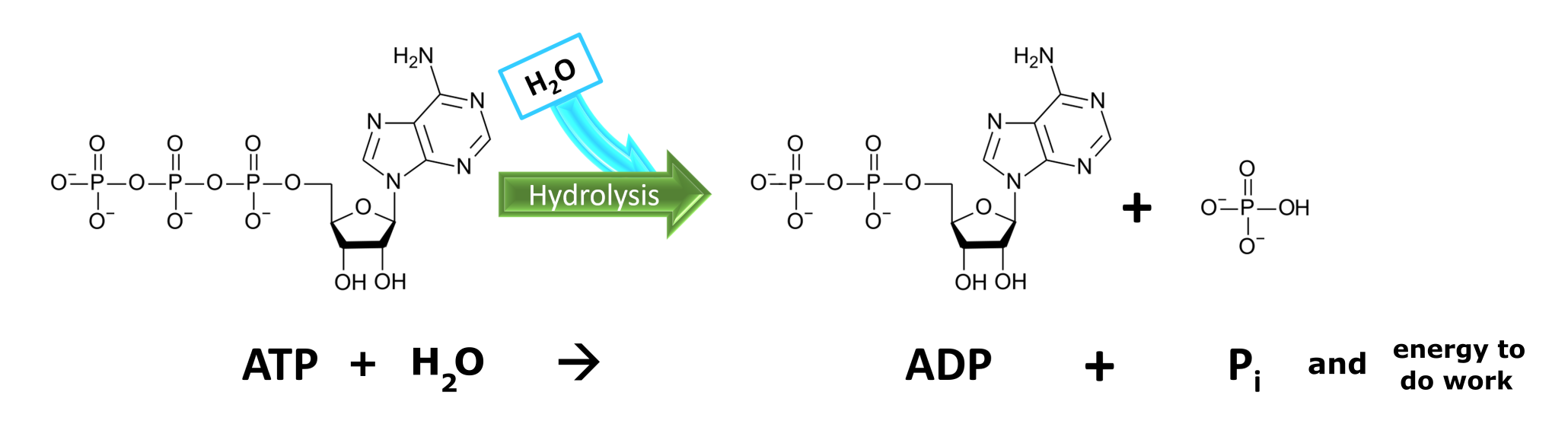
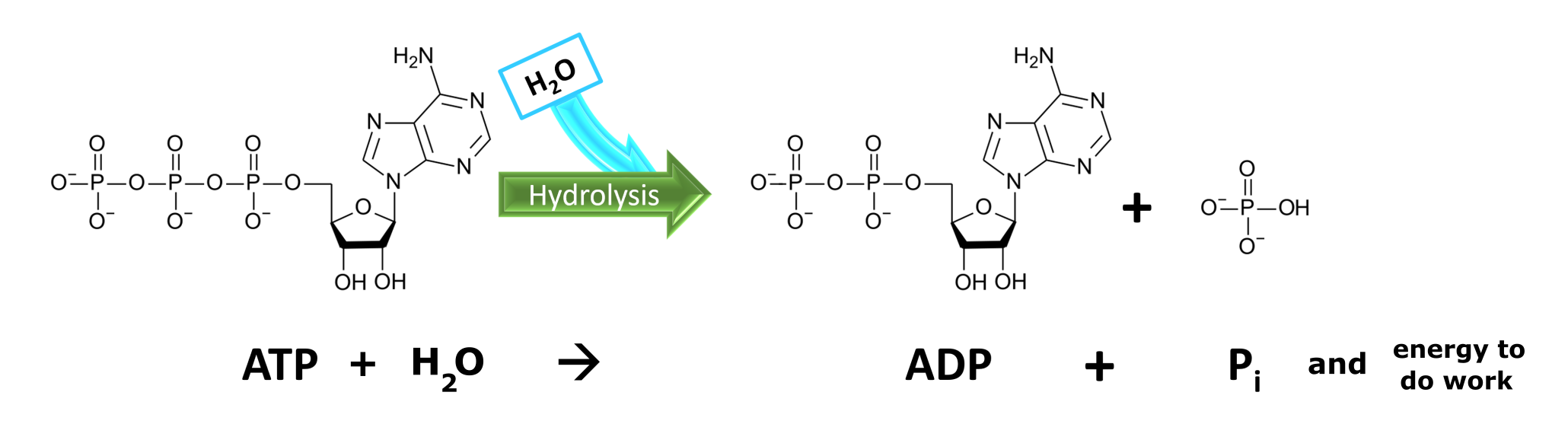
How is energy formed from ATP?
When the third phosphate is is removed by hydrolysis there is a small, sufficient amount of energy released.
Life processes within cells that require ATP for energy
Synthesising macromolecules, anabolic reactions (such as making polymers/DNA and RNA transcription/translation) require ATP
Active transport across membrane, e.g. with pump proteins
Movement inside the cell (e.g. chromosomes during mitosis or vesicles inside cell) or changing the shape of the cell (e.g. muscles contracting)
Hydrolysis and condensation reactions with ATP
A hydrolysis reaction with ATP would release 1 phosphate and some energy, making ADP.
A condensation reaction is the opposite and requires energy and releases water.
Cell respiration definition
A system for producing ATP within the cell using energy released from carbon compounds like but not limited to fatty acids and glucose.
Cell respiration vs. gas exchange
Gas exchange is when oxygen and carbon dioxide are transferred into and out of the blood in the lungs. The CO2 that leaves the body is produced with cell respiration, while the oxygen inside the blood, from the lungs, is used in cell respiration.
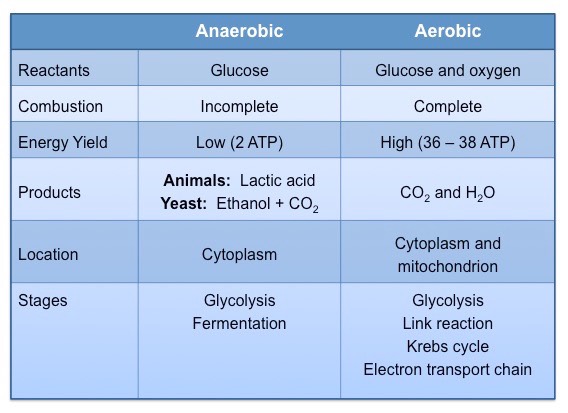
Anaerobic respiration vs Aerobic respiration
Both have the glycolysis reaction
Vary in:
Whether oxygen is used (in anaerobic it isn’t)
relative yields of ATP (in anaerobic it’s less)
End products (aerobic respiration produces CO2 and water in both plants and animals)
substrates (anaerobic uses only glucose)
where the reaction finds place (anaerobic is only in the cytoplasm)
Variables affecting rate of cell respiration
temperature and pH affect the functionality of the enzymes involved in the process
availability of substrates, glucose and oxygen
inhibitors for the enzymes in respiration
Measuring rate of cell respiration
The oxygen produced/consumed can be measured, e.g. with a manometer that measures the change in pressure
Phosphorylation
The addition of a phosphate group. E.g. the addition of a phosphate group to ADP to make ATP, in this case a condensation reaction
Decarboxylation
Removal of a carbon dioxide molecule. E.g. conversion of pyruvate into acetal CoA in aerobic respiration
Lysis
The splitting of a molecule. E.g. hydrolysis of ATP to ADP or macromolecules to monomers or glycolysis
Oxidation/Dehydrogenation
Oxidation is loss of an electron or loss of a hydrogen which is dehydrogenation
Reduction
Is the gain of electrons to a compound or addition of a hydrogen
Electron carriers
They temporarily accept and later release electrons or hydrogens
NADH/NAD+
Nicotinamide adenine dinucleotide - In cell respiration NAD is an electron carrier. NAD+ is oxidised and NADH is reduced
4 steps of aerobic cell respiration
Glycolysis, the link reaction, Kreb’s cycle and the electron transport chain
Simple word equation of aerobic respiration
Glucose (although this can be anything) + oxygen —> carbon dioxide + water + ATP
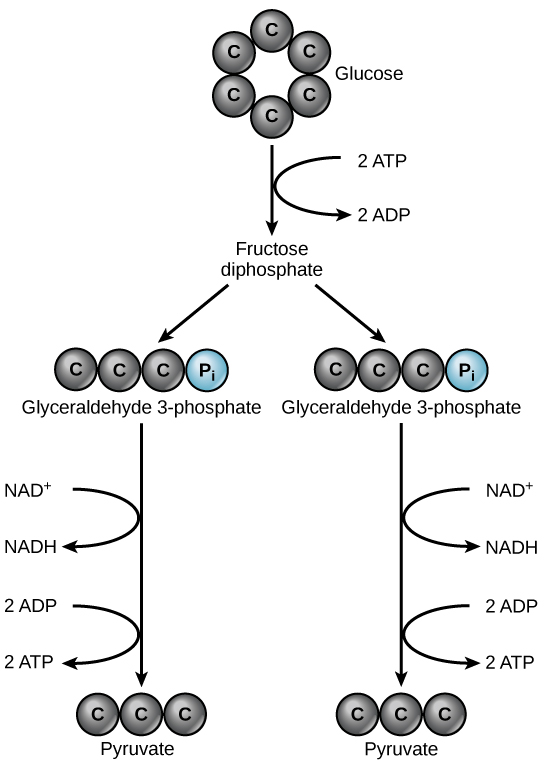
Glycolysis
Occurs in the cytoplasm
Glucose is phosphorylated into glucose biphosphate
Which is broken down (lysis) into two triose phosphate molecules
Which makes pyruvate (x2)
Total per glucose: 2 ATP and 2 NADH
The link reaction
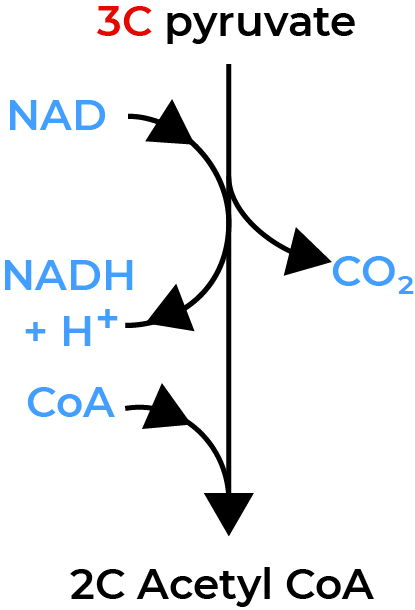
Happens twice, with two pyruvates after glycolysis, occurs in the mitochondrial matrix
Decarboxylation and redox make acetyl co-enzyme A (2C), with the co-enzyme A (CoA) recycled from the Krebs cycle
Krebs cycle
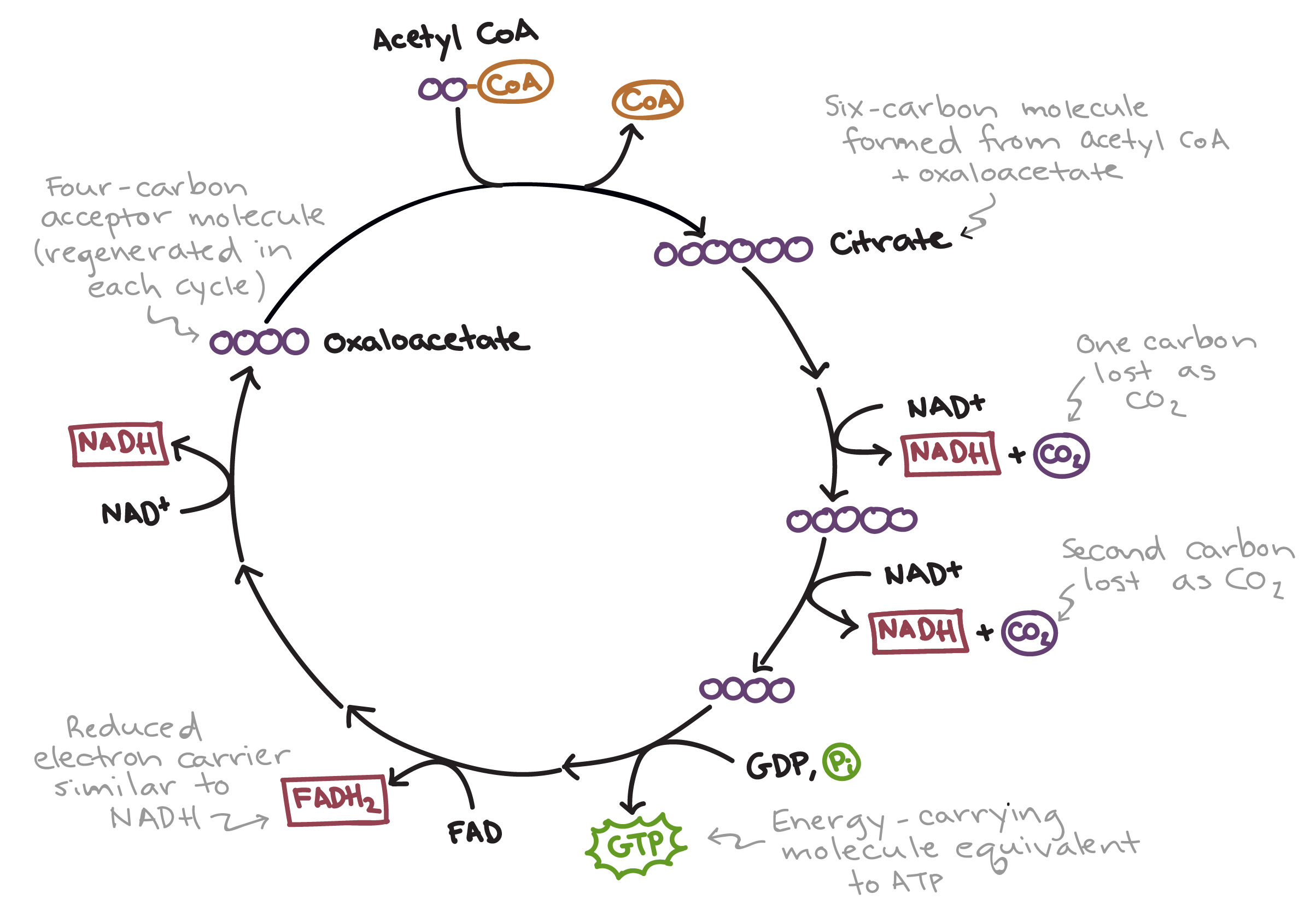
Happens twice with 2 acetyl co-enzyme A per glucose, occurs in mitochondrial matrix
Oxaloacetate (4C) joins with acetyl co-enzyme A (2C) to make citrate (6 carbon molecule)
Citrate decarboxylises to a 5 carbon molecules
The 5 carbon molecule carboxylises and yields many reduced NADH and FADH2 to oxaloacetate (4C)
Repeat cycle
Total yield for Krebs cycle and link reaction
Per pyruvate (so x2 for per glucose)
1 ATP, 4 NADH, 1 FADH
and 3 carbon dioxide products
The electron chain
The electron carriers (NAD and FAD) are brought to the inner mitochondrial membrane and release their hydrogen ions and electrons by oxidation.
Electron carriers inside the membrane take the electrons and pump hydrogen ions into the intermembrane space to create a concentration gradient.
The protons (hydrogen ions) flow down their concentration gradient through an enzyme called ATP synthase. The enzyme makes ATP through a process called chemiosmosis.
Lipids in respiration
Lipids contain less oxygen than carbs and can produce more energy
Lipids have an energy yield per gram of 37 KJ whilst carbs have 17 KJ
Lipids don’t undergo glycolysis, so can not be used for anaerobic respiration
Anaerobic respiration
Cell respiration without oxygen, with only glycolysis as the end product pyruvate can be converted into lactate to regenerate NAD+
There is only a net yield of 2 ATP
Make lactate from pyruvate through a process called lactic fermentation.
Anaerobic respiration in yeast and plants
In plants/yeast, the pyruvate breaks down into ethanol and carbon dioxide which is known as ethanol fermentation.
In brewing, yeast is used to make ethanol and the other product carbon dioxide simply bubbles up through the liquid and is lost.
In baking, yeast is used so that the carbon dioxide bubbles make the dough rise. The ethanol is a waste product as it evaporates in the baking that follows.