OHD1: Electronic tonometers week 7
 Call Kai
 Learn
Learn Practice Test
 Spaced Repetition
 Match
Match Flashcards
 Knowt Play
1/23

There's no tags or description
Looks like no tags are added yet.
Name | Mastery | Learn | Test | Matching | Spaced | Call with Kai |
|---|
No analytics yet
Send a link to your students to track their progress
24 Terms
schiotz
a digital scale readout
subject to the same errors

mackay - marg
hand held
1.5mm diameter probe in tonometer head
movements create electrical current
know how much force required to applanate 1.5mm²
analyse current to measure applanation
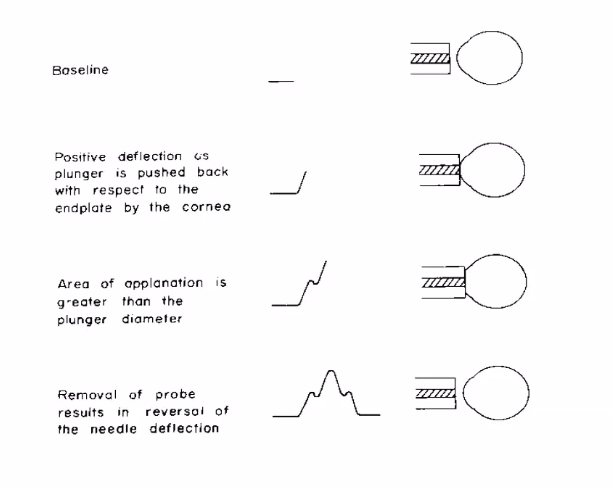
how does mackray marg work?
middle of baseplate that sticks out
when taking pressure, touches the central cornea
plunger pushes in and movement is sensed by magnets which creates an electrical impulse
by the time the cornea has hit the rest of the plate it stops moving
at that point it has 1.5 mm applanation
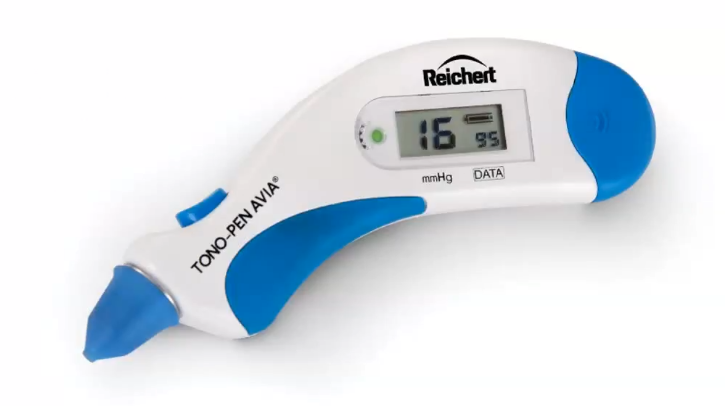
tonopen
hand held mackray-marg
battery operated
read IOP directly - digital display
record time taken
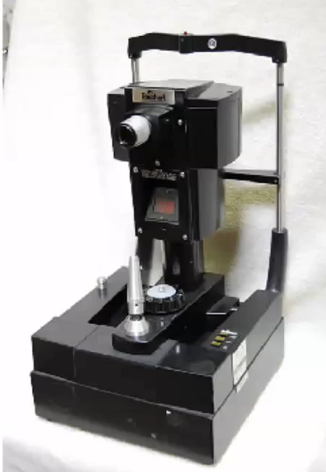
grolmann (NCT)
uses air to applanate the cornea
constant area applanation
no need for anaesthetic
little risk of corneal damage
principles of grolmann
3 components:
alignment system
pneumatic system
applanation detector
alignment system of NCT
ensures ocrrect positioning
image forms when object is at the centre of the curvature of surface
approx 11mm from the eye
cant operate unless aligned
fires when right distance away
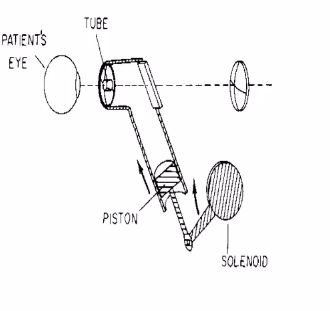
pneumatic system
this creates the puff of air
narrow collimated pulse9 air going in same direction)
pressure increases linearly gradually
peaks at 12ms
indents/ flattens cornea
applanation reached before indentation
applanation detector
need to know at what point the cornea flattens
collimated IR beam and has IR detector
uses reflection: cornea reflects IR light bounces of the flat cornea and is detected by the detector
time measured to applanation is proportional to IOP
measure puff of air at applanation
procedure of NCT
demonstrate and explain
align pateint then instrument
take number of readings recommended by manufacturers guidance: usually 4
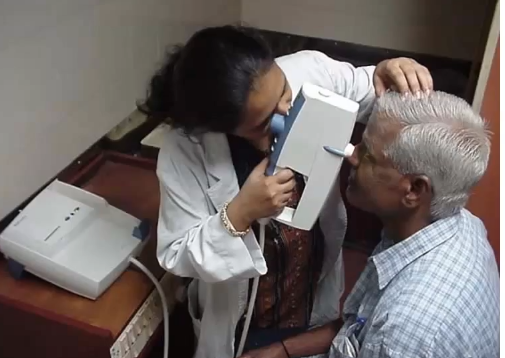
pulsair nct
hand held nct
automatic activation
measures system pressure at applanation
softer pulse under 25mmHg
take 4 readings
readings of the pulsair
the machine will indicate when 2 readings within 1mmHg of eachother have been achieved
do 4 readings
displays average so press R to get the individual readings
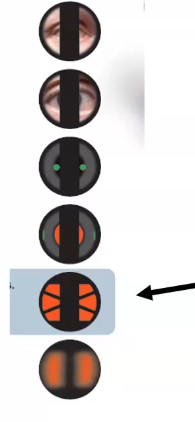
what to look for in pulsair
when bowtie is seen hold it there and it should fire
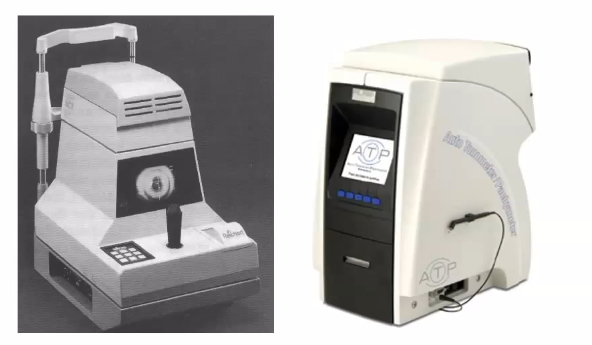
reichert xpert (NCT)
Manual or automatic modes
measures system pressure
pulse cut off at applanation
TV monitor
results printed
errors with nct
ocular pulse: pressure fluctuates every sections
distorted corneal surface -applanation and allignment requires cornea to be shiny for the reflection
eye movement
lids/lashes
high IOP- reliability decreases
advantages of nct
speed and ease of use
repeated readings are possible
non contact with the cornea
clinically accurate
disadvantages of nct
patients dislike
expensive
not good on scarred cornea
can produce spurious readings
complicated to calibrate
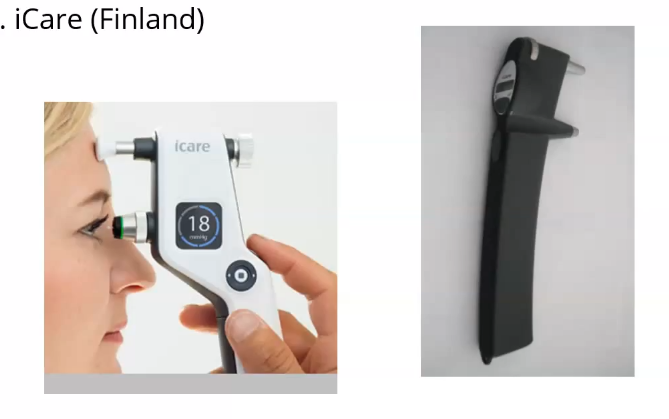
rebound tonometry
gently touching the cornea with a probe
induction coil propels a magnetised steel wire (with a plastic tip) towards the cornea
probe hits cornea and rebounds
returning movement induces current in coil
bouncier cornea= higher iop
6 measurements
advantages of rebound tonometry
patients prefer over NCT
no drugs required
self assessment versions available
less affected by corneal thickness
disadvantages
probes are needed which are costly
less reliable at high IOPs
affected by corneal rigidity : elasticity of cornea, how bouncy it is
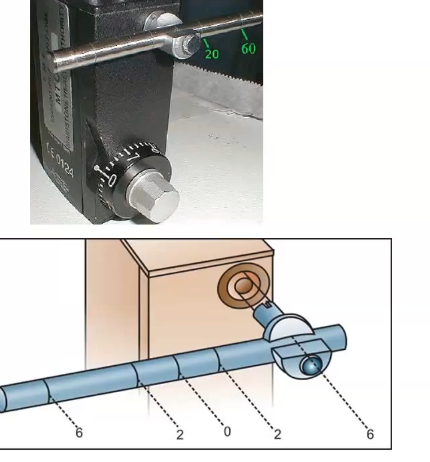
calibrating goldman tonometer
calibration bar - a weight at side
marked at 0.2 and 6mgs : 20 mmHg and 60mmHg
if set at 6: hae 6g of weight pushing against tonometer bar
if dialled up to 6 aswell it equalises so probe will be in the middle
can compensate
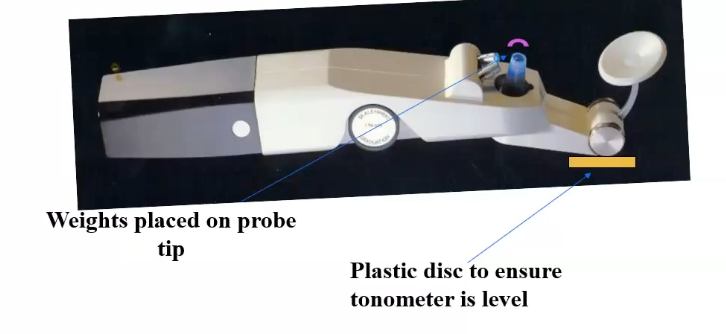
calibrating perkins
lie on plastic disc
puts weight on cone- 3g and 5g
20mmHg 50mmHg
can compensate f calibration out
must be linear : if its out my 1mmHg at 2, and out by 1mmHg at 6
perkin calibration
add the 2g and twist the wheel until it balances
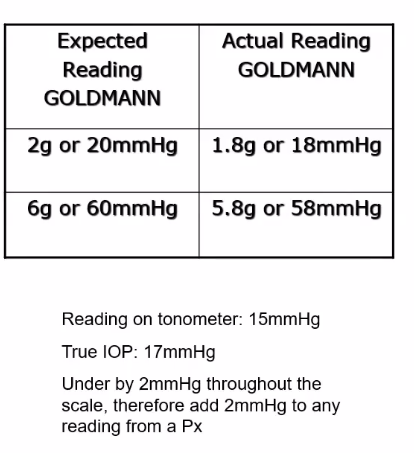
compensating measurements of goldmann
if use 2g and rocks forward by 1.8g then it reads under by 2mmHg
so need to add 2mmHg to the result