Unit 8: Theories of Personality
 Call Kai
 Learn
Learn Practice Test
 Spaced Repetition
 Match
Match Flashcards
 Knowt Play
1/85

There's no tags or description
Looks like no tags are added yet.
Name | Mastery | Learn | Test | Matching | Spaced | Call with Kai |
|---|
No analytics yet
Send a link to your students to track their progress
86 Terms
Sigmund Freud
Founder of psychoanalysis
Developed theories of the unconscious mind and psychosexual development
Psychoanalytic Theory
Perspective of psychology that claims behavior is due to unconscious motives and conflicts
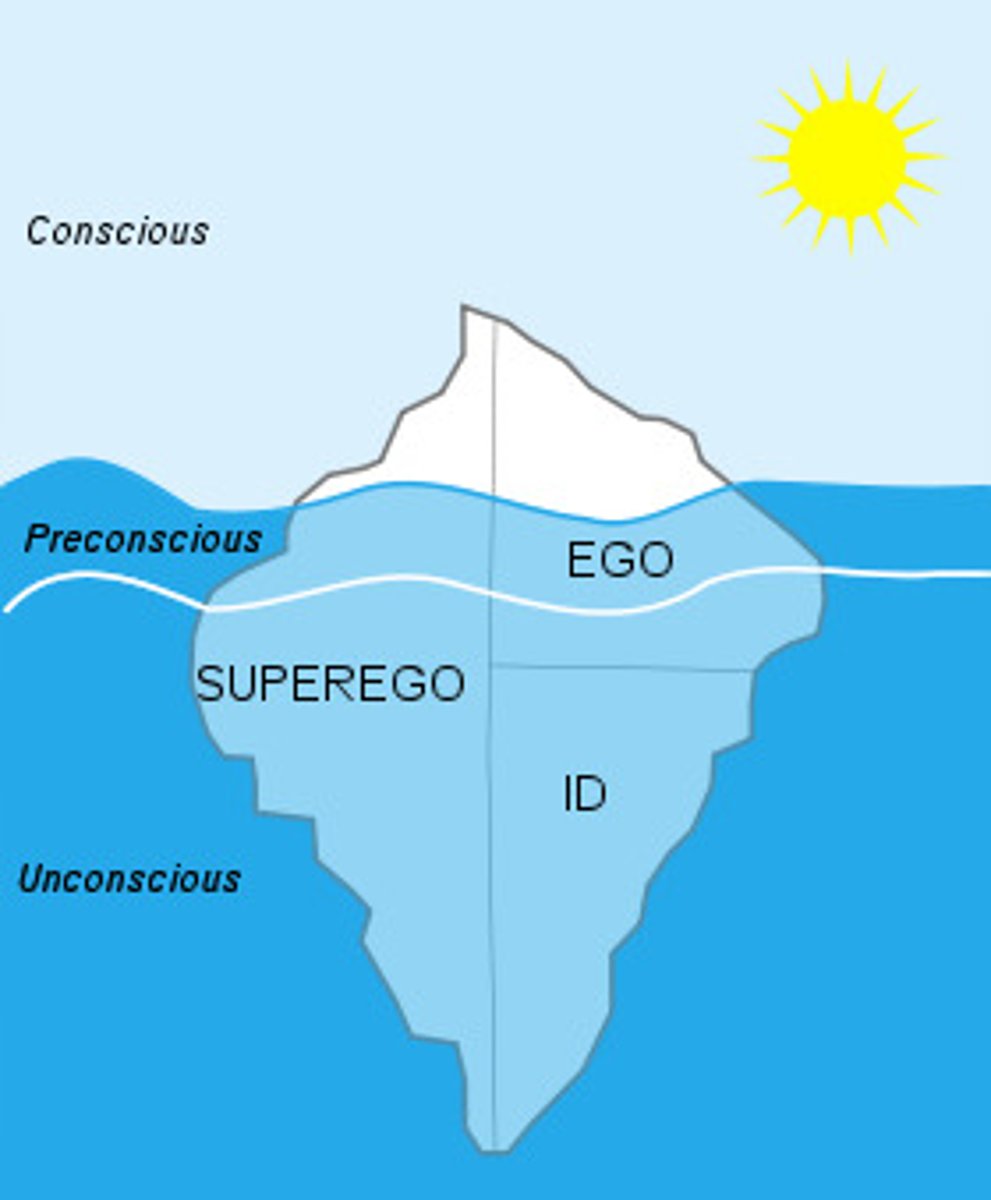
Unconscious Mind
Freud's proposed mechanism for where we contain our repressed memories, thoughts, and basic desires and urges
Id
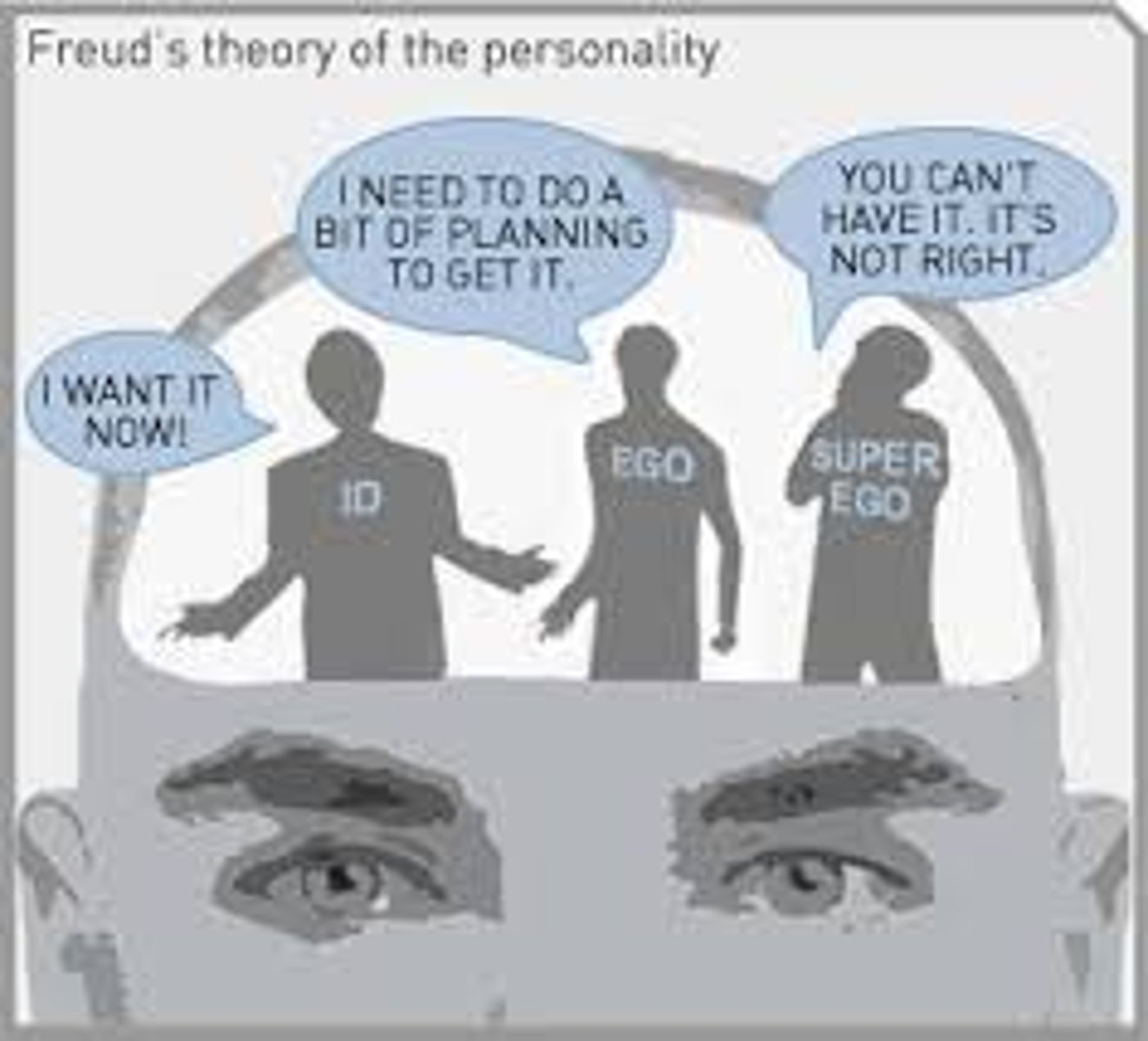
our unconscious primary energy we have from birth ruled by the "Pleasure Principle" and has no values, morality, or logic

Ego
The structure of our personality
that we develop ruled by the "Reality Principle" and balances the id and superego by being organized, rational, and postponing gratification
SuperEgo
The component of our personality we develop ruled by the "Morality Principle" and is the opposite of the Id because it is the internal, parental voice with rules and values
Free Association
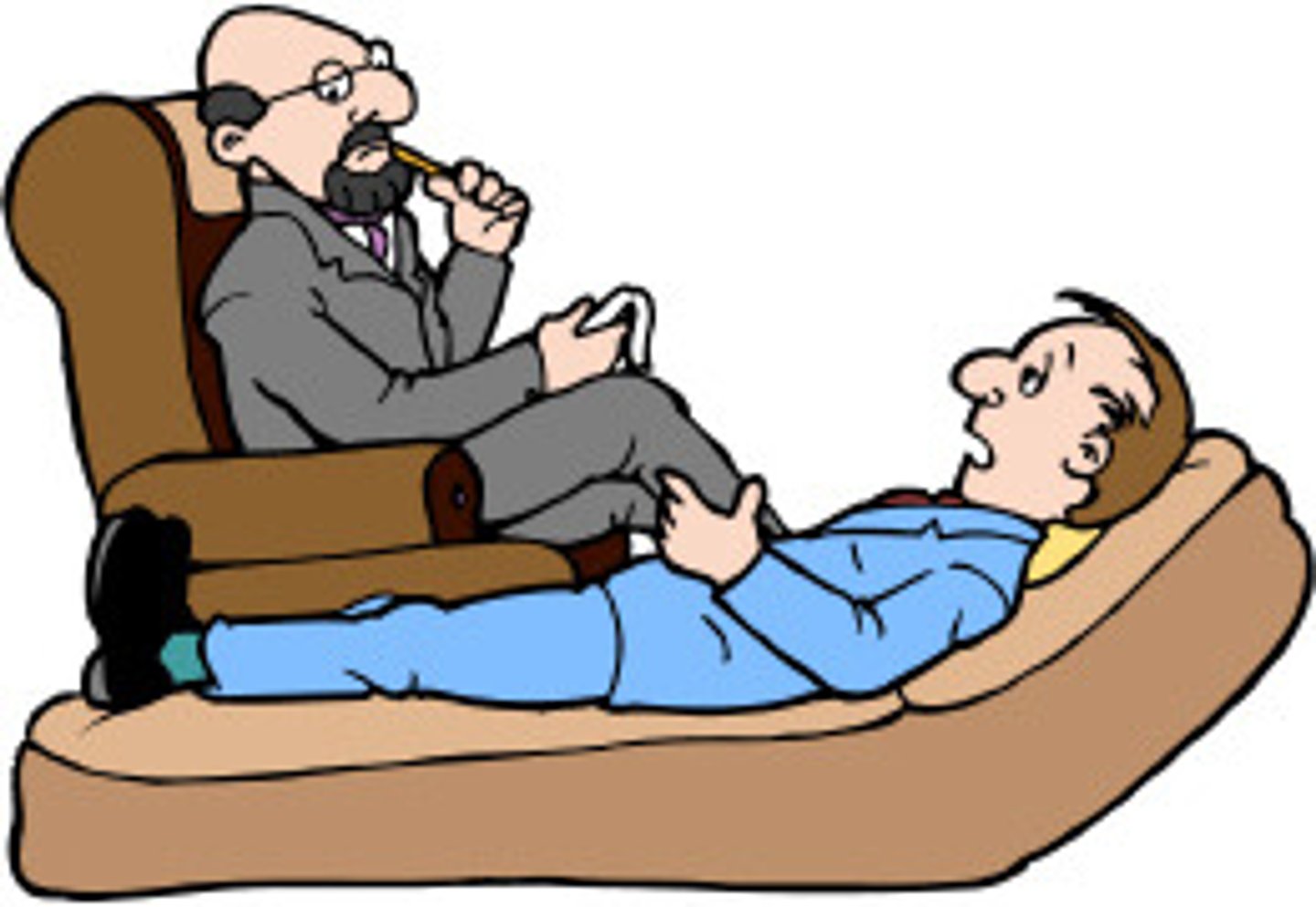
A technique used to access the unconscious where patient freely exposes his/her ideas, impressions, etc.
Freudian Slips
Slips of the tongue that expose the unconscious mind
Psychosexual Development
- sequential and discontinuous stages with changing erogenous zone and conflict in each stage (Oral, Anal, Phallic, Latency, Genital)
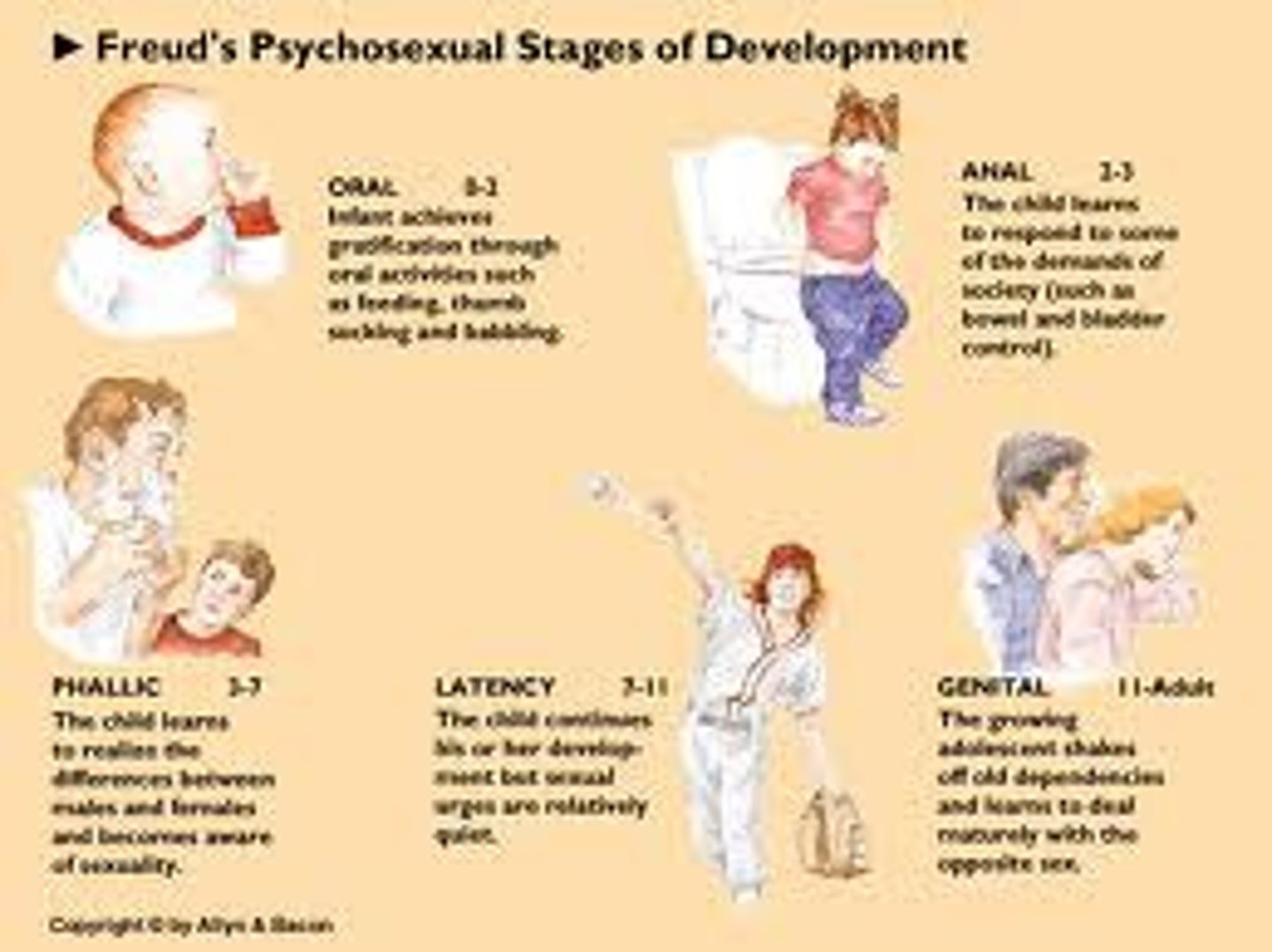
Oral stage
Freud's first stage of psychosexual development during which pleasure is centered in the mouth
Anal stage
the psychosexual stage corresponding roughly to the period of toilet training
Latency stage
Psychosexual stage in which sexual impulses are submerged into the unconscious
Phallic stage
Third stage occurring from about 3 to 6 years of age in which the child discovers sexual feelings
Genital stage
during and after puberty, sexual feelings reawaken with appropriate targets, fixations from previous stages take shape
Penis Envy
Freudian theory that females are resentful from the lack of physical anatomy and suffer from moral inequality as a result
Electra Complex
The unconscious desire of girls to rival their mother and win their father's romantic love.
Oedipus Complex
a boy's sexual desires toward his mother and feelings of jealousy and hatred for the rival father
Defense mechanisms
the ego's protective methods of reducing anxiety by unconsciously distorting reality
Neo-Freudians
followers of Freud who developed their own competing theories of psychoanalysis with reduced emphasis on psychosexual theories
Collective unconscious
A warehouse of "instinctive memories" passed down to each generation and all humans share
and is made up of archetypes
Archetypes
Defined: Inherited universal concepts that create the Collective Unconscious

Womb envy
Men are envious of a women's ability to have children and therefore, they compensate with other forms of achievement.
Inferiority Complex
people who compensate for feelings of inferiority by acting ways that make them appear superior.
Rorschach Inkblot Test
seeks to identify people's inner feelings and conflicts by analyzing their interpretations of 10 ambiguous black and white inkblots
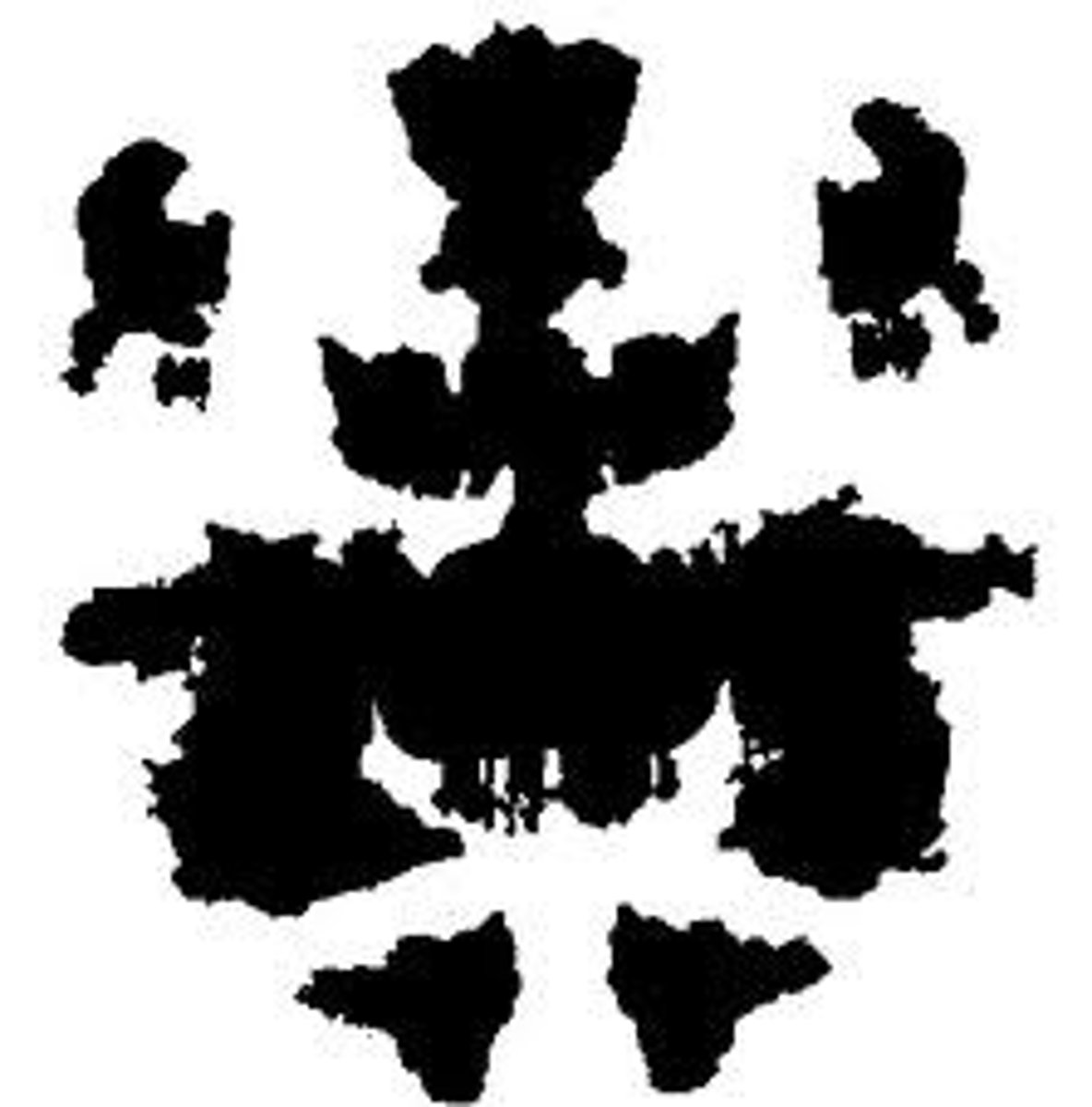
Projective Tests
Description: Provide ambiguous stimuli in order to trigger the projection of one's inner dynamics
Thematic Apperception Test
projective test that uses 20 pictures of people in ambiguous situations as the visual stimuli
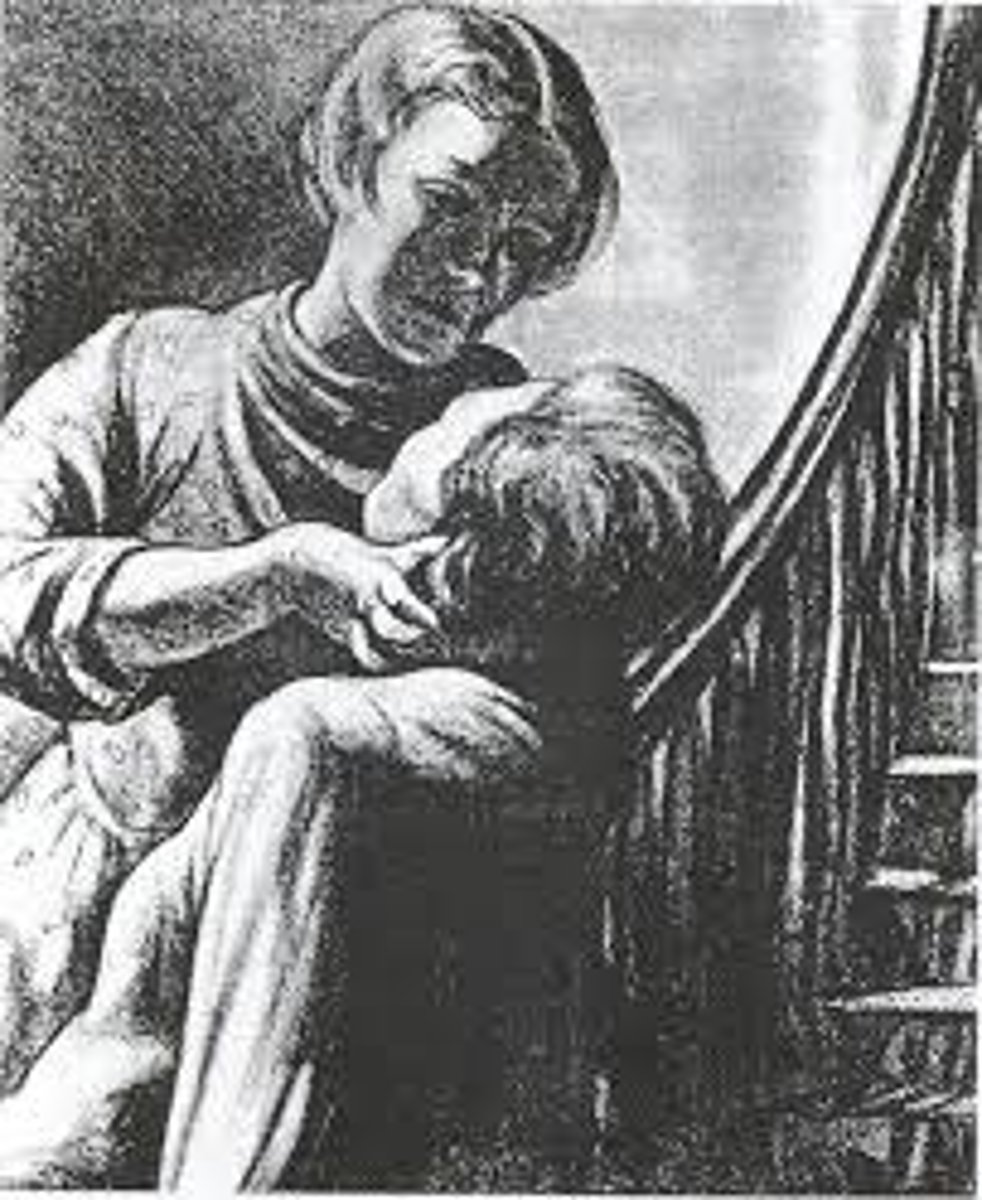
Humanistic Theory
Description: People develop their personality by trying to reach their full potential and may be hindered by a lack of filling their needs
Self-Concept
all our thoughts and feelings about ourselves, in answer to the question, "Who am I?"
Incongruence
When a person's Real Self and Ideal self do not match, causing anxiety.
Unconditional positive regard
according to Rogers, an attitude of total acceptance toward another person
Empathy
Identification with and understanding of another's situation, feelings, and motives-important to receive from others according to Rogers to form positive self-concept
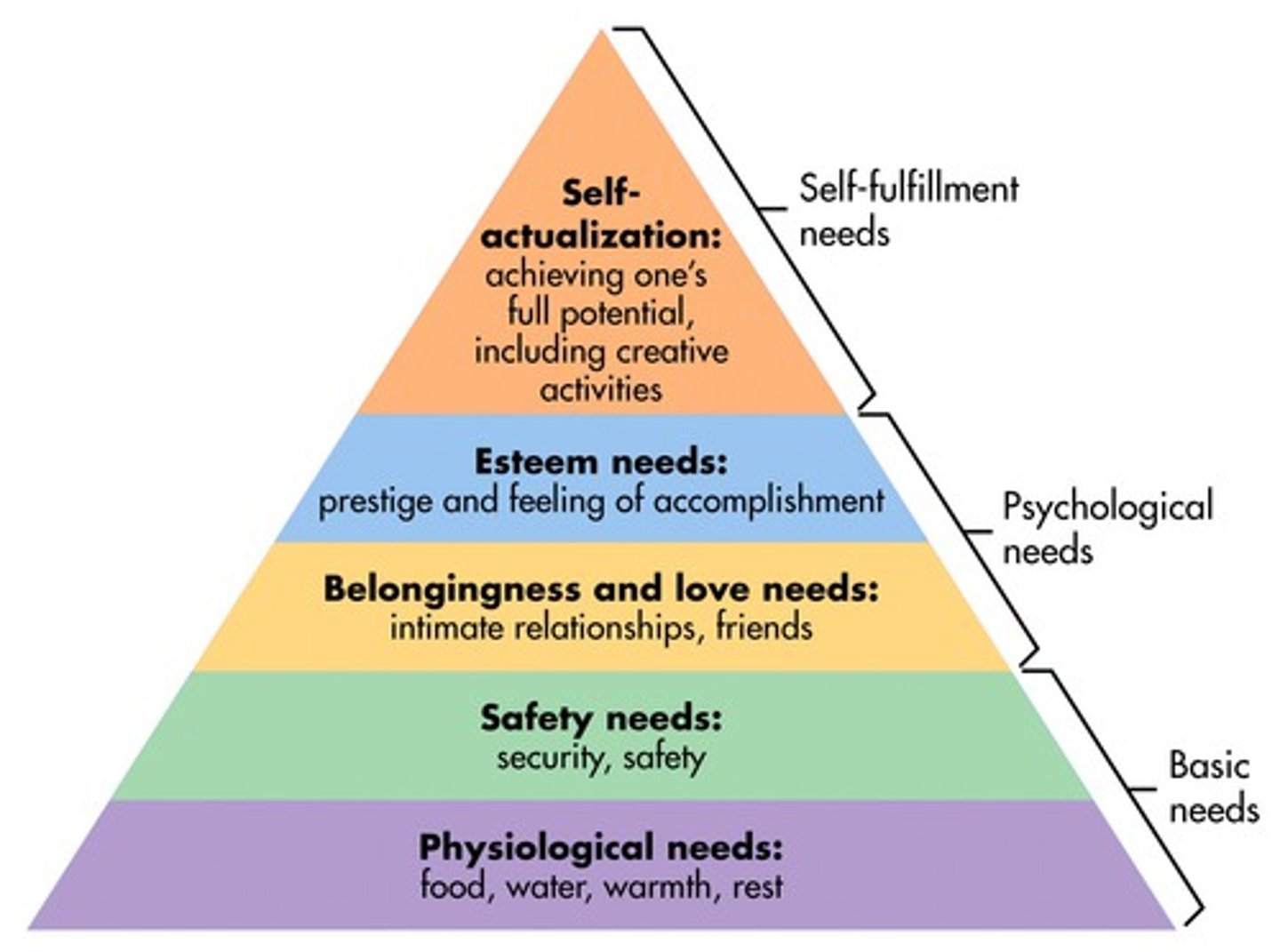
Hierarchy of Needs
Maslow's ranked list of those needs essential to human growth and development
Trait Theories
an approach to the study of human personality that assumes personality traits are biologically motivated (nature)
Factor analysis
A statistical technique for sorting test items or behaviors into conceptually similar groupings, used in personality inventories to help identify common traits
MMPI
widely used structured personality test designed to assess symptoms of mental disorders
Big Five Factor Personality Test
Defines personality in 5 Traits (Openness, Conscientiousness, Extraversion, Agreeableness, Neuroticism)
Openess
characteristics such as imagination and insight, and those high in this trait also tend to have a broad range of interests
Conscientiousness
include high levels of thoughtfulness, with good impulse control and goal-directed behaviors.
Extraversion
characterized by excitability, sociability, talkativeness, assertiveness and high amounts of emotional expressiveness
Agreeableness
includes attributes such as trust, altruism, kindness, affection and other pro-social behaviors.
Neuroticism
characterized by anxiety and emotional instability
Social Cognitive Approach to Personality
Theory of Albert Bandura that proposes the personality is influenced by the factors of the environment, our cognitive interpretation of events, and the behaviors that we display as a result
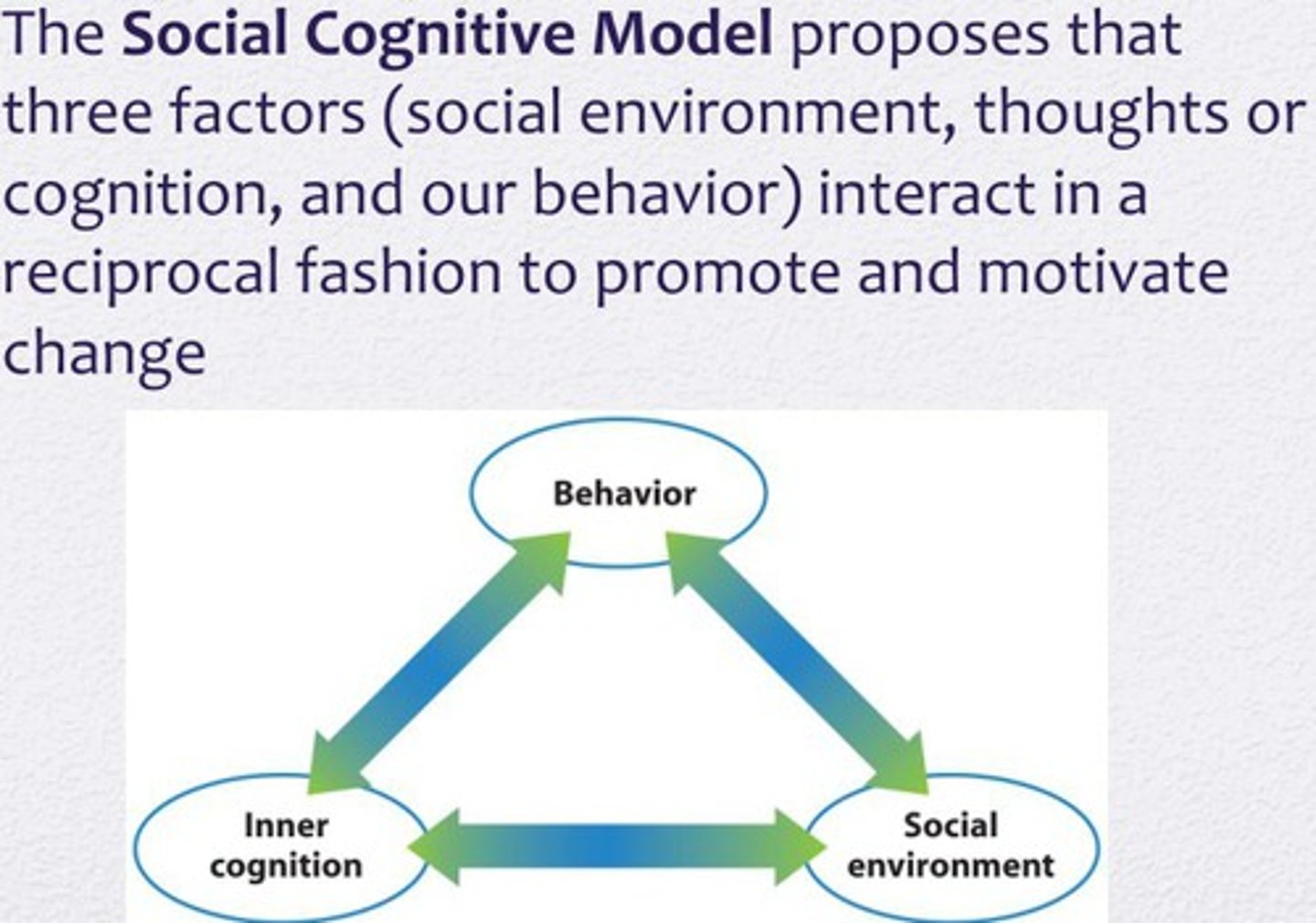
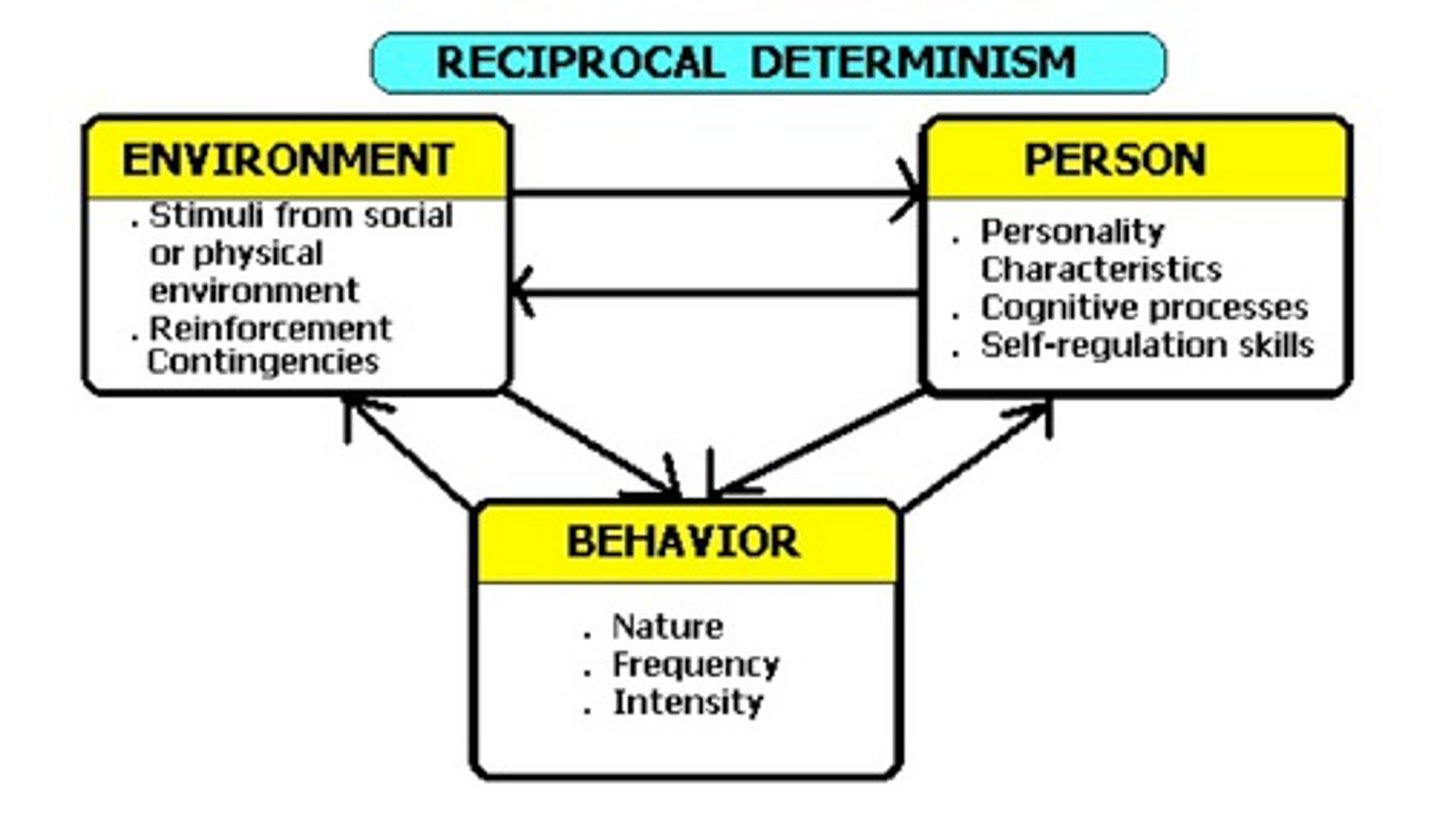
Reciprocal determinism
The process in which cognitions, behavior, and the environment mutually influence each other.
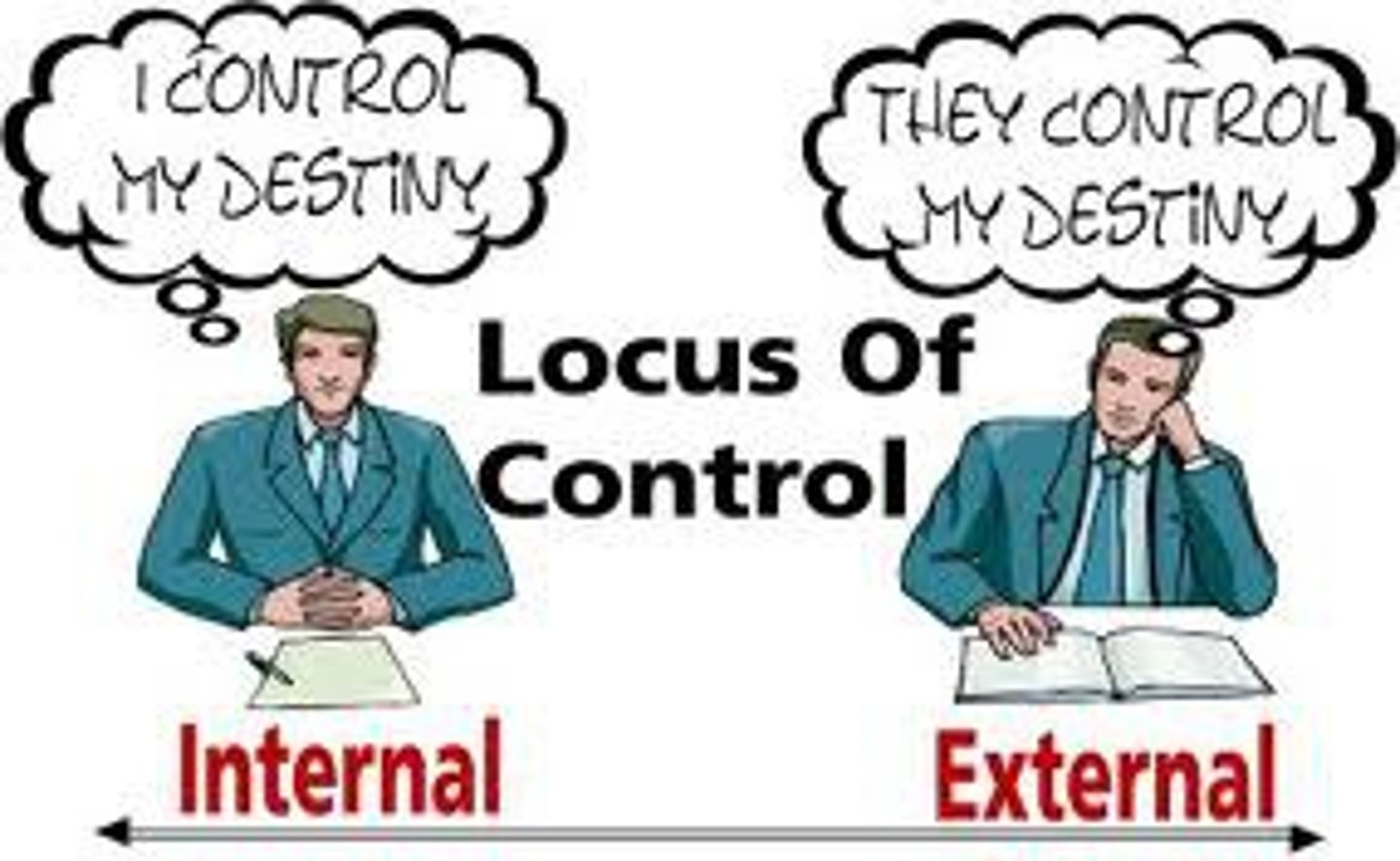
External Locus of Control
The perception that chance or outside forces beyond your personal control determine your fate
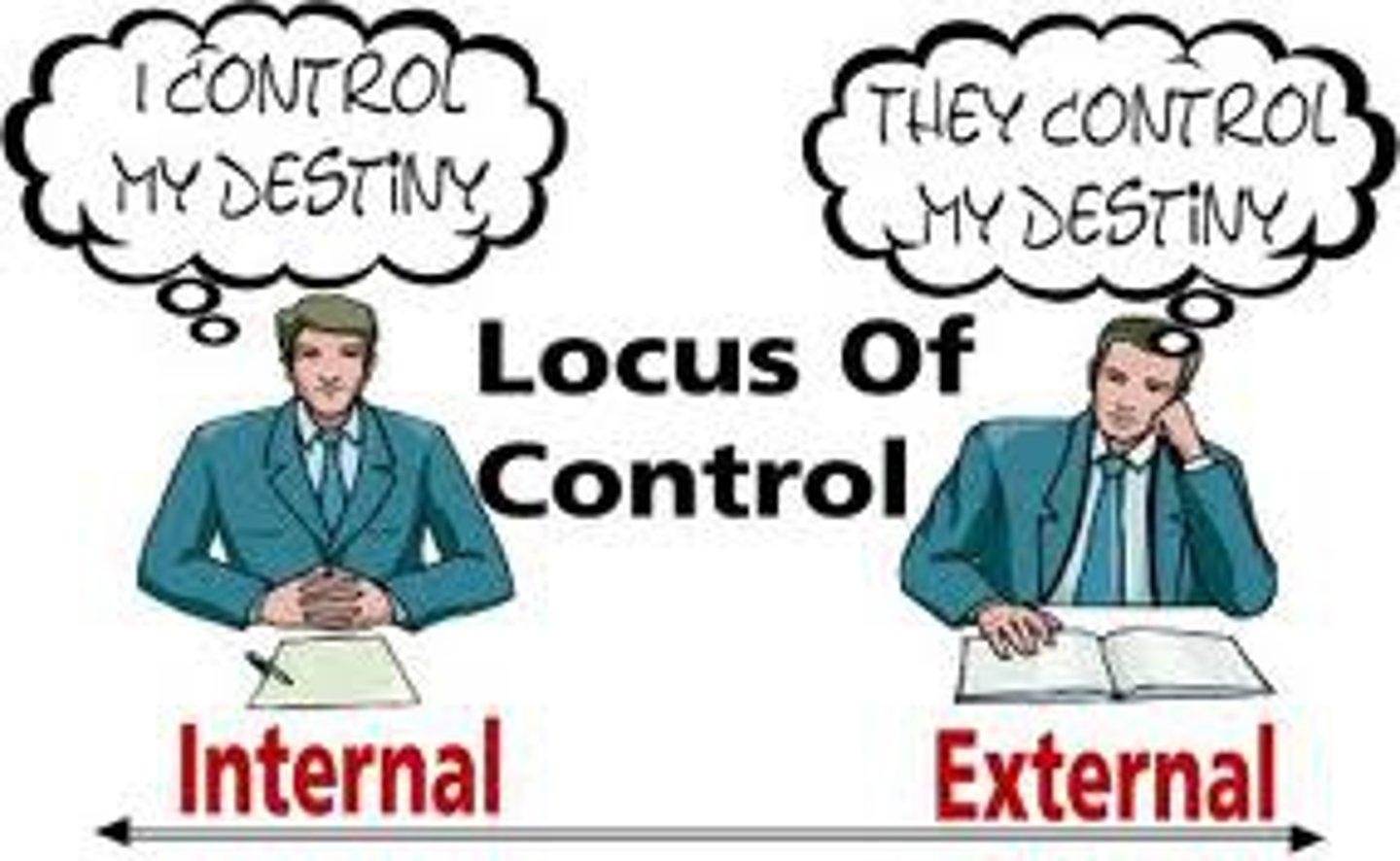
Internal Locus of Control
The perception that you control your own fate
Self- efficacy
the belief in your own ability to deal with different situations and accomplish specific goals
Attributional style
cognitive process in which someone explains why something happens (how they attribute an event or circumstance)
Optimistic
Tendency to take a favorable view of events or conditions and to expect the most favorable outcome as an attributional style
Pessimistic
a tendency to stress the negative or unfavorable as an attributional style
Martin Seligman
Psychologist who performed studies with dogs demonstrating the effects of learned helplessness
locus of control
a personality attribute that measures the degree to which people believe they control their own fate
learned helplessness
pattern of responding to situations by giving up because of repeated failure in the past
Ideal self
In Roger's theory of personality, the self a person would ideally like to be (also called the possible self)
Real self
one's perception of our actual characteristics, traits, and abilities in Roger's theory of personality
Abraham Maslow
Main humanist who proposed the Hierarchy of Needs as a theory to explain human personality
Carl Rogers
Humanist who studied the concept of the self and proposed three forces-Genuineness, Unconditional Positive Regard, and Empathy-as crucial for healthy personality development
Genuineness
Being open with one's feelings and emotions
Self-actualization
Highest level of Maslow's Heirarchy where one attains morality, problem-solving skills, creativity, lack of prejudice, and other aspects of personality
possible self
a collection of thoughts, beliefs, feelings, and images concerning the person one could become
spotlight effect
overestimating others' noticing and evaluating our appearance, performance, and blunders
self esteem
one's feelings of high or low self-worth
Myers Briggs Test
Personality Inventory that assesses 4 dimensions of traits: extraversion (E) vs. introversion (I), sensing (S) vs. intuition (N), thinking (T) vs. feeling (F), judgment (J) vs. perception (P)
Gordon Allport
psychologist credited with founding the trait perspective in personality theory
Paul Costa and Robert McCrae
proposed that personality can be described using the big five personality traits (OCEAN)
Raymond Cattell
Creator of the 16PF test
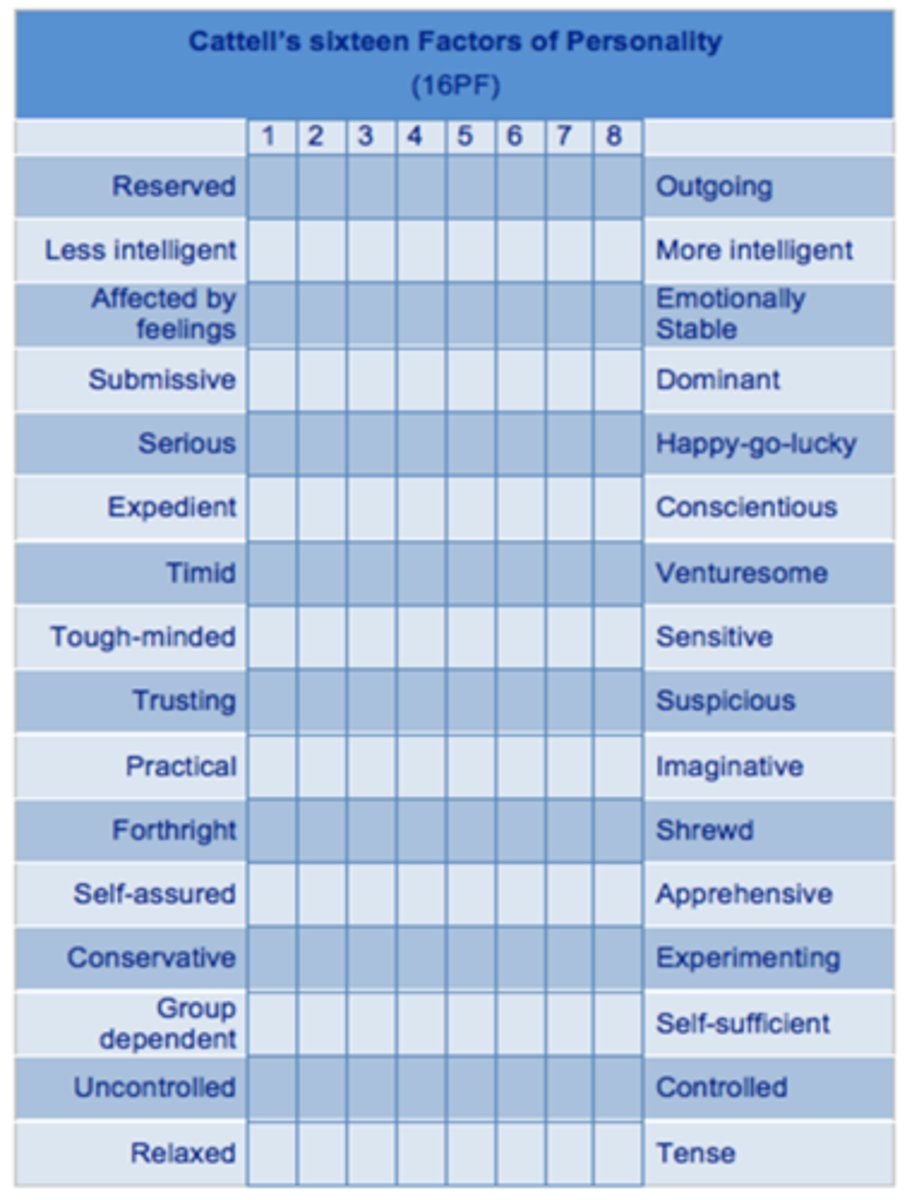
16 Personality Factor Test (16PF)
Inventory that describes 16 personality trait dimensions
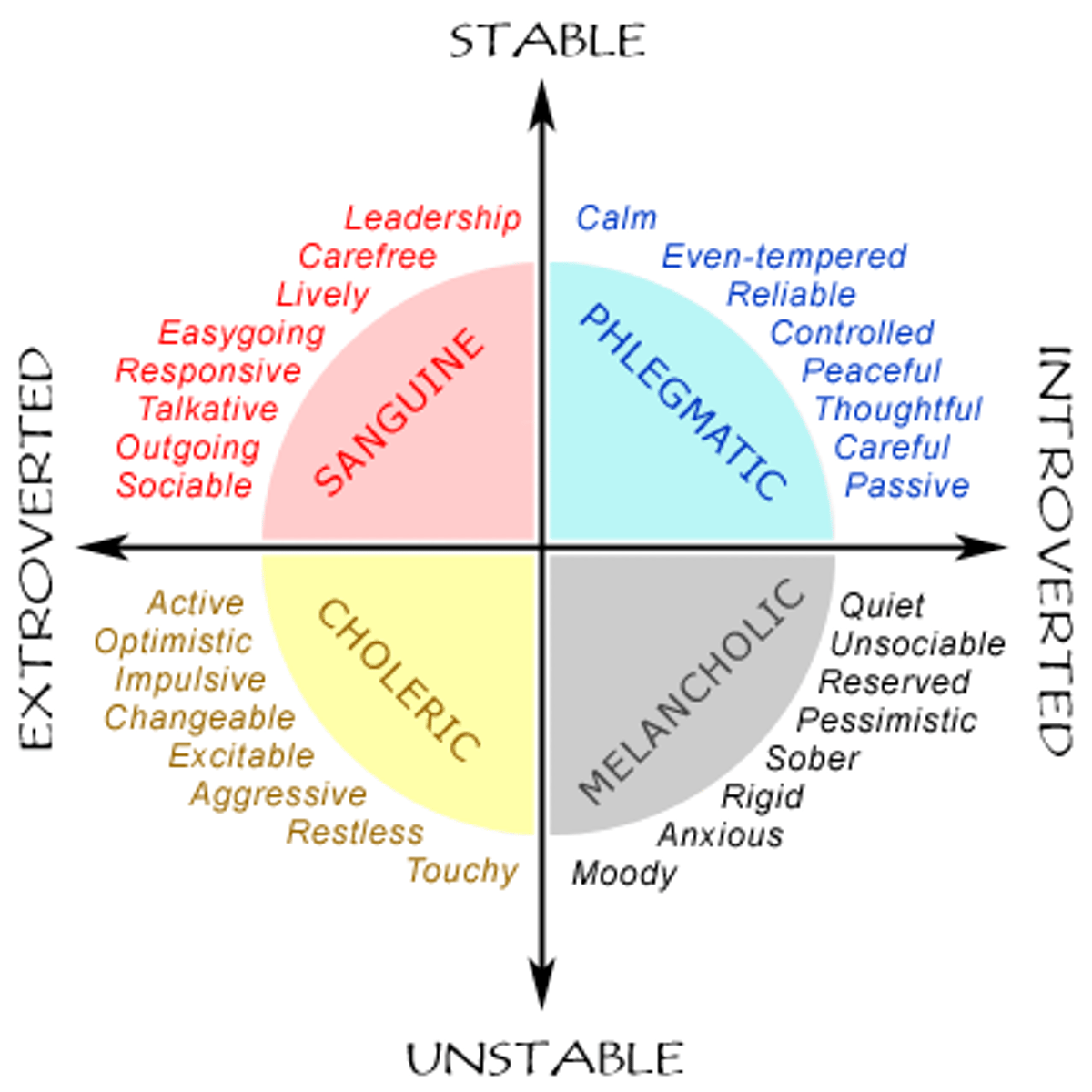
Hans Eysenck
created an inventory based on 3 different source traits: introversion/extroversion, neuroticism/emotionally stable, psychoticism
Walter Mischel
Proponent of "the situation" in the "person-situation" debate in personality theory, performed the Marshmallow Test with children
Delayed gratification
Ability to put off being rewarded instead of needing instant reinforcement (gratification)
Person-Situation Controversy
the question of whether behavior is caused more by personality or by situational factors
Eysenck Personality Inventory
inventory based on 3 different source traits: introversion/extroversion, neuroticism/emotionally stable, psychoticism
denial
refusing to believe or even perceive painful realities
displacement
defense mechanism in which unwanted feelings are directed towards a different object
projection
unconscious attribution of our negative characteristics to others
rationalization
ego defense mechanism in which a person confronted with anxiety makes excuses to justify behavior
intellectualization
defense mechanism in which the person analyzes a situation from an emotionally detached viewpoint using only facts and logic, becomes an "expert" on the topic
reaction-formation
defense mechanism in which our thinking, feeling or behaving in a manner which is opposite to how we really feel motivated in the unconscious mind
regression
reverting back to a previous stage of development to avoid dealing with emotionally painful feelings or anxiety
Sublimation
Channeling unacceptable unconscious urges into more acceptable behaviors
latent content
According to Freud, the content of of dreams that contains hidden meaning or symbolism that should be psychoanalyzed
manifest content
According to Freud, the straightforward content of our dreams
Alfred Adler
Neo-Freudian who claims unconscious holds motivations for personality including inferiority complexes and influence from birth order
Karen Horney
Neo-Freudian who claimed general anxiety from childhood must be resolved and that men may feel loss from the inability to bear children (womb envy)
Carl Jung
neo-Freudian who created concept of "collective unconscious"
sibling rivalry
the spirit of competition, jealousy, and resentment that may arise between two or more siblings due to birth order (Adler)
personality
an individual's characteristic pattern of thinking, feeling, and acting